A (Black) Gat in the Hand: Will Murray on Lester Dent’s Lost Detective
 I’m always happy when my Pulp buddy Will Murray writes an A (Black) Gat in the Hand essay. He tackles cool stuff that never even occurs to me. And often which I knew nothing about. Will is the leading authority on Lester Dent’s Travis McGee predecessor (and you KNOW I love me some John D. MacDonald), Oscar Sail. But I had never even heard of the the maritime PI who follwed Sail: Cyrus Peace. So I’m thrilled to give you Will’s essay on another Dent PI: who, unfortunately, never made it to print. Read on, MacDuff.
An interesting sub-genre of modern detective fiction is the private detective who lives on and operates from a boat anchored somewhere along the Florida coast.
John D. McDonald’s Travis McGee is considered the most successful in this peculiar sub-genre. His houseboat, The Busted Flush, was moored off Fort Lauderdale.
(Editor’s Note – Click here for Black Gate’s John D. MacDonald coverage)
Others include the trio of troubleshooters who operated out of a Miami Beach houseboat in the 1960-62 Warner Bros. television show, Surfside 6––Dave Thorne, Sandy Winfield II, and attorney-turned PI Ken Madison.
Lesser known, but successful entries include two by Randy Wayne White. Doc Ford is an ex-CIA troubleshooter whose boat, The Dandy, is moored among the mangroves of Sanibel Island. The other is PI Hannah Smith, who lives on a houseboat near Pine Island.
William Wells’ Chicago homicide detective Jack Starkey retired to live on a Fort Myers houseboat, Phoenix. But his reputation prompts the local police to drag him into every tough case that washes ashore.
Another Florida retiree was David Crosby’s Will Harper. Formerly an investigative reporter, he operates from his Grand Banks Trawler, WanderLust, as a private investigator, cruising the waterways of the Gulf Coast and tied to no one location.
No doubt there are others—or eventually will be.
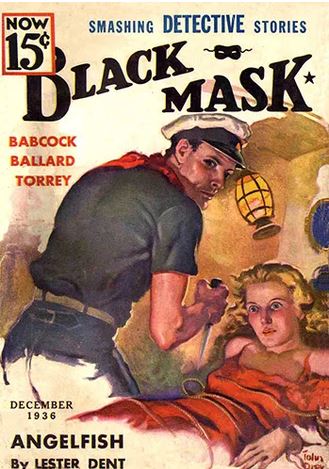 But the originator of the nautical concept was Lester Dent’s 1936 Black Mask PI, Oscar Sail.
Only two Oscar Sails stories were ever published, and they were among the last stories purchased by legendary editor Joseph T. Shaw. Dent had been working on a third Oscar Sail story when the editorship changed and he lost interest in the series.
Sail was a lean and laconic character, unusually tall, who preferred to wear black polo shirts. His black Chesapeake bugeye schooner was named Sail.
Originally, Oscar Sail was a chubby fellow modeled after Dash Hammett’s Continental Op, in terms of his unprepossessing physique. But Shaw rejected that version of “Sail” and Dent rewrote the story with a strikingly different long and lean character with the same name.
A sequel, “Angelfish,” followed soon after. It was a powerful yarn culminating in a hurricane climax. Dent and his hero were poised to become Black Mask regulars. Then Shaw was let go. In solidarity with Joe Shaw and other contributors who believed that Black Mask would not be the same magazine under Fanny Ellsworth, Lester declined to submit anything more to the magazine, even though Ellsworth requested more Sail stories.
Friend and fellow pulpster Frank Gruber wrote about Dent’s brief Black Mask career in The Armchair Detective, giving the inside story:
Along about 1936 Lester Dent began to tire of Doc Savage. He thought the stories were too juvenile and he thought that he should be trying to write more adult fiction. He wrote two stories for Black Mask, but he told me that he had been forced to rewrite both stories so many times that he did not himself like the final product. Also, the time and effort consumed by the long rewriting were not compensated by the modest payment of Black Mask. As far as I know those were the only stories that Dent sold to a “better” pulp and Lester was greatly dissatisfied.
Dent’s Sail stories have been among the most anthologized of all the Black Mask contributions, so it’s not surprising that other writers might have picked up on the unique locale and setting. And emulated it because it was so novel.
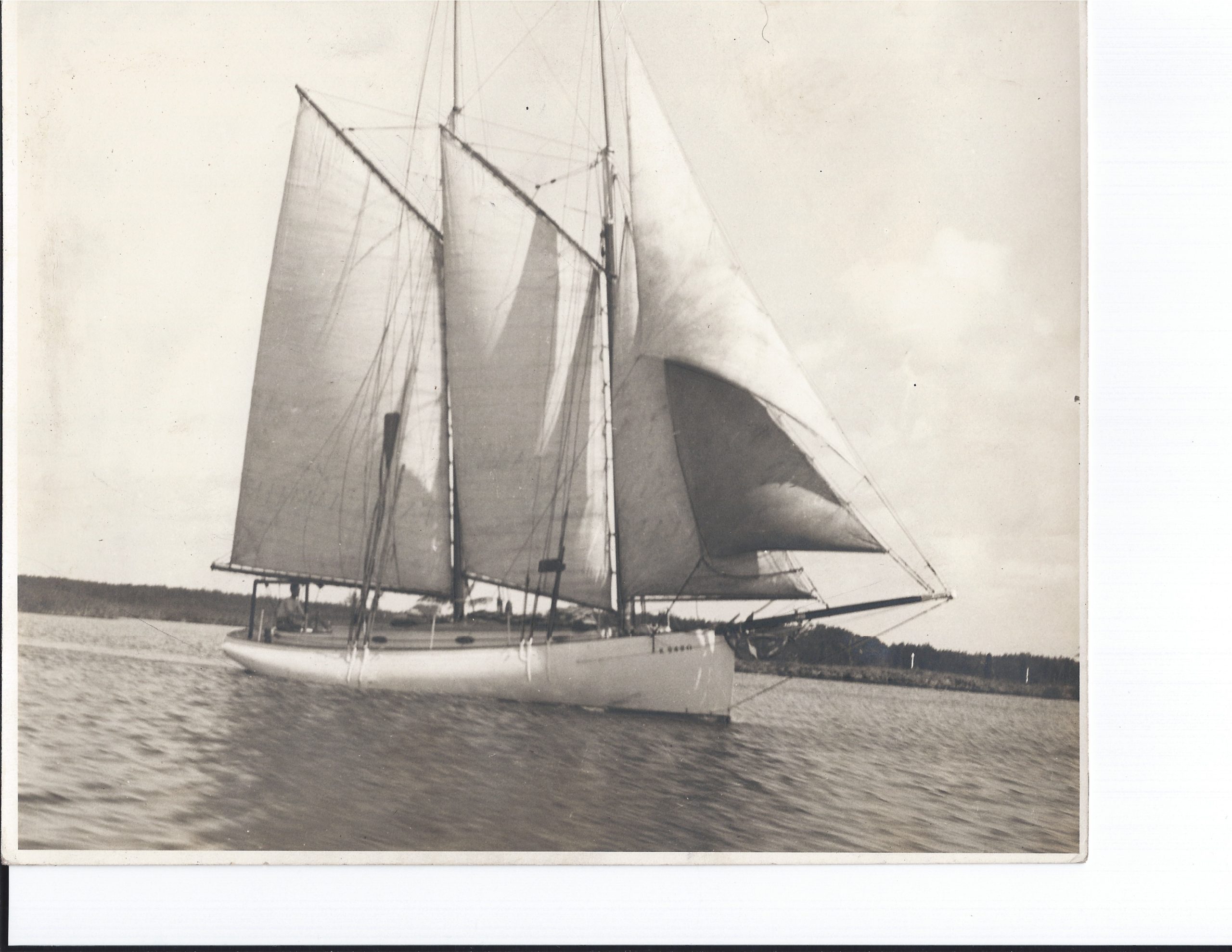
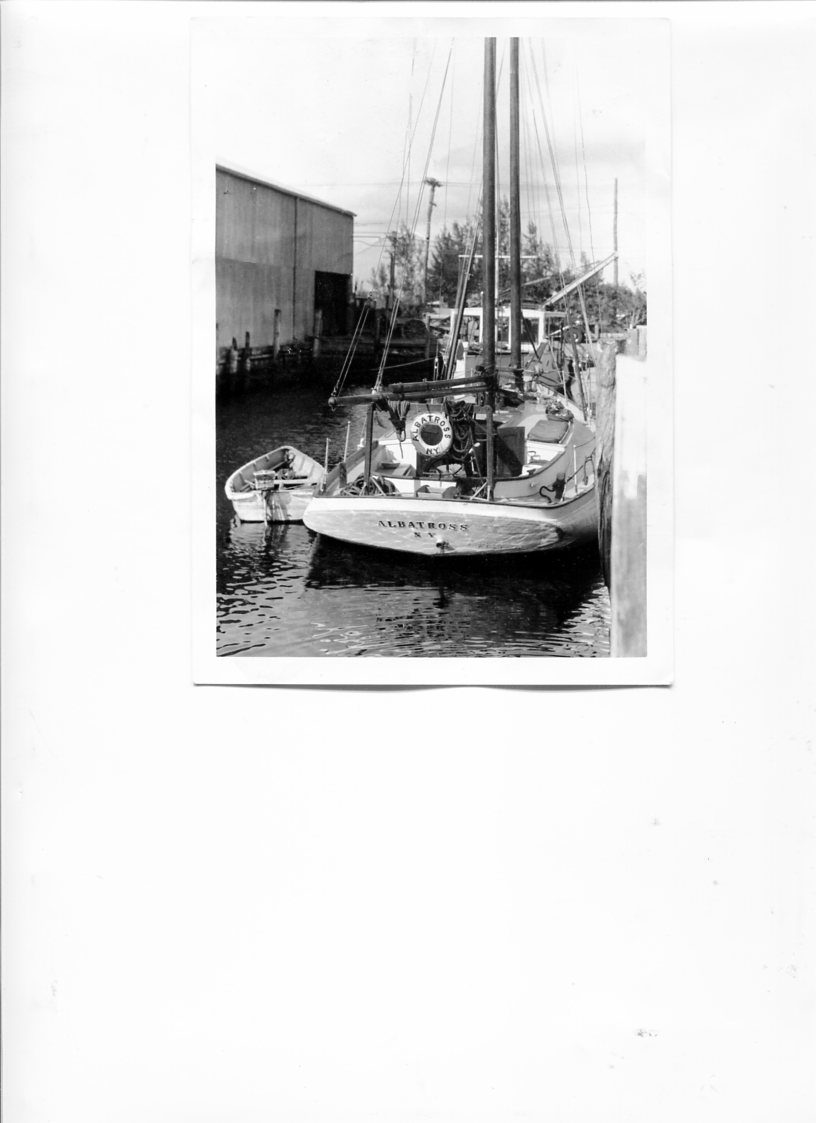
In the mid-1930s, Dent himself lived on his boat, the Albatross, which was anchored on the Miami docks. It was white, while Oscar Sail’s similar vessel, Sail, was black, right down to the mainsail. So his character was a kind of ego projection, although I would imagine the familiar setting and circumstances inspired the concept of a private detective whose boat doubled as his home and office.
It’s not known if John D. MacDonald read these stories and drew his inspiration from them. In the beginning of his career, he wrote for Doc Savage magazine, where Lester Dent’s lead novels appeared every month. But that connection is rather tenuous. And at this late date, an influence can’t be established with certainty.
After Dent turned his back on Black Mask, he submitted to Detective Fiction Weekly a manuscript featuring a new sleuth who also operated out of Miami.
His name was Cyrus Peace. The story was titled “Windjam.” It was a 15,000-word novelette written late in 1936, soon after “Angelfish” was accepted.
Peace was a typical eccentric Lester Dent protagonist. Like Dent, he was a transplanted Missourian residing in Miami. And like Dent and Oscar Sail, he’s strikingly tall, angular and deeply tanned. Peace holds forth in a tiny office. Peace‘s practice––which is only thirty days old––is limited to marine cases. He doesn’t live in or on a boat––at least, the surviving story doesn’t stipulate either way. But he’s cut from the same rough sailcloth as Oscar Sail:
…. Peace fingered the three corn cobs, hefted them. They were red cobs, large, looking as if they had been varnished. Peace held one of the cobs out and studied it, then seemed to do nothing but shrug his shoulders, but the cob vanished. It was weird, to the eye, at least. One instant the cob was there; next it wasn’t. It was neat, sleight-of-hand, but Peace kneaded his fingers and examined them as if he did not believe he had done such a good job vanishing the cob. But back of the business with the cobs was thoughtfulness, as if he had merely been doing something which he did unconsciously, as some men scratched their heads when thinking.
Then Peace grunted and arose, proving to be a very tall and wide man with a lot of bone in his makeup and a suit that did not fit too well. Thunder whooped and gobbled and Peace went to the window. Red lightning light washed his face, made his features seem more lean than they were. Black clouds, lightning and noise was all bunched over the Everglades back of Miami to indicate that it would pour before long.
Peace got a very long, lemon-colored oilskin coat and a sou‘wester off the hangar, and rolled them into a bundle. He seemed too big for the little office. Too big, and much too toughened by seas and winds. He opened the door. Printing on it said:
CYRUS PEACE
Admiralty Investigations.
Dent refers to him as “the Corn Cob Philosopher.“
“Windjam” was set around Pier No. 4 of Miami’s City Yacht Basin, where Dent’s Black Mask detective, Oscar Sail, anchored his sloop, and where Dent’s Albatross spent the winters of 1935-36.
“Les was very familiar with that spot,” wife Norma recalled. “Our boat was tied there for two winters. The boat next to ours was a cabin cruiser, owned by the Winchells, (Stewart Sterling) another well-known writer. However, he spent very little time on board his boat. Most of the time he lived in New York.”
Dent included some nice 1930s color describing the imitation South Seas Island huts constructed of concrete but painted to look like wood on Bayfront Park, and the Miami police, who wore white pith helmets and matching Sam Browne belts during tourist season.
 It’s possible the plot for “Windjam” was originally conceived as another Oscar Sail entry. But I’ve found no concrete evidence of that. The planned third Sail story was to be called “Cay” and was set in the Caribbean. All of Dent’s Sail stories—including the original version of “Sail”—retitled “Luck”––as well as the unfinished openings to other stories, were recently collected in Steeger Books’ The Complete Black Mask Stories of Lester Dent.
Regrettably Detective Fiction Weekly rejected “Windjam.” It’s unfortunate because Cyrus Peace, as portrayed in his one and only exploit, is an intriguing character:
Peace was Missouri stock. His youth had been spent there. He had learned to swim in a stream called Bear Creek, and had graduated to another place called the Santa Fe Pond: two of the best available bodies of water for the purpose. While his leg action was the same as used for kicking down corn stocks, which he did well enough.
Those two reference points, as well as another mentioning the Chariton Hills, suggests that Cyrus Peace had been raised in around La Plata, Missouri, Lester Dent’s hometown. Throughout the story, Peace recalls advice his Uncle Bide gave him back in the Show-Me State:
“Reckon right now I feel the same way Uncle Bide’s red hog felt when he got his head fast in the slop bucket,” he says at one point.
The story of revolves around Peace being framed for murder because one of his trademark corn cobs was found next to a body. Peace, like Lester Dent, was an amateur magician. It was an interest the writer acquired through his friendship with magician-turned-writer Walter B. Gibson of Shadow Magazine fame:
Peace went on into the room, where the body of Benjo had lain. The body was gone, of course, but Peace discovered something else. His corn cobs and his gimmick, which enabled him to do some of his tricks.
He walked over, began putting the corn cobs in his pockets, the gimmicks in his clothing. Magic with corn cobs was his hobby. He knew it struck others as being a goofy kind of hobby. He never let that bother him. He could do things with those corn cobs, rather incredible things. They were rather special cobs, too, but so cleverly fixed up that they stood examination. For instance, no one had noticed anything wrong with the cobs.
He was arranging his last gimmick when red-headed Bets Bentrams came in, holding a flat automatic pistol close to her side.
“You’ve killed your last man!“ she said, and raised her gun deliberately.
Peace did not apparently carry a gun. He wielded another type of armament:
Bets Bentrams had the shape to wear slacks. The slacks were blue, her blouse white and blue, and both garments were cut to keep men looking at her. But they would not keep looking at her as she was now. Not after they saw what was on her face. It was undiluted horror.
Peace grinned at her, a big, artificial and unnatural grin with one sole purpose of being so grotesque and out of place that the girl would watch it and not his hands. She did.
A corn cob got into Peace’s hand, coming out of his sleeve, where the gimmick had it. Gimmicks enabled magicians to do many tricks. This one let a cob fall when Peace took a deep breath.
His hand flicked. He had thrown a cob a million times. He could toss one on a top of twenty foot pole so accurately that it would balance there on end. This cob hit the girl’s gun hand, and the gun bounced on the floor. Peace retrieved the corn cob and got the gun, then examined the gun.
Dent described one gimmick as an elastic bank that runs up Peace’s sleeve, abhorred by a safety pin. A clamp of light spring wire at the other end holds a corn cob. When Peace releases his grip on it, the cob is whisked up his sleeve and out of sight. Maybe that was one gimmick that was too much of a stretch for pulp editors….
Lester Dent never revisited Cyrus Peace. A few months later, he launched a successful series in Street & Smith’s Crime Busters, written around a gadgeteer-turned-amateur-detective named Click Rush. The character proved to be one of the magazine’s headliners, and Dent found the demand for new Gadget Man novelettes to be almost as insatiable as his monthly Doc Savage deadlines.
Early in the series, no doubt pressed for plots, Lester condensed and rewrote “Windjam” as a Click Rush entry––eradicating any possibility of peddling Cyrus Peace elsewhere.
The surviving manuscript is missing several pages, and so cannot be printed today, alas.
Prior Lester Dent:
Will Murray on Dash(iell Hammet) and (Lester) Dent
Will Murray on Doc Savage
The Master Plot Formula
Prior Posts in A (Black) Gat in the Hand – 2026 (7)
 Front Porch Pulp and Frank Kane
After Dark, My Sweet
Ten Things I Think I Think (Gat Edition)
Rory Gallagher & The Continental Op (again)
Spider-Noir
Elliott Gould Reads Chandler
All My Steeger Books Intros
Prior Posts in A (Black) Gat in the Hand – 2025 (12)
Will Murray on Dash(iell Hammet) and (Lester) Dent
Shelfie – Dashiell Hammett
Windy City Pulp & Paper Fest – 2025
Will Murray on Who was N.V. Romero?
Conan – The Phoenix in the Sword in Weird Tales
More of Robert E. Howard’s Kirby O’Donnell
More Weird Menace from Robert E. Howard – Conrad and Kirowan
Hardboiled Gaming- LA Noire
Western Noir: Hell on Wheels
T.T. Flynn’s Mr Maddox
Dashiell Hammettt’s The Scorched Face (my intro)
Will Murray on Raymond Chandler’s Other Lost Stories?
Prior Posts in A (Black) Gat in the Hand – 2024 Series (11)
Will Murray on Other Lost Raymond Chandler Stories?
Will Murray on Dashiell Hammett’s Elusive Glass Key
Ya Gotta Ask – Reprise
Rex Stout’s “The Mother of Invention”
Dime Detective, August, 1941
John D. MacDonald’s “Ring Around the Readhead”
Harboiled Manila – Raoul Whitfield’s Jo Gar
7 Upcoming A (Black) Gat in the Hand Attractions
Paul Cain’s Fast One (my intro)
Dashiell Hammett – The Girl with the Silver Eyes (my intro)
Richard Demming’s Manville Moon
More Thrilling Adventures from REH
Prior Posts in A (Black) Gat in the Hand – 2023 Series (15)
Back Down those Mean Streets in 2023
Will Murray on Hammett Didn’t Write “The Diamond Wager”
Dashiell Hammett – ZigZags of Treachery (my intro)
Ten Pulp Things I Think I Think
Evan Lewis on Cleve Adams
T,T, Flynn’s Mike & Trixie (The ‘Lost Intro’)
John Bullard on REH’s Rough and Ready Clowns of the West – Part I (Breckenridge Elkins)
 John Bullard on REH’s Rough and Ready Clowns of the West – Part II
William Patrick Murray on Supernatural Westerns, and Crossing Genres
Erle Stanley Gardner’s ‘Getting Away With Murder (And ‘A Black (Gat)’ turns 100!)
James Reasoner on Robert E. Howard’s Trail Towns of the old West
Frank Schildiner on Solomon Kane
Paul Bishop on The Fists of Robert E. Howard
John Lawrence’s Cass Blue
Dave Hardy on REH’s El Borak
Prior posts in A (Black) Gat in the Hand – 2022 Series (16)
Asimov – Sci Fi Meets the Police Procedural
The Adventures of Christopher London
Weird Menace from Robert E. Howard
Spicy Adventures from Robert E. Howard
Thrilling Adventures from Robert E. Howard
Norbert Davis’ “The Gin Monkey”
Tracer Bullet
Shovel’s Painful Predicament
Back Porch Pulp #1
Wally Conger on ‘The Hollywood Troubleshooter Saga’
Arsenic and Old Lace
David Dodge
Glen Cook’s Garrett, PI
John Leslie’s Key West Private Eye
Back Porch Pulp #2
Norbert Davis’ Max Latin
Prior posts in A (Black) Gat in the Hand – 2021 Series (7 )
The Forgotten Black Masker – Norbert Davis
Appaloosa
A (Black) Gat in the Hand is Back!
Black Mask – March, 1932
Three Gun Terry Mack & Carroll John Daly
Bounty Hunters & Bail Bondsmen
Norbert Davis in Black Mask – Volume 1
Prior posts in A (Black) Gat in the Hand – 2020 Series (21)
Hardboiled May on TCM
Some Hardboiled streaming options
Johnny O’Clock (Dick Powell)
Hardboiled June on TCM
Bullets or Ballots (Humphrey Bogart)
Phililp Marlowe – Private Eye (Powers Boothe)
Cool and Lam
All Through the Night (Bogart)
Dick Powell as Yours Truly, Johnny Dollar
Hardboiled July on TCM
YTJD – The Emily Braddock Matter (John Lund)
Richard Diamond – The Betty Moran Case (Dick Powell)
Bold Venture (Bogart & Bacall)
Hardboiled August on TCM
Norbert Davis – ‘Have one on the House’
with Steven H Silver: C.M. Kornbluth’s Pulp
Norbert Davis – ‘Don’t You Cry for Me’
Talking About Philip Marlowe
Steven H Silver Asks you to Name This Movie
Cajun Hardboiled – Dave Robicheaux
More Cool & Lam from Hard Case Crime
A (Black) Gat in the Hand – 2019 Series (15)
Back Deck Pulp Returns
A (Black) Gat in the Hand Returns
Will Murray on Doc Savage
Hugh B. Cave’s Peter Kane
Paul Bishop on Lance Spearman
A Man Called Spade
Hard Boiled Holmes
Duane Spurlock on T.T. Flynn
 Andrew Salmon on Montreal Noir
Frank Schildiner on The Bad Guys of Pulp
Steve Scott on John D. MacDonald’s ‘Park Falkner’
William Patrick Murray on The Spider
John D. MacDonald & Mickey Spillane
Norbert Davis goes West(ern)
Bill Crider on The Brass Cupcake
A (Black) Gat in the Hand – 2018 Series (32)
George Harmon Coxe
Raoul Whitfield
Some Hard Boiled Anthologies
Frederick Nebel’s Donahue
Thomas Walsh
Black Mask – January, 1935
Norbert Davis’ Ben Shaley
D.L. Champion’s Rex Sackler
Dime Detective – August, 1939
Back Deck Pulp #1
W.T. Ballard’s Bill Lennox
Erle Stanley Gardner’s The Phantom Crook (Ed Jenkins)
Day Keene
Black Mask – October, 1933
Back Deck Pulp #2
Black Mask – Spring, 2017
Erle Stanley Gardner’s ‘The Shrieking Skeleton’
Frank Schildiner’s ‘Max Allen Collins & The Hard Boiled Hero’
 A (Black) Gat in the Hand: William Campbell Gault
A (Black) Gat in the Hand: More Cool & Lam From Hard Case Crime
MORE Cool & Lam!!!!
Thomas Parker’s ‘They Shoot Horses, Don’t They?’
Joe Bonadonna’s ‘Hardboiled Film Noir’ (Part One)
Joe Bonadonna’s ‘Hardboiled Film Noir’ (Part Two)
William Patrick Maynard’s ‘The Yellow Peril’
Andrew P Salmon’s ‘Frederick C. Davis’
Rory Gallagher’s ‘Continental Op’
Back Deck Pulp #3
Back Deck Pulp #4
Back Deck Pulp #5
Joe ‘Cap’ Shaw on Writing
Back Deck Pulp #6
The Black Mask Dinner
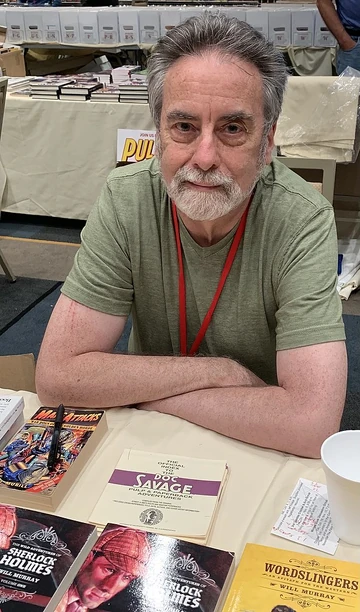 There are some outstanding names in the ‘New Pulp’ field, but William Patrick Murray’s probably stands above them all. Along with Doc Savage, Will has written Tarzan and The Spider. And he’s quite the Sherlock Holmes writer. Short stories, comic books, radio plays, nonfiction essays and books – Murray has done it all.
He created The Unbeatable Squirrel Girl for Marvel Comics, and his collection of essays on Doc Savage, Writings in Bronze, is a must read. I love a good book introduction, and Murray has written some fine ones for Steeger Books.
Visit his website Adventures in Bronze.com
 Bob Byrne’s ‘A (Black) Gat in the Hand’ made its Black Gate debut in 2018 and has returned every Summer since.
His ‘The Public Life of Sherlock Holmes’ column ran every Monday morning at Black Gate from March, 2014 through March, 2017. And he irregularly posts on Rex Stout’s gargantuan detective in ‘Nero Wolfe’s Brownstone.’ He is a member of the Praed Street Irregulars, and founded www.SolarPons.com (the only website dedicated to the ‘Sherlock Holmes of Praed Street’).
He organized Black Gate’s award-nominated ‘Discovering Robert E. Howard’ series, as well as the award-winning ‘Hither Came Conan’ series. Which is now part of THE Definitive guide to Conan. He also organized 2023’s ‘Talking Tolkien.’
He has contributed stories to The MX Book of New Sherlock Holmes Stories — Parts III, IV, V, VI, XXI, and XXXIII.
He has written introductions for Steeger Books, and appeared in several magazines, including Black Mask, Sherlock Holmes Mystery Magazine, The Strand Magazine, and Sherlock Magazine.
You can definitely ‘experience the Bobness’ at Jason Waltz’s ’24? in 42′ podcast.
There’s also Marvin Albert’s Tony Rome (Of Miami Mayhem and Lady in Cement.) He too is a Florida houseboat dweller.
Somebody talked about them recently to me. The movie, I think. Maybe Will in a text.
First I’d heard of him.
There was also Captain Compass a DC comics golden age character that was a private investigator for a shipping line. I’ve only read one story but I have the impression that it was mediocrity written and drawn but it seemed to lasted a long time.
https://dc.fandom.com/wiki/Mark_Compass_(New_Earth)
That’s cool.
And with all the variations on the PI role, a shipping line is a cool one, with a lot of potential for neat locations.
Very nice! I always love these unknown history pieces.