Remembering Children of the Dragon, by Frank S. Robinson
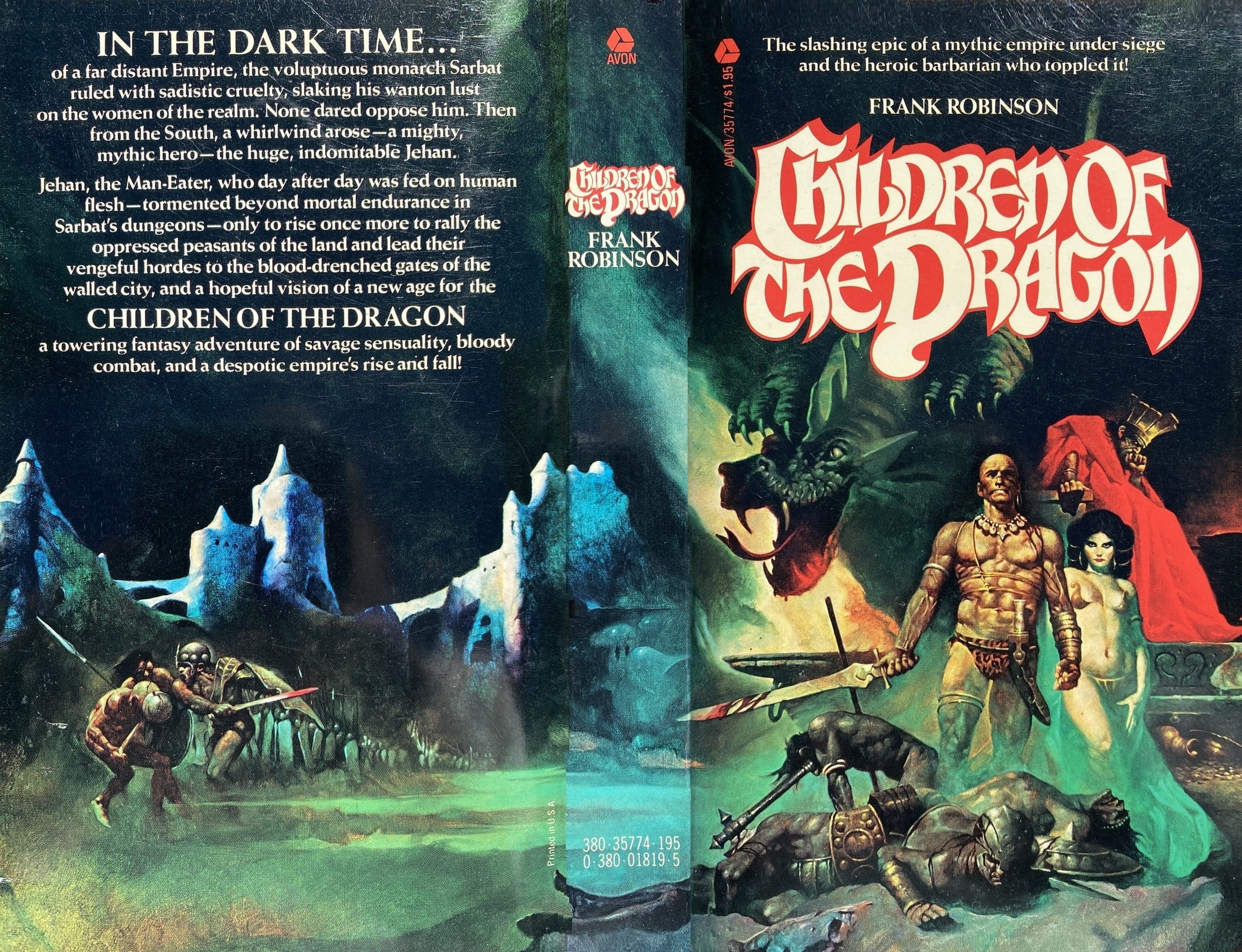
The fact that people are not ruled by any god frees them to rule themselves. The fact that fate is blind frees people to take their fate into their own hands. The fact that the race has no purpose frees its individual members to pursue their own purposes. And so, the fact that bare human life is without intrinsic value does not mean human endeavor is pointless. Just as a worthless chunk of stone can be sculpted into a precious work of art, so too can a raw, common life become great by what its owner makes of it. And that endeavor is the key to life — with no god, no other value to existence — a man’s own endeavor is everything.
— from Children of the Dragon, by Frank Robinson
There are no dragons in this novel, as I first thought when I bought Children of the Dragon back in 1978. There are no wizards or witches, no magic, no strange beasts or monsters. This is alternate-world fiction, without any of the usual fantasy tropes. Probably the first or one of the first novels that later would be labeled Grimdark, for this certainly is a grim and dark novel.
Sadly, Robinson wrote only this one “fantasy” novel. He wrote no sequels, no other fantasy. The cover reads “Frank Robinson,” but inside the book his name is Frank S. Robinson, and that is the name under which the book is copyrighted. He also wrote a few other fiction and non-fiction books under that name, but he was not prolific. (His agent was Virginia Kidd, a high-profile agent in her day, to whom he dedicated this novel. She also represented science fiction writer Avram Davidson.)
Robinson’s fully-realized world is called Bergharran, and it owes a lot to Robert E. Howard’s Hyborian Age, and there some comparisons to Conan, but his main character, Jehan Henghmani, is a far cry from the Cimmerian.
Children of the Dragon: An Early, Long Lost Grimdark Fantasy?
I had to do some research before writing this article, because it’s not only a complex novel, so much of it I’ve forgotten since reading it again in the early 1980s. There was a Kindle version, with a different cover by artist unknown, but it’s no longer available. I searched for hardcover or trade paperback editions, but could not find any.
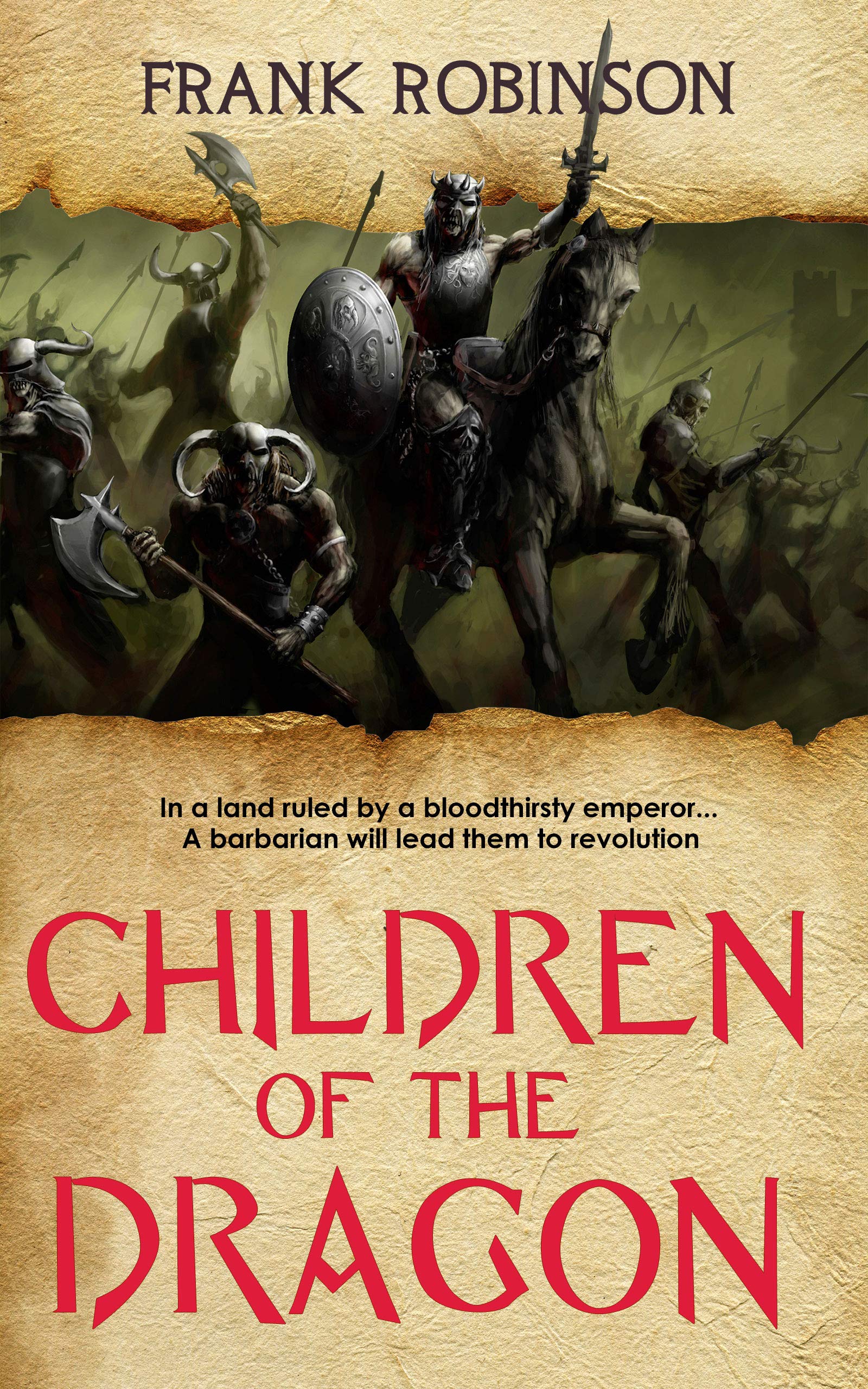
Thanks to advancing age, it’s quite difficult for me to reread the small print of this mass-market paperback — even with my reading glasses! Like I said, it’s a complex story, filled with intrigue, torture, war, human drama, and plot points and characters that are now, unfortunately, lost to memory.
What I do remember is the impact it had on me when I first read it, because I had never read a fantasy so grim, so violent and so dense. I always considered it a powerful novel, and what I remember most are the opening chapters and the sad, dark finale. This is not a novel for everyone, and for many its length may be a turn off. Robinson’s prose is quite good, although at times it can be a bit ponderous and slow-going. His narrative is often weighed down with so much politics, strife and turmoil that it can be a bit tiresome. But if you stick with it, you may find the story pulling you into his world.
There are regions (countries), dialects, languages, cultures, and so forth that are explained in great detail. But, overall, I speculate that Robinson mirrored parts of the book after the Timurid Empire of the 15th century, what is known now as modern Iran, Iraq, Afghanistan, Pakistan and portions of North India and Turkey. Bergharran is experiencing an age similar to a post-Civil War. The Tnemghadi (the North) defeated the Urhemmedhi (the South) and they now rule with an iron fist as a tyrannical empire. The book’s sprawling landscape fits the book’s narrative, a storyline that encompasses 20ish years of Bergharran history.
— Paperback Warrior, 2023
As you can see from the paragraph above, Robinson’s names are somewhat long and often hard to pronounce. But for me, that’s part of the flavor of this novel, part of what makes it feel like another world’s history. To the above I’d like to add that Bergharran made me think of feudal Japan or China, as well. It has that kind of aura about it.
Jehan Henghmani is a powerful giant of a man — seven feet tall, as I remember. He’s a Spartacus-like bandit chief who builds an army and leads a failed revolt against the tyrant, Emperor Tnem Sarbat Satanichadh. When Jehan is captured and imprisoned, and then insults the Emperor, he is consigned to a lifetime of daily torture, but Satanichadh gives his men orders not to kill the rebel chief; if he dies under torture, all those who are responsible will be put to death.
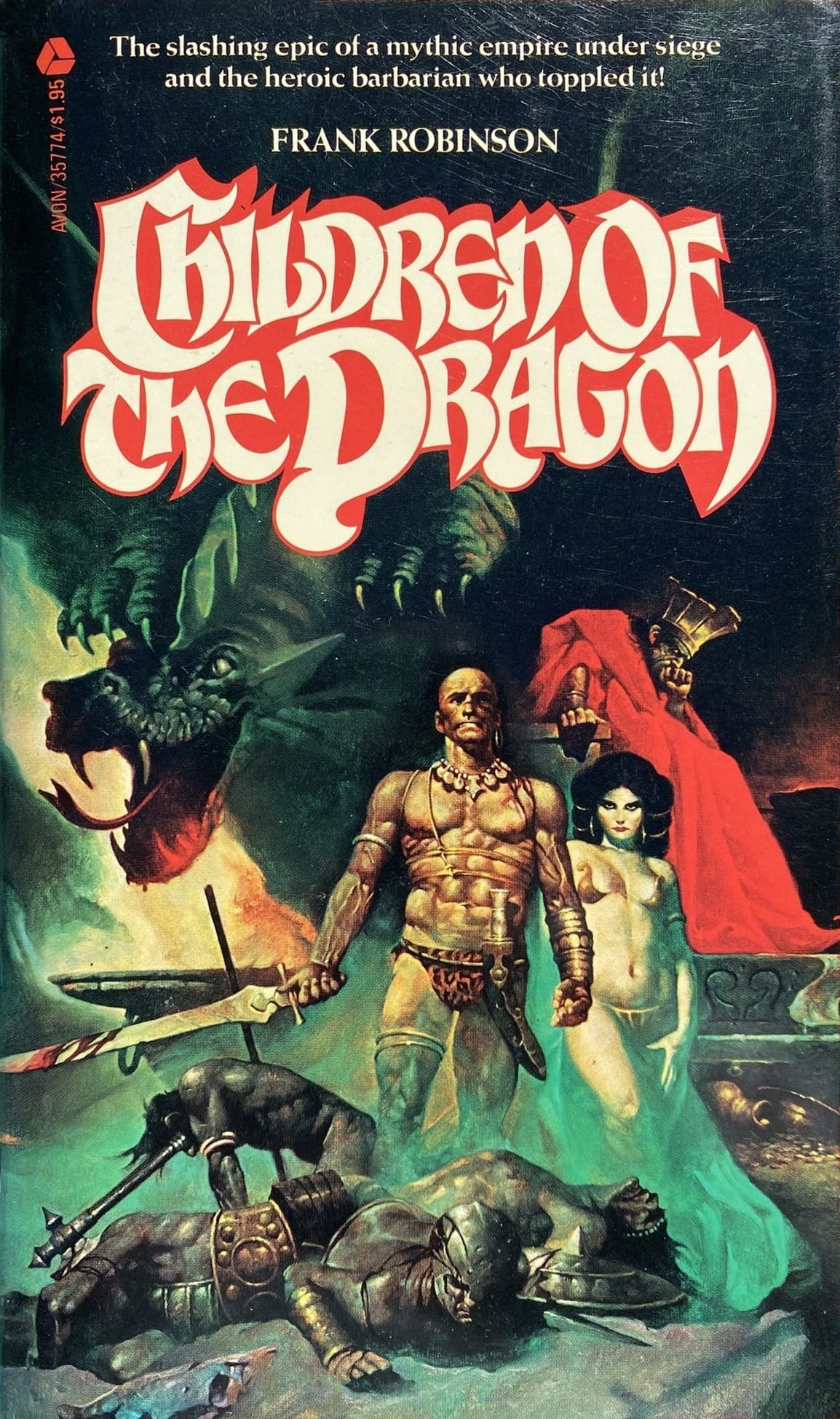
Satanichadh is a twisted madman, a real psychopath. Jehan’s torture goes beyond brutality: he is horribly mutilated, and forced to watch as his wife and two daughters are brutally raped, then is forced to have sex with one or both of his daughters. I forget. He is then forced to eat human flesh and is later known as “Man-Eater.”
The first 20% of the book made it hard to continue. Some vile things happen including mutilation, torture, rape, incest, and murder. While not descriptive, it may turn some away because of the subject matter. But be assured that once past about the 20% mark you won’t have to read anything like that again. These awful things occur for a couple of reasons. Some of it cements the mindset of the Emperor and makes it unequivocally clear that to him, Everything is Nothing. The rest is used to break our protagonist and is part of his torture at the hands of the Emperor’s lackeys.
— Richard, Goodreads, 2019
Jehan starts out a bandit, but during the course of this novel he becomes a hero. He undergoes several changes throughout, until his ultimate fate is revealed. His perception of the world around him is changed, and he discovers truths he wished he had discovered when he was a young man, truths that would have caused him to see and act upon situations differently.
Needless to say, Jehan eventually breaks out of prison, builds another army, leads another rebellion and this time overthrows Emperor Tnem Sarbat Satanichadh. Eventually Jehan becomes Emperor, dying peacefully some fourteen years later.
On the surface, Children of the Dragon is a genuine heroic fantasy, a sometimes-thought-provoking novel with brutality and war throughout. But it is so much more than that.
Children has a downbeat, cynical tenor that reflects its late 70s conception, and this may make it worthwhile to readers who are looking for an epic ‘barbarian’ fantasy with a flavor different from contemporary novels and series like The Name of the Wind, The Game of Thrones, and The Warded Man
— The PorPor Books Blog, posted by Tarbandu, 2022
Of some note: Frank S. Robinson is/was a retired New York judge and an expert on coin values and collecting; there is no Wiki page or complete Amazon page on him, so I have no idea if he’s alive or dead. He prefaces each chapter with a bit of numismatic background and description regarding the various coins of the Tnemghadi and Urhemmdhin Empires. He is not the same person as famed pulp collector and author Frank M. Robinson, author of The Power and The Dark Beyond the Stars.
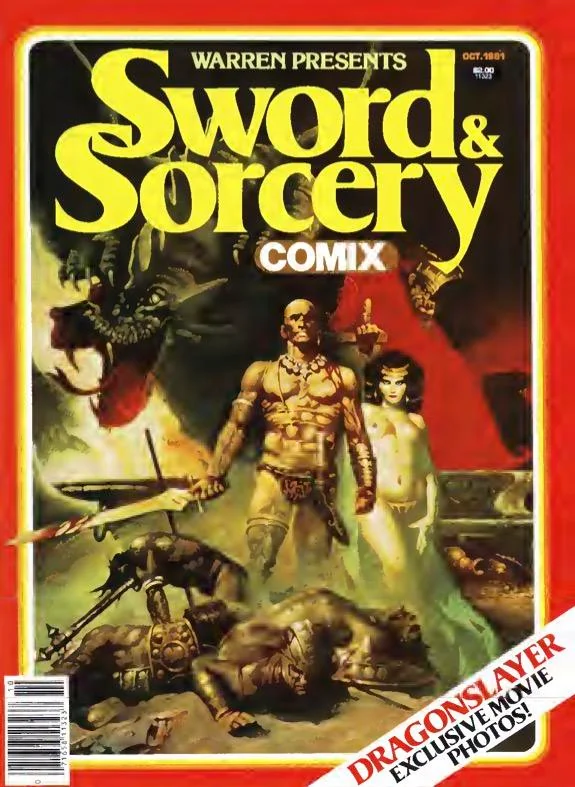
It’s also interesting to note that the excellent, original Sanjulian cover was used for a 1981 issue of Warren Publishing’s Sword and Sorcery magazine (above).
If you’re looking for something different, check out Children of the Dragon, by Frank Robinson. You might enjoy it. You can find a used copy on Amazon (link).
Joe Bonadonna
Joe Bonadonna is the author of the heroic fantasies Mad Shadows — Book One: The Weird Tales of Dorgo the Dowser (winner of the 2017 Golden Book Readers’ Choice Award for Fantasy); Mad Shadows — Book Two: The Order of the Serpent; Mad Shadows — Book Three: The Heroes of Echo Gate; the space opera, and now Mad Shadows Book Four: All the Colors of Darkness. Three Against the Stars and its sequel, the sword and planet space adventure, The MechMen of Canis-9; and the sword & sorcery pirate novel, Waters of Darkness, in collaboration with David C. Smith. With co-writer Erika M Szabo, he penned Three Ghosts in a Black Pumpkin (winner of the 2017 Golden Books Judge’s Choice Award for Children’s Fantasy), and its sequel, The Power of the Sapphire Wand.
He also has stories appearing in: Azieran: Artifacts and Relics; Savage Realms Monthly (March 2022); Griots 2: Sisters of the Spear; Heroika I: Dragon Eaters; Poets in Hell; Doctors in Hell; Pirates in Hell; Lovers in Hell; Mystics in Hell; Liars in Hell; Sinbad: The New Voyages, Volume 4; Unbreakable Ink; Poetry for Peace; the shared-world anthology Sha’Daa: Toys, in collaboration with author Shebat Legion; and with David C. Smith for the shared-universe anthology, The Lost Empire of Sol.
In addition to his fiction, Joe has written numerous articles, book reviews and author interviews for Black Gate online magazine.