Browsed by
Category: Magazines

Into the Weird: Weird Tales, April 1923 (Volume 1, Number 2) Part 1
Into the Weird: Weird Tales, April 1923 (Volume 1, Number 2) Part 1

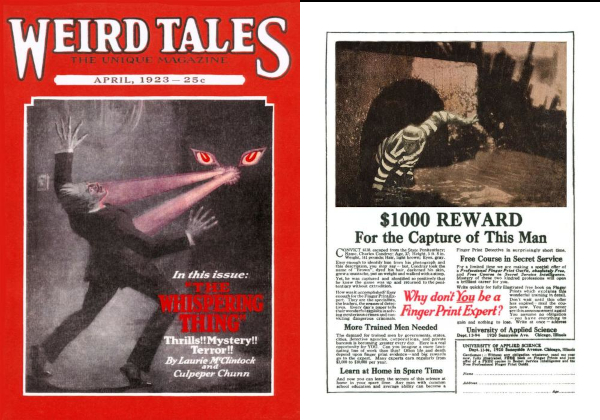
Weird Tales, April 1923, front and back covers

The second issue of Weird Tales, on sale from March of 1923 through to April, looked much like the first: a pulp magazine 6 and a half inches by 9 and a half, with 192 pages. The black-white-and-red cover was more striking than the previous issue’s, with the main image contained in a thick red frame, and the date and price more easily visible under the title. There was a new and smoother-looking logo. Unlike the first issue, this cover didn’t share a format with that month’s issue of Weird Tales’ older sister publication Detective Tales.

In fact, the cover’s about all you might hope for from a magazine called Weird Tales. Mysterious gigantic eyes stare out of darkness, while from just below them pink rays shoot out to strike a man who screams and throws out his hands. It’s not terribly sophisticated — background details are nonexistent or lost in the ink wash, and you can’t help but wonder if the mysterious creature in shadows is firing rays from its nostrils. But it is an image that tells you things supernatural and horrific lurk within these pages.

This post will take a look at the physical and editorial package of the second issue of Weird Tales, with an eye to tracking the magazine’s evolution. It’ll run long, because I’ve included numerous extracts from pulp magazine editorials — mostly for the sake of making an argument about how Weird Tales was positioning itself in its marketplace, but partly, I have to admit, for historical interest and potential amusement value.
Read More Read More

Into the Weird: Weird Times 2 — Cars, Roads, and Travel

Into the Weird: Weird Times 2 — Cars, Roads, and Travel

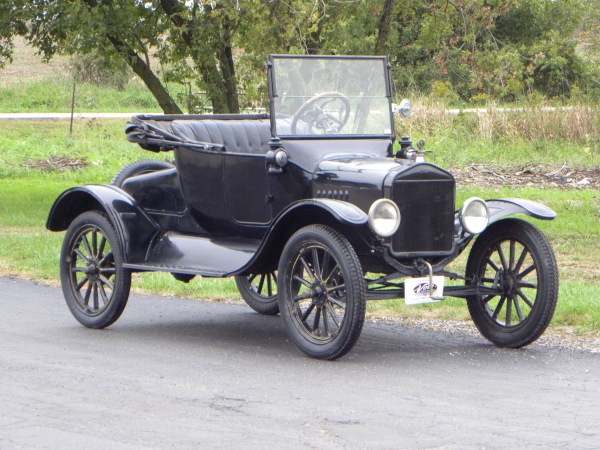
A 1923 Ford Model T

This post is the second in a series reflecting on the world of 1923 as a background to early issues of Weird Tales. Imagine that you’re an American in February of 1923, and you’re taking a walk to the newsstand to buy the first issue of a new pulp fiction magazine. What sort of things will you see?

Probably the first thing you’ll notice as you set out into the street is the street itself, and its contents. The motor car has begun to change urban life. Since Ford introduced the Model T fifteen years ago the price has steadily dropped; there were almost 11 million registered passenger automobiles in the United States by the end of 1922, and will be just shy of 13.5 million by the end of 1923. Cars are registered, incidentally, and license plates have been required since 1918, but most states do not issue driver’s licenses; half the states will require licenses by 1930, and as late as 1935 only 39 states will mandate licenses and not many of those will require passing a test. In 1923 Model Ts are still the most common make of car, though competing models are about to cut into its sales. Famously, you can get a Model T in any colour, so long as it’s black; Ford used to offer a range of colours, but in 1914 streamlined production by cutting back to a particular type of black paint that was cheap and fast-drying. Model Ts do not at this time have shock absorbers, windshield wipers, rear view mirrors, bumpers, or an instrument panel for a speedometer (not a standard feature) or gas gauge.

Read More Read More

Forgotten Authors: Henry J. Kostkos

Forgotten Authors: Henry J. Kostkos

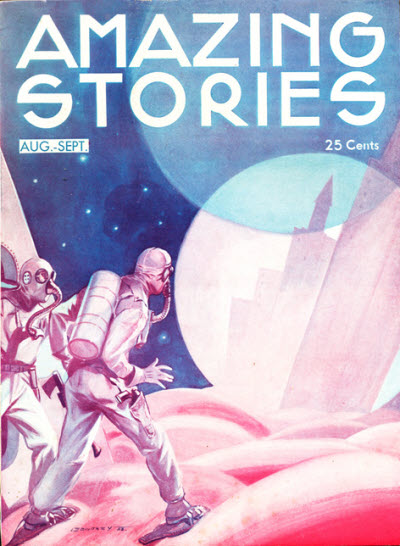
Amazing Stories, August-September 1933, cover by Leo Morey

This week starts a brief period where these explorations are going to be shorter, for many of these authors have little biographical information available.

In the 1972 anthology Clarion II, Damon Knight included an essay entitled “Goodbye, Henry J. Kostkos, Goodbye,” using the author, along with J. Harvey Haggard, as an example of an author he once read and was invested in, but whose name no longer meant anything to modern readers. At the time, both Kostkos and Haggard were alive (Haggard would be alive for another 29 years).

Henry J. Kostkos was born on June 11, 1900.

Kostkos and his wife, Mary, had two children, Miriam and Maureen. Kostkos worked for Western Electric as an electrical engineer as well as for Bell Labs in Chicago and Ohio. He worked on display mechanisms developed by Bell Labs for their associated telephone companies. At various times, he ran his own contracting business in New York and in Chicago.

Read More Read More

Why the Hell Am I Running Another Uncanny Magazine Kickstarter?

Why the Hell Am I Running Another Uncanny Magazine Kickstarter?

Uncanny Magazine cover collage Year 13 (issues 67, 68, and 72). Covers by Paul Lewin, Katy Shuttleworth, and Galen Dara.

This wasn’t my original plan for this guest post. The day before writing this, I was interviewed for the Functional Nerds podcast. During the interview, cohost Tracy Townsend brought up my recent Uncanny Magazine editorial where I said, “Nobody would call a yearly referendum about whether or not your business should exist a stress-free process.” Tracy wanted to know why I kept doing this if that’s the case.

So, why the hell am I running another Uncanny Magazine Kickstarter?

Read More Read More

Into the Weird: Weird Tales, March 1923 (Volume 1, Number 1) Part 2

Into the Weird: Weird Tales, March 1923 (Volume 1, Number 1) Part 2

Weird Tales volume 1 number 1 boasts 26 separate pieces of fiction, one of which is continued in the next issue. As you’d expect from an anthology, some stories are better than others. None reach the heights of the fiction the magazine would publish later. But a few are at least interesting in their own right.

I’m going to look here at each story, which means this post is going to run long. After I’m done going piece-by-piece, I’ll write about the collective effect of the issue, and how it reads as a whole. But there are over 100,000 words of fiction to discuss before I get there.

Three of the longest pieces lead off the issue. The second story is the cover feature, and the third story’s the first part of the serial. The opener, though, is “The Dead Man’s Tale,” by Willard E. Hawkins. So the first story of the first issue of Weird Tales lets us know right in its title to expect the unexpected: here dead men do tell tales.

Read More Read More

Into the Weird: Weird Times 1 — Architecture and Housing

Into the Weird: Weird Times 1 — Architecture and Housing

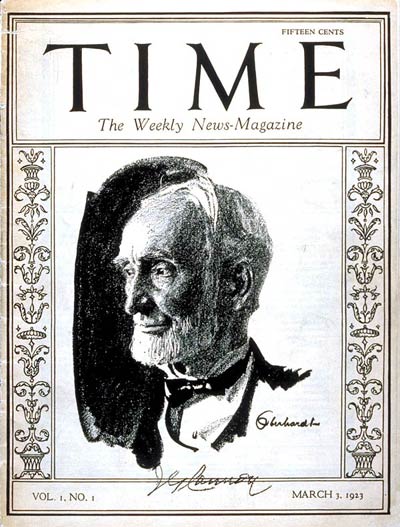
The first issue of Weird Tales went on sale in late February of 1923. It was cover-dated March, but that was a sell-by date. The issue would have arrived in stores on or about February 18, roughly a week before the first issue of Time magazine. In writing about early Weird Tales, I found it useful to think about that kind of context, and to look into that moment in history.

Partly that was because some aspect of a story would occasionally become clear once I understood specific terms or references or background. Mostly, though, I found an immersion in the time helped themes become clearer and habits of thought more obvious. In the hope that exercise might be useful for anyone else reading early Weird Tales or other fiction of the 1920s, I’ll be putting up a series of posts looking at different aspects of the era, reflecting on things I’ve learned or think I’ve learned. I hope these posts will also be useful as references I can link to in my reviews, rather than having to take the time to explain some 1920s-specific detail in a story.

Read More Read More

Dark Muse News: Mordschlag Sword and Sorcery Magazine

Dark Muse News: Mordschlag Sword and Sorcery Magazine

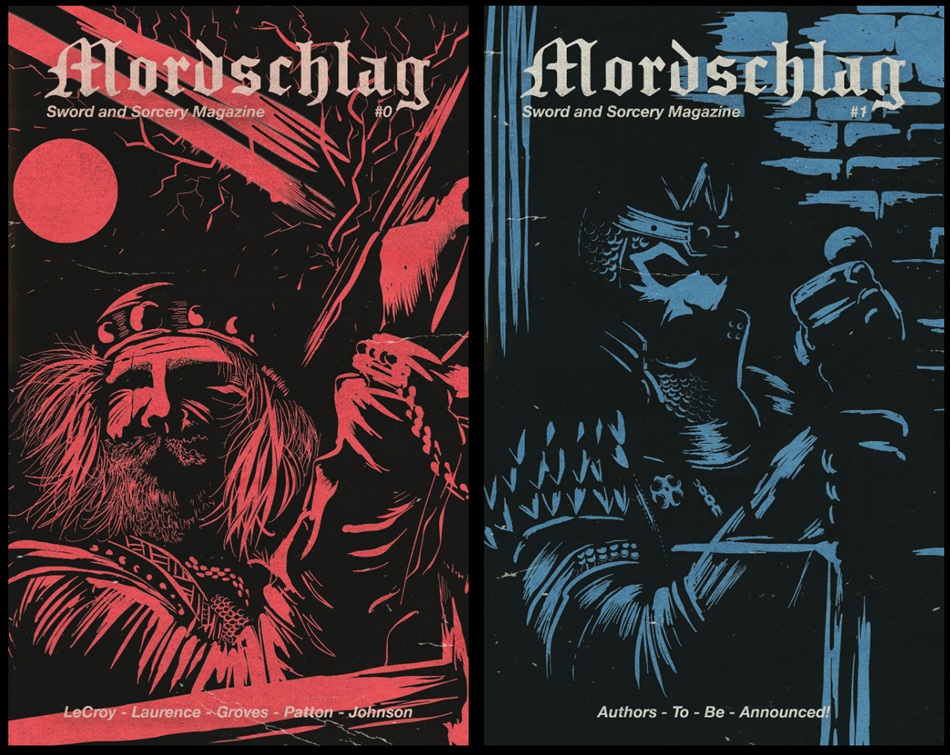
One of the most fun, unique aspects of Goodman Games’ Tales from the Magician’s Skull was the blending of Sword & Sorcery with Dungeon Crawl Classics statistics for the stories.  That’s a wonderful recipe that has not been reproduced, despite many super-cool S&S periodicals being available (Dark Moon Quarterly, Battleborn, New Edge S&S, Heroic Fantasy Quarterly, Swords and Sorcery Magazine, Savage Realms, Swords & Sorceries: Tales of Heroic Fantasy, etc. plus loads of anthologies).

Well, this Dark Muse News post has a Press Release for The Arcanist: Fantasy Publishing’s Backerkit campaign showcasing Mordschlag Magazine! Once again, S&S adventure and RPG gaming are combined. Every pocket-sized issue of Mordschlag promises new short fiction, an article analyzing the genre, and monster stat-blocks pulled straight from the tales and ready-to-play in ShadowDark RPG.

Read More Read More

Into the Weird: Weird Tales, March 1923 (Volume 1, Number 1) Part 1

Into the Weird: Weird Tales, March 1923 (Volume 1, Number 1) Part 1

Weird Tales March 1923. Cover by R. R. Epperly

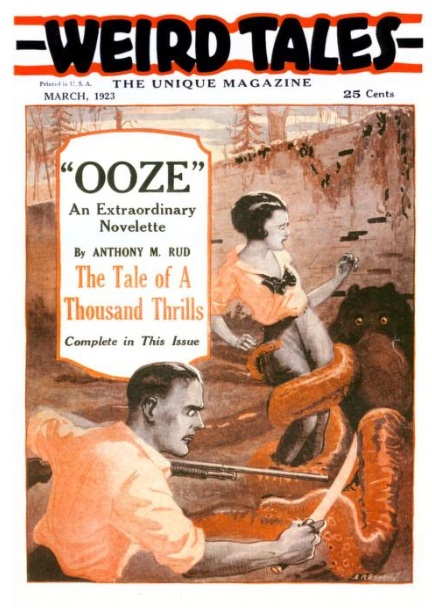
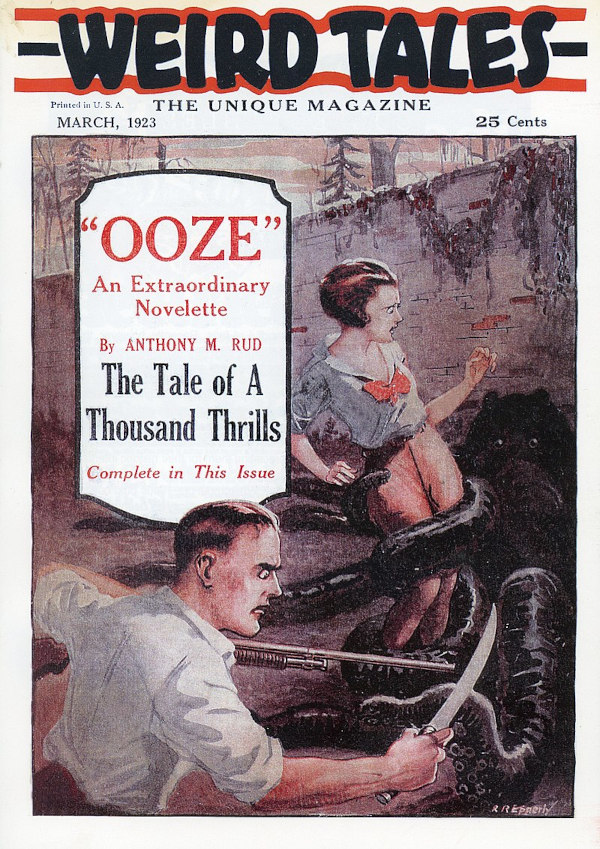
The first issue of Weird Tales landed on newsstands in late February of 1923. 192 pages long, it measured about 6 inches by 9, a standard size for a pulp fiction magazine. There were two different versions of the cover, perhaps due to a printing error; the illustration’s the same, a man with knife and gun fighting a shadowy tentacled monster which has grabbed a nearby young lady, but the colouring’s different. Either way, the cover advertised “‘OOZE’ / An Extraordinary / Novelette / by Anthony M. Rud / The Tale of A / Thousand Thrills.” Perhaps most intriguing, though, was the subhead below the logo: “The Unique Magazine.”

Thanks to modern technology it’s possible for anyone with an internet connection to flip through issue 1 of Weird Tales, if in a virtual format. In a later post I’ll write about the fiction the issue holds, but today I want to consider the magazine as an object (to the extent that’s possible working from a PDF). What do we see as we page through it? What signs of its times stand out? And what can be deduced about the editorial team’s vision?

Read More Read More

Into the Weird: An Introduction

Into the Weird: An Introduction


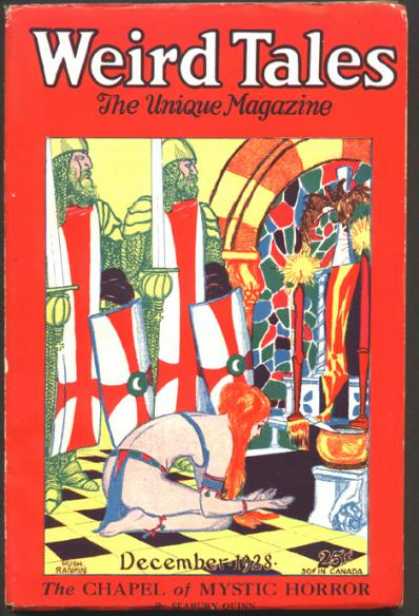
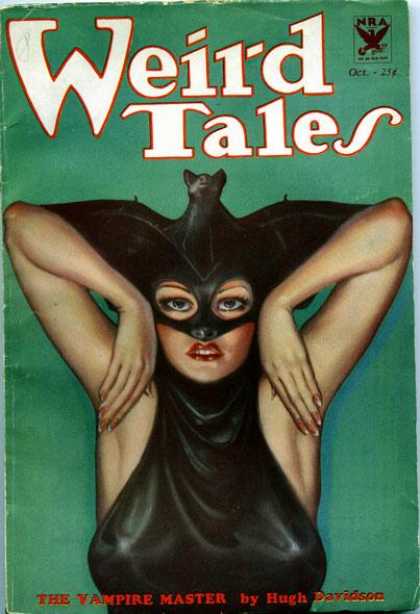
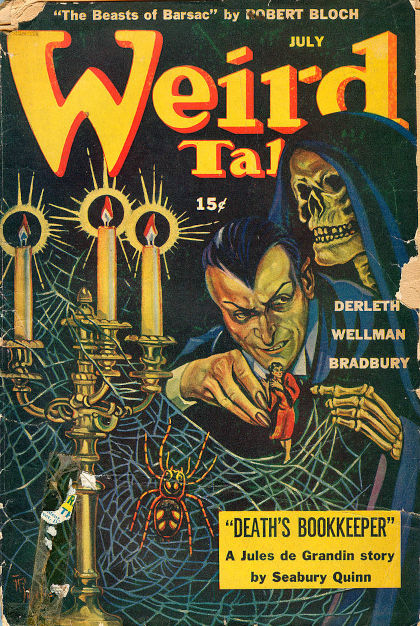
Weird Tales
, December 1928, October 1933, and July 1944. Cover
art by Hugh Rankin, Margaret Brundage, and A. R. Tilburne

A bit more than 103 years ago, the first issue of Weird Tales reached newsstands across North America. The magazine would be published consistently for over three decades, with the title revived sporadically ever since. The original Weird Tales would become a significant influence on the development of the fantasy and horror genres, and would lend its name to a subgenre of fantasy and a certain tone in fiction: the weird tale.

That entire first run of Weird Tales, ‘the unique magazine,’ is available at the Internet Archive. I thought it’d be an interesting project to look at it issue by issue, reading the magazine as it was published and discussing each issue as a whole. It was the venue for much of the fiction of H.P. Lovecraft and Clark Ashton Smith and Robert E. Howard, as well as a home for work by Robert Bloch, C.L. Moore, and Ray Bradbury, among many others. I wondered what it would be like to read those stories in the context of the other tales in the magazine by lesser-known writers; and to consider each issue as a package, a collection, with its cover and editorials and letters. And its ads; to look at the magazine holistically is to consider the many irruptions of its era into the experience of the fiction.

Read More Read More

A Tragedy and a Comedy: Murder Must Advertise by Dorothy Sayers

A Tragedy and a Comedy: Murder Must Advertise by Dorothy Sayers


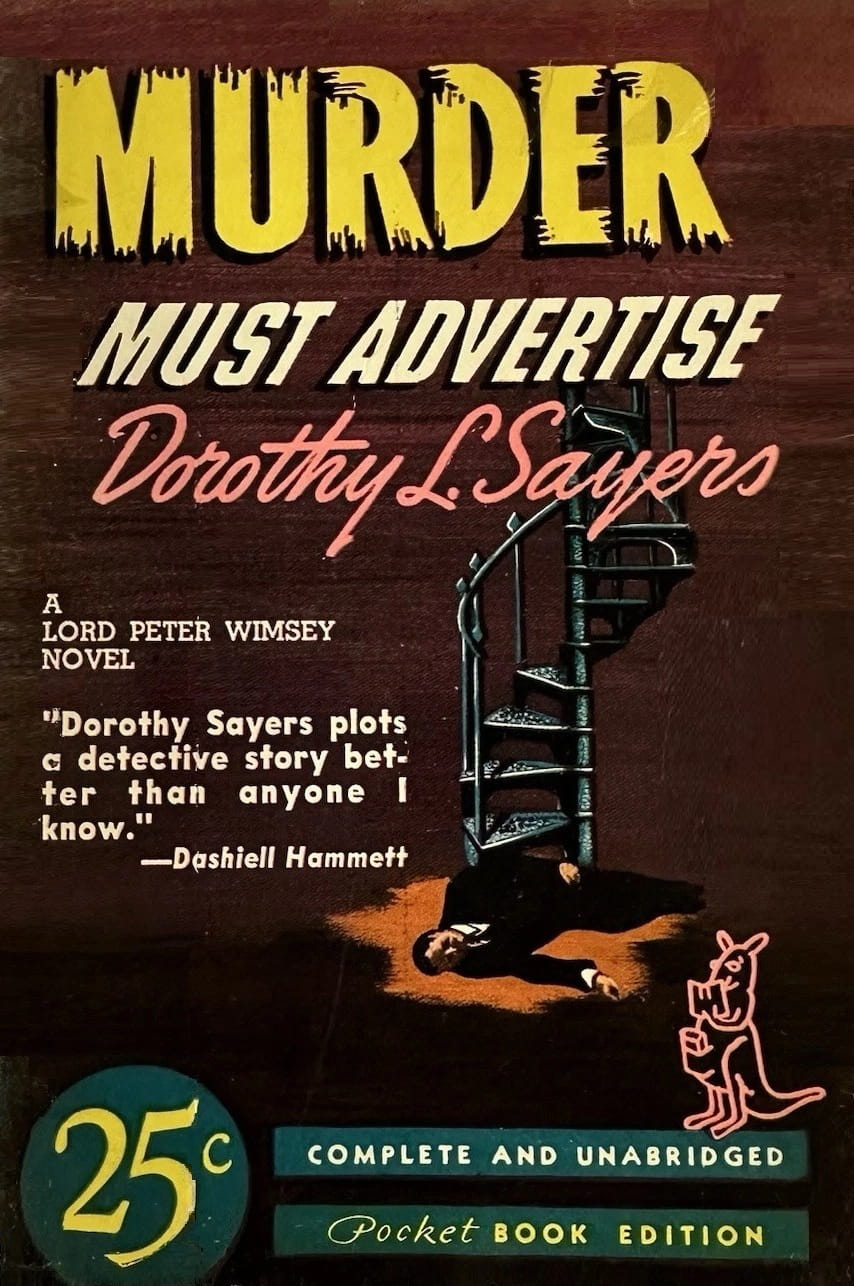
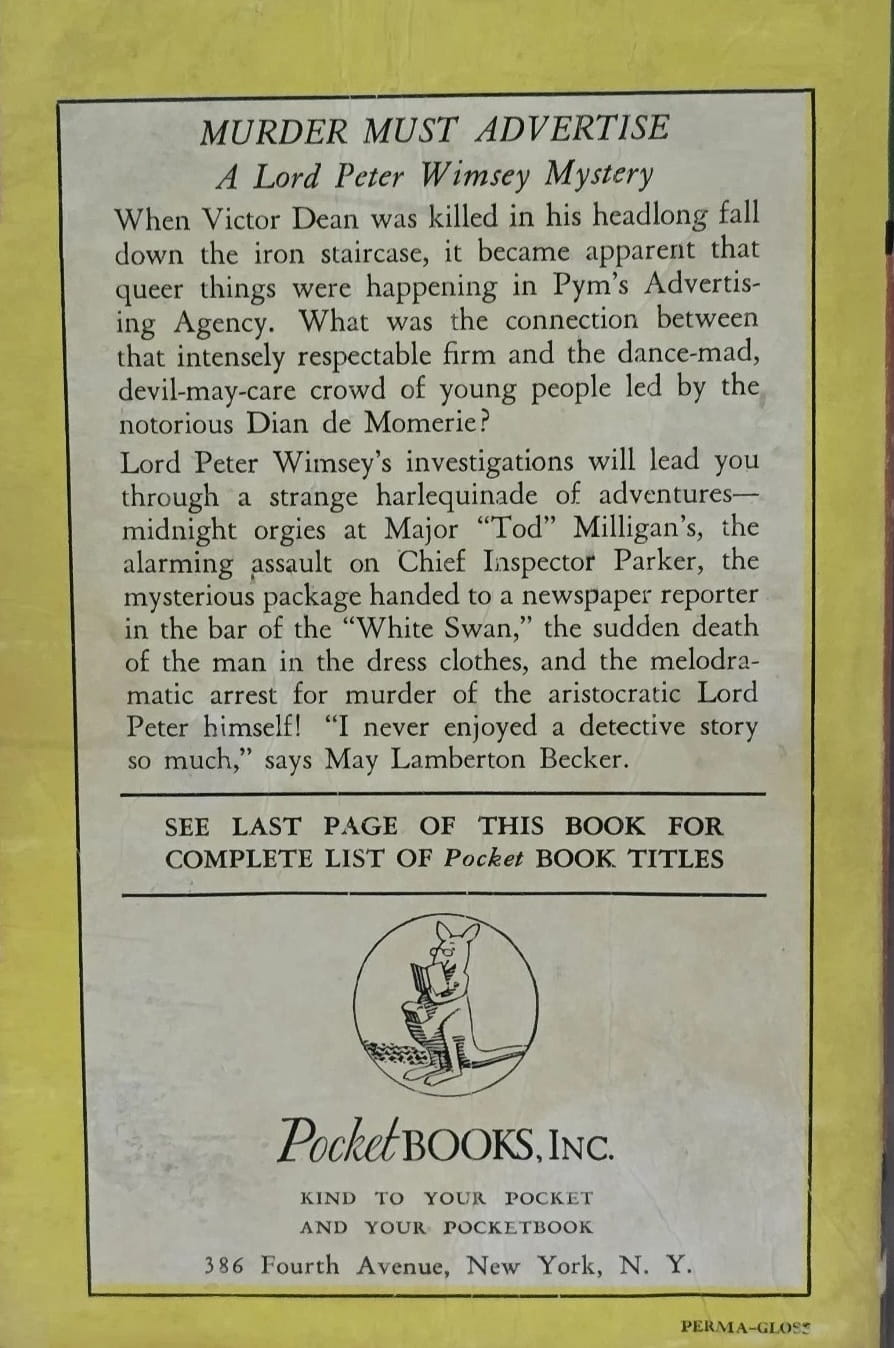
Murder Must Advertise (Pocket Books, 1940)

Mr. Tallboy’s eyes, roving negligently round, had fallen on Bredon’s index-card… Neatly printed on the card stood one word.

DEATH

In Murder Must Advertise, Dorothy Sayers takes murder mysteries in another new direction: not, this time, exploring an established subgenre, but hybridizing the mystery genre with what we would now call workplace drama, or sometimes workplace comedy. The setting is Pym’s Publicity, a successful advertising firm. Many incidents turn on problems in carrying out the work, friendships and tensions between staff members, and relationships with clients.

Read More Read More