Browsed by
Category: Sherlock Holmes

John Cleese Does Sherlock Holmes (and better, the first time)
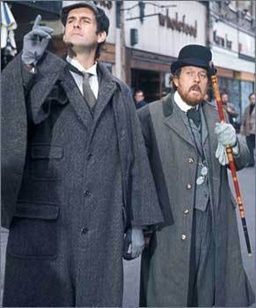
John Cleese Does Sherlock Holmes (and better, the first time)

I reinstalled Elder Scrolls Online, which is a rabbit hole I jump down periodically. I usually do side, and zone, quests. But when I decide to follow some of the main storyline, I am delighted to come across John Cleese’s Sir Cadwell. He is the a rather mad soul shriven who guides the characters in Cleese’s inimitable style. Every scene with Cleese is fun, and he also plays a part in one of the large DLCs.

Here’s a short ‘official’ video on the creation of the character. I think you’ll get the feel of this erratic character. Includes Cleese talking about it.

It’s a blessing he is still with us; active at 86.

Some folks are aware of his The Strange Case of the End of Civilization as We Know It (discussed at the end of this post). I set out to write about that awful Sherlock Holmes parody movie. I wrote this essay instead. And ten years later, I still have no interest in re-watching and writing an essay on Strange Case. It is just too dumb.

However, I do think folks who like Cleese, should give a watch to a better Sherlock Holmes project he did four years before Strange Case. It’s out there on YouTube. And while it’s not brilliant, I found it entertaining Cleese. And I will always watch something John Cleese, which makes me smile. He’s genuinely a feel-good kind of guy. So, read on about Elementary: My Dear Watson.

John Cleese is best known, of course, as the sardonic Q opposite Pierce Brosnan’s James Bond in Die Another Day. He’s not as well remembered for his role in the British comedy troupe, Monty Python. I’m kidding!

On January 18, 1973, the final episode of Python’s third season aired. It was Cleese’s last episode with the group, which would continue on for one more season. That very same day, Cleese’s next project aired – Comedy Playhouse Presents: Elementary, My Dear Watson. It was produced by Barry Took, who had brought the Python members together.
Read More Read More

The Best of Bob: 2025

The Best of Bob: 2025

Happy 2026! Let’s kick butt for another year. Or at least, limp to the finish in 52 weeks. I really enjoy ‘meeting’ with my friends – and some strangers – here at Black Gate every Monday morning. Keep checking in, and let’s keep the discourse going on things we love. Or at least that catches our eye. Black Gate really is a family. My time writing here has almost been longer than my marriage was!

I continued to evade the Firewall at Black Gate (no, I do not earn a cent a word every time I mention ‘Black Gate.’ like some kind of blogging Pulpster), so I showed up every Monday morning. I had a much harder time conning other folks into writing my column for me – they’re catching on. Drat! So, I had to do my own work this past year.

Here are what I thought were ten of my better efforts in 2025. Hopefully you saw them back when I first posted them. But if not, maybe you’ll check out a few now. Ranking them seemed a bit egotistical, so they’re in chronological order. Let’s go!

Read More Read More

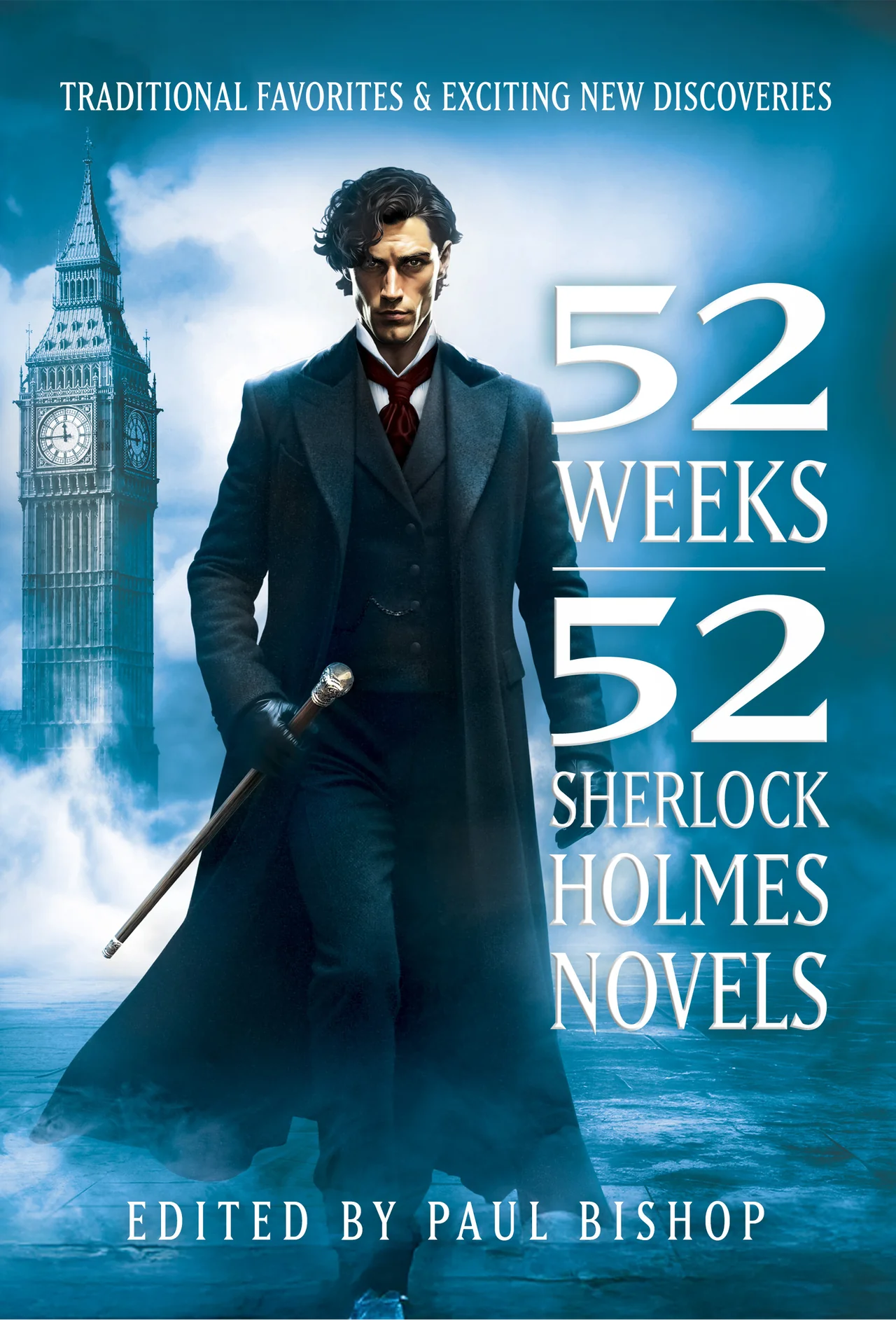
The Public Life of Sherlock Holmes: 52 Weeks: 52 Sherlock Holmes Novels – Kurland’s The Infernal Device

The Public Life of Sherlock Holmes: 52 Weeks: 52 Sherlock Holmes Novels – Kurland’s The Infernal Device

So, Paul Bishop is a friend of mine, and he wrote the very first post in Black Gate’s award-nominated Discovering Robert E. Howard. He talked about Howard’s boxing stories. Before those Pulps dried up, Howard wrote prolifically for them, with Sailor Steve Costigan his most popular creation.

Paul is a major Westerns guy, and with Scott Harris, he put together 52 Weeks: 52 Western Novels, in which a slew of folks wrote about their favorite Westerns. It’s a cool format, and 52 Weeks: 52 Western Movies, and 52 Weeks: 52 TV Westerns, followed. The ’52’ number flows nicely with reading one a week, right? I have read the Novels, and Movies, books, and I think they’re cool for Westerns fans.

Paul reached out to me last year, and asked if I was interested in contributing a chapter to a 52 Weeks: 52 Sherlock Holmes Novels, project. Write about a non-Doyle pastiche? Heck yeah!!! In the end, I wrote four of them, so I’ve got a good 7.6% of the reviews. I covered Hugh Ashton’s The Death of Cardinal Tosca; John Gardner’s The Return of Moriarty; Michael Kurland’s The Infernal Device: and Frank Thomas’ Sherlock Holmes & The Sacred Sword.

We all followed the same format; well, we were supposed to. I know I did. So, to help promote this cool book, which came out last Friday (paperback and digital), here’s the first of the four I wrote. I’ve long been a fan of Kurland’s Moriarty books, and this is where it all started for me with him. Enjoy!

Read More Read More

’24? in 42′ with…Bob Byrne????

’24? in 42′ with…Bob Byrne????

Jason Waltz kicked off season two of his 24? in 42 podcast interviews with your very own Monday morning columnist. The prior installment was with Malazan’s Ian C. Esslemont, so I’m in pretty good company here.

It should not surprise you that I was all over the place, covering Robert E. Howard, Michael Moorcock, Columbo, books on writing and screenwriting, Encyclopedia Brown, the Civil War, Tolkien, The Constitutional Convention of 1787, Lawrence Block, Steven Hockensmith, Norbert Davis, and much more.

Read More Read More

Eleven Years of Monday Mornings with Bob

Eleven Years of Monday Mornings with Bob

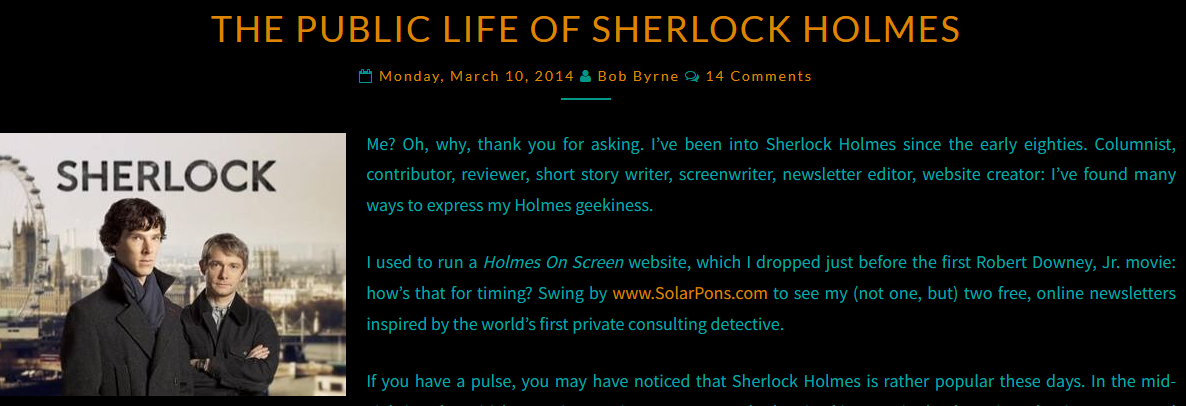
Wow. Eleven years ago today, on March 10, 2014, I became an official Black Gate blogger. The Public Life of Sherlock Holmes kicked off a three year run, bringing a mystery presence every Monday morning. I roamed off topic a bit – but NOTHING like I do now. I mean, did you read last week’s baseball post?

Encouraged by my buddy William Patrick Maynard (an established Black Gater), I went from some uknown guy commenting on other people’s posts, to a moderately interesting weekly columnist. And every World Fantasy Award-winning website, with an amazing roster of bloggers, needs a mystery column, right???

I talked about joining Black Gate in my chronicle of what passes for my writing career: Ya Gotta Ask.

Read More Read More

The Best of Bob: 2024

The Best of Bob: 2024

Happy 2025! Let’s kick butt for another year. Or at least, limp to the finish 52 weeks. from now. I take what I can get. I started a Best of Bob feature last year. And while it may seem I’m constantly finding folks to write my column for me (hey – it’s a gift!), some of you Black Gaters may be surprised that I occasionally actually write my own essays for the Monday morning slot. John O’Neill is too savvy an editor for me to completely fool him for over decade.

So here are what I thought were ten of my better efforts in 2024. Hopefully you saw them back when I first posted them. But if not, maybe you’ll check out a few now. Ranking them seemed a bit egotistical, so they’re in chronological order. Let’s go!

1) Roaming the Old West, with Holmes on the Range (February 5, 2024)

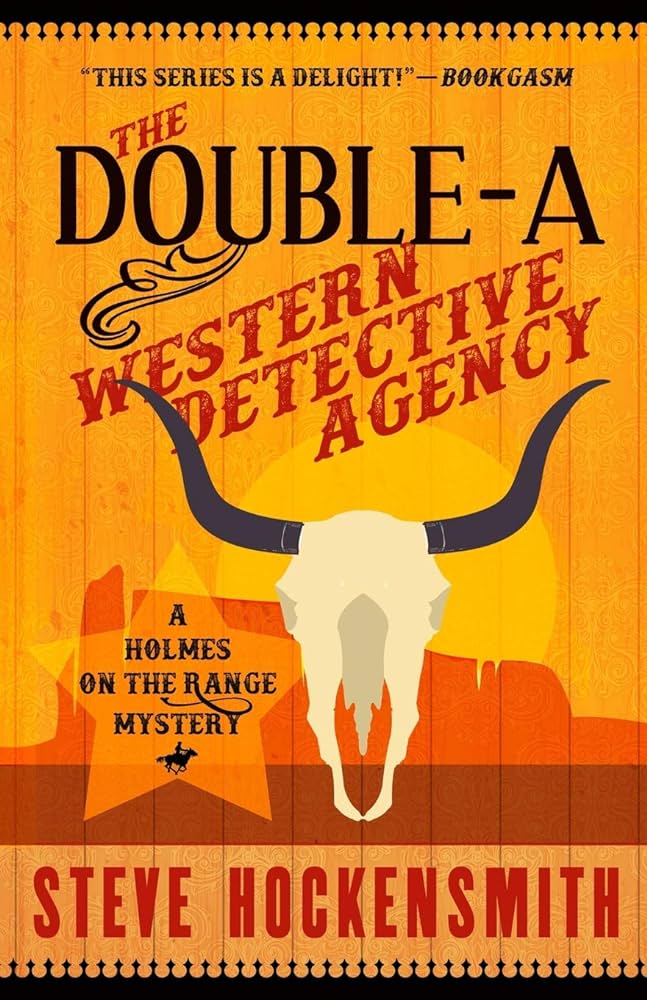
It might look like I just throw something together every week (and looks aren’t always deceptive). But when I can find the time, I love putting together something special. And after reading/re-reading the entire series, I really nailed a three-part series on Steve Hockensmith’s Sherlock Holmes influenced, Old West mysteries about cowboy brothers Old Red and Big Red.

I followed up a pretty solid series overview, with the first-ever comprehensive chronology! And then, we rounded it out with a great Q&A from Steve himself. This is a terrific series: a great read, and solid on audiobook. Late in the year, the first two novels in a spin-off series that’s more Old West adventure than Holmes-flavored, came out. I’m looking forward to more of all aspects of the Double-A Western Detective Agency.

Read More Read More

The Public Life of Sherlock Holmes: The Final Adventures of Sherlock Holmes (Haining)

The Public Life of Sherlock Holmes: The Final Adventures of Sherlock Holmes (Haining)

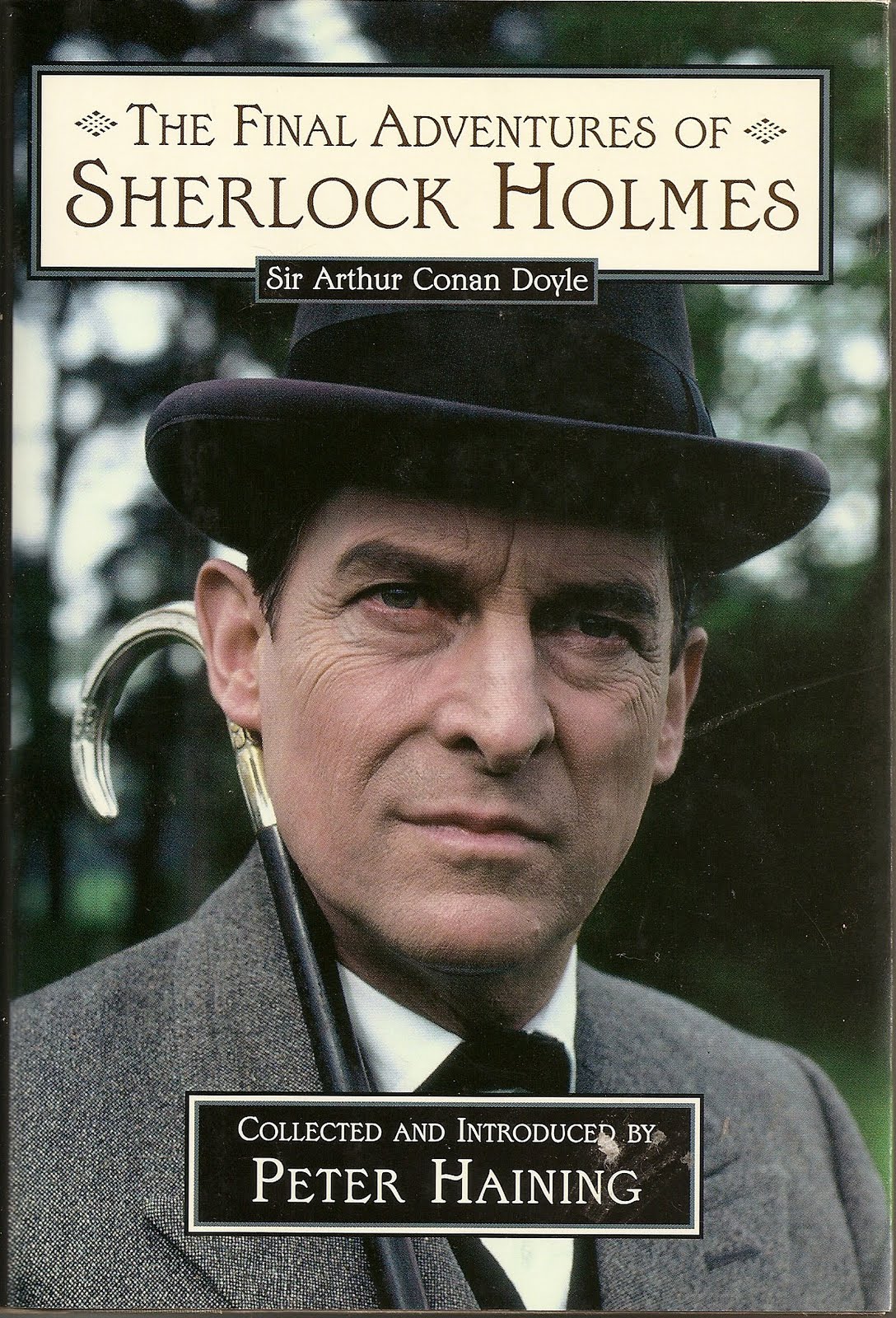
Peter Haining was a notable Sherlockian who compiled/edited several useful Sherlock Holmes books.

Back around 2005 or so, an article in the Wall Street Journal was about Barnes & Noble’s in-house publishing imprint. They have been reproducing classic works for years and selling them at affordable prices. But they range father afield than that, and my Sherlockian bookshelf includes several of their titles, such as The Sherlock Holmes Companion, The Lost Adventures of Sherlock Holmes and The Final Adventures of Sherlock Holmes.

The latter was the main source for the Doyle on Holmes series. The Final Adventures of Sherlock Holmes is a collection of stories, plays, and essays about Holmes that are not part of the Canon but certainly make nice supplementary reading. An excellent addition to any Holmes library.

It is somewhat similar to the out-of-print and often difficult to find Sherlock Holmes: The Published Apocrypha by Jack Tracy. Both books include the “almost Sherlock Holmes” stories and plays that don’t fit in the Canon, but are certainly in the neighborhood. I wrote about that one, here.

Read More Read More

The Public Life of Sherlock Holmes: Doyle’s Favorite SH Adventure (Doyle on Holmes)

The Public Life of Sherlock Holmes: Doyle’s Favorite SH Adventure (Doyle on Holmes)

And it’s another essay by Arthur Conan Doyle about his famous detective. This was also the last one he wrote, appearing in The Strand in March of 1927.

The fifth and final short story collection, The Casebook of Sherlock Holmes, was due out shortly.

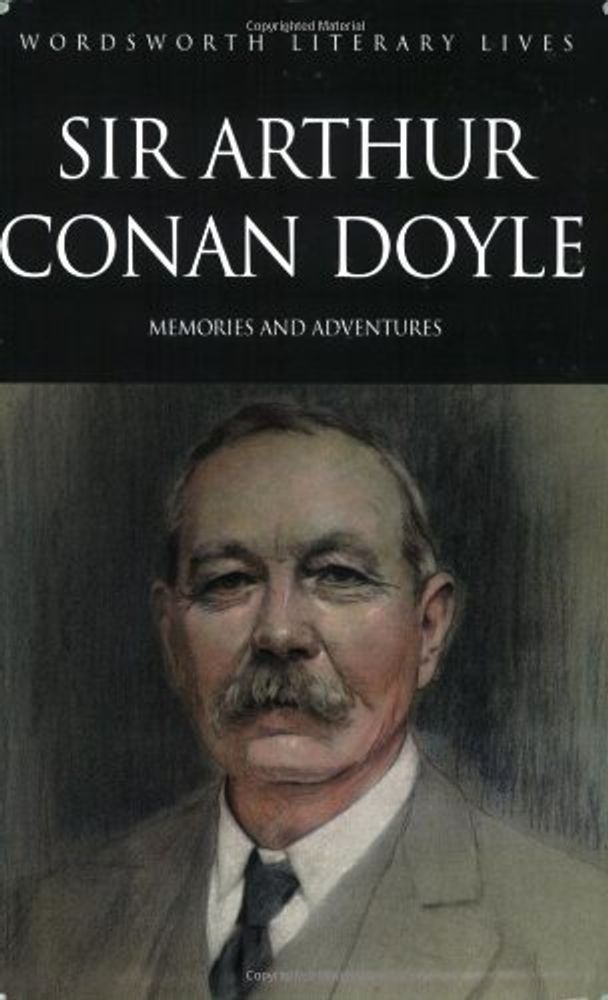
He wrote a piece to announce a contest for readers of The Strand to name their twelve favorite Holmes stories. He would make his own list and see how they compared. The response with the closest list to his would win a $100 check and an autographed copy of his autobiography, Memories and Adventures. One hundred more people would win autographed copies of the autobiography (no check).

There are actually four components to this. The announcement, written by someone at The Strand, was A Sherlock Holmes Competition.

Doyle’s accompanying essay was Mr. Sherlock Holmes to His Readers.

In June, someone at The Strand wrote The Sherlock Holmes Prize Competition: The Result.

Which was accompanied by Doyle’s essay, How I Made My List.

So Doyle wrote an essay to announce the contest, and another a few months later, to name his favorite stories. Each of those two essays was accompanied by some in-house text, with its own title.

Clear as mud? Okay, let’s go!

Read More Read More

The Public Life of Sherlock Holmes: The Case of the Inferior Sleuth (Doyle on Holmes)

The Public Life of Sherlock Holmes: The Case of the Inferior Sleuth (Doyle on Holmes)

The late Nis Jessen’s ‘A Study in Scarlet’ may be my favorite illustrated Holmes. It’s wonderful.

Welcome to week four of Doyle on Holmes. We started with The Truth Behind Sherlock Holmes. Then, it was Some Personalia about Sherlock Holmes. Last week, A Gaudy Death. This week, it’s a poem war featuring Sir Arthur! All four of these essays can be found in Peter Haining’s The Final Adventures of Sherlock Holmes. It’s a good book, and the only partial replacement I’ve found for Jack Tracy’s cornerstone book, Sherlock Holmes: The Published Apocrypha.

The Science of Deduction is the second chapter of A Study in Scarlet – the first Sherlock Holmes story. Holmes had explained the observations and inferences that had led to the famous line, “You have been in Afghanistan, I perceive.” Watson then – for the first, but certainly not the last, time – says it’s a simple matter. Watson then tells Holmes that he reminds him of Poe’s Dupin, and he didn’t know such existed in real life. Holmes sets him straight:

“Sherlock Holmes rose and lit his pipe. ‘No doubt you think that you are complimenting me in comparing me to Dupin,; he observed. ‘Now, in my opinion, Dupin was a very inferior fellow. That trick of his of breaking in on his friends’ thoughts with an apropos remark after a quarter of an hour’s silence is really very showy and superficial.

It’s Elementary – Bearing in mind this the very first story, having Holmes say that is pretty funny. Since he would do exactly that with Watson, more than once.

Read More Read More

The Public Life of Sherlock Holmes: A Gaudy Death (Doyle on Holmes)

The Public Life of Sherlock Holmes: A Gaudy Death (Doyle on Holmes)

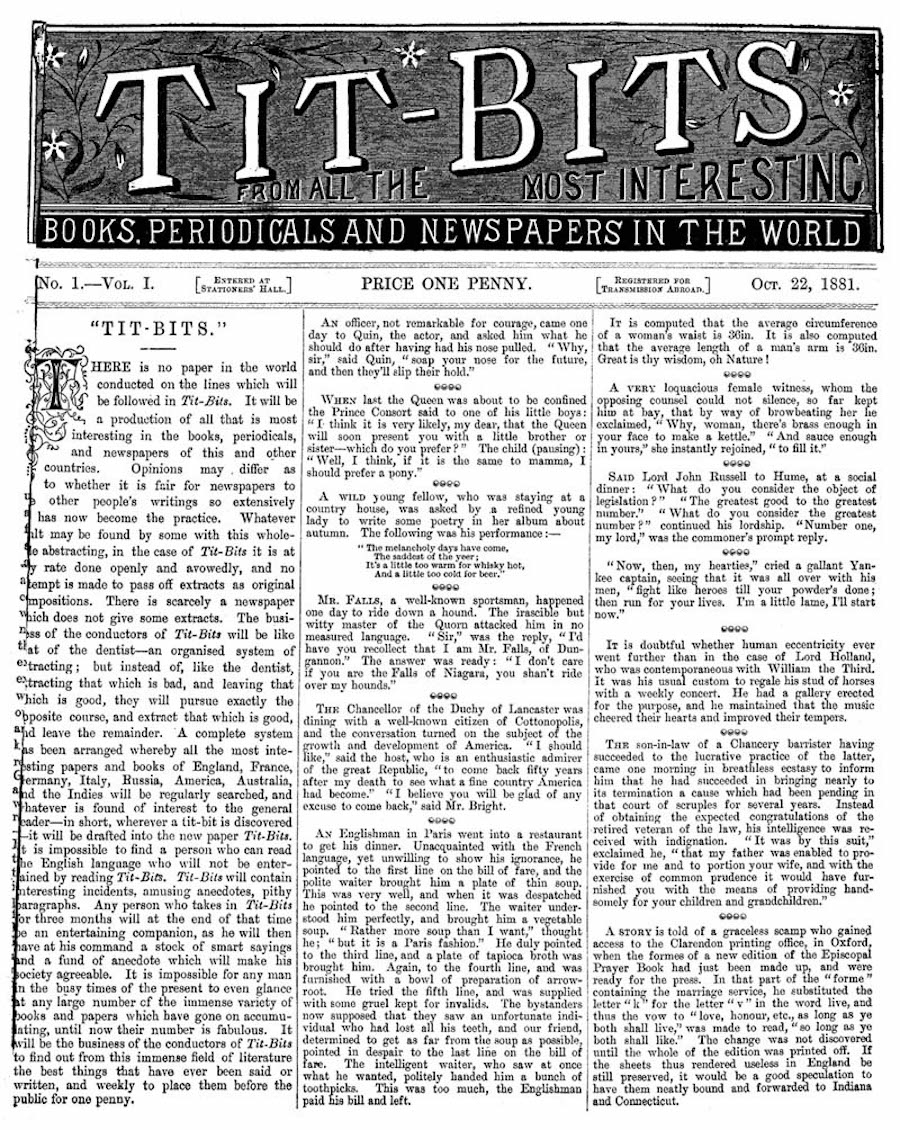
This essay precedes the two prior ones in our series, having appeared in Tit-Bits in December of 1900. The aptly named Tit-Bits was a potpourri of ‘stuff’ which was published by George Newnes, who also owned The Strand.

Wanting to make a big to-do about their thousandth issue, Newnes used his unique position to secure an ‘interview’ essay written by the publicity-shy Doyle. Holmes had gone over The Reichenbach Falls and Doyle was resisting pressure to bring him back.

To interview Dr Conan Doyle, the creator of Sherlock Holmes, is not an easy matter. Dr. Doyle has a strong objection to the interview, even though he has no personal antipathy to the interviewer. Considerations, however, of his long and friendly relationship with the firm of George Newnes Ltd, in the pages of whose popular and universally read Strand Magazine Sherlock Holmes lived, and had his being, overcame Dr. Doyle’s reluctance to be interviewed, and he consented to give the following particulars, which will be read with interest by his admirers all over the world.

It’s Elementary – Man, that is one serious run-on sentence above!

“Before I tell you of Sherlock Holmes’ death and how it came about, it will probably be interesting to recall the circumstances of his birth.”

So does Arthur Conan Doyle open this essay, seven years after readers had been shocked by “The Final Problem.” He reminds the reader it began with A Study in Scarlet, with Holmes suggested from “a professor under whom I had worked at Edinburgh, and in part by Edgar Allen Poe’s detective, which, after all, ran on the lines of all other detectives who have appeared in literature.”

It’s Elementary – It’s interesting to me that Doyle does not name Dr. Joseph Bell here, though that’s clearly who he is referencing. He cites Poe’s Dupin as an influence. That was mentioned in the first essay, The Truth About Sherlock Holmes. And that’s a main item in next weeks’ post, The Case of the Inferior Sleuth.

Read More Read More