Beneath Ceaseless Skies 194 Now Available
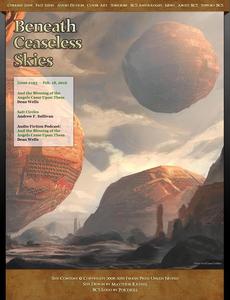
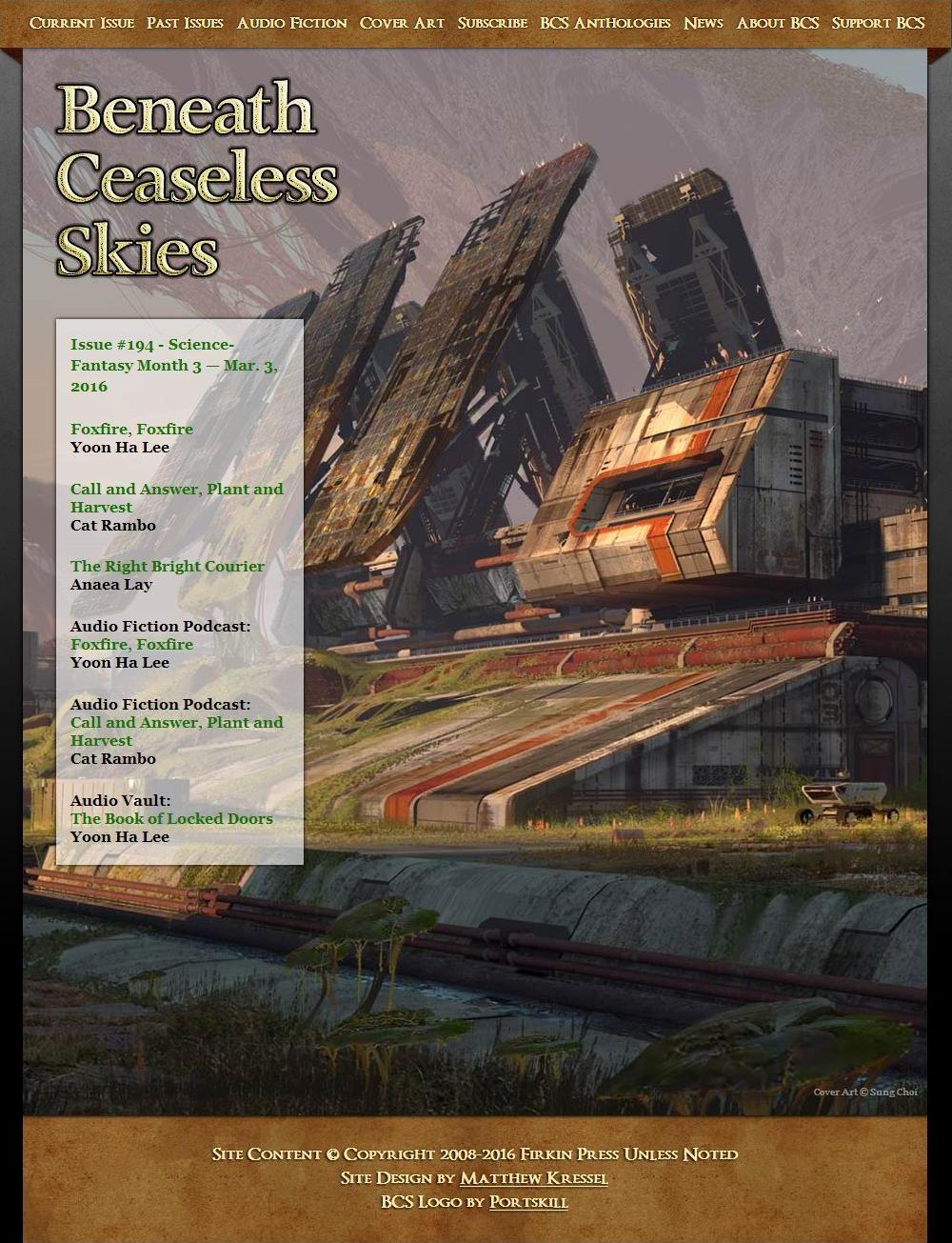 Beneath Ceaseless Skies has changed up its cover art again. I quite like the new art, “Research Lab” by Sung Choi (see the full piece here), which covers their third Science Fantasy Special Issue.
The March 3rd BCS is a special double-issue featuring a bonus story, a bonus podcast, and a science-fantasy episode of the BCS Audio Vault podcast. It contains original short fiction by Yoon Ha Lee, Cat Rambo, Anaea Lay, and an Audio Vault reprint by Yoon Ha Lee.
“Foxfire, Foxfire” by Yoon Ha Lee
Even in human-shape, I had an excellent sense of smell. I had no difficulty tracking the pilot. She lay on her side in the lee of a chunk of rubble, apparently asleep. The remains of a Brick Ration’s wrapper had been tossed to the side. She had downed all of it, which impressed me. But then, I’d heard that piloting was hungry work.“Call and Answer, Plant and Harvest” by Cat Rambo
Today her sleeves are sewn with opals and moonstones and within their glimmer here and there on the left sleeve, glitters another precious stone, set in no particular order, random as the stars. Her skirt and bodice are aluminum fish-scales, armored though she expects no fight. Her only weapon is her own considerable wit.