Into the Weird: Weird Times 2 — Cars, Roads, and Travel
This post is the second in a series reflecting on the world of 1923 as a background to early issues of Weird Tales. Imagine that you’re an American in February of 1923, and you’re taking a walk to the newsstand to buy the first issue of a new pulp fiction magazine. What sort of things will you see?
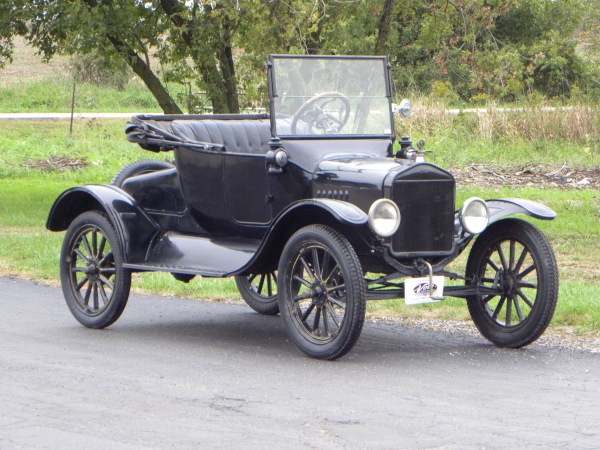
Probably the first thing you’ll notice as you set out into the street is the street itself, and its contents. The motor car has begun to change urban life. Since Ford introduced the Model T fifteen years ago the price has steadily dropped; there were almost 11 million registered passenger automobiles in the United States by the end of 1922, and will be just shy of 13.5 million by the end of 1923. Cars are registered, incidentally, and license plates have been required since 1918, but most states do not issue driver’s licenses; half the states will require licenses by 1930, and as late as 1935 only 39 states will mandate licenses and not many of those will require passing a test. In 1923 Model Ts are still the most common make of car, though competing models are about to cut into its sales. Famously, you can get a Model T in any colour, so long as it’s black; Ford used to offer a range of colours, but in 1914 streamlined production by cutting back to a particular type of black paint that was cheap and fast-drying. Model Ts do not at this time have shock absorbers, windshield wipers, rear view mirrors, bumpers, or an instrument panel for a speedometer (not a standard feature) or gas gauge.
(Some disclaimers before we go further: I am neither American nor a historian, though I’ve written pop history in the past. These posts are reflections on things I’ve read about the 1920s, and things I’ve come to think about the time; things I find interesting, and things I think underlie the fiction in Weird Tales. If I repeat here things that are common knowledge among Americans, my apologies; I can only say they seemed relevant to me as a foreigner.)
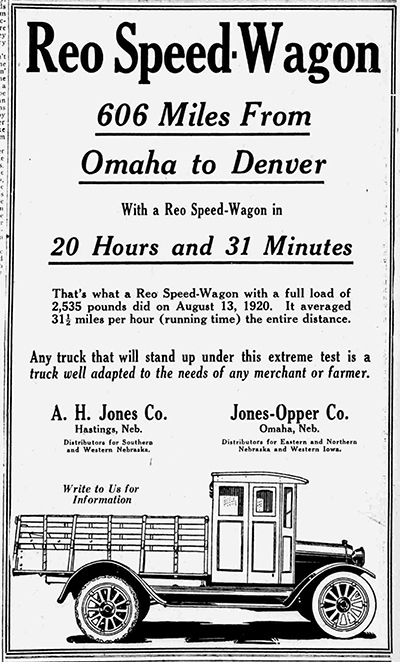
Light trucks are in increasing use, among the most popular being the REO Speed Wagon, first introduced in 1915 and which will come to be considered by some as the forerunner of pickup trucks. Diesel trucks will debut late in 1923. Four-wheel-drive trucks established their usefulness in the Great War with the Jeffery Quad (later the Nash Quad), which in later decades will come to be seen as an ancestor of the Jeep. Gas-powered tractors are slowly becoming more common; in 1920 3.6 percent of American farms had a tractor, which will rise to 13.5 percent in 1930. Modified tractors are being used as snowplows, significantly aiding winter travel in many places, including rural areas of the heavily-populated northeast.
Motorcycles, which started in the 19th century as bicycles with engines, have developed rapidly. The War demonstrated their utility; a 1919 government report noted that “The need of the Army for motorcycles, side cars and bicycles was so tremendous that for many months during the war practically the entire output of these vehicles most suitable for Army use was taken by the Government.” The American Harley-Davidson company is the largest manufacturer in the world, bolstered not only by their success during the war, but by their decision to enter motorcycle races in 1914; their team, which soon became known as the “Wrecking Crew,” was immediately and incredibly dominant. (In 1920 the team started a habit of taking their mascot, a pig, on a victory lap after every win, and from this eventually Harley-Davidsons will gain the nickname ‘hogs.’)
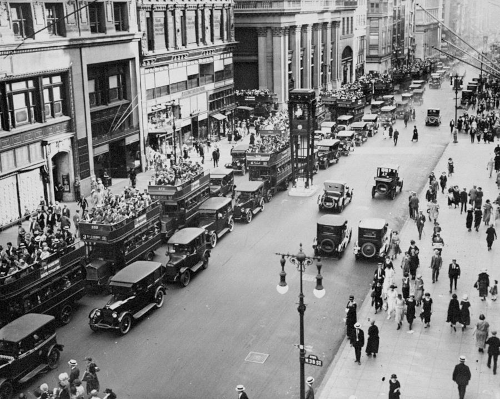
In 1923 horses still share the road with motorised vehicles, and as late as 1927 there will still be 50,000 horses in New York City, so you keep an eye out for droppings when you cross the street. But the internal combustion engine is taking over. In 1912 a New York Times reporter counted traffic passing through Times Square and found only five of 48 vehicles were drawn by horses. (12 were taxis, but in 1923 New York cabs have yet to be limited to the colour yellow; there are red and green taxis, black taxis, chequered taxis, and expensive lavender taxis. Some, in New York and other cities, are ‘jitneys,’ unlicensed cabs who don’t pay taxes or follow regulations.) In 1917 a survey in Pittsburgh counted twice as many gas cars as horse-drawn; in 1927 another survey will find 50 times as many. February of 1923 has seen the last horse-drawn fire engines in Chicago retired from service.
With cars have come or will come a host of other things. Traffic lights were introduced in 1920; in 1923 there are none in New York City. Recent years have seen the creation of stop signs and gas stations, and 1925 will see the first motel. There are now traffic jams consisting of cars instead of horse-drawn vehicles. Some had hoped that horses being replaced on the road by speedier automobiles would make traffic congestion a thing of the past; this is not happening. Worse, deaths on the road are increasing. 1925 will see 20,000 people die in car accidents, a staggering amount given the number of cars on the road and number of miles driven.
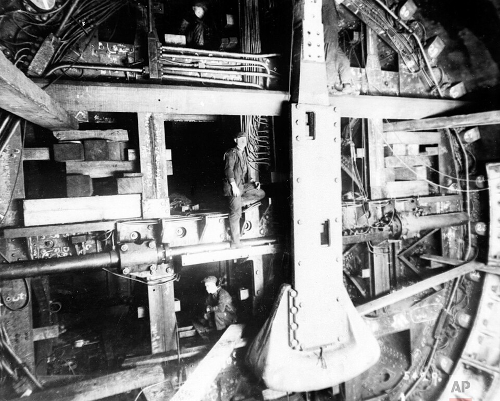
Accompanying and allowing the spread of the car, roads paved with macadam are becoming more common. But by one estimate 90 percent of the roads across the country are still unpaved. In 1922 there were less than 250 miles of paved road in the entire state of Tennessee; in 1927 there’ll be above 4000. The Lincoln Highway already runs from New York to San Francisco, but only the eastern half’s paved — in Nevada, it’s described as “largely hypothetical.” When in 1912 two journalists became the first people to drive across Canada, from Halifax to Victoria, it took them 52 days. Even in cities, one researcher has said that “[a]s late as 1923 small cities often had many more miles of dirt streets than of pavement, and a number of larger cities admitted that most of their pavement was water-bound macadam.” Along with road improvements, bridges are being built and infrastructure developments are in progress; New York’s Holland Tunnel, for example, was begun in 1920 and will open in 1927 — until which time, cars coming to Manhattan from the west have to take a ferry across the Hudson River.
Worth noting that there are typically other means to get around in a city. Some cities have a few elevated train tracks, unpopular due to noise and the shadows they cast on streets below. Four metropolitan areas have subways. And there are electric trolley cars, which in 1923 are quite common; the decade of 1913 to 1923 is in fact the peak of public transit in the United States, excluding some years of World War II when gasoline and tire rationing affected car use, and 85 percent of transit rides are taken on streetcars. The first attempt at a motorised bus appeared in New York in 1905, but the first bus close to modern design debuted in Oakland in 1920 and is being rapidly adopted across the country. Intercity buses will follow, and the first coast to coast service will appear in 1928, going from Los Angeles to New York in five days and 14 hours, with 132 stops in-between.
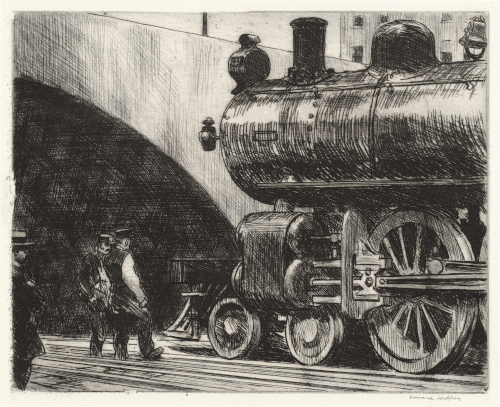
If in 1923 you think about means of cross-country travel, you probably think of the train. Laura Byrne Paquet writes in her social history of travel Wanderlust that “The years from 1880 to 1920 were the heyday of American railroads. In 1910, for example, about 95 percent of all intercity traffic travelled by rail, and by 1920 Americans were taking 1.2 billion passenger trips a year.” At the end of 1920 there were over 250,000 miles of rail in the United States, something like 100,000 more miles than there would be in 2026. 1000 train companies employed one and a half million people. The Pullman company, which operated sleeping cars for around four dozen railways, was the largest hotel chain in the world, lodging 40,000 people a night. The busiest decade for rail in the United States was 1910-1920, with an average annual traffic of 38.1 billion passenger miles.
In 1923 it still takes three days or so to cross the continent, with no air conditioning. And, while it will take a few years for the trend to become clear, rail traffic is beginning to dip as the automobile becomes more common. Still, there’s a glamour to the train. The rich can travel in luxury, or charter private cars.
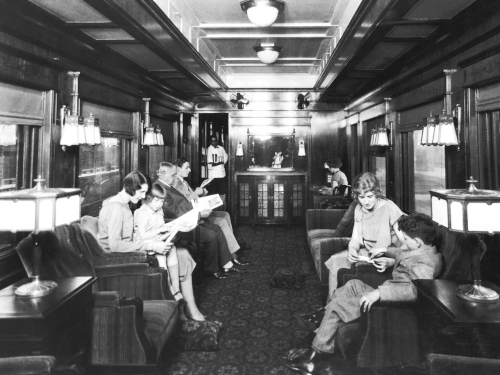
The system of international passports is still developing, boosted by the Great War. In 1920 the League of Nations recommended an international standard for passports that would resemble modern booklets. But the United States, not a member of the League, stopped requiring passports for international travel in 1921, when Woodrow Wilson’s presidency ended. Since other countries do require passports, Americans frequently request them as new affluence leads to increased leisure travel and tourism. Women in particular are requesting more and more passports; while 95 percent of passport applicants in the mid-19th century were men, more than 40 percent of applicants in 1923 were women. (The State Department, however, insists on identifying married woman under their husband’s first and last names rather than their own.)
Intercontinental travel from the United States almost necessarily means ocean travel. This has been called the golden age of the ocean liner, with ships carrying 1500 passengers crossing the Atlantic in 5 or 6 days — the Mauretania set the record for travel time in 1907, 4 and a half days, with 2300 passengers aboard. The world’s largest ship to date has launched in 1922, Britain’s RMS Majestic, 291 metres in length (956 feet), with space for 2145 passengers.
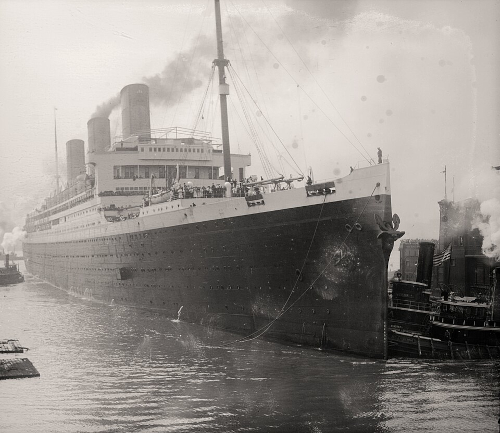
Steamships are experimenting with new cruise formats as new immigration laws in the United States (and more on those in a later post) cause a decline in steerage passengers, who suffer cramped and unsanitary conditions for the sake of crossing an ocean. Cruises appeal to the middle as well as upper classes, but different classes of passengers still have different entrances and living spaces on board ship. Cargo shipping is of course extensive, though compared to later times it’s inefficient — more than forty years before containerisation, ships may spend three weeks in port unloading and loading. Note that the United States, whose merchant shipping suffered at the hands of German U-boats during the Great War, has just completed a major ship-building program to give it one of the largest merchant fleets in the world. Battleships are being converted to civilian use, and captured German ships are being bought by shipping companies in Allied countries.
Airplanes have become more common thanks to the Great War, though helicopters are still only in the experimental stage. In 1923 planes are still mostly made out of wood, but multi-engine crafts are now in use to carry passengers — if typically only one or two at a time, squeezed around mail sacks. Air mail’s much more expensive than regular post, but is being used more and more often. Airfields are often literally country fields, though, and airline companies are small businesses that frequently only last a few weeks or months. The first American cargo airline will open in 1925.
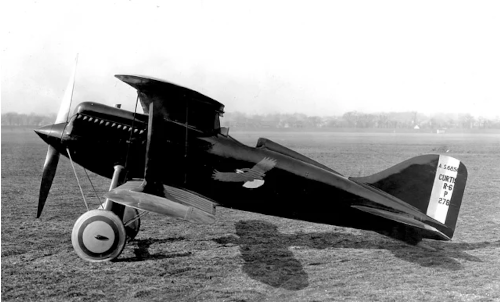
America, which has no regulation of pilots or airlines and which doesn’t even keep track of crashes and deaths, is well behind Europe, where a thousand people a week take daily flights between Paris and London. As late as 1927 there will only be around 30 commercial passenger planes in the entire United States. With no weather service or system of radio beacons, pilots have to hope they can track their location by eye, flying low to read local signs. Still, planes are used for dusting crops, taking aerial photographs, carrying ad banners, and giving shows — thrill rides for passengers at country fairs, or aerobatic exhibitions by travelling barnstormers.
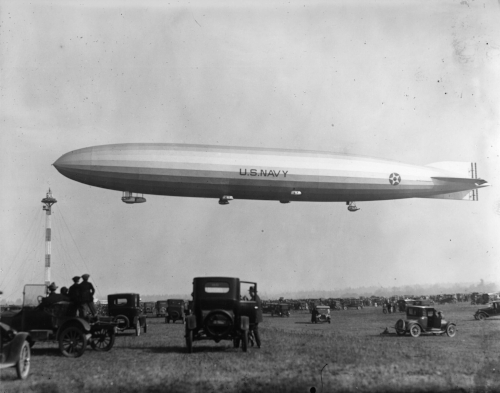
It is just possible (although tremendously unlikely) that if you look up and see a flying craft it will not be an airplane but a different sort of silhouette entirely, an enormous cigar-shaped balloon moving in stately fashion through the sky. Airships, sometimes called Zeppelins, promise a future of luxury travel across continents — in 1917 a German airship flew from Bulgaria to Sudan and back, over 4200 miles in 95 hours, while the British R.34 made a round-trip voyage across the Atlantic in 1919. They are not failsafe; in February 1922, almost exactly a year ago, the American airship Roma crashed with a death toll of 34. But later in 1923, the United States will launch the Shenandoah, one of a number of airships the U.S. Navy is building, with safer helium gas instead of flammable hydrogen. In 1923 airships are currently limited to military use and a few very wealthy passengers, but in 1928 the German Graf Zeppelin airship will provide the first transatlantic passenger flights.
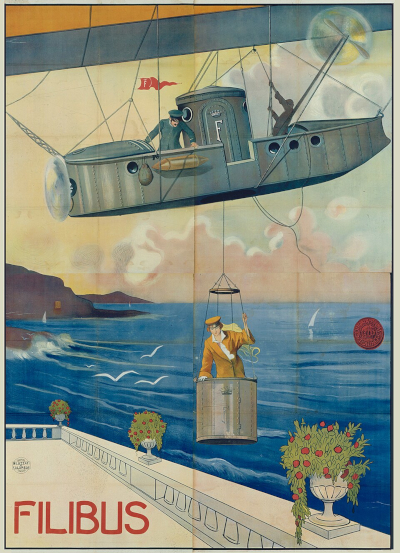
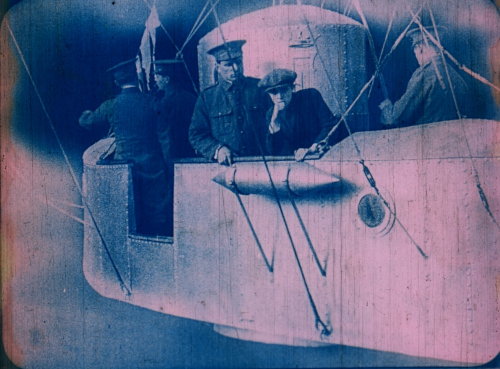
Air travel broadly is catching hold of the imagination. Air pilots are heroes; that’ll be especially true after Lindburgh flies solo across the Atlantic in 1927, launching a craze for ”air pulps” about planes. But already there have been things like the 1915 Italian film Filibus, about a cross-dressing lesbian airship pirate captain and bank robber.
It is important to realise that the time involved in travel and communication means that people in 1923 think in different ways about distances. The world is larger. In an issue of the 1919 magazine The Thrill Book (specifically the September 15 issue, Vol II number 6) there’s a story (Fred L. Packard’s “The Red Lure”) in which a character in New York decides he has to go to Singapore as soon as possible. He sets off, the chapter ends, and the next one begins with his arrival 5 weeks later. Similarly, in the September 1923 issue of Weird Tales (Vol II number 2) Hubert La Due’s story “The Soul of Peter Andrus” has a character return to small-town America from “the Bhutan district of India” (Bhutan was not a part of India) in response to a letter from a friend; the friend says “Why, you couldn’t have received that letter! It is less than a month since I put it in the mail!”
Places far away from the United States are farther away in 1923 than they will be a hundred years later. Notwithstanding the mobilisations and dislocations associated with the War, places outside the United States (and sometimes within them) are on the whole less visited by Americans and less known by them.
As technologies of travel change, the ways people relate to their environment and the ways they think about distance change. In 1923 as in 2026, travel isn’t just a way for people and things to get from place to place. Travel is also a concept; a means of transportation is an image and a symbol. Therefore social and technological changes affect the way the world’s imagined. And pulp fictions are places you can see that.
Find all my posts about Weird Tales here!
Matthew David Surridge is the author of “The Word of Azrael,” from Black Gate 14. You can buy collections of his essays on fantasy novels here and here. His Patreon, hosting a short fiction project based around the lore within a Victorian Book of Days, is here. You can find him on Facebook, or follow his Bluesky account, @bookofdays.
(Mostly off-topic response. Your article had some great food for thought.)
Ah! The REO Speed Wagon! Some say the only, but likely just the most famous, time a personal cargo-hauler was sold on the basis of speed, not just reliability, durability, and capacity. As oddly famous as the first time a test/demo pilot sold a contract for 707s by showing they could fly inverted. Great to see it here!
Your mention about all of the different taxi cab colors made me laugh, because I’d just gotten to see an old Checker from the 1950s on display. 1922 was the year Checker taxi cab company merged with the bankrupt Markin Auto Body company, creating the Checker Cab Manufacturing Company. Checker and Yellow were feuding so hard over market share and color trademarks in Chicago, that Markin (who’d stayed on through the merger) got his house bombed in 1923(?), and that’s when the Checker car marque moved its manufacturing to Kalamazoo. Weird times, when color trademarks were enough to justify the bombing of someone’s house. It’s like if Glad and Reynolds went into open warfare over both producing transparent plastic wrap.
Completely agreed that the speed and range of transportation makes the world smaller for most folks. Same thing with the development of communications technology. But then I run into anomalies like the Egtved Girl, anomalies who were traveling and communicating over great ranges even before the easier means were available. That makes me wonder who the anomalies are today, and what they’re doing that the rest of us can’t even conceive.
Thanks for the response! I should probably have noted that while travel was so different, there was (or had been in recent years) a surprising amount of movement of people from country to country. I’ll be getting into that more in a couple of posts. So outliers were definitely present.
Your point about the bombing over a colour trademark is great — that’s exactly the kind of thing that made me really want to do these background posts, the things that happened that look so strange now and come out of a reality really specific to the time!
I note that multiplying 20.5167 hours by 31.5 mph gives 646 miles, rather more than 606. REO couldn’t do arithmetic any more accurately then than advertisers can now, I guess!
Well, as a former English student, I can’t throw stones at anybody over bad math. Maybe they got lost along the way and had to double back?
Interesting as ever!
It’s possible the Weird Tales writer was referring to the “Bengal Duars”, a part of Bhutan that was ceded to British India late in the 19th Century. More likely, to be sure, the writer was being careless — and it does appear that Bhutan historically had very close ties to India. It’s easy to imagine someone traveling to Bhutan and thinking of it as part of india — at least back then. (Bhutan’s neighbor, the Kingdom of Sikkim, was independent until 1975, when it became a state of India. I remember the maps I saw as a kid that showed three independent countries on the top of India — Nepal, Bhutan, and Sikkim.)
Thanks Rich! I absolutely agree that it’s easy to imagine somebody from North America travelling to Bhutan in 1923 and not being clear on the details of who was sovereign where. (I’m biased because, although Canada was a Dominion and not a protectorate, Britain was also determining Canada’s foreign policy at the time though Canada was an independent country.) And I have to admit I had not heard of the Bengal Duars. In the spirit of generosity, going forward I’ll assume that’s what the writer had in mind!