Some Thoughts on Steven Spielberg’s 2005 War of the Worlds
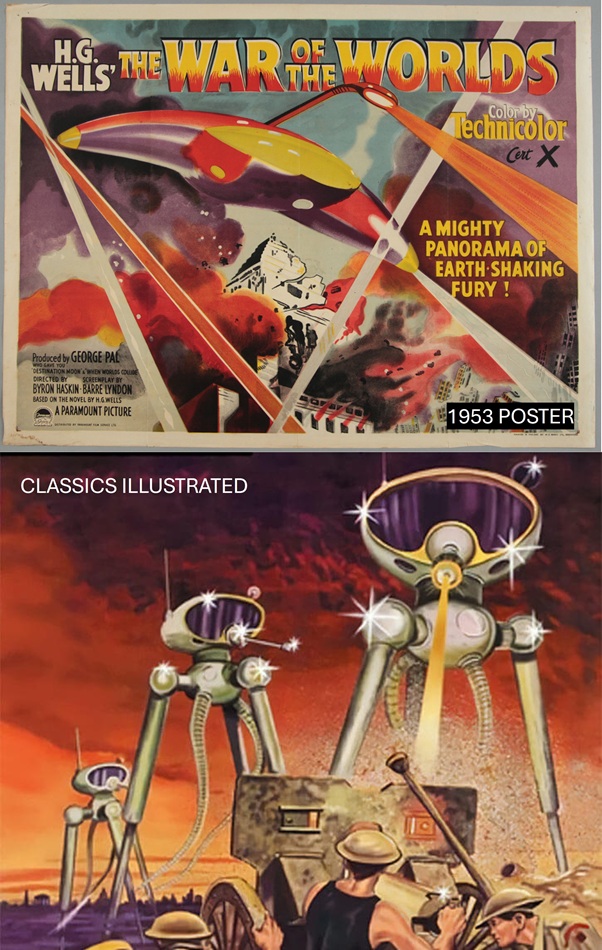
H. G. Wells’ War of the Worlds has always been a favorite of mine, since reading the excellent Classics Illustrated version, then Wells’ novel, and finally seeing the wonderful 1953 George Pale/Byron Haskins film version on television. I first encountered Wells in grade school, in an anthology of short stories, where I first read his “The Truth About Pyecraft”. That’s where I also first encountered Ray Bradbury and his “There Will Come Soft Rains,” and Poe’s The Raven, my favorite poem. Among a number of other authors in that collection were stories by Jack London, Saki, and Robert Louis Stevenson. Later I read Wells’ The Time Machine, When the Sleeper Wakes, The Island of Dr. Moreau, In the Days of the Comet, and The Shape of Things to Come, to name a few.
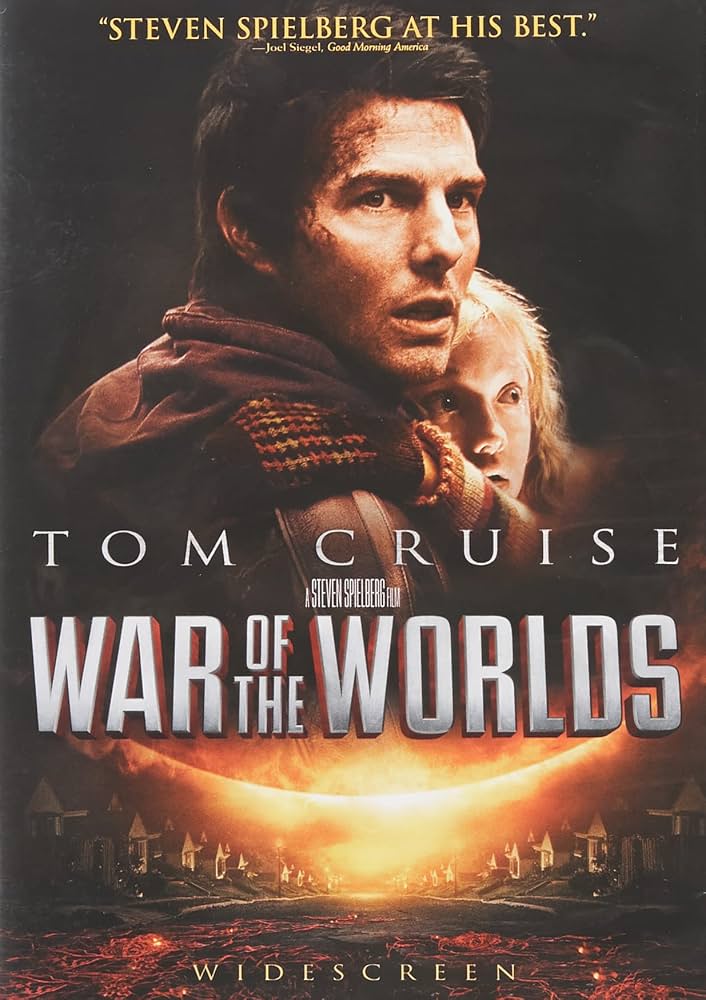
The 1953 film version of War of the Worlds is a classic, for sure, and to me it’s the perfect example of what makes for a great science fiction film. Magical special effects that still hold up today, with solid performances by the cast, and lush cinematography that really pops on Blu-Ray. Enough has been written about that film, so today I want to share some thoughts on Steven Spielberg’s 2005 version, without comparing the two films in any way. I don’t consider it a true remake, because both films are based on Wells’ novel. They’re just two different visions.
In spite of the dislike many people I know have for this remake, Steven Spielberg’s 2005 War of the Worlds was a financial hit. I like this film. After a short first act of family dynamics, the pace never lets up. Sure, it this film has some flaws. Mars is never mentioned in the film, although the prolog, narrated by Morgan Freeman, is taken from Wells’ own opening from his 1898 novel (“Across the vastness of space” etc.), and we are shown an image of Mars.
No one would have believed in the early years of the 21st century, that our world was being watched by intelligences greater than our own. That as men busied themselves about their various concerns, they observed and studied, the way a man with a microscope might observe the creatures that swarm and multiply in a drop of water. With infinite complacency, men went to and fro about the globe, confident of our empire over this world. Yet across the gulf of space, intellects vast and cool and unsympathetic regarded our planet with envious eyes, and slowly, and surely, drew their plans against us.
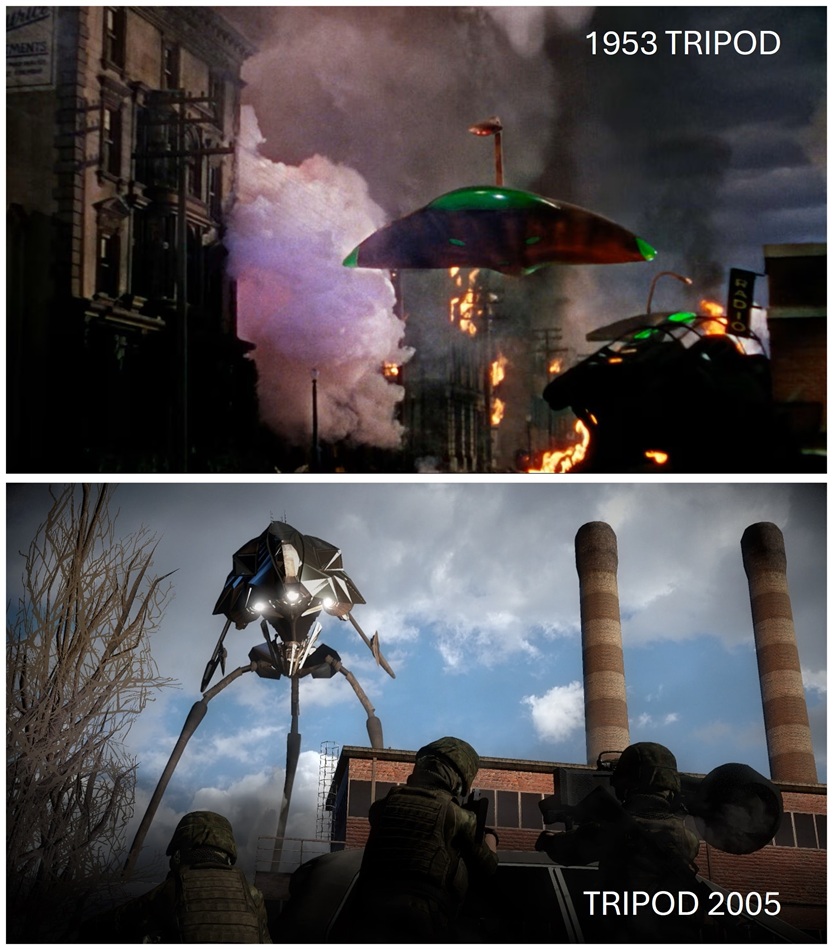
On the DVD commentary, Spielberg says the aliens came from inside the Earth, not from space, or words to that affect, which is somewhat true. But one of special FX people says the “tripod” Martian war machines had been buried in the Earth long ago, which is also mentioned in the film.
But how long ago were the machines buried? Probably before the Earth cooled, surely before humans dominated the planet, before the rise of civilization. He also says, and in the film, it’s later shown, that the Martians themselves came down in small vessels inside the many “lightning strikes,” to retrieve and use their machines.
So why did the Martians wait so long to invade? Planning for the future? Maybe because they needed enough human blood for their terraforming of Earth?
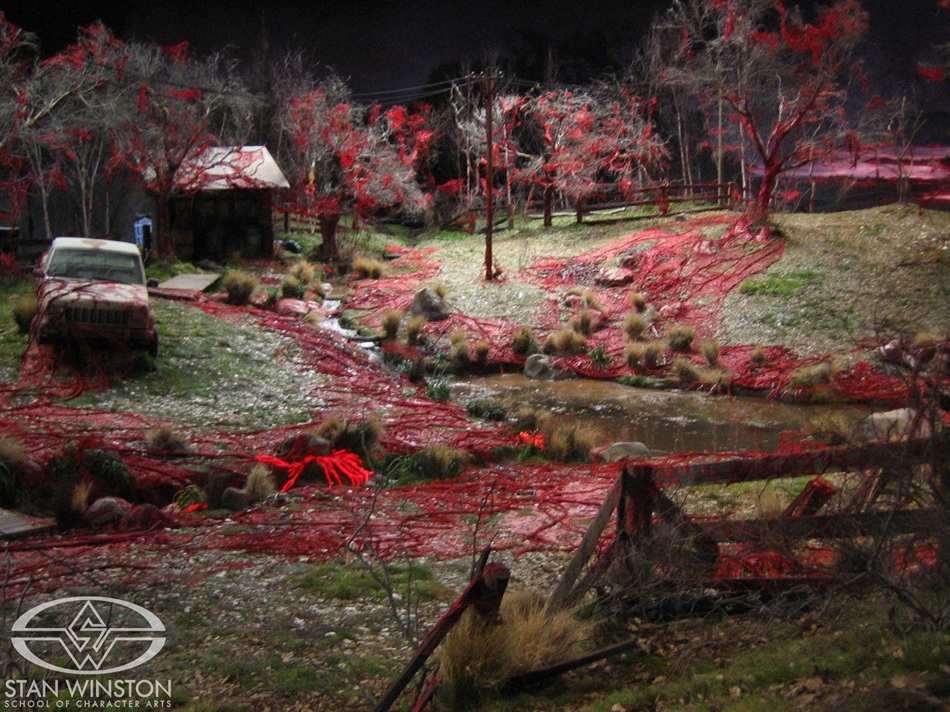
I like the usage of the red kudzu or the Red Weed, as Wells called it. When the war machines rise up from the earth, they emit an electro-magnetic pulse (EMP) that knocks out electricity and batteries in the vicinity. So why was that video camera still operational? Was it outside the “vicinity?”
I like that the film uses Well’s ferry boat attack; it’s a powerful scene. The scene in the basement, with Tim Robbins, is also taken from Wells’ novel; it’s revised, of course, but uses some of Ogilvy’s (Robbins) dialog from the novel.
The film, naturally, uses the same death of the Martians as it is in the book; Freeman also has the last word, using the same narration that closes the 1953 film.
I like that this is an intimate version, a family drama. Dakota Fanning, as Tom Cruise’s daughter, is wonderful: she is the heart of this film, and surely her character will need years of therapy. Her scenes with Cruise pack a punch. Cruise has a nice story arc, too, going from a callous, narcissistic and irresponsible parent to a brave, loving and heroic father. His scenes with his son (Justin Chatwin) also run the gamut from a somewhat strained relationship, to one of pride and tenderness; witness the look on Cruise’s face aboard the ferry when his son risks his life to save people, and then again later, when he realizes that his son is not a kid anymore.
The film is filled with excellent performances by the cast. Chatwin’s sibling relationship with Fanning is sweet and loving, and they protect each other.
Now, I’m not always fond of cameos in films, like Stan Lee’s in so many Marvel films. So, I’m not sure how I feel about the cameo in the final scenes, when Gene Barry and Ann Robinson, from the 1953 version, show up as the parents of Cruise’s ex-wife, played by Miranda Otto. They have nothing to do and no dialog whatsoever. (Robinson played her same 1953 character of Dr. Sylvia Van Buren in the 1988-1990 television sequel series.)
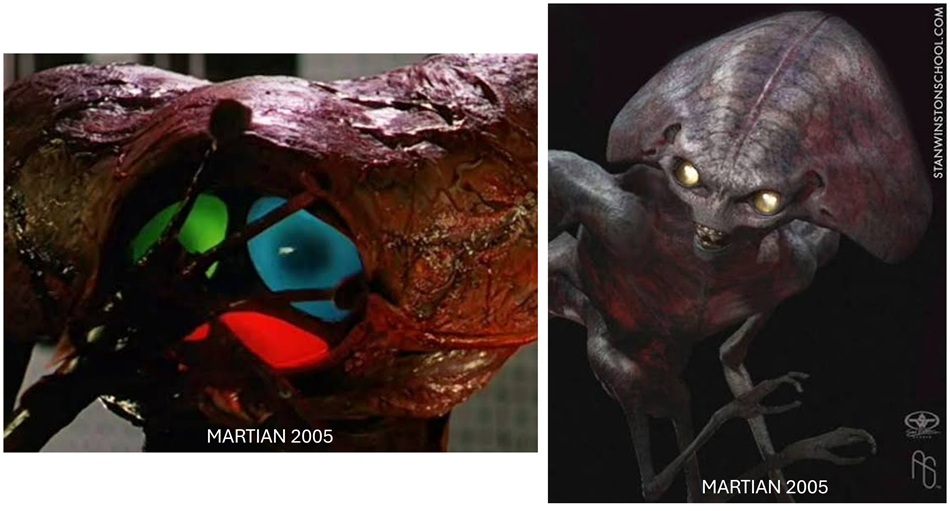
There are plenty of intense, dramatic scenes, and the special effects, especially the Martian war machines, are superb. This IS a Spielberg film, after all.
Joe Bonadonna
Joe Bonadonna is the author of the Heroic Fantasies Mad Shadows—Book One: The Weird Tales of Dorgo the Dowser (winner of the 2017 Golden Book Readers’ Choice Award for Fantasy); Mad Shadows—Book Two: The Order of the Serpent; Mad Shadows—Book Three: The Heroes of Echo Gate; Mad Shadows—Book Four: All the Colors of Darkness; the Space Opera Three Against The Stars and its sequel, the Sword & Planet space adventure, The MechMen of Canis-9. In collaboration with author David C. Smith, he’s written the Sword & Sorcery pirate adventure, Waters of Darkness. With author and artist Erika M. Szabo, Joe penned Three Ghosts in a Black Pumpkin (winner of the 2017 Golden Books Judge’s Choice Award for Children’s Fantasy), and its sequel, The Power of the Sapphire Wand. With author Shebat Legion he wrote Undertaker’s Holiday, for “Poets in Hell,” as well as Samuel Meant Well and the Little Black Cloud of the Apocalypse for the shared-world of “Sha’Daa: Toys.” With author Seth Lindberg he wrote The Tarnished Horde, for “Monsters in Hell.”
He also has solo stories appearing in: Azieran: Artifacts and Relics; Savage Realms Monthly (March 2022); Griots 2: Sisters of the Spear; Heroika I: Dragon Eaters; Poets in Hell; Doctors in Hell; Pirates in Hell; Lovers in Hell; Mystics in Hell; Liars in Hell; Monsters in Hell; Sinbad: The New Voyages, Volume 4; Unbreakable Ink; Stand Together—A Collection of Poems and Short Stories for Ukraine; and the anthology, Legion House. In addition to his fiction, Joe has written numerous articles, book reviews and author interviews for Black Gate online magazine.
Amazon Author Page for Joe Bonadonna / Bonadonna’s Bookshelf on Facebook