Browsed by
Category: Books

Future Treasures: The Whispering Swarm by Michael Moorcock
Future Treasures: The Whispering Swarm by Michael Moorcock

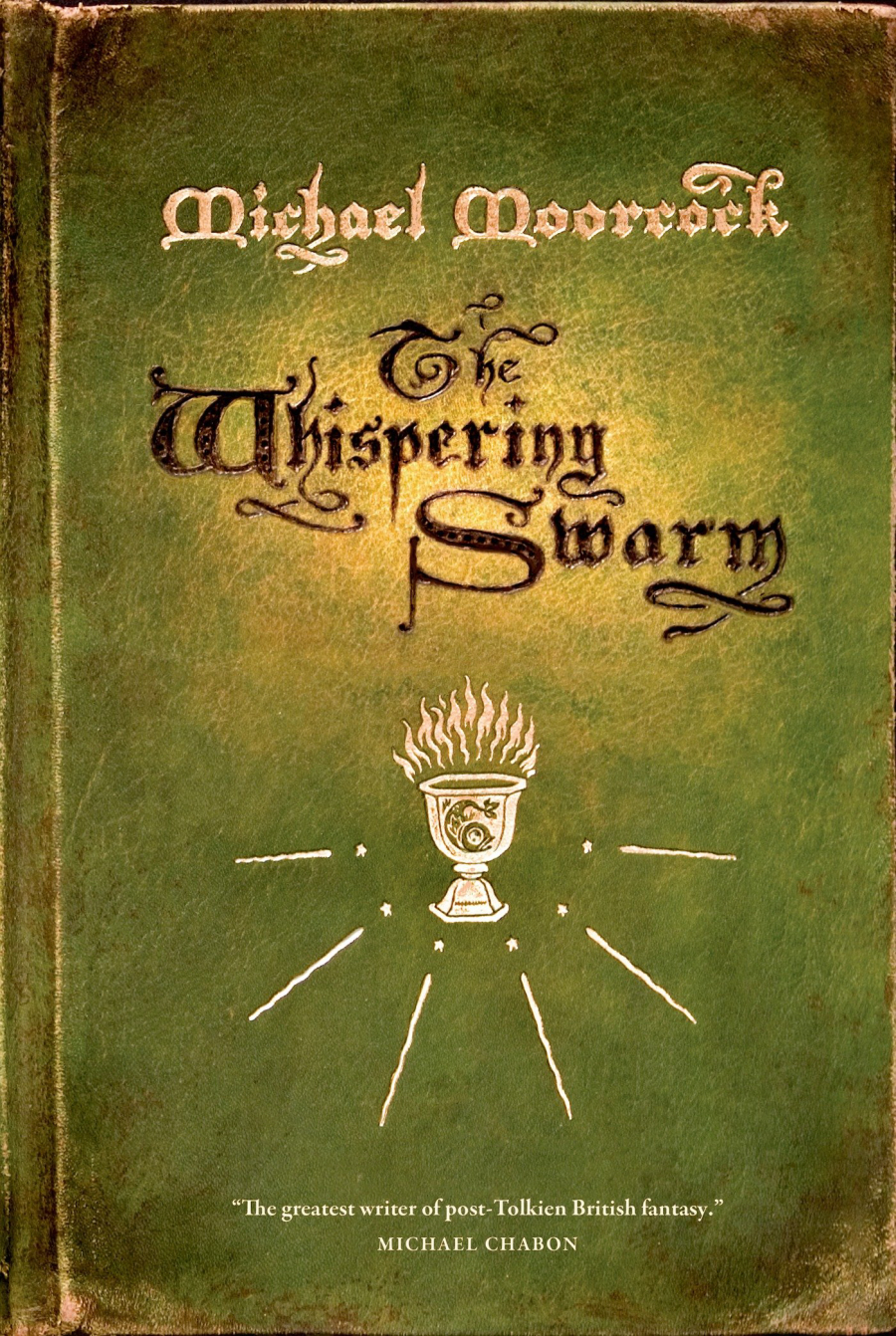
The Whispering Storm-smallWe’re big fans of Michael Moorcock at Black Gate.

I published an original Moorock novella, “The Dreamthief’s Daughter,” way back in our very first issue. More recently, Fletcher Vredenburgh reviewed his classic The Eternal Champion, Connor Gormley looked his at Von Bek series, Matthew David Surridge examined his Hawkmoon novels, and I covered the reprint of his early novels The Warlord of the Air and The Sword of the Dawn.

Now comes word that Tor will publish a brand new novel from Moorcock, a semi-autobiographical fantasy of a young man in post World War II London…

Tor Books now proudly presents Moorcock’s first independent novel in nine years, a tale both fantastical and autobiographical, a celebration of London and what it meant to be young there in the years after World War II. The Whispering Swarm is the first in a trilogy that will follow a young man named Michael as he simultaneously discovers himself and a secret realm hidden deep in the heart of London.

The Whispering Swarm is the first novel of The Sanctuary of the White Friars.

The Whispering Swarm will be published by Tor Books on December 9, 2014. It is 512 pages, priced at $26.99 in hardcover and $12.99 for the digital edition.

New Treasures: Seeker’s Bane by P.C. Hodgell

New Treasures: Seeker’s Bane by P.C. Hodgell

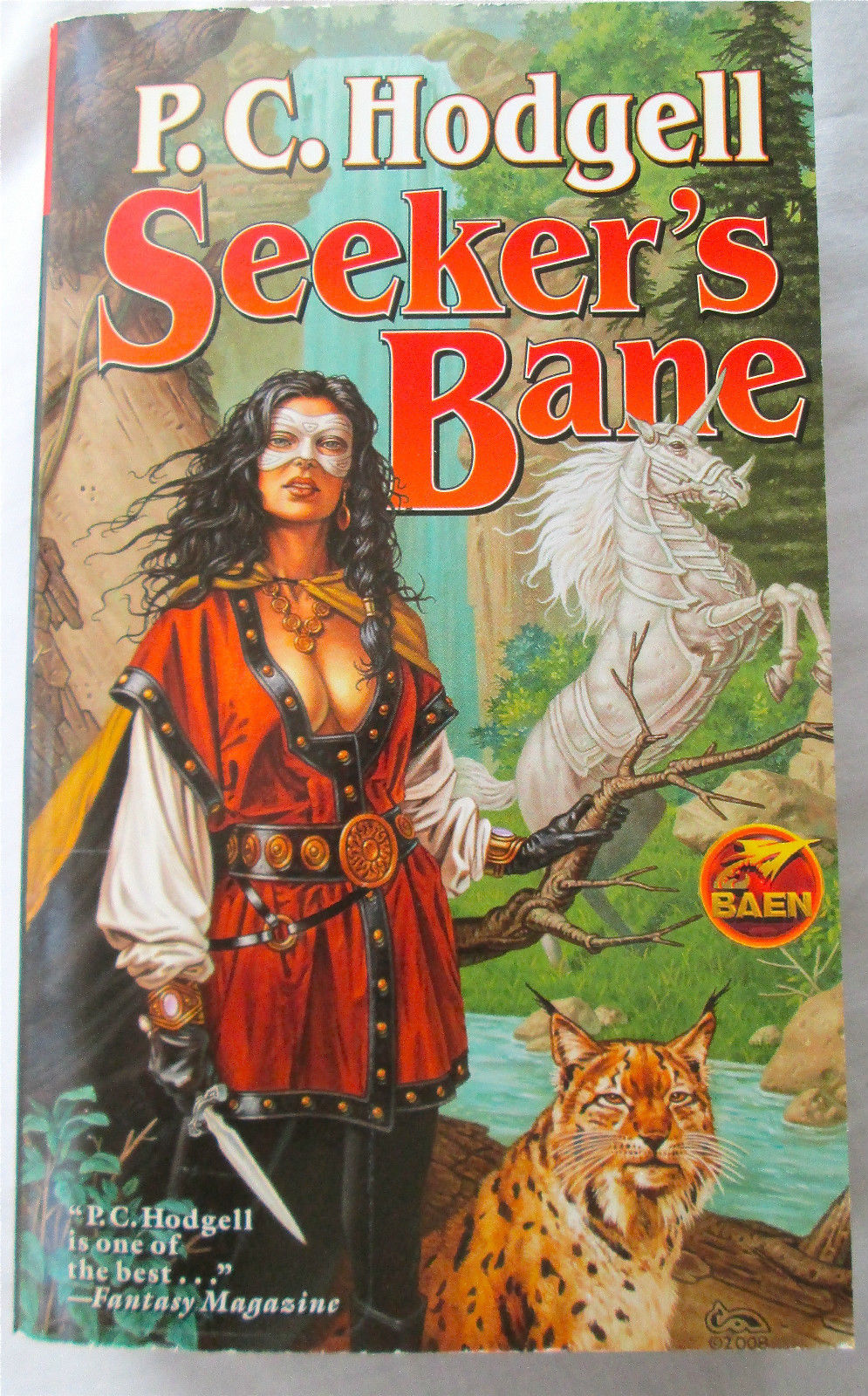
Seeker's Bane-smallSometimes it’s handy being editor of Black Gate. For one thing, it sure keeps you in-the-know on great books. I was editing Fletcher Vredenburgh’s enthusiastic review of P. C. Hodgell’s God Stalk last October, which begins thusly:

Out of the haunted north comes Jame the Kencyr to Rathilien’s greatest city, Tai-Tastigon. From the hills above, the city appears strangely dark and silent. She arrives at its gates with large gaps in her memory and cat claws instead of fingernails. She’s carrying a pack full of strange artifacts, including a ring still on its owner’s finger… and she’s been bitten by a zombie. Wary, but in desperate need of a place to heal, Jame enters the city. So begins God Stalk, the first book in P.C. Hodgell’s Kencyrath series and one of my absolute, bar none, don’t-bother-me-if-you-see-me-reading-it, favorite fantasy novels…

I’m so grateful Carl gave me this book thirty years ago. P.C. Hodgell seems so far below the general fantasy radar, I don’t know if I would have ever heard of her at all, which is pretty darn shameful.

Ha, I thought smugly, looking at my bookcase. Maybe she’s below the radar for most folks, but I’ve got my copy right here. Fletcher continued:

Following God Stalk came the 1985 sequel, Dark of the Moon… It’s taken nearly thirty years for the next four books to appear: Seeker’s Mask, To Ride a Rathorn, Bound in Blood, and Honor’s Paradox.

Wait, what? There are sequels? Like, five sequels? How did I not know? Are they out of print? Gahhh!

Fortunately, Baen Books to the rescue. Baen has collected the first four novels in two handsome mass market paperbacks: The God Stalker Chronicles (January 2010) and Seeker’s Bane (August 2010), both still in print. They’re a great way to get started on this terrific series, which Hodgell and Baen are continuing — I note the seventh volume, The Sea of Time, was just published last month. I just bought Seeker’s Bane and it’s a fabulous bargain: 1168 pages, priced at $7.99 in paperback and $6.99 for the digital version. The covers are by Clyde Caldwell. Check ’em out.

Future Treasures: Resurrection, by Mandy Hager

Future Treasures: Resurrection, by Mandy Hager

Resurrection Mandy Hager-smallThere’s no question that the hottest trend in fiction right now isn’t vampire romances, zombies, or even superheroes. It’s young adult dystopias. The trend didn’t begin with The Hunger Games, but for sure that’s the series that kicked it into high gear. Wander the young adult section of your local bookstores and you’ll see what I mean — you’ll find dozens of volumes advertising a grim future for our young folk. It would be depressing, except for the cheery sound of a cash register ringing.

There’s been such a flood of new dystopian fantasy that it’s made it tough for a quality new series to get noticed. Mandy Hager’s Blood of the Lamb trilogy — beginning with The Crossing (January 2013) and Into the Wilderness (January 2014) — has quietly been accumulating excellent reviews and new readers, and the arrival of the third book next month is sure to launch this one into the spotlight. Pick up the first two books now, while there’s still time.

When Maryam arrives back at Onewēre and tries to loosen the Apostles’ religious stranglehold by sharing the miraculous remedy for Te Matee lai, she finds herself captured once again — prey to the Apostles’ deadly game. The ruling elite manipulate her return by setting in motion a highly orchestrated ritual before a hysterical and brain-washed crowd. Somehow Maryam must get the islanders to listen to her plea that they start thinking for themselves — hoping to stir the independence in their hearts, even as she finds herself on the brink of death.

Resurrection will be published on August 12 by Pyr Books. It is 365 pages, priced at $17.99 in hardcover and $11.99 for the ebook.

The Series Series: The Night of the Swarm by Robert V.S. Redick

The Series Series: The Night of the Swarm by Robert V.S. Redick

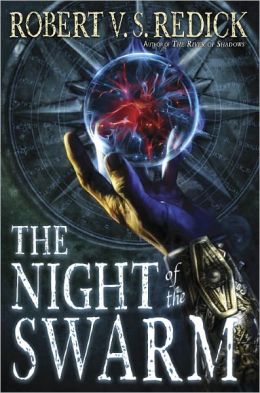
The Night of the Swarm Robert VS RedickIt’s one of the classic dilemmas all fantasy readers face: When the last volume in a series finally comes out, do you go back and reread from the start so you can reach the end with all the grace notes and loose ends fresh in memory as the author ties them off? Or do you dive in immediately because you’ve been longing to resolve the suspense of the last volume’s cliffhangers?

If you’ve been reading Robert V.S. Redick’s delightful series, The Chathrand Voyage, you face this decision again with the arrival of the final book, The Night of the Swarm. The opening volume, The Red Wolf Conspiracy, was Redick’s debut novel, so we’ve never seen him bring a series to closure before. The first three books were delicious, but will he pull off the conclusion well enough to justify the time it takes you to reread the whole set?

Yes. Do it. Go find your copy of The Red Wolf Conspiracy, or buy a new one if you’ve mislaid it. I’ve just finished The Night of the Swarm, which I dove into without reacquainting myself with the earlier books, and though it was immensely satisfying, I will definitely be rereading the whole series.

And if you’re a newcomer to The Chathrand Voyage, oh, you are in for such a treat. Get all four books at once, turn the ringer off on your phone for a few weeks, and set up an auto-response for your email, because you won’t want to leave the battered, glorious world of Alifros until you’ve seen its struggles through.

Our young heroes Pazel, Thasha, and Neeps — along with a ship’s company of fanciful, and sometimes frightening, supporting characters that Charles Dickens might have come up with if he’d been trying to adapt his favorite techniques from George R.R. Martin — have only been at sea for a year, but what perils they have weathered! They have resisted a madman whose army of followers worship him as a god, rescued Thasha from political assassination, fled by sailing ship across an almost unimaginably large and wild ocean, and rediscovered civilizations no one from their continent has seen in centuries.

…

Read More Read More

Blogging Sax Rohmer… In the Beginning, Part Two

Blogging Sax Rohmer… In the Beginning, Part Two

illo-Sax Rohmerrohmer2“The Green Spider” marked Sax Rohmer’s third foray into short fiction. Still writing under the pen name of A. Sarsfield Ward, the story first appeared in the October 1904 issue of Pearson’s Magazine. It was not reprinted until 65 years later in Issue #3 of The Rohmer Review in 1969. Subsequently, a corrupted version, with an altered ending courtesy of the editor, appeared in the May 1973 issue of Mike Shayne Mystery Magazine. The restored text was included in the 1979 anthology, Science Fiction Rivals of H. G. Wells. More recently, the story has appeared in the 1992 anthology, Victorian Tales of Mystery and Detection, the September 2005 issue of Alfred Hitchcock Mystery Magazine, and as the title story in the first volume of Black Dog Books’ Sax Rohmer Library, The Green Spider and Other Forgotten Tales of Mystery and Suspense (2011).

The story itself shares in common with Rohmer’s first effort, “The Mysterious Mummy” the presentation of a seemingly supernatural mystery that has a rational explanation. In the nine months that elapsed between the publication of “The Leopard Couch” and “The Green Spider,” Rohmer honed his writing skills and became a more devoted student of Sir Arthur Conan Doyle and deductive reasoning. “The Green Spider” concerns the disappearance of the celebrated Professor Brayme-Skepley on the eve of an important scientific presentation. It appears to onlookers and Scotland Yard that the Professor has been murdered by a giant green spider that apparently made off with his corpse. The unraveling of the mystery reveals the green spider is no more authentic a threat than the phantom Hound of the Baskervilles. While a minor effort, the story retains its charm more than a century on and shows that the mysterious A. Sarsfield Ward was steadily improving as an author.

…

Read More Read More

Sylvia Townsend Warner and Lolly Willowes

Sylvia Townsend Warner and Lolly Willowes

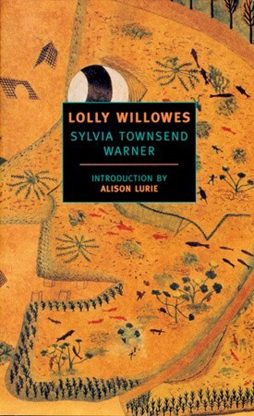
Lolly WillowesSylvia Townsend Warner is probably best known in fantasy circles for The Kingdoms of Elfin, her collection of linked short stories from 1977. I’ve been looking for a copy of that book, but have yet to locate one (using the Internet, I firmly feel, is cheating). But I did recently come across her debut novel, 1926’s Lolly Willowes, or the Loving Huntsman. It’s been described as a deal-with-the-devil story in which a middle-aged Englishwoman makes a Satanic pact and becomes a witch. That’s accurate, but not necessarily the best description.
It’s a story about an upper-class woman in 1920s England, Laura Willowes, and in wry third-person narration describes the outward details of her life and her search for imaginative freedom. Laura, or ‘Lolly’ to her family, is a vivid character who grows more fascinating as the book goes along. The first third of the book tells us about her childhood and family and how she lived with her father until he died and then moved in with her older brother to help him and his wife look after their children; the second part follows her in her late 40s, when she (seemingly) abruptly chooses to leave her brother’s London home to live on her own in a small town in South East England; the third sees her newfound independence threatened when her loving nephew comes to live in the same small town. At which time she turns to Satan — or thinks she does.

Is it a fantasy? Well, it’s a lovely book, filled not only with a dry and reserved wit, but also fine descriptions of nature and of dreams. It’s a gentle but devastating satire of gender roles, as well as a statement about love and freedom. It’s a leisurely-paced character study in elegant language. And then there’s also some stuff in it about witches and Satan. It’s possible to read it as a realistic novel in which the supernatural is hallucinated, but perhaps easier to read as a fantasy. Still, to say it’s a book ‘about’ witchcraft or Satan is untrue. The fantastic elements come in late and grow out of the mimetic elements. The book is ‘about’ Laura Willowes. Fantasy’s just a part of who she is.

…

Read More Read More

Vintage Treasures: H.P. Lovecraft’s The Colour Out of Space

Vintage Treasures: H.P. Lovecraft’s The Colour Out of Space

Lovecraft The Colour Out of Space-smallThe first Arkham House books I ever bought were the 3-volume 1964 edition of the complete stories of H.P. Lovecraft (The Dunwich Horror and Others, Dagon, and At The Mountains of Madness). It was a beautiful set, and one of the best purchases I’ve ever made.

On the other hand, having the complete Lovecraft at an early age robbed me of the joy of tracking down and collecting his fiction in paperback. I’ve been trying to rectify that over the years, starting with the marvelous Ballantine Adult Fantasy editions.

In the comments section of a recent post, John H. noted his first encounter with Lovecraft was:

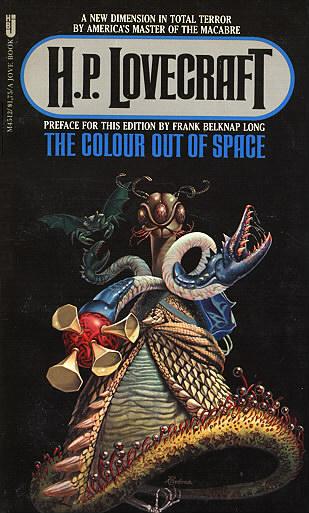
Colour Out of Space… the title story scared the bejeebers out of me (and to this day still creeps me out)… it was actually the Jove edition; the one with the Rowena painting of a Great Old One from “Shadow Out of Time” on the cover. Needless to say, it was the cover that drew me.

The Jove edition of The Colour Out of Space was one of two paperback Lovecraft volumes Jove published in 1978; the other was The Dunwich Horror. That’s it at right.

Joe’s comments intrigued me… I vaguely remembered a gorgeous set of Rowena covers on a pair of slender Lovecraft paperbacks in the late 70s but, like all Lovecraft paperbacks at the time, I scorned them because I had a complete set at home in hardback.

…

Read More Read More

Balance of Power

Balance of Power

People of the Black Circle-smallFantasy is generally about power. Who wields it, who wants it, and the price they pay for it. Magic (the supernatural world) is often the metaphor used for power in fantasy lit. But there are plenty of other kinds, such as fighting prowess, political power, and so on, that can also be incorporated.

In fact, what a fantasy story says about power is usually one of the most important elements to me.

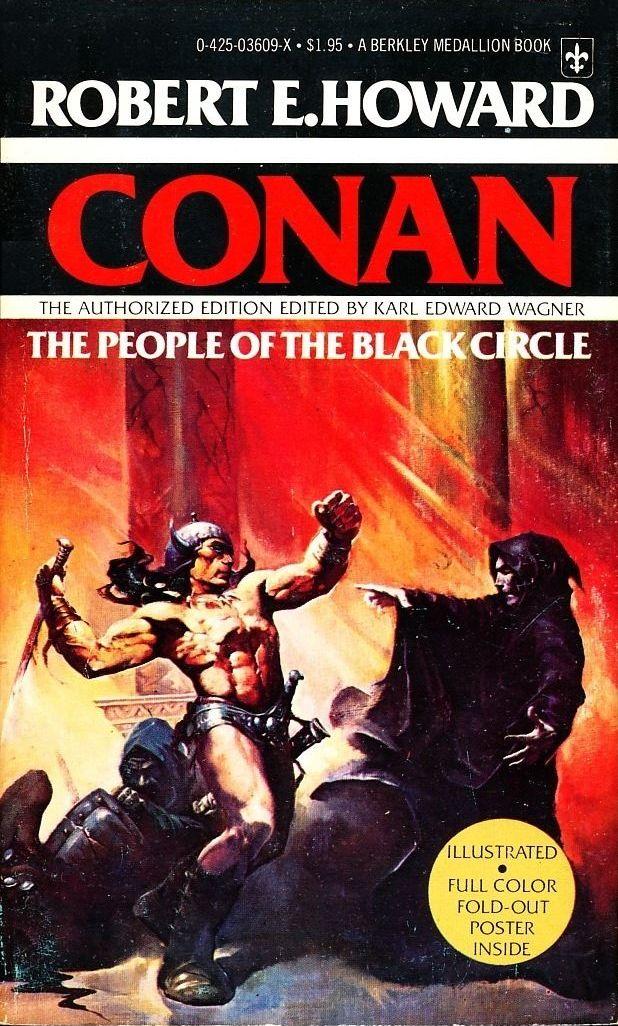
In Robert E. Howard’s Conan series, Conan represents the superiority of the barbarism over decadent civilization, and also the power of the individual against society. He is the fulcrum that swings the balance of power away from the rich nations by the force of his will and the strength of his arm. Until, of course, he eventually comes to rule one of those soft civilized nations….

In The Black Company, Glen Cook creates an epic saga about a company of grunts trying to survive during a massive war between supercharged sorcerers. Not only do the soldiers of the Black Company survive, they manage to thwart the wizards and witches who try to use them, showing that the common man and woman are the true shapers of history.

Steven Erikson’s The Malazan Book of the Fallen features a stunning array of factions and individuals across many levels of society, many of them jostling for power and some just trying to stay out of the way.

My own Book of the Black Earth series has only just begun, but already in the first book I’ve laid down the underlying conflict of rival powers. Religious cults vie with secular government. City-states compete for regional power. Individuals strive against the institutions of slavery and caste in a world where sorcery is the province of the ruling class.

…

Read More Read More

New Treasures: Resistance by Samit Basu

New Treasures: Resistance by Samit Basu

Resistance Samit Basu-smallIs it just me, or did I miss the literary trend where superhero novels suddenly became a thing?

Sure, superhero novels were always around, but now it seems they’re a thriving sub-genre. Just recently we’ve covered Michael R. Underwood’s superheroes-in-a-fantasy-city Shield and Crocus, V.E. Schwab’s super-villainous Vicious, Andrew P. Mayer’s steampunk Society of Steam trilogy, Jacqueline Carey’s werewolf novel Santa Olivia, and After the Golden Age by Carrie Vaughn, featuring the unpowered daughter of two famous superheroes, just to name a few. Maybe it’s all those billion-dollar Marvel movies, I dunno. But something’s made superheroes hot all of a sudden.

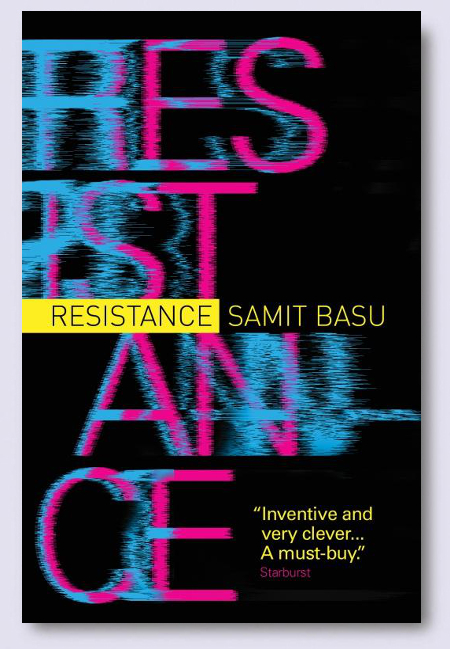
I missed Samit Basu’s first book from Titan, the well-reviewed superhero novel Turbulence. Which is a pity, because the premise sounds very intriguing: in 2009, all the passengers on flight BA142 from London to Delhi wake up the next morning to discover they have developed extraordinary abilities. His new novel Resistance picks up the tale a decade later, as a silent killer begins to pick off the supers one by one…

How would you adapt to a world full of superhumans? And how far would you go to stop them destroying it?

In 2020, eleven years after the passengers of flight BA142 from London to Delhi developed extraordinary abilities corresponding to their innermost desires, the world is overrun with supers. Some use their powers for good, others for evil, and some just want to star in their own reality show.

But now, from New York to Tokyo, someone is hunting down supers, kidnapping heroes and villains both, and it’s up to the Unit to stop them…

Resistance was published by Titan Books on July 8, 2014. It is 400 pages, priced at $14.95 in trade paperback and $7.99 for the digital edition.

Pat Murphy’s Three Books of Adventures

Pat Murphy’s Three Books of Adventures

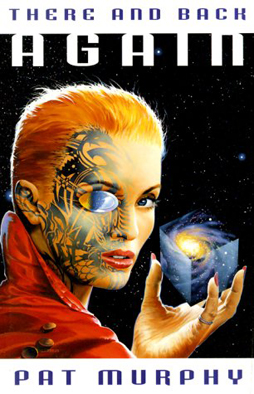
There and Back AgainThere was an extended period of time in the 1990s and the first decade of this century when I didn’t read much science fiction or genre fantasy. I started reacquainting myself with these fields a few years ago and I’m still in the process of learning what I missed. It’s not uncommon for me to only now find out about an author who established themselves during those years. Which brings me around to Pat Murphy.

A little while ago, I stumbled on three books by her that make up a highly distinctive sort of trilogy: There And Back Again, Wild Angel, and Adventures in Time and Space With Max Merriwell. They were published one a year from 1999 to 2001. They don’t really share a plot or setting, though some characters cross over from one to another. They’re linked by concepts both metafictional and science-fictional, which is a surprisingly unusual pairing, and while each can easily be read alone, the third book ties them all together with surprising effectiveness. ‘Surprising’ because at first the links between the books aren’t obvious. But by the end of book three, you realise what Murphy was driving at, and why these things had to be done in this particular way.

So what are these books? There And Back Again is a futuristic sf story about Bailey Beldon, a simple ‘norbit,’ a human inhabitant of an asteroid, who gets tied up with an oddball wanderer named Gitana and a family of thirteen clones. The clones have a map that’ll lead to a treasure with a fearsome guardian — and Gitana has decided that Bailey will accompany them on their quest. It is, in fact, a science-fictional and somewhat gender-flipped version of The Hobbit, and extremely effective. Similarly, Wild Angel is a story set in nineteenth-century California of a girl whose parents were killed when they came west to look for gold; the girl’s raised by wolves in exactly the same way Tarzan was raised by apes. But it’s the third book where things get really strange.

…

Read More Read More