Browsed by
Category: Books

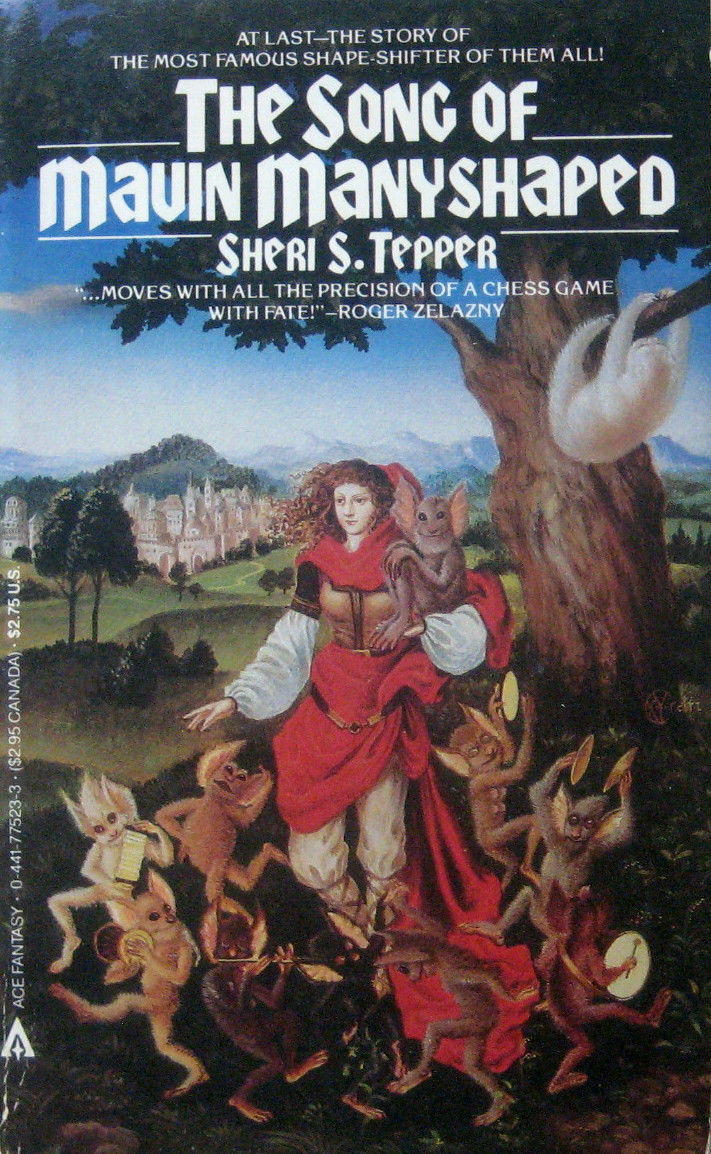
Vintage Treasures: The Song of Mavin Manyshaped by Sheri S. Tepper
Vintage Treasures: The Song of Mavin Manyshaped by Sheri S. Tepper

The song of Mavin Manyshaped-smallI think I’m finally starting to figure out Sheri Tepper’s 9-volume magnum opus The True Game (believe me, it took some work.)

I accidentally started (as usual) in the middle, with Dervish Daughter, which I didn’t even realize was part of a series, much less the eighth frickin’ volume. However, I overcame this as, after many decades of reading fantasy, I have mad reader skillz. Dervish Daughter isn’t really the eighth volume anyway, it’s actually the middle volume of the last trilogy, known as The Books of the True Game: Jinian.

The first trilogy, The Books of the True Game: Mavin Manyshaped, was written second, after the middle trilogy, which was composed of King’s Blood Four, Necromancer Nine, and Wizard’s Eleven, which were collectively gathered in a one-volume edition as The True Game. Which isn’t at all confusing. Still with me?

Forget it, I’m lost again. Let’s start over. The Song of Mavin Manyshaped is the first book in the first trilogy of The True Game. Mavin is a shapeshifter, and this opening trilogy tells the story from her point of view.

It is never easy growing up as a shape-shifter, learning to control the wild Talent for changing into any shape at all — a winged dragon, a pillar of stone, another human being, a creature from a nightmare. But for Mavin Manyshaped — one of only two she-shifters in her tribe, and recklessly headstrong by nature — coming of age is both exhilarating and terrifying. Little does she know she is destined to become the most notorious shape-shifter in all the lands of the True Game.

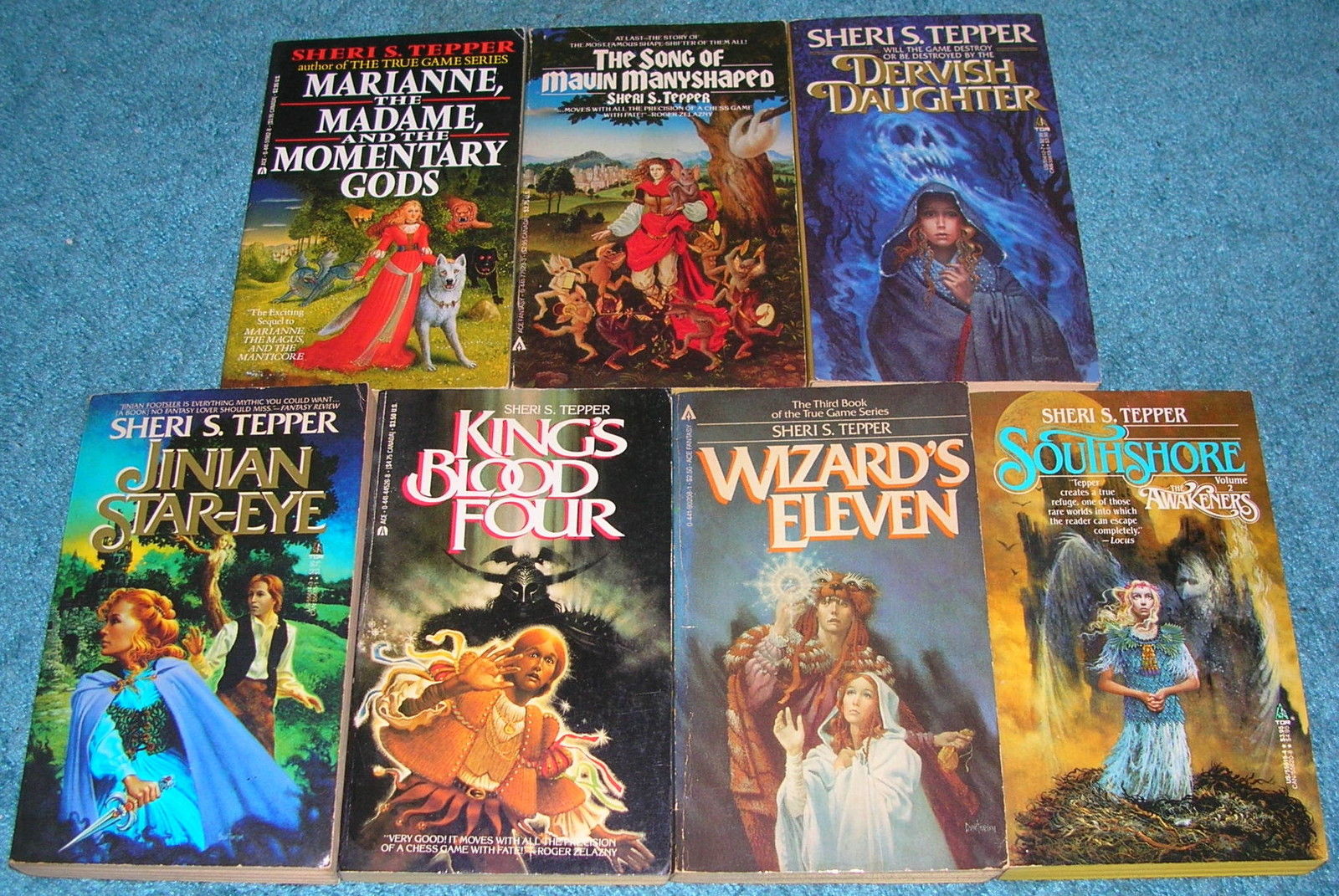
I bought The Song of Mavin Manyshaped as part of a jaunty collection of seven Sheri S. Tepper paperbacks on eBay for $10.50. They’re not all part of The True Game… I think. Anything is possible.
…

Read More Read More

Scott Taylor’s A Knight in the Silk Purse Now Available

Scott Taylor’s A Knight in the Silk Purse Now Available

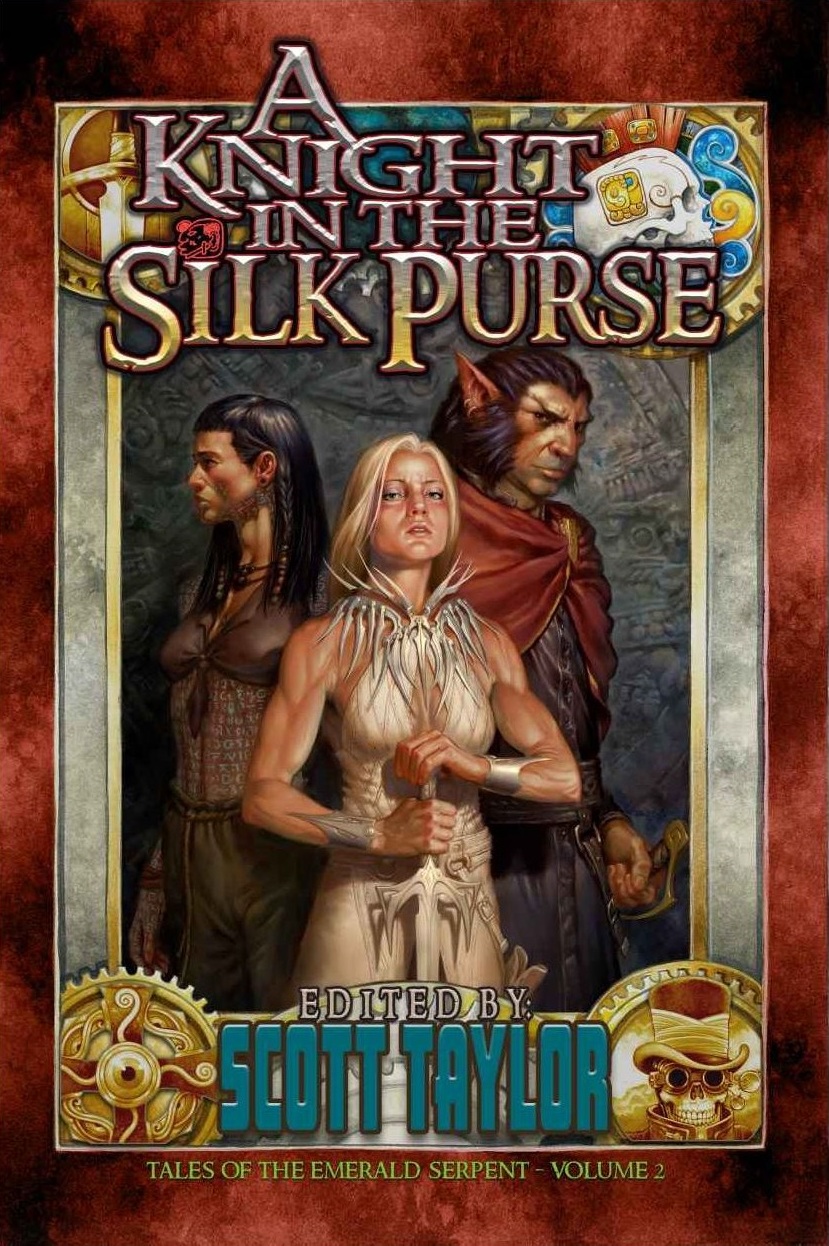
A Knight in the Silk Purse-smallScott Taylor’s latest anthology, A Knight in the Silk Purse, the sequel to his blockbuster, Tales of the Emerald Serpent, is now available.

If you’re a regular Black Gate reader, you’re familiar with Scott’s popular Art of the Genre column. But Scott is more than just a blogger and writer — he’s also an accomplished editor and publisher, with seven successful Kickstarter publishing projects under his belt. Inspired by classic shared world anthologies like Thieves World, Scott created the Free City of Taux, a sprawling fantasy port of “cursed stones, dark plots, and rich characters who share space inside the infamous Black Gate District,” and invited some of the genre’s most popular writers to tell its stories — including Lynn Flewelling, Juliet McKenna, Martha Wells, Julie Czerneda, Harry Connolly, and many others.

The result was Tales of the Emerald Serpent, one of the most acclaimed anthologies from last year. Lou Anders, editorial director at Pyr Books, said “I’m very impressed… it’s a smart, good looking package with some real gems of fiction inside.”

As we reported last year, Scott launched another successful Kickstarter to fund a sequel and A Knight in the Silk Purse was born — featuring virtually all of the writers from TotES, plus Dave Gross, Elaine Cunningham, Dan Wells, and Howard Tayler. Fans have been anxiously awaiting the arrival of the second volume and now the wait is over.

Here’s the book description.

…

Read More Read More

Future Treasures: Scarlet Tides by David Hair

Future Treasures: Scarlet Tides by David Hair

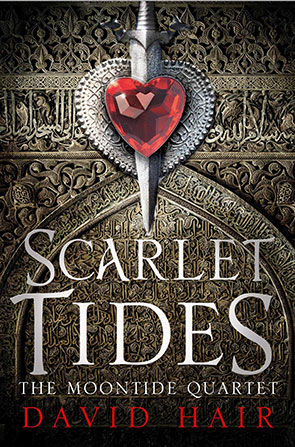
Scarlet Tides David Hair-smallI keep discovering interesting series with the second volume. I think it’s some kind of curse. When I was born, three fairies attended my christening. The first said, “Oh, crap. I didn’t bring a gift. Um, tell you what, John will be blessed with a love of reading.” And the second said, “That’s a good idea. And just for good measure, he’ll always be surrounded by books.” And the third, whom my parents had clearly offended somehow (seriously, who can figure out fairies?) said, “I curse this brat. He shall always discover great fantasy series with the second volume.” Fairies. Don’t invite them to parties and your life will go a lot easier.

My latest discovery is The Moontide Quartet by David Hair, which began last year with Mage’s Blood. Which I only learned recently, after I started reading the Advance Proof for the second volume, Scarlet Tides. Somewhere, a fairy is laughing.

In the exciting second volume of The Moontide Quartet, a scarlet tide of Rondian legions is flooding into the East, led by the Inquisition’s windships flying the Sacred Heart (the bright banner of the Church’s darkest sons). They are slaughtering and pillaging their way across Antiopia in the name of Emperor Constant. But the emperor’s greatest treasure, the Scytale of Corineus, has slipped through his fingers and his ruthless Inquisitors must scour two continents for the artifact, the source of all magical power.

Against them are arrayed the unlikeliest of heroes. Alaron, a failed mage, the gypsy, Cymbellea, and Ramita, once just a lowly market-girl, who have pledged to end the devastating cycle of war and restore peace to Urte.

East and West have clashed before, but this time, as secret factions and cabals emerge from the shadows, the world is about to discover that love, loyalty, and truth can be forged into weapons as powerful as sword and magic.

Mage’s Blood was published by Jo Fletcher Books last September; Tor. com called it “An outstanding start to a series which promises to recall epic fantasy’s finest.”

Scarlet Tides will be published in the US by Jo Fletcher Books on October 24, 2013. It is 657 pages, priced at $26.99 in hardcover.

New Treasures: The Shadow Throne by Django Wexler

New Treasures: The Shadow Throne by Django Wexler

The Shadow Throne-smallGood morning, campers! And welcome to another marvelous Saturday morning. It’s raining here at the Black Gate rooftop headquarters in downtown Chicago, but that’s okay. The city could certainly use the rain — even if it did mean we had to scramble to put umbrellas over all the desks.

We don’t know the meaning of the word ‘weekend’ here at Black Gate. Our tireless quest to bring you the latest news, reviews, gossip, and innuendo means that the office has been packed all morning (and most of the previous night). Ottawa correspondent Derek Kunsken has assembled a stack of Katherine Kurtz paperbacks (and, curiously, an old issue of Dragon magazine) and is putting the finishing touches on his Saturday afternoon column. Matthew David Surridge is here — but then, that guy is always here. And Connor Gormley is over in the corner, making notes on a bunch of video games. I’m sure we’ll see the fruits of their labor in the next few days.

As for me, I’m just here to pick up some of the mail before driving back home to St. Charles. I have a Dungeons and Dragons game with my kids scheduled after lunch — the same campaign I wrote about last summer. They’re deep in the heart of Gary Gygax’s G1: Steading of the Hill Giant Chief and it looks like the final battle against the mighty giant Chief Nosnra could finally occur today. Don’t wanna be late for that.

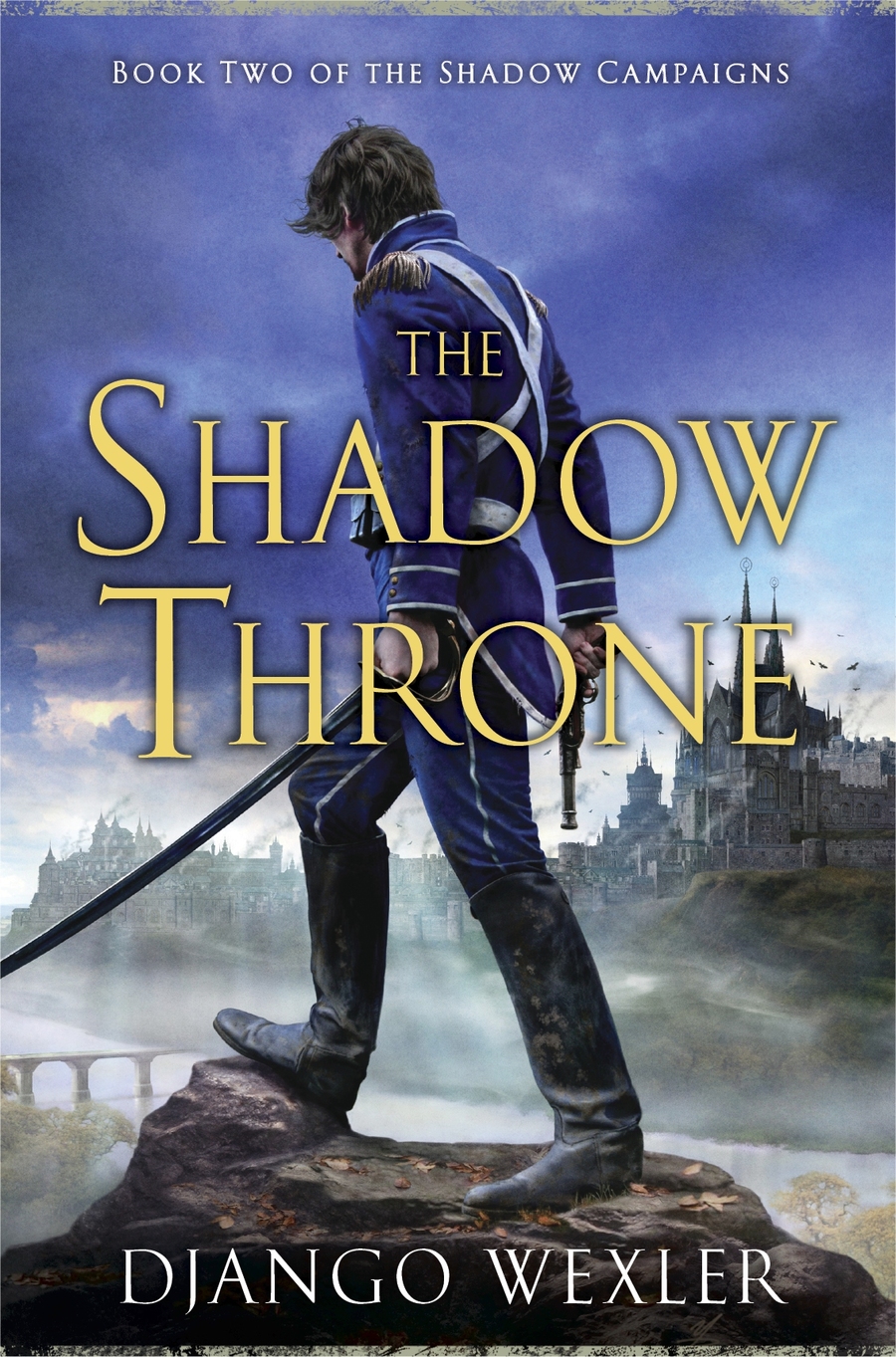
But there’s a handful of eye-catching new releases in the mail and I’m tempted to take a few home. The most interesting to me is Django Wexler’s The Shadow Throne, the sequel to The Thousand Names.

…

Read More Read More

Vintage Treasures: Martians, Go Home by Fredric Brown

Vintage Treasures: Martians, Go Home by Fredric Brown

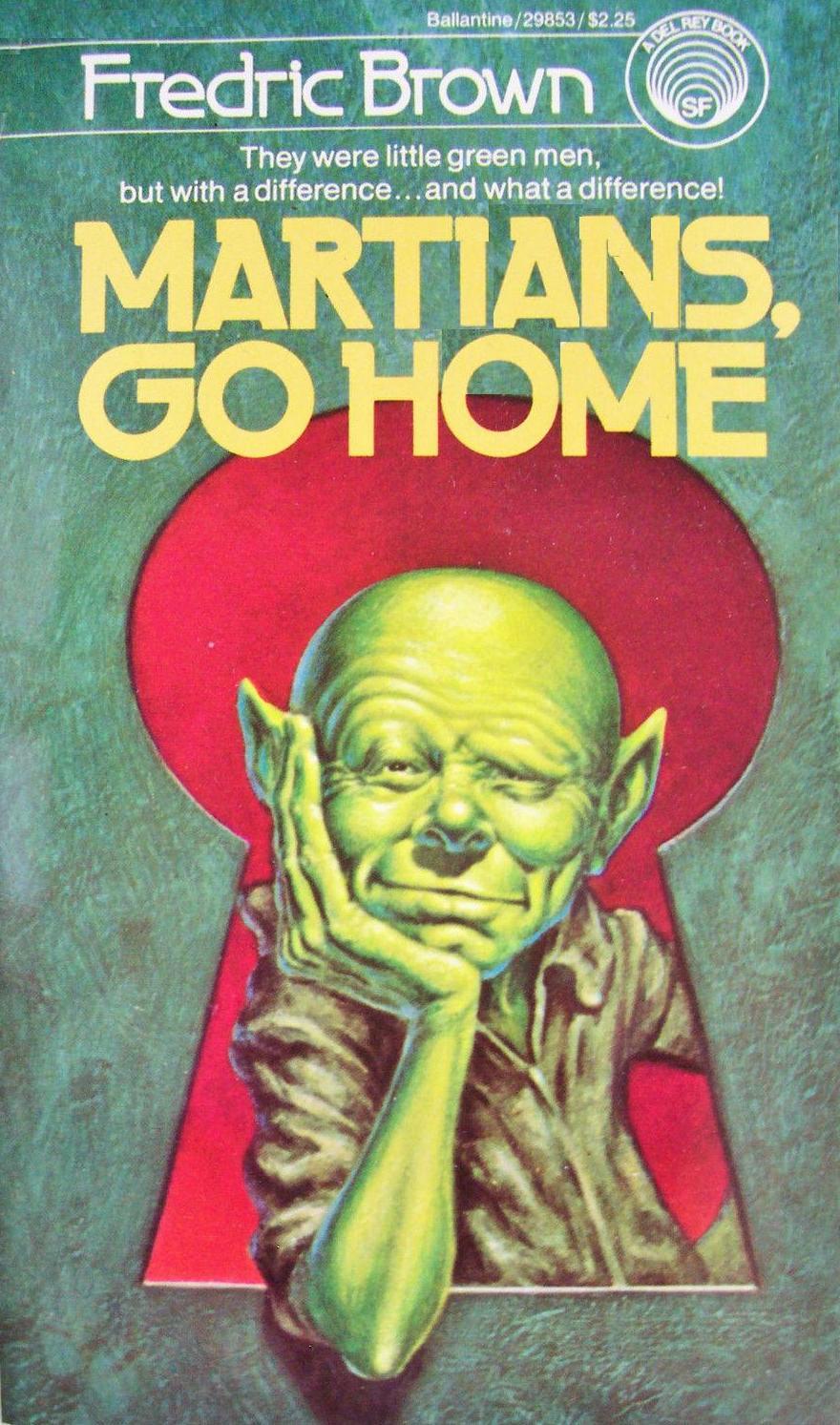
Martians-Go-Home-smallThe last time I talked about Fredric Brown, I called The Best of Fredric Brown one of the best short story collections I’ve read in years. Brown is best remembered today for his short stories — including  “Arena,” “Puppet Show,” and “The Geezenstacks” — but his novels are also fondly remembered.

Martians, Go Home is probably his most famous. A shorter version originally appeared in the September 1954 issue of Astounding; it was expanded a year later for publication in hardcover by E. P. Dutton. Set in the distant future of 1964, it begins as SF writer Luke Deveraux opens the door of his desert cabin in a drunken stupor to find a little green Martian, a one-creature invasion who proceeds to make Deveraux’s life hell. Richard A. Lupoff called it “one of the most charming bits of SF-whimsy ever written.” Here’s the description from the back of the 1976 Ballantine paperback.

THEY WERE GREEN, THEY WERE LITTLE, THEY WERE BALD AS BILLIARD BALLS AND THEY WERE EVERYWHERE!

Luke Devereaux was a science fiction writer, holed up in a desert shack waiting for inspiration. He was the first to see a Martian… but he wasn’t the last!

It was estimated that one billion of them had arrived — one to every three human beings on Earth — obnoxious green creatures who could be seen and heard, but not harmed, and who probed private sex lives as shamelessly as they probed government secrets.

No one knew why they had come. No one knew how to make them go away — except perhaps, Luke Devereaux. Unfortunately he was going slightly bananas, so it wouldn’t be easy. But for a science fiction writer nothing was impossible…

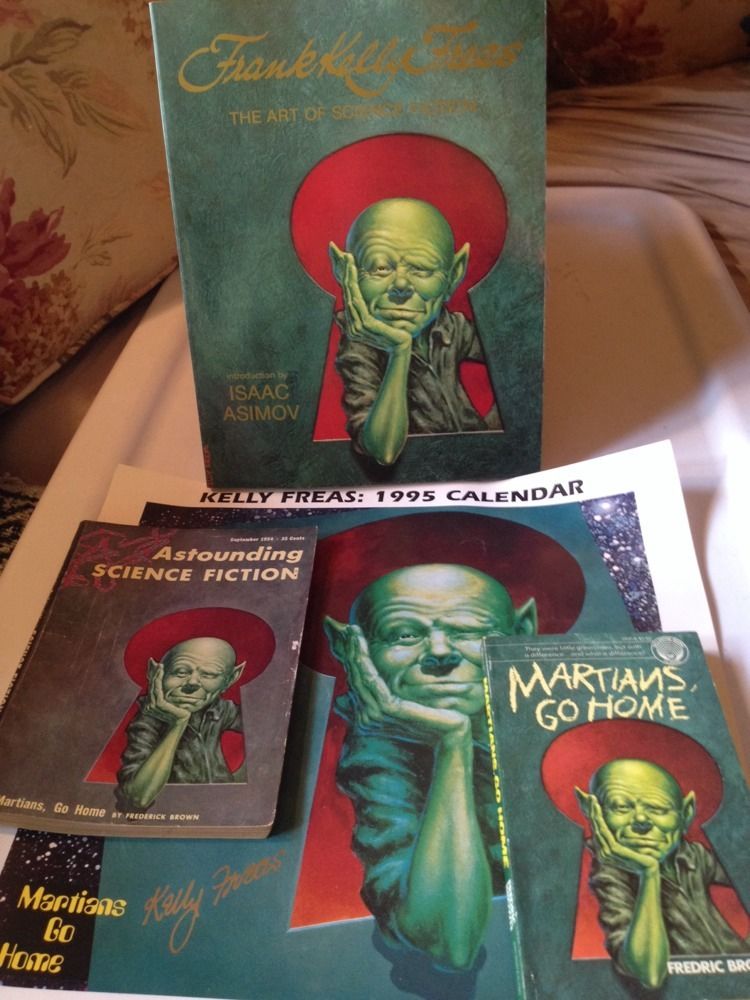
The cover painting by Frank Kelly Freas became one of his signature works, used as the cover of Astounding, two paperback editions, a calendar, and Freas’s art book (see the various versions here.)

Martians, Go Home was published by Ballantine Books in September 1976. It is 163 pages, originally priced at $1.50. It is currently out of print, but available in digital format from Hachette and audio book from Skyboat Media.

Welcome To The Commonwealth: John Myers Myers’ Silverlock

Welcome To The Commonwealth: John Myers Myers’ Silverlock

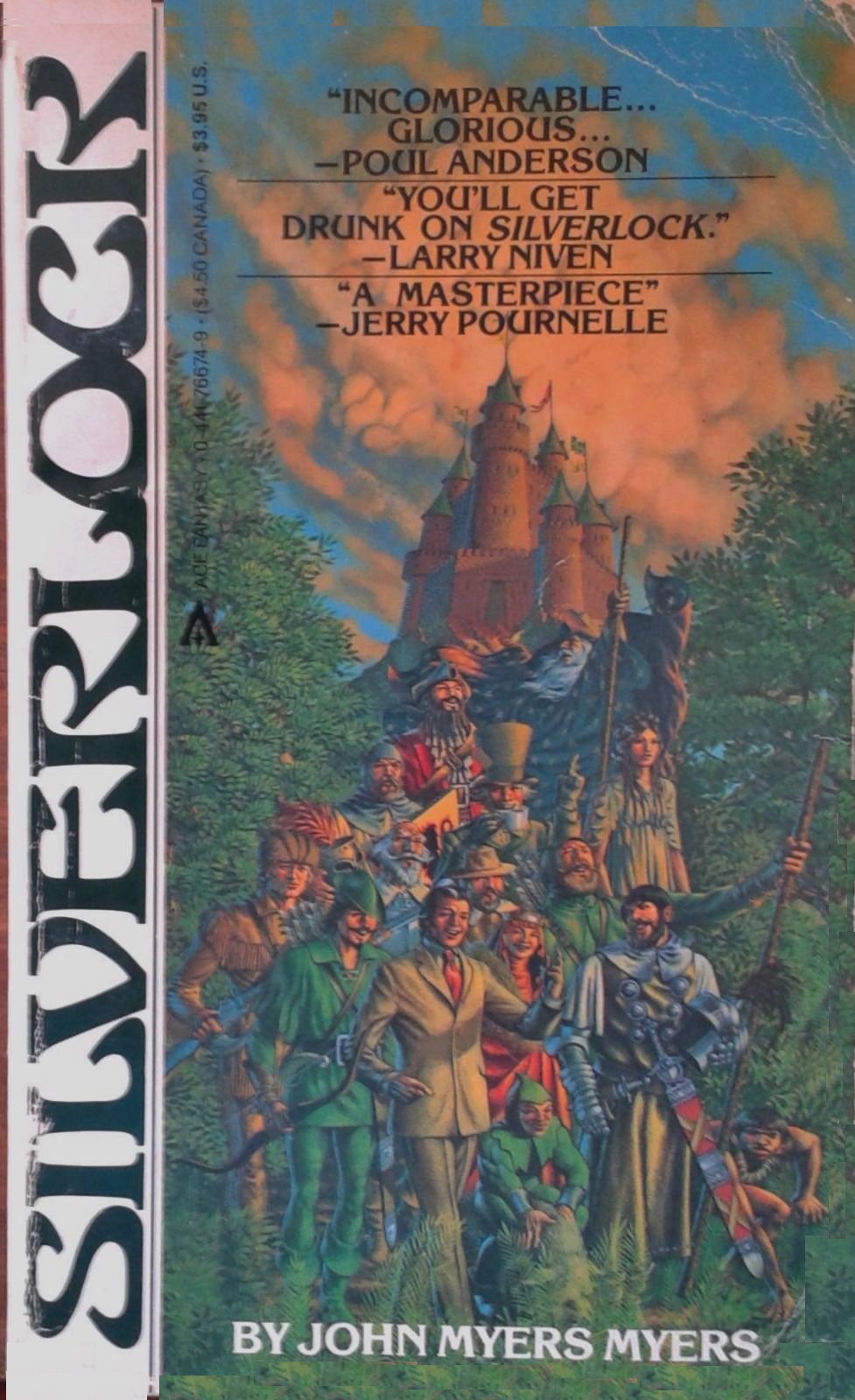
Silverlock Ace paperbackLast week, I was talking about L. Sprague de Camp and Fletcher Pratt’s Compleat Enchanter and it occurred to me that one of the great pleasures of that work is encountering familiar myths, persons, and fictional events in a new guise and from a new perspective. It’s also a bit intimidating, from the point of view of a writer, to realize just how thoroughly de Camp and Pratt had to know their source materials.

It doesn’t take very long to go from these thoughts to the great masterwork of this type, John Myers Myers’s Silverlock. On the surface, the book tells the story of  A. Clarence Shandon – re-christened Silverlock due to a white streak in his hair —  on his journey of self-discovery after being shipwrecked on the shores of the Commonwealth.

It doesn’t take long, in fact he’s still in the water,  for the well-read person to begin to find a certain quality of familiarity in the narrative, to figure out that Shandon has made landfall in the Commonwealth of Letters. From the very first, every  person he meets, every place he goes, everything that happens to him, alludes to some piece of literature. Every single person, place, or thing. What adds to the pleasure is that Shandon himself has no idea of what’s happened to him. His degree is in business administration.

Now this might strike you as a bit overwhelming, or even a bit tedious, but it isn’t. Shandon himself, without being aware of it,  provides the key to enjoying the book:

At times the mind works on two levels at once, and it was so with mine on this occasion. Half of it was giving itself gleefully to the moment, while the other half was revolving a new idea. What had impressed me was that this friar was well-informed and had a lot of fun out of that fact alone…  I glimpsed the concept that to know a thing for itself could be a source of joy. Take the song we were bellowing. It was easy to appreciate, but I would have had more chuckles out of if I had known, as the others did, about the personages involved.

…

Read More Read More

Blogging Sapper’s Bulldog Drummond, Part Four – “The Third Round”

Blogging Sapper’s Bulldog Drummond, Part Four – “The Third Round”

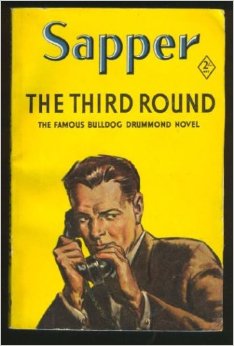
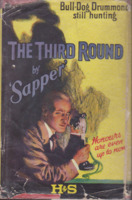
510+vaEqotL._SY344_BO1,204,203,200_20974339Sapper’s The Third Round (1926) marked a return to the more humorous tone of the first book in the series. Not only the humor, but the premise of that initial book is invoked with the decision to again build the plot around a spunky female whose doddering old father has fallen prey to heinous villains. All trace of The Black Gang (1924) and its doom-laden paranoia over England likewise falling prey to a communist revolution has been removed. In its place we have Hugh Drummond once again eager to escape the boredom of everyday life and engaging in comical banter with friends and foes alike.

The starting point for the adventure this time is the impending nuptials of Algy Longworth, Hugh’s old friend who has finally been reduced to the silly ass familiar from the stage play and film adaptations. The catalyst for Algy’s descent into idiocy is his having fallen head over heels in love to the extent that he now horrifies his friends by reciting poetry. So serious is his obsession with the girl of his dreams that he has become a literal walking disaster shunned by all who know him.

…

Read More Read More

The Drawing of the Dark by Tim Powers

The Drawing of the Dark by Tim Powers

oie_843719JA9UJcX8I have loved the work of two-time World Fantasy Award-winning and two-time Philip K. Dick Award-winning author Tim Powers ever since I read The Anubis Gates (one of the foundational works of steampunk) back in 1984. Since then, I’ve been equally thrilled by a number of his other books, including The Stress of Her Regard, his tale of artists and vampiric monsters; Last Call, about the search for the Fisher King in Las Vegas; and Three Days to Never, involving time-travel, Albert Einstein, and Charlie Chaplin.

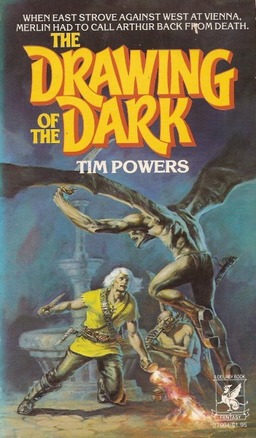
Every few years I feel the pull to revisit his third novel, The Drawing of the Dark (1979). It’s a swords & sorcery adventure set in 1529 and climaxing during Suleiman the Magnificent’s siege of Vienna.

Briefly, The Drawing of the Dark is about the adventures of Brian Duffy, an aging soldier of fortune who encounters a stranger with an offer of employment at just the time circumstances require him to flee Venice.

The old man who’d hailed Duffy stood by the window, smiling nervously. He was dressed in a heavy black gown with red and gold embroidery at the neck, and wore a slim stiletto at his belt, but no sword.

“Sit down, please,” he said, waving at the chair.

“I don’t mind standing,” Duffy told him.

“Whatever you prefer.” He opened a box and took from it a narrow black cylinder. “My name is Aurelianus.” Duffy peered closely at the cylinder, and was surprised to see that it was a tiny snake, straightened and dried, with the little jaws open wide and the end of the tail clipped off. “And what is yours?”

Duffy blinked. “What?”

“Oh! I’m Brian Duffy.”

Aurelianus nodded and put the tail end of the snake into his mouth, then leaned forward so that the head was in the long flame of one of the candles. It began popping and smoldering, and Aurelianus puffed smoke from the tail end.

…

Read More Read More

New Treasures: Flight of the Golden Harpy by Susan Klaus

New Treasures: Flight of the Golden Harpy by Susan Klaus

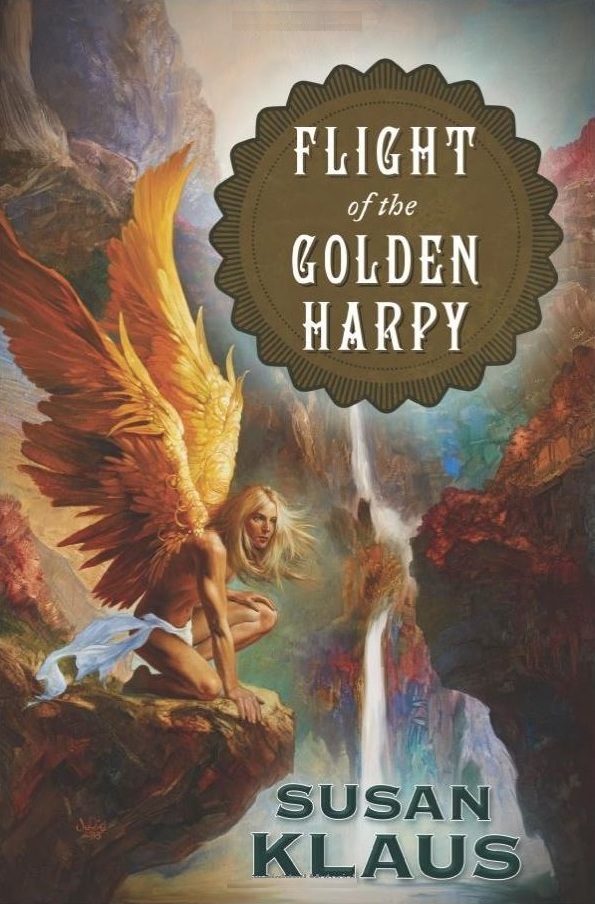
Flight of the Golden Harpy-smallI picked up a copy of Susan Klaus’s debut novel over the weekend, and so far have been intrigued. It’s romantic fantasy dressed up as science fiction, in which a young woman returns to the jungle planet of Dora, where long ago she was saved by a male harpy with beautiful golden coloring. But the human colonists of Dora treat harpies like dangerous animals and hunt them like wild game.

This morning, I read a guest post by Klaus at SF Signal, where she reveals that Flight of the Golden Harpy was inspired by an encounter with Brad Pitt while she was an extra on Oceans Eleven:

The guy wasn’t a disappointment… Brad is even more gorgeous in person. After 12 hours of gawking and drooling, I learned he was also a nice, down-to-earth guy. But his looks and personality had nothing to do with my book dedication or why he’s my main man and character in my books. It came from how Brad was treated when he first walked on the set. The extras immediately mobbed him. He smiled, signed their autographs, and [posed] for their little cameras, desperately trying to appease the crushing crowd. It was sad. Even on a closed set, he was smothered and harassed. Going out in public must be a nightmare for him. Sure he’s handsome and has fame, and fortune, but is it worth a hectic stressful life with the press and fans constantly stalking and pursuing him like wild game…

I drove home and realized that good-looks can have drawbacks, especially in his case. That night I started writing my fantasy about a jungle planet with the point of view of the beautiful winged harpies, half-bird, half-human creatures that can’t understand mankind or why humans hunt and kill them for their wings that become mounted trophies on a wall. I gave Brad Pitt credit because he inspired the story, and the novel is also dedicated to our vanishing wildlife.

Flight of the Golden Harpy was published by Tor Books on June 17, 2014. It is 400 pages, priced at $26.99 in hardcover and $12.99 for the digital edition.

The Public Life of Sherlock Holmes: Murder By Decree

The Public Life of Sherlock Holmes: Murder By Decree

That hairy fellow is director Bob Clark

Thanks in large part to Nicholas Meyer’s The Seven Per Cent Solution (book and film), Sherlock Holmes had a revival of popularity in the mid seventies. This resulted in an under-appreciated British-Canadian big-screen effort, Murder By Decree.

The most famous detective had tackled the most famous serial killer, Jack the Ripper, in 1965’s A Study in Terror. Originally conceived as a sequel to Christopher Lee’s under-achieving Sherlock Holmes & The Deadly Necklace, John Neville played a solid Holmes, though saddled with Donald Houston’s doofus of a Watson.

A bit lurid, it’s a good Holmes film, though promoted to appeal to Adam West’s very popular ‘Batman’ TV show crowd (“Here comes the original caped crusader”).

The Ripper File was a book based on Jack the Ripper, a BBC miniseries in which two popular TV detectives investigated the Jack the Ripper case. That miniseries introduced Joseph Sickert and his royal conspiracy theory (later turned into Stephen Knight’s book, Jack the Ripper: The Final Solution) to the world.

Director and producer Bob Clark (whose next film, improbably, would be Porky’s) built his story around The Ripper File. There are several variations of the royal conspiracy theory and Murder by Decree changes some (but not all) of the names and follows one of them.

…

Read More Read More