Weird Times 6: Journalism and Politics
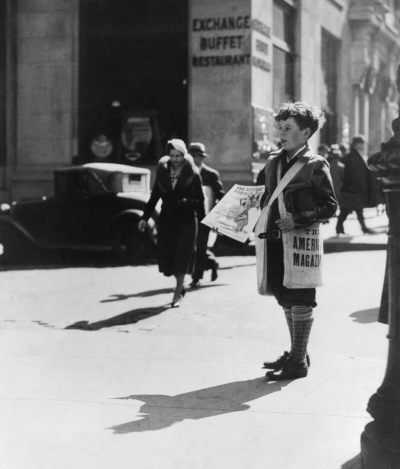
This is the sixth post in a series reflecting on the world of the 1920s as a background to early issues of Weird Tales. Imagine that you’re an American in a big city in 1923, and you’re taking a walk to the newsstand to buy the first issue of a new pulp fiction magazine. What sort of things might you see? What do those things suggest about ways people think? What do they say about the stories they tell?
And what might you hear? Cars, of course, and maybe the buzz of conversation around you. But perhaps you’ll hear the voice of a boy on a streetcorner, holding up a newspaper and crying out a still-famous phrase: Extra! Extra! Read all about it! For this is a time when newsboys are still a feature of urban life.
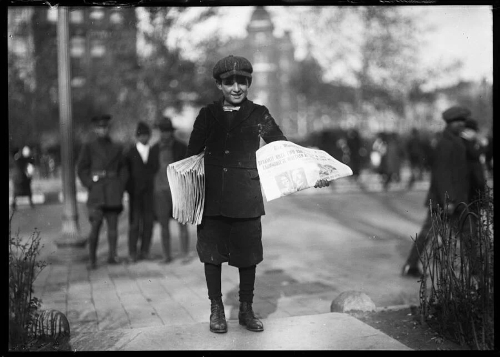
Newsboys, newsies, have been a tradition since 1833, when the New York Sun hired boys to sell papers; coincidentally or not, a year later it had the largest circulation in the United States. Technically, most newsies in 1923 are independents who buy newspapers wholesale to resell at retail price. The profession gives boys a way to make money; not great money, but for runaways, the homeless, or boys from desperately poor families, it can be a lifesaver. The problems are obvious, starting with issues around child labour, and extending to everything you might imagine when a literal child is left unsupervised on a city street corner for hours effectively announcing to passersby that he’s got a cash box full of change.
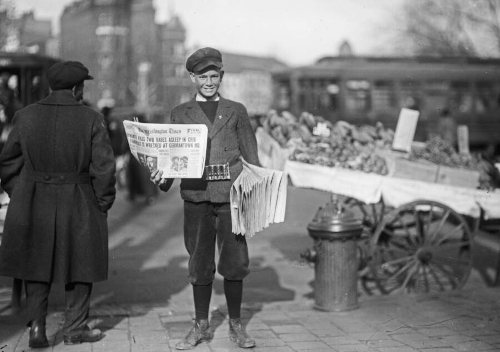
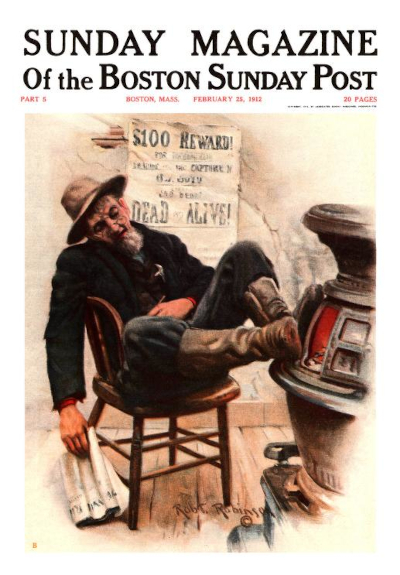
Some papers are sold starting in the morning, some in the afternoon or evening; evening papers tend to have more dramatic news and more spectacular design, which drive individual purchases as opposed to subscriptions. Some daily papers have Sunday editions, usually with extra sections and larger circulations. Sunday supplements, effectively small magazines in the form of a separate section within the Sunday paper, might include colour newspaper strips, serialised fiction, and puzzles. Daily papers circulate thirty miles or more, well into a city’s hinterlands, and extra editions, the source of the classic newsboy’s cry, are printed to report significant breaking news.
The Great War has also brought change to the newspaper business, as it has to so many others. After newspapermen stationed in the UK were exposed to British tabloid papers, the first North American tabloids appeared, starting with the New York Daily News in 1919. More traditional papers profess to be outraged by the tabloid focus on splashy graphics, celebrity gossip, sex scandals, and crime stories, but in fact newspapers have long tried to drum up sales with all those things (though admittedly not to the same extent). In particular, Joseph Pulitzer began publishing the sensationalist St. Louis Post-Dispatch in 1878, then applied that formula to the New York World starting in 1883; this led rich young man William Randolph Hearst to try the same approach with the San Francisco Examiner starting in 1887 before trying to beat Pulitzer on his own ground with the New York Journal in 1896.
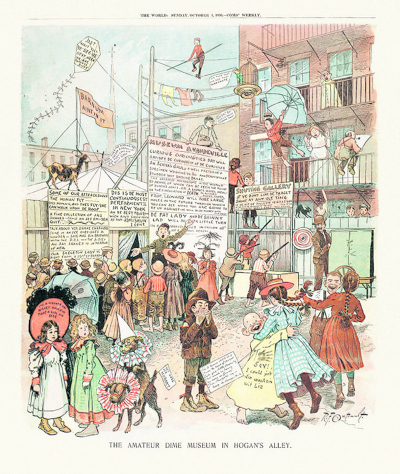
Pulitzer turned away from yellow journalism after the Spanish-American war, which was allegedly fostered or at least encouraged by yellow journalists, and died in 1911, leaving instructions in his will for annual prizes to be established for excellence in journalism and writing. Hearst is still publishing, and owns over 25 papers. In 1924 he’ll open a tabloid of his own, the New York Daily Mirror.
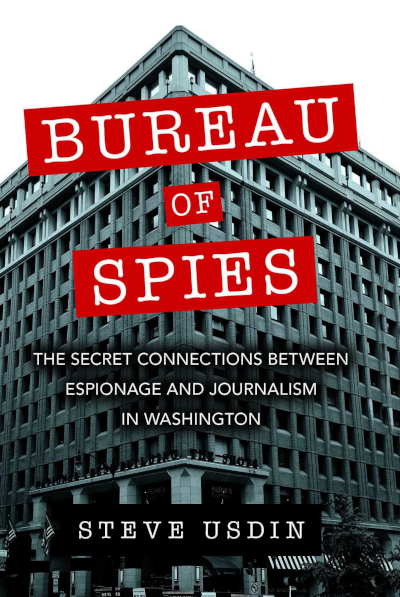
And of course outside the city journalists continue to cover important subjects. In 1908, the National Press Club was founded by journalists in Washington, D.C., who were fed up with having to constantly hunt about for locations to hold their poker games. It grew rapidly. In his 2018 book Bureau of Spies, Steven T. Usdin describes the 1925 construction of the National Press Building in Washington D.C. as coming at the beginning of the American capital’s “long, slow transition from sleepy, stagnant southern backwater to semi-sophisticated city.” He notes that the new skyscraper’s female elevator operators challenged norms in “a city that clung to to old ideas of decorum long after they’d been abandoned in more modern metropolises like New York and Chicago.” He quotes a 1927 Washington Post columnist observing that some men took off their hats for the operators, while “others keep on their Kellys until some other woman enters the car, and they uncover the old bean, although the passenger may be half as good looking or gracious as the elevator operator. … There is a third class of men who lift their hats neither for the female operator nor the woman passenger.” The building also will have a separate elevator for men only, and women will not be allowed into the National Press Club at the top of the building until 1971; the first Black man will be allowed to join the Club in 1955.
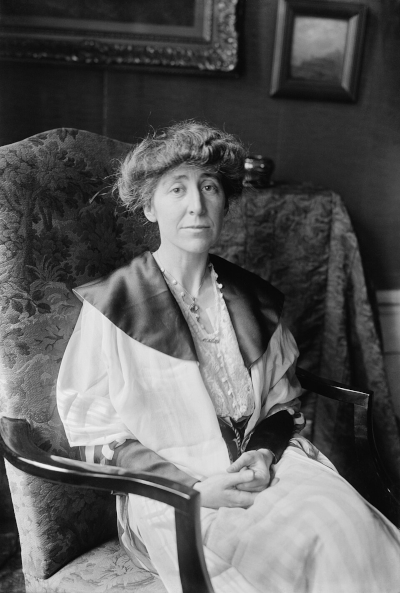
At this point it is worth shifting focus from journalism to the political scene American journalism covers, starting with the immediate aftermath of the 19th amendment. As it turned out, the 35 to 45 percent of women who voted in the 1920 federal election were split between parties in similar proportions as men. This would hold true for some time, but in 1923 there is still speculation about (and fears of) a “female voting bloc.” Most candidates for office have been male, but not all; 1916 had already seen the first woman elected to Congress, Jeannette Rankin, and in 1925 two women would win special elections for governorships. The first woman to serve in the Senate was Rebecca Latimer Felton, appointed for one day in 1922; a supporter of lynching, she was also the last slave-owner to sit in the Senate.
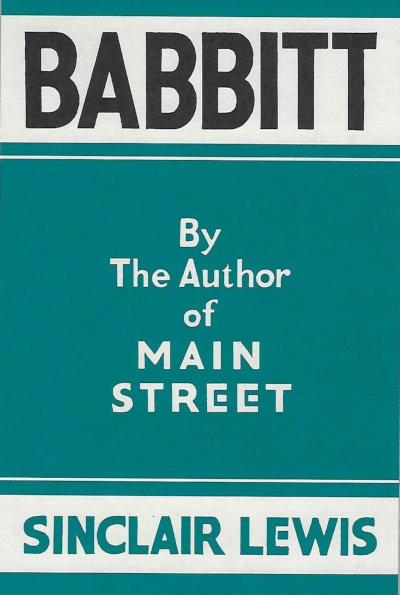
But it is also true that the political energy of the 1920s is changing. The first two decades of the twentieth century, and usually the last decade of the nineteenth with them, have been called the Progressive Era. During these years assorted political reforms were enacted forming the basics of a social safety net and welfare state. But the 1920s, in the eyes of many observers even at the time, will be a less idealistic time than the 1910s; thus, for example, Sinclair Lewis’ 1922 novel Babbitt struck a nerve with its depiction of a self-satisfied member of the bourgeoisie, who has become a symbol of society’s drive to conformity and complacency. If the reforms, intense political clashes, and controversial war experienced by America in the 1910s made the decade a loose equivalent to the 1960s, the materialistic 20s could be seen as parallel to the 1970s.
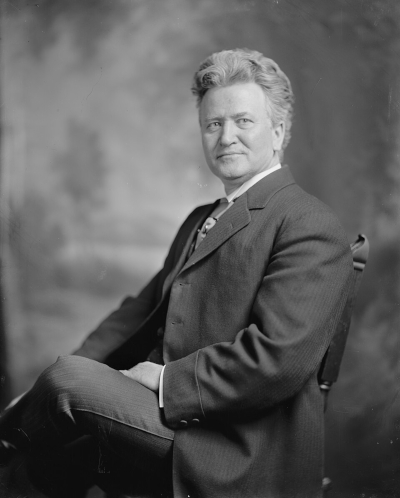
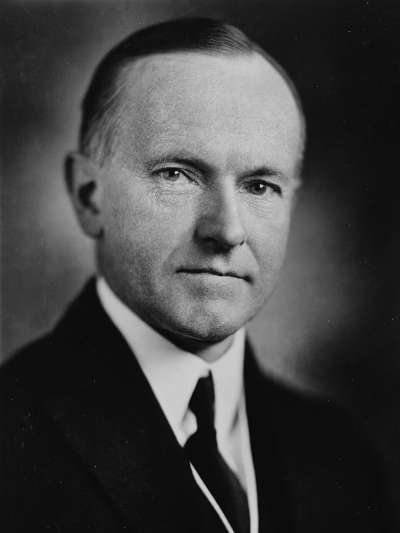
Consider what will happen in the 1924 election. Calvin Coolidge will run for the Republicans, pledging to continue Harding’s policies of cutting taxes (and immigration), and of limiting government. But the Democrats, running West Virginian John W. Davis, will promise a similar platform. The only option for the political left will be the Progressive Party, running Robert M. (“Fighting Bob”) La Follette, former governor of (and current Senator from) Wisconsin, on a platform that included nationalisation of railways and electric utilities, the abolition of child labour, and cheaper credit for farmers; he’ll be supported by the Socialist Party of America, then undergoing factional conflict and governmental repression, and by the American Federation of Labour.
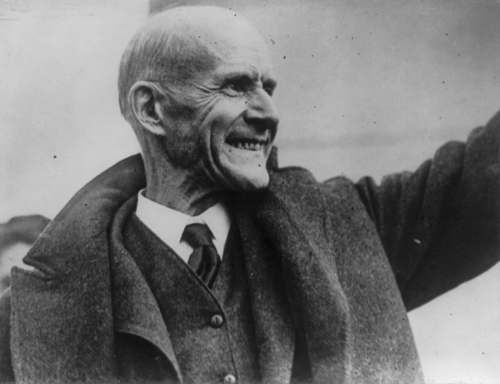
In 1923 one might be forgiven for wondering what exactly the future holds. Not only was the 1924 election still to come, Eugene Debs of the Socialist Party had won over 900,000 votes in both the 1912 and 1920 elections (though in 1916, when Debs did not run for President, the Socialists only drew 590,524 votes). The 1912 election marked the highest percentage of votes ever won by a Socialist Presidential candidate, at 6%, but then in 1920 Debs did suffer the minor inconvenience of being imprisoned for sedition in the Atlanta Federal Penitentiary.
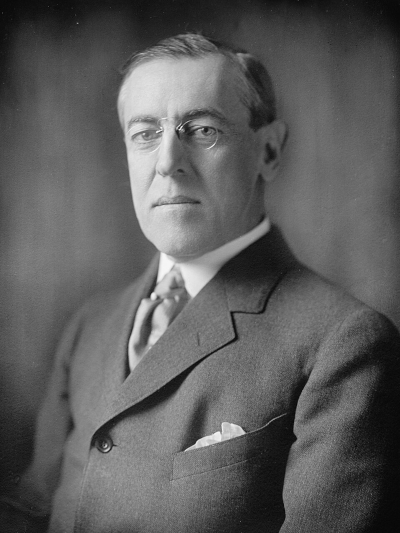
In particular, Progressives were often uninterested in issues relating to race and what would come to be called social justice. Woodrow Wilson, the second Democrat and first Southerner elected to the Presidency since the Civil War, was considered friendly to Progressive causes and also segregated the federal bureaucracy. (Technically, Wilson, born in 1856, would also end up the only former Confederate elected to the Presidency.) Oliver Wendell Holmes, Junior, a Supreme Court justice, liked to tease his Progressive friends by arguing, not necessarily incorrectly, that they cared more about Reds (Communists) than Blacks.
Worth noting that the Bureau of Biological Survey also protects wildlife habitats. This was recognised as an issue (at least by some) beginning in the late nineteenth century, particularly in Alaska. Theodore Roosevelt began designating certain areas as National Wildlife Refuges in 1903. The idea of species extinction caused by human action was still relatively new; when the last passenger pigeon died in a zoo in 1914, a writer for the Washington Post was moved to reflect that “When we talk of extinct animals, we think of creatures like the mammoth or mastodon, which died out thousands upon thousands of years ago. We seldom realize that there are whole species which have vanished quite lately, and many which are at present just trembling in the balance.” The American bison was saved by a major popular campaign, eventually supported by government action, while the 1900 Lacey Act, enforced by the Bureau of Biological Survey, protected several species of birds which were becoming endangered by the trade in feathers for women’s hats.
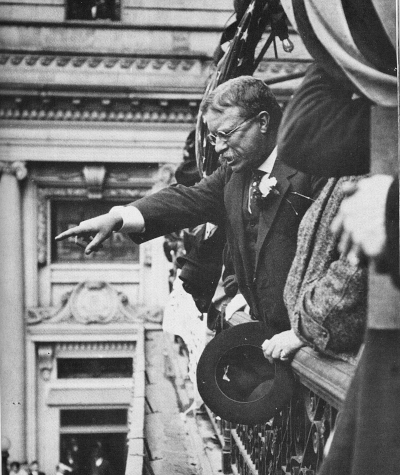
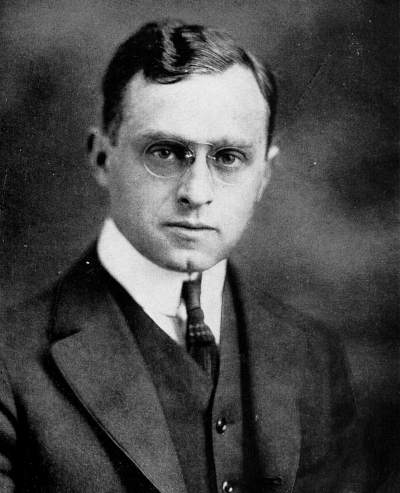
On the eve of the 1916 Presidential election, a 34-year-old Progressive named Felix Frankfurter, who would later help found the American Civil Liberties Union and still later become an associate justice of the Supreme Court, wrote a 23-page memo for circulation among his friends and mentors outlining what he saw as the virtues and defects of Wilson and Republican candidate Charles Evans Hughes. This was not a one-sided document, but a serious attempt to analyse which man would be better for Frankfurter’s preferred causes. Woodrow Wilson had been in power for four years, but it wasn’t immediately obvious which candidate was better for Frankfurter’s Progressive ideals.
This is a time when political corruption is common, and not just in the form of outright bribery. Many American cities are run by political patronage machines, hierarchical but non-democratic organisations that provide jobs and other favours in exchange for votes, continued power, and, often, money. Notorious examples include Chicago’s Gray Wolves — corrupt aldermen including the memorably-nicknamed “Bathhouse” John Coughlin and “Hinky Dink” Mike Kenna — and New York’s longstanding Tammany Hall. Tammany Hall’s power will only begin to decline after the death of its current boss, Charles Francis Murphy, in 1924.
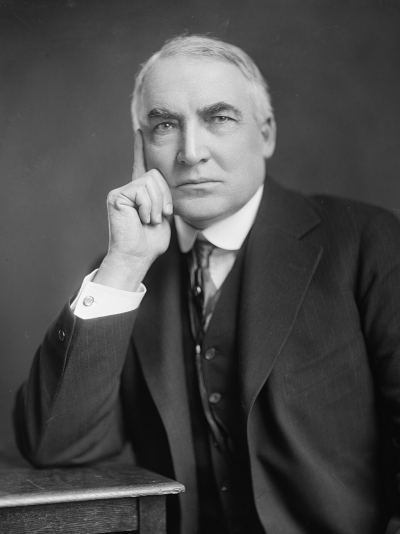
Harding is well-liked, notwithstanding the corruption scandals about to break, and notwithstanding the fact that his nomination in 1920 as the Republican candidate for President only came after intense behind-the-scenes negotiations among party power brokers in the original smoke-filled room. (The modern primary system is decades away from its creation.) That sympathy will dissipate after his death. In 1927 his lover Nan Britton will publish a tell-all book revealing that she had an illegitimate daughter by Harding (and decades later DNA tests will prove she told the truth). Even Harding’s personal charisma will be forgotten, his deportment remembered now for things like his having sex with Britton in a closet near the Oval Office, or an incident during a conversation when he casually pissed into a White House fireplace. At the moment, he’s still regarded fondly; when he dies later this year, Vice-President Calvin Coolidge will actually not know for several hours, as Coolidge will be visiting his home in Vermont — which has no telephone or electricity.
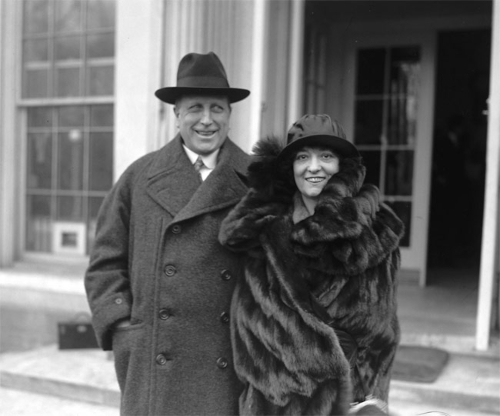
In 1884, at the age of 18, Harding bought his bankrupt hometown newspaper, the Marion Star, and built up its circulation. He loved the paper, and maintained ownership until June 1923, not long before his death in August. This mixture of politics and journalism wasn’t unusual; Joseph Pulitzer had been a state representative in Missouri and a Congressman in New York, while William Randolph Hearst twice won elections to Congress and tried for the 1904 Democratic nomination for President. In particular, James Cox, who Harding thumped handily in the 1920 Presidential election, had bought a paper in Dayton, Ohio in the 1890s, and acquired another in Springfield in 1905; after his election defeat he’d buy more papers, and later radio stations, forming a media conglomerate that still exists.
In other words: both Presidential candidates in 1920 had been newspapermen at a time when newspapers were a major part of the American media diet. It’s possible to draw parallels to later politics. But what I want to suggest here is simply that it is worth pondering how in the early 1920s journalism and politics could bleed into one another as related routes to power.
Find all my posts about Weird Tales here!
Matthew David Surridge is the author of “The Word of Azrael,” from Black Gate 14. You can buy collections of his essays on fantasy novels here and here. His Patreon, hosting a short fiction project based around the lore within a Victorian Book of Days, is here. You can find him on Facebook, or follow his Bluesky account, @bookofdays.