Stop the Madness: Walter M. Miller’s A Canticle for Leibowitz
 |
 |
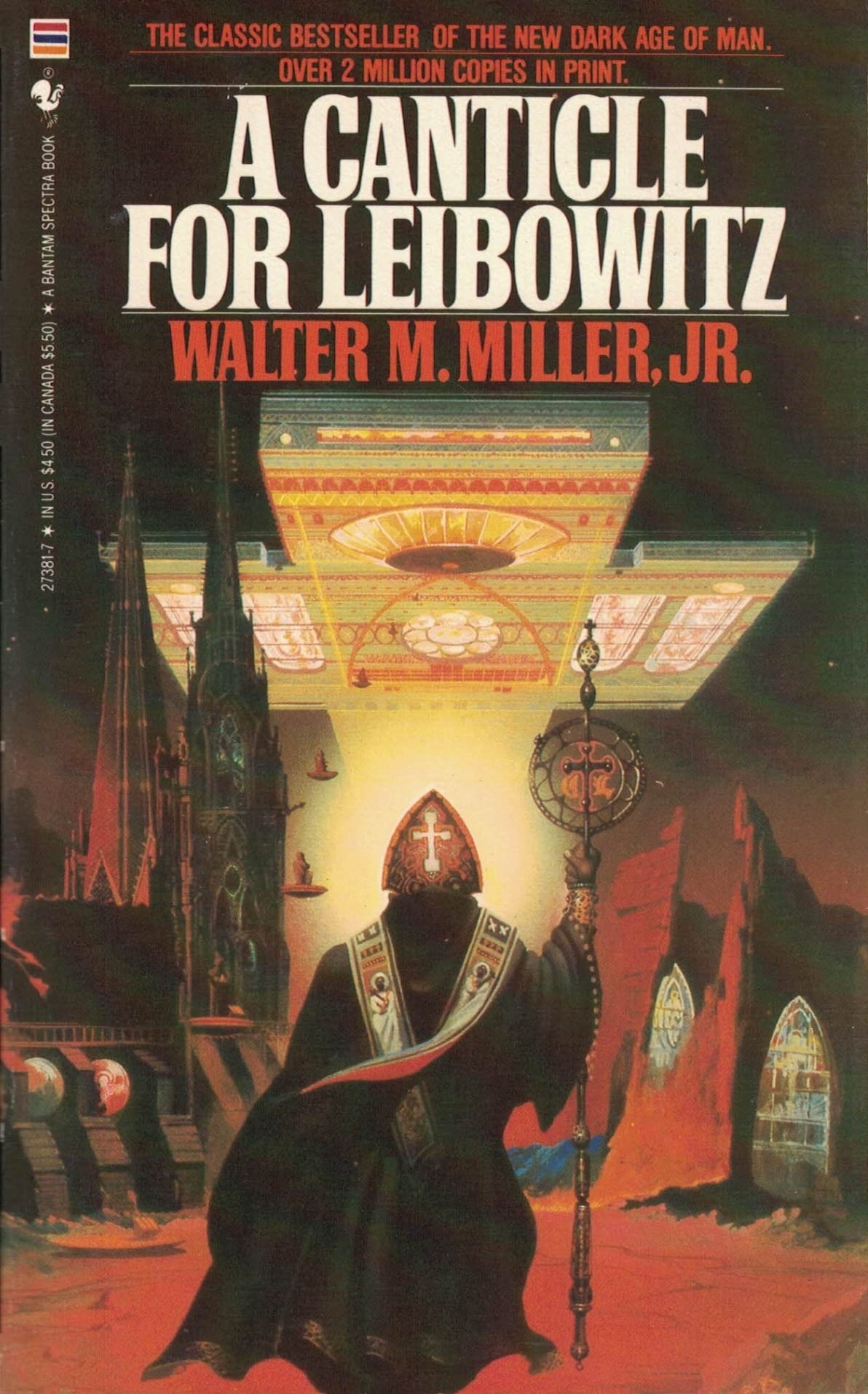
A Canticle for Leibowitz (Bantam Books reprint edition, August 1976). Cover by Lou Feck
In Walter M. Miller, Jr.’s A Canticle for Leibowitz, the humor is bleak, and the future worse. First published as a series of three stories in The Magazine of Fantasy & Science Fiction in 1955-57, and then assembled into a fix-up novel in October of 1959, Canticle is a novel pinned like a helpless butterfly to the Cold War terror of nuclear annihilation – a notion that was then fresh and febrile, but has now faded into the background, as Miller predicted, to our sorrow, that it would. The book itself remains a damning, furious read, yet it comes across, mostly, as contained – peaceful, even – as bucolic as any given warhead, up until it’s armed.
Miller’s dismay at humanity’s trajectory spills across every page, but this is no screed. He’s a story-teller, and a thoughtful, crafty one, and so he buries his polemics inside a cautious tri-partite structure, along with enough Latin to make this non-Catholic take to his on-line translator (a trick that Miller, in ‘59, could only dream of).
[Click the images to decant larger versions.]

The novel opens in a post-apocalyptic United States where what little learning remains is guarded somewhat jealously by confused, isolated remnants of the Catholic church. Deep in the Desert Southwest, a fasting monk from the local abbey encounters a vagabond pilgrim (who may or not be divinely sent, an actual Wandering Jew), and said pilgrim directs the monk with what seems like supernatural accuracy to a previously undiscovered, still-sealed fall-out shelter.
The monks discover a great many “relics” within, but the one they initially fixate on, in part because it makes no sense to them, is a prosaic shopping list: “Pound pastrami, can kraut, six bagels – bring home for Emma.”
 |
 |
The Magazine of Fantasy and Science Fiction, August 1956 and February 1957,
containing the second and third stories in the series: “And the Light Is Risen”
and “The Last Canticle”. Covers by Dick Shelton and Ed Emshwiller
What’s a good Catholic order to do when faced with such inscrutable mysteries? Hide them, that’s what – and protect them from all and sundry, even from those who might make decent use of them. Only in the book’s second portion does a budding scientist gain access to the abbey’s nascent reliquary, but by book three of this triptych, we suspect it’s all for naught. A new civilization has risen, with predictably shiny luxuries, burgeoning technology, and jealous governments, and once again the bombs (“Lucifer,” in the book’s colloquial parlance) begin to fall.
One reads A Canticle for Leibowitz with a certain despair. Out of such ingredients, no good can come, yes? Or so a lifetime of reading and living tells me.
And, because it’s germane in this instance, I think it’s only fair to admit that I have no faith whatsoever in our real-world system of nuclear détente, and I never have; détente is a status quo that works brilliantly, but only until it doesn’t. I once listened to a retired U.S. senator speak to a rapt audience, and he spent most of his allotted time recounting the many negotiations he participated in that led to tremendous missile and armaments reductions during the Cold War and glasnost. My experience of this senator’s laudatory victory lap was quite different from those around me. I wanted to leap from my seat and demand to know why he didn’t finish the job.
Pandora, perhaps, knows the answer. Or so we are told by those in charge.
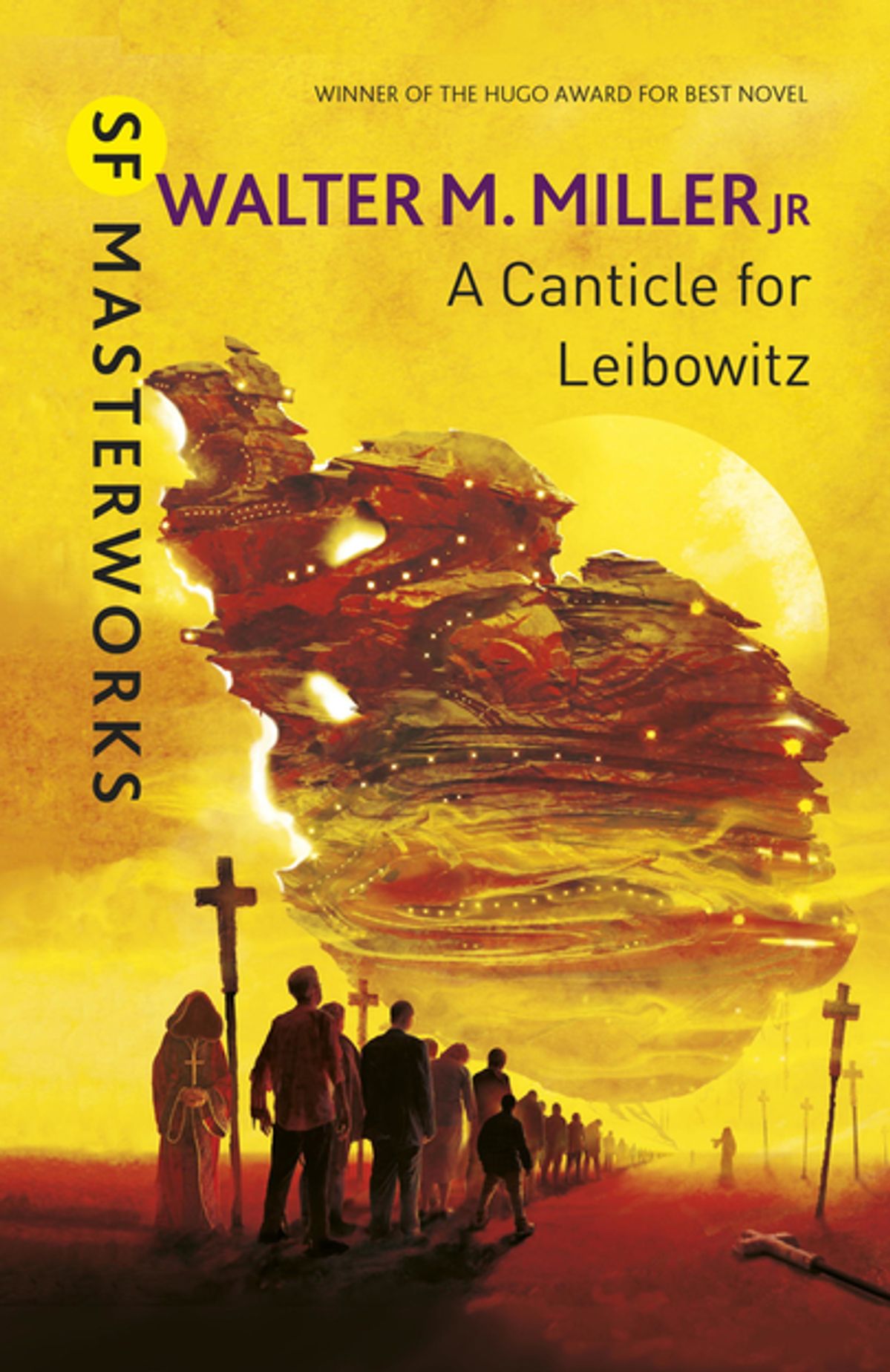
Miller’s themes are dark, no doubt, but the writing is often playful, in keeping with Beat Poetry or, sometimes, just plain nuts. More than one character teeters on the brink of sanity, and when given a chance to speak on the page, their language cantilevers toward the lunatic. I was reminded more than once of Russell Hoban’s Ridley Walker, another tome of nuclear peril and linguistic madness, or even the babbling canine escapees from The Plague Dogs (Richard Adams).
Canticle shares both temporal and fictive DNA with Nevil Shute’s On the Beach, the latter perhaps better remembered by the general public thanks to its film adaptation, anchored by Gregory Peck, Ava Gardner, Fred Astaire, and Anthony Perkins. In On the Beach, nuclear apocalypse is imminent: the world at large has already decimated itself, and now the Australian archipelago awaits the fatal radiation cloud drifting sluggishly closer. How to spend your last days, knowing that certain death is just around the corner? Shute details various choices with a clinical, wary eye.
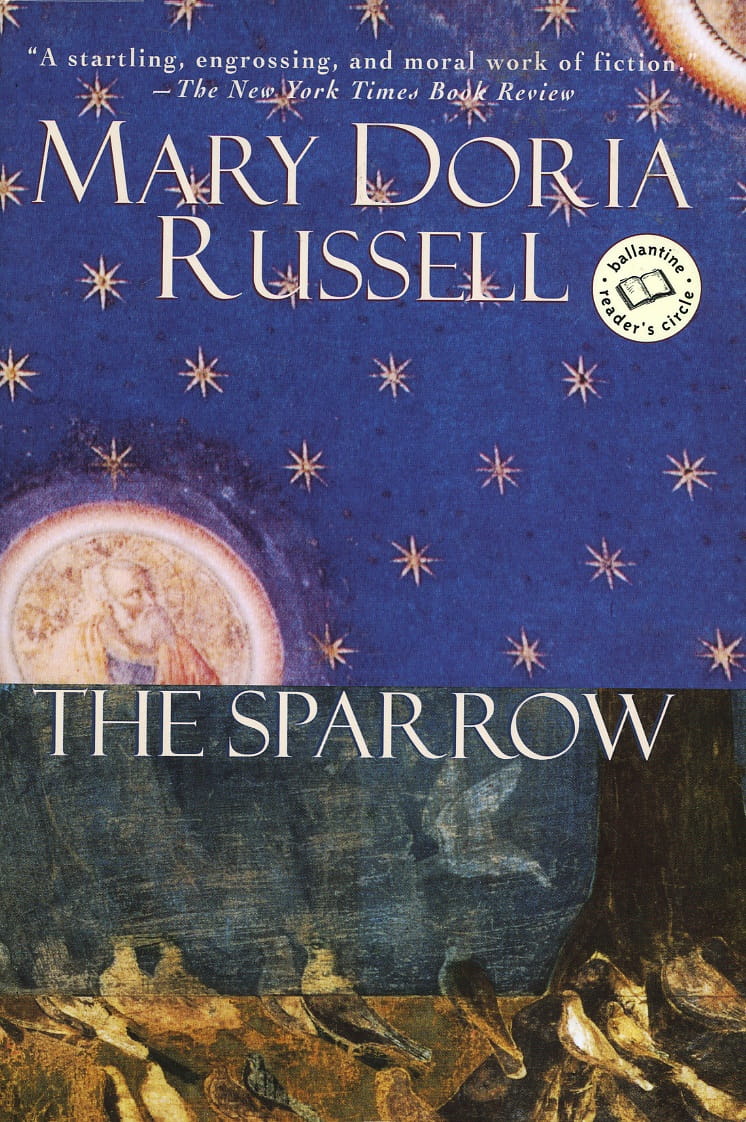
Canticle arrives in similar terrain only in the third of its three sections, and it finds the same solution as Mary Doria Russell in The Sparrow: humanity’s faithful must take to the stars for the greater glory of God. In The Sparrow, it’s the Jesuits who lead the way, but they’re not hell-bent on escape so much as extending an intergalactic olive branch.
In Canticle, the first space-farers aren’t much-mentioned, but when push comes to shove and “Lucifer” threatens to snuff out what remains of terra firma’s fauna, it’s the dregs of the papacy that race for an interstellar haven.
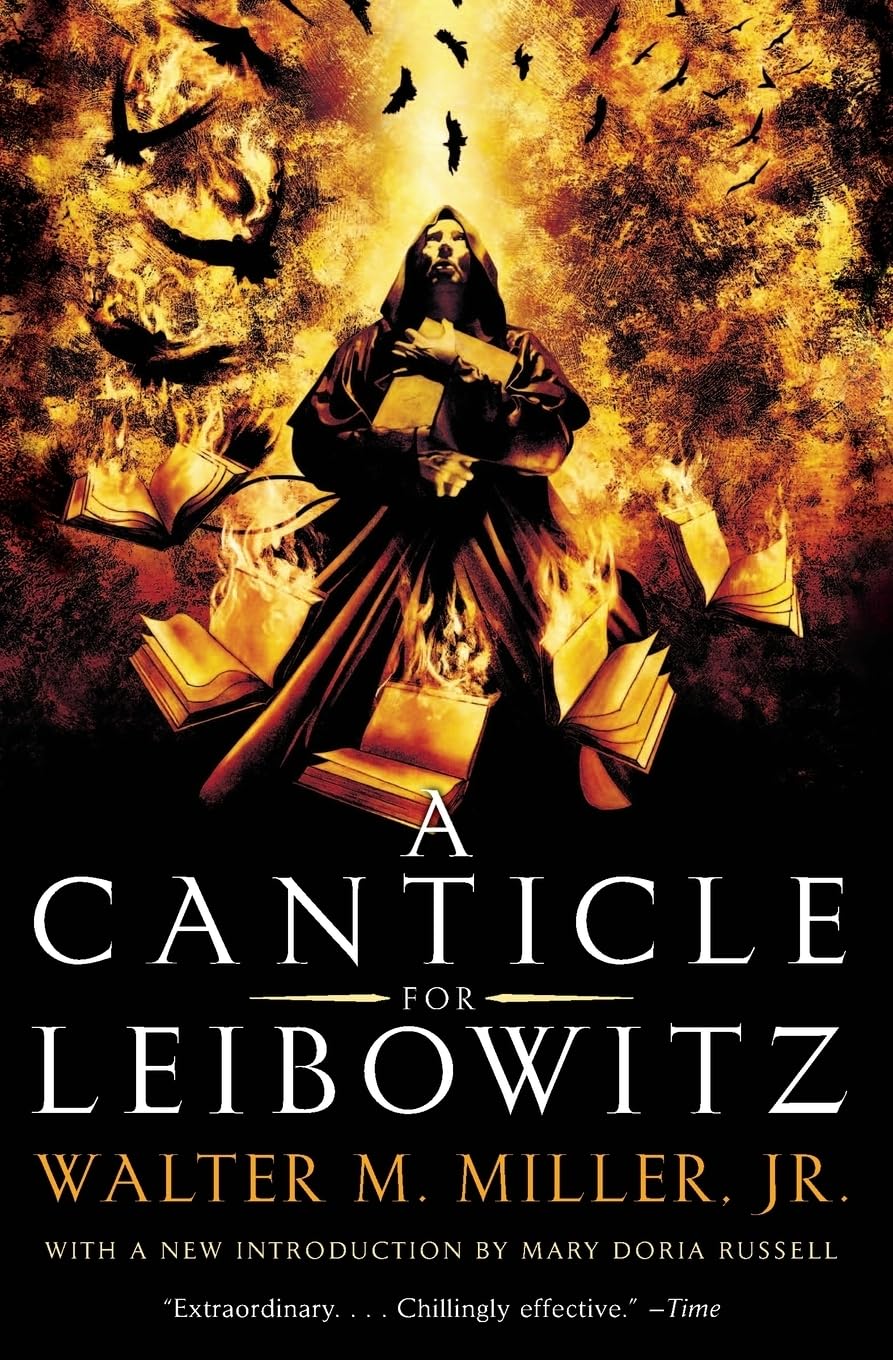
Miller seems not to take his own plot-line as particularly good news. Canticle exports religion (or at least one brand of it) to the cosmos, but the implication is that our human predilection for violence and contest will follow hard on our best selves’ heels.
If God can reach the heavens, then so, too, can Lucifer.
Mark Rigney is a writer and long-time Black Gate blogger. His latest S&S story, “The Icehawk,” is set to debut in Issue #3 of Battleborn, later this year and his stage plays can be found at Concord Theatricals and Gitelman & Good, among many other forums. His work on this site includes original fiction and perennially popular posts like “Genre 2012: the Ghetto Remains the Same.” About his recent novel, Vinyl Wonderland, reviewer Rich Horton said, “I was brought to tears, tears I trusted. A lovely work.” His favorite review quote so far comes from Instagram: “Holy crap on a cracker, it’s so good.” A preview post can be found HERE, while his website lives over THERE.