Browsed by
Category: Books

New Treasures: Weird Detectives, edited by Paula Guran
New Treasures: Weird Detectives, edited by Paula Guran

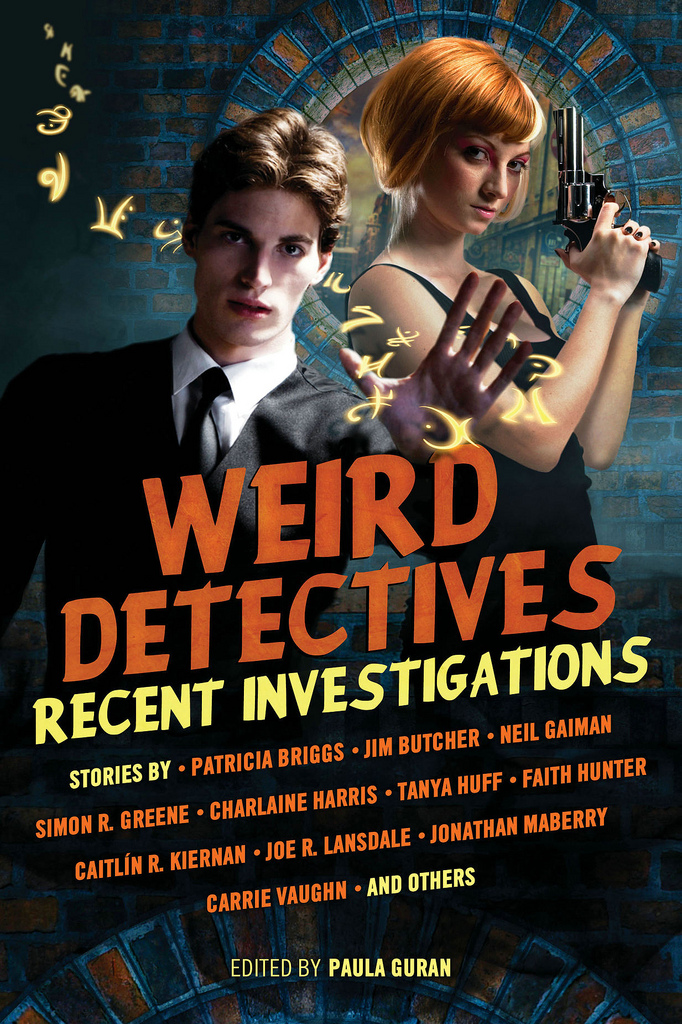
Weird Detectives-smallMan, this book is right up my alley. More than that, this book has backed up my alley, unpacked, and moved into my house.

The book in question is Weird Detectives: Recent Investigations, a fat anthology of modern fantasy reprints (nothing older than 2004) edited by Paula Guran, focusing on the new generation of occult detectives and paranormal investigators.

We love occult detectives at Black Gate — witness all the recent attention to the classics of the genre, including Josh Reynolds’s encyclopedic Nightmare Men series, William Hope Hodgson’s Carnacki The Ghost Finder, the short fiction of Joseph Payne Brennan, Manly Wade Wellman’s Complete John Thunstone and Silver John stories, and many, many others.

But it never occurred to me that people were still writing the stuff, despite the resurgence in urban fantasy over the last decade. This is why Paula Guran is a genius. She never lost sight of the thread connecting the pulp classics and the work being done in the same mold today by Neil Gaiman, Elizabeth Bear, Jim Butcher, Joe R. Lansdale, Carrie Vaughn, P.N. Elrod, Bradley Denton, Tanya Huff, Jonathan Maberry, Patricia Briggs, Faith Hunter, and many others. Here’s an excerpt from her excellent introduction:

Ghosts appear to Harry Escott in Fitz-James O’Brien’s short story “The Pot of Tulips,” published in Harper’s New Monthly Magazine of November 1855… In 1859 Escott appeared again (in O’Brien’s “What Was It? A Mystery,” also published in Harper’s) and is attacked by a supernatural entity that is, itself, the mystery.

The occult detective had been born. Also known as psychic detectives or ghost hunters, they were more often portrayed as scientists or learned doctors than as true detectives. Rather than dealing with human crimes, these investigators were involved in cases dealing with ghosts, malevolent spirits, arcane curses, demons, monsters, and other supernatural events and entities… A number of these sleuths made appearances in late nineteenth and early twentieth century fiction.
…

Read More Read More

Adventures in Horrific Fantasy Literature?

Adventures in Horrific Fantasy Literature?

fanlgTwo weeks back, my Black Gate post took a stab at identifying a handful of the most hair-raising, spine-tingling short fiction ever written (in Vintage Scares). The more I looked at the stories that I (and others) came up with, the more excited I became about them. Unfortunately, my enthusiasm only served to underscore a curious fact that I have not always been ready to claim: I have become both a consumer and a writer of horror fiction.

That’s not something I would ever have expected. My version of horror, my “elevator speech definition,” would for years have centered on the gross-out work of Clive Barker (Hellraiser) and the voyeuristic nastiness of the movies I saw growing up: A Nightmare On Elm Street, Evil Dead 2, and Friday the 13th. Horror to me meant attractive but stupid teenagers getting slaughtered and it was strictly low-brow. Not worthy of serious consideration.

Never mind that I’d already read Mary Shelley and Bram Stoker, not to mention Arthur Conan Doyle and a fair amount of Poe. By the time I’d been thoroughly eddicated by college, I’d relegated horror to a very distant cultural bayou. It was, at best, the literary equivalent of junk food.

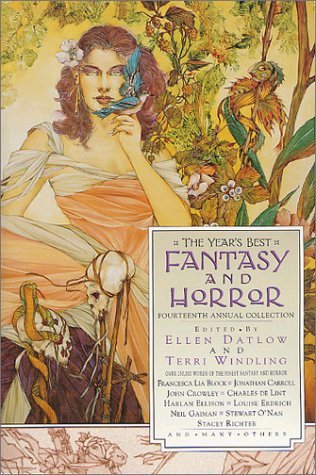
But then a funny thing happened. I bought a copy of The Year’s Best Fantasy and Horror 14th Annual Collection, edited by Ellen Datlow and Terri Windling. As with all of those (sadly now defunct) collections, fantasy and horror were presented back-to-back and face-to-face, bumped up against one another as inescapably close kissing cousins. Confronted by the likes of Susanna Clarke, Esther M. Friesner, Ian Rodwell & Steve Duffy, Tanith Lee, and Kelly Link, it was time to re-evaluate.

…

Read More Read More

The 2013 Hugo Award Winners

The 2013 Hugo Award Winners

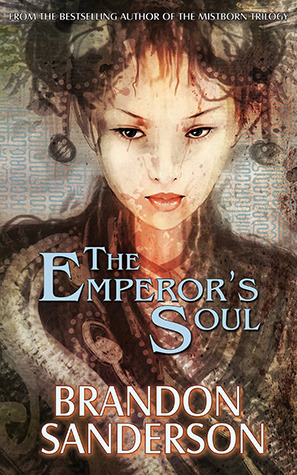
The Emperor's Soul-smallThe 2013 Hugo Awards were given out last night at LoneStarCon3, the 71st World Science Fiction Convention in San Antonio, Texas.

The complete list of winners follows.

BEST NOVEL

Redshirts, John Scalzi (Tor; Gollancz)

BEST NOVELLA

The Emperor’s Soul, Brandon Sanderson (Tachyon)

BEST NOVELETTE

“The Girl-Thing Who Went Out for Sushi,” Pat Cadigan (Edge of Infinity)

BEST SHORT STORY

“Mono no Aware,” Ken Liu (The Future Is Japanese)

…

Read More Read More

Chapter Eight Changes Everything: Iris Murdoch’s The Sandcastle

Chapter Eight Changes Everything: Iris Murdoch’s The Sandcastle

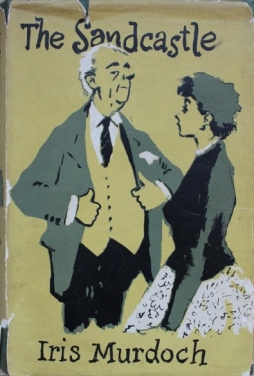
The SandcastleYou never know when you’ll find something fantastical to write about.
A little while ago, I started an ongoing project of reading through the novels of Iris Murdoch. This came out of an appreciation of A.S. Byatt’s fiction, which led to me reading her study of Murdoch’s early novel, Degrees of Freedom. That book in turn led me to start in on Murdoch. I loved her first novel, Under the Net, which is something like what might have happened if P.G. Wodehouse had written a philosophical social realist novel. The next book, The Flight From the Enchanter, was well-written but sprawling and felt overly symbolically-determined. So I started on the third novel, 1957’s The Sandcastle, unsure of what I’d find.

It’s set in a town not far from London and deals with an extramarital affair between Bill Mor (known throughout the book as Mor), a teacher at St. Bride’s school for boys, and a young painter named Rain Carter, who comes to the school to paint a portrait of the school’s former headmaster, Demoyte, a longstanding friend of Mor’s. For the first seven chapters, the book unfolds much as you’d expect from a mimetic novel. The background of Mor and his family and his school is sketched in; his political ambitions are described; the implicit conflict with his strong-willed wife Nan is set up; the personality of Rain is implied; a set of accidents throw Mor and Rain into close proximity. The prose is direct, even simple, and on the whole without ornament.

Then we get to chapter eight and everything changes.

…

Read More Read More

Black Gate Online Fiction: Pathfinder Tales: King of Chaos by Dave Gross

Black Gate Online Fiction: Pathfinder Tales: King of Chaos by Dave Gross

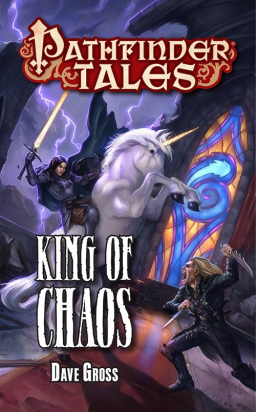
Pathfinder Tales King of Chaos-smallBlack Gate is very pleased to offer an exclusive first look at the latest Pathfinder Tales novel by Dave Gross, the acclaimed author of Prince of Wolves, Master of Devils, and Queen of Thorns.

After a century of imprisonment, demons have broken free of the wardstones surrounding the Worldwound. As fiends flood south into civilized lands, Count Varian Jeggare and his hellspawn bodyguard Radovan must search through the ruins of a fallen nation for the blasphemous text that opened the gate to the Abyss in the first place-and which might hold the key to closing it. In order to succeed, however, the heroes will need to join forces with pious crusaders, barbaric local warriors, and even one of the legendary god callers. It’s a race against time as the companions fight their way across a broken land, facing off against fiends, monsters, and a vampire intent on becoming the god of blood-but will unearthing the dangerous book save the world, or destroy it completely? From best-selling author Dave Gross comes a new adventure set against the backdrop of the Wrath of the Righteous Adventure Path in the award-winning world of the Pathfinder Roleplaying Game.

Dave Gross is the former editor of Dragon, Star Wars Insider, and Amazing Stories. His adventures of Radovan and Count Jeggare include the Pathfinder Tales novels Prince of Wolves and Master of Devils, as well as many novellas and short stories available at Paizo.com. His last novel for Paizo was the acclaimed Queen of Thorns.

We previously reviewed the Pathfinder Tales novels Death’s Heretic by James L. Sutter, Master of Devils by Dave Gross, and Howard Andrew Jones’s Plague of Shadows, and introduced you to BG Contributing Editor Bill Ward’s Pathfinder Tales story “The Box, and “The Walkers from the Crypt” by Howard Andrew Jones. We recently covered the game releases Ultimate Campaign, Fey Revisited, and Chronicles of the Righteous.

Pathfinder Tales: King of Chaos is published by Paizo Publishing and is part of their Pathfinder Tales Subscription. It is a 400-page mass market paperback available for $9.99 ($6.99 ePub and PDF). “The Watchtower,” the complete first chapter of King of Chaos, is presented here at Black Gate.

Read Chapter One of King of Chaos here.

Vintage Treasures: The Shapes of Midnight by Joseph Payne Brennan

Vintage Treasures: The Shapes of Midnight by Joseph Payne Brennan

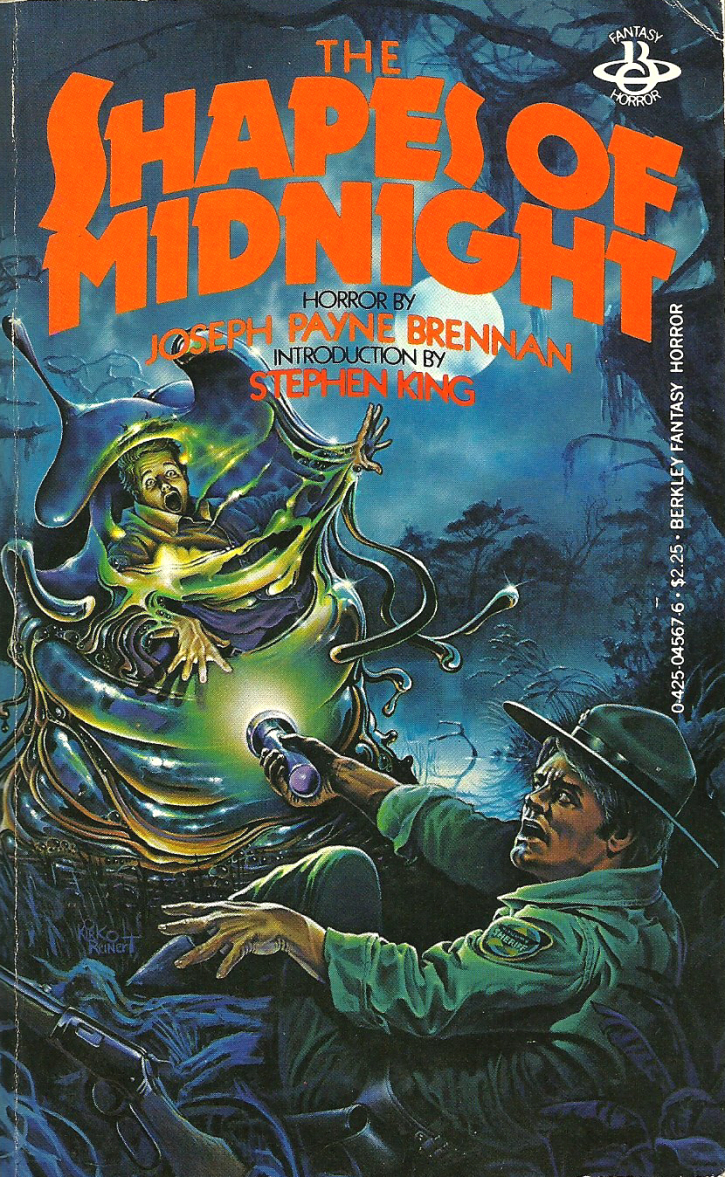
The Shapes of Midnight-smallJoseph Payne Brennan isn’t discussed much these days. He died over twenty years ago, in 1990, the same year his last book was released, The Adventures of Lucius Leffing, the fourth volume featuring his Carnacki-like occult detective.

Brennan wrote only two novels. But he is mostly remembered for his classic horror stories, published in Weird Tales, Whispers, Alfred Hitchcock’s Mystery Magazine, and over 200 horror anthologies. His most famous story, “Slime,” featuring a sinister new form of protoplasmic life which emerges from the ocean, was originally published in the March 1953 issue of Weird Tales and has been reprinted more than fifty times. It has influenced countless horror stories ever since, from the Steve McQueen film The Blob (which Brennan successfully sued for copyright infringement) to Stephen King’s famous short story, “The Raft,” which also features a horrific killer protoplasm in a lake.

Brennan’s imagination wasn’t limited to primordial monsters, however. One of his most acclaimed short stories, “Canavan’s Back Yard,” imagines an overgrown lot so twisted and mazelike that most who venture into it never return.

Brennan isn’t someone I discovered in the magazines. In fact, up until this week, I was pretty sure I’d never read anything by him at all. He’s been mentioned a few times here on the Black Gate blog, most recently in Douglas Draa’s review of Hauntings: Tales of the Supernatural, and in the discussion surrounding Robert E. Howard’s The People of the Black Circle.

But I’d been curious about his 1980 paperback collection, The Shapes of Midnight, containing both “Slime” and “Canavan’s Back Yard,” and my interest was heightened by the comments Doug Draa made on my People of the Black Circle article. So I became determined to get a copy, and in June I finally succeeded.

It’s a slender volume, just 176 pages, containing a dozen stories. The enthusiastic introduction is by a young horror writer who burst on the scene just six years earlier, with a successful horror novel titled Carrie. Here’s what Stephen King had to say about Joseph Payne Brennan, taken from his introduction to The Shapes of Midnight.

…

Read More Read More

Hilary Mantel and Beyond Black

Hilary Mantel and Beyond Black

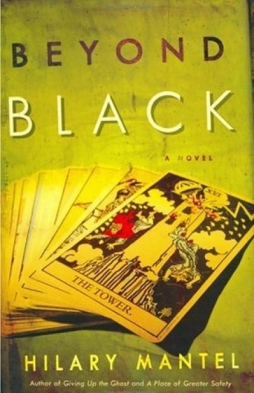
Beyond BlackHilary Mantel’s two novels of Tudor-era statesman Thomas Cromwell, 2009’s Wolf Hall and 2012’s Bring Up the Bodies, have both won the Man Booker prize; a third, The Mirror and the Light, will complete the trilogy, but has not yet been scheduled for publication. I want to write here not about those books, but about 2005’s Beyond Black, the last book Mantel published before embarking on the Cromwell trilogy. Her ninth novel, it was shortlisted for the Commonwealth Writers Prize and the Orange Prize. It’s a novel of the fantastic, in the broadest sense, and can be approached as fantasy, as horror, even as noir; but may be best understood simply as a thing in itself.
It’s the story of a medium, Alison Hart (born Cheetham, who changed her name for obvious PR reasons), and the business manager she hires, Colette. It follows their relationship, as well as Alison’s half-hearted attempt to recover memories of her abusive childhood. It’s also the story of their relationship with the ghosts who follow Alison, but remain invisible and imperceptible to Colette. One of these is Alison’s principal spirit guide, Morris, and you will find few characters living or dead nastier than he and his friends. Morris is one of a group of thugs from Alison’s past and understanding their background — what Alison did as a girl and what was done to her — becomes the key to the novel.

Or, at least, a key. The book’s notably plotless, in the sense of being defined by actions in sequence that necessitate one another. Things happen, characters change and are revealed, but there’s no tight narrative. The book’s held together by character, by imagery, by tone, and by the fantastic conceit at its heart: the validity of ghosts and psychic experience. To me, that makes it not just a fantasy, but one that’s worth looking at because the fantasy does something unusual — it’s part of the structure of the book in an interesting way.

…

Read More Read More

Celebrate the Sword & Sorcery Tradition of David Gemmell with Legends

Celebrate the Sword & Sorcery Tradition of David Gemmell with Legends

Legends Stories in Honour of David Gemmell-smallWe’ve been reporting on the David Gemmell Legend Award for the past four summers. It’s usually awarded in July and last year it went to The Wise Man’s Fear by Patrick Rothfuss.

There have been some changes this year, however. The big one is that the award has been moved to be part of the World Fantasy Convention, which happens every Halloween.

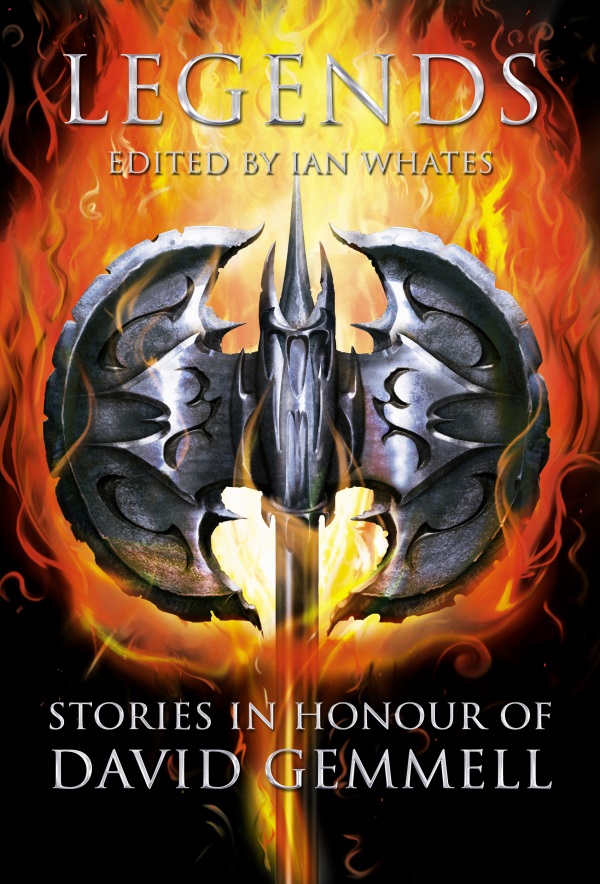
More interesting to heroic fantasy fans, however, is the impending release of Legends: Stories in Honour of David Gemmell, a new tribute anthology to be be launched October 31st, during the Gemmell Awards Ceremony at WFC.

Legends is being produced partly as a fund-raiser for the awards and is an anthology of original stories written in the tradition of David Gemmell. It is edited by Ian Whates, who proved his editorial acumen with the fine SF anthologies, Solaris Rising and Solaris Rising 2, and will be published by NewCon Press in the UK.

Determined warriors, hideous creatures, wicked sorceries, tricksy villains and cunning lovers abound as fantasy’s finest imaginations do their best… and their worst. James Barclay reveals the origins of The Raven, Adrian Tchaikovsky unveils new aspects of the realm of the Apt, Tanith Lee, Joe Abercrombie, Storm Constantine, Stan Nicholls, Juliet E McKenna and more weave their magic as only they can.

Steel yourself, throw caution to the wind, and dare to enter the realm of Legends.

Here’s the complete contents.

…

Read More Read More

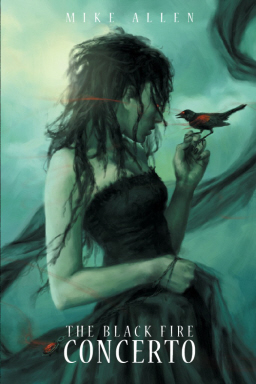
New Treasures: The Black Fire Concerto by Mike Allen

New Treasures: The Black Fire Concerto by Mike Allen

The Black Fire Concerto-smallMike Allen is scary talented.

After ten years of editing Black Gate magazine, I respect anyone who grapples with the logistical nightmare of producing a nationally-distributed print journal, and does it on a semi-regular schedule. Mike edits two and he makes it look easy: the acclaimed fantasy anthology series Clockwork Phoenix (four volumes so far) and the fabulous poetry journal Mythic Delirium.

Mike is also a very talented writer in his own right, with a Nebula nomination under his belt for his 2009 short story “The Button Bin” and his first collection of short fiction, The Button Bin And Other Horrors, forthcoming from Dagan Books. Long time BG readers will also remember his massive three-part Monstrous Post on Monsters, one of the most popular blog series we’ve run in the past few years.

See what I mean about talent? If Mike admitted he also plays bass for The Civil Wars on weekends, I wouldn’t be at all surprised.

Which is why we were so intrigued when we heard that Mike was working on his first dark fantasy novel. The book was edited by our own C.S.E. Cooney, who demonstrated an unerring ability to spot talent as Website Editor for Black Gate from 2010 to 2012 — and whose own rare writing gifts are on display in her recent books, How to Flirt in Faerieland & Other Wild Rhymes and Jack o’ the Hills.

I read Mike’s book in draft last year and was wowed. He has created a singular feat of the imagination, a world of shape-shifters, ghouls, and worse things, where two young women with a very unique form of magic may be the only hope against a sorceress of untold power.

…

Read More Read More

Gallowglas, Hester, Wagner & Coe: Four Authors Sound Off on the Writing Life of a Midlister

Gallowglas, Hester, Wagner & Coe: Four Authors Sound Off on the Writing Life of a Midlister

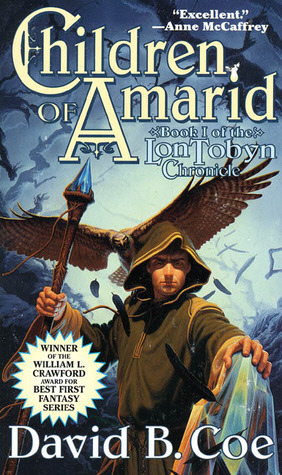
Children of Amarid-smallJuly 2013 was a month of firsts for me. A book of mine went out of print. A Kickstarter project I launched to fund an interactive e-book died a miserable, unnoticed death. I received my first ever fan art. And on the practical side, the sales numbers for my fantasy novel Dreamwielder got a great boost thanks to its selection as a Barnes & Noble Nook First Look pick, leading to my first ever proper royalty check — not a huge chunk of change, but enough to turn down freelance work and focus solely on my own writing for a few weeks. (Although I still ended up paying my health insurance bill late!)

It’s not exactly the glamorous lifestyle most people think of when they think of a published writer, even an “emerging” author like myself; but it’s one I’ve worked hard for, and one I’m proud of because I know I’ve finally joined the ranks of the SFF author community.

While authors like George R.R. Martin and Neil Gaiman dominate the fantasy bestsellers list and rake in the riches of TV and movie adaptations, the truth is most fantasy authors live a life closer to mine, a life of small successes, financial uncertainty, and near anonymity.

“One of the biggest misconceptions is that writers — all successful, published writers — are rich,” says David B. Coe, a fantasy author who has published over a dozen novels, including two new historical urban fantasy novels under the pseudonym D. B. Jackson. “For most of us, success in today’s market means continuing to be published by a reputable house.”

Coe broke into the fantasy world with his first novel, Children of Amarid, back in 1997, right when the publishing world was about to be turned on its head. “When I started out, I would get oohs and ahhs from people when I mentioned that I had a webpage,” Coe recalls. “Now there are domestic cats with better webpages than mine.”

Since then, the Internet and new technology like e-readers and print-on-demand have irreversibly changed the publishing landscape. Ebook sales skyrocketed. Self-publishing became an accepted alternative for authors to reach a mass audience. In order to adapt and stay competitive, big publishing houses merged with one another and tightened their belts. The days of big advances and promotional budgets for midlister authors is long gone.

…

Read More Read More