Browsed by
Category: Blog Entry

Gallowglas, Hester, Wagner & Coe: Four Authors Sound Off on the Writing Life of a Midlister

Gallowglas, Hester, Wagner & Coe: Four Authors Sound Off on the Writing Life of a Midlister

Children of Amarid-smallJuly 2013 was a month of firsts for me. A book of mine went out of print. A Kickstarter project I launched to fund an interactive e-book died a miserable, unnoticed death. I received my first ever fan art. And on the practical side, the sales numbers for my fantasy novel Dreamwielder got a great boost thanks to its selection as a Barnes & Noble Nook First Look pick, leading to my first ever proper royalty check — not a huge chunk of change, but enough to turn down freelance work and focus solely on my own writing for a few weeks. (Although I still ended up paying my health insurance bill late!)

It’s not exactly the glamorous lifestyle most people think of when they think of a published writer, even an “emerging” author like myself; but it’s one I’ve worked hard for, and one I’m proud of because I know I’ve finally joined the ranks of the SFF author community.

While authors like George R.R. Martin and Neil Gaiman dominate the fantasy bestsellers list and rake in the riches of TV and movie adaptations, the truth is most fantasy authors live a life closer to mine, a life of small successes, financial uncertainty, and near anonymity.

“One of the biggest misconceptions is that writers — all successful, published writers — are rich,” says David B. Coe, a fantasy author who has published over a dozen novels, including two new historical urban fantasy novels under the pseudonym D. B. Jackson. “For most of us, success in today’s market means continuing to be published by a reputable house.”

Coe broke into the fantasy world with his first novel, Children of Amarid, back in 1997, right when the publishing world was about to be turned on its head. “When I started out, I would get oohs and ahhs from people when I mentioned that I had a webpage,” Coe recalls. “Now there are domestic cats with better webpages than mine.”

Since then, the Internet and new technology like e-readers and print-on-demand have irreversibly changed the publishing landscape. Ebook sales skyrocketed. Self-publishing became an accepted alternative for authors to reach a mass audience. In order to adapt and stay competitive, big publishing houses merged with one another and tightened their belts. The days of big advances and promotional budgets for midlister authors is long gone.

Read More Read More

The Top 20 Black Gate Fiction Posts in July

The Top 20 Black Gate Fiction Posts in July

bones-of-the-old-onesA bit of a shake-up at the top of the fiction charts this month, as our exclusive excerpt from Howard Andrew Jones’ second Dabir and Asim novel, The Bones of the Old Ones, reclaimed the top spot from Martha Wells’ Nebula nominee The Death of the Necromancer. Coming up close behind were Joe Bonadonna’s perennially popular sword & sorcery tale “The Moonstones of Sor Lunarum,” and E.E. Knight’s thrilling Blue Pilgrim story, “The Terror in the Vale.”

Three of Aaron Bradford Starr’s Gallery Hunter tales made the list this month, including the epic 35,000-word novella “The Sealord’s Successor,” which Tangent Online called “The real deal…  It put me in mind of Fritz Leiber’s Fafhrd and Gray Mouser.”

Also making the list were exciting stories by Jamie McEwan, Judith Berman, Ryan Harvey, David C. Smith and Joe Bonadonna, Vera Nazarian, Jason E. Thummel, Gregory Bierly, Robert Rhodes, Emily Mah, Michael Penkas, Mary Catelli, and Vaughn Heppner.

If you haven’t sampled the adventure fantasy stories offered through our new Black Gate Online Fiction line, you’re missing out. Every week, we present an original short story or novella from the best writers in the industry, all completely free. Here are the Top Twenty most-read stories in July:

  1. An excerpt from The Bones of the Old Ones, by Howard Andrew Jones
  2. The Death of the Necromancer, a complete novel by Martha Wells
  3. The Moonstones of Sor Lunarum,” by Joe Bonadonna
  4. The Terror in the Vale,” by E.E. Knight
  5. The Sealord’s Successor,” by Aaron Bradford Starr
  6. The Highwater Harbor,” by Aaron Bradford Starr
  7. Falling Castles,” by Jamie McEwan
  8. The Poison Well,” by Judith Berman
  9. The Sorrowless Thief,” by Ryan Harvey
  10. An excerpt from The Waters of Darkness, by David C. Smith and Joe Bonadonna


  11. Read More Read More

Giant Season: A Review of Shingeki no Kyoujin (Attack on Titan)

Giant Season: A Review of Shingeki no Kyoujin (Attack on Titan)

I love anime, but I’d fallen out of the habit of watching it. The last series I finished was Claymore, nearly a year ago, and that disappointed me with paper-thin worldbuilding, slow animation, and one-note characters. Anime was beginning to look like a habit I’d dropped.

And then, based on a massive Internet buzz, I watched the first episode of Shingeki no Kyoujin, aka Attack on Titan. Within that short period — a mere twenty-two minutes, minus commercial interruptions — it became clear that I had stumbled across something great. I was moved, horrified, tantalized with the promise of soaring action to come, and, most importantly of all, captured by the mystery and terror of a bizarre world.

Take a moment to ravish your eyes on the glory of this opening song, which added a layer of fresh hair to my already-manly chest:

http://www.youtube.com/watch?v=m2ju9FJNHJc

Read More Read More

Vintage Treasures: The Best of Jack Williamson

Vintage Treasures: The Best of Jack Williamson

The Best of Jack Williamson-smallJack Williamson is a true legend among science fiction fans.

My favorite story about Jack Williamson concerns his first published story, “The Metal Man,” published in the December 1928 issue of Amazing Stories, when he was just 20 years old. The editor, Hugo Gernsback, was notoriously slow in paying his authors… so slow, in fact, that Williamson discovered he had broken into the magazine when he first laid eyes on the issue in a magazine rack and recognized his hero on the cover.

Williamson was one of the earliest pulp writers and he had an impressive career right through the 30s. He survived the coming of Campbell and continued writing into the 40s, 50s, and much later.

Which brings me to my second favorite Jack Williamson story. In the late 90s, Williamson was still regularly publishing short stories in major magazines, including “The Firefly Tree” (Science Fiction Age, 1997), “The Hole in the World” (F&SF, 1997), and “Miss Million” (Amazing Stories, 1999). A buzz began to go around fandom that if Williamson appeared in the magazines in the year 2000, that would mean he had been published in professional SF magazines for eight straight decades — a feat unequaled and very likely to remain unequaled for a long time.

Fandom held its breath. Jack Williamson turned 92 years old in the year 2000. And he published no less than three short stories that year: “Agents of the Moon” (Science Fiction Age), “Eden Star” (Star Colonies, edited by Martin H. Greenberg), and finally “The Ultimate Earth” (Analog).

“The Ultimate Earth” was nominated — and won — the Hugo Award for best novella of the year. It also won the Nebula.

As for Williamson, he kept publishing stories. Two in 2001, three in 2002, one in 2003, and an incredible seven in 2004 (including a collaboration with Edmond Hamilton – don’t ask how that happened).

Read More Read More

A Shard in Horror’s Broken Mirror…

A Shard in Horror’s Broken Mirror…

The Dad Who Turns Into a Supernaturally Driven Psycho Killer

shiningAre you afraid of the dark? Are you afraid of ghosts? Hey, if you’re a family man, are you afraid a malevolent ghost is going to possess you and turn you into a psycho killer?

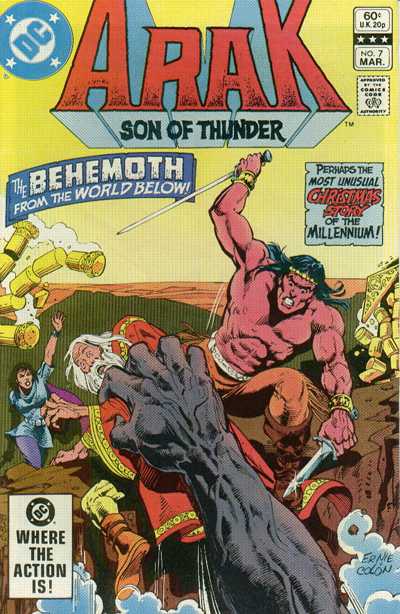
[Okay, before I get to all that, let me give a quick shout-out to those who have been following my ongoing blog of ARAK, Son of Thunder: I’ll have a new installment (covering the two-part story of issues 7 and 8) here for you next Monday. But this week I’d like to introduce the first in an occasional series examining aspects of the horror (primarily film) genre, which I’m going to call A Shard in Horror’s Broken Mirror. (Hey, how many “occasional series” does this guy have, anyway? Is he really, like, three different guys who take turns writing this blog under the same pen name?)]

The shard of horror I’m looking at today is an oft-recurring theme in many modern ghost thrillers: A character — usually, but certainly not always, the lead male — is manipulated or outright possessed by a supernatural agent (ghost, demon) and gradually becomes mentally cracked. This nearly always culminates in a final act where he is chasing his loved ones through a spooky locale with murderous intent.

Let me say at the outset that I’m generally not a big fan of this plot twist in most contemporary horror films. More on that later. First, though, a few words on where this narrative concept comes from.

Read More Read More

Vintage Bits: Lordlings of Yore

Vintage Bits: Lordlings of Yore

Lordlings of Yore-smallThere’s a lot of interest in retro-gaming today. Seriously, it’s a thing. There are fewer sales of big-budget shooters and a lot more people hunkered over tablets and cell phones, playing games that look like they were first compiled in 1995. I’ve seen my sons jump over more platforms and spill more monster guts in low resolution on their iPad recently than on their Xbox 360, let me tell you.

I appreciate the nod to the early days of the genre, but that ain’t true retro gaming. True retro games aren’t downloaded from the Internet. True retro games don’t even come in a box.

You really want retro gaming? You need to pull open a zip-lock bag, my friend. Respect.

I own a lot of computer games. A lot of them are old. Hell, most of them are old. The bulk of my collection comes from 1989 – 2003, when I still had time to occasionally insert a disk into my desktop machine and play Icewind Dale or Mechcommander a few hours a week.

Amiga games? I got ’em. Commodore 64? Couple hundred, easy. But we’re still talking the era of boxes here. You want real retro gaming, you need to go back even before my time, to when the first computer games were sold in zip-lock bags in small hobby shops, and almost exclusively for the Apple II.

I’ve collected a few of those fascinating relics over the years, but only a very few. I have Cranston Manor, Hi-Res Adventure #3, from an outfit called Sierra On-Line, Inc (1981). I have Odyssey: The Compleat Apventure, from Synergistic Software, from 1980 (purchased on eBay nearly 10 years ago for a ridiculous sum). But the rarest game — and certainly one of the most interesting — I possess is probably Lordlings of Yore, a marvelous fantasy strategy game I found on a used game shelf in a computer store in Champaign, Illinois in 1993.

Read More Read More

Black Gate Online Fiction: An Excerpt from The Black Fire Concerto by Mike Allen

Black Gate Online Fiction: An Excerpt from The Black Fire Concerto by Mike Allen

The Black Fire Concerto-smallBlack Gate is very pleased to offer our readers an exclusive first look at The Black Fire Concerto, a dark fantasy novel by Mike Allen, the acclaimed editor and publisher of the anthology series Clockwork Phoenix and the poetry journal Mythic Delirium.

It was one of the twins who warned her just after dark that a man dressed head-to-toe in black had come through the village earlier that day asking after a piper and harpist and left quickly upon getting an affirmative.

Olyssa had seen the cultists coming up the street from the wharf. At least thirty, all armed with rifles. When she returned to their room on the second story she told Erzelle that there might well be more covering the other exits.

After that brief announcement she sat lotus-style on the floor between their cots with her rifle in her lap and began to chant as the rough voice outside taunted.

“Come out and know our mercy. Come out or you’ll wish you had been eaten.”

She held the rifle up with both hands as if presenting it for an offering. Its red runes glowed brighter and brighter, her chant unceasing. Huddled under a cot, Erzelle made out the words, uttered fast and sing-song: “Find my enemies. Find my enemies. Find my enemies.”

Glowing brighter still, the rifle shuddered and lifted into the air.

John R. Fultz tells us “The Black Fire Concerto is Horror. It’s Magic. It’s a post-apocalyptic melody played on strings of Terror and Sorcery.” And Tiffany Trent says “Mike Allen offers readers a gift of the most delicately layered dark fantasy presented carefully on a post-apocalyptic platter.” And Tanith Lee called The Black Fire Concerto, “A prize for the multitude of fans who relish strong Grand Guignol with their sword and sorcery.”

Mike’s short fiction has appeared in Solaris Rising 2Best Horror of the Year, Volume 1, and Cthulhu’s Reign, among other places. He was a Nebula Award finalist in 2009 for his short story, “The Button Bin,” and his first collection of short fiction, The Button Bin And Other Horrors, is forthcoming from Dagan Books.

The Black Fire Concerto was published July 15 by Haunted Stars Publishing. It is a 202-page trade paperback available for $15.95 and $8.95 for the Kindle version. Listen to the first chapter here, and learn more at Haunted Stars.

Read an exclusive chapter from The Black Fire Concerto here.

New Treasures: Monster Island by Pete Nash & Friends

New Treasures: Monster Island by Pete Nash & Friends

Monster Island Runequest-smallI’ve been on a bit of a RuneQuest kick recently, inspired by my purchase of the incredible Pavis: Gateway to Adventure setting from Moon Design.

I honestly didn’t expect to encounter anything comparable to Pavis any time soon. But I didn’t reckon with The Design Mechanism and their equally ambitious campaign setting Monster Island — a massive and mysterious island which invites gamers to “delve back to a time of classic Sword & Sorcery with priceless jewels, fierce dinosaurs, and dark horror!”

Monster Island is precisely the kind of fully realized and adventure-packed product I wish I’d had when I first tried RuneQuest years ago. It’s a marvelously imaginative sandbox setting, complete with strange monsters, dangerous ruins, giant (and I do mean giant!) beasts, and even greater surprises. Why hasn’t anyone thought of this before?

Author Pete Nash dedicated the book to two people, both of whom we lost this year: legendary Chaosium editor Lynn Willis, “who was my mentor and gave me my start in gaming,” and filmmaker Ray Harryhausen, “whose monsters have never been surpassed. Both of you spurred my imagination and haunted my dreams…. this book is a fruition of your influences.”

Imagining a fusion of the brilliance of Chaosium’s best adventure modules — including Cthulhu By Gaslight, the award-winning Masks of Nyarlathotep, Thieves’ World, and Shadows of Yog-Sothoth — and the unfettered imagination of Ray Harryhausen is as good a way as any to describe Monster Island, a true adventurer’s paradise packed with mystery, danger, and constant surprises.

Read More Read More

Get the First Seven eBook Titles from Strange Chemistry for Just $1.99

Get the First Seven eBook Titles from Strange Chemistry for Just $1.99

The Assassin's Curse-smallHappy first birthday to Strange Chemistry Books!

Strange Chemistry is the Young Adult imprint of Angry Robot Books, “dedicated to the best in modern young adult science fiction, fantasy and everything in between.” It was launched in September 2012 under the stewardship of editor Amanda Rutter and over the last twelve months it has released no less than seventeen books, signed twenty four authors, and had one novel optioned for a TV show.

And what great books! Back in June, we shared a book cover montage of their first 18 releases, including Katya’s World by Black Gate author Jonathan L. Howard (“The Shuttered Temple” and “The Beautiful Corridor”), and Martha Wells’s Emilie and the Hollow World.

Now, to celebrate their first birthday, Strange Chemistry had reduced the price on the digital versions of each of their first seven releases, including The Assassin’s Curse by Cassandra Rose Clarke and Katya’s World to just $1.99:

Blackwood, by Gwenda Bond
Shift, by Kim Curran
The Assassin’s Curse, by Cassandra Rose Clarke
Poltergeeks, by Sean Cummings
Katya’s World, by Jonathan L. Howard
Broken, by A.E. Rought
Pantomime, by Laura Lam

I took advantage of the offer to buy both The Assassin’s Curse and Katya’s World — and I was sorely tempted by the rest. The offer is available for a limited time, so don’t delay.

The digital books are available Nook and Kindle format, though both Amazon and Amazon UK. Complete details (and links to the special offers) are at the Strange Chemistry website.

Blogging Dan Barry’s Flash Gordon, Part Five

Blogging Dan Barry’s Flash Gordon, Part Five

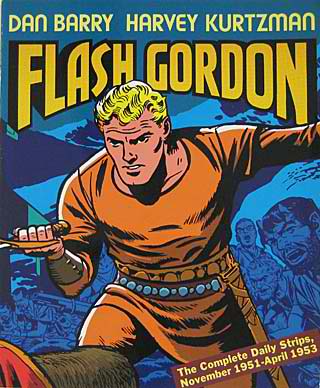
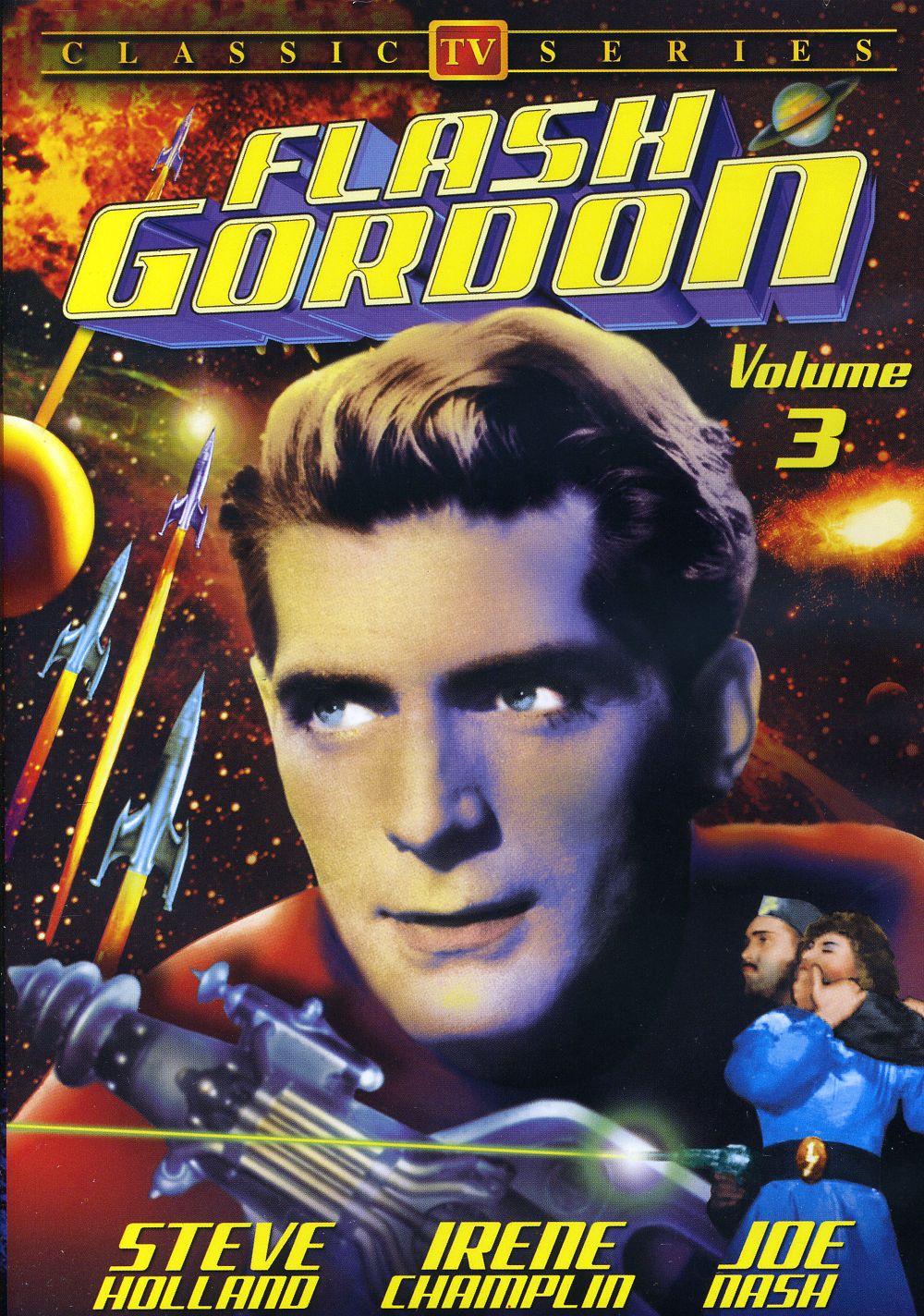
kurtzman_flash_gordon_cvr1MV5BMzk2NTI0Nzg3MF5BMl5BanBnXkFtZTcwMTg3MjE5Mw@@__V1_SY317_CR3,0,214,317_“The Space Kids on Zoran” was Dan Barry’s first Flash Gordon storyline following the departure of Harvey Kurtzman from the strip. It was published by King Features Syndicate from April 21 to October 24, 1953. The storyline shows the influence of Captain Video and his Video Rangers, the seminal series that was to the first television generation what the Buster Crabbe Flash Gordon serials had been to their parents. As the storyline progresses, Barry incorporates another Biblical parable, this time offering up a space age twist on the Christ story.

Dan Barry had settled into a more comfortable style with the characters that was recognizably his own take on Alex Raymond’s original work. This style would remain constant until the early 1980s. The story begins with Flash and Dale driving to visit Ray Carson, who has set up a club called the Space Kids at an abandoned site. The boys have built a full-size model rocket out of wood and spare parts that Ray’s father gave him. Flash agrees to help the boys that weekend. There is a definite switch to a more juvenile approach to the strip, with the portrayal of the kids more reminiscent of Harvey Comics than a dramatic adventure strip. The sight of Flash smoking a pipe as he surveys the youngsters’ work is also somewhat disconcerting.

From there, Flash leaves for a meeting with aeronautics industrialist, J. B. Pennington, who is employing Ray’s dad to build a rocket and has hired Flash to fly it. Pennington is the stereotypical capitalist authority figure. He is dismissive of his employees and unloving to his young son, Cyril. Flash’s contemptuous attitude is meant to endear him to the young readers of the strip more than it is to offer social criticism as the generation gap becomes one of the major themes of the storyline.

Read More Read More