Browsed by
Category: Editor’s Blog

The blog posts of Black Gate Managing Editor Howard Andrew Jones and Editor John O’Neill

io9 Founder Annalee Newitz Departs as Site Joins Gizmodo

io9 Founder Annalee Newitz Departs as Site Joins Gizmodo

Annalee Newitz-smallThe changes at io9 have begun, as the site begins restructuring in preparation for its upcoming merger with design and technology blog Gizmodo. Perhaps the biggest change occured yesterday with the departure of founder Annalee Newitz. In her public goodbye, Newitz wrote:

Today is my last day at io9 and Gizmodo. It’s been a long, astounding road, to say the least. I founded io9 back in 2008, and I watched it journey from the farthest reaches of space to its current home under this atmosphere bubble on Ceres… In January of this year, I took on the role of editor at Gizmodo, and since then, Charlie Jane and I have been integrating the world of io9 into Gizmodo. It’s kind of like we joined the United Federation of Planets….

And this is where my path diverges from io9 and Gizmodo. This past year managing both sites taught me that I’m not actually interested in being a manager. I want to write.

Annalee Newitz was one of io9‘s most talented writers, and we certainly understand her desire to pursue a writing career. Katie Drummond will take over from Newitz, and Charlie Jane Anders (whose own first novel, All the Birds in the Sky, will be released by Tor on January 26) will continue as Editor-in-Chief.

io9, one of the most popular locations for SF fans on the web, was launched in 2008 by Newitz and Anders. It covers science fiction, fantasy, comic books, science and technology. The site is owned by Gawker Media, which is restructuring its many holdings to focus more on politics (Gawker’s other holdings, including celebrity gossip site Defamer and Valleywag, which covers Silicon Valley, will be closed down). The merger with Gizmodo has apparently been in the works for months; when completed, io9 will become a section of Gizmodo, and io9.com will redirect to Gizmodo. All existing content will be preserved.

John DeNardo on Why I Love Retro Science Fiction

John DeNardo on Why I Love Retro Science Fiction

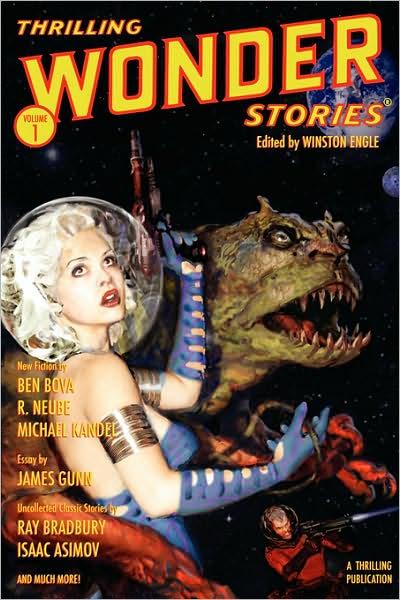
Thrilling Wonder Stories-smallOur bud John DeNardo, editor of the fabulous SF Signal, writes on a topic near and dear to our crusty little hearts, “Why I Love Retro Science Fiction,” over at Kirkus Reviews.

More than anything, retro-futurism is a flavor… It’s the way writers wrote science fiction in the past. Generally speaking, writers today are much more rigorous in their writing than the writers who were trying to meet the demand of weekly pulp publication serials. The resulting science fiction from that past era was plot-driven and didn’t spend pages discussing, say, some planet’s terrain. That made the stories shorter as well. Books from decades ago were 150 pages long and that was just fine.

Retro-futures are also kitschy. There’s a nostalgic quality to it. This is a little harder to describe. I tend to like the kind of science fiction that was written before I was born. Perhaps it’s because when I started reading science fiction, I often read older books that crossed my path. In the 1970s, I was weaned on sci-fi from the Golden Age and that mode of science fiction still appeals to me….

Today’s retro sci-fi is written by today’s writers, and while modern writers may try to emulate the science fiction of yesteryear, what they rarely, if ever, do is reflect the outdated thinking of those times. In today’s retro sci-fi, you will find more discussions of multiple viewpoints and philosophies, you’ll see diverse cultures portrayed on a galaxy-wide scale — and you’ll see it through the derring-do of space adventurers zipping around in the foreground.

Read the complete article here.

Collecting Philip K. Dick

Collecting Philip K. Dick

Philip K Dick paperback collection-medium

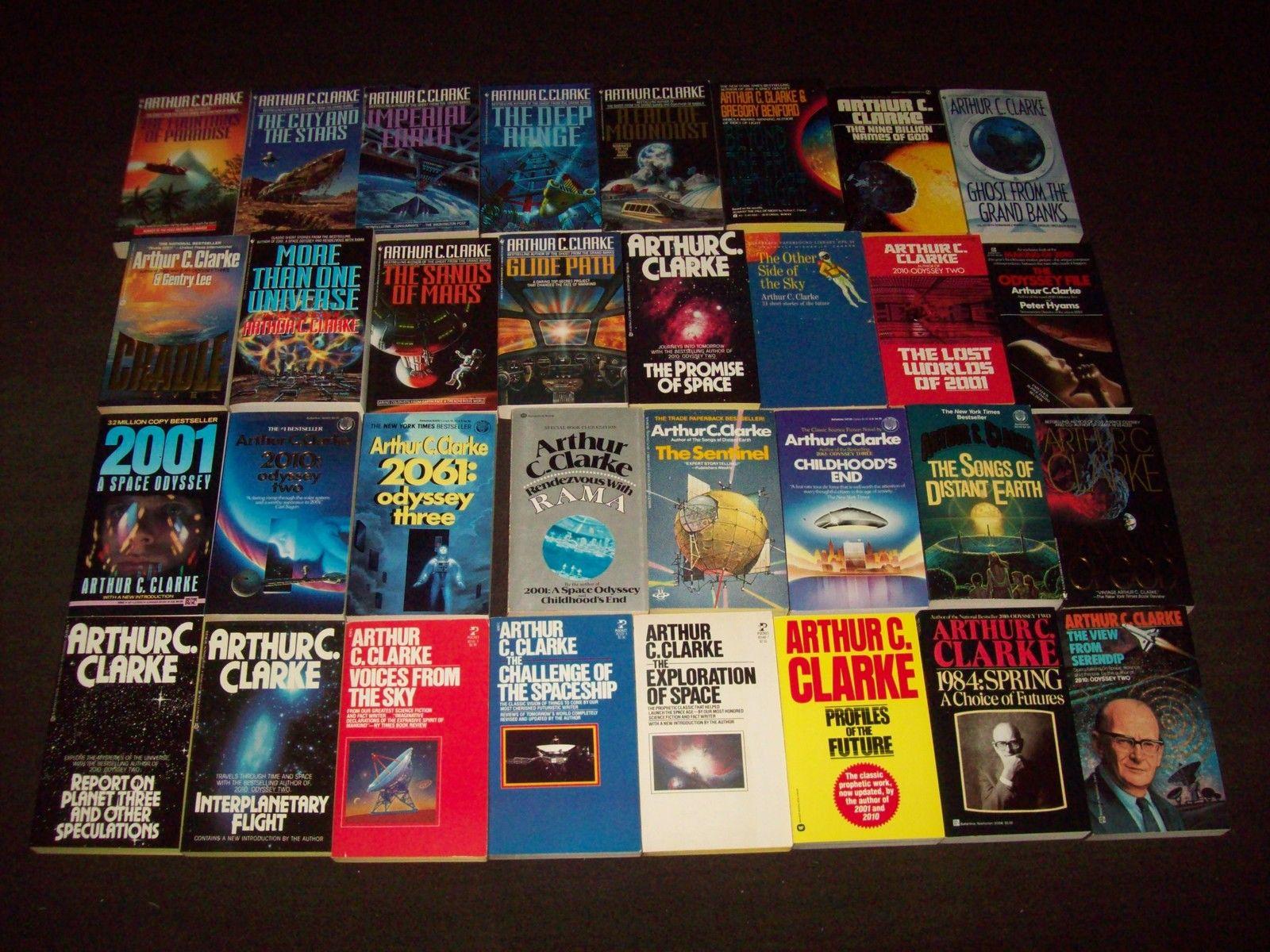
Recently I wrote here about a handsome collection of 35 books by Isaac Asimov I bought on eBay for $82.17 — a lofty price for vintage paperbacks, but I wasn’t the only one who noticed what great shape they were in. Last week I also reported on the set of 32 paperback of the same vintage by Arthur C. Clarke I purchased at the same time. Clarke is still highly regarded these days, but not in the same category as Asimov. I expected to pay much less for them, and I was right — I won the auction for $27.

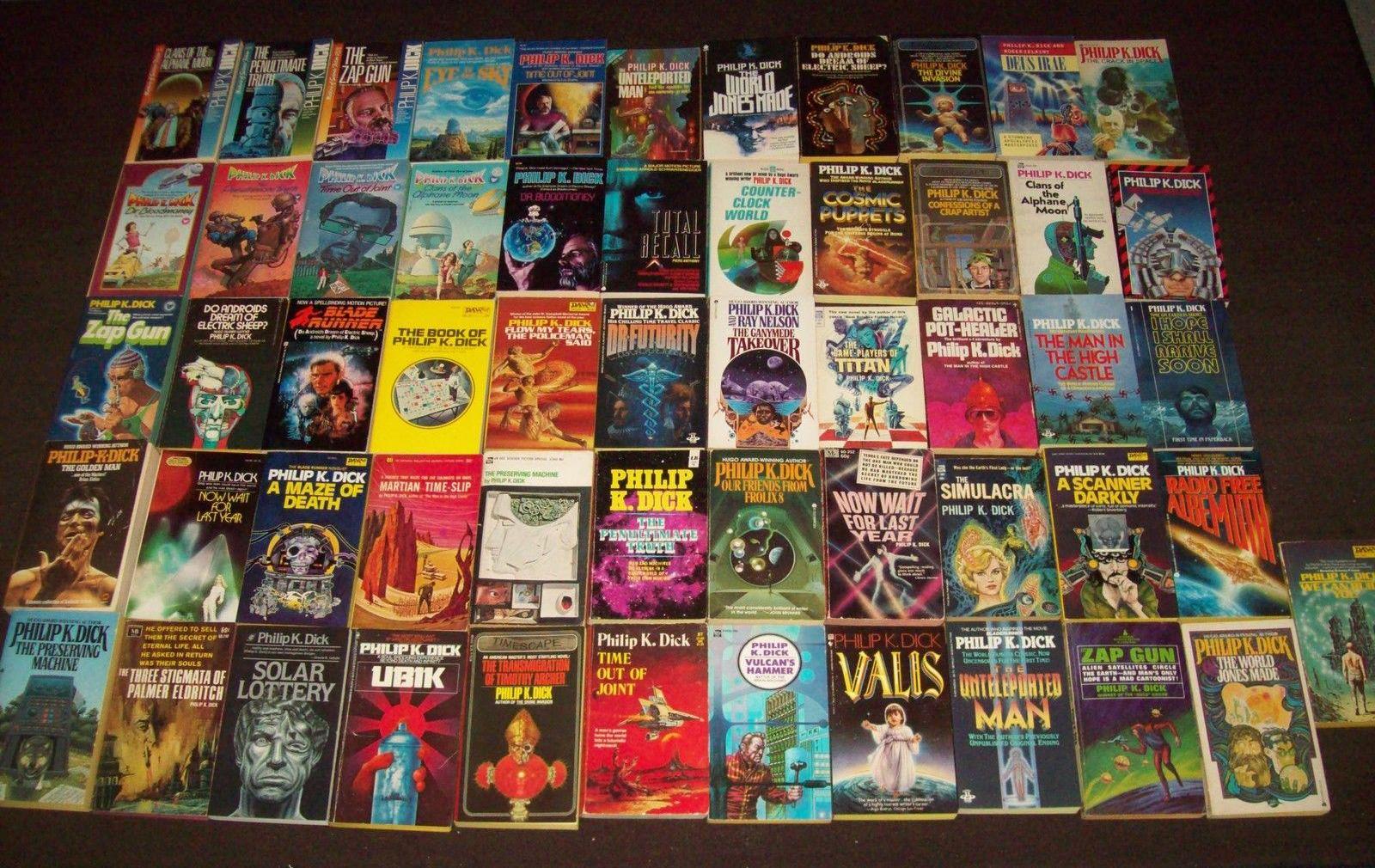
The same seller was also offering the striking set of Philp K. Dick books above (click for bigger version). While not virtually brand new like the Clarke and Asimov collections, they were nonetheless in terrific shape, especially for 40-year old paperbacks. I bravely took part in the auction, but bowed out before it hit $100. I expected it to go a lot higher, and it did.

The set sold for $536 and change, about $9.50 per book — a bargain, considering what Dick paperbacks in that kind of condition sell for individually.

Read More Read More

Joel Cunningham on Why There’s Never Been a Better Time to Be a Sci-Fi & Fantasy Reader

Joel Cunningham on Why There’s Never Been a Better Time to Be a Sci-Fi & Fantasy Reader

New Science Fiction-smallI’ve lived through enough boom-and-bust cycles in this industry to have read plenty of “science fiction is doomed’ prophecies over the decades. It usually happens at the start of a bust cycle, as the publishing industry contracts and readers see steep cutbacks. Funny enough, I almost never see the opposite  — astute readers pointing out the signs of a boom. Joel Cunningham at Barnes & Noble seems to be the exception. Have a look as he catalogs many of the signs of an ongoing explosion in SF & Fantasy publishing.

Hachette Book Group today announced an ambitious expansion of its sci-fi/fantasy imprint Orbit… Beginning in the fall of 2016, Orbit will grow its list by 50 percent, publishing approximately 90 titles a year—and they’re hiring new editors, marketers, and book packagers to do it.

Nothing proves belief in a market like investment, and across the board, publishers are investing in SF/F. Just this year, we’ve welcomed to the fold Saga Press, the dedicated genre imprint from Simon & Schuster that has developed a roster of launch titles unparalleled in the industry (the debut novel from award-winning short story author Ken Liu, anyone?).

Tor.com Publishing has emerged out of Tor Books, the largest player in the genre space, with a new business model that focuses on digital-first novellas, allowing for a faster-moving, more innovative strategy that brings you, the reader, the kinds of books you might never have been able to read before…

Why is this happening? It’s because of all of us. We readers are a passionate bunch, and we’ve voted with our time, attention, and most of all, our dollars, propelling big-money, book-first franchises like Game of Thrones and the Marvel and DC superhero universes to the forefront of the cultural conversation. There’s no stigma about being a genre reader these days, because genre touches everyone — just try getting through December without hearing about Star Wars on the regular (spoiler alert: it isn’t going to happen).

We covered the news of the Orbit expansion here, the launch of Saga Press here, and Tor.com‘s ambitious publishing venture here. Read Joel’s complete article here.

The Late November Fantasy Magazine Rack

The Late November Fantasy Magazine Rack

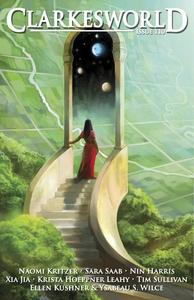
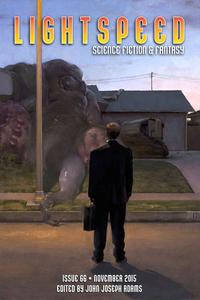
Cemetery-Dance-73-rack Beneath-Ceaseless-Skies-185-rack Clarkesworld-110-rack Lightspeed-Magazine-November-2015-rack
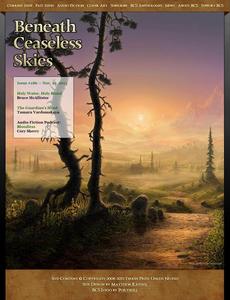
Interfictions-Online-rack Beneath-Ceaseless-Skies-186-rack The-Dark-Issue-10-rack Nightmare-Magazine-November-rack

We’ve got lots of great magazine coverage to point you towards the best new short fiction this month. We started our coverage of Interfictions with issue #6, and reported on the arrival of the massive Best Of Heroic Fantasy Quarterly, Volume 1. In our reviews section, Learned Foote took a look at Nike Salway’s “The Karen Joy Fowler Book Club” in the October Lightspeed, and Fletcher Vredenburgh highlighted the best in Beneath Ceaseless Skies, Heroic Fantasy Quarterly, and Swords and Sorcery Magazine in his October Round-Up. For vintage fiction fans, Matthew Wuertz journeys back over 60 years to look at a magazine from January 1953, with fiction by Philip K. Dick and Clifford D. Simak, in the latest installment of his issue-by-issue read of Galaxy.

Check out all the details on the magazines above by clicking on the each of the images. Our November Fantasy Magazine Rack is here.

As we’ve mentioned before, all of these magazines are completely dependent on fans and readers to keep them alive. Many are marginal operations for whom a handful of subscriptions may mean the difference between life and death. Why not check one or two out, and try a sample issue? There are magazines here for every budget, from completely free to $12.95/issue. If you find something intriguing, I hope you’ll consider taking a chance on a subscription. I think you’ll find it’s money very well spent.

Read More Read More

Collecting Arthur C. Clarke

Collecting Arthur C. Clarke

Arthur C. Clarke paperback lot-small

A couple weeks ago I reported here on a pristine collection of 35 Isaac Asimov books I purchased on eBay. Coincidentally, I also happened to stumble across blogger Mark R. Kelly’s Asimov Re-read. I found many of his comments right on the money, and Mark’s insights became the core of my article.

Eclipsed by all that discussion was the fact that the same day I also purchased a lot of virtually new paperbacks by Arthur C. Clarke (above). Although it was roughly the same size (32 titles) and same vintage (30+ years), and the books were in similar gorgeous shape, I expected to pay much less for them. And that’s exactly what happened: I took the lot home with a single bid for $27, less than a third of what I paid for the Asimov collection.

Read More Read More

Breathtaking and Truly Epic: Barnes & Noble on Michael Livingston’s The Shards of Heaven

Breathtaking and Truly Epic: Barnes & Noble on Michael Livingston’s The Shards of Heaven

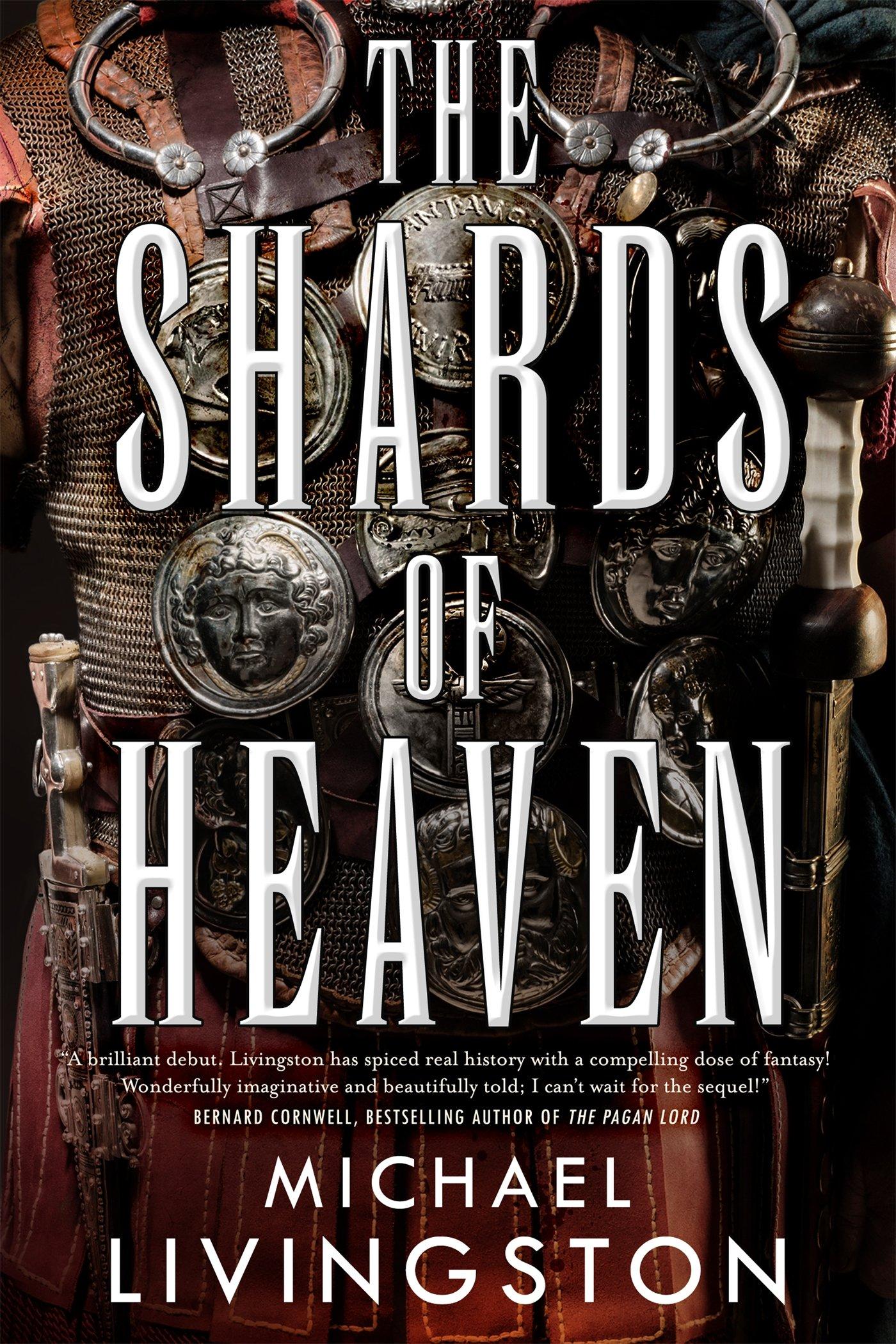
The Shards of Heaven-smallMichael Livingston’s stories for Black Gate were widely acclaimed by our readers. So I’m looking forward to seeing how the wider world reacts to his first novel, on sale this month from Tor. I got my first taste when I saw this rave review from Sam Reader at Barnes & Noble:

The Shards of Heaven is breathtaking in scope. With the first volume of a planned series intertwining Roman history and myth with Judeo-Christian mythology, Michael Livingston has created something truly epic… He uses real events and characters as the backbone for a truly inventive epic fantasy like novel, a massive undertaking that launches a tremendously ambitious series.

With Julius Caesar dead, a civil war threatens to destroy Rome. On one side is Octavian, Caesar’a ruthless successor, who will resort to any means to assert his power over the Empire. On the other are Caesar’s former ally Marc Antony and his lover Cleopatra… But then history twists, and Octavian’s half-brother Juba, a Numidian prince and thrall of Rome, uncovers something that will upend the conflict completely: the Trident of Poseidon, which gives the wielder the ability to control any fluid with an extension of will. The discovery comes with the knowledge that the trident is but one of the legendary Shards of Heaven, artifacts whose immense power hints at the existence of a strength greater than man’s…

The action here is big and bloody… Livingston uses violence in sudden, sparing bursts, each fight given a sense of purpose and consequence — until he doesn’t: the book’s centerpiece is the Battle of Actium, a massive naval conflict both grand in scope and enormously complex in its intricacies. Livingston keeps tight control over both.

The Shards of Heaven will be published by Tor Books on November 24, 2015. It is 414 pages. priced at $25.99 in hardcover and $12.99 for the digital version. It is the opening volume in an epic new historical fantasy series set against the rise of the Roman Empire. See our previous coverage here.

The Top 50 Black Gate Posts in October

The Top 50 Black Gate Posts in October

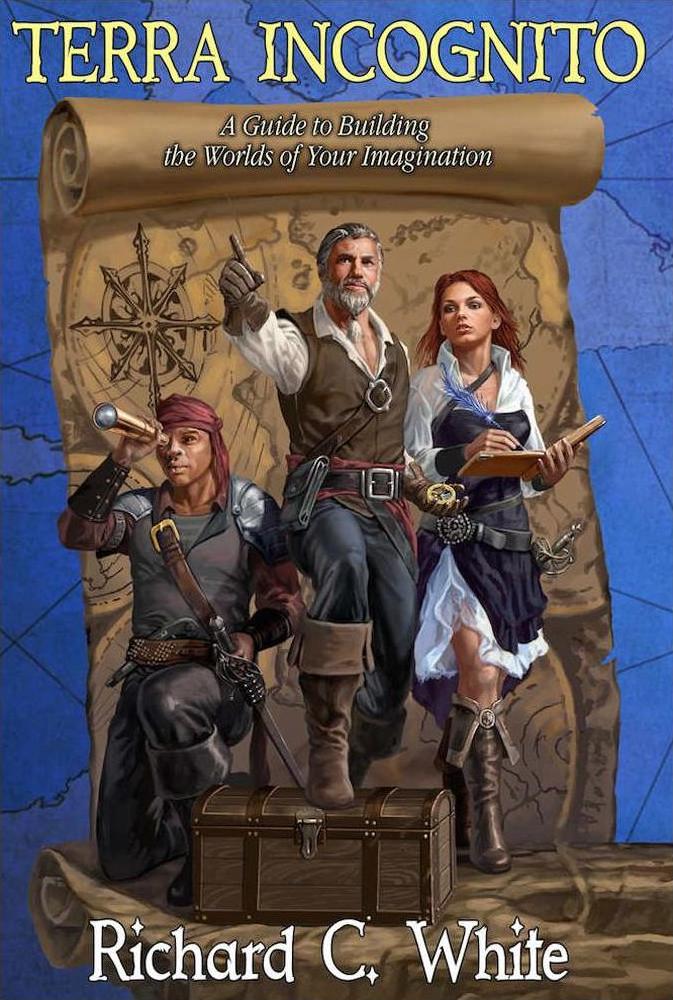
Terra Incognito A Guide to Building the Worlds of Your Imagination-smallWith his very first article for Black Gate, Richard C. White shot right to the top of the charts with the most popular article for the month, “World Building 101: The Village.” Here’s a sample:

Just because you have water doesn’t mean you can put any number of people in an area. The Cahokia Mounds in Illinois were believed to have held up to 40,000 people which would have made it the biggest city in North America until the 18th century. However, archeologists now believe the reason that Cahokia was abandoned was not due to warfare but because they had so many people that the water became too polluted to support the population. Even pioneers in the 19th century soon learned you can only dig a well so deep before it doesn’t provide enough water. An overabundance of people/livestock/ irrigation can cause a drought as easily as Mother Nature. So, when planning your village for your story, think about how do your people get their water and how they deal with waste water.

Coming in second was Fletcher Vredenburgh’s look back at one of the most popular fantasy novels of the 20th Century, “You Can’t Go Home Again: The Annotated Sword of Shannara: 35th Anniversary Edition by Terry Brooks.” The third most popular article last month was Derek Kunsken’s interview with Christopher Golden, Co-Author of Joe Golem, Occult Detective.

Rounding out the Top Five for the month were Goth Chick, with her look at Sony Pictures’ Freaks of Nature, and M Harold Page’s catalog of tips for those trying to write a novel this month, “NaNoWriMo is coming!”

The complete list of Top Articles for September follows. Below that, I’ve also broken out the most popular overall articles and blog categories for the month.

Read More Read More

Orbit US Announces Major Expansion

Orbit US Announces Major Expansion

Orbit LogoOrbit Books has published some of the most acclaimed SF and fantasy of the past few years — including Ann Leckie’s Ancillary Justice, Peter Higgins’s Wolfhound Century, John R. Fultz’s Books of the Shaper trilogy, N.K. Jemisin’s The Fifth Season, Mur Lafferty’s The Shambling Guide to New York City, M.R. Carey’s debut The Girl With All the Gifts, Ian Tregillis’s Alchemy Wars, and many, many others. Now comes word that Orbit’s success has been great enough that they are planning to grow their publishing schedule by 50% next year. The Orbit Team posted this announcement on their website on Friday:

Orbit, the SF and Fantasy imprint of Hachette Book Group, announces a major expansion plan starting from Fall 2016. The imprint will increase the number of titles it publishes by 50% to approximately 90 titles each year. Additional staff, including editorial, marketing, and design, will be recruited to support the expansion.

Tim Holman, Orbit Publisher and Hachette Book Group SVP, said: “There is a huge and diverse audience for SF and Fantasy out there, and it’s the perfect time to be expanding the list. Orbit is currently the fastest growing SF and Fantasy imprint in the U.S. with an increasing number of New York Times bestsellers – most recently Ann Leckie, whose debut Ancillary Justice was also the first novel to win every major SF award. Since our launch in 2008, we have been committed to publishing the most exciting authors in the field and looking for creative ways to connect with new readers. We’re very much looking forward to building on the success we’ve had, expanding the publishing team, and welcoming more authors to the list.”

This is great news for readers — and writers, time to polish those NaNoWriMo manuscripts! See the complete announcement here.