Browsed by
Category: Books

The Public Life of Sherlock Holmes: When Elric of Melnibone Came to 221B Baker Street

The Public Life of Sherlock Holmes: When Elric of Melnibone Came to 221B Baker Street

Moorcock_DorsetLodgerWell, not quite. That title was just to grab your attention. But Elric’s creator did set a tale at London’s most famous address, 221B Baker Street. And it’s a pretty ‘normal’ Holmes tale; which you might not expect from the guy who created Stormbringer.

I enjoyed Fletcher Vrendenburgh’s post last week on Michael Moorcock’s Eternal Champion. I devoured the tales of Corum, Hawkmoon, Erekose, and of course Elric in my middle-school years.

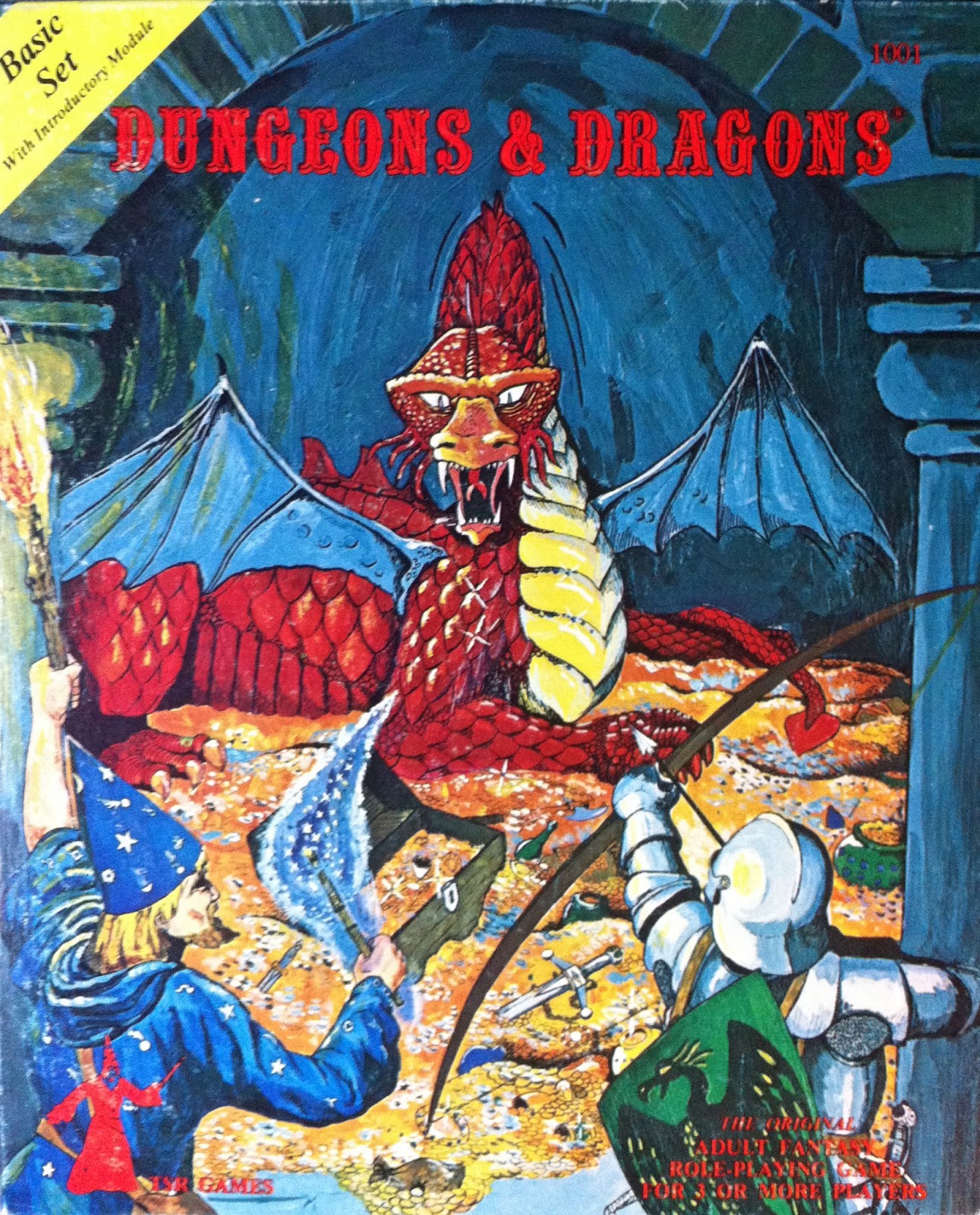
Being a Dungeons and Dragons player, these books were awesome. I think I even used Rackhir the Red Archer in a game. If you’ve not read  significant parts of that saga, your fantasy education is lacking.

Moorcock’s work encompasses much more than just the Eternal Champion tales. I’m a Christian and I was fascinated by the premise of The War Hound and all the World’s Pain (an excellent read: the sequel, not so much).

I even wrote a paper on the idea for a high school religion class. That got me an invite to see the teacher, a priest, after class.

Back in 1995, Moorcock wrote “The Adventure of the Dorset Street Lodger” as a privately printed chapbook which he let friends of his, who were opening a hotel on Dorset Street, give away to their first guests.

Read More Read More

Self-Published Book Review: Pyre by R. B. Kannon

Self-Published Book Review: Pyre by R. B. Kannon

If you have a book you’d like me to review, please see the submission guidelines here.

While the cover is beautiful, I’m pretty sure Ember never wore anything remotely like that outfit anywhere in the novel.

This month’s self-published book is Pyre by R.B. Kannon. Set in a desert land reminiscent of ancient Egypt, it tells the life story of Ember, scion of a ruined people.

When Ember was a small child, her mother locked her inside an ancient, abandoned temple to die. She did this because Ember is cursed. Her people have no dreams or visions, no hope or desire or love. They sacrificed those things to a long forgotten demigod. But Ember is different—she not only has those ordinary traits of humanity, her mere presence disturbs the dreamless sleep of her people, bringing them unwanted dreams and nightmares. So she was locked away in the temple, but she was not alone. The Voice was there, a demonic presence who bonds with her and frees them both.

At first, Ember is taken in by Azarus, the eunuch satrap of the province, who teaches her to read and write not only the common language, but also the ancient glyphs that cover the ruins littering the countryside. Years later, when Azarus is killed by the Emperor’s unfavored son, she flees, returning first to her own people, then falling in with prostitutes and bandits, before finally coming back to the temple, where she challenges the Voice to seek redemption not just for herself, but for her fallen people.

The strongest part of Pyre was the prose. The first person narration has a lyrical quality, filled with descriptions rich with dream-like imagery, slipping effortlessly between reality and Ember’s own dreams. Ember herself is strong and determined, qualities which initially drew the Voice to her. The Voice, on the other hand, is cynical and mocking. He accompanies Ember more out of curiosity and boredom, and his own chance at freedom and survival, than because he has any interest in her welfare.

Read More Read More

Want to sell SF and Fantasy? The Only Book You Need is Bud Webster’s The Joy of Booking

Want to sell SF and Fantasy? The Only Book You Need is Bud Webster’s The Joy of Booking

The Joy of Booking-smallI’ve written here a few times about my adventures as a bookseller. Like that time a buyer found a rare Harry Dresden first edition in our $1 box at the 2010 World Fantasy Convention. Or when I sold Jo Walton an Eric Frank Russell paperback she never knew existed. Or the weekend Howard Andrew Jones, James Enge,  Donald Crankshaw, Peadar Ó Guilín, Rich Horton, and I sold books together at the World Science Fiction convention

Or what happened when an attractive young woman picked up a copy of a Philip K. Dick paperback at Dragon*Con, and I stupidly said “Hey there — are you a fan of Dick?”

But despite all those years selling vintage SF paperbacks, I’m still very much a newbie. Especially compared to the legendary Bud Webster, who has made a vocation of buying and selling SF and fantasy books for decades, at conventions all over the country.

He’s collected anecdotes from a lifetime of selling SF, and packaged them up with excellent advice to aspiring booksellers on things like Managing Your Stock, Obtaining Stock, and When to Sell, in a single extremely useful and highly entertaining volume: The Joy of Booking, published in 2011.

Full exposure: Bud was the poetry editor for Black Gate, back when we had a print edition, and he’s also written a few articles for us on (what else?) bookselling and vintage books, such as “Selling Your Books Ain’t as Easy as it Looks,” “What I Do and Why I Do It,” “What I Do It With,” “Holding History,” and “Talk to Any Squids Lately? In Space, I Mean?.”

Read More Read More

New Treasures: New Cthulhu: The Recent Weird edited by Paula Guran

New Treasures: New Cthulhu: The Recent Weird edited by Paula Guran

New Cthulhu-smallMy birthday was last month, and one of the gifts my children bought for me (my children! That’s sweet. And a little disturbing) was Paula Guran’s 2011 anthology New Cthulhu: The Recent Weird. Yes, I do realize the book is very nearly three years old and a bit long in the tooth to be a “New Treasure,” but I’m still so touched that my kids got me a Cthulhu anthology that I’m going to overlook it.

Anyway, it’s a fine addition to any Cthulhu library. It reprints 27 Cthulhu Mythos tales from the 21st Century, including contributions from Neil Gaiman, Kim Neuman, Charles Stross, Marc Laidlaw, Laird Barron, Paul McAuley, William Browning Spencer, Holly Phillips — and even Michael Shea’s chilling novelette “Tsathoggua,” published online here at Black Gate. Here’s the book description.

For more than 80 years H.P. Lovecraft has inspired writers of supernatural fiction, artists, musicians, filmmakers, and gaming. His themes of cosmic indifference, the utter insignificance of humankind, minds invaded by the alien, and the horrors of history — written with a pervasive atmosphere of unexplainable dread — remain not only viable motifs, but are more relevant than ever as we explore the mysteries of a universe in which our planet is infinitesimal and climatic change is overwhelming it.

In the first decade of the twenty-first century the best supernatural writers no longer imitate Lovecraft, but they are profoundly influenced by the genre and the mythos he created. New Cthulhu: The Recent Weird presents some of the best of this new Lovecraftian fiction — bizarre, subtle, atmospheric, metaphysical, psychological, filled with strange creatures and stranger characters – eldritch, unsettling, evocative, and darkly appealing.

Read More Read More

Blogging Sapper’s Bulldog Drummond, Part Two

Blogging Sapper’s Bulldog Drummond, Part Two

4b19b9961e944_71847n861809-superdicklib_3The strongest scenes in Bulldog Drummond (1920) are the ones that show off Sapper’s strengths as a humorist. While it has since become commonplace to see Bondian heroes tossing off quips while being menaced by an unfailingly polite villain, it hardly compares to the way Hugh Drummond handled himself in similar scenarios. Drummond regularly displays a self-deprecating humor when it comes to his features and his intellect, yet his ability to needle villains by refusing to treat them as a serious threat displays an intelligence and understanding of the criminal mind that provides a constant source of amusement to the reader.

Drummond may start off as an independently wealthy and very bored veteran of the First World War seeking adventure, but the character soon transforms into the head of a gang of vigilantes determined to right wrongs as they see fit. He and his gang view meting out justice without resorting to the law as their right as recently demobilized soldiers. The wartime ability to kill without fear of criminal punishment continues into their clandestine civilian activities, although they take the precaution of hiding behind masks and hoods to protect their identities when doing so.

Drummond’s gang includes his fellow World War I veterans Algy Longworth, Peter Darrell, Ted Jerningham, Toby Sinclair, and Jerry Seymour, as well as New York police detective Jerome Green. Later dubbed The Black Gang, the vigilante squad was clearly inspired by Edgar Wallace’s bestselling Four Just Men series. The secret war they wage is aimed squarely against the forces of socialism and communism to an extent that was matched only by Harold Gray’s original version of Little Orphan Annie. The anti-foreign sentiments in the first book are rooted in the perceived threat of foreigners altering the course of England’s political identity and economic status.

Read More Read More

Future Treasures: The Return of the Discontinued Man by Mark Hodder

Future Treasures: The Return of the Discontinued Man by Mark Hodder

The Return of the Discontinued Man-smallI hear good things about these Burton & Swinburne adventure novels by Mark Hodder.

The series opened with The Strange Affair of Spring Heeled Jack (Sept. 2010) and The Curious Case of the Clockwork Man (March 2011). Come on, you have to love them just for the titles. Book #3, Expedition to the Mountains of the Moon, arrived in January, 2012, and #4, The Secret of Abdu El Yezdi, in July of last year. In regards to that last book, Steampunk godfather KW Jeter noted, “Mark Hodder vaults to the front of the new steampunk writer’s pack.” Time for me to jump on board now, I think.

SPRING HEELED JACK IS JUMPING BACK!

It’s 9 p.m. on February 15, 1860, and Charles Babbage, the British Empire’s most brilliant scientist, performs an experiment. Within moments, blood red snow falls from the sky and Spring Heeled Jack pops out of thin air in London’s Leicester Square. Though utterly disoriented and apparently insane, the strange creature is intent on one thing: hunting Sir Richard Francis Burton!

Spring Heeled Jack isn’t alone in his mental confusion. Burton can hardly function; he’s experiencing one hallucination after another-visions of parallel realities and future history. Someone, or something, is trying to tell him about… what?

When the revelation comes, it sends Burton and his companions on an expedition even the great explorer could never have imagined-a voyage through time itself into a twisted future where steam technology has made a resurgence and a despotic intelligence rules over the British Empire!

The Return of the Discontinued Man will be published on July 8, 2014 by Pyr Books. It is 339 pages, priced at $18 in trade paperback and $11.99 for the digital edition.

Welcome To The Club

Welcome To The Club

BW TalesEvery now and then I get reminded that there’s a whole group of people out there who think of Isaac Asimov as a mystery writer. It’s not that they don’t know he’s a famous SF writer, it’s just that they’re familiar with his work through the pages of Ellery Queen’s Mystery Magazine.

Asimov wrote “main stream” mystery novels, of course, such as Murder at the ABA, or A Whiff of Death, and SF mysteries like Caves of Steel and The Naked Sun (known along with others as The Robot Novels). But it’s his Ellery Queen stories that fit the topic I’ve been talking about for the last few weeks, the bar story.

A quick review: bar stories are a series, using as a framing device the setting of a bar or a club. A group of people are “regulars” and tales are told. These are not usually the same thing as stories set in bars, but the lines can blur a bit.

Asimov’s tales are club stories, in that while drinking is definitely going on, the setting is, in the case of the Black Widowers, a dinner club’s private dining room, and in the case of the Union Club, the club library.

The Black Widower stories nod in the direction of Clarke’s Tales from the White Hart in that the characters belonging to the club are based on real people – in fact, they’re based on a real club of which Asimov was a member, called The Trap Door Spiders. The real-world club was started by Fletcher Pratt and if you’d like to have a complete list of the “real” members, as well as finding out which “fictional” member is which, have a look here.

Read More Read More

The Mark of the Dragonfly is Middle Grade Steampunk Wrapped in Fantasy Clothing

The Mark of the Dragonfly is Middle Grade Steampunk Wrapped in Fantasy Clothing

The Mark of the Dragonfly-smallThe Mark of the Dragonfly
Jaleigh Johnson
Delacorte Books for Young Readers (March 25, 2014, 400 pages, $16.99)

Thirteen-year-old Piper has two goals: make enough money to get away from her impoverished scrapper town and to see the world. She knows it’s unlikely to accomplish either by selling the trinkets that periodically rain from the sky. She’s never known anyone who got rich selling the assorted mysterious artifacts that found their way from other worlds to hers via unexplainable meteor showers. Instead, Piper earns money by working as a machinist. She can fix anything anyone brings her, even objects that other machinists deem beyond hope. She makes enough to survive by fixing mechanical oddities, but she knows that she won’t realize her dreams doing that, either.

When Piper finds a girl with a Dragonfly tattoo on her arm after a meteor storm, Piper believes she has found her ticket out of town. The tattoo signifies the girl — Anna — is protected by the King of the Dragonfly Territories, and so Piper assumes there must be a reward for her return. They escape the scrapper town by jumping aboard the 401, a train that Piper has always dreamed of riding. Once it becomes apparent that Anna isn’t who she seems, Piper must decide which is more important — living her own dreams or protecting a girl with dangerous enemies.

Full disclosure: Johnson and I are both members of the All Rights Reserved writing group. I’ve loved this book since it was nothing more than a map and a vague concept about trains and otherworldly treasures. I’m happy to report that reading Dragonfly in its published form is even more captivating as the first read through.

Read More Read More

New Treasures: Two Serpents Rise by Max Gladstone

New Treasures: Two Serpents Rise by Max Gladstone

Two Serpents Rise-smallYou know what irks me? Writers who write faster than I can read, that’s what irks me.

A few years back, I got all excited by Max Gladstone’s debut novel, Three Parts Dead, which I described as “a high-stakes tale of dead gods, necromancers, and dark dealings in a richly-imagined urban landscape.” Apparently I wasn’t the only one — last year Gladstone was nominated for the John W. Campbell Award for Best New Writer and Tor moved quickly to snap up his next novels.

Recently, Tor announced that Full Fathom Five, the third book in what’s now known as the Craft Sequence, will be released on July 15, 2014, and Gladstone has already contracted for a fourth, Last First Snow, plus at least one more. Here’s how Gladstone summed up the deal on his blog back in February:

The big news hit Publisher’s Weekly on Friday: Tor Books has bought two more novels in the Craft Sequence! So, after Full Fathom Five, I get to play more in this world of creepy lawyers, boss skeletons, existential uncertainty and gargoyles and undead gods. The first of the pair is done already — in fact, this morning I finished the fourth draft, a bit ahead of schedule.

Wait, what? I don’t even have a copy of the second one yet!

A hasty trip to Amazon rectified that and yesterday Two Serpents Rise finally crossed my humble threshold. It sounds pretty good, too.

Read More Read More

To The Dark Tower He Came: Warlock of the Witch World by Andre Norton

To The Dark Tower He Came: Warlock of the Witch World by Andre Norton

oie_305718ZdC2d7IWIn my previous reviews of Andre Norton’s Year of the Unicorn and Three Against the Witch World, I wrote how exciting it was to discover that a series I had long overlooked was so much fun. I am happy to report that with Warlock of the Witch World (1967), things get even better.

In Science Fiction and Fantasy, edited by Reginald, Menville, and Burgess, Andre Norton wrote that “the background of most of [Witch World] is based on Celtic and early English folklore. Warlock of the Witch World is a retelling of “Childe Roland.” In the original Scottish ballad, the children of the queen are playing ball. When the daughter, Burd Ellen, dances widershins around the church, she vanishes. Her four brothers learn she has been taken prisoner by the King of Elfland. One by one, her brothers set off to save her, each disappearing in turn until only the youngest brother remains. Armed with a magic sword, he undertakes the quest — his siblings’ last hope.

In Three Against the Witch World, the three children of the dimensionally transported American, Simon Tregarth, and a Witch of Estcarp, Jaelithe, have escaped their homeland to the hidden land of Escore. There, the arrival of the triplets — warrior Kyllan, scholar Kemoc, and witch Kaththea — reawakened dark forces long asleep and reignited a war between the forces of Shadow and Light. By the end of the book, the stage for a final confrontation was being set. Allies for the armies of Light were being sought and marshaled in the magically protected Valley of Green Silences.

Read More Read More