Browsed by
Category: Books

A Page-Turning Creepy Thriller: A Review of Authority by Jeff VanderMeer

A Page-Turning Creepy Thriller: A Review of Authority by Jeff VanderMeer

Jeff VanderMeer Authority-smallAuthority is the second novel in Jeff VanderMeer’s Southern Reach Trilogy, which has a very aggressive 2014 publishing schedule. I recently reviewed the first volume, Annihilation. Though I loved the first book, I also found it incredibly frustrating in that it stacked up a lot of mysteries providing little to no answers. As I had hoped, the second volume, Authority, begins to shed some light on some of these mysteries.

The Southern Reach Trilogy centers upon a government agency (i.e. the Southern Reach) that is responsible for investigating, and containing, Area X, an expanse of (presumably American) southern coastland that has been “captured” (in some strange way) by some sort of unexplained anomaly. Whereas the first volume Annihilation centered upon a seemingly doomed expedition that went into Area X, the second volume Authority centers upon the Southern Reach agency itself outside of Area X, out in the real world (presumably our world).

Our main viewpoint character is John Rodriguez, a fairly young bureaucrat and ex-spy, who is the new director of the Southern Reach. Rodriquez goes by the code name “Control,” which is ironic given that he seems to have so little of it throughout the book. We slowly learn that Control has a somewhat tainted vocational track record and that his new appointment to the Southern Reach is perhaps his last chance to redeem himself. But this government job is like no other that Control has had before and he may very well be in too deep for his own good.

Authority seems to pick up where the last book left off. The Southern Reach has recently picked up three survivors from the last mission — which in itself is puzzling since Annihilation seemed to end with possibly only one survivor. Control attempts to piece together the disparate threads of this last mission as well as various other endeavors that the Southern Reach has also been attempting. The revelations we get — what few we do get — are far from satisfying, much less reassuring, for Control.

Read More Read More

What Might Have Been: Steven Bauer’s Satyrday

What Might Have Been: Steven Bauer’s Satyrday

SatyrdayOne of the interesting things about going back to the beginning of any tradition is seeing how things might have gone. Seeing, that is, possibilities unexplored and roads not taken. Sometimes you catch a glimpse of what, in retrospect, is an earlier stage of evolution. Sometimes there’s a sense of a missed chance. And then sometimes you can see why things went the way they did.

I’ve written here before about my fascination with underexplored elements in 80s fantasy. In this context I have an elastic definition for ‘80s,’ beginning in 1977 — arguably when the modern mass-market fantasy genre was born, with the publication of Brooks’s Sword of Shannara and Donaldson’s Illearth War — and ending whenever seems rhetorically convenient (I go back and forth, and any ideas in comments about when 80s fantasy ended will be read with interest). Particularly earlier on, there’s an odd mix in these years of idiosyncratic, individual tales alongside a developing commercial genre; in all, a lot of stories trying out techniques and approaches, a lot of writers finding out what works and what doesn’t. We remember, on the whole and more or less, the stuff that works. But sometimes it’s interesting to see the stuff that misfires and see other possibilities for the genre.

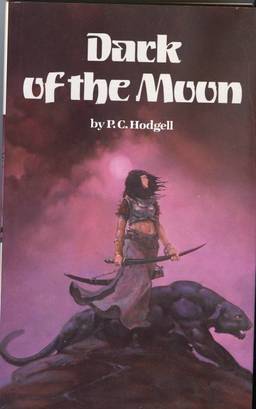
Steven Bauer’s Satyrday is mentioned in Clute and Grant’s Encyclopedia of Fantasy, where they call it a satire. I will say up front that I didn’t get that sense from the book and have no idea what it’s supposed to be satirising. It’s a book that mixes animal fable, Greek myth, and the then-emerging fantasy staple of a young boy coming to adulthood by engaging in a quest to defeat a dark lord. A great owl has captured the moon and holds it captive as part of a plot to gain ultimate power. But not far away, a satyr named Matthew has brought up a human boy named Derin, and at the urging of a raven named Deirdre they set out to free the moon and thwart the owl’s schemes. The adventure’s less than compelling, but there are nice passages and if the book doesn’t entirely come together, there’s still an engaging weirdness to the ingredients.

Read More Read More

Vintage Treasures: Eyes of Amber by John D. Vinge

Vintage Treasures: Eyes of Amber by John D. Vinge

Eyes of Amber John D Vinge-smallI’m still exploring the box of SF and fantasy paperbacks I inherited from my sister-in-law Mary Dechene after her death last month.

Mary enjoyed bestselling fantasy and she had a fabulous collection. But her library also had many surprises, including some from an age when it wasn’t unusual for a midlist author to have a mass market collection. In 1979 Joan D. Vinge had only two other books to her name, The Outcasts of Heaven Belt (1978) and Fireship (1978), when Signet published her short story collection Eyes of Amber, featuring the Hugo Award-winning title story. Among Mary’s collection was the 1983 Signet reprint, with a fabulous new cover by artist Tom Kidd (at right).

The Universe of the Imagination Awaits You in…

Eyes of Amber — The Hugo Award-winning story of one Earthman trying to play a symphony of civilization to a distant, barbaric world.

To Bell the Cat — What happens to humans facing a true alien encounter when they have already become alienated from each other?

View from a Height — What do you do with the rest of your life when you’re alone on a one-way journey to meet the universe?

Media Man — In the precarious society of Heaven Belt, he sold dreams to a dying people. And he knew his career would be over the day he told them the truth…

The Crystal Ship — The Star Well: Was it two races’ chance for the future or a bottomless pit in which all hope must die?

Tin Soldier — Can love really survive across the spaceways and down through time?

Read More Read More

The Public Life of Sherlock Holmes: Gary Gygax’s Role Playing Mastery

The Public Life of Sherlock Holmes: Gary Gygax’s Role Playing Mastery

Gygax_RPMcoverMy Dungeons and Dragons roots don’t go back to the very beginning, but I didn’t miss it by much. I remember going to our Friendly Local Gaming Store with my buddy. He would buy a shiny TSR module and I would get a cool Judges Guild supplement.

And I remember how D&D was the center of the RPG world in those pre-PC/video game playing days. And Gary Gygax was IT. It all centered around him. So, I’ve been reading with interest a book that he put out in 1987, less than twelve months after he had severed all ties with TSR.

Role Playing Mastery is his very serious look at RPGing. He included the 17 steps he identified to becoming a Role Playing Master.

If you’re reading this post, you probably know that Gary Gygax and Dave Arneson co-created Dungeons and Dragons circa 1973-1974. Unfortunately, it was not a long-lasting partnership and lawsuits would ensue. While both were instrumental in creating D&D, it is Gygax who is remembered as the Father of Role Playing.

Read More Read More

The Series Series: Dreamweaver Road by Kelly Ann Jacobson

The Series Series: Dreamweaver Road by Kelly Ann Jacobson

Dreamweaver Road Kelly Ann Jacobson-smallKnow what I’ve always wanted to see in a past-lives-intrude-on-present story? A protagonist who finds out about her past lives and, instead of taking that as an immediate mandate to robot out the dubious decisions of her previous selves, tries something new. Were you married to someone in a past life? Okay, but that doesn’t mean you have to marry him again. I mean, what if he was a thug or a dud? If a story’s world dictates that people are supposed to improve themselves, right their wrongs, grow as spirits as they progress through their incarnations, I would like to see reincarnation used for something other than an idiot plot, a transparent cheat on the part of so many authors. If some old decision is going to get remade, it should have to earn the remaking. For pete’s sake, somebody write me a reincarnated skeptic!

And now I have what I’ve always wanted.

If Kelly Ann Jacobson’s sequels to the slender YA volume Dreamweaver Road can keep up what’s working here, we may get to read a story that happens to include reincarnation without being shackled by it. Maybe that’s one of the things that can happen now, in this weird new age when writers like Chabon and Lethem have forced the mainstream to make its peace with genre writing enough so that an MFA candidate at Johns Hopkins can write fantasy openly. The MFA polish also seems to have resulted in a little more music in the sentences than YA novels generally have, which is all to the good.

Our heroine Zoey is a sixteen-year-old farm girl when she comes into her powers. She’s been picking those powers up gradually over many lifetimes, mostly by making mistakes that get her killed. At the book’s opening, she remembers none of those other lives and the mistake she’s looking to set right is one she made just a year ago.

She thinks her quest is to find her best friend, who was stolen away by an unknown enemy that seems to have guessed wrong about which kid had the magic. It’s bigger than that. Much bigger.

Read More Read More

New Treasures: Nihal of the Land of the Wind by Licia Troisi

New Treasures: Nihal of the Land of the Wind by Licia Troisi

Nihal of the Land of the Wind-smallWhen I first got my Kindle, I imagined it would be a gateway to a whole new way to buy and read books. The ability to browse and download books in a matter of seconds, all from the comfort of my big green chair, was pretty darned appealing — not to mention the host of free samples and complete novels Amazon posts every week.

Well, it didn’t unfold that way. Turns out that, by and large, I still buy and read novels primarily in paperback. And cover art and design have a huge impact on what I pick up every week… and frankly, much of the digital-only fantasy out there just isn’t visually appealing enough for me to bother with.

That’s starting to change, though. Exhibit A: Nihal of the Land of the Wind, the first volume of Chronicles of the Overworld, a bestselling Italian fantasy series by Licia Troisi. I have no idea who painted the cover — and the Kindle version doesn’t tell me — but it is gorgeous (click for a bigger version). Here’s the description.

Nihal lives in one of the many towers of the Land of the Wind. There is nobody like her in the Overworld: big violet eyes, pointed ears, and blue hair. She is an expert in swordplay and the leader of a handful of friends that includes Sennar the wizard. She has no parents; brought up by an armorer and a sorceress, Nihal seems to be from nowhere.

Things suddenly change when the Tyrant takes charge. Nihal finds herself forced to take action when she is faced with the most difficult mission a girl her age could imagine.

Fierce, strong, and armed with her black crystal sword, Nihal sets out to become a real warrior. Readers will be riveted as she forges her powerful path of resistance.

Read More Read More

The Ballantine Adult Fantasy Series: The Silver Stallion by James Branch Cabell

The Ballantine Adult Fantasy Series: The Silver Stallion by James Branch Cabell

The Silver StallionThe Silver Stallion
James Branch Cabell
Ballantine, 1969, $0.95
Cover art by Bob Pepper
Internal illustrations by Frank C. Pape

So now we come to one of the better known (some would say infamous) authors in the Ballantine Adult Fantasy line. James Branch Cabell is, to the best of my knowledge, the only author in the lineup who had a book (Jurgen) as the centerpiece of an obscenity trial.

James Branch Cabell was born in Virginia on April 14, 1879. His family was wealthy enough that he could devote his time with genealogical research and writing a complex series of fantasy novels.

These novels are called the Biography of Manuel. They concern Dom Manuel, who rose from being a pig farmer to ruler of the fictional French province of Poictesme. A total scoundrel, after his death, Manuel’s widow Niafer and the saint Horvendile engage in a PR campaign of impressive proportions, recasting him as a faultless savior who will come back to restore Poictesme to holy glory.

But the series doesn’t stop there. Some books deal with Manuel’s descendants. There are 25 books total, written over a period of 23 years. They weren’t written in order of internal chronology and contain a number of references to other works in the series, some subtle and some fairly prominent.

The Silver Stallion opens following the alleged death of Manuel. Jurgen, the son of Coth of the Rocks, claims he saw Manuel taken up into the heavens while riding with Father Death. The Fellowship of the Silver Stallion is the group of Manuel’s closest companions and advisers. They react to news of Manuel’s death in a variety of ways.

Read More Read More

Ghostbusters With More Swearing and Fewer Crappy Sequels: A Review of David Wong’s John Dies at The End

Ghostbusters With More Swearing and Fewer Crappy Sequels: A Review of David Wong’s John Dies at The End

John Dies at the End-smallThis book is the strangest thing I’ve ever read.

Within the first hundred pages, you’re treated to a seven foot man made of meat, wig monsters from another dimension, a man with the ability to communicate through a bratwurst, a dude taken over by small glowing alien things with a penchant for punching people in the balls, a hamburger that screams as you eat it, and a weirdo with a pseudo-Jamaican accent who can tell everything about you at just a glance.

And it never lets up from there; Wong somehow manages to produce a steady stream of balls-to-the-wall crazy throughout. It’s delirious, insane, and stark raving mad. If this book were a person, he would charge into the street and head-butt the first person he sees, before flying away with David Bowie and a dragon. This book is John Dies at the End by David Wong.

John Dies at the End follows the somewhat delirious exploits of David and his best friend, John, who’s never given a last name. This is where anyone else would talk about the plot, but it’s the kind of thing you need to actually read yourself to really appreciate. But I’m going to try anyway, just for you.

Dave and John are kind of like Ghostbusters, except with more swearing and fewer crappy sequels. They deal with paranormal occurrences in their town and its surrounding area, and in doing so have attracted something of a cult following, which arouses the interest of a reporter, Arnie, who interviews Dave about his experiences and the events leading up to him becoming a kind of paranormal detective guy. The story Dave tells Arnie is the story he tells us.

In short, he and John stumble across a drug called “soy sauce,” which heightens the user’s senses to an extreme level and gives them a window into another plane of existence. From here, the two embark on an adventure of Moorcockian proportions: uncovering a dark conspiracy, going to other planes, alternate dimensions, fighting aliens with a flamethrower made from a squirt gun, and meeting a supreme being called Korrok.

Read More Read More

Come Into Callahan’s, Said the Spider

Come Into Callahan’s, Said the Spider

CallahansI first met Jake (the narrator), Fast Eddie (the piano player), Doc Webster, Long Drink McGonnigle, and Mike Callahan himself in the pages of Analog. All of Spider Robinson’s stories were eventually collected in three anthologies: Callahan’s Crosstime Saloon, Time Travelers Strictly Cash, and Callahan’s Secret.

Callahan’s is a place where the day after Monday is Punday, Wednesday is Tall Tales Night, there’s a Fireside Fillmore night, and a Riddles Night. And in the grand tradition of the bar story, we get told these tall tales, we’re given the lyrics of the songs, and we can even participate in the guessing of the riddles.

But unlike the traditional bar story, these are just window-dressing, Robinson’s homage to the conventions. The real stories are what happens around, during and after all this traditional bar story action. And these are anything but traditional – they are, after all, science fiction stories, and the characters who come into Callahan’s for help are time-travelers, aliens, humans suffering from strange mutations . . . and a talking dog.

Though the prefaces, intros, and afterwords establish the pretense that Callahan’s actually exists, it’s clearly in either an alternate universe or an alternate timeline. The second story in CCS, for example, “The Time Traveler,” was written, or at least appeared, in 1973 or ’74. Not too long after that, in “The Law of Conservation of Pain,” a time traveler appears from the year 1995, using the first time machine.

Read More Read More

Blogging Sapper’s Bulldog Drummond, Part One

Blogging Sapper’s Bulldog Drummond, Part One

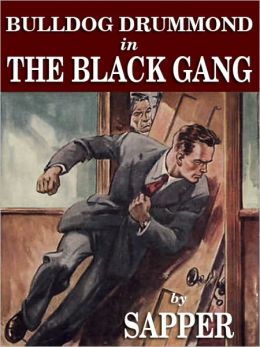
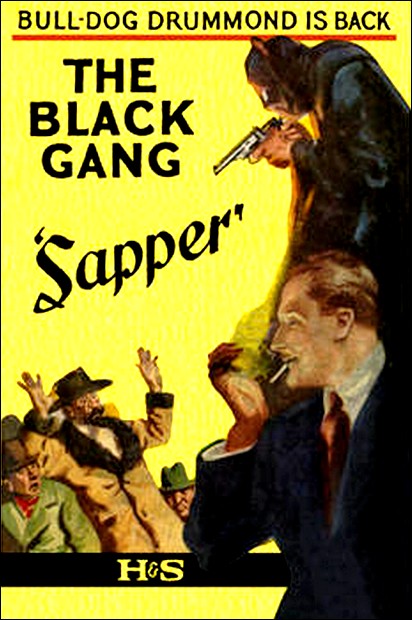
170px-Bulldog_Drummond_Poster2566515-bulldogdrummond2Bulldog Drummond is a peculiar case. The reputation of the original novels is more maligned than even Sax Rohmer’s Yellow Peril thrillers. To be sure, “Sapper” (the pseudonym of author H. C. McNeile) expressed views that stand out as offensive even among the common colonial prejudices of Edwardian England. The reason for this is easily understood. The author’s nationalistic fervor was predicated on the belief that the only good nation was Britain and every other nationality was inferior to varying degrees.

McNeile was a “True Blue” Brit in every way. A decorated veteran of the Great War, Sapper and his characters adore England and are intolerant of everyone else. Americans are castigated for their crudeness, the French are pompous, and Germans are a vile and irredeemable people. More bigoted views will follow, but that is the extent in the first quarter of the first book in the series.

Having covered the bad, what is it that makes the books still worth reading nearly a century later? Are they simply a document of more repressive times or do they offer value that makes one willing to overlook the reliance upon stereotypes and casual slurs? I would argue that anyone interested in the development of the thriller and pulp fiction should be exposed to at least the first four books in the long-running series. There is much that is light and entertaining in Sapper’s fiction, to the extent that they often read like drawing room comedies until thriller aspects interrupt the humor.

Read More Read More