Browsed by
Category: Editor’s Blog

The blog posts of Black Gate Managing Editor Howard Andrew Jones and Editor John O’Neill

The Bones of the Old Ones Inches Closer to December Publication Date

The Bones of the Old Ones Inches Closer to December Publication Date

bones-of-the-old-onesThis week the most exciting item to arrive at the Black Gate rooftop headquarters, bar none, was the Advance Reading Copy of Howard Andrew Jones’s The Bones of the Old Ones, the sequel to his breakout fantasy novel, The Desert of Souls.

I read The Bones of the Old Ones the instant I could get my hands on it, and it was everything I hoped it would be. A rollicking adventure that follows our heroes Dabir and Asim in a daring quest across the landscape of 8th Century Arabia, Bones is packed with ancient secrets, underground lairs, dread pacts, mysterious sorcery, desperate heroism, and moments of laugh-out-loud humor. The cast is much larger than The Desert of Souls, and the stakes are higher, as Dabir and Asim race against time to prevent an ancient sorcerous cabal from plunging the world into eternal winter:

Combining the masterful fantasy of Robert E . Howard with the high-speed action of Bernard Cornwell, Howard Andrew Jones breathes new life into the glittering tradition of sword-and-sorcery with the latest tale of Dabir and Asim’s adventures. As a snowfall blankets 8th century Mosul, a Persian noblewoman arrives at the home of the scholar Dabir and his friend the swordsman Captain Asim. Najya has escaped from a dangerous cabal that has ensorcelled her to track down ancient magical tools of tremendous power, the bones of the old ones.

To stop the cabal and save Najya, Dabir and Asim venture into the worst winter in human memory, hunted by a shape-changing assassin. The stalwart Asim is drawn irresistibly toward the beautiful Persian even as Dabir realizes she may be far more dangerous a threat than anyone who pursues them, for her enchantment worsens with the winter. As their opposition grows, Dabir and Asim have no choice but to ally with their deadliest enemy, the treacherous Greek necromancer, Lydia. But even if they can trust one another long enough to escape their foes, it may be too late for Najya, whose soul is bound up with a vengeful spirit intent on sheathing the world in ice for a thousand years…

The Bones of the Old Ones will be released in hardcover and eBook by Thomas Dunne Books on December 11. It is 307 pages of non-stop action for $24.99 ($12.99 digital), and gets my highest recommendation. Place your advance order now.

Vintage Treasures: A Box of 1950s SF and Fantasy Magazines, and the End of the First Era of Space Exploration

Vintage Treasures: A Box of 1950s SF and Fantasy Magazines, and the End of the First Era of Space Exploration

july-ebay-lot2

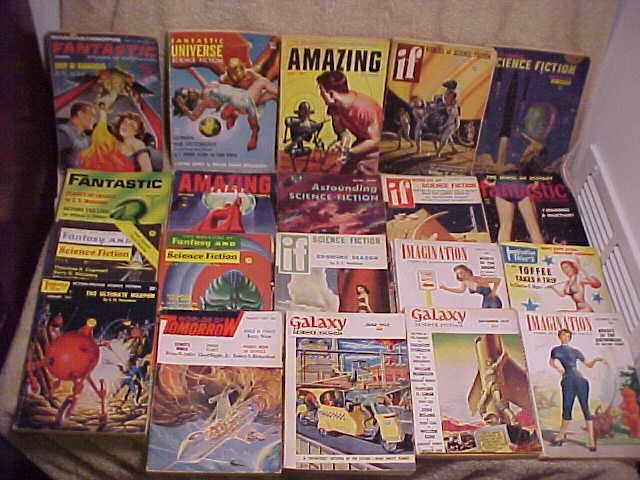
I bought a box of 1950s SF and fantasy digests in an online auction at the end of July, an assortment of chiefly lesser-known magazines such as Imagination, Worlds of Tomorrow, Fantastic Universe, and Imaginative Tales. The box has been sitting in my library for three weeks while I puttered around it, like an unopened Christmas present. I finally unpacked it this morning. Just as I’d hoped, it was filled with wonders.

Holding these the day after the death of Neil Armstrong gives me the powerful sense of the passage of history. Every one of these magazines was published before Armstrong walked on the moon — in most cases at least a decade before. The era of space exploration, with all its incredible promise and danger, was firmly in mankind’s future. Looking at them now, as the first era of space exploration draws to a close with the death of its most famous hero at age 82, I feel like I’m looking back through not one but two eras, to a time when landing on the moon was something that many still scoffed at. When the future was a place where robots carried guns, aliens were green-skinned and wore khakis, and housewives walked alien dogs who didn’t know what to do with a fire hydrant.

Even setting aside all the musings on history, there’s still a lot of wonder packed into these yellowing pages. Marvelous artwork, and even more marvelous stories, from some of the brightest lights in the genre. This box of 20 magazines, which I purchased for 48 bucks, is a splendid sampling of some of the best work of the decade.

Read More Read More

Josepha Sherman, December 12, 1946 – August 23, 2012

Josepha Sherman, December 12, 1946 – August 23, 2012

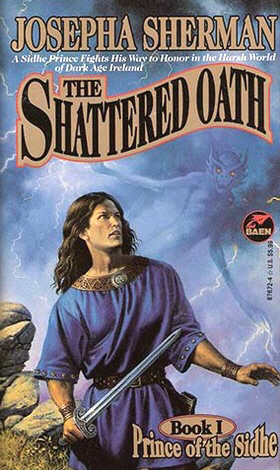
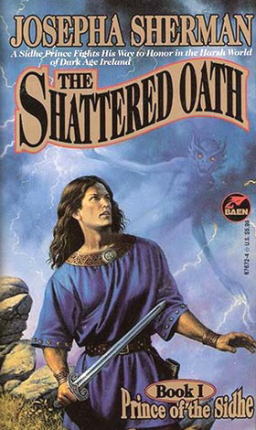
the-shattered-oath2Reports are pouring in that prolific fantasy writer Josepha Sherman, author of The Prince of the Sidhe novels and numerous licensed tie-in books, died on Thursday. She had been in poor health and struggled with dementia in the final years of her life.

Sherman began her career writing for The Adventures of the Galaxy Rangers, the animated Space Western TV series that ran between 1986 and 1989. Her first standalone fantasy novel was Golden Girl and the Crystal of Doom (1986). It was followed by more than a dozen others, including the Compton Crook Award winner The Shining Falcon (1990).

She began a lengthy and productive career writing tie-in novels for popular television and computer gaming properties in 1986 with The Invisibility Factor (Find Your Fate Junior Transformers, No 9). She produced licensed novels for Buffy the Vampire Slayer, Star Trek, Bard’s Tale, Highlander, Mage Knight, and Gene Roddenberry’s Andromeda. She also published All I Need To Know I Learned From Xena: Warrior Princess (1998), Greasy Grimy Gopher Guts: The Subversive Folklore of Childhood (with T. K. F. Weisskopf, 1995), Mythology for Storytellers (2002), and more than 30 other non-fiction titles.

Sherman was also a prolific editor with eleven anthologies under her belt, beginning with A Sampler of Jewish-American Folklore (1992) and including Trickster Tales: Forty Folk Stories from Around the World (1996), Urban Nightmares (with Keith R.A. DeCandido, 1997), Merlin’s Kin: World Tales of the Heroic Magician (1998), and Young Warriors: Stories Of Strength (with Tamora Pierce, 2005).

Sherman frequently wrote in collaboration, producing more than a dozen books with a variety of talented partners including Susan M Shwartz (5 Star Trek novels), Laura Anne Gilman (2 Buffy novels), Mercedes Lackey (Bard’s Tale and Bardic Choices), Keith R.A. DeCandido (one anthology), Tamora Pierce (one anthology), T K F Weisskopf (one non-fiction book), and many others.

Writers including Pat Cadigan, Keith DeCandido, Theodora Goss, Nick Pollotta, Vera Nazarian, Ellen Kushner, and David B. Coe have been leaving testimonials on her Facebook page.
Vintage Treasures: The Startling Worlds of Henry Kuttner

Vintage Treasures: The Startling Worlds of Henry Kuttner

the-startling-worlds-of-henry-kuttner2I have fun with these Vintage Treasure pieces. For one thing, they’re a great excuse to shine some light on interesting items that cross my path.

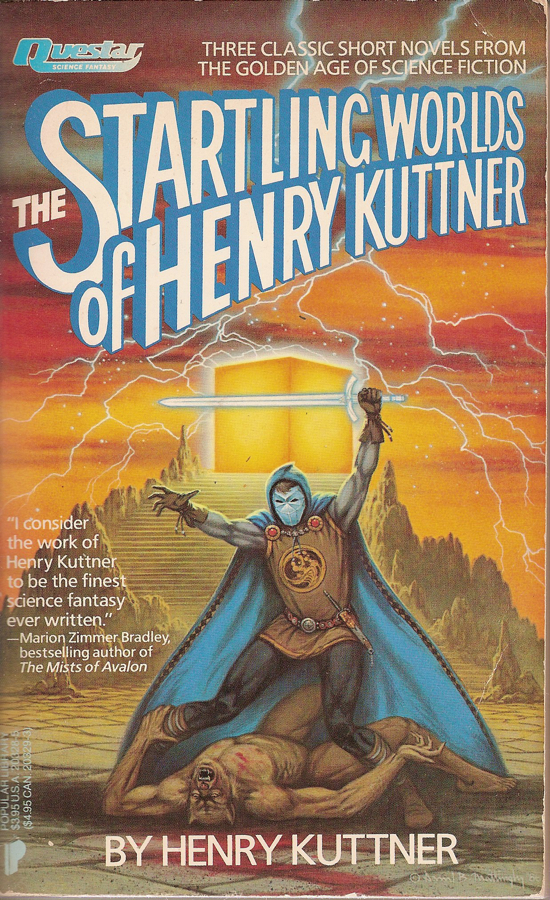
Take Henry Kuttner’s paperback collection, The Startling Worlds of Henry Kuttner. Published in 1987, nearly 20 years after his death, it’s unusual in several respects. For one thing, it includes only novellas. And all originated from a single source: the long-dead pulp magazine Startling Stories.

I think this is a neat idea. The best writers of the pulp era — and Kuttner certainly qualifies — have seen most of their short fiction studiously reprinted. In fact, we’ve covered four generous collections of Kuttner’s pulp fiction just in the last few years: the weird-menace collection Terror in the House, the first volume in The Early Kuttner series; Thunder in the Void, gathering his early space operas; Detour to Otherness, the massive retrospective of his collaborative work with C.L. Moore; and none other than the distinguished James Enge reviewed his Gallagher stories for us, collected in Robots Have No Tails.

But short novels, 40,000-word epics printed in a single pulp issue, rarely (if ever) get reprinted. They’re too long for most collections, and generally too short for a standalone novel, so most of them have slipped through the pages of history. The Startling Worlds of Henry Kuttner rescues three such wonders and puts them under one cover.

But that’s not even the most interesting thing about The Startling Worlds of Henry Kuttner. Since all three novels appeared in a single source, this isn’t just a collection of Kuttner’s work. It’s an anthology that celebrates Startling Stories. Just as most collections give us insight into the recurring themes in an author’s work, this book offers us a  generous sampling of the kind of fiction that appeared in that grand old pulp.

The Startling Worlds of Henry Kuttner collects The Portal in the Picture (originally published in 1949), Valley of the Flame (1946), and The Dark World (1946). It’s one of the most intriguing collections I’ve come across in the past year. At press time, there are 23 used copies available on Amazon.com, ranging in price from $2.25 to $9.99.

Weird Tales Pulls Novel Excerpt Following Fan Uproar

Weird Tales Pulls Novel Excerpt Following Fan Uproar

weird-tales-359aIt’s been an interesting day for Weird Tales, the oldest genre magazine on the market.

It began with the abrupt resignation of Ann VanderMeer as a senior contributing editor, “due to major artistic and philosophical differences with the existing editors.” As reported here last year, VanderMeer was replaced as editor by Marvin Kaye as the magazine transitioned to new Publisher Nth Dimension Media, run by John Harlacher. While Ann commented that her resignation “has been in the works for several months, ever since I was removed as the editor-in-chief,” it was apparently hastened by Kaye’s decision to publish an excerpt from Victoria Foyt’s novel,  Saving the Pearls: Revealing Eden. The “Pearls” in the title refer to whites, who find themselves a persecuted minority after an ecological disaster. In praising the book, Kaye wrote:

Weird Tales seldom prints SF, but this story is a compelling view of a world that didn’t listen to the warnings of ecologists, and a world that has developed a reverse racism: blacks dominating and detesting not just whites, but latinos and albinos, the few that still survive of the latter are hunted down and slaughtered.

[Kaye’s post, and the comments it generated, have since been removed from the WT site; a Google webcache of the page is here.]

Read More Read More

Happy Birthday, H.P. Lovecraft

Happy Birthday, H.P. Lovecraft

the-call-of-cthulhu-for-beginning-readers122 years ago today, Howard Phillips Lovecraft, the father of modern horror, was born in Providence, Rhode Island.

Here at Black Gate we’ve celebrated Lovecraft’s works in numerous ways over the years. In 2010, John R. Fultz interviewed the authors behind the landmark anthology Cthulhu’s Reign in “Cthulhu Has Risen…”, perhaps the single most popular blog post we’ve ever published, and last year he examined a brand new magazine celebrating Cthulhu’s creator, Lovecraft eZine. Matthew David Surridge took a detailed look at the master’s prose style in H.P. Lovecraft: The Style Adjectival, and Bill Ward told us about the silent movie version of The Call of Cthulhu.

We’ve covered numerous games, books, and audio adaptations, from Andrew Zimmerman Jones’s 2011 article on Age of Cthulhu: Death in Luxor to my review of Dark Adventure Radio Theatre’s superb audio play The Shadow Over Innsmouth. In the last week alone we told you about Ross E. Lockhart’s excellent anthology The Book of Cthulhu and the new RPG setting Clockwork and Cthulhu from Cakebread & Walton.

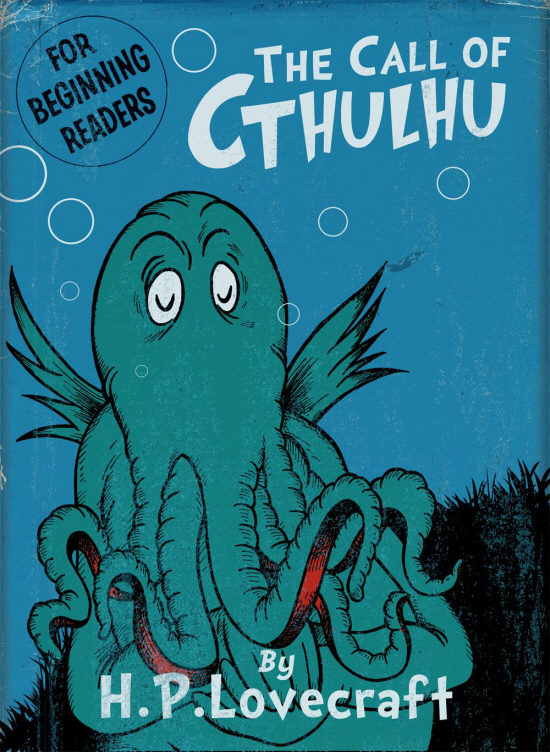
But there’s always more. So today, in honor of H.P. Lovecraft’s 122nd birthday, we’d like to present to you The Call of Cthulhu (For Beginning Readers), a faithful retelling of the classic horror tale… in the style of Dr. Seuss.

Created by artist Richard John Ivankovic, The Call of Cthulhu (For Beginning Readers) is a full-color illustrated version of the perhaps Lovercraft’s most famous story, originally published in the February 1928 issue of Weird Tales. The complete version can be browsed online here.

We think H.P. Lovecraft would have enjoyed it.

Michael Penkas Promoted to Black Gate Website Editor

Michael Penkas Promoted to Black Gate Website Editor

michael-penkasWe are very pleased to announce that, effective August 15, Michael Penkas has been promoted to Black Gate Website editor.

Michael Penkas moved to Chicago in 2004 and since then has performed at various open mic events. He previously worked as a copy editor and general assistant for the long-running Twilight Tales book/reading series. His short stories have been published in Midnight Echo, One Buck Horror, Uncle John’s Bathroom Reader, and Shock Totem, among others.

Michael sold his first short story to Black Gate in 2011. His first blog post for us was a review of Brendan Detzner’s short story collection Scarce Resources in November of 2011; in the last few months he’s reviewed Matt Wagner’s Mage: The Hero Discovered, Ted Naifeh’s Courtney Crumrin and the Night Things, and Jonathan Carroll’s The Land of Laughs, among others.

Michael takes over from C.S.E. (Claire) Cooney, who was promoted to website editor in January of 2011. Claire’s relocation to Rhode Island — and the growing success of her recent books, including How to Flirt in Faerieland & Other Wild Rhymes — has left her less time for other activities. Claire brought enormous energy and drive to the role, and she attracted many new bloggers to our small community. She will be much missed, although she promises to continue to blog for us when time permits.

Michael Penkas has been working hard behind the scenes for the past few months as Assistant Website Editor, bringing a new level of professionalism to the blog. We are pleased and very proud to have him officially take over the reins as our new Website Editor.

For a complete list of the folks responsible for Black Gate, visit our Staff Page.

James Enge’s A Guile of Dragons Arrives

James Enge’s A Guile of Dragons Arrives

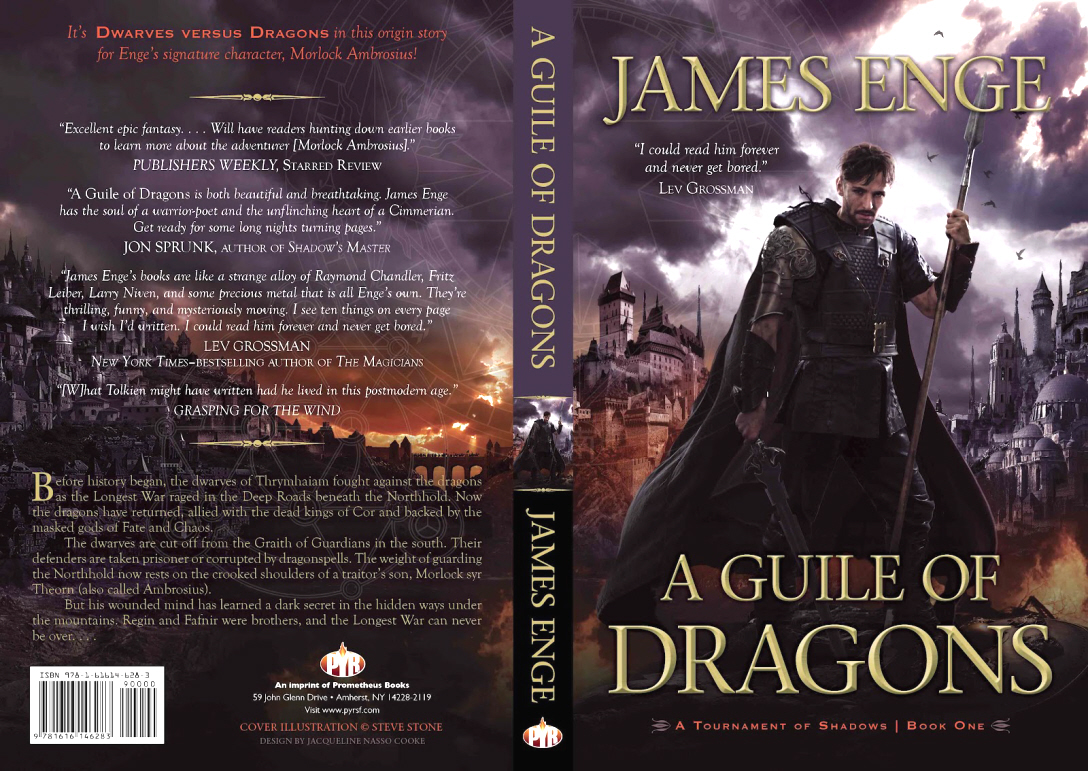
a-guile-of-dragonsThe official on-sale date isn’t until August 24, but I’ve now received multiple reports that James Enge’s A Guile of Dragons has arrived in stores. It’s also available for purchase online. We can’t postpone the party any longer.

James Enge’s first published story “Turn Up This Crooked Way” — the tale that introduced Morlock the Maker to the world — was in Black Gate 8. Morlock appeared in virtually every issue of Black Gate for the next five years; his last appearance was the novella “Destroyer” in BG 14.

James’ first Morlock novel, Blood of Ambrose, was nominated for the World Fantasy Award in 2010. It was followed by This Crooked Way, which collected a dozen short stories, including all six published in Black Gate, and The Wolf AgeA Guile of Dragons is the fourth in the series, and the first new Morlock book in almost two years. As we reported back in February, it is Morlock’s origin story:

Before history began, the dwarves of Thrymhaiam fought against the dragons as the Longest War raged in the deep roads beneath the Northhold. Now the dragons have returned, allied with the dead kings of Cor and backed by the masked gods of Fate and Chaos.

The dwarves are cut off from the Graith of Guardians in the south. Their defenders are taken prisoner or corrupted by dragonspells. The weight of guarding the Northhold now rests on the crooked shoulders of a traitor’s son, Morlock syr Theorn (also called Ambrosius).

But his wounded mind has learned a dark secret in the hidden ways under the mountains. Regin and Fafnir were brothers, and the Longest War can never be over…

The gorgeous cover is by Steve Stone. Click on the image at right to see the complete wrap-around image in HD.

A Guile of Dragons is 320 pages in trade paperback, published by Pyr Books. It is $17.95, and has an official on-sale date of August 24. But if you find it for sale and whisk it home before then, we won’t tell anyone.

New Treasures: The Book of Cthulhu, edited by Ross E. Lockhart

New Treasures: The Book of Cthulhu, edited by Ross E. Lockhart

book-of-cthulhuIt’s been a few good years for Cthulhu fans, with a number of high-profile, acclaimed anthologies offering brand new tales of everyone’s favorite genocidal cosmic entity, including Ellen Datlow’s Lovecraft Unbound (2009), Darrell Schweitzer’s Cthulhu’s Reign (2010), S. T. Joshi’s Black Wings of Cthulhu (2010), and Future Lovecraft (2011) edited by Paula R. Stiles and Silvia Moreno-Garcia, among others.

However, if you’re new to the Cthulhu mythos, or just want to sample the best Lovecraftian horror of the last eight decades, your options are a little more limited. Paula Guran’s New Cthulhu: The Recent Weird (2011) offers an excellent cross-section of fiction from the last decade, with short stories by Neil Gaiman, John Langan, China Miéville, Michael Shea, Charles Stross, and many others. At 528 pages, it’s a veritable feast of modern cosmic horror, but since the oldest story dates from the year 2000, it doesn’t really count as a true survey of the very finest Cthulhu fiction.

That title, I think, goes to Ross E. Lockhart’s The Book of Cthulhu. It includes some of the most famous Cthulhu stories of all time, including T.E.D. Klein’s “Black Man With a Horn” (1980), Brian McNaughton’s “The Doom That Came to Innsmouth” (1999), and fiction by Charles R. Saunders, Ramsey Campbell, Bruce Sterling, Laird Barron, Kage Baker, Thomas Ligotti, Gene Wolfe, and many others.

Although Lockhart draws heavily from modern writers, there’s surprisingly little overlap with Guran’s volume — a scant four stories. You could probably get away with getting both, in fact. I’m glad I did.

Ross E. Lockhart is the managing editor of Night Shade Books. A second volume, The Book of Cthulhu 2 — reprinting stories by Fritz Leiber, Neil Gaiman, Laird Barron, Michael Chabon, and many others — is scheduled for release in October.

The Book of Cthulhu is 530 pages in a handsome trade paperback, with cover art by Obrotowy. It was released in August, 2011 by Night Shade Books, with a cover price of $15.99.

Harry Harrison, March 12, 1925 – August 15, 2012

Harry Harrison, March 12, 1925 – August 15, 2012

harry-harrisonHarry Harrison, the prolific author of nearly 60 novels (including Deathworld; Bill, the Galactic Hero; The Hammer and the Cross; and eleven titles in The Stainless Steel Rat series) has died.

Harrison’s first publication was the short story, “Rock Diver,” in the February 1951 issue of Worlds Beyond. But he entered the field as an illustrator, working on some of the most fondly-remembered comics of the 50’s, including EC Comics’ science fiction titles Weird Fantasy and Weird Science. He also wrote a number of syndicated comic strips, creating Rick Random and becoming the main writer of the Flash Gordon newspaper strip in the 50s and 60s.

Harrison also made a name for himself as an important and influential editor, beginning with the September 1953 issue of Rocket Stories. He was the editor of many of the field’s leading magazines, including Amazing Stories (1967 – 1968), Science Fiction Adventures (1953 – 1954), Fantastic (1968), and SF Impulse (1966 – 1967). With Brian Aldiss, he edited Nebula Awards 2, two volumes of SF Horizons, three volumes of the Decade anthology series (1940, 1950, and 1960), and nine volumes of The Year’s Best Science Fiction (1967 – 1975).

But it was as an author that Harrison really made his mark. His first novel was Deathworld (1960), a book that was still in print and much discussed two decades later, when I was in high school. He wrote two more in what was eventually to become The Deathworld Trilogy. His 1966 novel Make Room! Make Room! became the basis for the famous science fiction film Soylent Green (1973), starring Charlton Heston.

Harrison had an affinity for series work, and most of his 58 novels are part of a series including the Brion Brandd novels (2 titles), Tony Hawkin (2), To the Stars (3), The Hammer and the Cross (3), Stars and Stripes (3), Eden (3), Bill, the Galactic Hero (7), and The Stainless Steel Rat (11). Much of his short fiction also followed this pattern, including the nine “Matter Transmitter” stories.

Harrison’s career spanned nearly six decades. The monumental collection 50 in 50 (Tor, 2002) collects 50 stories written over 50 years. His last novel was The Stainless Steel Rat Returns, published by Tor in 2010.

According to The Official Harry Harrison Website, Harry Harrison died today at the age of 87. He was a vastly influential writer and editor during the formative years of the genre, and he will be much missed.