Browsed by
Author: John ONeill

Vintage Treasures: A Touch of Infinity/ The Man With Nine Lives by Harlan Ellison
Vintage Treasures: A Touch of Infinity/ The Man With Nine Lives by Harlan Ellison

A-Touch-of-Infinity-smallI enjoy collecting vintage SF and fantasy paperbacks of all kinds. But I get the most pleasure out of the Ace Doubles.

The Ace Doubles have a lot of things going for them in terms of raw collectibility. They were edited by Donald A. Wollheim, one of the most accomplished editors our genre has ever seen, and the authors in their stable reads like a Who’s Who of major talent of the era. Best of all, they had some really terrific covers, including some truly iconic SF images.

Of course, even among the Ace Doubles, some are more collectible than others. Certainly the early novels of Philip K. Dick are near the top of the list, as are novels by Asimov and Dean Koontz. But speaking as someone who’s bought and sold Ace Doubles for many years, I think Harlan Ellison’s A Touch of Infinity (paired with The Man With Nine Lives) may be the most in demand.

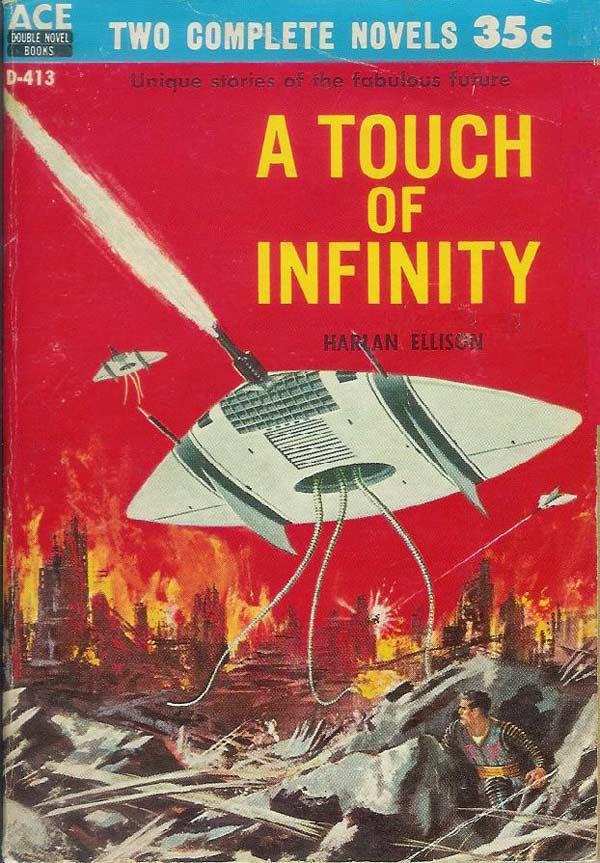
Lots of reasons for this. Ed Valigursky’s classic cover, featuring a spacesuit-clad future person hiding in the rubble from invading flying saucers, clearly didn’t hurt. 54 years after this book went on sale, I still want to find out what that’s all about. A Touch of Infinity is also Ellison’s first short story collection and that alone makes it remarkable. And the novel on the flip side, The Man With Nine Lives, has never been reprinted… so if you’re an Ellison collector, this is the only way to get it.

On top of all of that though, this little book is simply a pure slice of 60s nostalgia. It’s a way to transport yourself back half a century, to a time when science fiction was still fresh and new; when Harlan Ellison was an unknown name, a hotshot young writer with only two previous books to his name; and when a mainstream publisher still tried their best to package his singular voice as typical paperback SF.

It wasn’t long before books by Ellison became a major event in the genre, so his first humble releases have a unique appeal to collectors — almost as if he were appearing in a secret identity.
Read More Read More

Take a Trip to Haven — The Free City

Take a Trip to Haven — The Free City

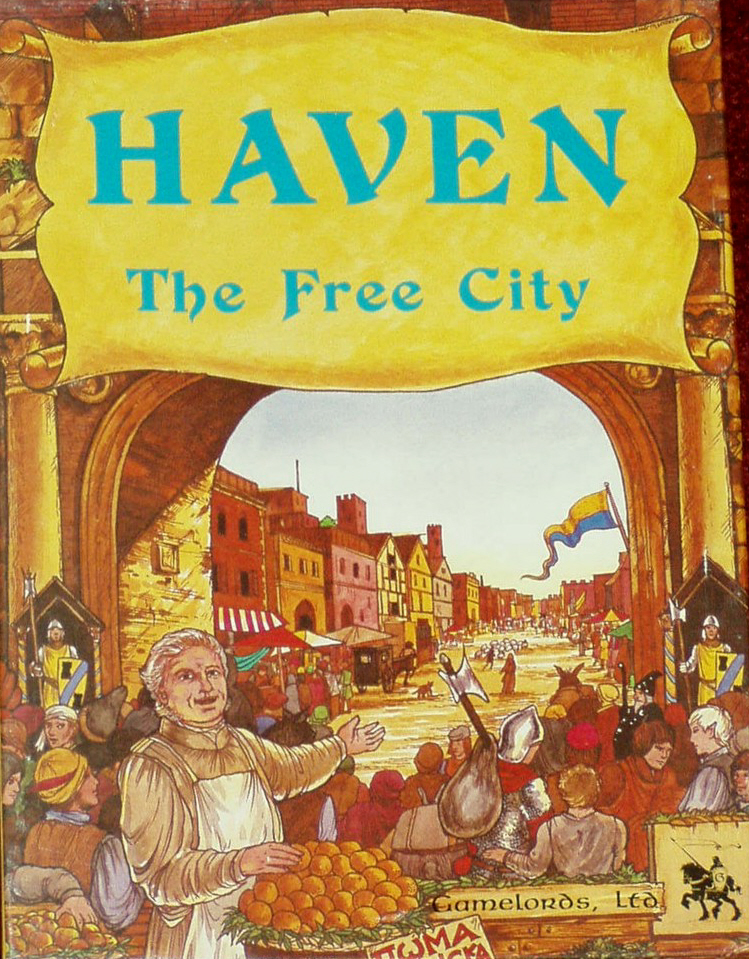
Haven the Free City-smallIn the early days of role playing, rule systems were plentiful. Really, you couldn’t set foot in a game shop without tripping over a new RPG system. Every game company on the planet was trying to grab a piece of the rapidly-exploding market with a new game focused on pirates,  science fiction, the Bronze Age, the Wild WestKing Arthurhorror movies, the fall of Moria, the Federation, Middle Earth, Jack Vance’s Dying Earth, Judge Dredd’s Mega-City One, the Marvel Universe… heck, there were even role playing games about high school, fer cryin’ out  loud.

Supplements? They were a dime a dozen. Virtually every one of the systems above had at least half a dozen. Want the complete scoop on Midgard? Wolfgang Baur has you covered. Desperately need advice on how to survive in a dungeon? Check. Or how about a trip to the mysterious lost Empire of the Aztecs?

Adventures? Lordy, yes. Countless fabulously detailed adventures, from Gygax’s classic The Temple of Elemental Evil; to the home of King Kong, Monster Island; to the ruins of Parlainth, an ancient capital that vanished from the face of the Earth; to Call of Cthulhu scenarios based on actual tales by H.P. Lovecraft. You couldn’t throw a stick without bouncing off half a dozen epic adventures.

Was there anything an avid gamer couldn’t find, in the first heady decades of our hobby?

Yes, there was. If there was anything as scarce as hen’s teeth, it was a thriving, living city setting.

And no wonder. Ruined cities, they were a cinch. Pretty map and an encounter key. But an inhabited city? With a functioning economy, logically consistent government, sinister underworld, bustling marketplaces, and larger-than-life heroes, villains, and just plain folk going about their business? That took a level of imagination — and commitment to design — on a whole new scale.

There were a few attempts at city settings, some better than others. But for my money, the most successful, and easily one of the most ambitious, was Gamelord’s marvelous Haven — The Free City.

Read More Read More

Robin Hobb on What’s Wrong with Epic Fantasy

Robin Hobb on What’s Wrong with Epic Fantasy

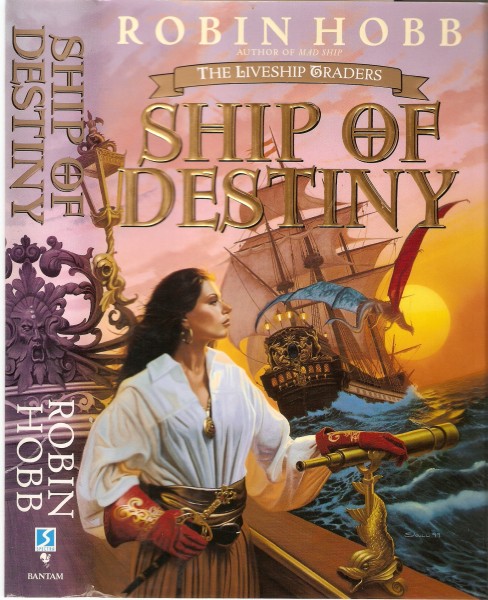
Robin Hobb Ship of Destiny-smallOver at SF Signal, Andrea Johnson has put together one of the more interesting round-robin interviews I’ve read in a some time. As part of their Mind Meld series, she asked eight well known fantasy authors — including Martha Wells, Melanie Rawn, Sam Sykes, and Robin Hobb — to answer the question “What’s Wrong with Epic Fantasy?”

Many of the answers are both fascinating and insightful. Martha critiques the current trend towards multiple viewpoint characters (“A perfectly valid style, but… when it’s done wrong, it’s tedious”), Marc Alpin comments on the necessity to switch gears between books (“Some readers, especially those who wanted more of book one, freak out and think they’ve been cheated”), and Patrick Tomlinson discusses inevitable book bloat (“The longer an author writes inside a world, the longer the books tend to become.”) But it was Megan Lindholm, aka Robin Hobb, who I thought had the most salient comment, pointing out that the rise of independent publishers has also unleashed a host of amateur marketeers, whose newbie mistakes have left us with countless books that are misrepresenting themselves on the shelves:

I’m going to commit heresy here. I think that old time publishers are actually better at targeting the audience and showing readers the books they want than our current climate of ‘Everyone quick, promote a book you like’ is. Authors see their own books differently from how their publishers see them, and some of the author promotions I’ve seen led me to expect one sort of book and then [they] delivered another… I think that some (not all) of the people who are hired to create the book trailers don’t really know much about marketing… They make terrific trailers, and I get so excited to read the book, I buy it, and then think, ‘Well, this is a pretty good book, but it’s not at all what I thought it was going to be…’

To find a book that you really want to read, I recommend going to a bookstore (a big building sometimes made out of brick and mortar where they sell books made out of paper), and talk to the book seller (a person who knows all about what she or he is selling)… If you do not have a bookseller who can do this, then I am very sorry for you. Try your librarian.

Read the complete article here.

New Treasures: Iron Night by M.L. Brennan

New Treasures: Iron Night by M.L. Brennan

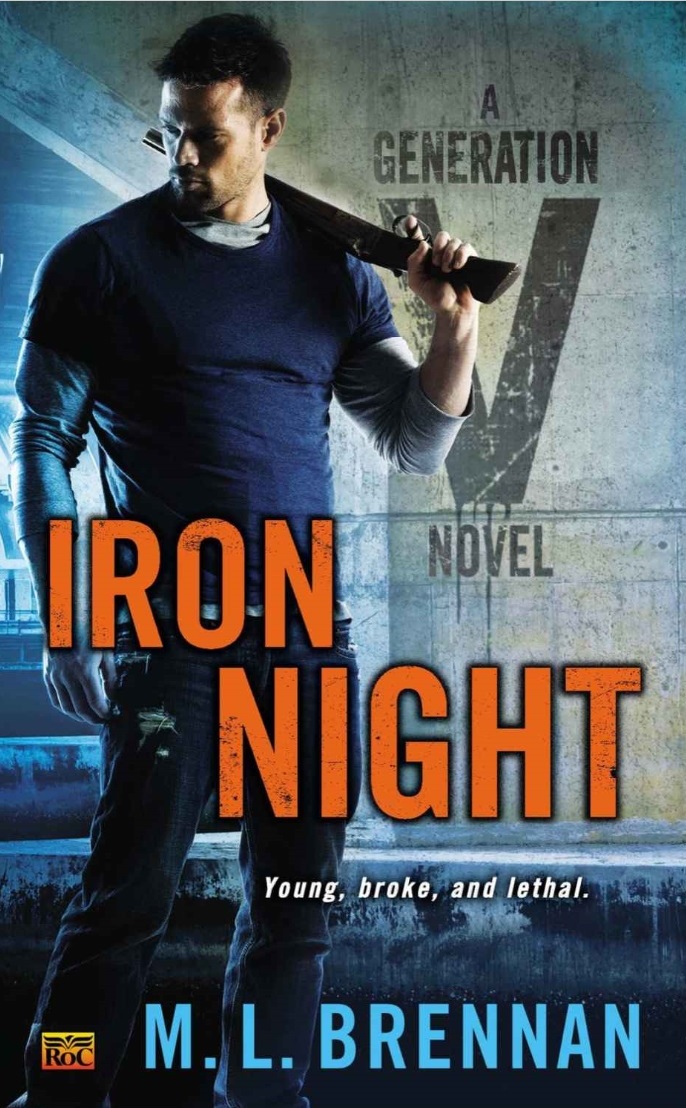
Iron Night-smallI’m a sucker for a good review. You’d think that, with all the reviews I’ve written, edited, and published, I’d be immune to a little hyperbole by now. But I’m not. When I see a reviewer pull out all the stops for a new book — especially one from a writer I’ve had my eye on for a while — I’m intrigued. I can’t help it. I love this genre and, at the end of the day, we’re all on the lookout for that great read hidden amongst all the same-looking titles on the bookshelves.

It was the ever-trusty SF Signal that pointed me towards my latest discovery, M.L. Brennan’s Generation V series, with Nick Sharps’ review of the second volume, Iron Night:

Someone or something is killing humans in a particularly gruesome way and it just happened to pick the wrong target – the roommate of Fortitude Scott. Fort, now being brought up to speed on the family business, pursues the killer with vengeance in mind, but he might have stumbled onto something far more dangerous than a common murderer…

I haven’t been this excited about a series in a long time. This is urban fantasy at its best, with a strong focus on characters and relationships and an awesome take on established creatures… Brennan’s elves are on par with her vampires. The elves of Iron Night are seriously twisted – more the product of Guillermo del Toro’s worst nightmare than Tolkien’s friendly fair folk… The plot of Iron Night is much stronger than Generation V, complete with really awesome moments (I’m particularly fond of the undercover speed dating)…

Iron Night is freaking awesome. Brennan has made vampires cool again, elves creepy, and urban fantasy feel fresh. In an over saturated genre this is no small feat.

M.L. Brennan’s first novel, Generation V, featuring the young vampire Fortitude Scott, was published on May 7, 2013. The third installment, Tainted Blood, will appear in November.

Iron Night was published on January 7, 2014 by Roc Books. It is 320 pages, priced at $7.99 for both the paperback and digital versions.

Announcing the Winner of M. Harold Page’s The Sword is Mightier and Blood in the Streets

Announcing the Winner of M. Harold Page’s The Sword is Mightier and Blood in the Streets

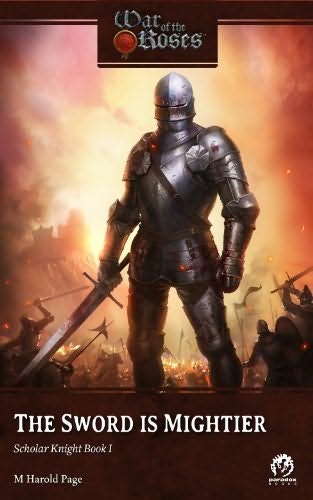
The Sword is Mightier-smallLast month announced a contest to win both novels in M. Harold Page’s exciting Scholar Knight series: The Sword is Mightier and Blood in the Streets, compliments of Paradox Interactive and M. Harold Page.

It’s too late to enter the contest now, but it’s not too late to discover Mr. Page’s unique brand of heroic fantasy. Visit his blog here or stop by Black Gate every Thursday to read his regular column.

His recent articles for us have included So What’s Wrong With (Some) Modern Fantasy?Understanding Tolkien: Why His Landscapes Work, Why Evil Overlords Need to be Competent, and Why Medieval Fantasy is Not Inherently Conservative (or Inherently Anything Political).

We received so many entries for this contest, we had to abandon our usual tracking and selection process. We gave up on spreadsheets to track the entries — but at least our D&D dice didn’t fail us when it came time to determine a winner.

We are pleased to announce that the winner of both volumes in M. Harold Page’s Scholar Knight series is Jackie Stevens of Aylesbury. Congratulations, Jackie! We’ll be touch to let you know how you can claim your books.

Thanks to everyone who entered, and to M. Harold Page and Paradox Interactive for sponsoring the contest. The Sword is Mightier and Blood in the Streets were published on September 25 and December 12, 2013, respectively. They are available in digital format for $4.99 each.

Vintage Treasures: The Legion of Space by Jack Williamson

Vintage Treasures: The Legion of Space by Jack Williamson

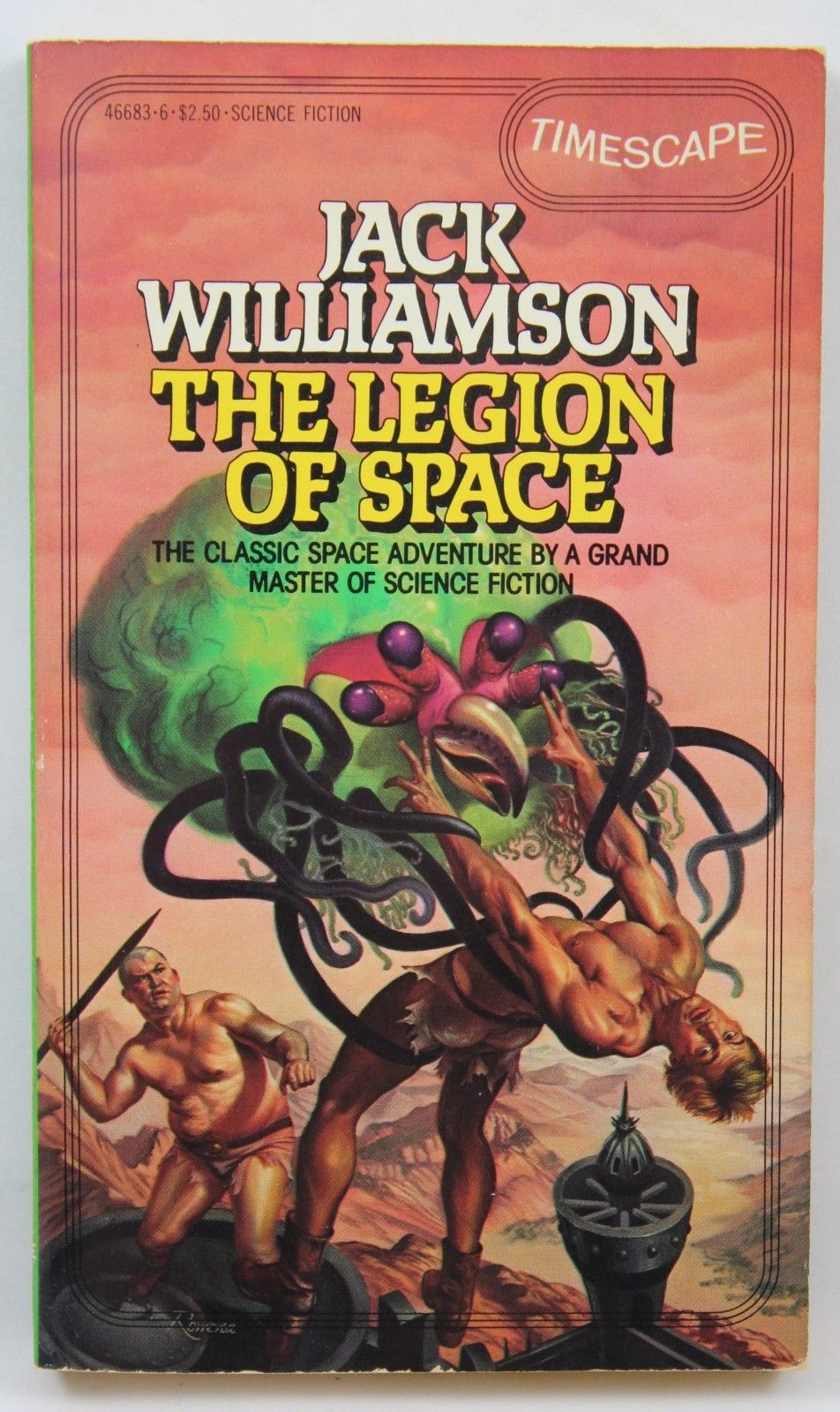
The Legion of Space-smallA few months ago I wrote about The Best of Jack Williamson, a fun refresher course for me in one of the great science fiction writers of the pulp era. It also reminded me that I wanted to read his Legion of Space novels, one of the most popular pre-Campbell space operas.

Time is running out, too. Isaac Asimov, a huge fan of The Legion of Space when he first read it in Astounding Stories in 1934, sadly found it virtually unreadable when he returned to it as an adult. It’s not unusual for these early pulp novels to be a tough read as you get a little older — if you want to really enjoy them, you pretty much have to experience them first in your youth. And since I turn 50 this year, I figured I better get cracking.

The story goes that Jack Williamson was in a Great Books course when he heard that Henryk Sienkiewicz, the Nobel Prize-winning writer of Quo Vadis, had written at least one of his novels by mashing The Three Musketeers with Shakespeare’s John Falstaff. Recognizing a brilliant idea when he heard it, the young Williamson took Falstaff and the Musketeers and shot them into space, and went looking for a market for his new masterpiece.

Williamson’s Legion, the military and police arm of the newly-liberated Solar System, was led by Jay Kalam and the brilliant warrior Hal Samdu. The part of Falstaff is played by Giles Habibula (frequently described on the jacket copy as “the incomparable Giles Habibula!”, with an exclamation mark). The setting is the 30th Century, where the solar system is colonized but mankind dares venture no further, since the first team of interstellar explorers to Barnard’s Star returned as barely-alive madmen, babbling about a massive planet filled with deadly aliens — and a city inhabited by evil “Medusae,” floating jellyfish with terrible powers.

Astounding turned out to be the right market at the right time. Editor F. Orlin Tremaine published The Legion of Space as a five-part serial, beginning in April 1934. It was a success and Williamson followed with The Cometeers, a four-part serial in Astounding starting  in May 1936, and then One Against the Legion, a three-parter starting in April 1939. All three were collected in 1980 as Three from the Legion; one of the first books I ever purchased from the Science Fiction Book Club. Williamson re-visited the Legion a final time, nearly 50 years after he penned their first adventure, with The Queen of the Legion, an epic set after the disbanding of the Legion. It was published in 1983.

I’ve been reading a lot of pulp fiction recently, and mostly enjoying it — especially the short work of Clark Ashton Smith (“The Vaults of Yoh-Vombis“), Murray Leinster (“Proxima Centauri“), and the fanzines that cover the pulps, like Fantasy Review. I have high hopes that The Legion of Space will add to that list.

The Lost Art of Bruce Pennington

The Lost Art of Bruce Pennington

Bruce Pennington The Shadow of the Torturer-small

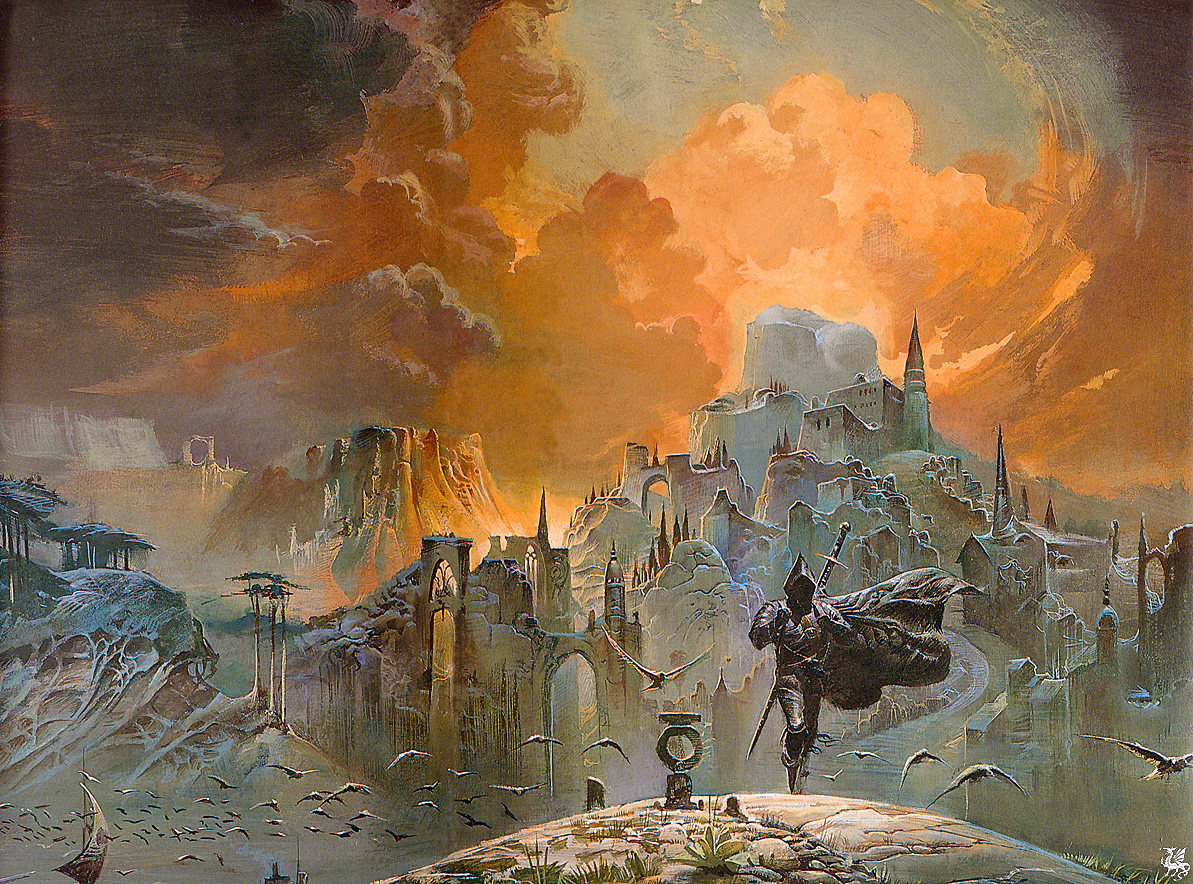
A few weeks ago, while discussing the cover of the Panther edition of Fritz Leiber’s Night Monsters, I mentioned that I’m a huge Bruce Pennington fan. Bruce was very kind to me when I called him out of the blue in 2007, hoping to buy the rights to two of his paintings to use as covers for Black Gate. Once he’d had a chance to see the magazine for himself, and determined that I was simply a fan with a very limited budget, Bruce was extraordinarily gracious, agreeing to my modest offer without a murmur of complaint, and inviting me to look through his vast portfolio and select the covers I wanted.

Well, this was like being a kid in a candy store. I already knew that I wanted to use his extraordinary painting of an armored horseman, one of the finest pieces of sword & sorcery art I’d ever seen. It was originally published on the Panther edition of Lin Carter’s anthology Flashing Swords 2.

Read More Read More

New Treasures: London Falling by Paul Cornell

New Treasures: London Falling by Paul Cornell

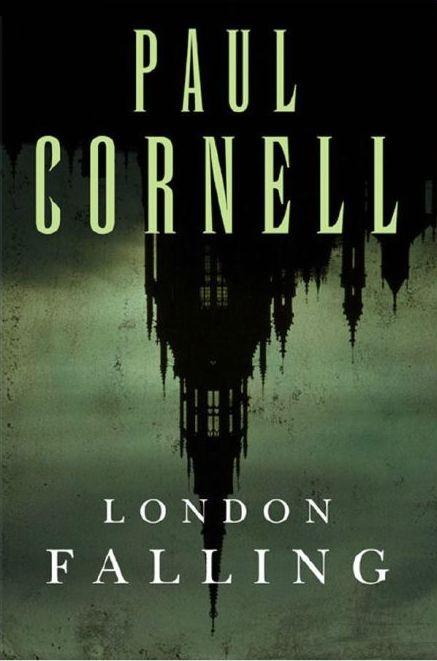
London Falling-smallBoy, Tor publishes intriguing books. I keep trying to save a few bucks by waiting until they arrive in paperback, but there are some books that just demand to be read right now.

I admit I was attracted to London Falling first by the great cover. Covers are important to me — ultimately I have time to read less than a third of what I buy, so at least I want my purchases to look good on my shelves. But the book description, which promises an enticing mix of police procedural and supernatural mystery, really sealed the deal.

Police officers Quill, Costain, Sefton, and Ross know the worst of London — or they think they do. While investigating a mobster’s mysterious death, they come into contact with a strange artifact and accidentally develop the Sight. Suddenly they can see the true evil haunting London’s streets.

Armed with police instincts and procedures, the four officers take on the otherworldly creatures secretly prowling London. Football lore and the tragic history of a Tudor queen become entwined in their pursuit of an age-old witch with a penchant for child sacrifice. But when London’s monsters become aware of their meddling, the officers must decide what they are willing to sacrifice to clean up their city.

Paul Cornell’s first novels were a series of highly regarded Doctor Who tie-ins, and the SF novels Something More (2002) and British Summertime (2007). This is his first fantasy novel, but he’s no stranger to the genre. He wrote three Doctor Who episodes for the BBC, and his comics work includes Batman & Robin, Action Comics, Saucer Country, Demon Knights, and Young Avengers. He’s also an acclaimed short story writer and one of only two people to be nominated for the Hugo Award for fiction, comics and television (bonus points if you can name the other one).

London Falling was published by Tor Books on April 16, 2013. It is 403 pages, priced at $24.99 in hardcover, and $11.99 for the digital edition. The sequel, The Severed Streets, is scheduled to be published by Tor on May 20.

See all of our recent New Treasures here.

Practically Fantasy: The Fort by Aric Davis

Practically Fantasy: The Fort by Aric Davis

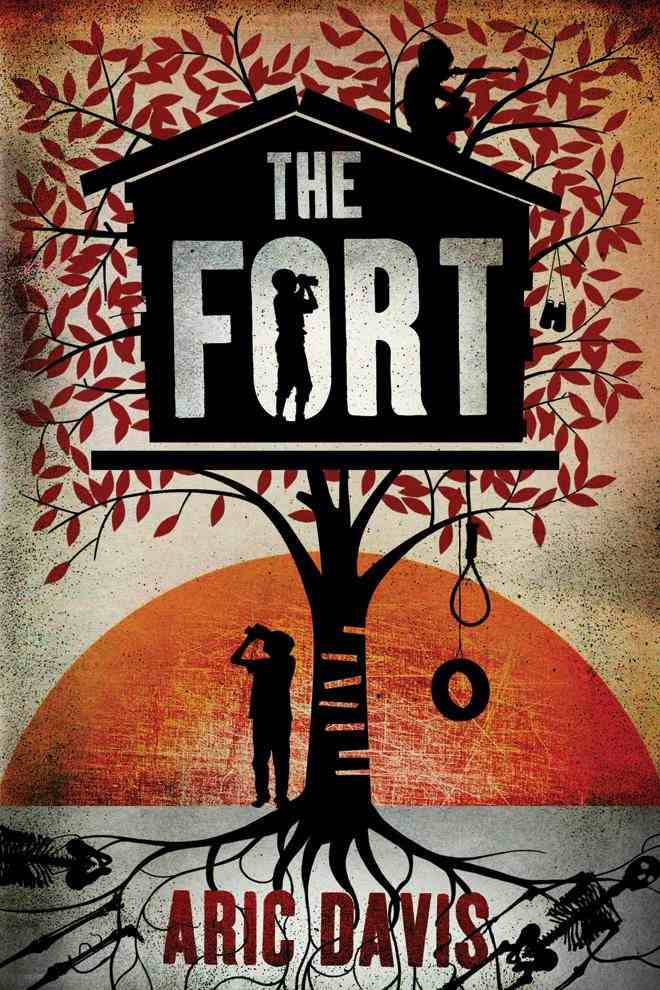
The Fort Aric Davis-smallI try hard to keep the focus on fantasy at Black Gate. There’s only so much we can cover and there are plenty of other sites out there devoted to science fiction, horror, etc.

Of course, there are always borderline items for which I’m constantly trying to find a way to justify a mention. That was the case with Aric Davis’s new novel The Fort. After a week of racking my brains, I came up with this: The heck with it. If ever there was a boy’s adventure novel sure to appeal to every young fantasy fan I’ve ever met, it’s The Fort.

Here’s the description from the back of the book:

With the boys’ new fort finally finished, everything that summer was going great. And then the killer showed up.

During the summer of 1987, from their tree house fort in the woods, neighborhood boys Tim, Scott, and Luke spot a man holding a gun to missing sixteen-year-old Molly Peterson’s back. The problem is, nobody believes their story, not even the police. As search efforts to find Molly dwindle, the boys know that she, and the man with the gun, are nearby — and that they must now find and save Molly themselves. A growing sense of honor and urgency forces the boys to take action — to find Molly, to protect themselves, and to stand guard for the last long days of summer.

Aric Davis has a resume that would impress fantasy fans, too. He’s the author of the crime novels Rough Men and A Good and Useful Hurt, and the YA detective novel Nickel Plated, which Gillian Flynn called a “dark but humane, chilling and sometimes heart-breaking work of noir.”

The Fort was published on June 11, 2013 by Thomas & Mercer. It is 239 pages, priced at $14.95 in trade paperback, and just $4.99 for the digital edition.

Gygax Magazine #3 Now Available

Gygax Magazine #3 Now Available

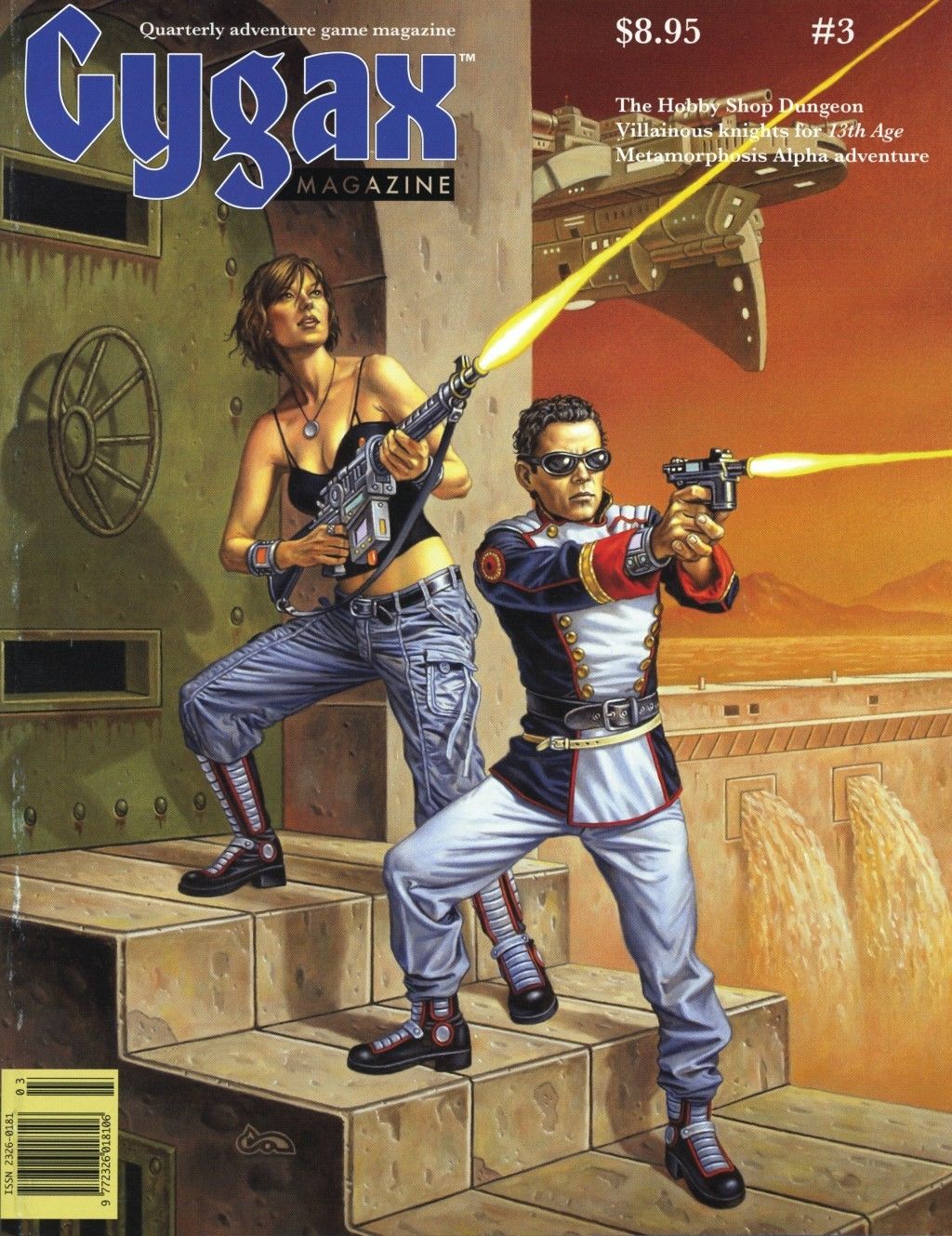
Gygax Magazine 3-smallWhen the last game shop in town went out of business six years ago, I lost the ability to easily browse the latest new releases, and keep up with what’s going on in the industry. Sure, Games Plus in Mount Prospect– one of the finest game shops on the planet — is still in business and thriving, but it’s a good hour away, and I don’t get there more than two or three times a year (although I never miss their semi-annual auction).

One of the things I miss the most is the magazine section. Nothing makes you feel your hobby is vibrant and alive quite like a healthy ecosystem of periodicals. I really enjoyed standing in front of the magazine rack and pulling out the latest issue of Knights of the Dinner Table, Kobold Quarterly, the excellent KnockSpell, Games Workshop’s  White Dwarf, or Troll Lord’s The Crusader.

The loss of so many local game shops has really hurt gaming magazines — we lost Kobold Quarterly in 2012 and Mythmere has announced the future of Knockspell is in doubt. That’s one of the reasons I was so delighted to hear about the launch of the very promising Gygax Magazine last year.

I reviewed the first issue last March and I was very impressed. Issue #2 was released in time for Gen Con, and I’ve been anxiously awaiting the third issue for some time… and wondering how I was going to find a copy.

My wait finally ended last week, compliments of a Priority Mail package from our San Diego correspondent and ace blogger Scott Taylor — who late last year was hired as the new Art Director for the magazine. Inside was a beautiful copy of Gygax Magazine #3, the first issue with his name on the masthead.

Read More Read More