Browsed by
Category: Books

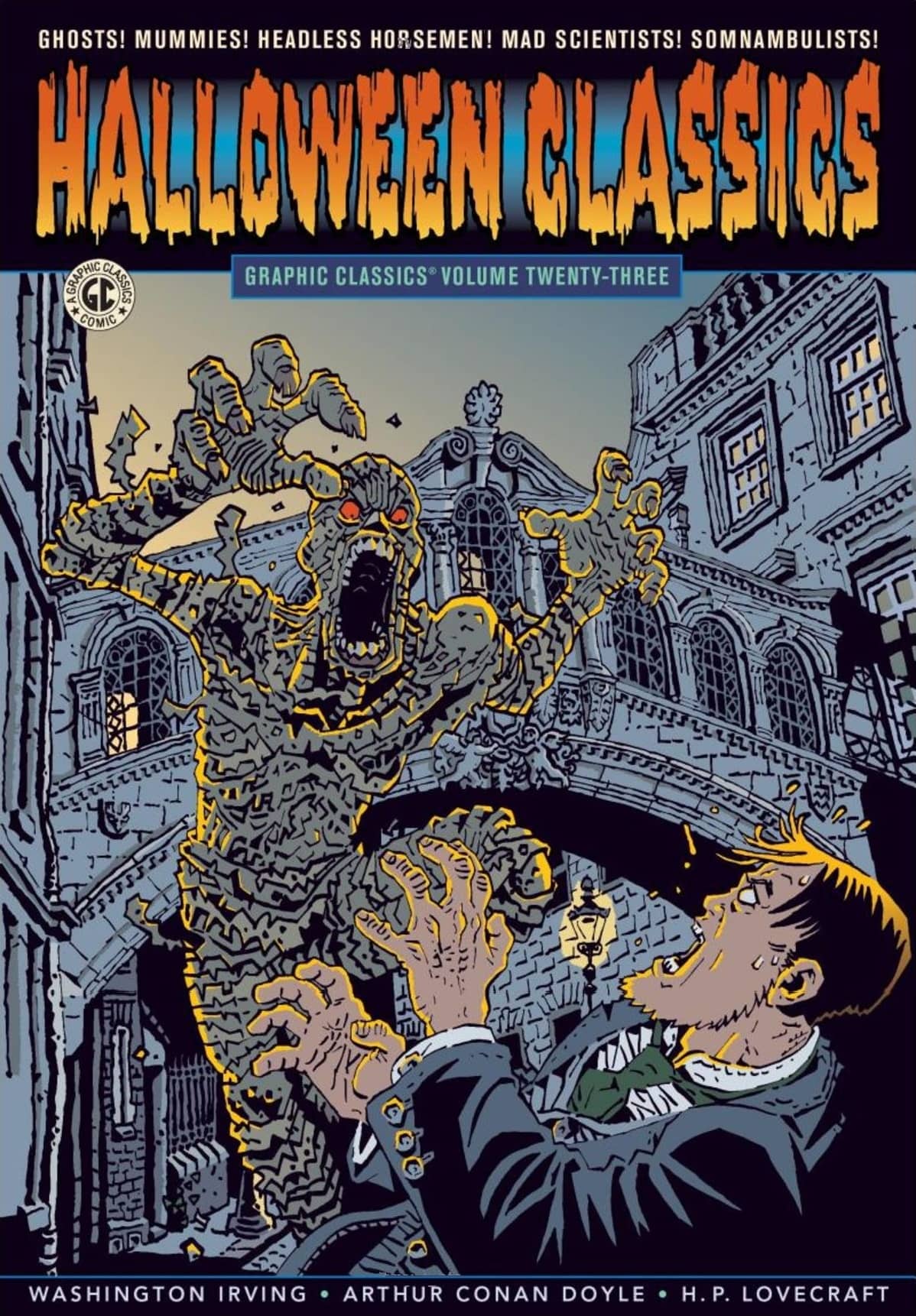
Get Graphic Classics Volume 23: Halloween Classics for only $10 in October
Get Graphic Classics Volume 23: Halloween Classics for only $10 in October

Graphic Classics Halloween Classics-smallI’m a big fan of Tom Pomplun’s Graphic Classics comic anthologies. I’ve lost track of exactly how many he’s published so far, but it’s a lot — including volumes showcasing Edgar Allan Poe, Bram Stoker, Arthur Conan Doyle, Jack London, Ambrose Bierce, Mark Twain, R.L. Stevenson, O. Henry, Rafael Sabatini, Oscar Wilde, and my favorite, H.P. Lovecraft.

Each book is 144 pages in graphic novel format, collecting some the best stories from each of the featured authors, illustrated by a stellar line-up of artists. And seriously, that Lovecraft release is the bee’s knees.

He’s also done a series of special theme volumes, including Western Classics, Fantasy Classics, Gothic Classics, Horror Classics, and Adventure Classics. As an added bonus, the most recent of these (including Science Fiction ClassicsPoe’s Tales of Mystery, and Native American Classics) are in full color.

Now Graphic Classics Volume 23: Halloween Classics is just $10 for the entire month of October (reduced from $15 ). This volume features an EC-style introduction, by Mort Castle and Kevin Atkinson, and contains Matt Howarth’s adaptation of the screenplay of the classic silent film, The Cabinet of Dr. Caligari, alongside adaptations of Washington Irving’s “The Legend of Sleepy Hollow” by Ben Avery and Shepherd Hendrix, H.P. Lovecraft’s “Cool Air” by Rod Lott and Craig Wilson, Mark Twain’s “A Curious Dream’’ by Antonella Caputo and Nick Miller, and Arthur Conan Doyle’s “Lot No. 249” illustrated by Simon Gane.

We covered Halloween Classics when it was first released last September. Get more details or order a copy on their website and see the complete line-up of fabulous Graphic Classics here.
Vintage Treasures: Strange Eons by Robert Bloch

Vintage Treasures: Strange Eons by Robert Bloch

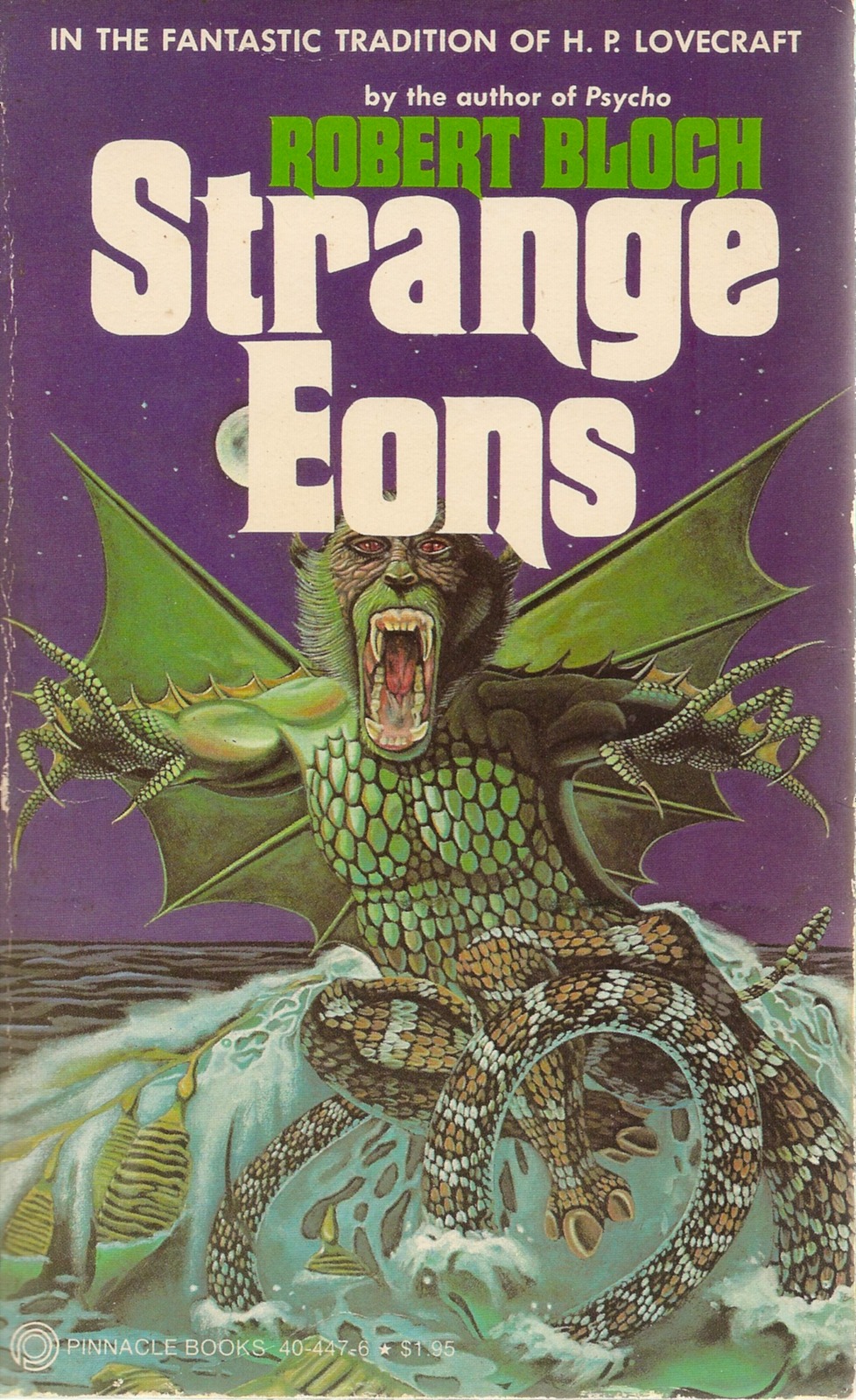
Strange Eons Robert Bloch-smallBack in July, I did a Vintage Treasures article on The Best of Robert Bloch, the second in my series on Lester Del Rey’s Classics of Science Fiction. In doing the research for that article, I came across references to Bloch’s book of Lovecraftian fiction, Strange Eons, first published in 1979.

My curiosity was piqued. It took a while to track down a copy, but this is the age of the Internet, when all things are possible. I settled in to read it this morning and I was surprised to find it’s a novel, not a collection, as I assumed. Given the big Doctor Who news today, I was also amused to find the last page given over to a house ad for Pinnacle’s Doctor Who novelizations, with a banner quote from Harlan Ellison: “Incomparable… extraordinary… my hero, Doctor Who!”

The book is dedicated to H.P. Lovecraft — at least that wasn’t a surprise. As the publisher notes on the back of Strange Eons, Bloch was a protégé of Lovecraft and, at the age of fifteen, the youngest member of the “Lovecraft Circle” of writers. The novel builds unabashedly on the work of the master, starting with the premise that the creatures he wrote of are real, and his books form a dire warning for mankind:

What men know is called science; what they have not yet learned they call magic. But both are real….

In the world of today and the near future, three people inexorably linked by a common interest in the work of H. P. Lovecraft, discover: that the legendary creatures he created in his fantasies have hideous counterparts in reality… that his fiction is incredible fact… that his message is a warning…

Spooky stuff. I’ll see if the execution lives up to the promise. Strange Eons was published by Pinnacle Books in June 1979, with cover art by David Hada. It is 249 pages, priced at $1.95 in paperback. I paid $5.50 for a fine condition copy on eBay.

See all of our recent Vintage Treasure articles here.

New Treasures: Deadbeat: Makes You Stronger by Guy Adams

New Treasures: Deadbeat: Makes You Stronger by Guy Adams

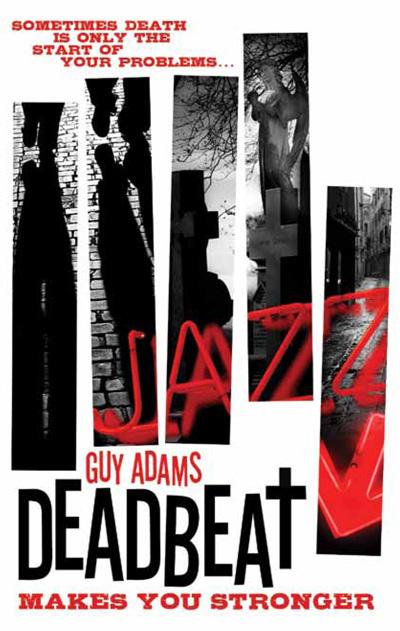
Deadbeats Guy Adams-smallI first stumbled on the novels of Guy Adams with The World House and its sequel, Restoration, both modern fantasy from Angry Robot, and his novel of hidden laboratories, genetic engineering, and Sherlock Holmes, The Army of Dr. Moreau (August, 2012). But it was his gonzo fantasy-western, The Good The Bad and the Infernal, released in March, that really got my attention.

Guy is not exactly sitting on his hands. The sequel to his March novel, Once Upon a Time in Hell, is scheduled to arrive in December, and his companion to the hit TV series Sherlock, The Sherlock Files, shipped in July. For those of you not keeping score, that’s four books in about 18 months. Damn.

So you can imagine my surprise when my weekly trip to the bookstore turned up Deadbeat: Makes You Stronger, a paperback by Guy Adams that was released in June, 2013. This is a pretty impressive run — all the more impressive because this one sounds like the most intriguing book yet.

Max and Tom are old, old friends, once actors. Tom now owns a jazz nightclub called Deadbeat which, as well as being their source of income, is also something of an in-joke. In a dark suburban churchyard one night they see a group of men are loading a coffin into the back of a van. But, why would you be taking a full coffin away from a graveyard and, more importantly, why is the occupant still breathing?

Tom and Max are on the case. God help us…

Deadbeat was published by Titan books in June 2013. It is 289 pages, priced at $7.99 for both the paperback and digital versions. The sequel, Deadbeat: Dogs of Waugh, is scheduled to arrive June 2014.

“Aren’t You a Little Short for a Stormtrooper?” Or, How to Describe Characters

“Aren’t You a Little Short for a Stormtrooper?” Or, How to Describe Characters

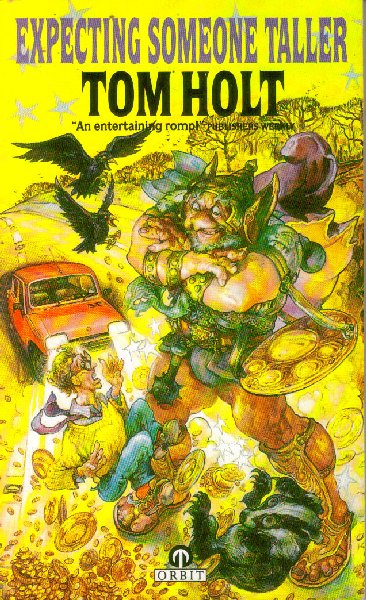
Expecting Someone Taller-smallAs it happens, this line isn’t needed where it appears. We’re watching a movie and we can see for ourselves how tall Luke Skywalker is.

But imagine that we’re reading the screenplay or a novel. That one line tells us quite a bit. That troopers are usually tall. That Luke isn’t.

For a really brilliant example of how this works in a novel, consider Tom Holt’s Expecting Someone Taller. Without even opening the book, readers immediately know something about the main character’s appearance: he’s shorter than anyone expects.

I thought I was finished with exposition in my last post – or as finished as a writer ever is when talking about the elements of writing. But then I realized that, in a way, description is a particular form of exposition, just as necessary, and just as likely – yes, I’ll say it – to be skipped, or at least skimmed, by readers if it’s too long.

And description, like other forms of exposition, carries its own peculiar difficulties. What I’d like to talk about this week is how characters, especially main characters, are described. You know, what they look like, not their personalities.

[Aside: Is a fictional character an object? In giving them human characteristics, are we indulging in personification?]

Read More Read More

Vintage Treasures: Ronald Welch’s Knight Crusader

Vintage Treasures: Ronald Welch’s Knight Crusader

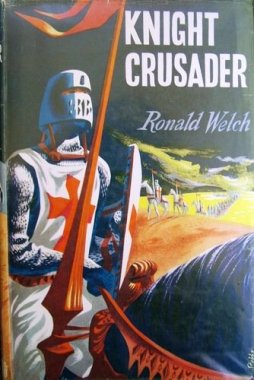
Knight Crusader
“The British Harold Lamb”

Try not to lick your cracked lips. Don’t think of water. Listen to the Saracen arrows buzz past. Don’t flinch! Most of all, hold the line!

Grumpy old Sir Fulk can’t stand the heat. He raises his helm and ignoring the shouts of the other crusaders, waits while his son, Sir Joscelin, shares the last of his flask.

Whirrrrrrr! Thock!

An arrow takes Sir Fulk in the throat. There’s blood, there’s thrashing, and the old knight dies in the arms of his son, the effete Sir Joscelin.

Kurtzhau – age 6 – lets out a cry, as if he too were there, riding out under the baking 12th-century sun to face the army of Saladin. This is four years ago and I’m reading aloud from Ronald Welch’s Knight Crusader.

Now, Sir Joscelin — he of the camp voice, the silk clothing, perfumed handkerchief, the tough-as-nails young warrior who enjoyed winding up his conservative father with his decadent ways – charges out solo, determined on revenge.

Another cry from Kurtzhau. He draws up the covers. It’s Sunday morning, we’re reading in bed, and only now am I remembering that Ronald Welch, though nominally writing Children’s Fiction — he won the Carnegie medal for this — is ruthless with his body count.

Like the Crusader army, I’m caught in a cleft stick. If I stop, Kurtzhau won’t have closure. If I go on… well… Sir Philip, the hero, has a “character shield.” Let’s just say that his friends don’t.

Read More Read More

To Elf or Not To Elf: Races in Fantasy Lit

To Elf or Not To Elf: Races in Fantasy Lit

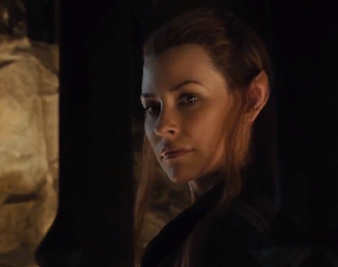
Evangeline Lilly in The HobbitA long, long time ago, I wrote my first novel. This was decades before I would get published. I was fresh out of college with grand ideas about how my book would set the fantasy world on fire. The story featured a main character that was half human and half elf, who set out to defend his elven kin from a nation of hostile orcs.

Yeah, I know. Not exactly groundbreaking. I’m thankful that novel was never published, more because of the shitty writing than the plot or characters. Yet, it brings up an interesting debate within fantasy literature.

Are races like elves, dwarves, orcs, and goblins fair game for modern fantasy?

Now, off the cuff, I’m inclined to say yes. You can write about anything you desire. Who am I to judge, right? However, while that may be the politically-correct answer, a little more digging turns up some complex issues for the modern writer.

My first introduction to those “classic” fantasy races was Prof. J.R.R. Tolkien’s The Lord of the Rings saga, and it was continued in my formative years via games like Dungeons and Dragons and Warhammer Roleplay. Growing up on a diet of elves and orcs, it was little wonder that I choose to feature them in my own early writing. I suspect that most authors begin by emulating their literary idols, but eventually you need to break away and find your own brand of storytelling. It’s difficult to find your voice when you’re playing in someone else’s sandbox.

But what about authors who genuinely want to write about these races? Here’s why I would advise against it.

Read More Read More

Support The Great Way, an Epic Fantasy Trilogy by Harry Connolly

Support The Great Way, an Epic Fantasy Trilogy by Harry Connolly

The Great Way Harry ConnollyWe try not to pimp too many Kickstarter projects here on the BG blog. We know you’re probably as tired of hearing about them as we are. But today, we’re making an exception for Harry Connolly.

Why? Because he’s awesome.

Harry’s first fiction sale, “The Whoremaster of Pald,” originally appeared in Black Gate 2, and quickly became one of the most popular stories we’ve ever published. It was also the first tale we presented online in its entirety, and that experiment was so successful it helped launch the entire Black Gate Online Fiction line. Harry returned to the decadent city of Pald in BG3 with “Another Man’s Burden,” and his brilliant tale of a civilization on the brink of extinction, “Soldiers of a Dying God,” appeared in Black Gate 10. We couldn’t keep him to ourselves forever, and Harry’s first three novels — Child of Fire, Game of Cages, and Circle of Enemies, together comprising the Twenty Palaces trilogy — were published by Del Rey between 2009 and 2011.

Harry wasn’t won over by Kickstarter right away, pointing out the platform is a fantastic resource but not right for every project in his January 2013 column “Let me tell you about my ambitions, and why they don’t include Kickstarter (right now).” He’s apparently come around, however: on September 19, he kicked off a campaign to fund the completion of The Great Way, an epic fantasy trilogy about a supernatural invasion that destroys an empire.

The first draft of The Great Way is already complete, and weighs in at a whopping 300,000 words. Harry has made Chapter One of the first volume, The Way into Chaos, available on his blog. Cover artist Christian McGrath has agreed to do the cover art for all three books as a stretch goal, if the campaign reaches $34,000.

That’s a pretty safe bet; as of this writing, it stands at $33,300 (well past its original $10,000 goal), and shows no signs of slowing down. The Kickstarter ends on Oct 19th, so there’s still time to back it and ensure that you get copies of an exciting new fantasy trilogy from one of the best new writers in the genre. Check it out here.

Can’t Keep a Great Buncha Folks Down

Can’t Keep a Great Buncha Folks Down

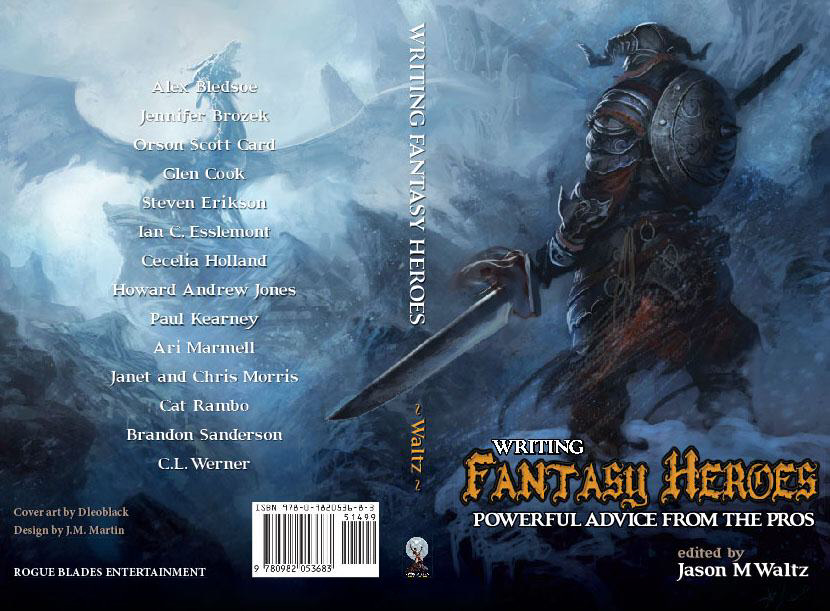
Writing Fantasy HeroesOr as Charlie Daniels sang, “RBE will rise again.” Or maybe not, but it is what he was thinking. Or maybe not.

It is, however, the truth. RBE (Rogue Blades Entertainment) has resurfaced online, finally putting up its first website in two years at Rogue Blades Presents.

It’s been a bit and then some, but the house is making strides and a comeback’s round the bend. The site is up, the books are all listed, the authors and artists are accounted for, and the future looks promising.

In recreating the site, I even discovered something spectacular: all of the old Home of Heroics posts! Granted, they’re buried in a mass of gibberish in an XML file, but it’s nothing a little elbow grease, good eyes, and lots of time won’t salvage. Volunteers?

Drop on by the new joint and share your thoughts of it; grab a book while you’re there.

Appendix T

Appendix T

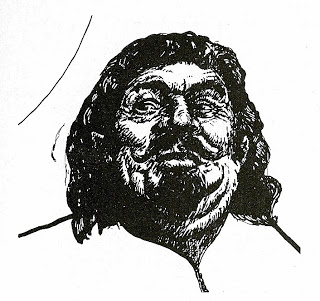
aljUnless one considers charts, tables, and mathematical formulas to be “illustrations,” the original edition of GDW’s science fiction roleplaying game Traveller (1977) contains only one piece of genuine artwork: namely, the portrait to the right. That portrait, by an uncredited artist, depicts Alexander Lascelles Jamison, the example character whose career is detailed in the first volume of the classic SF RPG. Like all Traveller characters, before he starts seeking his fortune among the stars, Jamison has already had a career, in this case in the merchant service, where he mustered out with his own ship and the rank of captain.

Looking at that portrait, I found myself remembering a quote from “Margin of Profit,” a story by the late Poul Anderson, first published in the September 1956 issue of Astounding Science Fiction. That story, too, depicts an interstellar merchant captain:

He was a huge man, two meters in height and broad enough to match. A triple chin and swag belly did not make him appear soft. Rings glittered on hairy fingers and bracelets on tawny wrists, under snuff-soiled lace. Small black eyes, set close to a great hook nose under a sloping forehead, peered with laser intensity.

Anderson’s merchant is, of course, Nicholas Van Rijn, president of the Solar Spice & Liquors Company, and one of the more famous characters from the period between the end of the Golden Age of Science Fiction and the rise of the New Wave.

Read More Read More

Sword & Sorcery for the Girl Who Wants to be Conan: Gaie Sebold’s Babylon Steel

Sword & Sorcery for the Girl Who Wants to be Conan: Gaie Sebold’s Babylon Steel

Babylon Steel-smallI can’t keep up with all the fabulous fiction rolling off the assembly lines of the great factories of modern publishing (I can just barely stay on top of the story-a-week we publish here at Black Gate, truth be told). It’s amazing… I spend all day – and most of the night – reading and writing about this genre, and still can’t encompass it all. Either we live in amazing times, or being hopelessly clueless is just an intrinsic part of my nature.

Eh. Probably a little of both.

Fortunately, there are other bloggers out there to help me out. Liz Bourke’s “Sleeps With Monsters” column at Tor.com helped me out this week, by pointing me to Gaie Sebold’s debut fantasy novel, Babylon Steel.

Now, anyone can miss a novel or two, but I have no excuse for not being on top of this one. For one thing, Solaris has been putting out terrific fantasy recently, and obviously deserves more attention; for another, I’ve had my eye on Gaie Sebold ever since I bought her brilliant and funny “A Touch of Crystal” (co-written with fellow Brit Martin Owton), the tale of a shopkeeper who discovers some of the goods in her New Age shop are actually magical, for Black Gate 9. Here’s Liz:

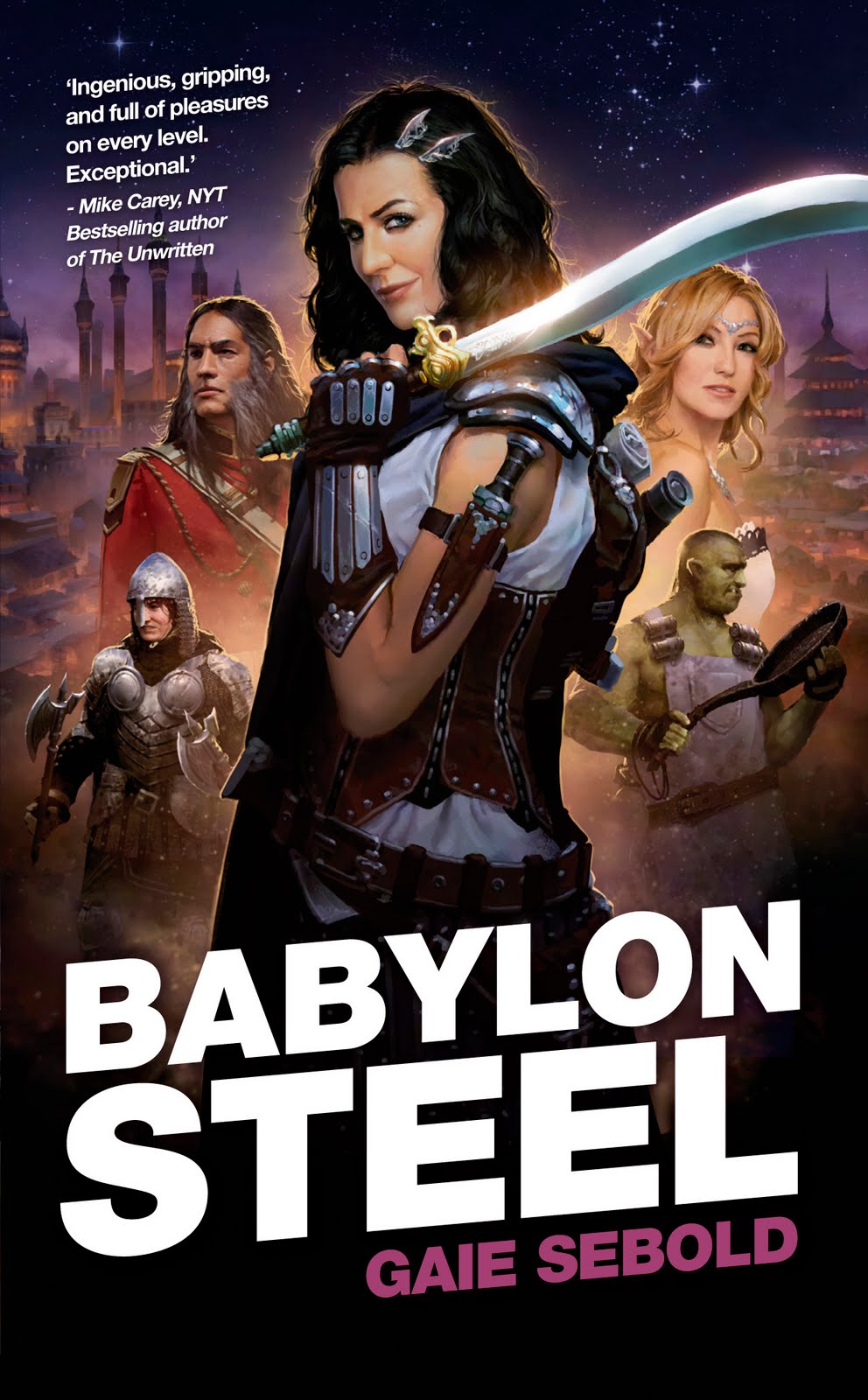
Gaie Sebold’s Babylon Steel (Solaris, 2011) is a remarkably entertaining debut. It’s as though someone took the best bits of Robert E. Howard and the fantasy noir city of Simon R. Green’s Hawk and Fisher novels, threw in some more Cool S**t ™, and reimagined them through a lens that foregrounded female perspectives. This is sword-and-sorcery pulp wish fulfillment for the kind of girl who wanted to be Conan… And that? That makes one of the most awesome things I’ve read this year…

Sebold evokes mood and atmosphere — and character — very well. And the climactic BOOM LIKE THAT is an earned one.

An excellently entertaining book. Give me more like this. MORE I TELL YOU.

Babylon Steel was nominated in two categories for the Gemmell Awards: The Morningstar (best newcomer) and the Legend (best novel). It came out so long ago now that there’s already a sequel (dang! I really am clueless). Dangerous Gifts appeared in January of this year.

Babylon Steel was published in December 2011 by Solaris. It is 544 pages, priced at $7.99 in paperback and $6.99 for the digital edition.