Browsed by
Category: Books

Thank Politically Correct Parents for Sword and Sorcery!
Thank Politically Correct Parents for Sword and Sorcery!

Battle in the Dawn
Sword and Sorcery… will not die despite the various attempts to kill it.

The odd thing about Sword and Sorcery is that it will not die despite the various attempts to kill it.

Sloppy overproduction ruined its reputation, its focus on violence and pre-modern-style patriarchal societies made it politically unfashionable, role players made it nerdy, then Terry Pratchett slashed and burned through its tropes, and still it survived!

Like a thief, Sword and Sorcery springs nimbly between media: “Literature has become hostile? Fine, now I’m a comic! Intellectuals look down on me? No problem, I’m a movie.” 

Like a mercenary captain, it furnishes characters to other genres: “Fashion favors Fantasy fiction? OK, but take a look at some of the supporting characters…”

Like a rogue, it’s a master of disguise: “Sword and Sorcery? Never heard of it mate! I’m Heroic Fantasy!”

It’s true that Sword and Sorcery is a most flexible genre. With no need to nod at extrapolation, and the capacity to invent bespoke cosmologies, it can reflect changing times and social mores, while still delivering a dose of physical adventure and sense of wonder. It’s also true that the genre has inherent literary advantages: magic and religion can support interesting themes, and close-quarters combat gives us the secondhand experience of people putting their bodies where their personal politics are.

However, there’s another factor that I think is easily overlooked. To understand it, you have to come Christmas toy shopping with me.
…

Read More Read More

New Treasures: In Space No One Can Hear You Scream, edited by Hank Davis

New Treasures: In Space No One Can Hear You Scream, edited by Hank Davis

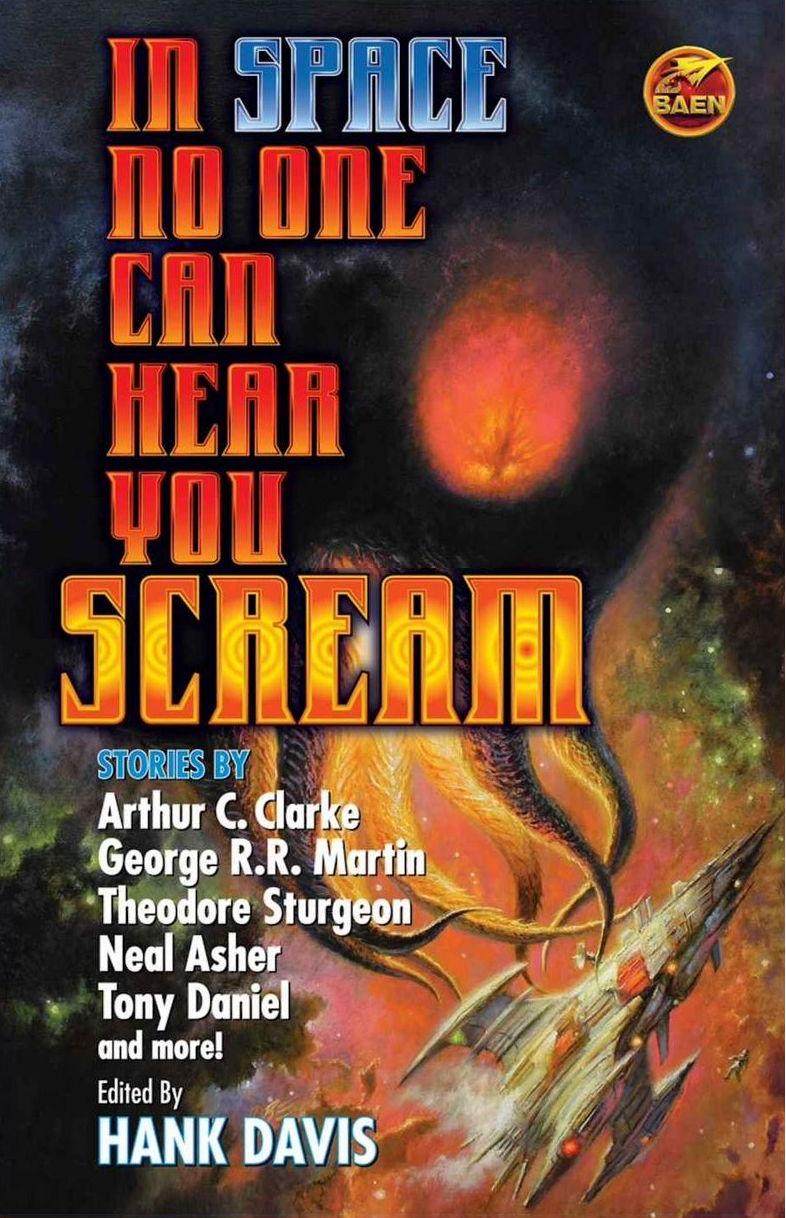
In Space No One Can Hear You Scream-smallIn 2013, no one remembers that “In Space No One Can Hear You Scream” was the tag line of a 1979 horror movie.

Well, after 34 years, I guess it’s okay to recycle a decent tag line, even for a film as popular as Alien. Especially when the end product is as intriguing as this Halloween-themed science fiction anthology. The moment I saw it I thought, “I wonder if it has the really great horror SF, like Arthur C. Clarke’s “A Walk in the Dark,” and George R.R. Martin’s “Sandkings?” It has both, in fact, alongside 11 short stories and novelettes from Theodore Sturgeon, Elizabeth Bear and Sarah Monette, and others — plus a long novella from James H. Schmitz.

THE UNIVERSE MAY NOT BE A NICE NEIGHBORHOOD…

“The oldest and strongest kind of fear is fear of the unknown,” the grand master of horror, H.P. Lovecraft, once wrote. And the greatest unknown is the vast universe, shrouded in eternal cosmic night. What things might be on other planets — or in the dark gulfs between the stars?

Giving very unsettling answers to that question are such writers as Arthur C. Clarke, Robert Sheckley, James. H. Schmitz, Clark Ashton Smith, Neal Asher, Sarah A. Hoyt, Tony Daniel and more, all equally masters of science fiction and of terror.

One might hope that in the void beyond the earth will be found friendly aliens, benevolent and possibly wiser than humanity, but don’t be surprised if other worlds have unpleasant surprises in store for future visitors. And in vacuum, no one will be able to hear your screams — as if it would do any good if they could…

Here’s the complete table of contents.

…

Read More Read More

Battle in the Dawn: The Complete Hok the Mighty by Manly Wade Wellman

Battle in the Dawn: The Complete Hok the Mighty by Manly Wade Wellman

oie_1743857GRCQJimHHistorical adventure fiction is one of the primary roots of swords & sorcery. From it you get the same fast-paced adventure in exotic settings.

Some writers of S&S, Robert E. Howard and Sprague de Camp for example, wrote historical adventure fiction alongside their more fantastic stories. Often the tales involve battling Crusaders and Saracens, high seas Viking adventures, swashbuckling freebooters, or Roman centurions fighting Teutonic hordes. Sometimes, though, they star cavemen.

Manly Wade Wellman spent his childhood in a primitive village in Portuguese West Africa. Till he died Wellman spoke of a young boy forced to kill a leopard in order to protect cattle. Other boys had been less lucky and had fallen prey to leopards. His time and experience in Angola was perhaps the greatest influence on his life, but most certainly on his prehistoric stories.

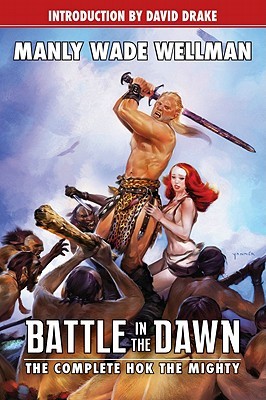
In 1939, after a decade of writing pulp science fiction with titles like “The Disc-Men of Jupiter” and “Outlaws on Callisto,” Manly Wade Wellman introduced his Cro-Magnon hero, Hok the Mighty, in the novelette “Battle in the Dawn.” Four stories followed before he retired the character. While there’s a strong anthropological component to the Hok stories, with footnotes explaining then-current thoughts on the discoveries made by early man, these five tales get progressively more fantastic.

In 2010 Paizo collected all the Hok stories, along with several fragments and the cavenmen vs. Martians mini-epic “The Day of the Conquerors,” in Battle in the Dawn: The Complete Hok the Mighty for their Planet Stories line.

…

Read More Read More

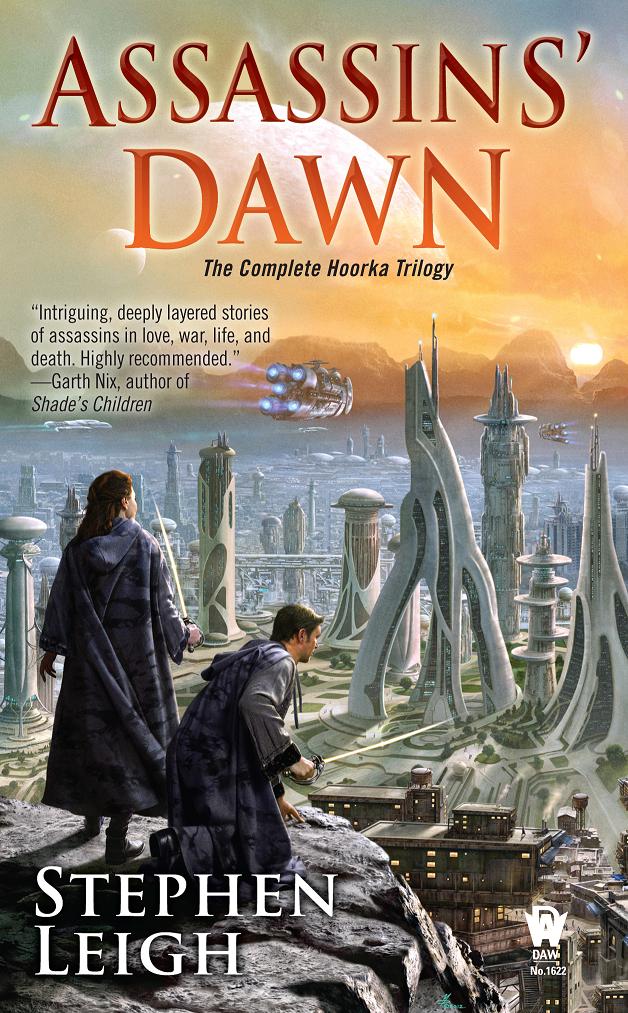
New Treasures: Assassin’s Dawn: The Complete Hoorka Trilogy, by Stephen Leigh

New Treasures: Assassin’s Dawn: The Complete Hoorka Trilogy, by Stephen Leigh

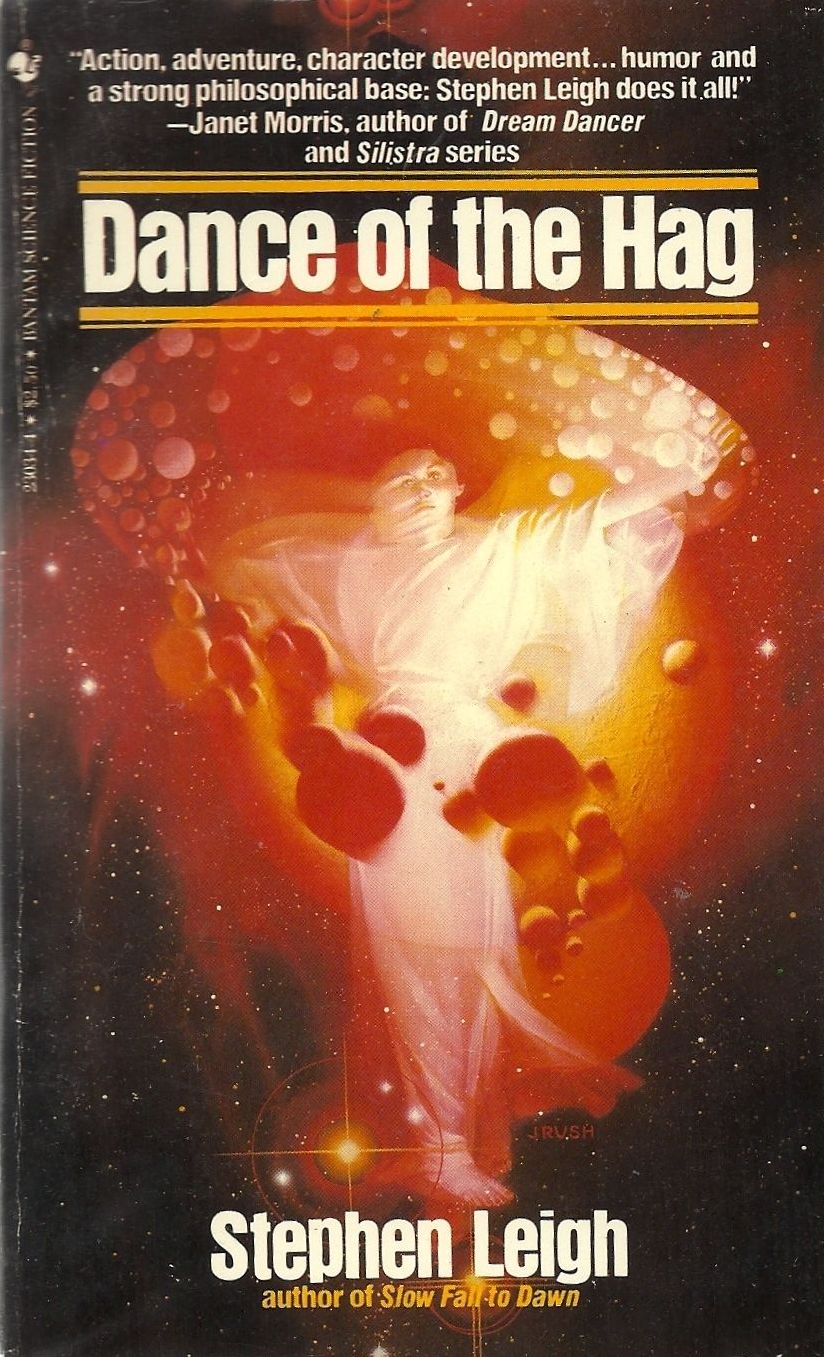
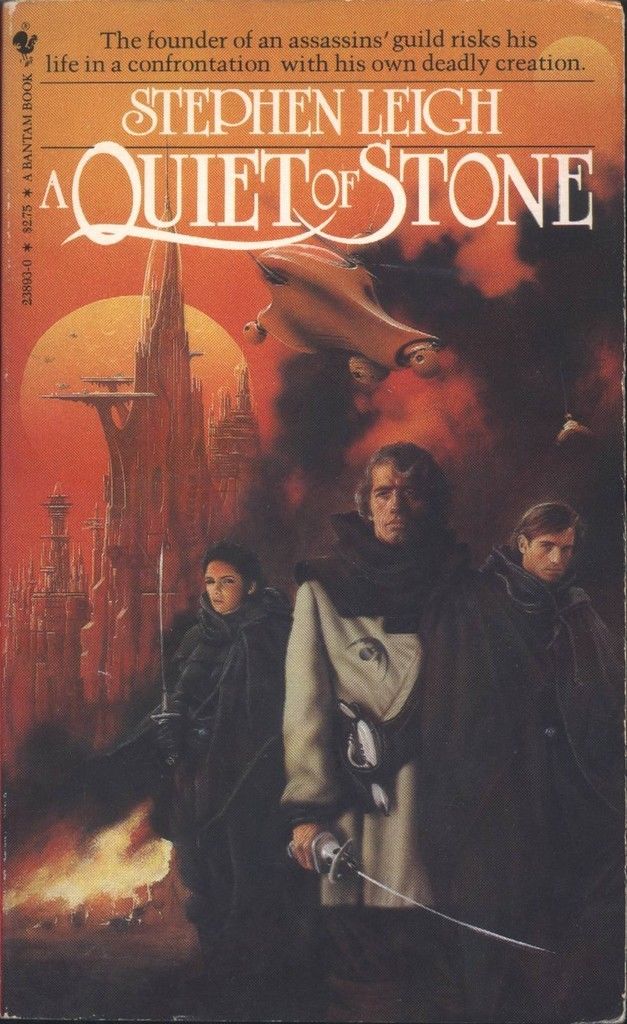
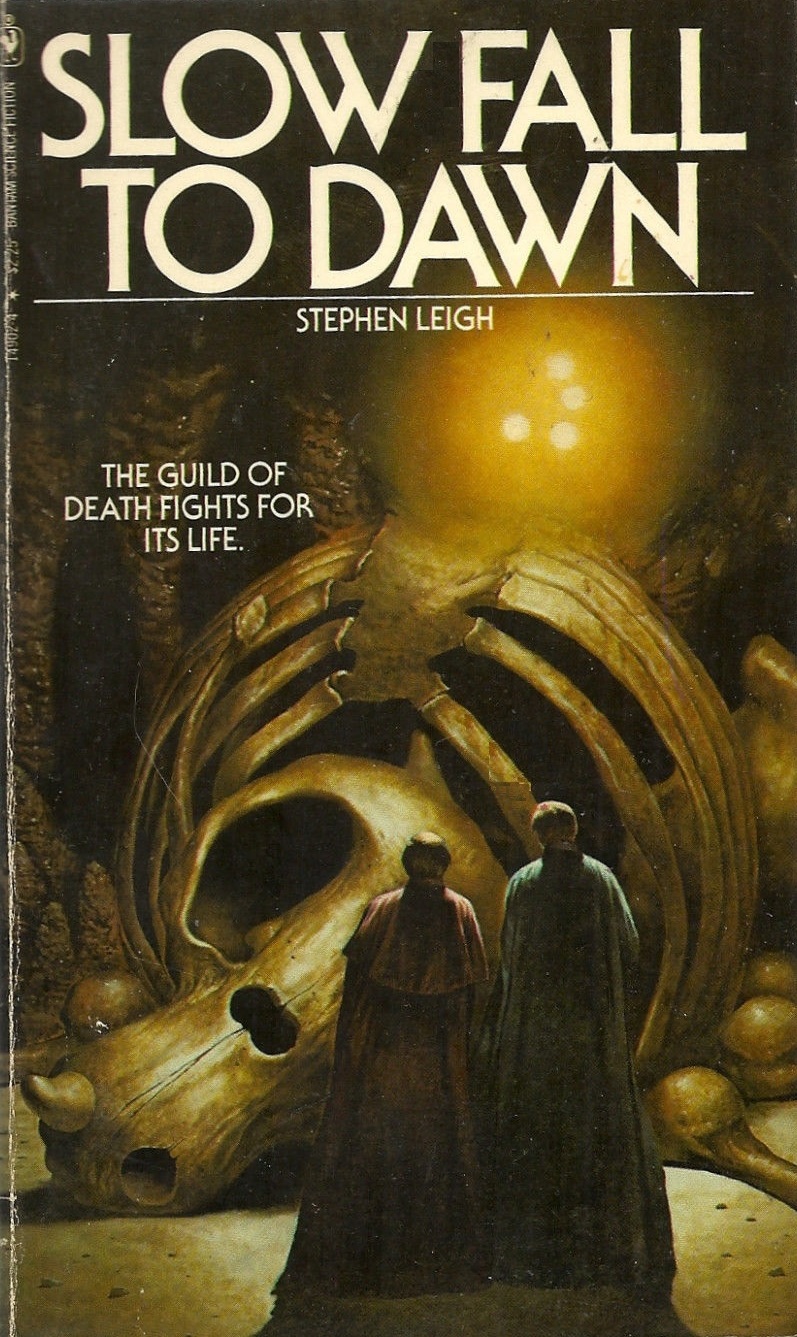
Slow Fall to Dawn-small Dance of the Hag-small A Quiet of Stone-small Untitled-3

[Click on any of the images above for bigger versions.]

Paperback publishing has come a long way since the early 80s. Improved binding and glues have made producing thicker books much more economical. Or something, I dunno. But we’re definitely living in the golden age of the omnibus, when publishers are cramming shelves with big, fat paperbacks collecting forgotten fantasy and SF series from prior decades, all for about the same price as every other dopey paperback.

Is that a great deal, or what?  I certainly thought so on Saturday, when I found a handsome volume collecting all three novels in Stephen Leigh’s long out-of-print science fantasy Hoorka Trilogy on the shelves at Barnes & Noble. Assassin’s Dawn includes Slow Fall to Dawn (1981), Dance of the Hag (1983), and A Quiet of Stone (1984). The Hoorka are a guild of assassins with a strict code: any victim that can survive until dawn may go free, unmolested. But the consequences of this law can be harsh, especially when the client has no such scruples, as their leader Gyll discovers as he tries to take his guild offworld, into the newly thriving Alliance, a star-spanning organization attempting to put together the pieces of a once-great empire.

Stephen Leigh is also the author of The Crystal Memory, Dark Water’s Embrace, Dinosaur Planet, Speaking Stones, The Bones of God, and The Abraxas Marvel Circus. His publisher DAW has been something of a pioneer in the fantasy omnibus biz, with a nice assortment from Terry A. Adams, Tanya Huff, Marion Zimmer Bradley, C. J Cherryh, Jennifer Roberson, S. Andrew Swann, Peter Morwood, and many others.

Assassin’s Dawn was published May 2013 by DAW. It is 610 fat pages, priced at $8.99 for both the paperback and digital versions.

Tales of the Wold Newton Universe, Part 3 of 4

Tales of the Wold Newton Universe, Part 3 of 4

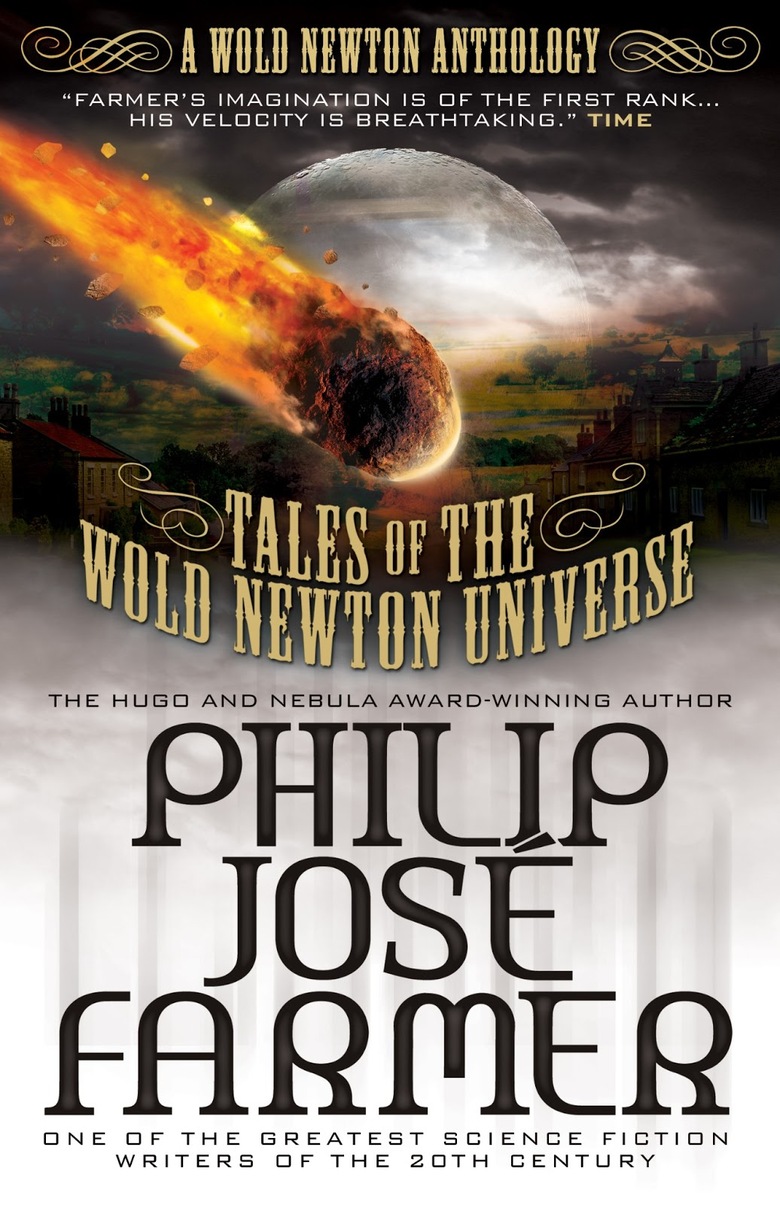
Tales of the Wold Newton Universe-smallLast month marked the release of Tales of the Wold Newton Universe, a new anthology from Titan Books that collects, for the first time ever in one volume, Philip José Farmer’s Wold Newton short fiction, as well as tales set in the mythos by other Farmerian authors.

The Wold Newton Family is a group of heroic and villainous literary figures that science fiction author Philip José Farmer postulated belonged to the same genetic family. Some of these characters are adventurers, some are detectives, some explorers and scientists, some espionage agents, and some are evil geniuses. According to Mr. Farmer, the Wold Newton Family originated when a radioactive meteor landed in Wold Newton, England, in the year 1795. The radiation caused a genetic mutation in those present, which endowed many of their descendants with extremely high intelligence and strength, as well as an exceptional capacity and drive to perform good, or, as the case may be, evil deeds. The Wold Newton Universe is the larger world in which the Wold Newton Family exists and interacts with other characters from popular literature.

To celebrate the release of the new anthology, we’ve asked the contributors to discuss their interest in Philip José Farmer’s work and to tell us something about how their stories in the book specifically fit into the Wold Newton mythos.

For today’s installment, please welcome author and co-editor of Tales of the Wold Newton Universe, Christopher Paul Carey.

Win Scott Eckert,
Co-editor, Tales of the Wold Newton Universe

  …

Read More Read More

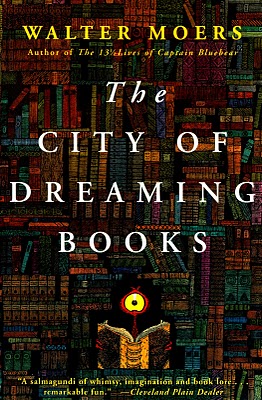
New Treasures: The City of Dreaming Books by Walter Moers

New Treasures: The City of Dreaming Books by Walter Moers

The City of Dreaming BooksWalter Moers got my attention with his first novel in English, The 13½ Lives of Captain Bluebear, which relates adventures of human-sized bear with blue fur on the fictional continent of Zamonia.

Okay, I know how that sounds. But Moers, who’s also a cartoonist and painter, brings cartoon sensibilities to the page with consummate skill, and his whimsical tales of Zamonia have captured hearts and minds around the world. The 13½ Lives was followed by Rumo, A Wild Ride Through the Night, and The Sorcerer’s Apprentice.

The City of Dreaming Books sounds like his most intriguing title yet, featuring a city-sized library filled with secrets, haunted by the mysterious Shadow King…

Optimus Yarnspinner has inherited from his godfather an unpublished manuscript by an unknown writer. He sets off to track down the mysterious author, who disappeared into Bookholm — the so-called “City of Dreaming Books.” Yarnspinner falls under the spell of this book-obsessed metropolis, where an avid reader and budding author can find any number of charming attractions — priceless signed first editions, salivating literary agents, and for-hire critics. But as Yarnspinner pursues the trail of the missing author, the darker side of Bookholm begins to unveil itself — cold-blooded book hunters, fearsome cyclopean booklings, sharp-toothed animotomes, and of course, the Shadow King, whose howls rise from deep beneath the city at night. Will Yarnspinner survive his quest into this world where reading is a genuine adventure?

Like most of his books, this one features a cover by Moers, and numerous black & white illusrations throughout. Moers’ art is as charming as it is unique, equal parts Virgil Finlay and Dr. Seuss.

I found the brand new sequel, The Labyrinth of Dreaming Book, in the Dealer’s room at Windycon last week for the first time. That means it’s time for me to stop dithering and finally read this one.

The City of Dreaming Books was published by Overlook Press in 2008. It is 462 pages, priced at $17.95 in trade paperback at $11.99 for the digital edition. It was translated from the German by John Brownjohn.

The Plot Thickens. Or Maybe Stretches.

The Plot Thickens. Or Maybe Stretches.

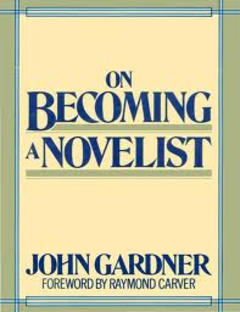
NovelistI had occasion to look into John Gardner’s On Becoming a Novelist for something totally unrelated to the posts I’ve been doing lately on plotting and plot devices. While I was checking through the book for the quote I needed, however, I found a few things he had to say about plot that I thought you might find interesting.

For those of you wondering, this is not the British John Gardner who was tapped to write the 007 pastiches in the 1980’s, but the American one who wrote all that Old English literary criticism, who’s one of the best known teachers of creative writing, with his book The Art of Fiction considered one of the seminal works in the field for students and teachers alike. For those of us in the Fantasy and SF community, however, he’s likely best known as the author of novels like Grendel, and Freddy’s Book, and October Light.

I’m going to share these observations in the order in which they appear, for the most part without regard to context. I won’t apologize for all the male-centric pronouns, I’ll just  point out that the book was published after Gardner’s unexpected death (so no changes could be made in later editions) and that male-centric was the default back then (pre-1982), even for most female writers. Here we go:

The wise writer counts on the characters and plot for his story’s power, not on tricks of withheld information, including withheld information at the end . . .

…

Read More Read More

Goth Chick News – NYT Best Seller Dark Places in Post Production

Goth Chick News – NYT Best Seller Dark Places in Post Production

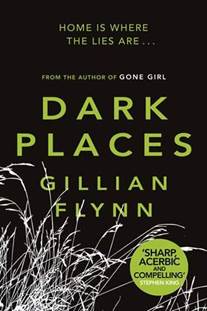
image006This time next year, fellow Chicagoan Gillian Flynn is going to have one heck of a fall season with two of her best-selling novels headed for the big screen.

David Fincher’s high-profile thriller Gone Girl, starring Ben Affleck and Rosamund Pike, releases October 3, 2014 but this week it was announced that Flynn’s earlier cult thriller Dark Places is nearly in the can, with Frenchman Gilles Paquet-Brenner behind the camera and Charlize Theron in front of it.

Dark Places is set to hit theaters September 1, 2014.

Dark Places was published in 2009 and at the time was listed on the New York Times Best Seller List for hardcover fiction for two consecutive weeks. The book was also shortlisted for the Crime Writers’ Association Ian Fleming Steel Dagger Award and won the Dark Scribe Magazine Black Quill Award for Dark Genre Novel of the Year.

Flynn’s more recent novel, Gone Girl, spent eight weeks at No. 1 on the hardcover fiction best-seller list of The New York Times, and has sold more than two million copies in print and digital formats.

In addition to Oscar-winner actress Charlize Theron, Dark Places will also star Nicholas Hoult (Warm Bodies), Chloë Grace Moretz (Carrie), Corey Stoll (House of Cards) and Emmy Award nominated actresses Christina Hendricks (Mad Men) and Drea de Matteo (Sons of Anarchy).

The plot sees the seven year-old Libby Day witness the murder of her family, seemingly the work of a Satanic cult, and testify against her own brother (Stoll) as the murderer.

…

Read More Read More

New Treasures: The Tilting House by Tom Llewellyn

New Treasures: The Tilting House by Tom Llewellyn

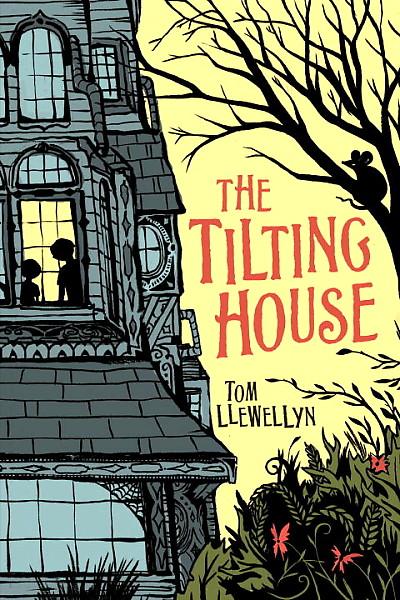
The Tilting House-smallI love kid’s books. It was kid’s books like Alfred Hitchcock and the Three Investigators and The Case of the Marble Monster that first taught me to love reading, and I’ve never really lost my appreciation for straight-up adventure tales, or a good spooky mystery.

So I still buy them from time to time. And overall, the same story elements appeal to me today that did in 1974, when I was 10 years old:  treasure maps, strange inventions, haunted houses, and rats with hidden agendas. All the building blocks of drama, really.

Which explains why Tom Llewellyn’s The Tilting House appealed to me the moment I laid eyes on it, and left me unable to put it down until I had purchased it:

Talking rats. Growth potions. Buried treasure.

Brothers Josh and Aaron Peshik are about to discover that their new home with the tilting floors hides many mysteries. When the boys and their neighbor Lola discover the hidden diary of F.T. Tilton, the brilliant but deranged inventor who built the house, they learn a dark secret that may mean disaster for the Peshik family. Can the kids solve the riddles of the tilting house before time runs out?

Mad science, mischief, and mishaps combine in the suspenseful and imaginative tale of The Tilting House.

The Tilting House was Tom Llewellyn’s first novel; he followed it with A Matter of Life and Seth: Life is a battle. High School is Murder in 2013.

The Tilting House was published by Trigygle Press, a division of Random House, in April 2011. It is 152 pages, priced at $15.99 in hardcover and $10.99 for the digital edition. It is illustrated by Sarah Watts, who also did the colorful cover.

Vintage Treasures: Prince of Foxes by Samuel Shellabarger

Vintage Treasures: Prince of Foxes by Samuel Shellabarger

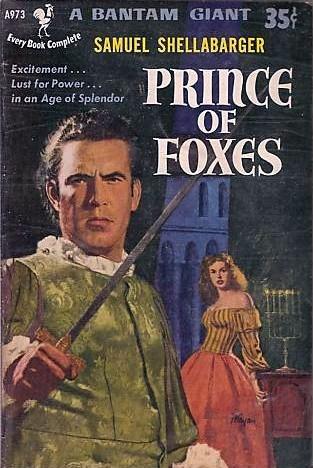
Prince of Foxes-smallIf you’ve been reading my Vintage Treasures posts for any length of time, you’re probably aware I have a weakness for buying small collections. Especially vintage paperback collections.

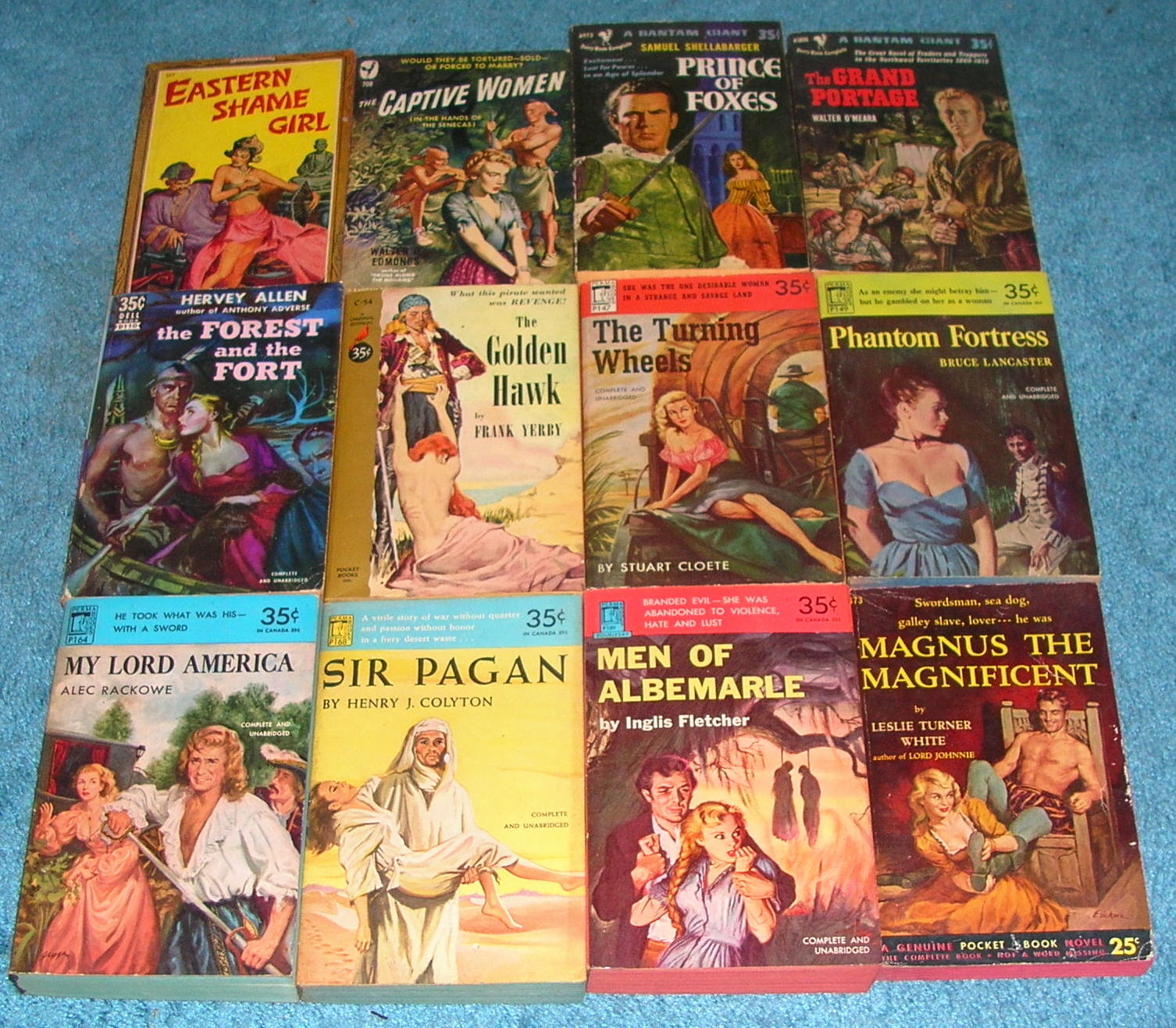
There are a few ways to find interesting lots on online auctions sites like eBay, but I’ve had the most success recently searching for Bantam Giants, a line which repackaged a lot of popular historical adventure fiction in paperback with terrific covers — and without chopping it up first to fit the smaller format, a common practice in the early days of paperbacks.

Bantam Giants are a great way to learn about new writers (okay, old writers, but new to me), and they’re ridiculously cheap. They sold — by the tens of thousands — on newsstands for 35 cents in the early 1950s. Generally speaking, copies in fine condition are still fairly common, and don’t cost much more than that now.

Last year I talked about discovering the works of Lawrence Schoonover, especially his 13th Century adventure novels The Golden Exile and The Burnished Blade. Tucked into the same collection that contained those volumes was a gorgeous book titled The King’s Cavalier, by someone named Samuel Shellabarger.

My guides through the world of 40s and 50s historical adventures, the Honorable Howard Andrew Jones and John C. Hocking, have been telling me about Shellabarger for years. So I was delighted to find another of his novels in the latest collection of Permabooks and Bantam Giants I acquired last month: Prince of Foxes, a tale of adventure and intrigue in Renaissance Italy.

It follows the exploits of Andrea Orsini, a talented and resourceful peasant who rises through the ranks to become a political agent for the sinister Cesare Borgia. It was filmed in 1949, with Orson Welles as Borgia and Tyrone Power as Orsini.

…

Read More Read More