Browsed by
Category: Books

Why Did the Genre Cross the Road?

Why Did the Genre Cross the Road?

Red Plant Blues Last week I was talking about dystopias and satires, urban fantasy and paranormal romance, and further thought has led me to observe that genre can be a tricky thing. Of course, I was really talking about how definitions change and evolve, and how we all fight the changes we don’t agree with. I didn’t really talk about the difference between nouns and adjectives. I didn’t mention that something can be dystopian, without being, actually, a dystopia. Or that something can have satirical elements, without being, technically, a satire.

After all, practically everything we read – or watch for that matter – has a romantic element, but that doesn’t mean we’re reading romance novels, or watching rom-coms.

Total aside: is there a rom-trag genre? Wuthering Heights, maybe? Rebecca? Truly, Madly, Deeply?

Anyway. I’ve actually had a romance novel published, so I think of myself as someone uniquely qualified to talk about that aspect of crossing genres.

As with any other genre, romance has characteristic conventions, but what really makes a romance novel a romance novel is that it tells the story of a very precise portion of the protagonists’ lives. Specifically, it tells the story of how they met the person they love, and began spending the rest of their lives together. Other things are very likely happening to the characters at the same time. They have work lives, social lives, family obligations. They may have crimes to commit or solve. But if the main plot concerns their love life, then it’s a romance. If there’s also a mystery/crime, that means there’s a mystery element, one that exists only to allow the characters to meet, interact, and so forth.

…

Read More Read More

Goth Chick News: The Devil and Leonardo DiCaprio in the White City

Goth Chick News: The Devil and Leonardo DiCaprio in the White City

image002The last time we heard anything about a possible film version of one of my very favorite books, Erik Larson‘s The Devil in the White City: Murder, Magic and Madness at the Fair That Changed America, Leonardo DiCaprio‘s company had just optioned it and attached the actor to the project.  Way back then DiCaprio had yet to shoot either J. Edgar or The Great Gatsby, both of which have already come and gone.

And that’s what the industry refers to as “development hell.”

However, recently it was confirmed that DiCaprio was, and still is, set to play H.H. Holmes, the serial killer who haunted the creation of the 1893 World’s Fair in Chicago. We still haven’t heard all that much about the film, but Warner Bros. says they are still working to make it a reality, and have hired Graham Moore to script.

It might help to move things along that fellow Chicago native Moore is a huge fan of the book, and has been for some time.  As he told Deadline Hollywood,

[I’ve been] obsessed with Devil in the White City for a decade. My high school was 50 yards away from where the Chicago World’s Fair was held, and I played soccer on a field near where Holmes murdered about 200 people. It was a truly horrible crime, but it’s a very Chicago story. Though I moved to LA, I think of myself as fundamentally Mid-Western, and in a weird way, this is a dark and twisted tribute to my hometown.

Nicely put Mr. Moore, I couldn’t agree more.

…

Read More Read More

Vintage Treasures: The Coming of the Rats by George H. Smith

Vintage Treasures: The Coming of the Rats by George H. Smith

The Coming of the Rats-smallA lot of post-apocalyptic novels and films appeared in the 50s and 60s. World War II was still a recent memory, and the threat of the H-Bomb was very real, even if most folks didn’t understand exactly what the “H” stood for. Publishers and filmmakers played on the very real terrors people faced every day. Fear of another war. Fear of atomic radiation.

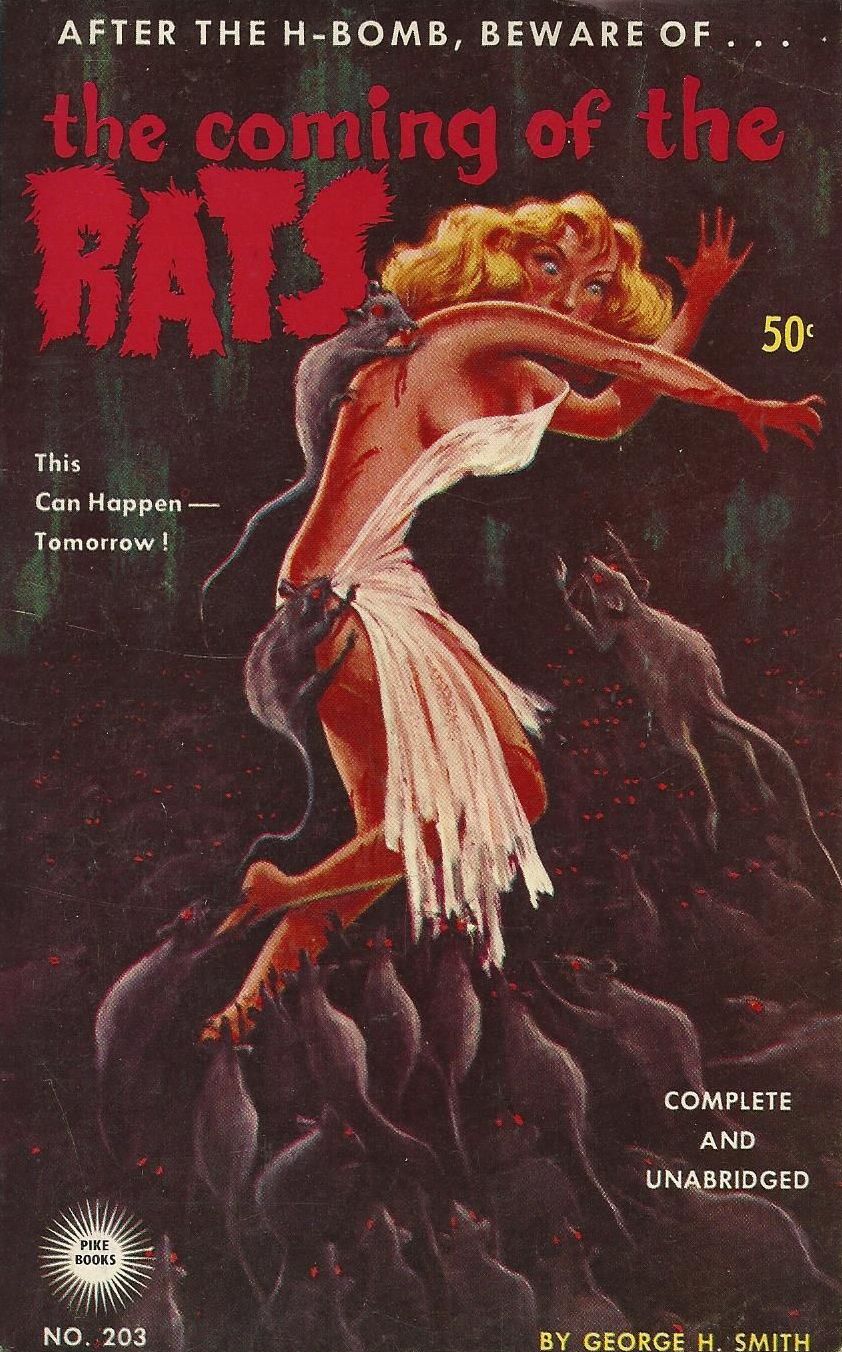
And, going by the cover of George H. Smith’s The Coming of the Rats, the deep-seated fear that rats would attack our women and strip their clothes off.

Now, I’m not sure how our parents and grandparent dealt with these crippling fears, but from what I understand their coping mechanism involved a lot of cheap paperbacks, and multiple Saturday matinees (which seems like a stable strategy, when you think about it).

This is how that generation learned the facts about atomic radiation. And how the logical result would be mutants, and lots of ’em. Giant mutant ants. Mutant town-eating blobs. And horrible, women-chewing mutant rats.

Which brings us to The Coming of the Rats, and its hallowed place in the post-apocalyptic fiction canon.

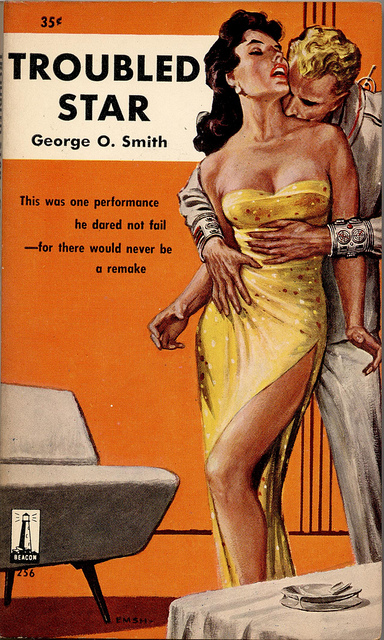
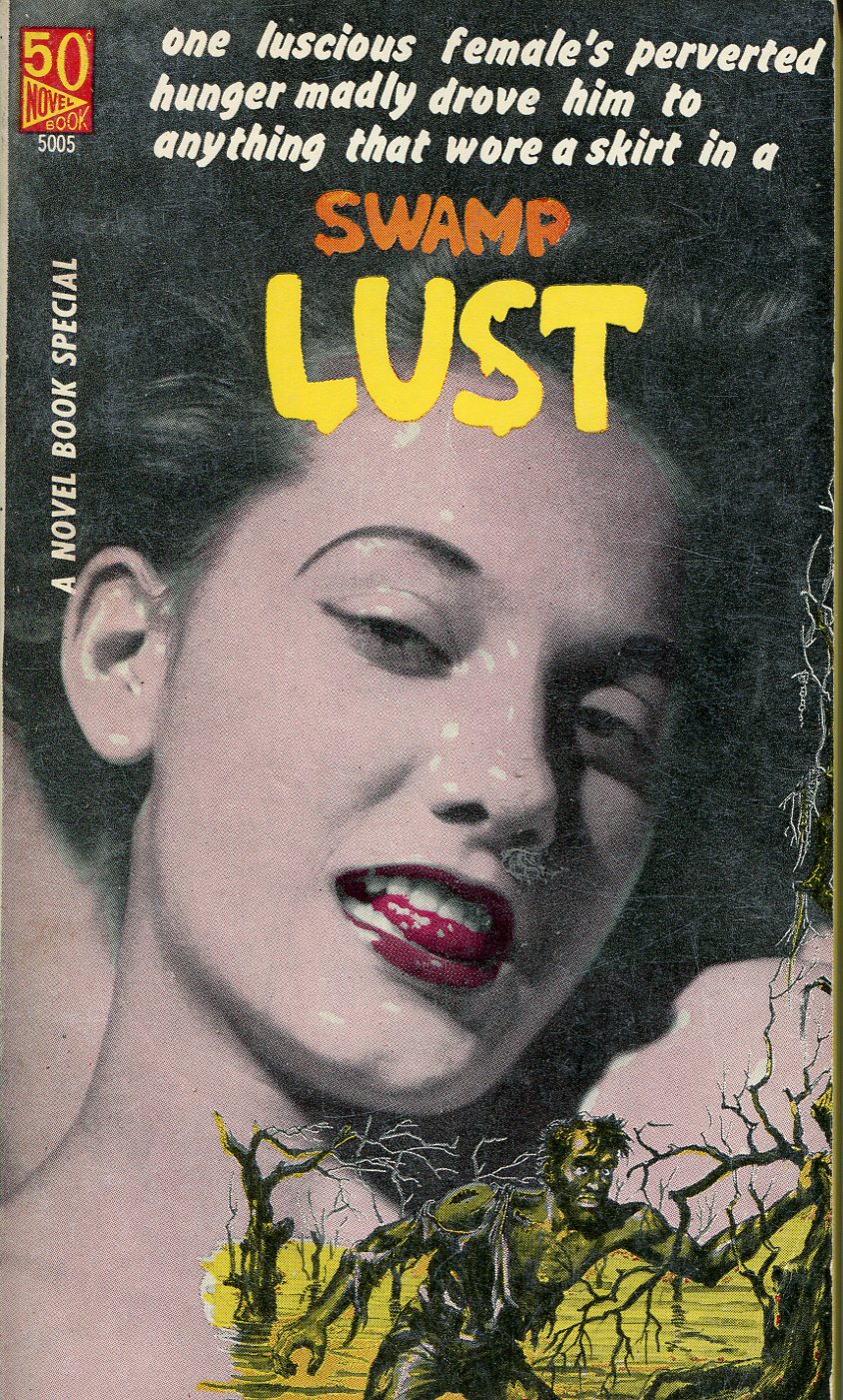
Author George H. Smith (not to be confused with George O. Smith, author of Venus Equilateral and Troubled Star, or the George H. Smith who wrote Swamp Lust, Swamp Bred, and other swamp love classics) had a checkered career as a paperback writer in the 60s. His first publication was a short story in Startling Stories in 1953, and he sold a number of stories to SF magazines throughout the fifties before graduating to novels. He’s mostly remembered today for a line of soft-core erotica written under various pseudonyms.

His first attempt at more serious SF was The Coming of the Rats. But nobody told the cover artist, who cheerfully went the soft-core route, depicting a toga-party victim unsuccessfully fending off high-jumping rats.

Of course, the best covers intrigue readers and make them ask questions, and this cover made me ask questions. Chiefly, “Why are you wearing a dish towel?”

…

Read More Read More

New Treasures: Copperhead by Tina Connolly

New Treasures: Copperhead by Tina Connolly

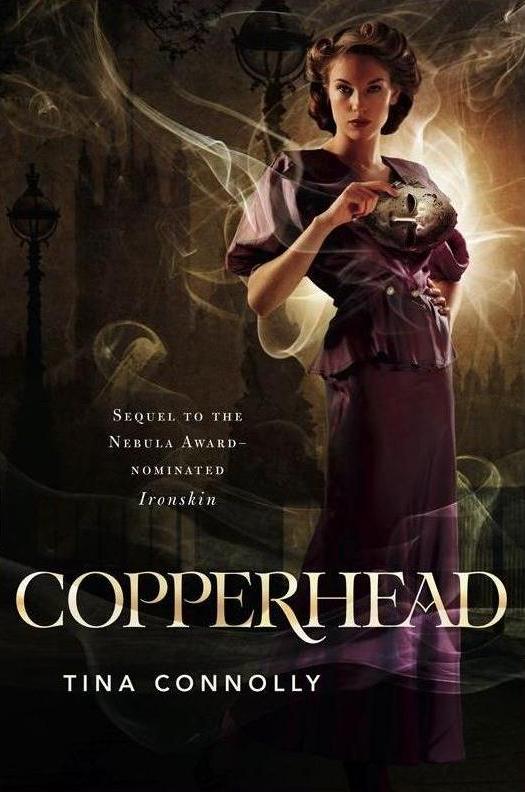
Copperhead-smallI first met Tina Connolly at the World Fantasy Convention in San Diego in 2011. She was charming, witty, and very entertaining — precisely the kind of person you want to follow around to all the good parties. I tried this enthusiastically for a while, until someone from the con committee patiently explained to me that this was called “stalking” and was, like, illegal.

Fortunately, Tina Connolly is also a very talented writer. And reading her novels (I’ve discovered) is exactly like hanging out with the author at a great party. The same sparkling wit, the same penetrating intelligence. Except, unlike at parties, I can pause the conversation to look up words without looking stupid.

Tina’s first novel Ironskin was an historical fantasy set in an alternate version of early 1900s England, and was nominated for a Nebula Award last year. The sequel Copperhead has finally arrived, and it looks just as delightful as the first volume.

Helen Huntingdon is beautiful — so beautiful she has to wear an iron mask.

Six months ago her sister Jane uncovered a fey plot to take over the city. Too late for Helen, who opted for fey beauty in her face — and now has to cover her face with iron so she won’t be taken over, her personality erased by the bodiless fey.

Not that Helen would mind that some days. Stuck in a marriage with the wealthy and controlling Alistair, she lives at the edges of her life, secretly helping Jane remove the dangerous fey beauty from the wealthy society women who paid for it. But when the chancy procedure turns deadly, Jane goes missing — and is implicated in a murder.

Meanwhile, Alistair’s influential clique Copperhead — whose emblem is the poisonous copperhead hydra — is out to restore humans to their “rightful” place, even to the point of destroying the dwarvven who have always been allies.

Helen is determined to find her missing sister, as well as continue the good fight against the fey. But when that pits her against her own husband — and when she meets an enigmatic young revolutionary — she’s pushed to discover how far she’ll bend society’s rules to do what’s right. It may be more than her beauty at stake. It may be her honor… and her heart.

Copperhead was published by Tor Books on October 15th. It is 318 pages, priced at $24.99 in hardcover, and $11.99 for the digital edition.

A Hero in the Service of Organized Crime: A Review of Jhereg by Steven Brust

A Hero in the Service of Organized Crime: A Review of Jhereg by Steven Brust

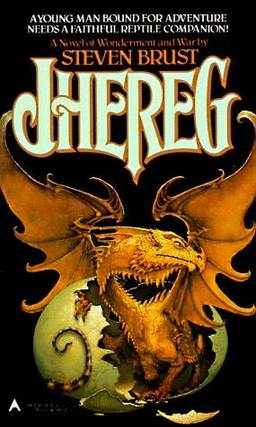
oie_250265755JIVFDZI’m always excited to find a new author, especially one with a long back catalogue for me to plunge into. With 26 novels to his name, Steven Brust is one of those finds.

When I first started blogging about swords & sorcery I spent some time looking around for newer books and series (newer for me meaning anything written after 1984). Again and again, people suggested Steven Brust’s Dragaeran Empire series. Without reading too much about it I learned the main protagonist, Vlad Taltos, had a little pet dragon. Right away my brain flashed some kind of warning and, fearing the books might be too cute by half, I rejected them.

Well, a few weeks ago Bill Ward wrote very highly of the adventures of Vlad Taltos. I figured why not? For a penny (plus $3.99 shipping) I ordered The Book of Jhereg (1999), an omnibus containing the series’ first three books: Jhereg, Yendi, and Teckla. Though still apprehensive of the little dragon, I started on Jhereg (1983) and blew through it in two days. Well I’m feeling a little foolish now for not having overcome my dracophobia much sooner.

The Dragaerans are nearly immortal, seven foot tall beings with slightly pointed ears and more finely featured than humans. Their society is divided into seventeen houses, each with its own traits and skills. Humans are a small and disfavored minority. The human Vlad Taltos is an assassin in House Jhereg, the Dragaeran equivalent of the mafia.

…

Read More Read More

New Treasures: The Edinburgh Dead by Brian Ruckley

New Treasures: The Edinburgh Dead by Brian Ruckley

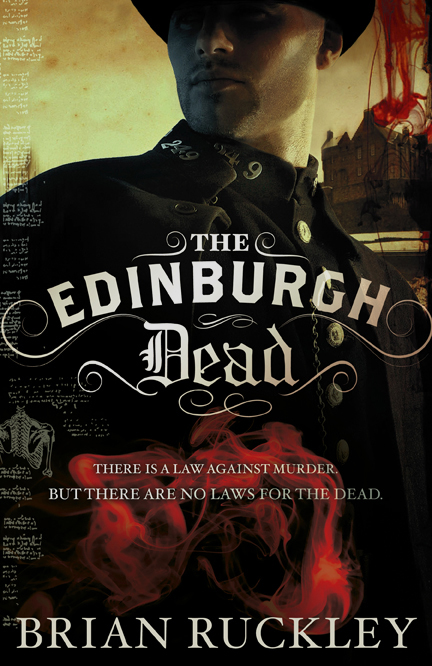
The Edinburgh Dead-smallThe first time I encountered Brian Ruckley, he impressed me greatly. It was with his long story “Beyond the Reach of His Gods,” in Jason Waltz’s groundbreaking anthology Rage of the Behemoth. Since then, he’s proved that wasn’t a fluke with The Godless World trilogy (Winterbirth, Bloodheir, and Fall of Thanes), a satisfying rich heroic fantasy of an apocalyptic war in a godless winter landscape.

But it was his dark fantasy set in the Scottish capital that really grabbed my attention. A gothic tale of devilry and detective work, it looks like it could be a breakout success for this heroic fantasy writer.

Edinburgh: 1828. In the starkly-lit operating theaters of the city, grisly experiments are being carried out on corpses in the name of medical science. But elsewhere, there are those experimenting with more sinister forces.

Amongst the crowded, sprawling tenements of the labyrinthine Old Town, a body is found, its neck torn to pieces. Charged with investigating the murder is Adam Quire, Officer of the newly-formed Edinburgh Police. The trail will lead him into the deepest reaches of the city’s criminal underclass, and to the highest echelons of the filthy rich.

Soon Quire will discover that a darkness is crawling through this city of enlightenment — and no one is safe from its corruption.

The Edinburgh Dead is a powerful fusion of gothic horror, history, and the fantastical.

The Edinburgh Dead was published by Orbit on August 17, 2011. It is 354 pages, priced at $14.99 in trade paperback and $9.99 for the digital edition.

See all of our recent New Treasures here.

Last Chance to Win a Copy of Howard Andrew Jones’ Stalking the Beast

Last Chance to Win a Copy of Howard Andrew Jones’ Stalking the Beast

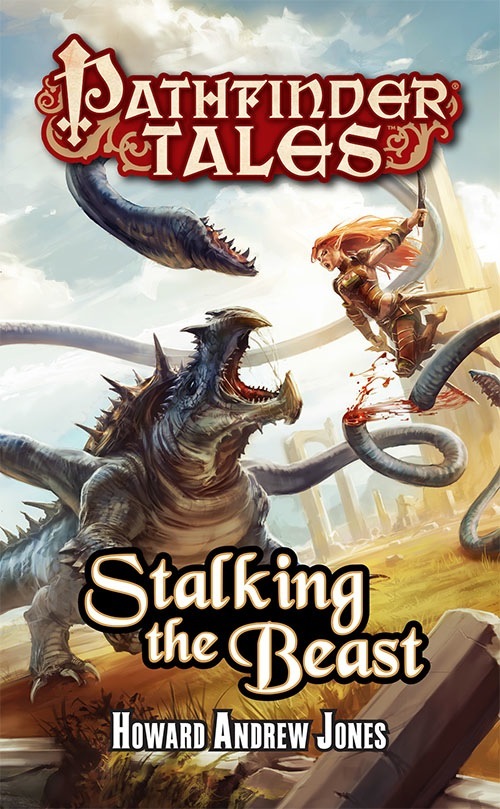
Pathfinder Tales Stalking the Beast-smallTwo weeks ago, we announced a contest to win one of five copies of Stalking the Beast, compliments of Paizo Publishing.

In the weeks since the book’s release, Howard has been interviewed by Suvudu, released a sample chapter from the book, and posted the first two parts of his new story “Bells For the Dead,” featuring the gunslinging bounty hunter Lisette from Stalking the Beast, at Paizo.com.

Man. I need a full-time staff just to keep up with the guy.

How do you win one of those sweet giveaway copies? Easy — just tell us about your favorite sword & sorcery tale — novel or short story. Send us a one-paragraph review telling us what makes it so special, and be sure to include the author and (if it’s a short story) where you read it.

We’ll publish the best responses here on the blog and randomly draw five names from all qualifying entries. Those five winners will each receive a copy of Stalking the Beast, compliments of Paizo Publishing.

To enter our contest, just send an e-mail to john@blackgate.com with the title “Stalking the Beast,” and your one-paragraph entry, before December 1, 2013.

All entries become the property of New Epoch Press. No purchase necessary. Must be 12 or older. Decisions of the judges (capricious as they may be) are final. Terms and conditions subject to change as our lawyers sober up and get back to us. Not valid where prohibited by law, or outside the US and Canada.

Good luck!

New Treasures: Watcher of the Dark

New Treasures: Watcher of the Dark

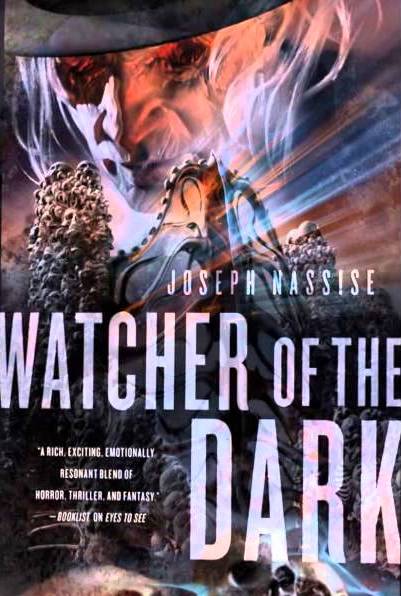
Watcher of the Dark-smallYou’d think that, after nearly 40 years of collecting science fiction and fantasy, I’d be accustomed to looking past the cover while on the hunt of promising new books.

Naaah. Good covers are underrated, and great covers can tell you a more than a simple plot summary. And Watcher of the Dark has a very intriguing cover indeed, featuring a fabulously detailed Lovecraftian horror dominating a bone-strewn alien landscape, while a sinister blind man looms over the whole affair, plotting his evil… wait a minute.

Is that blind guy the hero, exorcist Jeremiah Hunt? My. He’s definitely got a certain style (click the image at right for a bigger version.) This is even more intriguing than I thought.

New Orleans was nearly the death of Jeremiah Hunt, between a too-close brush with the FBI and a chilling, soul-searing journey through the realm of the dead that culminated with a do-or-die confrontation with Death himself.

Hunt survived, but found no peace. When he performs an arcane ritual to reclaim the soul of the magically gifted, beautiful women who once saved him, he must flee the law once again, to the temporary sanctuary of Los Angeles, city of angels.

In L.A., Hunt must contend with Carlos Fuentes, who sees in the blind exorcist a means to obtain the mystical key that opens the gates of Hell. Fuentes knows Hunt’s weakness is his loyalty – to the woman he loves and to another supernaturally gifted friend – and threatens to torture them in order to get Hunt help complete his dreadful quest.

…

Read More Read More

Manly Wade Wellman, Fletcher Pratt, and Appendix N: Advanced Readings in D&D

Manly Wade Wellman, Fletcher Pratt, and Appendix N: Advanced Readings in D&D

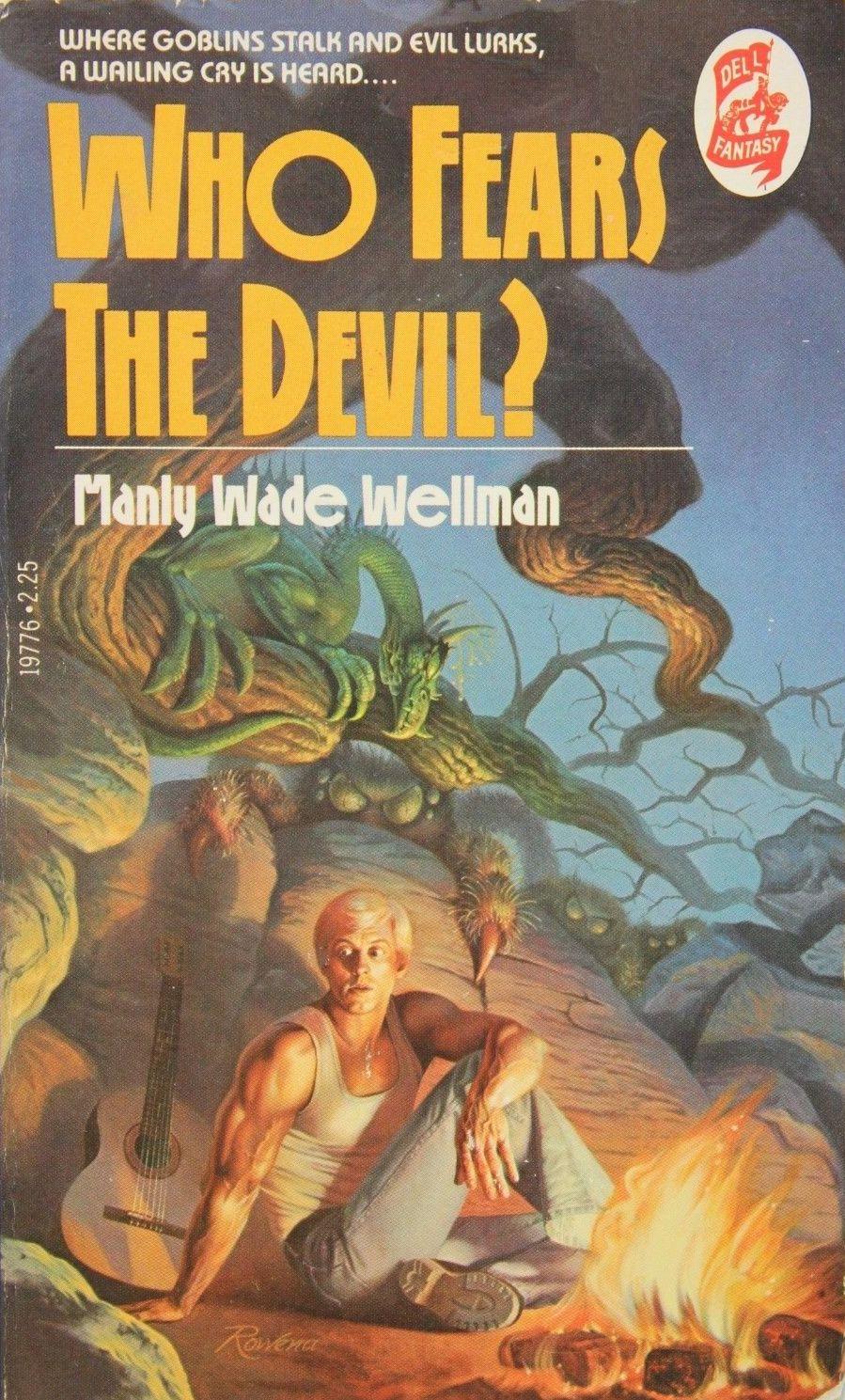
Who Fears the Devil-smallI’ve been waiting for Mordicai Knode and Tim Callahan at Tor.com to get to both Manly Wade Wellman and Fletcher Pratt as part of their ongoing exploration of Gary Gygax’s famous Appendix N — and not very patiently, either.

Manly Wade Wellman is consistently one of the most beloved authors we feature here at Black Gate. Just three days ago Fletcher Vredenburgh reviewed his Battle in the Dawn: The Complete Hok the Mighty, and a while back new Black Gate blogger Alex Bledsoe offered a fine reminiscence of Wellman’s Appalachian fantasy tales in “How I Discovered Silver John.” The most popular contest in our history was our call for The Best One-Sentence Reviews of Manly Wade Wellman, and the winners received a copy of Haffner Press’ gorgeous The Complete John Thunstone.

And Fletcher Pratt? He wrote The Well of the Unicorn, one of the 20th Century’s most acclaimed heroic fantasy novels (none other than Lester del Rey called it “The best piece of epic fantasy ever written.”) With his frequent collaborator L. Sprague de Camp, he was also the author of the very popular Incomplete Enchanter and Gavagan’s Bar series.

So I’ve been looking forward to both authors receiving the Appendix N treatment. And now at last the wait is over.

Sadly, Tim doesn’t seem to fully briefed on the greatness that is Manly Wade Wellman:

I didn’t know anything about Manly Wade Wellman before Mordicai and I embarked on this project. I had never heard of the author, outside of the mention of his name in Appendix N.

Ouch. Well, I’d read almost nothing by Clark Ashton Smith prior to last week (when I read his brilliant pulp horror story “The Vault of Yoh-Vombis“), so I guess we all have our blind spots.

The real question is: What does Tim think of Wellman now?

…

Read More Read More

“You Keep Using This Word… “

“You Keep Using This Word… “

utopia thomas more-smallDid you know that in the 18th century, “conscious” meant “guilty”? People have always played fast and loose with terminology and definitions, and we’re all bothered by the ones that bother us, and not by the ones that don’t.

For example, there’s been a bit of an outcry lately over the changing definition of the word “literally.” While I understand – and sympathise – the fact is that new definitions don’t replace old ones, and that English is a language that’s been evolving forever. What’s more important, it seems to me, is that we decide which definitions we’re using at any given time, and we make sure that all other parties to the discussion are using the same ones.

So much for the definitions of words. What about when the word itself is the definition?

I always thought I knew what “Urban Fantasy” meant. You know, a novel set in a city, with an element of fantasy added in. Usually, but not always, a modern, our-world city*. A novel where the story couldn’t be set in any place other than a city, using the tropes, paradigms and conventions of fantasy. That’s what makes it a fantasy novel, just as the necessary setting makes it an urban fantasy.

Then I was invited to be on a panel where we were to discuss whether it was possible for urban fantasies to have male protagonists. I was confused. I wasn’t aware that to a great many people “urban fantasy” is coming to mean “paranormal romance.” Which is, you know, a romance novel with an element of the paranormal added in. Using the tropes, paradigms and conventions of the romance novel. Which is what makes it a romance novel.

…

Read More Read More