Browsed by
Category: Books

Lust, Women, and the Devil: Seven Decades of Fritz Leiber’s Conjure Wife
Lust, Women, and the Devil: Seven Decades of Fritz Leiber’s Conjure Wife

Conjure Wife-small There are a lot of fascinating things you can learn about 20th Century America — and America today — by being a compulsive paperback collector. Seriously. It’s like being a Cultural Anthropologist.

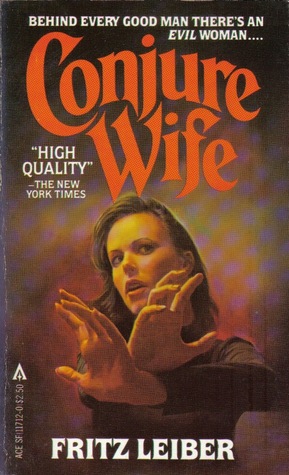
Let’s take a look at Fritz Leiber’s first novel, Conjure Wife. In fact, it’s a near perfect example. The book has been reprinted around a dozen times by roughly as many publishers over the last 70 years, and each time the cover art and marketing copy tell you as much about society as they do about the book. More, even.

First, it helps to know a little about the novel. Conjure Wife was written in 1943; it’s a supernatural horror novel that imagines that witchcraft is an ancient secret shared by most women. Our protagonist Norman Saylor, a professor at a small town college, accidentally discovers that his wife Tansy is a witch. When he convinces her to abandon the mysterious art, the couple rapidly find their luck changing for the worse. Turns out that Tansy’s various charms were the only thing protecting them from an intricate web of curses and counter-spells cast by the women around them.

I always thought that was a fascinating premise. If it seems familiar, it’s because the story has filtered into public consciousness since 1943 — it’s been filmed at least three times: the Lon Chaney, Jr. feature Weird Woman (1944), the Charles Beaumont and Richard Matheson collaboration Burn, Witch, Burn! (1962), and Lana Turner’s final film, Witches’ Brew (1980). Of course, the concept of a community of witches and warlocks living secretly among us has gradually become a popular fantasy trope — used in Jimmy Stewart’s 1958 fantasy Bell, Book and Candle, just for example, as well as the 1964 to 1972 TV series Bewitched, and even the Harry Potter novels.
…

Read More Read More

When Is An Apocalypse Not an Apocalypse?

When Is An Apocalypse Not an Apocalypse?

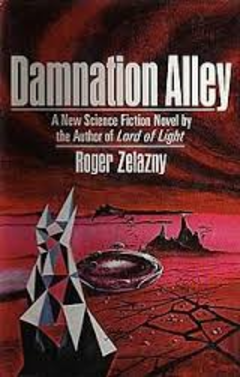
Damnation Last week, I was talking about apocalyptic novels – both Fantasy and SF – that I have on my shelves, and once again I got some very interesting and stimulating commentary. There are quite a few recommendations in those comments – along with some great ideas – so I’d advise you to have a look.

I was a bit chagrined when one of the commenters mentioned Roger Zelazny’s Damnation Alley (1969) as an example of post-apocalyptic SF. Like the other books I cited, this one is on my shelves, and as a big fan of his, I don’t know how I missed it. I’m going to talk about it, and about another of Zelazny’s novels, This Immortal (1965/66), but first, a little clarification.

One of the things we got into in the comments was exactly what we meant by “apocalypse” and “post-apocalyptic.” Now, as someone who not that long ago had a little rant about definitions, I probably should have been clearer about what I meant by those particular terms. Not that there was any name-calling or hair-pulling in last week’s comments. Just that I should have been more careful to follow my own advice.

Here’s my take on it: The existence of a precursor society is insufficient to make a story post-apocalyptic. An apocalyptic event brings about the “end of the world as we know it.” It should happen abruptly, not slowly over the course of time, as with the fall of the Roman Empire, or the disappearance of the civilization of the Caids in my own Dhulyn and Parno Novels. The new, post-apocalyptic society should be starting, effectively, from scratch. Maybe they’ve retained some “stuff” from the previous civilization, even some of the political or social ideas, but their world has changed in a way that can’t be changed back. The apocalyptic event can be natural or man-made – and I’d include magically created events in the latter category.

…

Read More Read More

The Return of Renner and Quist

The Return of Renner and Quist

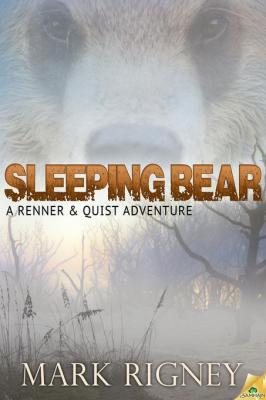
sleeping bearSamhain Publishing has just awakened Sleeping Bear, the second Renner and Quist adventure by Mark Rigney to see publication as an ebook. I discovered the series last year when the same publisher unearthed The Skates, a screwball quest involving tormented Victorian souls, a pair of magic ice skates, a ghostly hound, and dimensional time and space travel.

For the benefit of newcomers, Renner and Quist are an odd couple double act comprising a stuffy Unitarian minister and a rather crude, sometimes boorish, ex-linebacker and former private eye, who team to solve occult mysteries in Michigan. This quirky series is surprisingly literate fiction that calls to mind Douglas Adams’s delightful Dirk Gently detective series.

Rigney’s fiction is built around his characters’ faith (or their lack thereof) in the supernatural and preternatural. The series is thought-provoking as much as it is entertaining. This time out, Sleeping Bear finds Reverend Renner suffering through a crisis of faith as his attempts to minister at a local hospice have fallen on not just deaf ears, but unbelieving ones.

…

Read More Read More

Future Treasures: The Best Science Fiction and Fantasy of the Year Volume 8, edited by Jonathan Strahan

Future Treasures: The Best Science Fiction and Fantasy of the Year Volume 8, edited by Jonathan Strahan

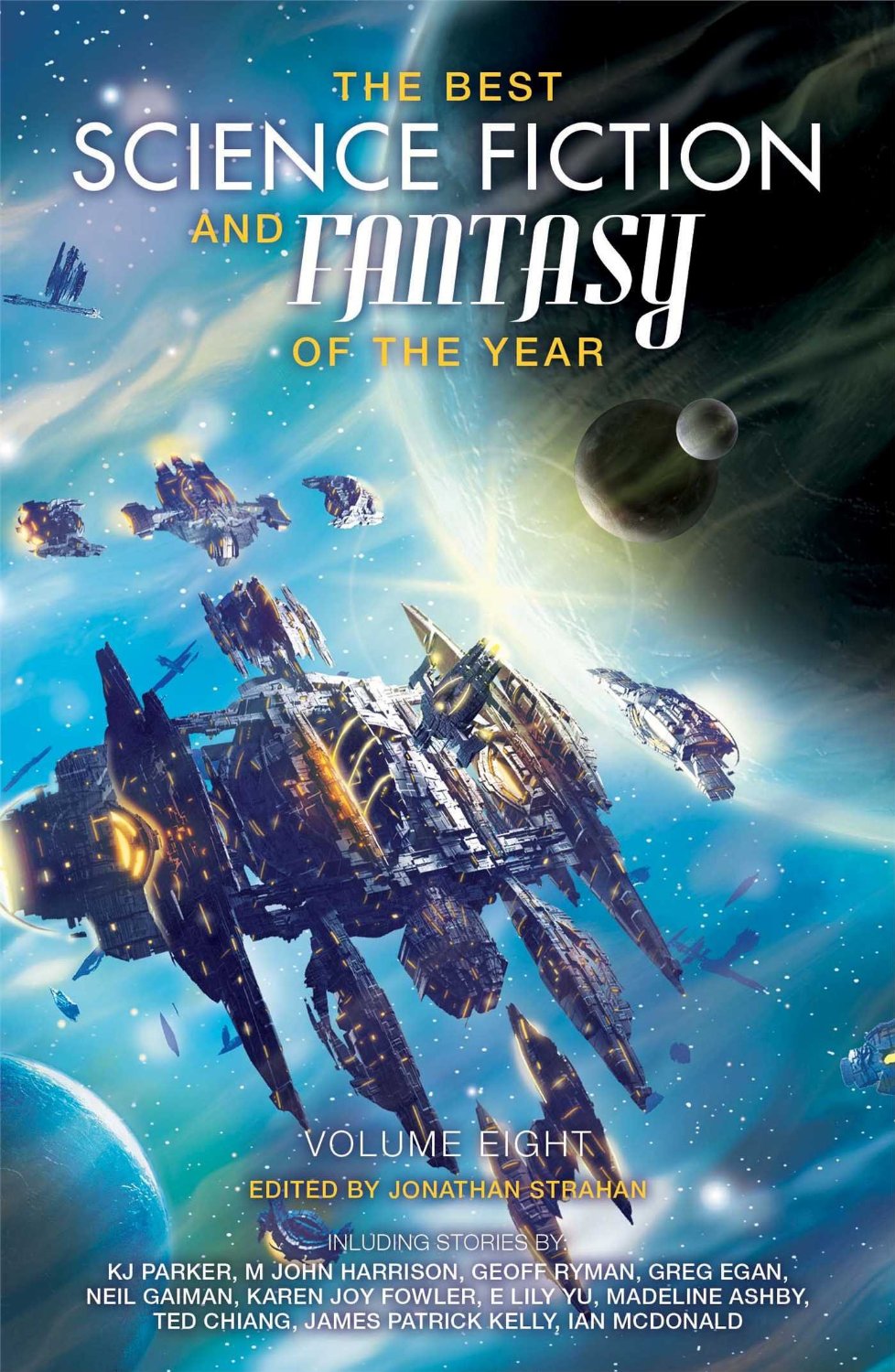
The Best Science Fiction and Fantasy of the Year Volume 8-smallWhen we covered The Best Science Fiction and Fantasy of the Year Volume 7 (back in May, if memory serves), publisher Night Shade was having serious issues and I mentioned, “Likely this will be the last one, at least in this format.” Which I considered a real tragedy, as editor Strahan has proven to have a real talent for picking out gems from the crowded and constantly changing genre short fiction market.

Fortunately, ace publisher Solaris has stepped into the void and rescued the series and Volume 8 will appear this year on schedule. They’ve changed the distinctive cover style and format — a shame, since the first seven volumes look impressive on my shelves — but hopefully they won’t mess with too much else.

Strahan has unveiled the table of contents at his website and it looks like another very impressive volume. As usual, he culls fiction from a wide range of industry markets, including traditional print mags — F&SF, Interzone, McSweeney’s, Asimov’s, Electric Velocipede, and even Twelve Tomorrows, the special SF issues of the MIT Technology Review — and top-tier online markets like Clarkesworld, Lightspeed, Beneath Ceaseless Skies, Eclipse Online, Subterranean, Tor.com, and Strange Horizons.

He also draws stories from the biggest anthologies of the year, like Old Mars, Dangerous Women, Rags and Bones, Once Upon a Time: New Fairy Tales, and An Aura of Familiarity.

Authors in this volume include Ian McDonald, Robert Reed, Eleanor Arnason, Ian R Macleod, Charlie Jane Anders, James Patrick Kelly, K J Parker, Lavie Tidhar, Richard Parks, Ted Chiang, M. John Harrison, Neil Gaiman, Geoff Ryman, Greg Egan — and, as always, a few new talents whose names you may not yet recognize, but whom you may want to keep an eye on.

…

Read More Read More

New Treasures: Snowblind by Christopher Golden

New Treasures: Snowblind by Christopher Golden

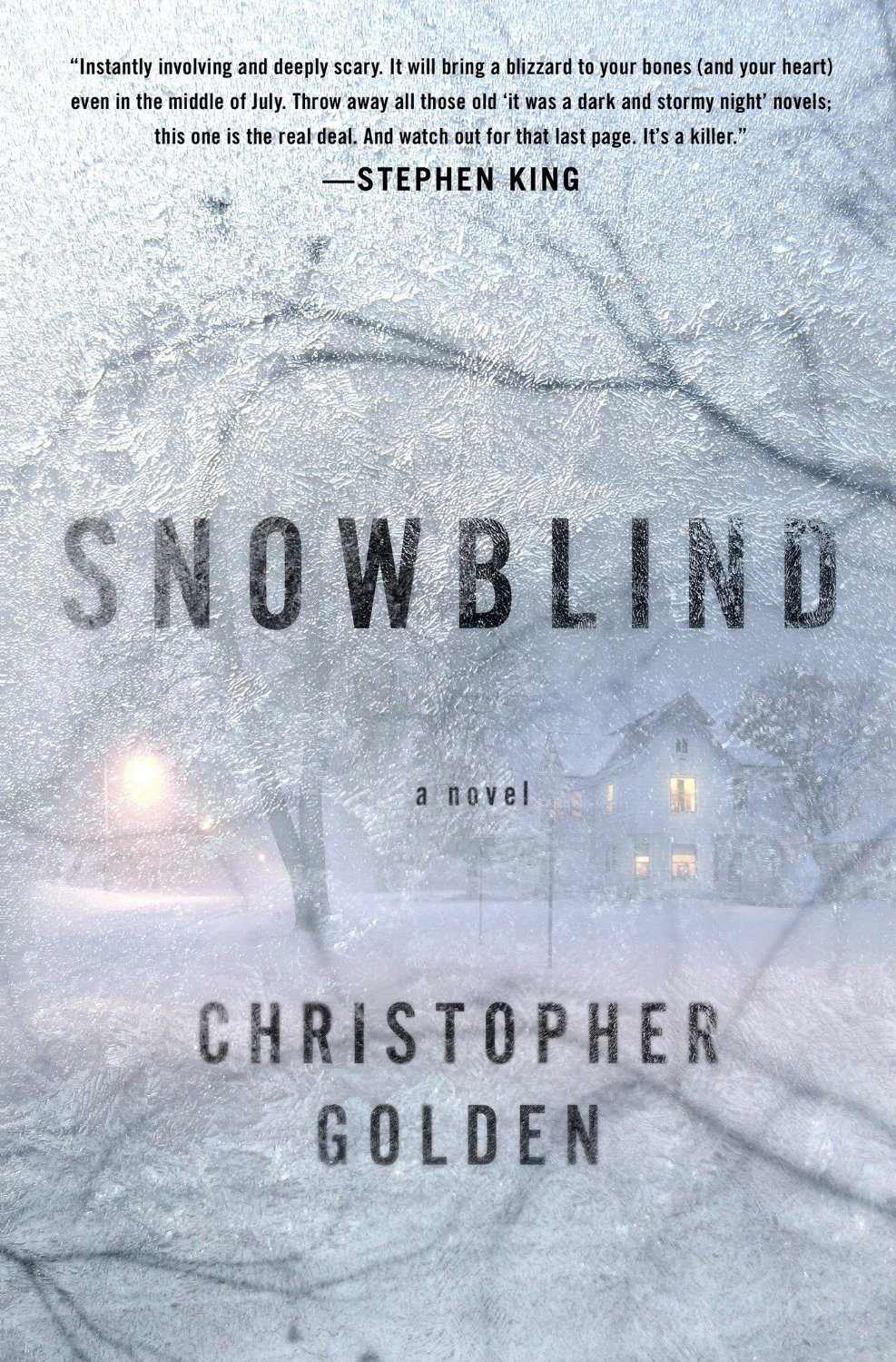
Snowblind Chistopher Golden-smallI think I speak for the entire country when I say that this winter stinks.

Seriously. I grew up in Canada; I know cold, miserable winters. When I was five, I spent a year in northern Quebec, where it snowed in June and the winter was one constant snow storm. I remember I climbed the snowdrift by our driveway until I was able to step up onto the house, and my Dad came out and yelled at me to get off the roof. Now that’s a lot of snow.

But I can’t ever recall a winter as cold or as miserable as this one. Here in Chicago, the weathermen tell us we’re only a few inches away from a snowfall record and a few more sub-zero days away from the coldest winter on record.

The things that frighten each generation are very different. And it’s only our very best best horror writers who are so plugged into the national psyche that they know what frightens us before we know it ourselves. And after the winter of 2013-2014, I think we’ll all look back and appreciate just how brilliant Christopher Golden is and how he picked the right year to write a novel about a killer snow storm.

The small New England town of Coventry had weathered a thousand blizzards… but never one like this. Icy figures danced in the wind and gazed through children’s windows with soul-chilling eyes. People wandered into the whiteout and were never seen again. Families were torn apart, and the town would never be the same.

…

Read More Read More

New Treasures: The Year’s Best Dark Fantasy & Horror 2013, edited by Paula Guran

New Treasures: The Year’s Best Dark Fantasy & Horror 2013, edited by Paula Guran

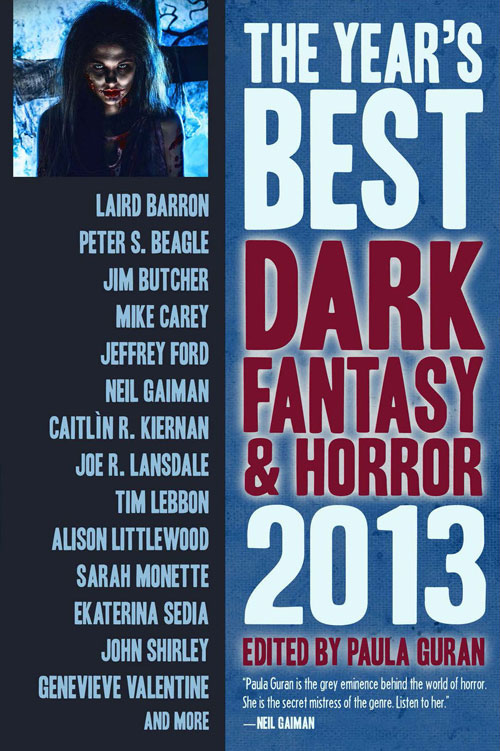
The Year's Best Dark Fantasy and Horror 2013-smallYou don’t have time to keep up on all the great work produced in the fantasy and horror fields, year after year.

You may think you do. But trust me, you don’t. There are fantastic new novelists emerging all the time — folks like Laird Barron, Theodora Goss, Genevieve Valentine, and Ekaterina Sedia — and new masters of the short story, like Karen Tidbeck, Ken Liu, Rachel Swirsky, Mike Carey, and many others. How are you going to keep up?

Believe it or not, that’s not a rhetorical question. I have the answer right here: Paula Guran’s indispensable annual collection The Year’s Best Dark Fantasy & Horror. It’s like a cheat sheet covering all the exciting new — and established — writers in the genre. Read it every year, and I guarantee you’ll be talking intelligently about the latest literary trends in dark fantasy at your next party. (You’re on your own picking out what to wear, though. Just remember: no white after Labor Day.)

Paula Guran doesn’t provide the lengthy annual summary typical of some Year’s Best collections. Instead she gives the space over to fiction — over 500 pages of the best short stories of 2013, culled from magazines like Beneath Ceaseless Skies, Postscripts, Cemetery Dance, F&SF, Clarkesworld, Subterranean, Lightspeed, Apex, and Shimmer, and anthologies like The Book of Cthulhu 2, Hex Appeal, Shotguns v Cthulhu, Dark Tales of Lost Civilizations, Black Wings II, and many others.

This is the fourth volume of The Year’s Best Dark Fantasy & Horror, but the first one I’ve gotten around to. In our defense, we’ve at least covered several of Paula’s other recent anthologies, including Season of Wonder and Weird Detectives.

Here’s the book description.

…

Read More Read More

Vintage Treasures: The Man Who Awoke by Laurence Manning

Vintage Treasures: The Man Who Awoke by Laurence Manning

The Man Who Awoke-smallI love dollar bins. If you’ve ever been in the Dealer’s Room at a convention, or any decent bookstore, you know what I’m talking about. The jumbled box at the foot of the booth, virtually ignored, with a hand-scrawled note on the lid: “All books — $1.”

I was at Capricon 34 this weekend here in Chicago and dropped by Greg Ketter’s booth in the Dealer’s Room. Greg is a great guy, owner of DreamHaven Books in Minneapolis, one of the last great science fiction bookstores. I’m pretty sure I was in the middle of a conversation with someone when I saw three boxes peeking under from under his booth with a hand-written “$1” sign. Next thing I know, I’m sitting on the floor, surrounded by neat little stacks of books on the carpet.

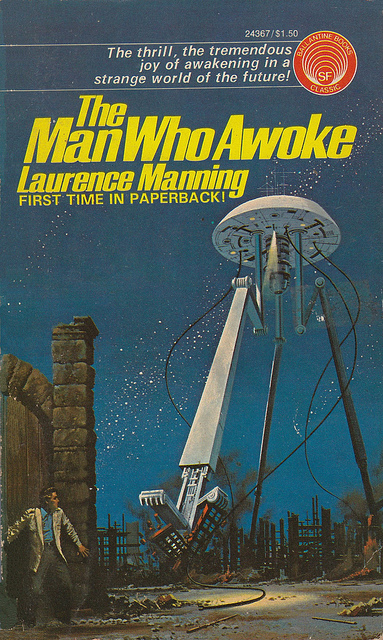
There’s nothing like finding a book you’ve always wanted in a dollar bin. Except maybe finding a treasure you didn’t even know existed. And that’s what happened when I pulled out a pristine copy of Laurence Manning’s 1975 paperback The Man Who Awoke from the bottom of the box.

The Man Who Awoke is a collection of five novelettes originally published in Wonder Stories in 1933. It follows the adventures of Norman Winters, a scientist who finds a way to put himself into suspended animation and wake up every 5,000 years. He encounters vastly changed human civilizations at every stop, until he awakens one last time in the year 25,000 A.D.

I read the first story in the pages of that pinnacle of Western Modern Literature, Isaac Asimov’s pulp anthology Before the Golden Age, and really enjoyed it. Winters awakens in 5,000 A.D. to find the city of New York gone, and in its place a thick forest — and humanity struggling to survive.

It was a rip-snortin’ slice of pulp escapism… or was it?

…

Read More Read More

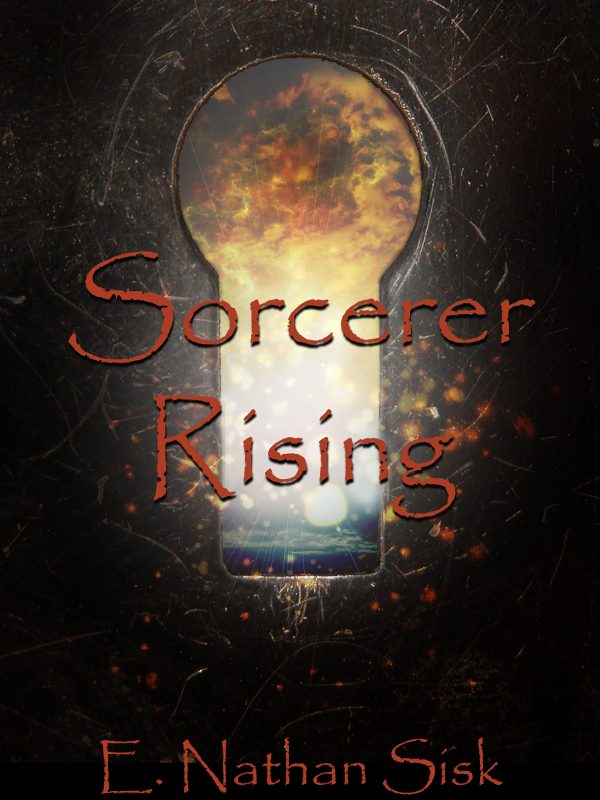
Self-published Book Review: Sorcerer Rising by E. Nathan Sisk

Self-published Book Review: Sorcerer Rising by E. Nathan Sisk

After a month off, I’m ready to start reviewing self-published books again. I haven’t received many new books recently, so if you have a book you’d like me to review, please follow the submission guidelines here. The fewer submissions I receive, the better your chances of getting a review. Meanwhile, this month’s book is Sorcerer Rising by E. Nathan Sisk. A submission which I received in December, not coincidentally.

SorcererRising800x600The titular sorcerer in Sorcerer Rising is one Virgil McDane. The word “sorcerer” can mean different things in different books. In some books, sorcerer, wizard, witch, and magician are all terms for the same thing. And in others, they’re very different. In Virgil’s world, a world a lot like ours, except that magic is real and public (and as a result technology is different but recognizable), the real difference is that wizards are part of the Guild, trained in its magic and responsible for following its rules, and sorcerers are self-taught. (I’m still not sure what the deal is with witches, just that Virgil considers them scarier than wizards.) Virgil is a sorcerer, but he used to be a wizard. When he was kicked out of the Guild for an act of desperation, he was Branded, and everything the guild taught him was taken away. He had to relearn magic on his own, and thus he is a Sorcerer, working outside the Guild, scraping together a living doing jobs that wizards won’t do.

At the beginning of Sorcerer Rising, that job is smuggling. Across the world are scattered clouds, mists of pure Aether, and in each cloud is a world. How the world is formed is not fully explained, but it seems that raw Aether can be influenced by the human mind and the first people to visit a world do a lot to shape what it becomes. The Guild controls access to most of these clouds, as they have the knowledge and magic to safely enter and return. They can also Inhale things in these clouds, storing them in their minds, later Exhaling them into the world. Most of the Guild’s wealth comes from trade with these clouds, retrieving rare and valuable materials and bringing them back to the mundane world.

…

Read More Read More

New Treasures: Dreamwalker by C.S. Friedman

New Treasures: Dreamwalker by C.S. Friedman

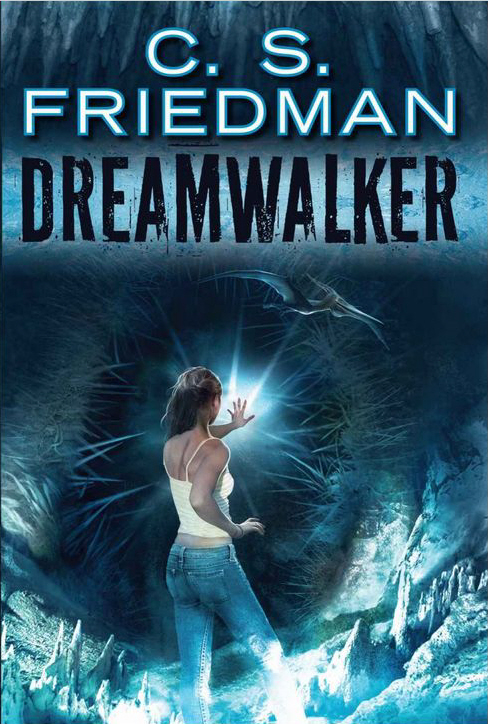
C.S.Friedman Dreamwalker-smallC.S. Friedman is not a particularly prolific writer — but what she does write usually makes an impact. Her first novels, including In Conquest Born and The Madness Season, were science fiction; her more recent Magister trilogy (Feast of Souls, Wings of Wrath, and Legacy of Kings) returned to the sweeping epic fantasy of her popular Coldfire trilogy (Black Sun Rising, When True Night Falls, and Crown of Shadows).

Her new novel, on sale this week, is something brand new for Friedman — a contemporary fantasy. Mixing a woman gifted with visionary dreams, gaming culture, and the very roots of mythology, Dreamwalker is an ambitious new novel with an intriguing premise.

All her life Jessica Drake has dreamed of other worlds, some of them similar to her own, others disturbingly alien. She never shares the details with anyone, save her younger brother Tommy, a compulsive gamer who incorporates some aspects of Jessica’s dreams into his games. But now someone is asking about those dreams… and about her. A strange woman has been watching her house. A visitor to her school attempts to take possession of her dream-inspired artwork.

Why?

As she begins to search for answers it becomes clear that whoever is watching her does not want her to learn the truth. One night her house catches on fire, and when the smoke clears she discovers that her brother has been kidnapped. She must figure out what is going on, and quickly, if she and her family are to be safe.

Following clues left behind on Tommy’s computer, determined to find her brother and bring him home safely, Jessica and two of her friends are about to embark on a journey that will test their spirits and their courage to the breaking point, as they must leave their own world behind and confront the source of Earth’s darkest legends – as well as the terrifying truth of their own secret heritage.

Dreamwalker was published Feb. 4 by DAW Books. It is 400 pages, priced at $19.99 in hardcover, and $10.99 for the digital edition.

See all of our recent New Treasures here.

The Least-Expected Trumpet of Apocalypse: Leonora Carrington’s The Hearing Trumpet

The Least-Expected Trumpet of Apocalypse: Leonora Carrington’s The Hearing Trumpet

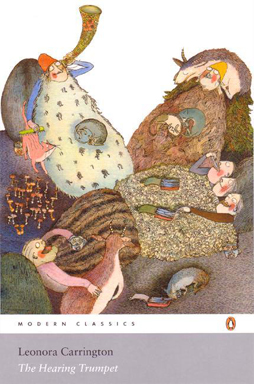
The Hearing TrumpetA little while ago, I followed a retweeted link to a blog post by writer Sofia Samatar, presenting the syllabus for a class on weird world fiction she’ll be teaching this semester. It was an interesting list. Some names were new to me, so I set about looking them up. And found a library near me had a book by one of these writers: The Hearing Trumpet by Leonora Carrington. Which turned out to be a constantly surprising read, a short book that opened doors to places I didn’t expect.

Carrington died in 2011 at the age of 94. She was primarily known as a painter; as a young artist she left school to live with Max Ernst, and with him became a part of the Surrealist movement. When the German Ernst was arrested by the French government in September of 1939, Carrington suffered a mental breakdown and, after fleeing France, was institutionalised in Spain. She ultimately fled to Mexico, where she lived for the rest of her life, producing paintings, sculptures, novels, plays, and short stories. (You can see a selection of her works at her page at wikipaintings.org.)

The Hearing Trumpet may have been first written in 1950, or perhaps in the early 1960s; it was first published in French in 1974, then in Engish in 1976. It’s a story about a 92-year-old woman, Marian Leatherby, given a hearing trumpet by her friend Carmella (a character widely believed to be based on Carrington’s close friend, the surrealist painter Remedios Vero — see more of her work here). The trumpet sharpens Marian’s hearing to a fantastic degree and she at once hears her family planning to put her in a home for old women. This institution turns out to be marked by strange architecture — buildings in the shape of “toadstools, swiss chalets, railway carriages, one or two ordinary bungalows, something shaped like a boot, [and] another like what I took to be an outsize Egyptian mummy,” with the main building a castle at the centre — and is run by highly idiosyncratic Christians. A picture of a one-eyed female saint seems to grin mockingly in the dining hall. Strange things follow: one of the other inmates dies, perhaps murdered; Marian is given a peculiar book outlining the history of the painted saint and her quest for the Holy Grail; and then things get much, much weirder.

…

Read More Read More