Browsed by
Category: Books

The Series Series: The End Is Nigh: The Apocalypse Triptych, edited by John Joseph Adams and Hugh Howey
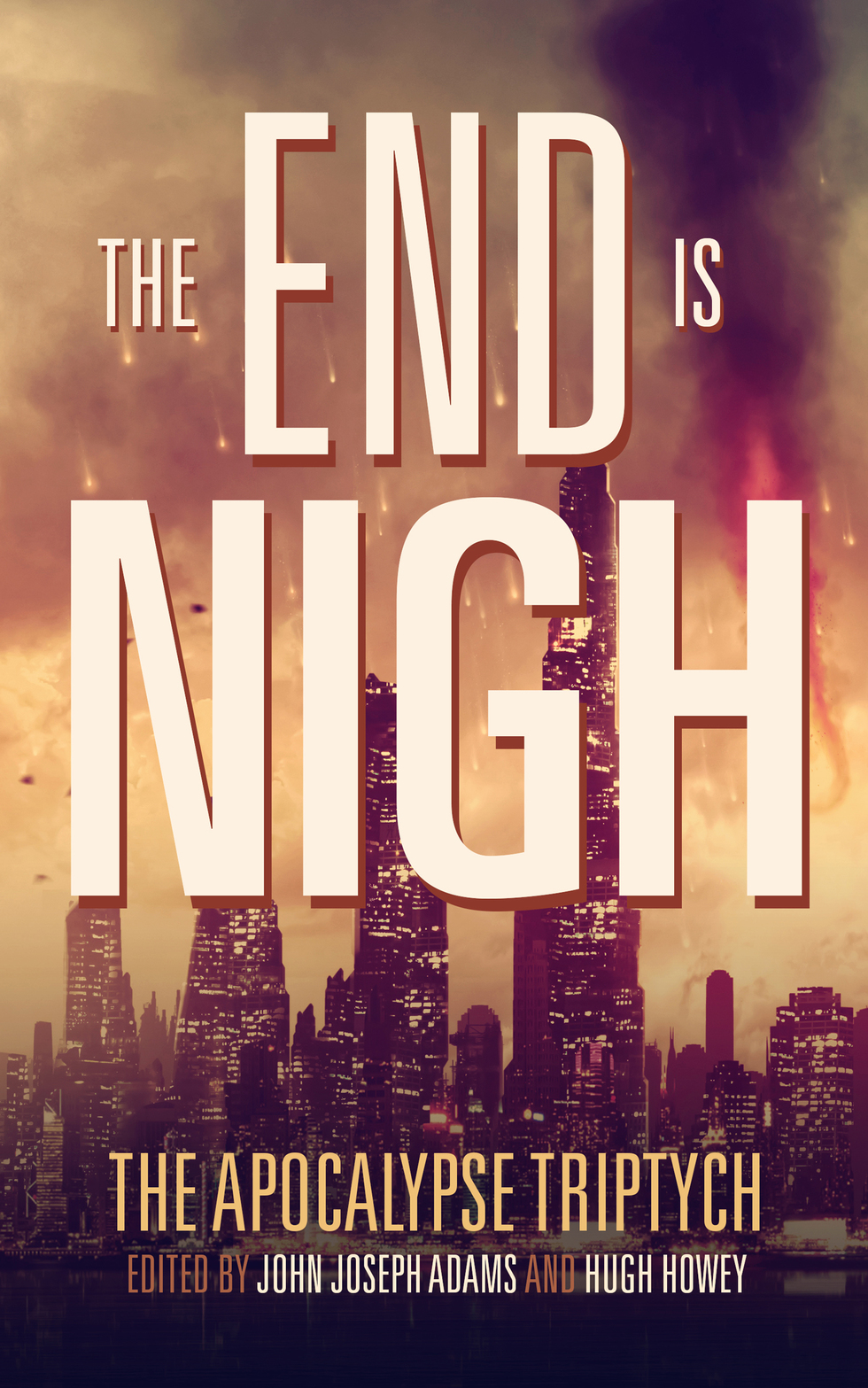
The Series Series: The End Is Nigh: The Apocalypse Triptych, edited by John Joseph Adams and Hugh Howey

The End is Nigh John Joseph Adams-smallThe end of the world turns out to be heartbreaking. Who would have guessed?

This anthology of end-of-the-world stories from two dozen big-name and up-and-coming writers is nothing like the Hollywood blockbuster apocalypse experience, all stirring music and flashy effects, tidily wrapped up with a life-affirming ending in under two hours. Nor is it much like the sprawling genre novels of cosmic disaster that we like so much. You could stack the dead characters in George R.R. Martin’s A Song of Ice and Fire like cordwood and get a wall longer than Hadrian’s, but we keep reading because there are still characters to root for, and moments of hope for a world that hasn’t altogether ended.

Adams and Howey’s planned three-volume anthology series The Apocalypse Triptych opens with a volume of stories that cover the moment the old world ends. A second volume, The End Is Now, will feature stories set in the midst of the chaos between, and The End Has Come will focus on the beginnings of whatever gets built from the ashes.

The structure of The End Is Nigh shapes a very specific emotional rhythm and, if you try to read the book straight through over a few days, a reading experience unlike any other I’ve had. Each author has come up with a different take on how the world might end, and each story presents a different vision of what the world that’s ending is like.

The viewpoint characters are all deliciously different from each other and their predicaments grow increasingly extreme in their deliciously different and often absurd ways, until the not-so-delicious moment when the worlds and stories end. No matter how funny, juicy, or satirically entertaining the story has been up to that moment, the world’s end hits like a knife to the gut. You’re still reeling when the story slams into its last sentence and ejects you before you can find some way to ask, But what happened next?

And then, dear reader, you turn the page and go through it all again. You try not to get too attached to the main characters, whose odds of survival two weeks past the final paragraph range from pretty slim to definitely toast.
…

Read More Read More

Vintage Treasures: The Spell of Seven, edited by L. Sprague de Camp

Vintage Treasures: The Spell of Seven, edited by L. Sprague de Camp

The Spell of Seven-smallIt takes real effort to keep on top of even a fraction of the exciting new work in the fantasy genre every week. Between the print magazines, online outlets like Subterranean and Beneath Ceaseless Skies, paperbacks, hardcovers, and self-published and independent work from talented folks just outside mainstream publishing, it’s exhausting. Luckily, it’s also extremely rewarding, and I feel fortunate indeed to be part of such a lively and vibrant branch of literature.

Of course, there are also weeks when I say, “The hell with it,” and settle in with a great vintage paperback.

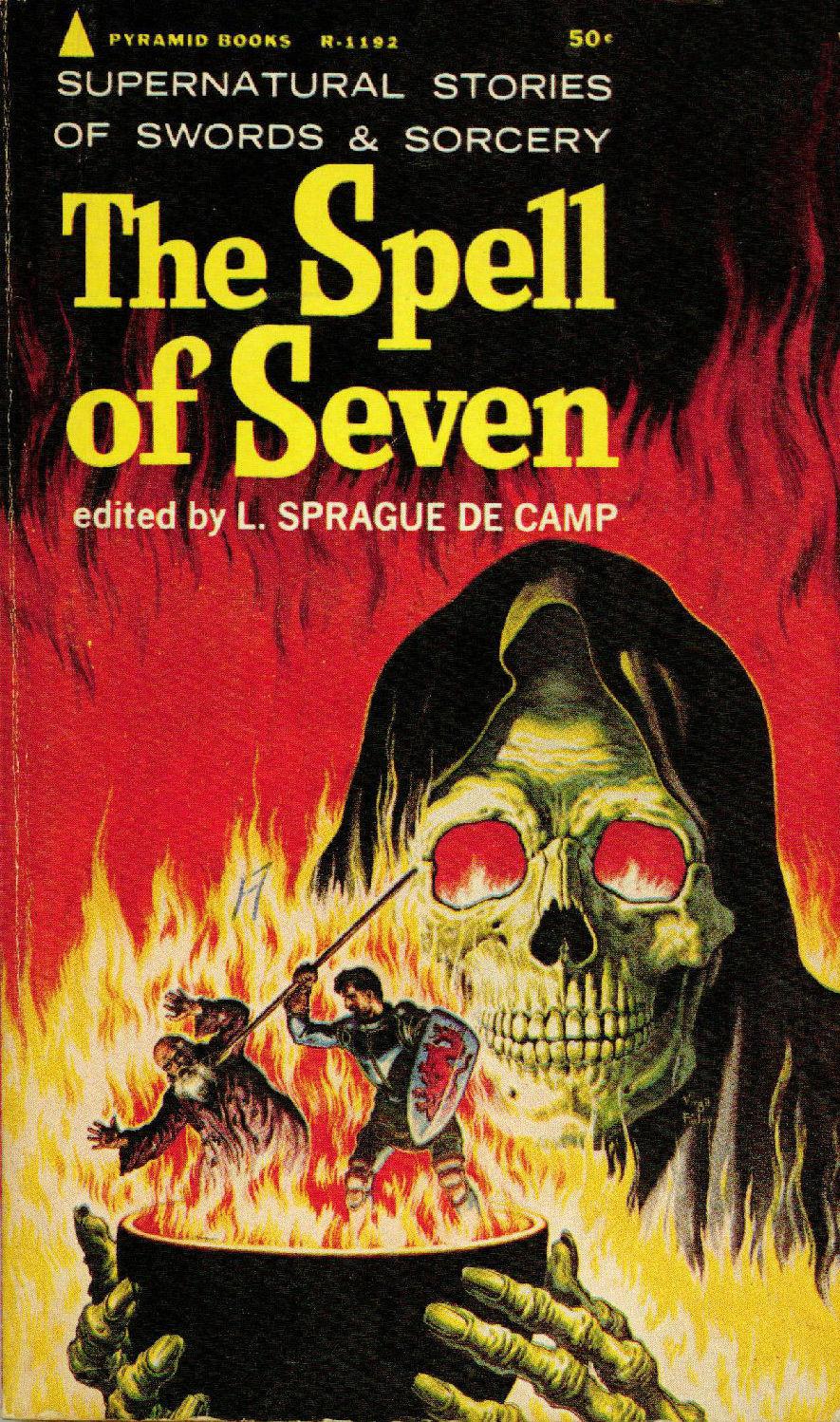
This was one of those weeks. And the book that lured me away from the latest crop of promising new writers clamoring for my attention was L. Sprague de Camp’s The Spell of Seven, a slender sword & sorcery anthology from 1965.

I’ll admit up front that I thought that The Spell of Seven was a standalone title. I’m a child of the late 20th Century; when a book is part of a series, I expect the publisher to sell me on that up front. (It’s easier to mug me for more money that way.)

Fortunately, I have the collective hive-mind of Black Gate to call upon. One of the great lobes of that mind is Brian Murphy, who pointed out that the book was a follow-up to De Camp’s seminal S&S anthology Swords and Sorcery, and part of a successful series that would eventually evolve into a four volume survey from Pyramid Books covering the most important heroic fantasy of the time.

Here are Brian’s comments, taken from his 2011 review of The Fantastic Swordsmen.

…

Read More Read More

A Certain Charm Marred by an Air of the Horrible: Count Bohemond by Alfred Duggan

A Certain Charm Marred by an Air of the Horrible: Count Bohemond by Alfred Duggan

oie_174413CCNNRiqmHistory provides us with real life characters who seem to have stepped straight out of myth. The scale of their ambition or power seems beyond the reach of mortals. Their successes verge on the unbelievable. And yet they are real. Bohemond de Hauteville, Prince of Taranto, was one of those people.

Alfred Duggan’s posthumous 1965 novel Count Bohemond presents the first half of Bohemond’s life: his rise to fame and victory set against the background of the faltering Byzantine Empire and culminating with the near miraculous victories of the First Crusade. This dense and captivating book covers the thirty-five years from Bohemond’s childhood to the height of his success and the capture of the fortified city of Antioch in 1098.

Though she disliked all Normans, and Bohemond in particular, Anna Komene, daughter of Emperor Alexius described him quite laudably in the Alexiad, a history of the Byzantine Empire in the 11th and 12th centuries:

Now he was such as, to put it briefly, had never before been seen in the land of the Romans (that is, Greeks), be he either of the barbarians or of the Greeks (for he was a marvel for the eyes to behold, and his reputation was terrifying). Let me describe the barbarian’s appearance more particularly — he was so tall in stature that he overtopped the tallest by nearly one cubit, narrow in the waist and loins, with broad shoulders and a deep chest and powerful arms. And in the whole build of the body he was neither too slender nor overweighted with flesh, but perfectly proportioned and, one might say, built in conformity with the canon of Polycleitus… His skin all over his body was very white, and in his face the white was tempered with red. His hair was yellowish, but did not hang down to his waist like that of the other barbarians; for the man was not inordinately vain of his hair, but had it cut short to the ears. Whether his beard was reddish, or any other color I cannot say, for the razor had passed over it very closely and left a surface smoother than chalk…

…

Read More Read More

New Treasures: Wildside Double #6 — Alien StarSwarm by Robert Sheckley / Human’s Burden by Damien Broderick & Rory Barnes

New Treasures: Wildside Double #6 — Alien StarSwarm by Robert Sheckley / Human’s Burden by Damien Broderick & Rory Barnes

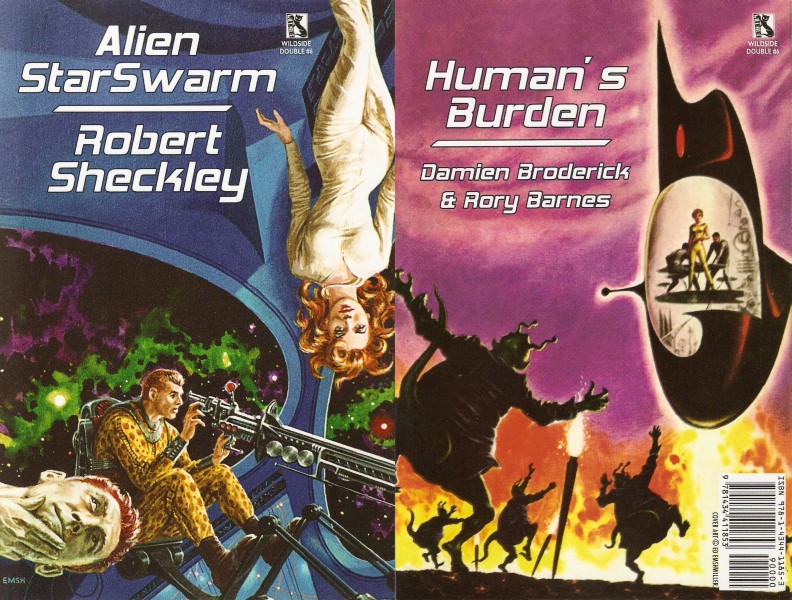
Alien Starswarm Robert Sheckley-smallWith all the recent attention we’ve been giving to the classic Ace Doubles by Andre Norton, Harlan Ellison, Murray Leinster, and others, I would be remiss to not point out that Wildside Press has recently revived the tradition of the Ace Double with a handsome series of back-to-back short novels (novellas, really). It looks like they’re pairing hard-to-find reprints with original fiction, which I think is a terrific idea.

They’ve assembled a crackerjack list of writers, too — including Robert Sheckley, Damien Broderick & Rory Barnes, Edmond Hamilton, Harl Vincent, Lawrence Watt-Evans, Brian Stableford, Howard V. Hendrix, Philip Jose Farmer, Randall Garrett, Robert Silverberg, Pamela Sargent, and many others. So far, they’ve produced over 30, which is pretty darned impressive.

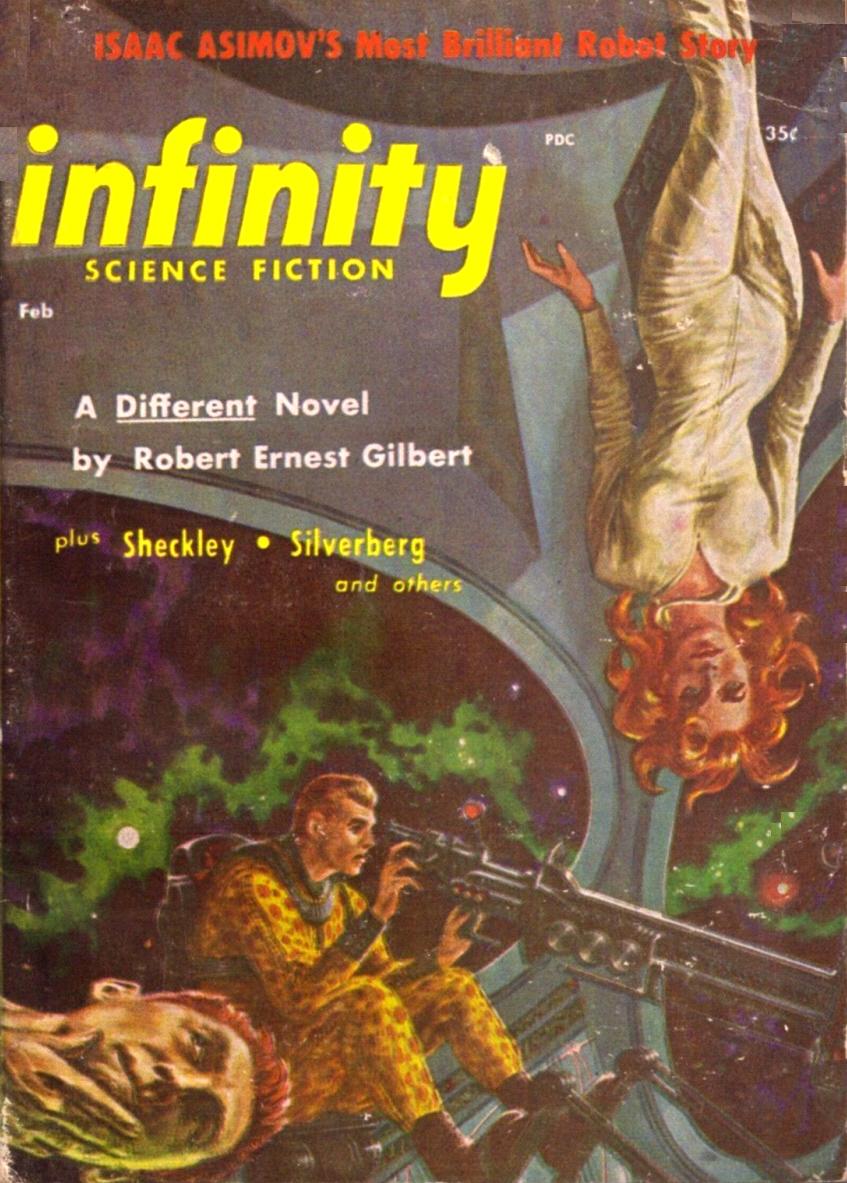
I bought an assortment of titles to try them out, and the one that commanded my attention immediately was #6 — Robert Sheckley’s Alien StarSwarm, paired with Human’s Burden, by Damien Broderick & Rory Barnes. Likely that’s due to the gorgeous covers by Emsh (Ed Emshwiller), one of the greatest (if not the greatest) cover artists our genre has ever seen. The Sheckley side features a nicely re-colored version of the cover of the February 1957 issue of the short-lived magazine Infinity Science Fiction. Here’s the book description for Alien StarSwarm.

Salvatore commands the battleship Endymion. He’s seen his share of battles and fought them bravely, too. So he doesn’t hesitate when beautiful Princess Hatari pleads for his help. She wants to regain her throne, but it may be more than Salvatore can accomplish, for the deadly race known as the Balderdash has taken over the planet Melchior — and now, even his own men have turned against him. Bred to fight, he accepts the challenge!

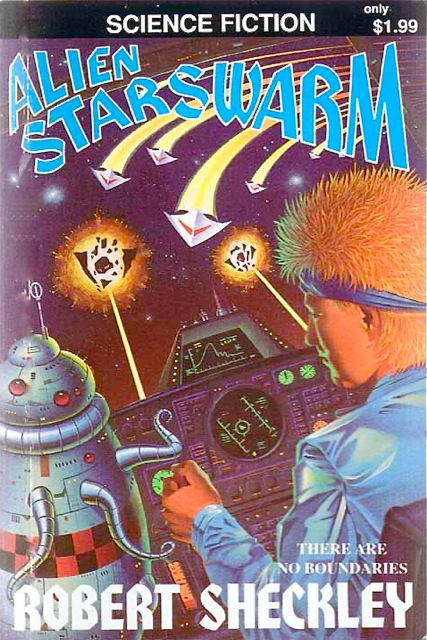
Alien StarSwarm was originally published as a 96-page chapbook from a company called DimeNovels way back in 1990. It certainly qualifies as hard-to-find… I’ve never even seem a copy (here’s a snap of the cover, just to prove it exists.) It has never before been reprinted — so if you’re a Sheckley fan, this may be the only way you’re going to find it.

…

Read More Read More

The Adventure Continues: the Return of Renner and Quist

The Adventure Continues: the Return of Renner and Quist

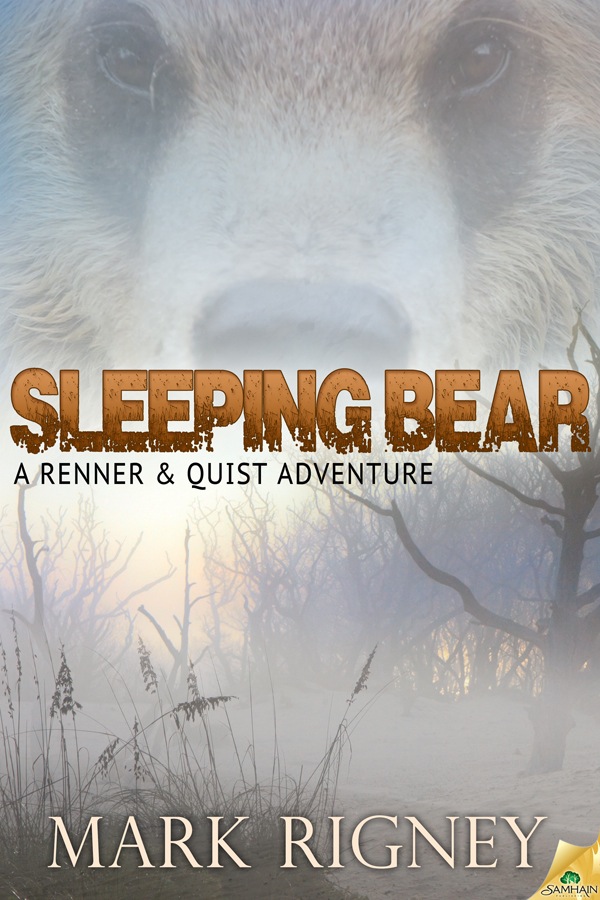
Sleeping Bear coverWhen I first dreamed up my odd-couple pair of Renner & Quist, one of the many goals I had in mind was to write their stories specifically and consciously as adventures. This was not perhaps the most sensible decision, given a literary market polarized between nominally realistic “grown-up” fare and the highly fantastical tomes aimed at teens. (I shall not deign to even mention Romance; call me biased, go ahead. I can take it.) Nor did my conception of Renner & Quist allow for them to don armor, wield swords, or inhabit some far-flung or alternate world. No, these two, Reverend Renner being a Unitarian Universalist minister and Dale Quist a former P.I. and ex-linebacker, required a contemporary setting; to emplace them elsewhere would be to guarantee that any stories woven around them would be untruthful.

This is not to say that I’m against high fantasy; quite the opposite. I’m here, aren’t I? For further proof, take a gander at my Black Gate trilogy concerning Gemen the Antiques Dealer.

But not all ideas trend that direction and with Renner & Quist, I knew I had nearer waters to chart. Now that their second novella, Sleeping Bear, is out in the world, and with their first proper novel, Check-Out Time, very much in the production pipeline, it seems high time to explore what remains, in the 21st century, of that cracking good term, “adventure.”

…

Read More Read More

Future Treasures: Irenicon by Aidan Harte

Future Treasures: Irenicon by Aidan Harte

Irenicon by Aidan Harte-smallI get a lot of advance proofs. I used to treasure them. I remember I got this advance proof for an upcoming novel by George R.R. Martin back in 1996 called A Game of Thrones. Looked pretty good. I took it with me to Archon in St. Louis and sat in on a very lightly-attended reading — just six of us in a cozy room, listening to George act out the character of a dwarf named Tyrion — and George was gracious enough to sign my copy. I eventually gave it away. No sense holding on to proofs once they’ve been reviewed; you just clutter up your house.

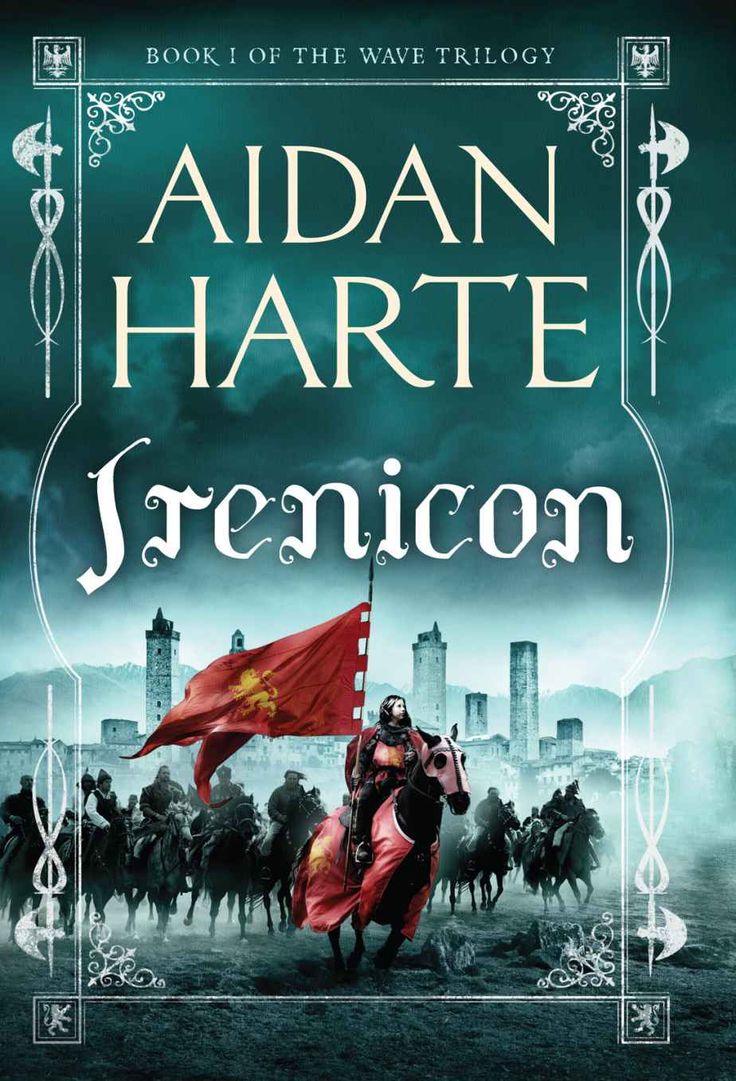
Point is, it’s got to be pretty special to grab my attention these days. The latest fantasy epic from Jo Fletcher books got my attention for two reasons. First, I couldn’t make out the title. What that heck is that? Frenicon? Srenicon? (renicon? That’s bizarre. Alice, help me out here. I think it’s some kind of eye test.

Second, the book features a sentient river. That’s right, a sentient river — and not a happy one. That’s worth a read right there.

The river Irenicon is a feat of ancient Concordian engineering. Blasted through the middle of Rasenna in 1347, using Wave technology, it divided the only city strong enough to defeat the Concordian Empire. But no one could have predicted the river would become sentient — and hostile.

…

Read More Read More

Return to Thieves World in Beyond Sanctuary: The Revised and Expanded Author’s Cut by Janet Morris

Return to Thieves World in Beyond Sanctuary: The Revised and Expanded Author’s Cut by Janet Morris

Microsoft Word - 09 12 24 Sacred Band Cover white horse white foLet me start off here with a quote from my Black Gate review of Janet and Chris Morris’s novel, The Sacred Band:

The Sacred Band is much more than great Heroic Fantasy: it is classic literature, filled with sub-plots, a fine cast of well-drawn characters, insight and wisdom and recurring themes of honor, faith, brotherhood and love. This novel spoke to me on a personal level because it’s a story of pure human drama and powerful emotions. While the characters are larger than life, they are also richly-drawn and written with great depth of insight and humanity. What also rings true with the Sacred Band is their military tradition, their ethos. These characters are soldiers, warriors. They are not only mythic heroes, they are also everyday heroes; real people, everyday people who face extraordinary odds and foes… The Sacred Band has the sharp edge of reality, the harshness, the bitterness and the danger of the real world. Love, loyalty, honor — these are the ideals by which these characters live and die. This novel is epic in scope. It is mythic by heritage. It is positively Homeric.

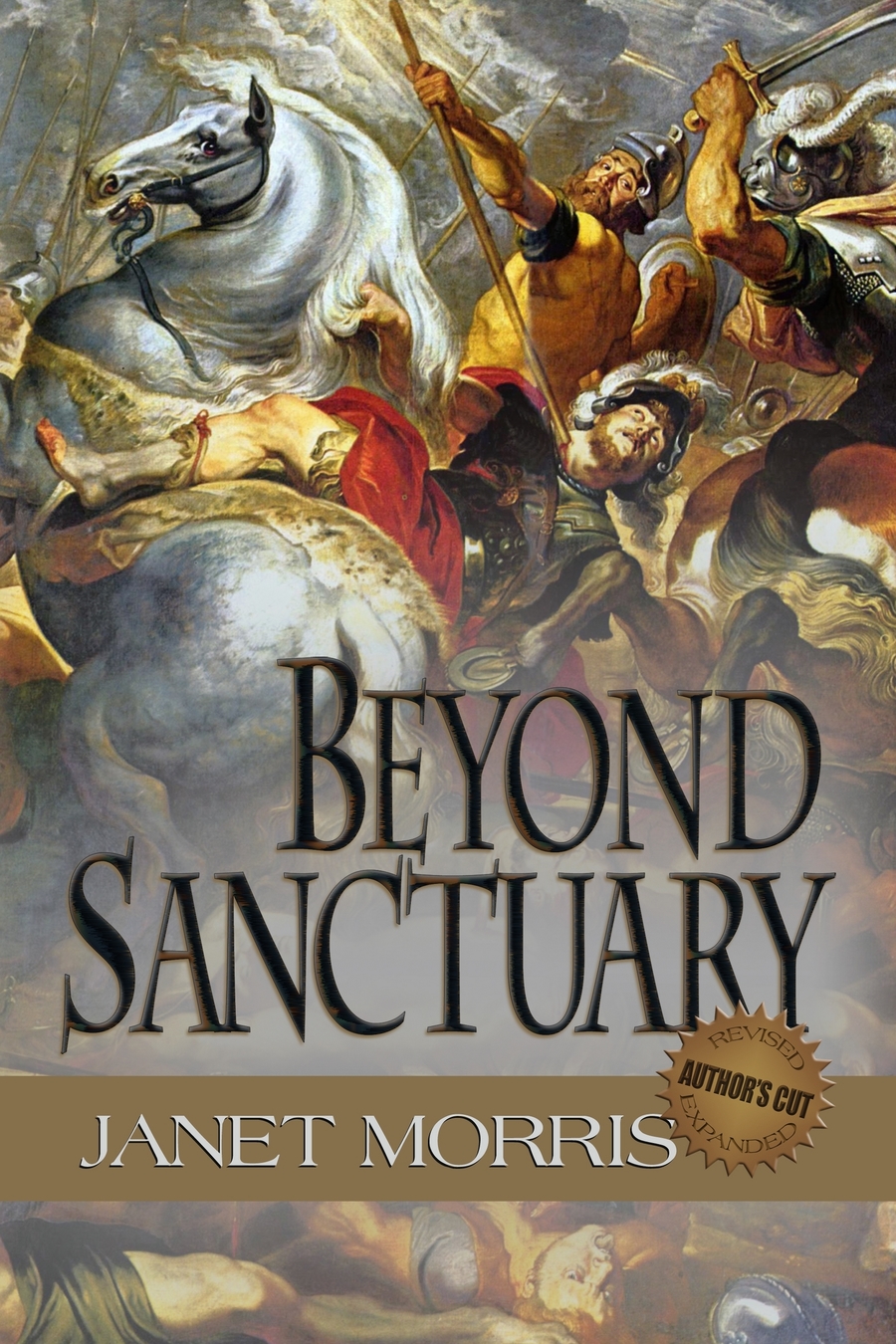
Janet Morris’s Beyond Sanctuary is the first volume in a trilogy that includes Beyond the Veil and Beyond Wizardwall, and the events in this trilogy take place before The Sacred Band, the magnificent novel by Janet and her husband Chris, which I previously reviewed here for Black Gate.

Beyond Sanctuary is a complex novel and truly literary heroic fantasy. It is textured and layered, subtle at times, and yet always powerful. Like the best of all literary fiction, it has emotional depth and human drama, subtext and a philosophy that is expressed through the thoughts, words, and deeds of its characters, and not through narrative lecture and dissertation that slows the pace of narrative thrust.

…

Read More Read More

Vintage Treasures: The Last Planet by Andre Norton

Vintage Treasures: The Last Planet by Andre Norton

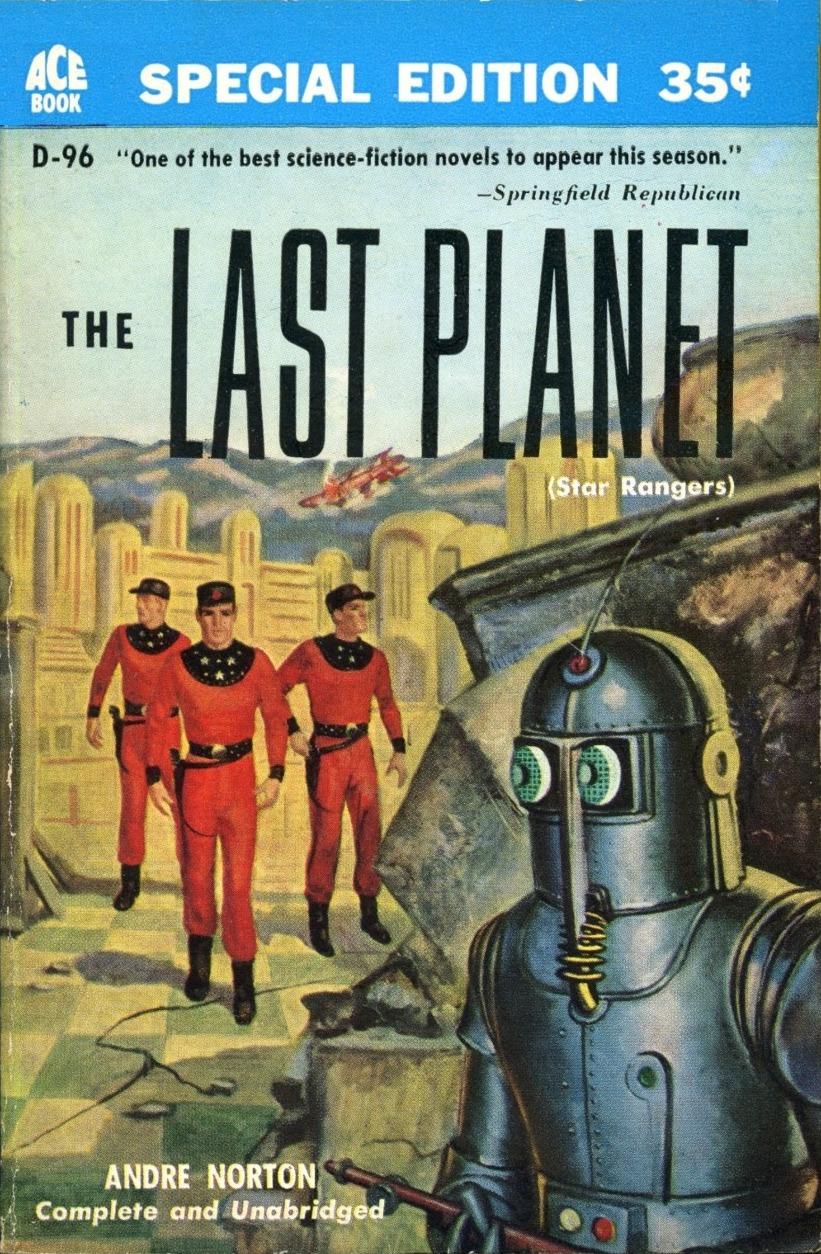
The Last Planet-smallAndre Norton’s The Last Planet may have been the first Ace Double I ever saw.

Memory is a tricky thing, so I can’t really be sure. It may have been Daybreak — 2250, which sat enticingly in the spinner racks of the St. Francis Junior High School library in Halifax, Nova Scotia. But The Last Planet was almost certainly the first Ace Double I laid eyes on which I was aware was an Ace Double, with a sister book on the flip side and everything (in this case, Alan E. Nourse’s futuristic thriller A Man Obsessed.)

By then, I had begun to build my own collection of SF paperbacks and this fascinating relic of early SF adventure helped pull me towards the entire Ace Double line, like a shipwrecked sailor drawn towards a desert island. A big, lush desert island with a gorgeous library.

It’s Harry Barton’s classic cover for the 1955 paperback that really did it for me. I’ve never read The Last Planet — it took me years just to track down a copy — but nonetheless it has loomed large in my imagination for decades. Three stalwart space explorers, walking through the ruins of an alien city as their crashed spacecraft cools in the foothills behind them, about to stumble upon a metal robot, hiding in the rubble and clutching a rudimentary weapon.

How could it not? For me, at least, it’s one of the signature works of 20th Century SF artwork.

In the years that I searched for a copy, I imagined the story of those three explorers. Would they shoot the robot? Was it friendly? Could be friendly, with those big google-eyes and curious gaze. Those red-shirted explorers looked awfully trigger happy though, with their steely gazes and twitchy hands on their futuristic sidearms. Lords knows, you can’t blame a redshirt for being trigger-happy on an away mission.

…

Read More Read More

Monster Mash-up: Elizabeth Hand’s Pandora’s Bride

Monster Mash-up: Elizabeth Hand’s Pandora’s Bride

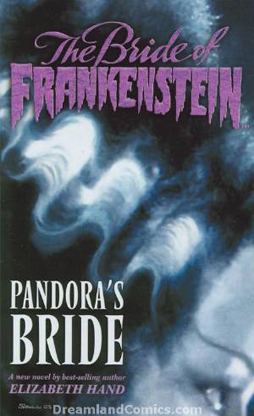
Pandora's BrideFebruary is Women in Horror Month, and with that in mind I’d like to look at an interesting oddity. In 2005, Dark Horse Books, a then-recently launched imprint of Dark Horse Comics, announced they’d be publishing a set of tie-in novels. These novels wouldn’t tie into the big modern-day entertainment franchises that Dark Horse Comics was known for working with, though. Instead, they’d each present the further adventures of one of the famous Universal Studios horror characters. I happened to stumble across one a little while ago: Pandora’s Bride by Elizabeth Hand. Hand is a fine writer and I was happy to find that she’d taken her assignment here and run with it. Ostensibly, the book’s about the adventures of “the Bride of Frankenstein,” but Hand’s cleverly and amusingly told a story about several other remarkable film characters as well, playing with some of the great works of German Expressionist film and of Fritz Lang in particular.

Her main character, though, is the Bride — is there any other film character that’s made such an impact, become such an icon, with so little actual screen time? The Bride doesn’t appear until the final few minutes of the 1935 movie named for her; and then almost all she does is point and scream. Yet nearly everyone knows who she is. Her image is unmistakeable. Obviously, that’s a function of striking visual design. It may help that Elsa Lanchester, who played both the Bride and Mary Shelley (in a prologue to the film’s main action), ended up settling in to a career filled mostly with character roles and few other starring appearances. But for whatever reason, the Bride exists as perhaps the most literally iconic of movie roles: an image, with no character arc attached.

So Hand’s first task in this novel would be to find a story for the Bride. A prolific novelist and short story writer, Hand’s won all sorts of awards: a Nebula for her short story “Echo,” International Horror Guild Awards in 2001 for Best Long Form work and in 2002 for Best Intermediate Form, two World Fantasy Awards for Best Novella and one for Best Collection, and both a Tiptree Award and a Mythopoeic Award for her 1994 novel Waking the Moon. She’s an excellent writer, and specifically a horror writer, as well as a veteran of tie-in fiction — in addition to writing a number of movie novelisations, she’s produced four Boba Fett children’s books for Lucasfilm. (And perhaps Boba Fett before the prequel films and the Extended Universe would have been the only other character remotely close to the purely-iconic nature of the Bride; but then Fett had appeared in a cartoon segment in a TV special even before his first appearance in Empire, as well as newspaper comic strips.) All told, Hand was a good choice for the job.

…

Read More Read More

New Treasures: Broken Homes by Ben Aaronovitch

New Treasures: Broken Homes by Ben Aaronovitch

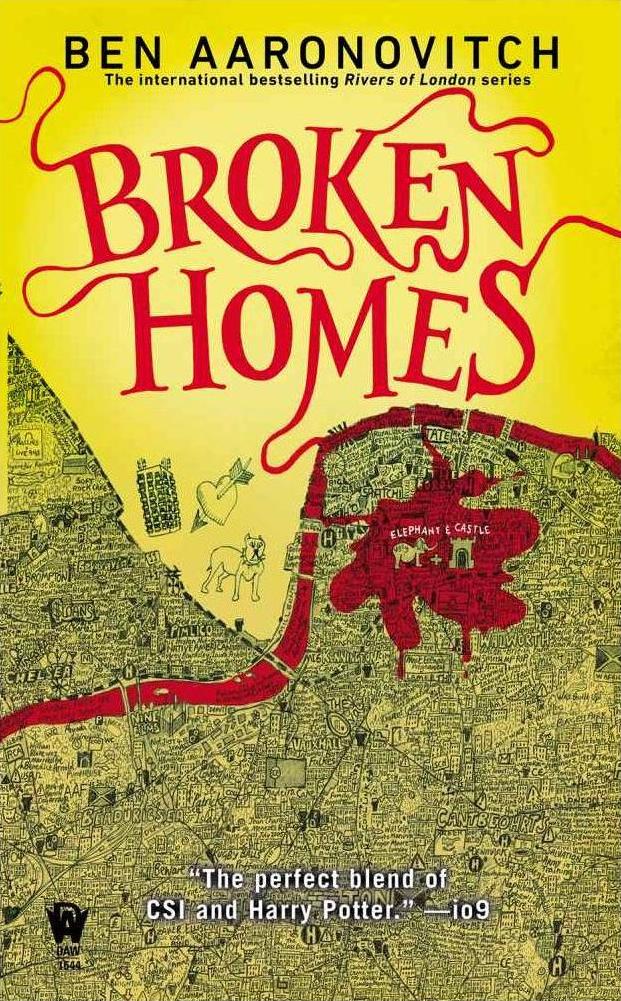
Broken Homes-smallBen Aaronovitch’s Rivers of London novels are one of my favorite new series. io9 calls them “The perfect blend of CSI and Harry Potter.” I’ve never watched CSI, but I imagine that can’t be that far off. I think Diana Gabaldon is very close when she describes them as “What would happen if Harry Potter grew up and joined the Fuzz.”

Even those quotes don’t do justice to how funny these novels are. They’re tightly plotted, too; just the right mix of humor, suspense, and genuine character development. The latest in the series, Broken Homes, just landed this month. Do yourself a favor and check it out.

My name is Peter Grant, and I am a keeper of the secret flame — whatever that is.

Truth be told, there’s a lot I still don’t know. My superior Nightingale, previously the last of England’s wizardly governmental force, is trying to teach me proper schooling for a magician’s apprentice. But even he doesn’t have all the answers. Mostly I’m just a constable sworn to enforce the Queen’s Peace, with the occasional help from some unusual friends and a well-placed fire blast. With the new year, I have three main objectives, a) pass the detective exam so I can officially become a DC, b) work out what the hell my relationship with Lesley Mai, an old friend from the force and now fellow apprentice, is supposed to be, and most importantly, c) get through the year without destroying a major landmark.

Two out of three isn’t bad, right?

A mutilated body in Crawley means another murderer is on the loose. The prime suspect is one Robert Weil, who may either be a common serial killer or an associate of the twisted magician known as the Faceless Man — a man whose previous encounters I’ve barely survived.

…

Read More Read More