Browsed by
Category: Books

A Point of Transition: Andre Norton’s Witch World
A Point of Transition: Andre Norton’s Witch World

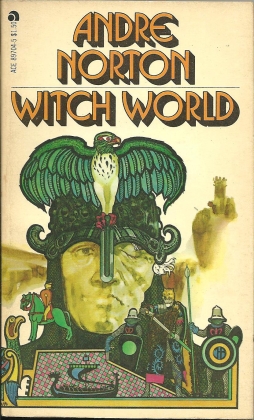
Witch WorldSomehow, when I was growing up, I missed Witch World. Some of the books in the series were always around, as I remember it, in my local libraries and bookstores, but I don’t think I ever read one — if only because I always try to read a series in order, and finding Witch World itself was not always easy. Somewhere along the line, though, I picked up a used copy, and set it aside to be read later. As it happens, there’s been a certain amount of talk about Andre Norton lately, here and elsewhere, and that prompted me to finally turn to the original Witch World novel, and see what I could make of it.

The book was first published in 1963 and ultimately gave rise to well over two dozen sequels, some of them collaborations and some written by other hands. That’s an incredible commercial success, particularly given that this was before the real establishment of fantasy as a well-defined commercial genre. Reading the book now, you can see in it much of what came later; but then also elements of what came before. So to me it feels like a kind of transitional or perhaps transformational work, a significant influence on the development of the genre as a genre.

The story begins with ex-colonel Simon Tregarth on the run from a criminal organisation. He escapes them through the Siege Perilous, a gateway which, Tregarth is promised, will lead him to a new world that will perfectly suit his abilities and desires. He ends up in the Witch World. Largely medieval in its social structure and technology — though there are elements of super-science present as well — it’s also home to magic, psychic powers controlled by the witches of the land of Estcarp, who’re seeking to maintain their realm against their aggressive neighbours. Most aggressive are the mysterious folk of Kolder, who have conquered the nearby island of Gorm with unknowable powers of their own. Tregarth signs on with Estcarp and the book follows him as he and the witches go to war with Kolder, throw their enemies back, and learn something about who it is they fight.
…

Read More Read More

Vintage Treasures: Hell’s Cartographers, edited by Brian W. Aldiss and Harry Harrison

Vintage Treasures: Hell’s Cartographers, edited by Brian W. Aldiss and Harry Harrison

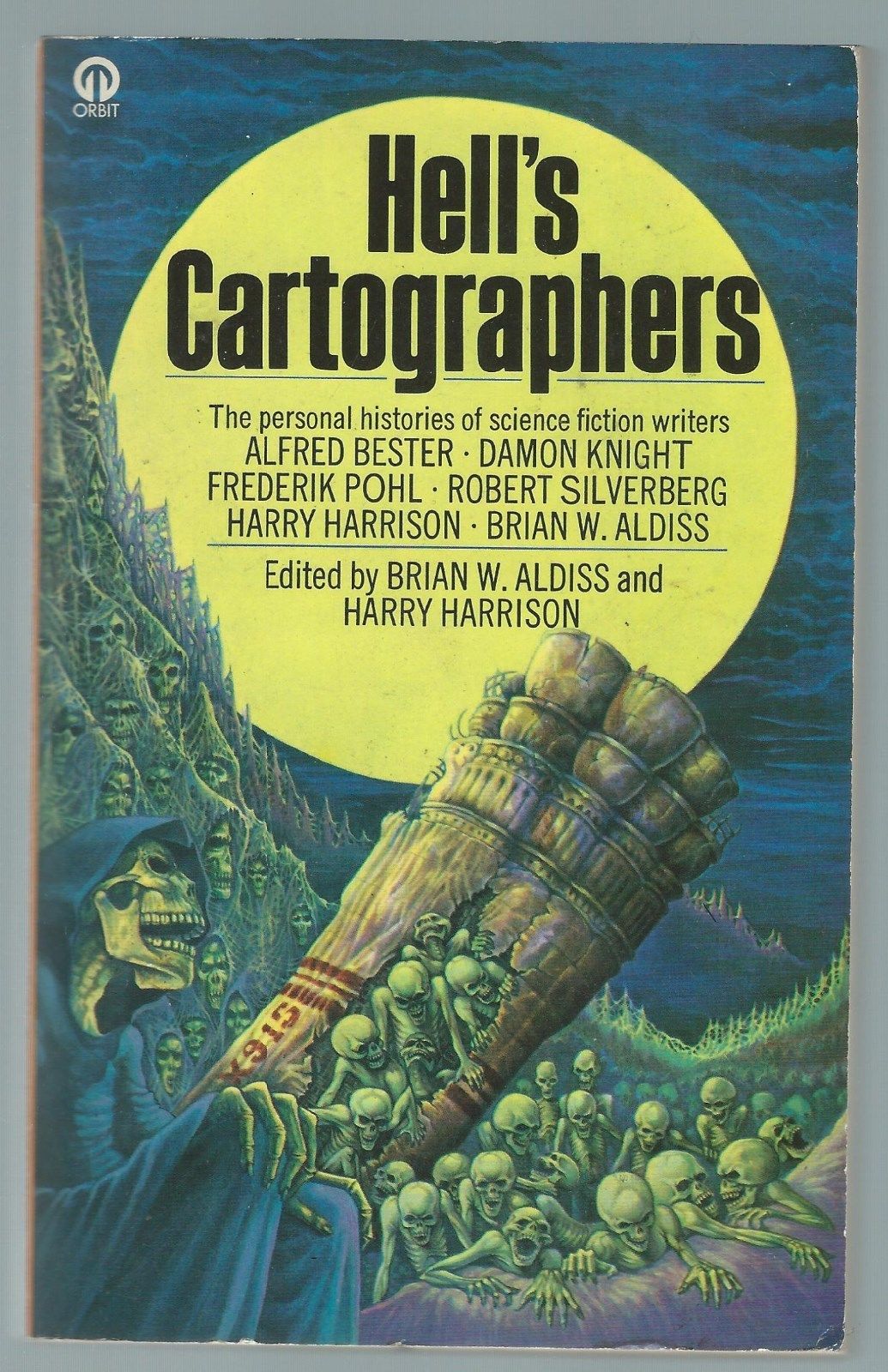
Hell's Cartographers-smallI’ve been enjoying writing my ongoing series on the Ballantine Best of… books. It’s nice to be able to celebrate all those classic SF and fantasy writers, sure, but it’s also an excuse to talk about how I discovered each of them and what their books meant to me personally.

I don’t think I’m unique in this. SFF readers love to talk about the favorite authors of their youth. Look at the comment threads for any of my Ballantine articles — it’s just a bunch of us old fans yakking about the good old days (and yelling at those kids with their Kindles to get off our lawn).

In truth, this is a long-established tradition. Respected, even. Lots of SF authors did it. Asimov and Damon Knight did it, in Before the Golden Age and Science Fiction of the 30s. So did Brian Aldiss, in Billion Year Spree, and Sam Moskowitz, in Seekers of Tomorrow, Under the Moons of Mars, and just about every book he ever wrote. Perhaps most famously, Kingsley Amis did it in New Maps Of Hell, his celebrated survey of science fiction from 1960.

But probably my favorite example is Hell’s Cartographers, a marvelous collection of “personal histories” from six top science fiction writers: Alfred Bester, Damon Knight, Frederik Pohl, Robert Silverberg, Harry Harrison, and Brian Aldiss. This book is packed with countless anecdotes, fascinating references to SF magazines and ground-breaking stories, and tales of awkward adolescences. And for those of us interested in the history of the field, there is treasure on every page.

There are numerous quotes I could tease you with, but I’ll limit myself to this one, from Damon Knight’s entry, “Knight Piece,” which effectively communicates just how hapless these accomplished young men were around women.

…

Read More Read More

When is Writing Like a Magic Trick?

When is Writing Like a Magic Trick?

Penn & TellerSimple. When giving the explanation ruins things. When what you don’t tell is as important as what you do tell. Or, at times, when it’s who you tell, not what you tell. After all, magicians’ assistants generally know a great deal more about the trick than the audience does – though there might be things even the assistants don’t know, at least not at first.

Most exposition deals with items and details known to the characters, which then have to be conveyed to the readers. What about things the characters don’t know, but the readers must? When we talk about exposition, and giving explanations, along with the how and the when, we also have to consider the who.

Writers are like magicians in this sense – we’ve got to keep our secrets, at least until the right moment when all (ahem) will be revealed. But here’s what makes our lives trickier than those of stage magicians: our readers are both the audience and the assistants. They’re watching the trick unfold, even while they’re participating in the unfolding.

Probably the most obvious example of this is the use of dramatic irony. You know, when the audience knows something the other characters in the play don’t know, because we’ve witnessed action or events that took place when they were off stage. Plays and movies manage this by, well, moving the other characters off stage – or by soliloquies if it’s Shakespeare (think of the beginning of Richard III, where he tells us what he’s going to do, and the other characters don’t know).

[Aside: ever notice that it’s always the bad guy who tells you his plans? That’s because it’s the bad guys who have plans. Good guys are just minding their own business until the bad guy acts up. I’m sure there’s a language in which “good guy” means “has no particular plans.”]

…

Read More Read More

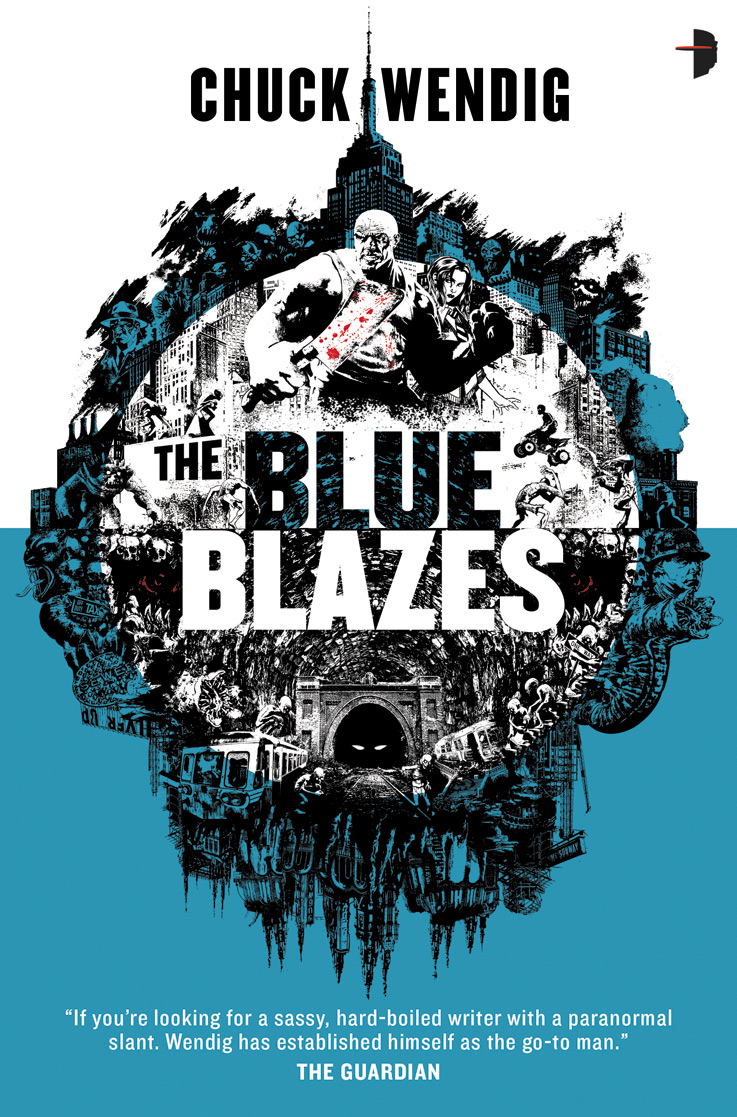
New Treasures: The Blue Blazes by Chuck Wendig

New Treasures: The Blue Blazes by Chuck Wendig

The Blue Blazes-smallAnd so we continue our celebration of the latest crop of fabulous new paperbacks from Angry Robot.

Angry Robot is rapidly becoming one of my favorite publishers. Sure, we highlight a lot of great independent publishers here — folks like Haffner Press, Night Shade, Prime Books, Paizo, Pyr, Orbit, Titan, Solaris, and many others — but most of them concentrate on hardcovers and trade paperbacks, where profit margins are much higher. The low-margin mass market paperback is a much riskier proposition these days, especially when you’re taking a risk on new writers without an established audience.

But we still love paperbacks here at Black Gate. We love the way they’re packaged, and even the way they smell. And we especially love publishers willing to take chances on new writers. And those paperback publishers willing to take chances on gonzo, edgy, hugely original ideas from daring new writers… we just want to take them home and snuggle them. And make them a warm batch of chocolate chip cookies.

The Blue Blazes is the third Chuck Wendig novel from Angry Robot. They’ve also published Blackbirds and Mockingbird, as well as the upcoming The Cormorant. But it was The Blue Blazes that really grabbed my attention last time I was at Barnes & Noble. Sure, the marketing text on the back was intriguing:

Meet Mookie Pearl. Criminal underworld? He runs in it. Supernatural underworld? He hunts in it. Nothing stops Mookie when he’s on the job. But when his daughter takes up arms and opposes him, something’s gotta give…

But it was the blurb from Empire State author Adam Christopher that really sealed the deal:

The Blue Blazes is exactly my kind of supernatural mob crime novel: dark and visceral, with an everyman hero to root for and Lovecraftian god-horror to keep you awake at night… this is the good stuff, right here.

…

Read More Read More

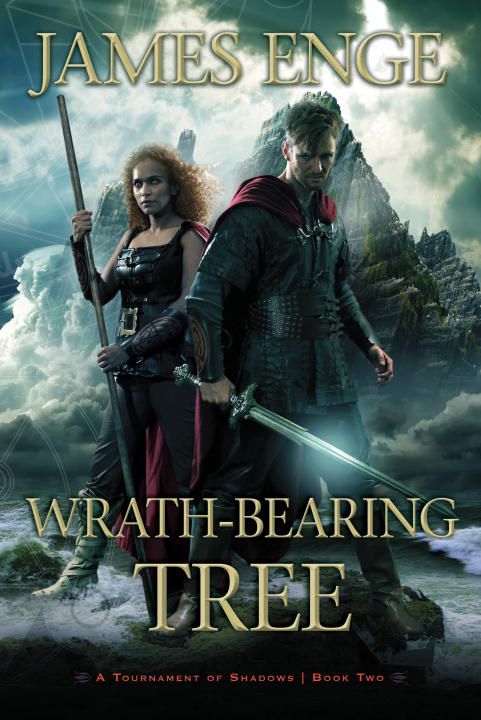
Wrath-Bearing Tree by James Enge

Wrath-Bearing Tree by James Enge

The first time I saw a James Enge novel on the shelf of my local bookstore, I broke into a little dance of jubilation. I’d been reading Enge’s short stories about Morlock the Maker in the pages of Black Gate — this was when BG had literal paper pages — and it was news to me that Enge had made the leap from short fiction to novels.
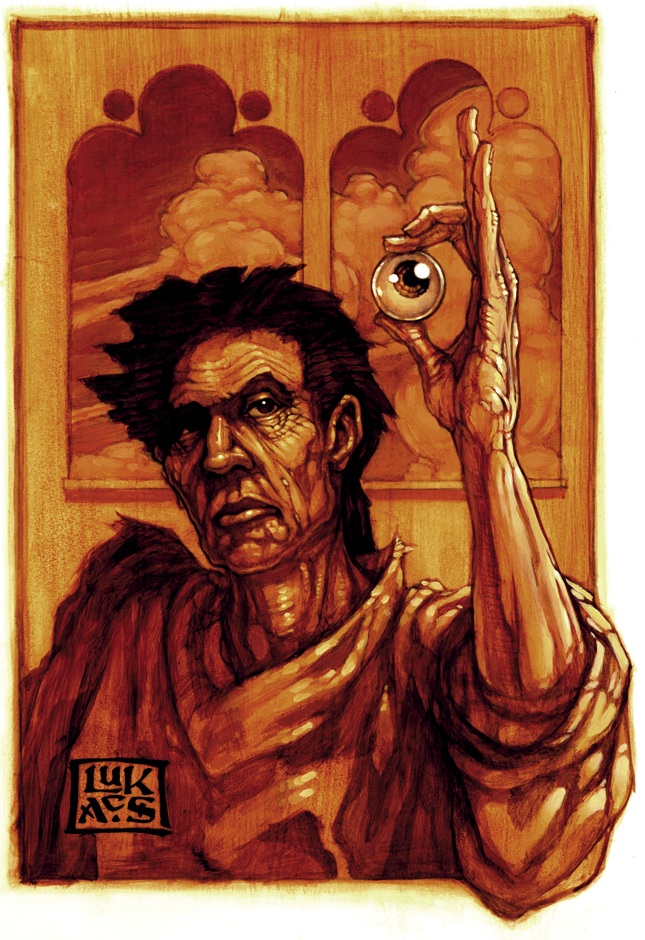
The blurbs on Enge’s books all say some variation on this theme: you will find no other character in fantasy literature, or maybe in literature generally, who is like Morlock the Maker. He’s a traumatized combat veteran who’s still one of his world’s great ass-kickers, yet he’s also an enthusiastically geeky mad scientist. He’s a cynic who will risk all he has to protect innocence where he finds it. He’s wickedly funny, in fewer words of dialogue than should really be possible. Read around in Morlock’s world a while, and you feel pretty soon like you know him, but you can never guess what he’ll do next. A Morlock novel! Could anything be better?

Over the next few years, Enge followed Blood of Ambrose with This Crooked Way and The Wolf Age, and it turned out the one thing better than a Morlock novel was a whole trilogy of Morlock novels.
I loved the cranky old Morlock, the character whose curmudgeonliness sometimes verged on becoming a superpower, so I am still getting used to Enge’s new Tournament of Shadows trilogy about Morlock’s origin story, which began with A Guile of Dragons and now continues with Wrath-Bearing Tree. As a young man, our hero is every bit as odd, unpredictable, noble, hilarious, tragic, clear-eyed, and difficult as his future self, but he hasn’t yet put the damage on and become the ugly old man we loved in the short stories that became This Crooked Way.

…

Read More Read More

Who Took the Flowers Out of my Prose?

Who Took the Flowers Out of my Prose?

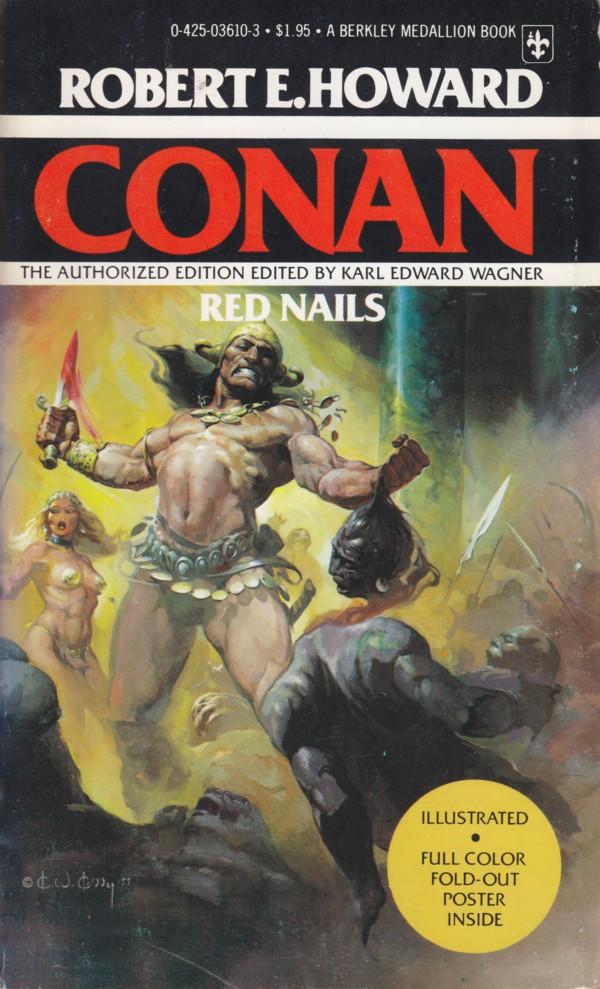
Conan Red Nails-smallOver here in England, we have a shop called ‘Poundland,’ which is pretty much what it says on the tin: a shop where everything costs a single pound, and for a boy of about ten, it was a dream come true. All the flimsy toys, dodgy sweets and budget DVDs my little mind could conjure — there was a book section as well, but it mostly consisted of either absolute rubbish or books about Simon Cowell.

But one particular day, when I was about ten, I happened to spot a diamond hidden amongst the rubbish: an anthology of stories by Robert E Howard. I’d never heard of him at the time, but the book had Conan in the title.

I had heard of Conan. My brief experience with the two movies told me I liked big swords, big monsters, and Arnold Schwarzenegger as much as the next ten-year-old, so I decided to buy it. On the train ride home, I found myself introduced to a new, vivid, and lively world, one of blood and savagery, of death and shadow, of lurking devils and skulking gods. I was exposed to a land of witchcraft, sorcerers, devils and demons, nations torn apart by brooding crusaders kings and swashbuckling puritans. It was the best train ride of my life.

“That’s all well and good, Connor,” you might say, “but what’s this got to do with prose?” Show a little patience; I’m getting to that.

What enchanted me most throughout these adventures was the prose; it just had its own nature and flavor, its own distinguished way of presenting things. I’d never encountered anything like it before; it was poetic, haunting, powerful. It lent every blow a sort of impact, made every monster tangible. Even the heroes — too powerful, too fast, too smart to ever be real — it made them come alive.

And in fantasy, where a key aspect is immersion, this is an impressive achievement. I touched upon this not too long ago with my Fantasy Face-off article; noting that prose dictates the way we see the world on the page and, therefore, how vivid and real it is. Prose overshadows flaws when it’s successful and highlights them when it’s not.

But what I didn’t mention was how prose can amplify the tone of the book. Fritz Leiber’s prose is rather light, reflecting the comic, satirical feel of his books. Howard’s is fast, rip-roaring and powerful, much like the pacing of his books and the characters within them. Tolkien’s prose, though it can sometimes be lacking, feels reminiscent of a fairy tale.

…

Read More Read More

The Other Appendix N

The Other Appendix N

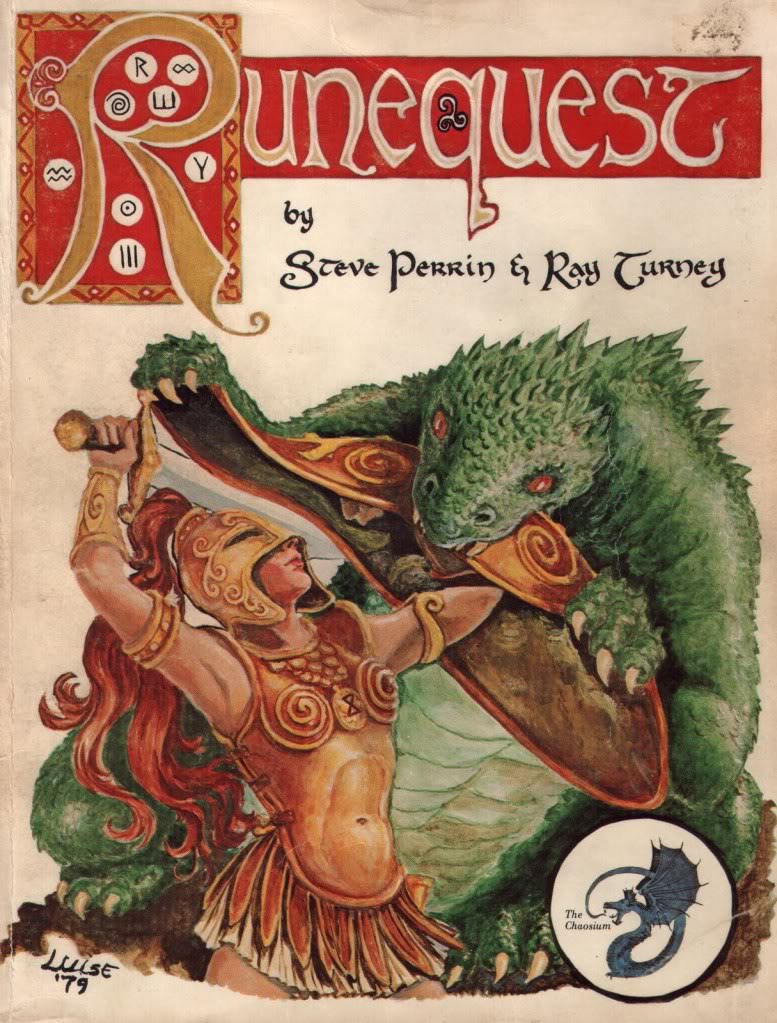
runequest2coverThe death of Gary Gygax, co-creator of Dungeons & Dragons and one of the fathers of the roleplaying game, provided added impetus to the already-extant (in 2008) re-evaluation and appreciation of what have come to be popularly known as “old school” roleplaying games. An important part of that re-evaluation centers on the literary origins of RPGs, particularly the books that fired the imaginations of their designers. Gygax helpfully provided us with a list of the authors who were, in his words, “of particular inspiration” to him. This list is now known quite widely simply as “Appendix N,” since it first appeared as just that, a lettered appendix at the back of his Dungeon Masters Guide (1979).

Appendix N has been much discussed over the last half-decade, becoming a significant talking point for those interested in the origins of the hobby of roleplaying. For example, there is much debate regarding the extent to which D&D truly captures the spirit of the books Gygax presented as being “the most immediate influences.” So energetic has the discussion of Appendix N become that it has not only spilled over into the wider world of fantasy (including this very site), but it has led to a mini-revival in pulp fantasy, with authors such as Abraham Merritt, Fletcher Pratt, and Margaret St. Clair (to cite but three on Gygax’s list) receiving more attention in recent years than they probably have in decades. Within the roleplaying hobby itself, Appendix N is well on its way to becoming a “brand,” with at least one RPG, Goodman Games’s Dungeon Crawl Classics, heavily promoting its own adherence to Gygax’s canon as one of its major selling points.

The creators of other early roleplaying games were usually not as forthcoming in acknowledging their literary inspirations, though there are, of course, exceptions, such as Steve Perrin and Ray Turney’s RuneQuest. First published in 1978, RuneQuest is, in its own words, “a departure from most FRP (as they are abbreviated) games” in that it is “tied to a particular world, Glorantha.” The brainchild of Greg Stafford, Glorantha is a fantasy world evocative of ancient history and myth and one of the most enduring settings in the hobby. For that reason, Glorantha is also frequently described as being both complex and idiosyncratic to the point of being inaccessible to newcomers.

I do not share this judgment of Glorantha, but I understand why some might make this claim. Fortunately, its designers offered some insight into their own inspirations in a bibliography that they coincidentally also labeled “Appendix N,” a full year before Gygax would use the same designation. Like Gygax’s own list, it is not exhaustive, but only “contains those [books] we felt exemplary or exceptional.” RuneQuest‘s Appendix N one-ups Gygax, in my opinion, by being an annotated bibliography, which provides additional insight into not just what books and authors were inspirational, but why.

…

Read More Read More

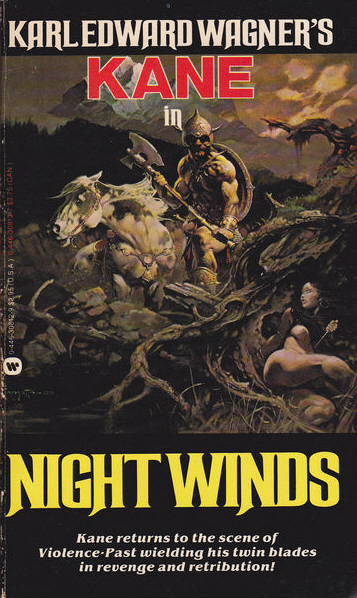
Night Winds by Karl Edward Wagner

Night Winds by Karl Edward Wagner

Night Winds-small

“He’s evil incarnate! Stay away from him!”
— from Darkness Weaves

Long before the coiners of the term grimdark were born, Karl Edward Wagner was creating some of the most aggressively unheroic fantasy. There had always been a dark current to swords & sorcery from the genre’s beginnings in the 1930s with Robert E. Howard. But not even Michael Moorcock’s 1960s antiheroes prepared S&S fans for Wagner’s 1971 novel Darkness Weaves and its amoral mystic swordsman, Kane.

Six feet tall and “three hundred pounds of bone, sinew, and muscle,” Kane is cursed to live forever for rebelling against the god who created him. Peering out from his fiery red hair and beard, his blues eyes blaze with a killer’s fury — a warning to all who cross his path. Though a violent death can free him from his accursed immortality, he is determined to survive.

Over the course of three novels and seventeen stories, Kane plots and murders his way across continents and centuries. He is by turns a mighty sorcerer, a bandit lord and a lone wanderer. While it’s explicitly stated in one story that Kane is “seldom needlessly cruel,” he’s seldom sympathetic.

It’s in the two collections of short stories, Death Angel’s Shadow (which I reviewed last year at my site) and Night Winds, that Wagner crafted his greatest swords & sorcery. His novels, Bloodstone, Dark Crusade, and Darkness Weaves, all have their moments, but they don’t have the short, sharp, shock of the stories. While the books are memorably epic, the stories are fast-paced nightmares.

…

Read More Read More

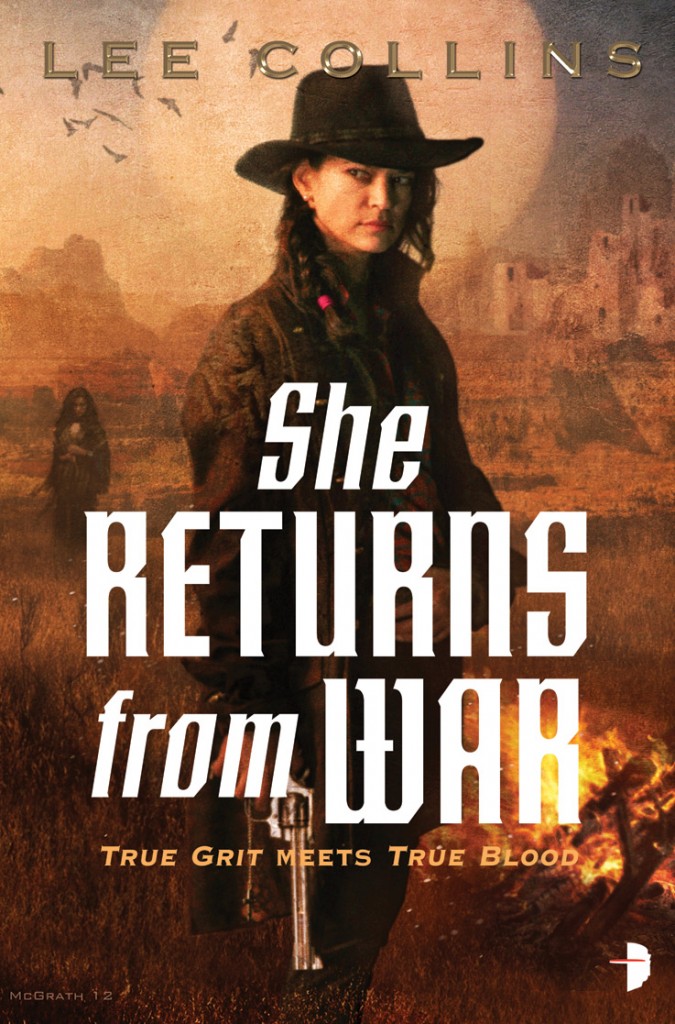
New Treasures: She Returns From War by Lee Collins

New Treasures: She Returns From War by Lee Collins

She Returns from War-smallI love Angry Robot books. I don’t pay much attention to publishers when I’m at the bookstore. But when I’m home, and my purchases are stacked by my big green chair, it’s hard not to notice that half of them have the Angry Robot logo on the spine.

I think they’re just in tune with the kind of books I’m most interested in. Which is weird, because I’m not exactly sure what they are myself. But I know they involve great cover art, intriguing settings, and women in cowboy hats. This week, anyway.

She Returns From War is the sequel to the supernatural western The Dead of Winter, released last October. The tag line is True Grit Meets True Blood, which is clever. Have you noticed this burgeoning mini-trend of western-horror-fantasies, including Guy Adams’s The Good The Bad and the Infernal, Mercedes Lackey & Rosemary Edghill’s Dead Reckoning, and the Bloodlands novels of Christine Cody? Apparently it’s a thing. See? We’re paying attention.

Four years after the horrific events in Leadville, a young woman from England, Victoria Dawes, sets into motion a series of events that will lead Cora and herself out into the New Mexico desert in pursuit of Anaba, a Navajo witch bent on taking revenge for the atrocities committed against her people.

She Returns From War was published by Angry Robot on January 29, 2013. It is 361 pages, priced at $7.99 in paperback and $6.99 for the digital edition.

The recent coverage Angry Robot titles we’ve covered were The Crown of the Blood by Gav Thorpe, The Lives of Tao by Wesley Chu, The Bookman Histories by Lavie Tidhar, and The Corpse-Rat King, by Lee Battersby.

See all of our recent New Treasures here.

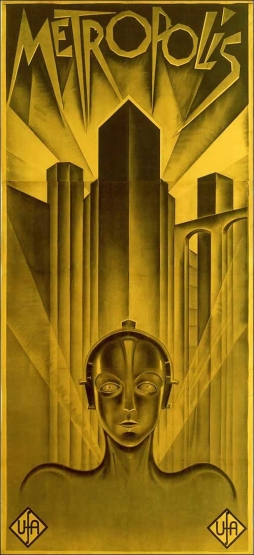
Shock of the New: Thea von Harbou, Fritz Lang, and Metropolis

Shock of the New: Thea von Harbou, Fritz Lang, and Metropolis

MetropolisI’ve always had a fascination with Frtiz Lang’s Metropolis that I’ve never been able to explain. Obviously, it’s a visually powerful film and a tremendous influence on later films and later sf. But that imaginative magnificence seemed almost disconnected from the actual story of the movie. To a large extent, that’s because the Metropolis I knew for most of my life was a greatly-reduced version of Lang’s film. On its premiere in 1927, the movie was 4189 metres (13,823 feet) long, and ran 153 minutes; it was subsequently edited heavily, down to about 3100 to 3200 metres, without the input of husband-and-wife team of director Fritz Lang and scriptwriter Thea von Harbou. For decades, only short versions of Metropolis were believed to have survived, with major subplots and characters missing from the movie. A 2002 re-edit from rediscovered footage recreated something close to the original 1927 film and a 2010 version, based on a newly-recovered negative of the film, finally returned Metropolis to Lang and von Harbou’s original vision. Still, even seeing the whole thing, I have that sense of a kind of gap between the literal content of the film and what might be called its latent content — the mythic feel of the world it imagines.

I didn’t entirely understand that gap until I read Thea von Harbou’s novel of the story. Published in 1925, the book clarifies a number of things: elements of the plot, the character motivation, and the symbolism. The use of the pentacle, the presence of a cathedral, the imagery of Babel and Apocalypse, the vision of Moloch superimposed over Metropolis’s machines, and especially the seemingly self-destructive urge of Joh Frederson, “the Master of Metropolis,” all become clearer. At the same time, I was conscious that I was reading the book with memory of the film always present. It seems to me that the two things, book and movie, work together to make a rich and full experience out of a distinctive fusing of science fiction and the gothic.

It has to be said that there’s been some difference of opinions about the book. Critic Holger Bachmann describes the novel as “a disparate, trivialized collection of motifs from various literary sources,” and refers to its “trivial romanticism.” John Clute, in the entry on von Harbou in the SF Encyclopedia, states that novel doesn’t have much of the film’s “symbolic force.” Personally, I tend to agree with Gary Westfahl, who stated that “von Harbou excelled in the one aspect of literary craftsmanship that critics tend to ignore because it is utterly beyond their ability to comprehend: the power of myth-making.” The sense of latent power I felt in the film of Metropolis has to do with its evocation of myth, both old and new, and I think that’s more clearly present in the book. It’s not a technical triumph like the film, but it’s not to be overlooked.

…

Read More Read More