Blogging Sax Rohmer’s The Mask of Fu Manchu – Part Two
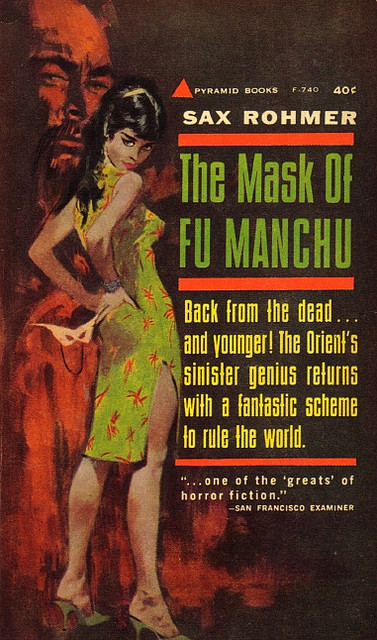 Sax Rohmer’s The Mask of Fu Manchu was originally serialized in Collier’s from May 7 to July 23, 1932. It was published in book form later that year by Doubleday in the US and the following year by Cassell in the UK. It became the most successful book in the series thanks to MGM’s cult classic film version, starring Boris Karloff and Myrna Loy, that made it into theaters later that same year.
The second part of the book sees Sir Denis Nayland Smith of British Intelligence, the renowned archaeologist Sir Lionel Barton, his foreman (and the book’s narrator) Shan Greville, and the expedition’s photographer Rima Barton (Sir Lionel’s niece and Shan’s fiancée) make their way from Ispahan to Cairo, where they are reunited with Dr. Petrie, Sir Denis’s oldest friend (and the narrator of the first three books in the series). Believing that Dr. Fu Manchu is behind the El Mokanna uprising that has already spread to Egypt, Petrie is relieved that his wife is safely visiting her in-laws in Surrey at present and out of harm’s way.
While Petrie drives the group into town, an incident occurs where it appears Petrie has struck a pedestrian. An angry mob, resentful of the British colonialists, soon gathers. While Petrie examines the victim and concludes the man had been dead three hours before his corpse was pushed in front of Petrie’s car, Sir Lionel is nearly abducted. The aim of the accident was to get at the large trunk he carries with him, containing the relics of El Mokanna’s tomb from his recent excavation in Persia. The timely arrival of the colonial police is all that saves them from the enraged mob.


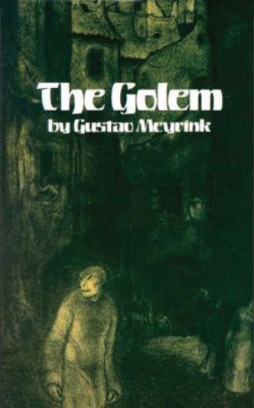 The first thing I feel I have to say about Gustav Meyrink’s novel, The Golem, is that it’s intensely, thrillingly strange. Dreamlike, elliptical, informed by theosophical and occult symbols, it wrong-foots you; nothing in it develops the way you’d expect, not in terms of character or plot or imagery. And yet that strangeness feels almost like a side-effect, a byproduct of its insistence on its themes, on its vision, on its focus on the reality of Prague and on whatever it is that lies beyond that reality. Perhaps the strangest thing about the book, published in installments in 1913 and 14 and published as a whole in 1915, was that this odd esoteric horror story was also tremendously popular in its day.