Browsed by
Category: Blog Entry

December Short Story Roundup

December Short Story Roundup

Magazine of Fantasy and Science Fiction Jan-Feb 2015-smallNot every month brings me a great big stack of stories to review. Which is fine. I mean, it’s not like we all don’t have a ton of things to do during December. Still, I did find three stories to tell you about, one them quite good.

Let’s start with the highlight of the December stories, “Prisoner of Pandarius,” by Matthew Hughes in The Magazine of Fantasy & Science Fiction (January/February 2015). It’s a tale of revenge, thievery, and guild politics starring Raffalon, a thief with a ready wit, an overriding sense of self-preservation, and a name more than a little reminiscent of E A Hornung’s famous gentleman thief, Raffles.

Hughes makes no bones about being a fan of, and inspired by, Jack Vance’s Dying Earth. On his site he refers to Raffalon as “my archetypal Dying-Earthish thief.” There’s certainly a Vancian sensibility to the story’s trappings, e.g. a spell with the name “Izzizitz’s Matchless Latch” and the thieves’ organization’s official name of “The Ancient and Honorable Guild of Purloiners and Purveyors.” I’m a sucker for Jack Vance-inspired stories, provided they’re done well. I’m quite happy to write that “Prisoner of Pandarius” is one of those.

My first encounter with Hughes’s fiction was just this past September, also on the pages of F&SF (Sept/Oct 2014). “Avianca’s Bezel,” which I like very much, also features Raffalon. Therein, he learns the hard way the problems attendant with working for wizards.

In the new story, his decision to never again work for a wizard is put to the test when he is defrauded by the Purveyors — i.e. fences — of his guild. An old associate, the sorcerer Cascor, approaches him with a job offer and he reconsiders the hard line he’d previously taken.
Read More Read More

The Barbarism of Bullfighting and Archaic Diction in L. Sprague de Camp’s “The Rug and the Bull”

The Barbarism of Bullfighting and Archaic Diction in L. Sprague de Camp’s “The Rug and the Bull”

1974 Paperback edition. Cover art by Frank Frazetta.

One of the many freedoms of Sword and Sorcery, it seems to me, is that it enables the adoption of a world that allows the writer to comment on just about anything on which one would want. One of Robert E. Howard’s purposes in the construction of his own Hyboria was to create a conglomerate of cultures, no matter how anachronistic their juxtapositions, so that his hero Conan might have any kind of adventure that Howard might think up. Whereas for previous tales, Howard perhaps had to construct different heroes for different historical epochs (Bran Mak Morn for the Celtic Picts, Solomon Kane for the sixteenth century, Kull for Atlantis), in the Hyborian Age Conan might be a thief, a soldier, a pirate, and ultimately a king, his adventures all the while providing Howard with powerful commentary on “civilization.”

So, too, writers after Howard have utilized this purpose. Dave Sim, through his creation of Cerebus the Aardvark, begins by commenting on the Sword and Sorcery genre itself (as well as the mainstream comic books of Sim’s time) and then goes on to explore High Society, Church & State, marriage – and this last, in Jaka’s Story, is as far as my reading has taken me, but I understand that Sim is so far reaching in his exploration of topics that in a much later volume he even explores the life and works of Ernest Hemingway through Cerebus taking on the position of Hemingway’s personal secretary!

Terry Pratchett uses the Sword and Sorcery milieu to ingenious satirical effect, cribbing directly (I believe) from Fritz Leiber in order to forecast to his readers, in the very first pages of the very first Discworld novel, just what tone and material his readers may expect. Pratchett’s initial perspective characters, soon abandoned, are Bravd and the Weasel (Fafhrd and the Gray Mouser, obviously). I quote the following description in order to give an example of Pratchett’s satirical treatment of Sword and Sorcery and to underscore, specifically, Pratchett’s debt to Leiber. For more humor, one might want to pick up this book and enjoy the way that these characters talk to each other – it’s impressively Leiberesque.

Read More Read More

A Blast From the Past: John Christopher’s The Tripods Trilogy

A Blast From the Past: John Christopher’s The Tripods Trilogy

white1Long before YA fiction conquered the universe and millennia before the trilogy became the gold standard by which the world judges any given author, there lived Sam Youd, a British writer who worked under the pseudonym of John Christopher. Youd published The White Mountains in 1967, at a time when the United Kingdom was lurching away from the tight-laced, survivalist mode inherited from and necessitated by back-to-back world wars. Cue mods and rockers, Pink Floyd, the Swinging Sixties. Twiggy. Bowie. Cue a mind-set ready to dismiss the bleak past in favor of (in Christopher’s eye) an equally bleak future.

I first encountered The Tripods trilogy in the late seventies, and both my sister and I devoured the series more than once. In the first book, Will Parker, his loutish cousin Henry, and a whipsmart French lad, Beanpole, embark on a post-apocalyptic journey to the only haven they’ve ever heard of where humankind isn’t ruled by the fearsome Tripods, massive metal beings reminiscent of The War Of the Worlds. But in The White Mountains, the tripods have won: humanity has been enslaved through the use of “caps,” metal headgear installed without fail on a child’s fourteenth birthday. Will, Henry, and Beanpole are about to turn fourteen, and they are all too aware that after capping, their peers are never the same.

So book one is the journey. Book two, The City Of Gold and Lead, pits the boys, along with a stoic German, Fritz, against the creatures that operate the tripods, the Masters. Will and Fritz pose as slaves and infiltrate one of the three cities inhabited by the Masters.

Read More Read More

The Public Life of Sherlock Holmes: Hard Boiled Holmes

The Public Life of Sherlock Holmes: Hard Boiled Holmes

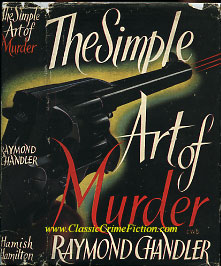
HBH_MurderBy now, readers of this column (all three of you) know that I’m ‘all-in’ on Sherlock Holmes and Solar Pons. But I am also a long-time hard boiled fiction afficionado. I’ve got a section of the bookshelves well-stocked with private eye/police novels and short stories, from Hammett and Daly to Stone and Burke.

Now, I wouldn’t bet my house on the premise of the following essay, which first appeared in Sherlock Magazine back when I was a columnist for that fine, now defunct periodical. But I believe that I make a more compelling argument than you thought possible at first glance. The roots of the American hard boiled school can be seen in Sherlock Holmes and the Victorian Era. Yes, really.

And if any of the hard boiled heroes mentioned catch your fancy, leave a comment. I’ll be glad to tell you more about them. Without further ado, I bring you “Hard Boiled Holmes.”

“But down these mean streets a man must go who is not himself mean, who is neither tarnished nor afraid.”

Raymond Chandler wrote these words in his essay, ‘The Simple Art of Murder.’ Ever since, the term ‘mean streets’ has been associated with the hard-boiled genre. One thinks of tough private eyes with guns, bottles, and beautiful dames. But was it really Chandler who created those words to describe the environment that the classic Philip Marlowe operated in?

Is it possible that it was Victorian London that gave birth to the mean streets, which would later become famous as the settings in the pages of Black Mask? Could it be that Sam Spade and Philip Marlowe were followers in the footsteps of Sherlock Holmes?

Read More Read More

The Tragic and Poignant Tales of R. Murray Gilchrist: A Night on the Moor & Other Tales of Dread

The Tragic and Poignant Tales of R. Murray Gilchrist: A Night on the Moor & Other Tales of Dread

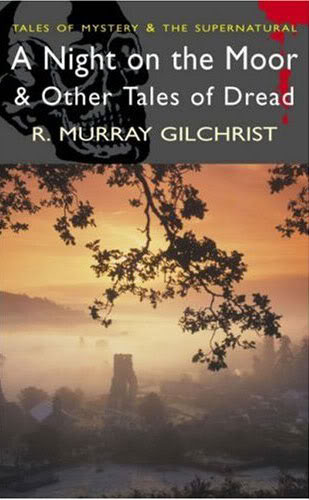
A Night on the Moor-smallIt’s probably no surprise that I got a new volume in the Wordsworth’s Tales of Mystery And The Supernatural series for Christmas.

I’m not familiar with R. Murray Gilchrist, but that’s the beauty of this series — it’s introduced me to a wide range of excellent ghost story writers. Gilchrist wrote chiefly in the late 1800s and he produced a fine range of supernatural ghost stories, including horror, humor, mystery, and even tragic romance. A Night on the Moor is a slender volume (at just 190 pages, it’s considerably shorter than most of the recent Wordsworth edition we’ve covered), but I’m enjoying it so far.

Robert Murray Gilchrist (1868-1917) is perhaps best known for his interest in topography, and for his stories set in Derbyshire’s Peak District. But he was also a master of mystery and horror, as this richly varied collection shows.

If you are looking for a conventional horror story, in which the supernatural element is paramount, try “The Crimson Weaver,” “Dame Inowslad,” “Witch In-Grain,” or “A Night on the Moor.” If you are more taken with the psychology of the participants, often allied to a fascination with the killing of friends or lovers, then “Francis Shackerley,” “The Noble Courtesan,” “Althea Swathmore,” and “My Friend” will be right up your street. For humor we are offered the Peakland comedy of “The Panicle” or “A Witch in the Peak.” And when it comes to love, there are the tragic and poignant tales we might expect (“The Return,” “The Lost Mistress,” “The Madness of Betty Hooton”), but also the engaging and unusual “Bubble Magic” — a story of romantic betrayal which hints at a happy ending.

Read More Read More

January 2015 Nightmare Magazine Now on Sale

January 2015 Nightmare Magazine Now on Sale

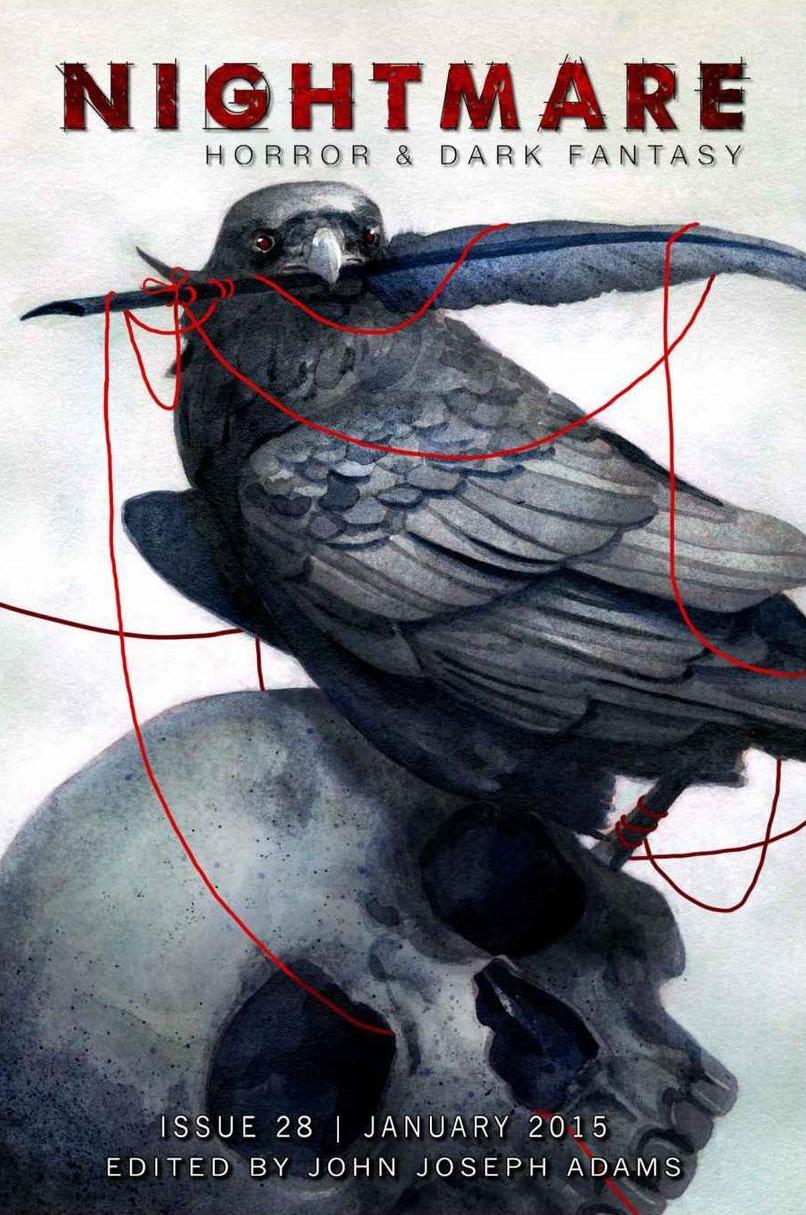
Nightmare magazine January 2015-smallThe January 2015 issue of Nightmare Magazine is now available.

Nightmare is the sister publication to the highly-regarded science fiction and fantasy magazine Lightspeed. It’s an online magazine of horror and dark fantasy, with a broad focus — editor John Joseph Adams promises you’ll find all kinds of horror within, from zombie stories and haunted house tales to visceral psychological horror. Fiction contents this month are:

Original Stories

“Returned” by Kat Howard
“The Trampling” by Christopher Barzak

Reprints

“The Hollow Man” by Norman Partridge
“Blessed Be the Bound” by Lucy Taylor

There’s also an editorial with news on the follow-up to the groundbreaking Women Destroy Science Fiction! anniversary issue of Lightspeed, the upcoming Queers Destroy Science Fiction! project, as well as new subscription pricing through Amazon. Read the complete editorial online here,

Read More Read More

Four Tricks for Dealing with The Unsightly Scars of Righteous Battle

Four Tricks for Dealing with The Unsightly Scars of Righteous Battle

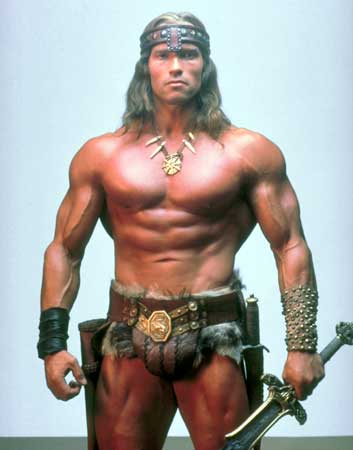
Arnold as Conan-smallIt occurred to me while writing about the benefits of chainmail bikinis that one of the major downfalls is the vast amount of exposed skin. Not for any morality or mortality reasons (although those do make for interesting points), but rather for the sheer amount of maintenance that would require. I’m not even talking about shaving and waxing. (We all agree that Conan *must* wax to pull off that oily muscled look, right?)

And let’s be realistic. Wow, the scars adventurers must have. I mean, I once had a tick removed from my tender tender belly flesh. That’s what you get for running in the woods fully clothed, so I flinch at the thought of running half-naked in the woods. You’d become a tick magnet.

Anyway, a 70-year old mostly blind doctor went at me with a scalpel to remove the tiny leg still stuck in my flesh and, I gotta tell you, that left a scar. Now that was one tiny, super sharp and badly wielded knife. So let’s pause and imagine how many scars inappropriately armored individuals must have.

This is more about the unsightly scars left behind by being thrust at with swords, spears, arrows, knives, mystical weapons, spells, and large pachyderms. Obviously there are ways of dealing with such minor scars, leaving visible only the major nod-to-backstory ones.

In my continued efforts to support sword and sorcery fashion adventurers, here’s an undoubtedly incomplete list of tricks to deal with scarring while wearing almost nothing.

Read More Read More

Writerly New Year’s Resolutions and How to Make Them Work: Part 1

Writerly New Year’s Resolutions and How to Make Them Work: Part 1

Xmas Sword
No rocket pack from Santa, but I’m not complaining… 🙂

So here it is, AD2015. This being the 21st century, I hope you’re enjoying the belated rocket pack Santa finally brought you. (For some reason mine didn’t arrive and I got a sword instead.)

Judging from the way the local kids’ birthday parties usually fall between September  and November, January is a time when people try to start something new, or at least make a fresh start. This is why the Internet is full of New Year Resolutions made by aspiring writers.

You know the kind of thing: This year I’ll… focus more on my writing… finish my novel… be more disciplined… write 10K words a week…. etc etc.

From the vague to the painfully specific, they mostly boil down to either being more productive, or else setting things up so you can be more productive.

Take being more productive.

First can we quickly discard the obsession with word count?

Yes, rapid drafting is a good thing, but really aggregate word count is what counts — time spent planning and revising is also valuable — and what that aggregate count counts towards is finishing a novel. So if you must measure your productivity, then please make a proper project plan with milestones and monitor yourself against that.

Now let’s turn to the most common subtext of productivity resolutions: the sporting idea that productivity and motivation are two sides of the same coin. A good pep talk — Steven Pressfield provides just about the best of these — and with proper motivation, you can blast through resistance, Bum In Chair (“BIC”), silence your inner critic, and Bob’s your uncle. Productivity! Hurrah!

Been there, done that. Maybe it’s because I’m British, but I think that’s putting the cart of enthusiasm before the horse of capability…

Read More Read More

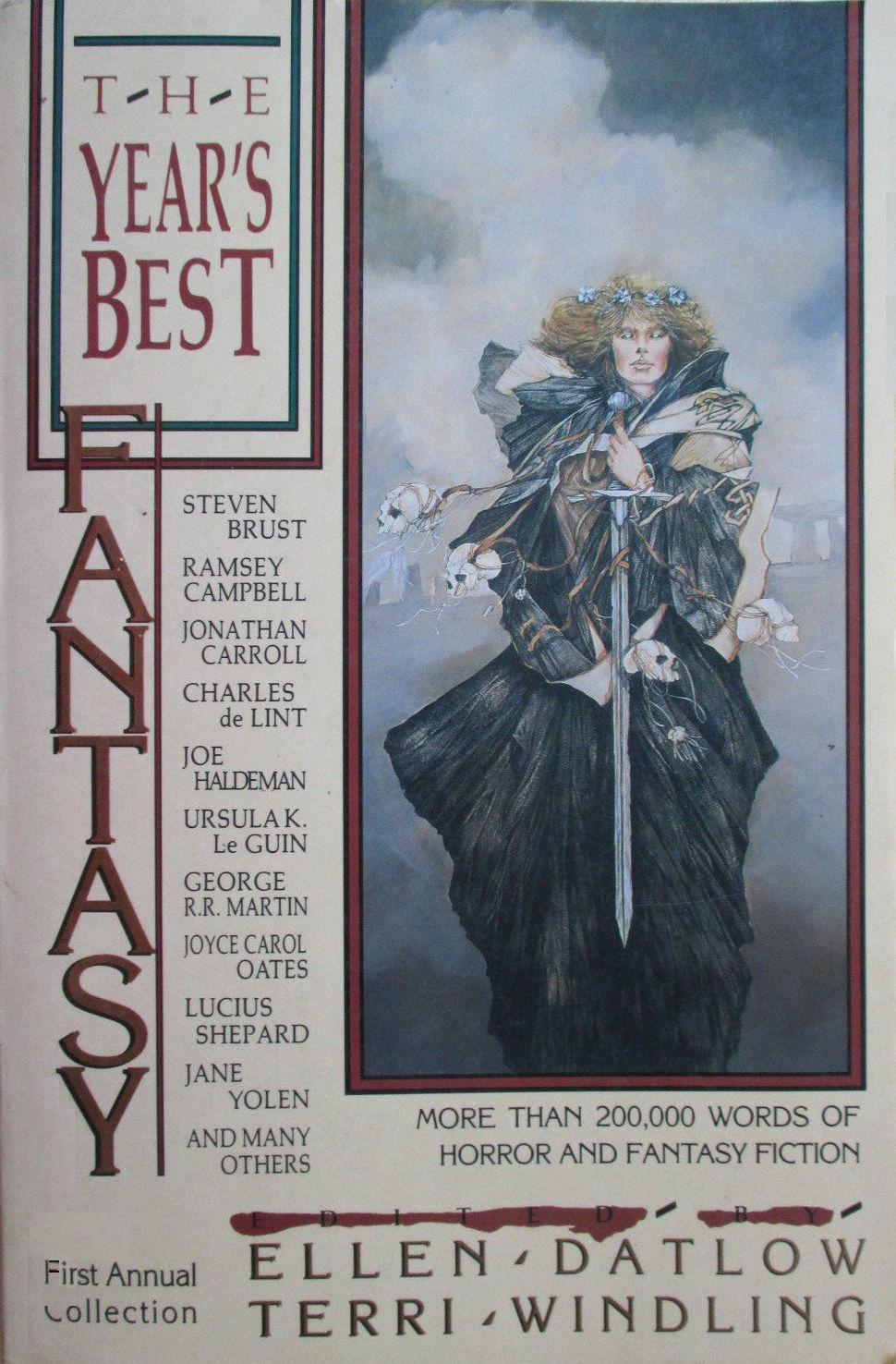
Vintage Treasures: The Year’s Best Fantasy, First Annual Collection, edited by Ellen Datlow and Terri Windling

Vintage Treasures: The Year’s Best Fantasy, First Annual Collection, edited by Ellen Datlow and Terri Windling

The Year's Best Fantasy First Annual Collection-smallSome 27 years ago, the first volume of Ellen Datlow and Terri Windling’s long-running Year’s Best Fantasy series appeared.

Created in conscious imitation of Gardner Dozois’s even longer-running Year’s Best Science Fiction (also published by St. Martin’s), Datlow and Windling’s Year’s Best Fantasy became the most prestigious and long-lived fantasy annual the genre has yet seen. Renamed The Year’s Best Fantasy and Horror beginning with the third book in 1990, it lasted an impressive 21 years, publishing its final volume in 2009.

The series accumulated numerous accolades and award nominations over the decades, and became the acknowledged yearbook for the field. Just as Dozois did with his sprawling summations, Datlow and Windling summarized the year’s news, events, and gossip in lengthy and highly readable intros. If you were a new writer, publication, or small press, it was a major career milestone just to be name-checked.

I remember how excited I was to finally get my hands on a copy in the fall of 1988. I took it to the common room of my graduate dorm in Urbana, Illinois, and curled up in a comfy chair, where I read for hours while the first winter snow accumulated outside. I read this first volume cover to cover, in the process getting introduced to dozens of writers like Delia Sherman, Michael McDowell, David J. Schow, Susan Palwick, and many others. The book was the equivalent of a graduate course in modern fantasy.

In fact, there was just one problem. I didn’t like most of the stories.

Read More Read More

The Royal Armory of Madrid

The Royal Armory of Madrid

This sumptuous armor and barding was a gift from Carlos Manuel, Duke of Savoy, to Philip III. It was made in Milan in the 1580s.

Europe is rich in collections of early arms and armor. Most major cities and many smaller towns have their local armories. Generally these collections span a broad range of time, but La Real Armería, the Royal Armory, in the Royal Palace in Madrid, is unusual in that most of the collection dates to the lives of Charles V (1500-1558) and Philip II (1527-1598). This makes it perhaps the best collection of high quality sixteenth-century arms and armor in the world.

Read More Read More