Browsed by
Author: John ONeill

Richard Matheson, February 20, 1926 – June 23, 2013

Richard Matheson, February 20, 1926 – June 23, 2013

richard mathesonRichard Matheson, the legendary author of some of the most famous science fiction and horror novels of the 20th Century, died Sunday at the age of 87.

Matheson wrote over 25 novels and nearly 100 short stories, but is probably best known for his many works adapted into popular movies — including I Am Legend, The Shrinking Man, Hell House, Trilogy of Terror (based on three of his short stories), What Dreams May Come, Somewhere in Time (based on his novel Bid Time Return), A Stir of Echoes, and Real Steel (based on The Twilight Zone episode “Steel.”)

He also wrote one of the most famous episodes of Rod Serling’s The Twilight Zone, “Nightmare at 20,000 Feet,” which starred a young William Shatner. He adapted his 1971 short story “Duel” into the TV movie of the same name, launching the career of its young director, Steven Spielberg. Matheson later noted the story’s inspiration came from a trip he took with Star Trek author Jerry Sohl (“The Corbomite Maneuver”), when they were dangerously tailgated by a large truck.

Matheson was scheduled to be the Guest of Honor at the upcoming World Fantasy Convention in Brighton, England. The convention committee has announced that the convention will now be “dedicated to his memory and stand as a tribute to one of our genre’s greatest storytellers.”

As Matthew Wuertz wrote on the occasion of his 87th birthday in February:

Even if you haven’t read his stories, Matheson’s writing has undoubtedly influenced something you’ve read or watched. His work will leave a noticeable impact for many years to come. Perhaps he should reuse his novel’s title I Am Legend for an autobiography.

Matheson received the World Fantasy Award for Life Achievement in 1984, and the Bram Stoker Award for Lifetime Achievement in 1991. He was inducted into the Science Fiction Hall of Fame in 2010. He won the World Fantasy Award twice, for novel Bid Time Return (1975) and his collection Richard Matheson: Collected Stories (1989). Read his Entertainment Weekly obituary here.

New Treasures: Philippa Ballantine’s The Order of Deacons

New Treasures: Philippa Ballantine’s The Order of Deacons

The Order of DeaconsI can’t be the only one who really enjoys these low-cost omnibus editions produced by the Science Fiction Book Club.

Omnibus editions have been a tradition for the SFBC for as long as I’ve been a member (don’t ask how long that is). One of the first books I purchased from them — and still one of my favorite SF books, period — was H. Beam Piper’s The Fuzzy Papers in the mid -1970s, containing Little Fuzzy and Fuzzy Sapiens. The most recent was probably E.E. Knight’s Enter the Wolf, containing the first three novels of his terrific Vampire Earth saga: Way of the Wolf, Choice of the Cat, and Tale of the Thunderbolt.

At the same time as I purchased Enter the Wolf, I also acquired The Order of the Deacons, which collects the first three volumes of Philippa Ballantine’s A Book of the Order series. I’ve been intrigued by these books for a long time, and was impressed by the snippets I read from Geist, the opening book. Here’s the description for Geist:

Between the living and the dead is the Order of the Deacons, protectors of the Empire, guardians against possession, sentinels enlisted to ward off the malevolent haunting of the geists…

Among the most powerful of the Order is Sorcha, now thrust into partnership with the novice Deacon, Merrick Chambers. They have been dispatched to the isolated village of Ulrich to aide the Priory with a surge of violent geist activity. With them is Raed Rossin, Pretender to the throne that Sorcha is sworn to protect, and bearer of a terrible curse.

But what greets them in the strange settlement is something far more predatory and more horrifying than any mere haunting. And as she uncovers a tradition of twisted rituals passed down through the dark reaches of history, Sorcha will be forced to reconsider everything she thinks she knows.

And if she makes it out of Ulrich alive, what in Hell is she returning to?

The omnibus also includes Spectyr and the most recent volume, Wrayth. Philippa Ballantine is also the co-author, with Tee Morris, of the Ministry of Peculiar Occurrences novels (as “Pip Ballantine”) and the Shifted World fantasy series, which began with Hunter and Fox. With luck, those will get a SFBC omnibus treatment too.

The Order of Deacons was published by SFBC in January 2013. It is 787 pages in hardcover, priced at $17.99. There is no digital edition. It is available exclusively to Science Fiction Book Club members; learn more at the SFBC website. Cover art by Karla Ortiz.

Black Gate Online Fiction: The Death of the Necromancer, Part Four

Black Gate Online Fiction: The Death of the Necromancer, Part Four

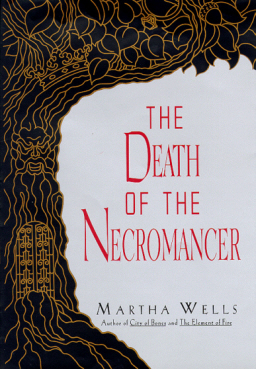
The Death of the NecromancerBlack Gate is very proud to present Part Four of Martha Wells’s Nebula Award-nominated novel, The Death of the Necromancer, presented complete online for the first time. On her blog, Martha describes the book thusly:

It’s basically about a Moriarty-like master criminal and his friends in an otherworldy version of La Belle Epoque Paris with magic, who get involved in a clandestine battle with a sorcerer who seems to be trying to raise the dead.

And Publishers Weekly had this to say about the novel:

The setting echoes with the lively sounds and sights of turn-of-18th-century France, with a mesh of dark magic woven throughout. In her third novel, Wells (City of Bones; The Element of Fire) continues to demonstrate an impressive gift for creating finely detailed fantasy worlds rife with many-layered intrigues and immensely personable characters.

Martha Wells is the author of fourteen fantasy novels, including City of BonesThe Element of FireThe Cloud Roads, and The Serpent Sea. Her most recent novel is the YA fantasy, Emilie and the Hollow World, published by Strange Chemistry Books in April. Her previous fiction for us includes “Reflections” in Black Gate 10, “Holy Places” (BG 11), and “Houses of the Dead (BG 12). Her most recent article for us was “How Well Does The Cloud Roads Fit as Sword and Sorcery?,” which appeared here March 13. Her web site is www.marthawells.com.

The complete catalog of Black Gate Online Fiction, including stories by Mary Catelli, Michael Penkas, Vera Nazarian, Ryan Harvey, Nina Kiriki Hoffman, E.E. Knight, C.S.E. Cooney, Howard Andrew Jones, Harry Connolly, and many others, is here.

The Death of the Necromancer was originally published in hardcover by Avon EOS in 1998. The complete, unedited text is being presented here; it began on June 2 with the first four chapters here.

Part Four includes Chapters Fourteen through Eighteen. It is offered at no cost.

Read Part Four of the complete novel here.

Vintage Treasures: Tales of Outer Space, edited by Donald A. Wollheim

Vintage Treasures: Tales of Outer Space, edited by Donald A. Wollheim

Tales of Outer SpaceSometimes I think I owe Donald A. Wollheim for a big chunk of my childhood.

Today we’re looking at Tales of Outer Space, a collection of interplanetary adventure tales edited by Wollheim in 1954, a decade after he invented the mass-market SF anthology with The Pocket Book of Science Fiction in 1943 (the first book with the words “Science Fiction” in the title), and not long after he produced  the first original SF anthology, The Girl With the Hungry Eyes, in 1947.

That’s some pioneering stuff. But Wollheim spent most of his career as a pioneer. From 1947 to 1951, he was the editor of Avon Books, where he introduced mainstream America to mass-market editions of some of the best fantasy from the pulp era — including Ralph Milne Farley’s An Earth Man on Venus (which I discussed last month), A. Merritt’s The Moon Pool, and eighteen issues of the highly sought-after fantasy paperback magazine, The Avon Fantasy Reader, among many other accomplishments. He even published C. S. Lewis’s Silent Planet space trilogy.

In 1952, Wollheim left Avon to spearhead a new paperback imprint, Ace Books, where he remained for 20 years. While there, he added science fiction to their lineup for the first time and, in a stroke of brilliance which endeared him to future generations of paperback collectors, invented the Ace Double in 1952.

You may have heard of some of his other successes at Ace as well: he first introduced Tolkien’s The Lord of Rings to the US in 1964 (against Tolkien’s wishes, as it happened) and published Frank Herbert’s obscure hardcover Dune in a paperback edition that made it a bestseller in 1965.

That ought to be enough for anyone. But of course, as many of you know, it wasn’t enough for Wollheim. In 1971, he left Ace to found his own publishing company, which bore his initials. DAW was the first mass market publisher to specialize in SF and fantasy, and before his death in 1990, it had acquired and published over a thousand titles, making it one of the most successful genre publishers of all time.

Of course, most of that was in Wollheim’s future when he released Tales of Outer Space — but the seeds of greatness were already there for anyone who looked.

Read More Read More

New Treasures: Titan

New Treasures: Titan

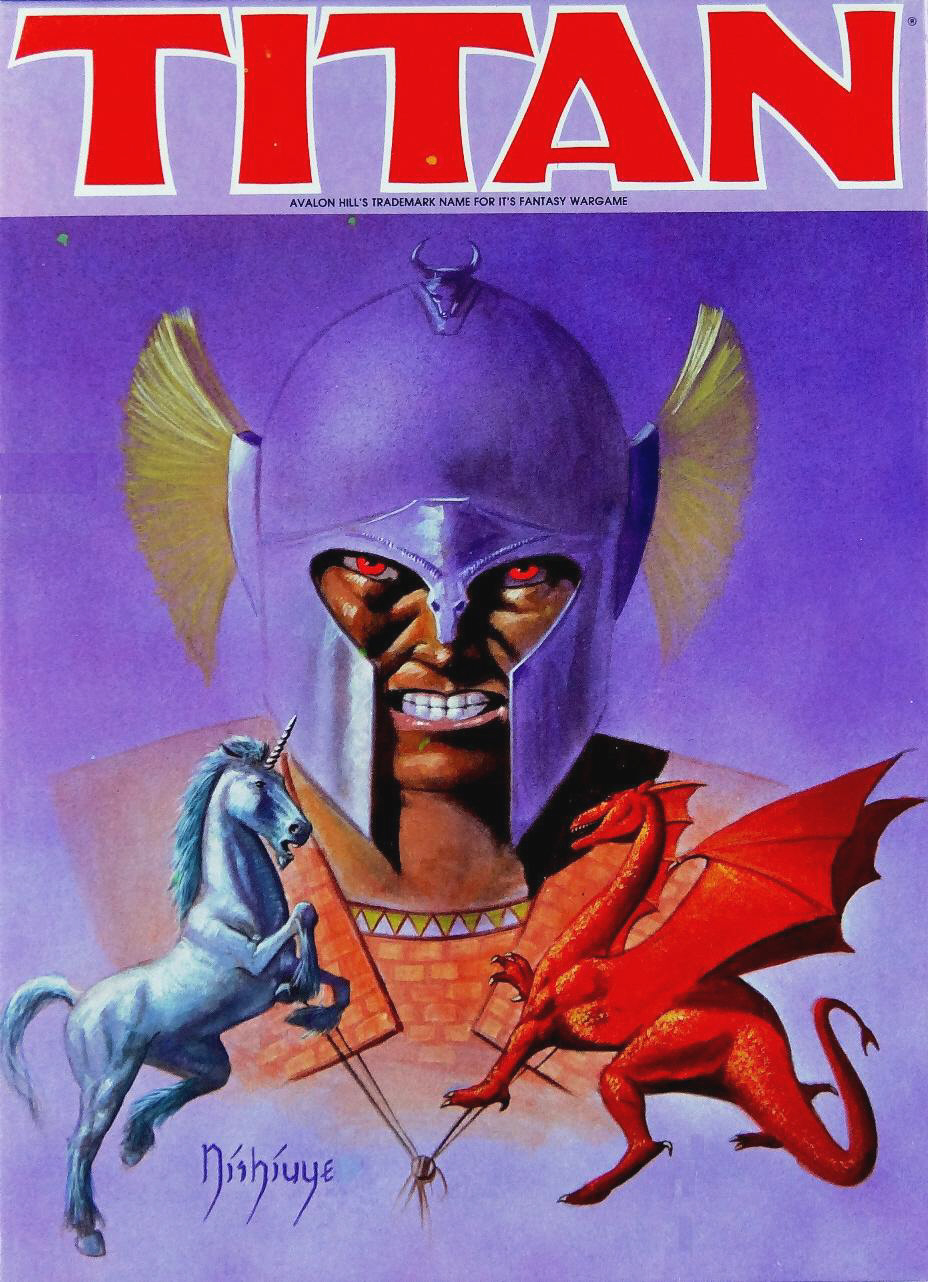
Titan Avalon HillThere are classic fantasy games and there are classic fantasy games. Jai Kamani and David A. Trampier’s Titan, a massive game of conflict between mythological armies of ogres, unicorns, griffons, and other creatures, was perhaps the most ubiquitous fantasy game of my youth. There were copies everywhere, tucked under arms at gaming conventions and on the shelves of department stores.

Titan was first published in an ultra-rare first edition in 1980 by tiny Gorgonstar, Inc. It was later made a hit by Avalon Hill, and remained in print for nearly two decades until Avalon Hill was sold and ceased operations in 1998. After that, copies of the most popular fantasy board game of the 80s and 90s gradually became harder and harder to find.

I remember getting my boys excited about Titan by nostalgically telling tales of epic battles between behemoths, dragons, and trolls. They clamored to play it.

I’d never owned Titan, but that’s not a problem in the age of the Internet. I found a pristine copy on eBay and hung on during a spirited bidding war. 90 bucks later, it was on my kitchen table.

Still in the shrink wrap.

It was perfectly preserved. My boys stood at my side, ready to go, anxious to throw down some dice, and experience some of that legendary Titan action. To shred the shrink and punch out counter sheets that had staunchly stood fast for over twenty years. My hands gripped the game, hesitating.

I couldn’t do it.

Read More Read More

Parke Godwin, January 28, 1929 – June 19, 2013

Parke Godwin, January 28, 1929 – June 19, 2013

Sherwood Parke Godwin-smallParke Godwin, the American author of more than a dozen fantasy novels, died this week.

I first encountered Godwin with The Masters of Solitude, his 1978 science fiction collaboration with Weird Tales editor Marvin Kaye. They wrote one sequel, Wintermind (1982), and one horror novel together: A Cold Blue Light (1983).

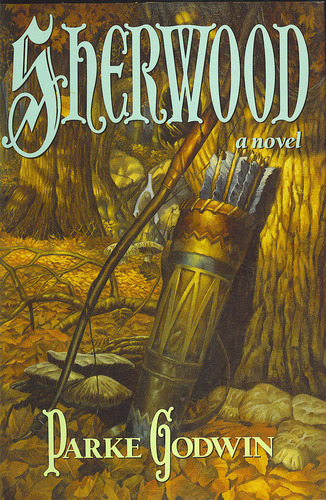
But I’ll chiefly remember Godwin for my favorite Robin Hood adaptation, Sherwood, published in hardcover by William Morrow & Co. in August 1991. The novel follows young Edward Aelredson, Thane of Denby, who’s driven from his home by Norman invaders and takes refuge in primeval Sherwood forest — where he meets a surprising cast of characters and gradually becomes a thorn in the side of the usurping king. Set during the Norman conquest, Sherwood features both William the Conqueror and William Rufus as major characters. Godwin wrote one sequel, Robin and the King, in 1993.

Sherwood was perhaps his most successful book, but he’s also fondly remembered for his Arthurian trilogy set in 5th century Britain during the collapse of the Roman empire: Firelord (1980), Beloved Exile (1984), and The Last Rainbow (1985).

Godwin’s first novel was Darker Places (1973), his last was Prince of Nowhere, published in 2011. In between, he wrote a number of popular historical and romantic fantasies, including A Truce with Time (1988), The Tower of Beowulf (1995), and Lord of Sunset (1998). He also turned his hand to solo science fiction with Limbo Search (1995) and the humorous Snake Oil series: Waiting for the Galactic Bus (1988) and The Snake Oil Wars (1989).

As an editor he produced Invitation to Camelot (1988) and, with Marvin Kaye, one collection of Weird Tales reprints, Weird Tales: The Magazine That Never Dies (1988). He had one short story collection, the Hugo-nominated The Fire When It Comes (1984), which included the World Fantasy Award-winning title story.

His short story “Influencing the Hell out of Time and Teresa Golowitz,” (Twilight Zone magazine, January, 1982) was adapted as “Time and Teresa Golowitz,” an episode of The Twilight Zone TV show in 1986.

Parke Godwin was born in New York City in 1929, and lived there much of his life. He died on Wednesday at the age of 84.

Vintage Treasures: The Best of Murray Leinster

Vintage Treasures: The Best of Murray Leinster

The Best of Murray LeinsterI first encountered Murray Leinster… wow, I don’t even know when. Probably in The Hugo Winners, Isaac Asimov’s 1962 anthology collecting the first short stories to win science fiction’s coveted prize.

It featured Leinster’s 1956 novelette, “Exploration Team,” about a desperate rescue attempt on a distant planet — involving an illegal settler blackmailed into helping a lost colony, and his team of Kodiak bears. Lost colonies, deadly aliens, and even more deadly bears… that’s the kind of story that sticks in your mind when you’re twelve, believe me.

Leinster died in 1975; he published his last book, a novelization of the Land of the Giants TV series, in 1969. But he was a steady presence on bookstore shelves during my formative reading years for well over a decade after his death, with reprint titles like The Med Series (Ace, 1983) and The Forgotten Planet (Carroll & Graf, 1990).

The mass market reprints have tapered off over the last few years. The last were all from Baen, a trio of excellent collections all edited by Eric Flint and Guy Gordon: Med Ship (2002), Planets of Adventure (2003), and A Logic Named Joe (2005).

Since then, the wheels of publishing have ground on, as they do, abandoning Leinster by the side of the road. We did our part to keep his memory alive, of course. I reprinted one of Leinster’s earliest pulp tales, “The Fifth-Dimension Catapult,” from the January 1931 Astounding Stories of Super-Science, in Black Gate 9.

There have also been low-budget digital editions of his out-of-copyright pulp fiction, sure, but by and large the genre — as living genres should — has focused instead on new and emerging authors.

I used to think that was inevitable. Readers have long memories, but publishing industries don’t, and when an author has been out of print for over a decade, she’s likely to remain that way.

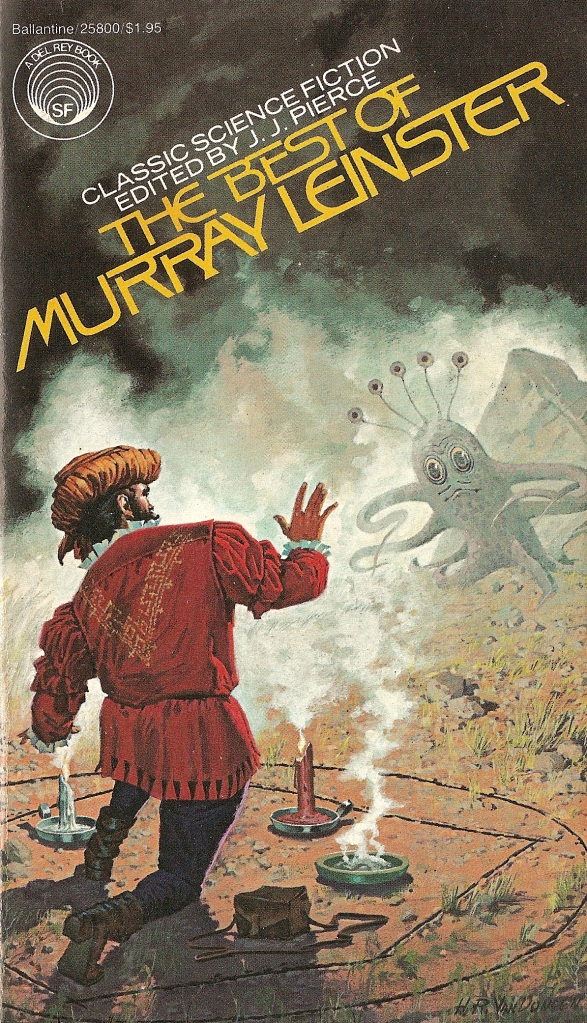
But the brilliant Lester del Rey, publisher of Del Rey Books, proved me wrong. In fact, he proved me wrong nearly four decades ago, with a fabulous line of top-selling paperbacks collecting the best short science fiction and fantasy from the writers of the Golden Age of SF — including The Best of Murray Leinster, a collection of some of the best short SF and fantasy of the 20th Century.

Read More Read More

Kim Thompson, September 25, 1956 – June 19, 2013

Kim Thompson, September 25, 1956 – June 19, 2013

Kim ThompsonKim Thompson, one of the most important figures in independent American comics, died today at the age of 56.

I first encountered Thompson during his days as editor of Amazing Heroes in the early 1980s. Amazing Heroes, which ran 204 issues from 1981 through 1992, was Fantagraphics’ version of The Comics Journal for superheroes, a serious (or at least, semi-serious) critical fan journal that ran articles on overweight superheroes, how Bob Burden narrowly escaped flaming death in Chicago, every move Jack Kirby ever made — and even produced an annual swimsuit issue. The first time I can remember reading his words was his announcement, some time in the early 80s,  that Amazing Heroes would run a Top 100 Comics on the back page (which quickly collapsed due to the sheer effort involved).

Thompson began working for Fantagraphics in 1977, and became a co-owner with Gary Groth the next year. According to an article in The Comics Journal #254, Thompson saved the company from bankruptcy by investing his inheritance in 1978.

He edited many of Fantagraphics’ most popular comics, including Linda Medley’s superb Castle Waiting, Peter Bagge’s Hate, Chris Ware’s Acme Novelty Library, Stan Sakai’s Usagi Yojimbo, and many others. He edited all 50 issues of funny-animal anthology Critters (1985-1990) and the alternative comics anthology Zero Zero (also 50 issues, 1995-2000).

Read More Read More

Kirkus Looks at Galaxy Science Fiction

Kirkus Looks at Galaxy Science Fiction

Galaxy February 1951Over the last few months, Matthew Wuertz and Rich Horton have been tag-teaming a series of Retro Reviews here at Black Gate, looking at science fiction digests from the 1950s and 60s — especially H.L. Gold’s Galaxy, which Matthew has been covering issue by issue since the very first, cover-dated October 1950.

Meanwhile, Andrew Liptak at Kirkus Reviews has done his own retrospective, “Changing the Playing Field: H.L. Gold & Galaxy Science Fiction,” a detailed and affectionate look at Gold and the superb magazine he created:

Galaxy appeared in October 1950 as a monthly publication. It paid far better than its competitors, and Gold proved to be a far better editor than his counterpart at Astounding… With Gold at the helm, Galaxy Science Fiction began to change the tone of the genre. Astounding had taken advantage of the scientific rush that followed the development of the atomic bomb, and the resulting doomsday stories that followed. Gold went in another direction, explaining in an editorial that “The shape humanity is in is cause for worry, I believe, but not the kind of paralyzing terror that clutches science fiction writers in particular… Look, fellers, the end isn’t here yet.”

Strong, socially aware and satirical fiction became the mainstay with Galaxy, and 1951 proved to be an excellent year for the publication: “The Fireman,” by Ray Bradbury, appeared in the February issue, set in a dystopian world where literature was burned by government agents, and was later expanded into his landmark novel Fahrenheit 451. April brought Cyril Kornsbluth’s story “The Marching Morons,” and September saw Gold bring Robert Heinlein away from Astounding with his three-part story The Puppet Masters

Read More Read More

New Treasures: Fiery Edge of Steel

New Treasures: Fiery Edge of Steel

fiery-edge-of-steelJill Archer’s first Noon Onyx novel, Dark Light of Day, served up a truly post-apocalyptic setting. And I don’t mean global warming or an inconvenient economic collapse. Armageddon is over, the demons won, and the few surviving humans worship patron demons just to survive. Sorta makes Mad Max look more like Mad Men, just with cooler fashions.

The second book in the series, Fiery Edge of Steel, has now arrived and it looks even more intriguing. It tosses an unusual mystery, a remote outpost, and an ancient and evil foe into the mix.

Lucifer and his army triumphed at Armageddon, leaving humans and demons living in uncertain peace based on sacrifice and strict laws. It is up to those with mixed demon and human blood, the Host, to prevent society from falling into anarchy.

Noon Onyx is the first female Host in memory to wield the destructive waning magic that is used to maintain order among the demons. Her unique abilities, along with a lack of control and a reluctance to kill, have branded her as an outsider among her peers. Only her powerful lover, Ari Carmine, and a roguish and mysterious Angel, Rafe Sinclair, support her unconventional ways.

When Noon is shipped off to a remote outpost to investigate several unusual disappearances, a task that will most likely involve trying and killing the patron demon of that area, it seems Luck is not on her side. But when the outpost settlers claim that an ancient and evil foe has stepped out of legend to commit the crimes, Noon realizes that she could be facing something much worse than she ever imagined…

Fiery Edge of Steel was published by Ace Books on May 28. It is 330 pages, priced at $7.99 for both the paperback and digital editions.

See all of our recent New Treasures posts here.