Dracula: Five Not-So-Easy Pieces
In November and December 2009, my jaw was wired shut for eight weeks. During that time I read voraciously being able to accomplish little else. Among the many books I devoured were five Dracula-related titles.
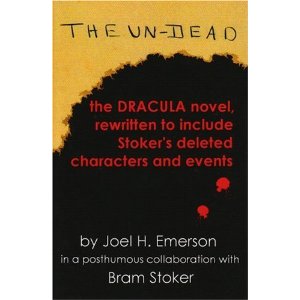 DRACULA THE UN-DEAD (2009/Dutton) by Dacre Stoker and Ian Holt achieves what it set out to do: bring income from Dracula back to the Stoker family and re-establish Dracula as the literary “property” of Stoker’s heirs by creating a new franchise from the public domain characters.
I wanted to love this book. I wanted to view it as the authorized sequel to DRACULA, the true heir to Bram Stoker’s literary classic. The trouble is one cannot make that claim when the sequel tries so hard to undo everything in the original.
Rather than pay homage to Bram Stoker’s work, the authors spend nearly 400 pages proving to us that everything Stoker wrote was wrong. Prince Dracula (Stoker was even wrong about his title, it seems he wasn’t a Count) was a “good” vampire working for God (a bizarre interpretation of the historical Vlad Dracula’s papal honor – later rescinded – of Defender of the Faith) and the real villain of DRACULA was the historical Countess Elizabeth Bathory who, it turns out, was a vampire and was also Jack the Ripper.
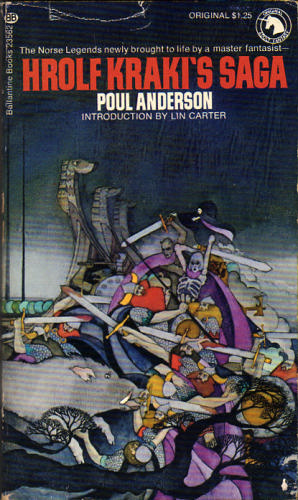 Let us die in the doing of deeds for his sake;
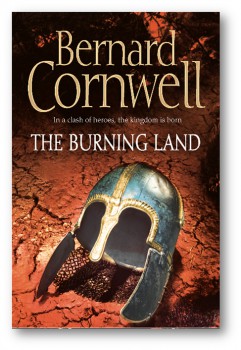 3. The Saxon Stories, Bernard Cornwell. Uhtred of Bebbanburg is a Saxon youth captured and raised among the Danes, who then proceeds to spend the next several books in this yet-unfinished series fighting alternately for both sides in war-torn 9th century England. The Saxon Stories features Cornwell, a brilliant historical fiction writer, at his near-best (though I still prefer his Warlord Trilogy) with Viking raids, shield walls, axes, dark ages combat, hall-burnings, and general mayhem galore. Great stuff.
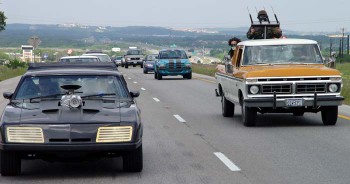 No deals . . . I want to drive the truck.
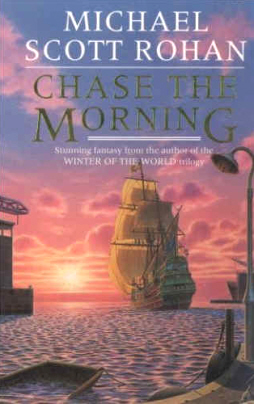 Steve is a very normal man, perhaps even a bit boring. He works at an English shipping company, handling inventories and looking forward to a career in politics once he climbs the business ladder as far as it will take him. One day, for no particular reason, a sudden fit of discontent sends him down to the docks looking for something different, perhaps a restaurant he hasn’t visited. In an alley, he sees a man being attacked . . .
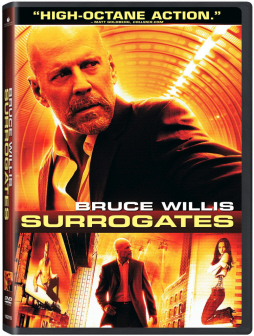 Early on in this film we see Bruce Willis with hair and looking young, and not Die-Hard bashed up, and we wonder absently if this time he’ll actually finish the film as scar-free as he began it. The Willis we begin with is quickly established as a ‘surrogate,’ the robot avatar of the real Willis character, Tom Greer, and it doesn’t take long for both Greer and his surrogate to get bashed up in familiar form.
 On the whole, I’m not opposed to traveling with boys. Generally speaking they are amusing companions particularly when refusing to ask directions, thereby winding you through mildly interesting places while attempting to locate the desired destination sans MapQuest. Along the route, in an effort to distract their hapless passengers from all the pointless meandering, they can generally be counted on for lively and revealing conversation about former girlfriends, prior arrests and entirely icky things done in frat houses; all of which become prime blackmail fodder for later use.