Romanticism and Fantasy: William Wordsworth, Part One
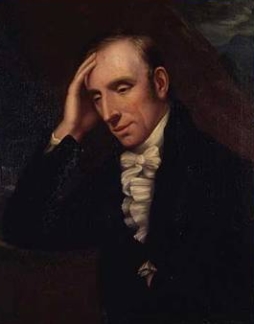 This post is part of an ongoing series about fantasy and the literary movement called Romanticism; specifically, English Romanticism in the late eighteenth and early nineteenth centuries. The series began with this introductory post, continued with an overview of the neo-classical eighteenth century the Romantics revolted against, considered the Romantic themes in English writing from 1760 to about 1790, then looked at elements of fantasy and Romanticism in France and Germany before returning to England to consider the Gothic. Last time, I looked closely at the work of William Blake. And in this post (and its sequel) I want to consider perhaps the least overtly fantastic of all major Romantic poets: William Wordsworth.
Like Blake, Wordsworth was concerned with the visionary nature of poetry, and with the character of his own poetic vision. Unlike Blake, he did not explore his vision through fantasy. He claimed to take as his subject the “simple produce of the common day,” and much of the newness of his verse came in the realism of his depiction of human personality, especially that of children and the poor — people who had for the most part not been looked at seriously in poetry up to that time. Nevertheless, I’ve always felt that there was something fantastic in Wordsworth’s verse. Some of that is a function of his preferred imagery. Some of that has to do with his themes.
Wordsworth is one of the great nature poets in the language — and in this makes a strong contrast to Blake, who felt that nature was significant only to the extent that it was transmuted by human imaginative vision. The interplay of vision and nature in Wordsworth is more complex, and accounts for some of the fascination of his work. I think that the way he works out that duality verges on the fantastic; how he deals with his material uses imagery and structures that would later become characteristic of what we think of as fantasy fiction. A critic named A.C. Bradley once wrote that “The road into Wordsworth’s mind must be through his strangeness and his paradoxes, and not round them.” I want, then, to explore here one of those paradoxes: how the depiction of nature and the everyday attains a sense of the fantastic.
 You know the prologue. Contracting an illness (possibly scarlet fever or meningitis) at the age of nineteen months, Helen Adams Keller survived, but was left both deaf and blind. Keller’s parents would eventually contact Anne Sullivan, herself blind, to tutor their daughter (who, at the age of six, still had not grasped the concept of words representing things). By pressing her hand into the girl’s palm, Sullivan was able to teach the girl to read sign language through touch. After that breakthrough, Helen Keller went on to write twelve books, meet thirteen U.S. Presidents, help found the American Civil Liberties Union, and introduce the Akita breed of dog to the United States.

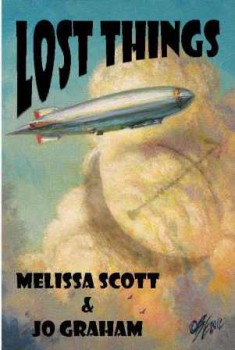 Lost Things: Book I of the Order of the Air