Vintage Treasures: The Best of Philip K. Dick
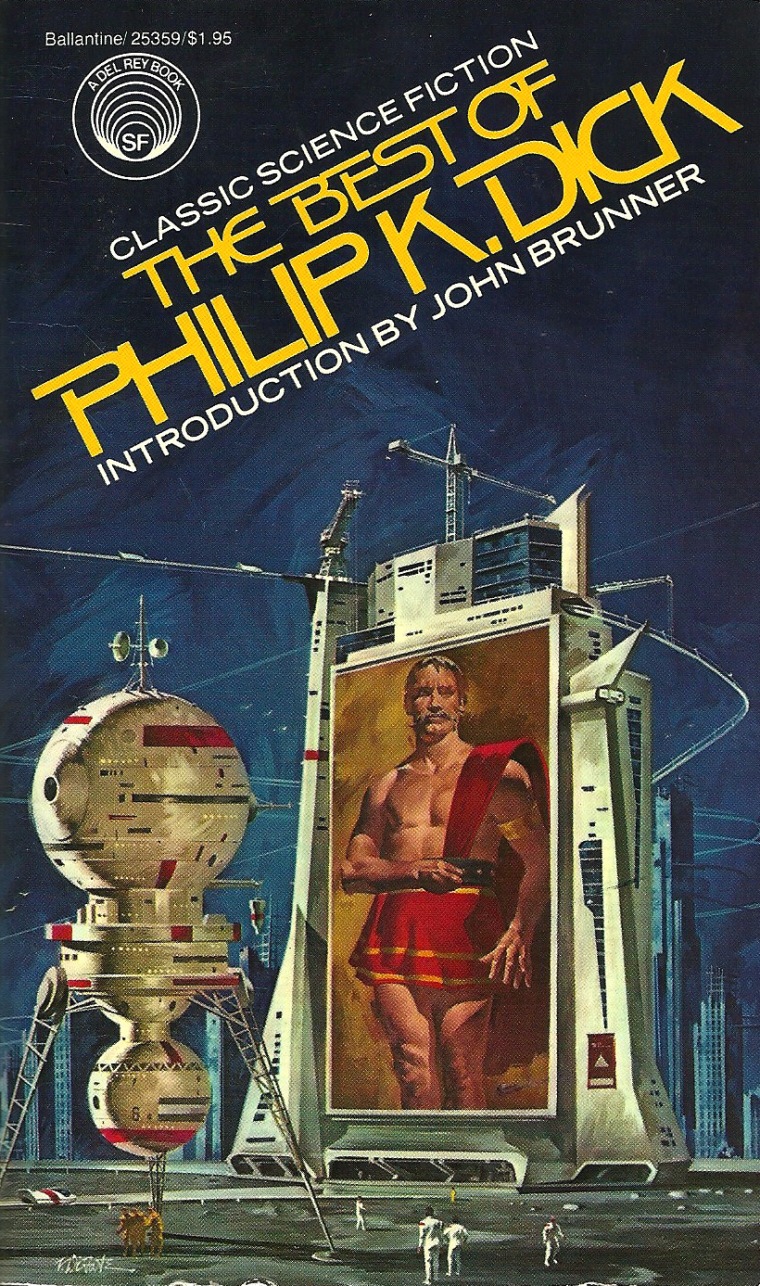 I didn’t know anything about Philip K. Dick when The Best of Philip K. Dick was released in 1977. That was the year Star Wars came out and I was more interested in trying to make a light saber out of my sister’s hair dryer.
I wasn’t alone (about Dick, not my obsession with my sister’s hair dryer). Philip K. Dick was a midlist paperback science fiction writer in the mid-70s, with few awards and only a handful of successful novels to his name, largely unknown except inside the genre. As Robert Silverberg observed in his famous comments on full-time SF writers, “Phil Dick was a full-timer, but lived at the poverty level.”
Dick was an unusual choice for Lester del Rey’s Classics of Science Fiction line for another reason. If you’ve been following the entries so far (see below for a complete list of the titles we’ve covered), you know that a typical volume consists of long out-of-print pulp stories by a writer who later achieved some measure of fame, usually for their novels.
The most recent story in last week’s entry, for example, The Best of John W. Campbell, was “Cloak of Aesir,” originally published in 1939. Similarly with The Best of Henry Kuttner (most recent entry from 1946), C.L. Moore (1946), Stanley Weinbaum (1936), and others.
By contract, the earliest story in The Best of Philip K. Dick, “Beyond Lie the Wub,” originally appeared in 1952. He’d barely been published for two decades by the time this book arrived, which didn’t fit the profile of Del Rey’s other choices at all. In fact, in many ways Dick was the most contemporary subject Del Rey chose for his select line of collections.
I can only conclude that Del Rey saw something special in Dick’s short stories. He wasn’t the only one, either — by the late 70s, the brilliant work being done by Dick at short length was becoming obvious to his fellow writers, even if wider recognition still eluded him. The blurbs on the inside cover reflect this. Here’s Norman Spinrad:
He has produced the most significant body of work of any science-fiction writer.

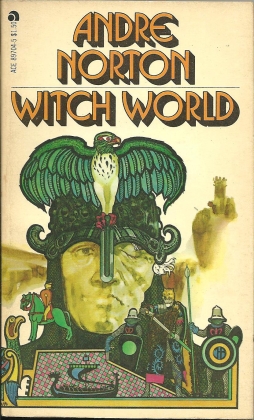 Somehow, when I was growing up, I missed Witch World. Some of the books in the series were always around, as I remember it, in my local libraries and bookstores, but I don’t think I ever read one — if only because I always try to read a series in order, and finding Witch World itself was not always easy. Somewhere along the line, though, I picked up a used copy, and set it aside to be read later. As it happens, there’s been a certain amount of talk about Andre Norton lately,