Browsed by
Category: Series Fantasy

The Series Series: Forever in the Memory of God and Other Stories by Peadar O Guilin

The Series Series: Forever in the Memory of God and Other Stories by Peadar O Guilin

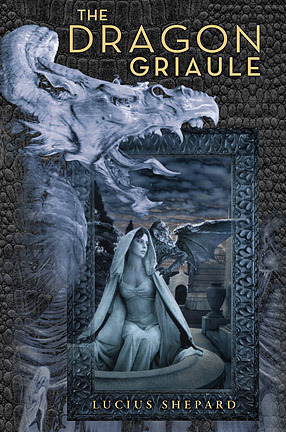
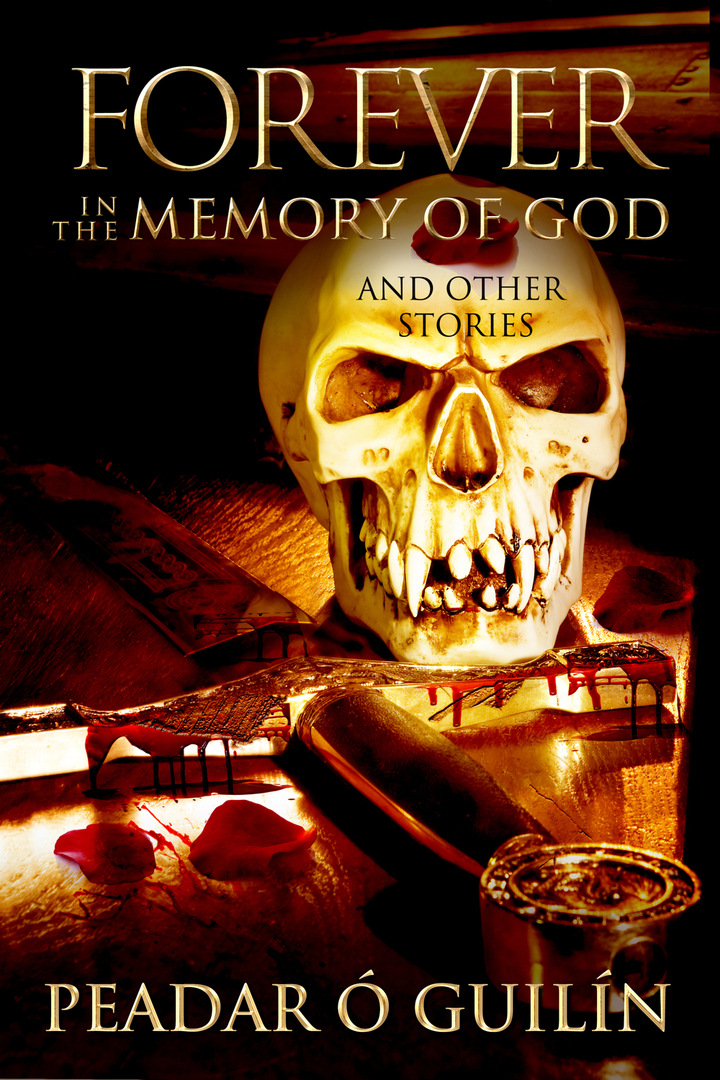
Forever In The Memory Of God-smallHow did he pull it off?

The stories in Peadar O Guilin’s Forever in the Memory of God are in some ways old-school weird fiction, Clark Ashton Smith style, heavy on disturbing imagery and sanity-shattering trauma so far over the top that it risks going beyond gallows humor and straight into comic absurdity, and yet it works. Every time. Even for me, and this is usually not my kind of thing. What these stories have going for them that the old pulp classics didn’t is striking characterization, a flesh of psychological realism animating some surprising configurations of plot bones.

The characters in the three stories here collected find themselves in dire predicaments. These characters — not all of them can be called heroes — bring their own moments of insight and blindness, laughter and grief, to their struggles. O Guilin keeps them struggling against plot twist after plot twist, all the way to twisty endings that gave me that wonderful readerly shock followed by a sense of inevitability: What?! Oh, but of course!

In the opening story, “The First of Many,” a young woman, born into the Rememberer tribe in a post-alien-invasion Earth, is the first of her kind to be a host organism to the larval young of the slug-like conquerors. She copes with the gradual loss of her arm and her privacy in her own mind — as the larva learns to read her thoughts and chemically manipulate her emotions — with a gallows humor that will be familiar to anyone who has lived with a chronic illness.

Read More Read More

New Treasures: The Six-Gun Tarot by R.S. Belcher

New Treasures: The Six-Gun Tarot by R.S. Belcher

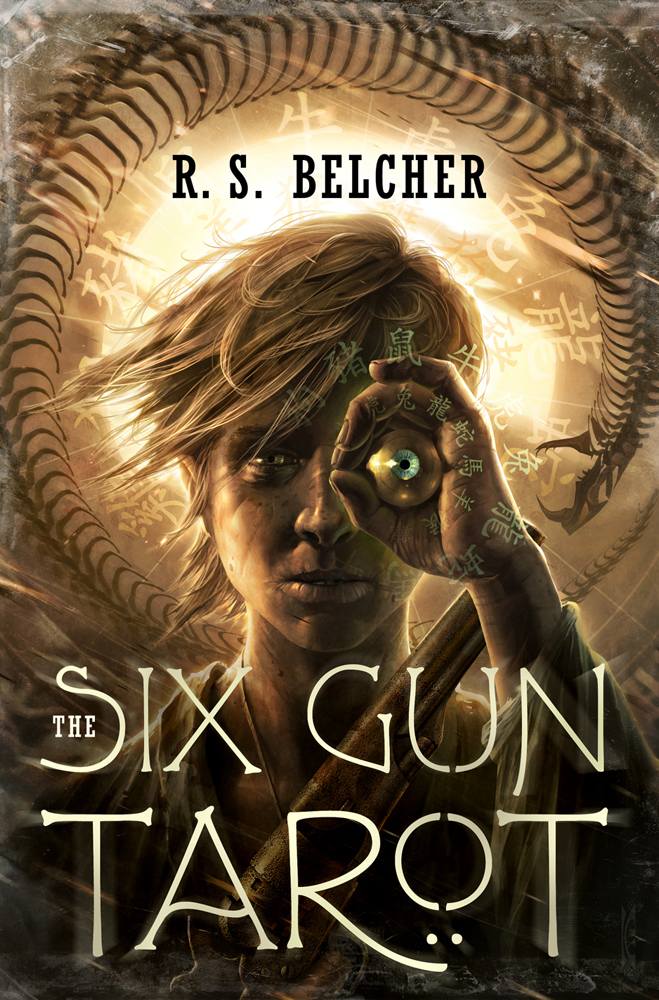
The Six-Gun Tarot-smallI’ve mentioned my fondness for this new Weird Western genre before. In the right hands, it’s an invigorating mix of mythic adventure and the straight-out gonzo weird. There’s been no shortage of fine examples recently, including Lee Collins’s She Returns From War, Guy Adams’s Once Upon a Time in Hell, Mercedes Lackey & Rosemary Edghill’s Dead Reckoning, and the Bloodlands novels of Christine Cody. Heck, even Firefly is a weird western, if you squint at it right.

The latest volume to cross my desk, hot off the presses last week in paperback, is the debut novel by R.S. Belcher. In a starred review, Library Journal called it “an astonishing blend of first-rate steampunk fantasy and Western adventure,” which sounds like just the right mix in my book.

Nevada, 1869: Beyond the pitiless 40-Mile Desert lies Golgotha, a cattle town that hides more than its share of unnatural secrets. The sheriff bears the mark of the noose around his neck; some say he is a dead man whose time has not yet come. His half-human deputy is kin to coyotes. The mayor guards a hoard of mythical treasures. A banker’s wife belongs to a secret order of assassins. And a shady saloon owner, whose fingers are in everyone’s business, may know more about the town’s true origins than he’s letting on.

A haven for the blessed and the damned, Golgotha has known many strange events, but nothing like the primordial darkness stirring in the abandoned silver mine overlooking the town. Bleeding midnight, an ancient evil is spilling into the world, and unless the sheriff and his posse can saddle up in time, Golgotha will have seen its last dawn… and so will all of Creation.

The Six-Gun Tarot was published on January 22, 2013 by Tor Books. It is 368 pages, priced at $25.99 in hardcover and $11.99 for the digital edition. It was re-issued in paperback on March 25, 2014.

Vintage Treasures: Starwolf by Edmond Hamilton

Vintage Treasures: Starwolf by Edmond Hamilton

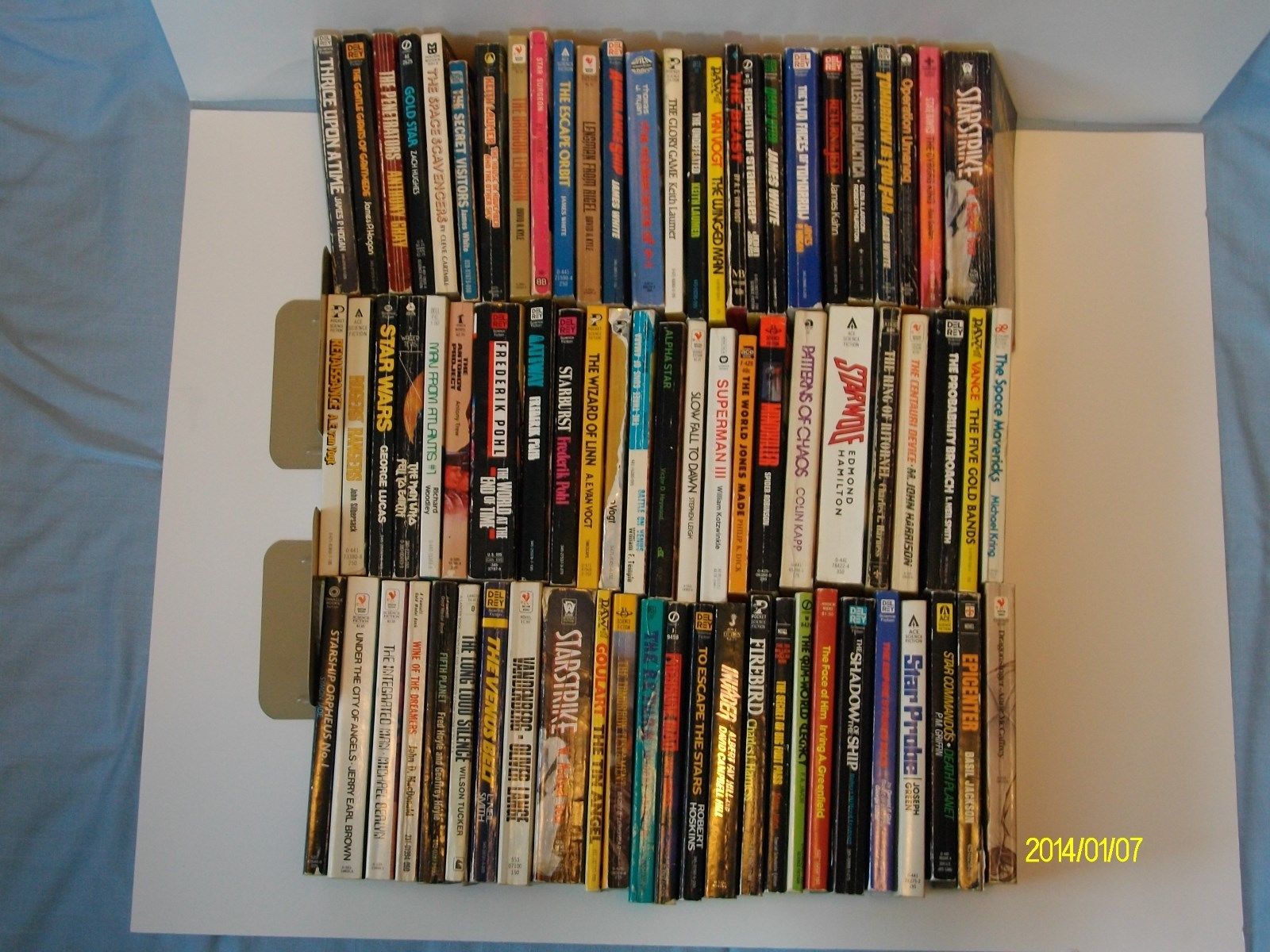
Edmond Hamilton Starwolf-smallLast week, I wrote about a delightful collection of 80′s paperbacks I bought on eBay for just 10 bucks — including John Silbersack’s Buck Rogers novel Rogers’ Rangers, well worth $10 all on its own. Sometimes it’s good when no one else shares your hobbies.

I’m still digging through the remaining 74 volumes and continuing to make marvelous finds. Like the omnibus collection of pulp novels by Edmond Hamilton, gathering together all three volumes in his classic Starwolf trilogy. It contains The Weapon From Beyond (1967), The Closed Worlds (1968), and The World of the Starwolves (1968), all originally published by Ace. That’s a lot of classic space adventure from one of the greatest pulp writers of the 20th Century. Well worth tracking down, if you can find a copy.

The only mercy a Starwolf could expect was death…

Morgan Chane was a Starwolf – a member of the most infamous band of interstellar pirates in the galaxy. He had flown with the raiding packs, rockets screaming, to plunder the rich and slaughter the helpless.

But Morgan Chane was also a Terran, adopted as a child into the Starwolf clan. And when a quarrel erupted, Chane discovered that the Starwolves weighed his alien birth more heavily than all the years of comradeship. Now he is cast out of the clan – and running for his life.

But where, in all the galaxy, can a Starwolf expect to find refuge?

Starwolf was published by Ace Books in October 1982. It is 456 pages, priced at $3.50. It went through multiple printings between 1982 and 1990, but has otherwise never been reprinted. There is no digital edition. The cover is by David Schleinkofer, who was obviously influenced by one too many viewings of Battlestar Galactica.

See all of our recent Vintage Treasures here.

Future Treasures: The Leopard by K.V. Johansen

Future Treasures: The Leopard by K.V. Johansen

The Leopard K V Johansen-smallLou Anders, editorial director of Pyr Books, may be the closest we have to Lin Carter in the field today: an editor with impeccable taste and boundless energy, who has also been a tireless champion for sword & sorcery. The latest he’s offering us is the opening volume in a new series from K.V. Johansen, the Canadian author of Blackdog (2011). Black Gate’s own James Enge blurbs The Leopard with a stylish tip of the hat to the great Harold Lamb: “I’m hooked. This mix of magic, Tibetan-style religion, and Harold Lamb-style adventure is pretty addicting.” Sounds pretty darn good to me.

Ahjvar, the assassin known as the Leopard, wants only to die, to end the curse that binds him to a life of horror. Although he has no reason to trust the goddess Catairanach or her messenger Deyandara, fugitive heir to a murdered tribal queen, desperation leads him to accept her bargain: if he kills the mad prophet known as the Voice of Marakand, Catairanach will free him of his curse. Accompanying him on his mission is the one person he has let close to him in a lifetime of death, a runaway slave named Ghu. Ahj knows Ghu is far from the half-wit others think him, but in Marakand, the great city where the caravan roads of east and west meet, both will need to face the deepest secrets of their souls, if either is to survive the undying enemies who hunt them and find a way through the darkness that damns the Leopard.

To Marakand, too, come a Northron wanderer and her demon verrbjarn lover, carrying the obsidian sword Lakkariss, a weapon forged by the Old Great Gods to bring their justice to the seven devils who escaped the cold hells so long before.

The Leopard is Volume One of Marakand. It will be published on June 10 by Pyr Books. It is 370 pages, to be priced at $18 in trade paperback and $11.99 for the digital version. The second volume, The Lady, is scheduled to arrive in December (see the cover here).

Doctor Who and the Daemons – the Novel!

Doctor Who and the Daemons – the Novel!

Daemons002 More than once on Black Gate, I’ve heard that the seventies were a dead zone for science fiction and fantasy. For teens in search of readily available genre “gateway drugs,” I suppose this might have been true for many, but my particular experience of growing up managed, against all odds, to be different. Ohio was my home base, a vanilla environment for “culture” of the fantastical sort, but luckily I had a smorgasbord of British relatives. One especially perceptive and sibylline aunt started sending me Doctor Who novelizations.

Doctor Who and the Dinosaur Invasion, that was the first I tried. Next, one of the best offerings in the canon, Doctor Who and the Auton Invasion.  I was in third grade and after facing down those blank-eyed Autons and their Nestene masters, I was hooked.

Note that I wasn’t in any way watching the TV show. In Columbus, Ohio, it simply wasn’t available, not until the early eighties, and then, when PBS did pick up a few random episodes, it was Tom Baker’s roost to rule. The Jon Pertwee, Patrick Troughton, and William Hartnell adventures I first encountered were absent entire.

What Tom Baker’s run taught me is that talented actors can be mired forever in substandard scripts and even worse special effects. This was a total and unpleasant surprise, because the novelizations were fast-paced genre gems, especially those penned by Terrance Dicks.  (Malcolm Hulke was the other regular adapter for the Doctor Who franchise, with a rotating cast of fellow contributors including Gerry Davis, Ian Marter, and David Whitaker.) How could such pacey, adrenaline-filled books arise from such hokey, hamstrung screen material?

Read More Read More

New Treasures: Once Upon a Time in Hell by Guy Adams

New Treasures: Once Upon a Time in Hell by Guy Adams

Once Upon a Time in Hell Guy Adams-smallYou know, I try not to play favorites with these New Treasures posts. The whole point is to present a diverse sampling of the most intriguing fantasy crossing my desk every week. It defeats the purpose if I keep talking about the same writers week after week, so I don’t do it.

Unless your name is Guy Adams, apparently. I wrote up his novel of hidden laboratories, genetic engineering, and Sherlock Holmes, The Army of Dr. Moreau, back in August 2012, and his noir jazz club mystery Deadbeat: Makes You Stronger last October. But it was his gonzo fantasy-western, The Good The Bad and the Infernal, released last March, that really grabbed my attention and I’ve anxiously been awaiting the sequel. Now that it’s arrived, here I am talking about Guy Adams again. It’s not my fault, I swear.

A weird western, a gun-toting, cigarrillo-chewing fantasy built from hangman’s rope and spent bullets. The west has never been wilder.

Wormwood has appeared, and with it a doorway to the afterlife. But what use is a door if you can’t step through it?

Hundreds have battled unimaginable odds to reach this place, including the blind shooter Henry Jones; the drunk and liar Roderick Quartershaft; that most holy, yet enigmatic of orders, the Brotherhood of Ruth; the inventor Lord Forset and his daughter Elisabeth; the fragile messiah Soldier Joe and his nurse Hope Lane. Of them all, Elwyn Wallace, a young man who only wanted to travel west for a job, would have happily forgone the experience. But he finds himself abroad in Hell, a nameless, aged gunslinger by his side. He had thought nothing could match the terror of his journey thus far, but time will prove him wrong.

On the road to Hell, good intentions don’t mean a damn.

Once Upon a Time in Hell is Book two of The Heaven’s Gate Trilogy. It was published on December 31, 2013 by Solaris. It is 283 pages, priced at $7.99 in paperback and $6.99 for the digital edition.

Urban Areas: The City, by Stella Gemmell

Urban Areas: The City, by Stella Gemmell

The CityA little while ago, I stumbled on a book that seemed especially worth writing about here: The City, by Stella Gemmell. It’s Gemmell’s first solo novel; she also completed Troy: Fall of Kings, the last book by her late husband, David. David Gemmell was a widely-known heroic fantasy writer — those unfamiliar with his work can see his Wikipedia entry, a wiki dedicated to his books, an obituary from The Guardian, a retrospective of his life and career from this site, and a look back at his first novel, Legend. I’ve only read a couple of his works myself, his early novels Legend and Waylander, but knowing his background I found myself curious about The City.

It’s the story of a vast, unnamed city at the centre of a sprawling empire, engaged in an ongoing brutal war and ruled by a mysterious immortal. The novel begins with a disgraced general struggling to survive in the labyrinthine sewers that undergird the city, then begins moving freely through a large cast, most of whom are soldiers in the city’s army. It becomes clear that the Emperor’s a tyrant, who must be overthrown — but can any merely human conspiracy survive against his mysterious powers?

The fantasy element of the book’s fairly light, beyond the setting (which itself turns out to have its own secrets). The book’s main focus is on war, battle, and the experience of the individual soldier. It ably moves from plot strand to plot strand, character to character, and occasionally skips forward by years or months. It’s an intricately-plotted book, and I suspect benefits from being read in a short time. Luckily, the style’s clear and plain without being simplistic, driving the reader on quickly through a series of fights and betrayals.

Read More Read More

The Novels of Michael Shea: A Quest for Simbilis

The Novels of Michael Shea: A Quest for Simbilis

A Quest for Simbilis-smallThe stories that surround Michael Shea’s first novel, A Quest for Simbilis, have the stuff of legend.

In the early 70s, Michael found a copy of Jack Vance’s Dying Earth novel The Eyes of the Overworld in the lobby of a hotel in Juneau, Alaska. The book stayed with him for four years, through a brief first marriage and extensive travels, hitch-hiking through France and Spain, until he sat down to write an homage to Vance and a sequel to his novel. It was published in paperback by DAW Books in 1974 and was a finalist for the British Fantasy Award.

There are dangers to playing in someone else’s playground, and some at the time saw Michael as a dabbler, not really serious about writing. But nothing could have been further from the truth, as his wife Lynn noted in the announcement of his death at Michael Shea’s website on March 7th.

Michael published his first novel, A Quest for Simbilis, in 1974, and for all the years that I knew him, he wrote almost every day. Novels, short stories, and, his first love, poetry poured out of him up through the very last day of his life. Some thought of Michael as reclusive, when in fact he was just old-fashioned, a writer’s writer. Once a piece was perfect, he wanted to set it aside, forget it, and begin the next project. Even so, we, his family, feel that, along with our memories, his written works are what we still have of him.

Michael’s family have now turned his website into a forum where his friends and fans can “share their experiences, both literary and personal, as well as find access to new releases and formats of his work.” Visit the site here.

Jack Vance graciously declined to share the advance offered by DAW Books for A Quest for Simbilis, but allowed the book to be released as an authorized sequel to his Dying Earth novels. Eventually, Vance took the series in a different direction when he published a third book, Cugel’s Saga, in 1983.

Read More Read More

New Treasures: The Iron Jackal by Chris Wooding

New Treasures: The Iron Jackal by Chris Wooding

The Iron Jackal-smallChris Wooding’s Ketty Jay novels come packed with witty dialog, high-flying adventure, and a hearty dose of steampunk fantasy — not to mention some great covers (see the British editions of the first three here). The previous volumes, Retribution Falls and The Black Lung Captain, were published in the US by Bantam Spectra; with the third Wooding switches publishers to Titan, bringing a new look to a series that has been compared to Firefly. If you’re on the hunt for a new series that includes sky pirates, quirky characters, and swashbuckling fantasy, this might be exactly what you’re looking for.

Things are looking good for Captain Frey, roguish captain of the Ketty Jay and her dysfunctional crew of layabouts. Accustomed to living on the wrong side of the law, running contraband, robbing airships and generally making a nuisance of themselves, Frey’s rag-tag bunch of no-hopers is finally on the rise from bottom-feeding freebooters to bar-room celebrities. And, just for once, nobody is trying to kill them.

Even Trinci Dracken, Frey’s one-time fiancée and long-time nemesis, has given up her quest for revenge. In fact, she’s offered him a job — one that will take his crew deep into the desert heart of Samarla, land of their ancient enemies, where the secrets of the past lie in wait for the unwary. Secrets that might very well cost Frey everything.

Join the crew of the Ketty Jay on their greatest adventure yet: a story of mayhem and mischief, roof-top chases and death-defying races, murderous daemons, psychopathic golems and a particularly cranky cat.

Chris Wooding is also the author of Malice, Storm Thief, and over a dozen other books. He has announced that the fourth volume in the series, the upcoming The Ace of Skulls, scheduled for release in August, is also the last.

The Iron Jackal was published by Titan Books on March 11, 2014. It is 480 pages, priced at $14.95 for the trade paperback and $9.99 for the digital edition.

I Invoke the Voidal! Oblivion Hand by Adrian Cole

I Invoke the Voidal! Oblivion Hand by Adrian Cole

oie_24224952K95LzfUEStripped of all his memories for some great transgression against the Dark Gods, the mysterious one called the Voidal, or Fatecaster, endlessly traverses the dimensions of the omniverse. Always he brings vengeance via his Oblivion Hand, an additional punishment of the Dark Gods. And furthermore, any who aid or befriend him are made to suffer.

Oblivion Hand (Wildside Press 2001) is a fix-up of eight early stories by Adrian Cole about his dark wanderer, the Voidal. Cole’s amnesiac protagonist was introduced in a chapbook titled “The Coming of the Voidal” (in this book reworked and retitled “Well Met in Hell.”) Five more tales appeared in a variety of small magazines and anthologies between 1977 and 1980, including Fantasy Crossroads and the Gerald Page-edited Heroic Fantasy. Two more, “The Lair of the Spydron” and “Urge and Demiurge,” were scheduled to be in Phantasy Digest and Weird Adventures respectively, but both magazines shut down before the stories could be published. They appear for the first time in Oblivion Hand.

In a review I did of the first two stories, “Well Met in Hell” and “The Lair of the Spydron,” I was harsh and almost disdainful. Still, there was something about them that I remember liking. Reading Lin Carter’s Kellory the Warlock last week (and whoever thought a writer most people agree was generally mediocre could attract so many comments a quarter of a century after his death?), elements of it reminded me of Cole’s book. Both authors were intent on creating a setting that wasn’t just another watered down mimeograph of Middle-earth; they wanted something stranger. Carter succeeded, but Cole did immeasurably better.

Cole’s omniverse is an endless collection of interesting settings: universe-sized dimensions; monster-infested pocket worlds; a realm filled not with planets but islands that float in space. Countless arrays of gods rule over these various worlds. Terrible beings like the Spydron create and work their will on hidden places they carve out for themselves. Powerful sorcerers raise themselves up above the gods in other worlds.

Read More Read More