Browsed by
Category: Series Fantasy

In A Land Before Atlantis and Mu: The House of Cthulhu by Brian Lumley

In A Land Before Atlantis and Mu: The House of Cthulhu by Brian Lumley

oie_214202658YPxSzMI imagine that when most people hear the name Brian Lumley, they think of his vast Necroscope series. You know — the books with the malformed skulls on the covers. If your memory is a little longer, you might think of his August Derleth-influenced contributions to the Cthulhu Mythos series, featuring the supernatural sleuth Titus Crow. And in case you didn’t know, he’s also a prolific writer of really great horror short stories. Even if I didn’t love the stories in his collections, Fruiting Bodies and Other Fungi and Beneath the Moors and Darker Places, I’d still love them for their titles.

While I did know about all those books and stories, what I didn’t know was that he’d written a whole series of swords & sorcery tales set in Earth’s earliest days on the primeval continent Theem’hdra. I had read a story in Andrew Offutt’s anthology, Swords Against Darkness IV, called “Cryptically Yours,” but hadn’t realized it was part of a much longer series of adventurous stories of wizards and warriors.

Recently, I learned from from Paul McNamee that Subterranean Press was making a lot of Lumley e-books available at $2.99 a volume. I immediately bought three story collections: Haggopian and Other StoriesThe Taint and Other Novellas, and No Sharks in the Med. I’ve dipped into all three already and recommend them all.

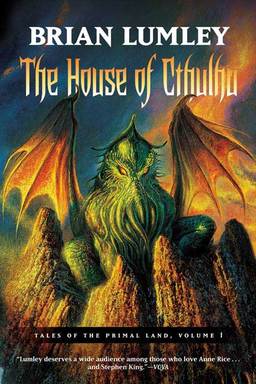
My buying spree led me to check out Lumley’s website, which led me to something called The House of Cthulhu: Tales of the Primal Land (2010). I learned it was the first of three collections of adventures from the dawn of time. While Tor Books wasn’t selling it as cheaply as the Subterranean collections, I still hit the buy-button. Within minutes, I was traveling back into the deep ages of the world to the Primal Land, encountering giant slug-gods, sorcerers striving for immortality, amoral barbarians, and old Cthulhu himself.

Read More Read More

2014 Hugo Award Nominees Announced

2014 Hugo Award Nominees Announced

The nominees for the 2014 Hugo Awards have been announced by LonCon 3, the 72nd World Science Fiction Convention, and let’s not mince words: it’s a wacky ballot.
What’s so wacky about it? Well, to start with, the novel category includes The Wheel of Time. That’s right, the complete series. Which means that 2013 novels likes Parasite by Mira Grant and Ancillary Justice by Ann Leckie will be up against one of the great phenomena in publishing history, a series spanning more than 20 years with combined sales of 44 million (to put that in perspective, George R.R. Martin’s A Song of Ice and Fire, which includes A Game of Thrones, has sold a paltry 24 million copies). Not exactly sure how that happened, but I wouldn’t want to be one of the other novel nominees this year.

There are additional surprises. Analog magazine, effectively shut out of Hugo nominations for many years, has surged back into the limelight with two nominations (both for Brad Torgersen), and the traditionally strong Asimov’s SF and F&SF both come away empty-handed. Some folks are laying the credit (or blame) for that on an organized campaign of bloc voting by nominee Larry Correia, which successfully placed as many as seven nominees on the ballot… but really, every year someone gets accused of bloc voting and it’s tough to blame someone for having enthusiastic fans.

It’s a triumph for Tor.com, with no less than four short fiction nods — more than all the print magazines combined. And the highly regarded Clarkesworld, which led the pack for short fiction nominations last year, didn’t make the ballot at all.

There are lots of people to congratulate, including several Black Gate contributors on the list, but I’d like to give a special shout-out to Scott Taylor, who acquired Dan Wells’s The Butcher of Khardov while he was an editor at Privateer Press. While I’d have to do some research to confirm it, I believe this is the first piece of licensed fiction to be nominated for a Hugo Award for Best Novella. Congrats on helping to make history, Scott!

The nominees for the 2014 Hugo Awards are:

Best Novel

Warbound, Larry Correia (Baen)
Parasite, Mira Grant (Orbit)
The Wheel of Time (complete series), Robert Jordan & Brandon Sanderson (Tor)
Ancillary Justice, Ann Leckie (Orbit)
Neptune’s Brood, Charles Stross (Ace)

Read More Read More

Raised On Potter: Give the People What They Want?

Raised On Potter: Give the People What They Want?

864751637_bbb406661f_zAs I mentioned in a recent post, I just finished teaching a creative writing course. Most of my students were college sophomores. None were creative writing majors. To cut a successful swath through my class, they had to write a short story, a poem, and a short play — and then revise each one multiple times. In order to bring a proper perspective to their efforts, I forced them (at dagger point) to read a great many examples of each form.

Thus ends the exposition. Now for the drama!

At the tail end of the semester, I asked my students to rank each reading on a five point scale, with one being exceptional and five a yawner. Imagine my surprise when I discovered that without exception, it was the fantasy and horror offerings on my syllabus that drew the strongest responses.

What can account for this?

My answer: J.K. Rowling.

Read More Read More

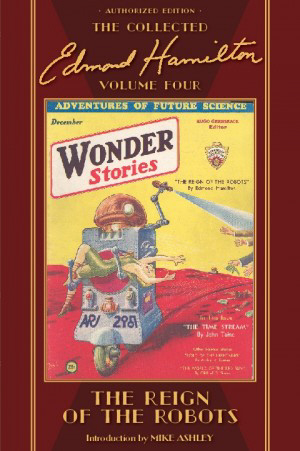
The Best One-Sentence Reviews of Edmond Hamilton: The Winner of The Collected Edmond Hamilton, Volume Four

The Best One-Sentence Reviews of Edmond Hamilton: The Winner of The Collected Edmond Hamilton, Volume Four

The Collected Edmond Hamilton Volume Four-smallLast month, we invited Black Gate readers to send us a one-sentence review of their favorite Edmond Hamilton novel or short story.

In return, we offered to award a copy of the long-awaited fourth volume of The Collected Edmond Hamilton from Haffner Press to one lucky winner. The winner was randomly drawn from the list of all qualified entrants.

Before we announce the winner, let’s have a look at some of the entries. We can’t reprint all of them, but we can hit the highlights. (But fret not — all qualifying entries received before April 20 were included in the drawing.)

We left the choice of what novel or story to review up to you and we weren’t too surprised to find the most popular topic was Edmond Hamilton’s The Star Kings series. Robert James Parker kicked things off with this review:

John Gordon, suffering from an existential crisis, agrees to travel through time and space to the far future where he gets caught up in a sweeping space opera full of cosmic space battles, beautiful princesses, and bizarre monsters.

Andy Sheets gets bonus points for a completely à propos Alan Rickman reference.

How can you not be enticed by a story about an out of step WWII veteran getting mind-swapped into the body of a prince 200,000 years in the future, hooking up with a foxy future princess, and battling The League of Dark Worlds, lead by a guy who should totally be played by Alan Rickman in the movie, with a super-weapon called the Disruptor, all tightly packed into a fast-moving novel not even 200 pages long?!

Read More Read More

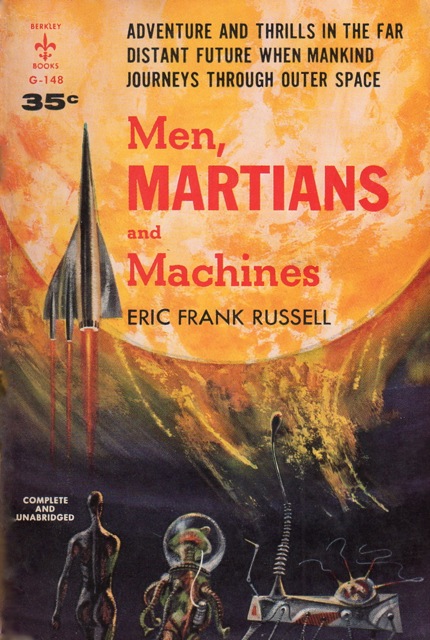
Vintage Treasures: Men, Martians, and Machines by Eric Frank Russell

Vintage Treasures: Men, Martians, and Machines by Eric Frank Russell

Men Martians and Machines-smallLast Sunday, I posted the latest article in my Ace Double series, this time focusing on Sentinels of Space by Eric Frank Russell and Don Wollheim’s The Ultimate Invader.

It made me realize that I’ve given precious little coverage to Eric Frank Russell over the years — really, a pretty serious oversight, considering what a fine writer he was. So I thought I’d remedy that here, starting with his 1955 volume Men, Martians, and Machines.

Men, Martians, and Machines is something of a problem child for catalogers. Wikipedia lists it as a novel, but it’s really not — it’s a collection of four linked stories, three published in Astounding during World War II, and one original. The Internet Speculative Fiction Database entry for Russell lists it as neither a collection nor a novel, creating a separate category for it.

In some ways the book is an early precursor to Star Trek. The stories follow the exploits of the rough-and-tumble crew of the solar freighter Upskadaska City, known more commonly as the Upsydaisy, who follow their Captain as he takes charge of one of the first faster-than-light starships, the Marathon. Captain McNulty leads his mixed crew of humans, jovial tentacled Martians, and one robot on voyages of discovery to far stars and strange alien planets.

Star Trek fans will certainly enjoy these proto-Trek stories and see how they influenced that seminal series two decades later. For me, these tales represent something even more primal. When I think of Golden Age robot stories, I think of Asimov; when I think of military science fiction, I think Heinlein. When I think of tales of brave exploration and camaraderie in the face of the vast mystery and terror of deep space, I think of Eric Frank Russell.

It’s his unique voice, I think, and the poetry and humanity of his prose, mixed with all the marvelous ray-gun trappings of pulp science fiction, that makes him such a joy to read. Here’s a snippet from the first story, “Jay Score,” as our unnamed narrator meets with the imposing new emergency pilot shortly after blast off.

Read More Read More

Future Treasures: Mirror Sight by Kristen Britain

Future Treasures: Mirror Sight by Kristen Britain

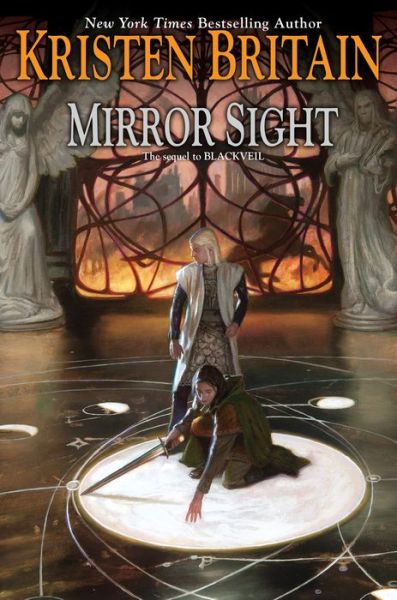
Mirror Sight-smallOne of the most rewarding things about running a pair of fan sites for nearly two decades — starting with SF Site in 1996, and continuing with the BG blog in late 2000 — has been being on the scene when a major new talent debuts. Those are the books you remember: Patrick Rothfuss’s The Name of the Wind, Steven Erikson’s Gardens of the Moon, Martha Wells’s ‘The Element of Fire, Jeff VanderMeer’s City of Saints and Madmen, James Enge’s Blood of Ambrose, Scott Lynch’s The Lies of Locke Lamora… and Kristen Britain’s Green Rider.

Green Rider made a huge splash with my small staff when it arrived in April 2000. Even my sister-in-law called me to complain, because I’d handed my niece a copy and now she wouldn’t budge from her room until she’d finished it. It was fast-paced, exciting, and everyone was asking me if there was going to be a sequel. (How the heck should I know?)

Well, there was a sequel — First Rider’s Call, in 2004 — followed by The High King’s Tomb (2008) and Blackveil (2012). And now the long-awaited fifth volume of one of the most popular fantasy series of the 21st Century is scheduled to arrive next month. My copy arrived this week and it looks fabulous.

Read More Read More

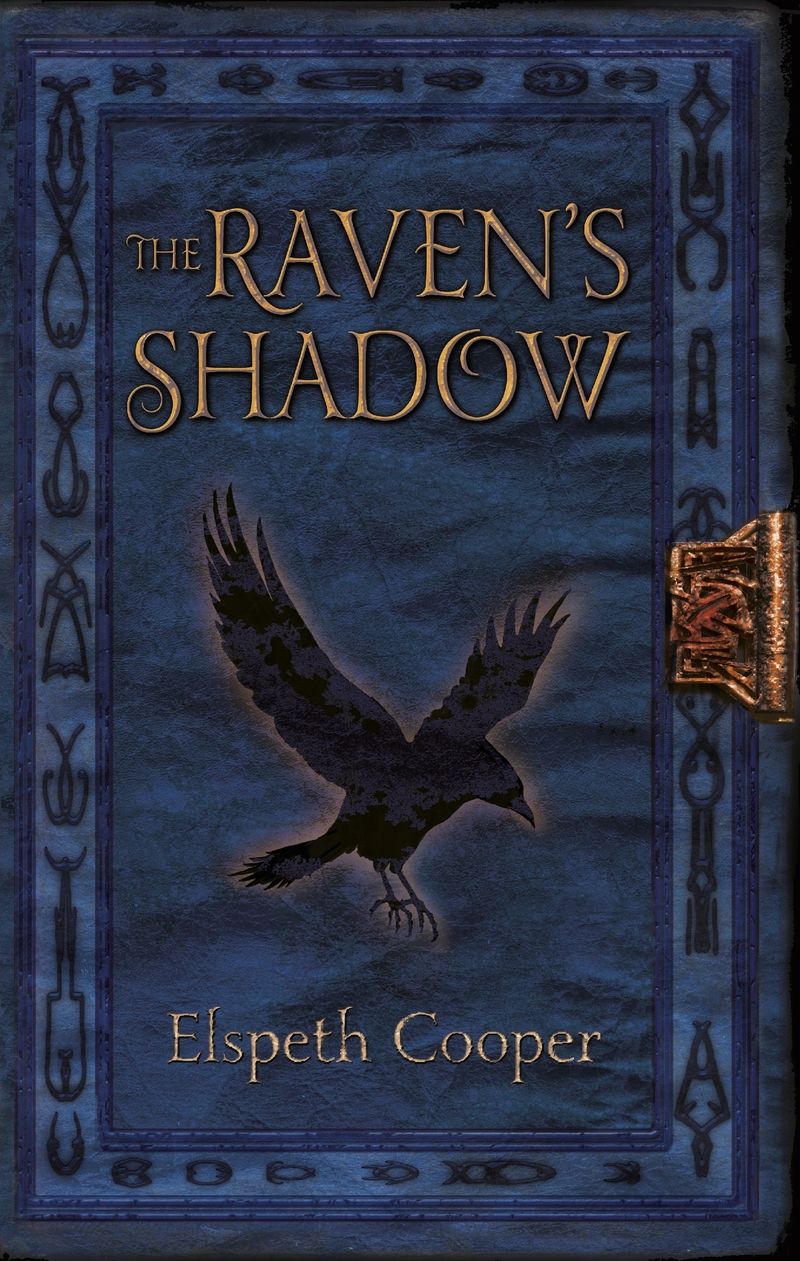
New Treasures: The Raven’s Shadow by Elspeth Cooper

New Treasures: The Raven’s Shadow by Elspeth Cooper

The Raven's Shadow-smallElspeth Cooper is a British fantasy writer whose first novel, Songs of the Earth, appeared in February 2012. It kicked off a new series, The Wild Hunt, with the tale of Novice Church Knight Gair, a man sentenced to death — and ultimately exiled — for his magical abilities.

The sequel, Trinity Rising, appeared in February 2013. Gair has proven himself to be the most powerful Guardian, but he’s still bound by grief over the loss of his home and his beloved. Gair and his mentor Alderan are being hunted by those who seek to extinguish the power of the song, and Gair quickly discovers he’s hurtling towards a conflict greater and more deadly than either of them expected. The third volume, newly arrived in March, finds war brewing on both sides of the Veil between the worlds.

The desert of Gimrael is aflame with violence, and in the far north an ancient hatred is about to spill over into the renewal of a war that, a thousand years ago, forged an empire. This time, it may shatter one.

Wrestling with his failing grip on the power of the Song, and still trying to come to terms with the horrifying events he witnessed in El Maqqam, Gair returns to the mainland with only one thing on his mind: vengeance. It may cost him his life, but when everything that he had to live for is being stripped away from him, that may be a fair price to pay.

Old friends and old foes converge in a battle of wills to stem the tide of the Nimrothi clans as they charge south to reclaim the lands lost in the Founding Wars. If they succeed, the rest of the empire may be their next target. And with the Wild Hunt at their head, the overstretched Imperial Army may not be enough to stop them.

Elspeth Cooper’s website has book trailers, summaries, and the first three chapters of all three books — including a sneak peek at her next book, The Dragon House. Check it out here.

The Raven’s Shadow was published by Tor Books on March 11. It is 567 pages, priced at $27.99 in hardcover and $14.99 for the digital edition. The cover art is by Dominic Harman.

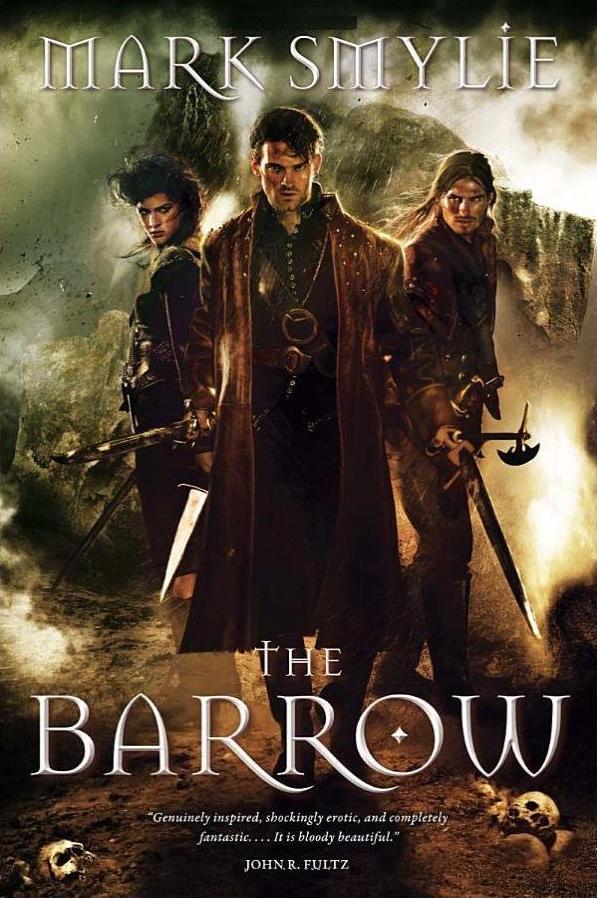
The Series Series: The Barrow by Mark Smylie

The Series Series: The Barrow by Mark Smylie

The Barrow-smallThe book mugged me. It was supposed to stay safely several weeks down in my queue while I kept commitments to other law-abiding books that had been waiting patiently for review. Then up walks The Barrow, brazen as you please, distracts me by flashing its jacket copy, and steals two weeks of all my attention right out of my calendar. But what else can you expect from a book full of gangsters, extortionists, rabble-rousers, mercenaries, slumming disgraced nobility, and assorted other low-life types?

I haven’t quite figured out how Mark Smylie pulled it off. The book has some obvious excellences, and some obvious failings, and some oddities that might be mistaken for one only to turn out to be the other. I’ll need to read more of Smylie’s work to figure out what tipped the balance in the book’s favor.

I found most of the characters somewhere between off-putting and odious, and nearly every time the body count went up by one, I was relieved at not having to put up with that character for one page longer. It’s as if Smylie had set himself the task of outdoing George R.R. Martin for grittiness of characterization, and overshot by twenty miles.

There are readers who love that sort of thing; I’m not usually one of them. As the endgame of the novel came in sight, there were only three characters I cared about at all — the enigmatic hero Stjepan Black-Heart, the cross-dressing street fighter Erim, and the disgraced noblewoman Annwyn. I kept coming back to my two snarky rhetorical questions: How are these two women going to survive ten more minutes surrounded by all those sociopaths? And when is Stjepan going to have a male friend who does not suck?

Only it turns out those are the questions that matter most, and several of the glitches I had mistaken for goofs on the author’s part ended up being the keys to the story’s other puzzles.

Read More Read More

George R.R. Martin is Spoiling HBO’s Game of Thrones

George R.R. Martin is Spoiling HBO’s Game of Thrones

George RR Martin A Game of Thrones-smallThis article has been making the rounds on the Internet since it was posted yesterday at UK satire site Underground Magazine — and it’s too good not to share. Funny as it is, the numerous outraged comments it’s received, from shall-we-say less informed fans of the HBO show, are equally hilarious (some of the comments were posted on Weird Tales’ Facebook page).

The entertainment industry was today warning fans of the popular HBO series Game Of Thrones to avoid ‘at all costs’ a series of books by a rogue enthusiast named George R.R. Martin, who has written five whole volumes consisting solely of spoilers for the popular television show.

“This man is dangerous and wants to ruin everyone’s enjoyment of a much-loved fantasy drama.” said executive producer D. B. Weiss. “It’s a sad symptom of today’s ‘binge’ culture that people can’t just wait and enjoy things as they are released. They want everything at once…”

Some of the books in question, which add up to a total of some 4,200 pages, contain so many spoilers that they have had to be split into volumes. HBO executives are investigating how Martin is able to work on new editions set far in advance of the current TV series.

TV fan Simon Rix told us he “picked up a copy of one of the books thinking it was a companion piece or a spin-off from the TV show, but after reading all of them in one week, I had the whole show ruined for me in intricate detail. There were characters I’d never heard of, plot lines that went way off course, and not nearly as much nudity.”

Read the complete article here.

My Favorite Fantasy Settings

My Favorite Fantasy Settings

The Shire, from War of the Ring (SPI)-smallIn writer’s jargon, they are often called “secondary worlds.” They are places of imagination where we authors create characters, towns, city-states, nations, and even entire planets. One of the aspects of writing I love best is the ability to fashion my own setting, from the politics and government down to the clothing fashions and local foods.

As a fantasy reader, I’ve had so many favorites over the years. They have inspired and amazed me. Here are some that I’ll never forget.

Middle Earth: J.R.R. Tolkien’s The Lord of the Rings is a fantastic epic for many reasons, but one of the most enduring is its setting. Middle Earth.

Tolkien may have created the most elaborate, detailed fictional setting in history, even creating his own languages for the various races. Some detractors have called his opus a “travelogue,” but to read LOTR is to enter a living, breathing world, both familiar and strange. Sometimes the journey IS the adventure.

Read More Read More