Browsed by
Category: Series Fantasy

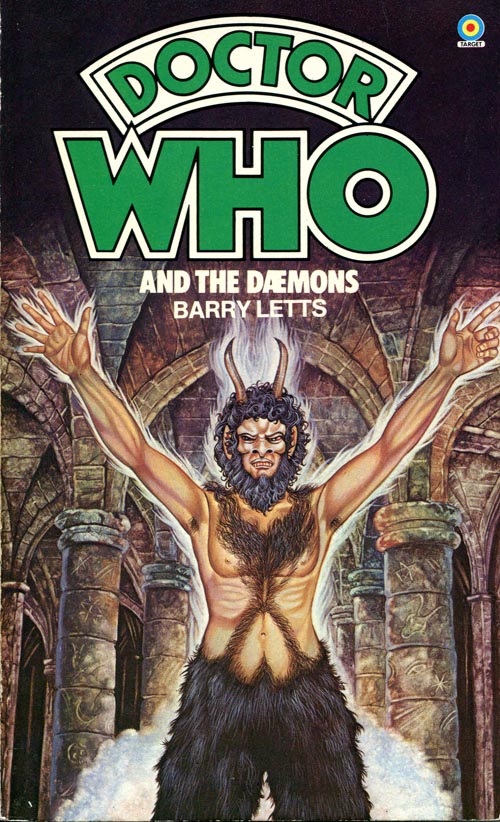
Doctor Who and the Daemons – the Novel!

Doctor Who and the Daemons – the Novel!

Daemons002 More than once on Black Gate, I’ve heard that the seventies were a dead zone for science fiction and fantasy. For teens in search of readily available genre “gateway drugs,” I suppose this might have been true for many, but my particular experience of growing up managed, against all odds, to be different. Ohio was my home base, a vanilla environment for “culture” of the fantastical sort, but luckily I had a smorgasbord of British relatives. One especially perceptive and sibylline aunt started sending me Doctor Who novelizations.

Doctor Who and the Dinosaur Invasion, that was the first I tried. Next, one of the best offerings in the canon, Doctor Who and the Auton Invasion.  I was in third grade and after facing down those blank-eyed Autons and their Nestene masters, I was hooked.

Note that I wasn’t in any way watching the TV show. In Columbus, Ohio, it simply wasn’t available, not until the early eighties, and then, when PBS did pick up a few random episodes, it was Tom Baker’s roost to rule. The Jon Pertwee, Patrick Troughton, and William Hartnell adventures I first encountered were absent entire.

What Tom Baker’s run taught me is that talented actors can be mired forever in substandard scripts and even worse special effects. This was a total and unpleasant surprise, because the novelizations were fast-paced genre gems, especially those penned by Terrance Dicks.  (Malcolm Hulke was the other regular adapter for the Doctor Who franchise, with a rotating cast of fellow contributors including Gerry Davis, Ian Marter, and David Whitaker.) How could such pacey, adrenaline-filled books arise from such hokey, hamstrung screen material?

Read More Read More

New Treasures: Once Upon a Time in Hell by Guy Adams

New Treasures: Once Upon a Time in Hell by Guy Adams

Once Upon a Time in Hell Guy Adams-smallYou know, I try not to play favorites with these New Treasures posts. The whole point is to present a diverse sampling of the most intriguing fantasy crossing my desk every week. It defeats the purpose if I keep talking about the same writers week after week, so I don’t do it.

Unless your name is Guy Adams, apparently. I wrote up his novel of hidden laboratories, genetic engineering, and Sherlock Holmes, The Army of Dr. Moreau, back in August 2012, and his noir jazz club mystery Deadbeat: Makes You Stronger last October. But it was his gonzo fantasy-western, The Good The Bad and the Infernal, released last March, that really grabbed my attention and I’ve anxiously been awaiting the sequel. Now that it’s arrived, here I am talking about Guy Adams again. It’s not my fault, I swear.

A weird western, a gun-toting, cigarrillo-chewing fantasy built from hangman’s rope and spent bullets. The west has never been wilder.

Wormwood has appeared, and with it a doorway to the afterlife. But what use is a door if you can’t step through it?

Hundreds have battled unimaginable odds to reach this place, including the blind shooter Henry Jones; the drunk and liar Roderick Quartershaft; that most holy, yet enigmatic of orders, the Brotherhood of Ruth; the inventor Lord Forset and his daughter Elisabeth; the fragile messiah Soldier Joe and his nurse Hope Lane. Of them all, Elwyn Wallace, a young man who only wanted to travel west for a job, would have happily forgone the experience. But he finds himself abroad in Hell, a nameless, aged gunslinger by his side. He had thought nothing could match the terror of his journey thus far, but time will prove him wrong.

On the road to Hell, good intentions don’t mean a damn.

Once Upon a Time in Hell is Book two of The Heaven’s Gate Trilogy. It was published on December 31, 2013 by Solaris. It is 283 pages, priced at $7.99 in paperback and $6.99 for the digital edition.

Urban Areas: The City, by Stella Gemmell

Urban Areas: The City, by Stella Gemmell

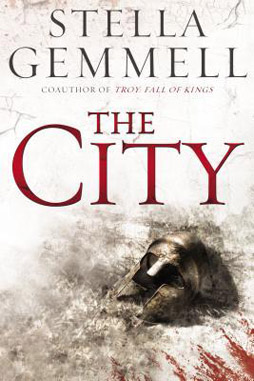
The CityA little while ago, I stumbled on a book that seemed especially worth writing about here: The City, by Stella Gemmell. It’s Gemmell’s first solo novel; she also completed Troy: Fall of Kings, the last book by her late husband, David. David Gemmell was a widely-known heroic fantasy writer — those unfamiliar with his work can see his Wikipedia entry, a wiki dedicated to his books, an obituary from The Guardian, a retrospective of his life and career from this site, and a look back at his first novel, Legend. I’ve only read a couple of his works myself, his early novels Legend and Waylander, but knowing his background I found myself curious about The City.
It’s the story of a vast, unnamed city at the centre of a sprawling empire, engaged in an ongoing brutal war and ruled by a mysterious immortal. The novel begins with a disgraced general struggling to survive in the labyrinthine sewers that undergird the city, then begins moving freely through a large cast, most of whom are soldiers in the city’s army. It becomes clear that the Emperor’s a tyrant, who must be overthrown — but can any merely human conspiracy survive against his mysterious powers?

The fantasy element of the book’s fairly light, beyond the setting (which itself turns out to have its own secrets). The book’s main focus is on war, battle, and the experience of the individual soldier. It ably moves from plot strand to plot strand, character to character, and occasionally skips forward by years or months. It’s an intricately-plotted book, and I suspect benefits from being read in a short time. Luckily, the style’s clear and plain without being simplistic, driving the reader on quickly through a series of fights and betrayals.

Read More Read More

The Novels of Michael Shea: A Quest for Simbilis

The Novels of Michael Shea: A Quest for Simbilis

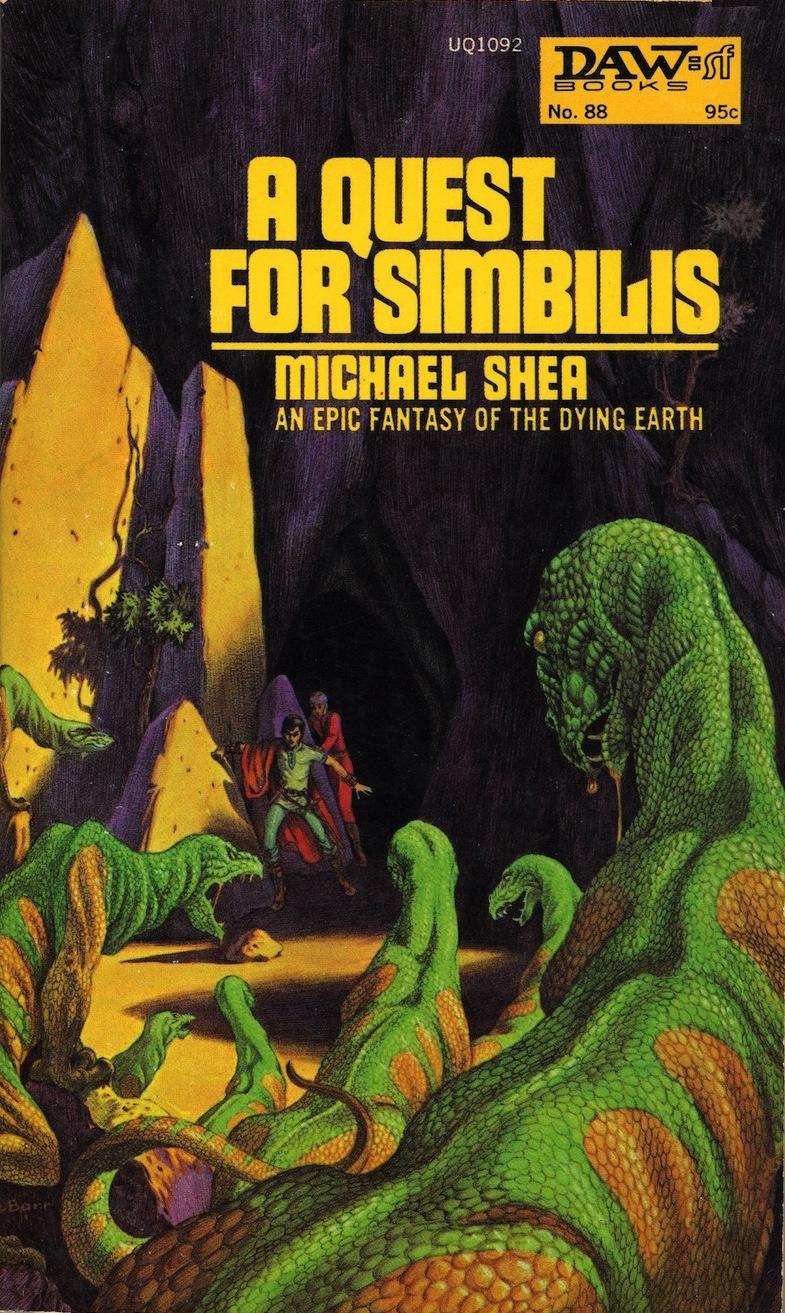
A Quest for Simbilis-smallThe stories that surround Michael Shea’s first novel, A Quest for Simbilis, have the stuff of legend.

In the early 70s, Michael found a copy of Jack Vance’s Dying Earth novel The Eyes of the Overworld in the lobby of a hotel in Juneau, Alaska. The book stayed with him for four years, through a brief first marriage and extensive travels, hitch-hiking through France and Spain, until he sat down to write an homage to Vance and a sequel to his novel. It was published in paperback by DAW Books in 1974 and was a finalist for the British Fantasy Award.

There are dangers to playing in someone else’s playground, and some at the time saw Michael as a dabbler, not really serious about writing. But nothing could have been further from the truth, as his wife Lynn noted in the announcement of his death at Michael Shea’s website on March 7th.

Michael published his first novel, A Quest for Simbilis, in 1974, and for all the years that I knew him, he wrote almost every day. Novels, short stories, and, his first love, poetry poured out of him up through the very last day of his life. Some thought of Michael as reclusive, when in fact he was just old-fashioned, a writer’s writer. Once a piece was perfect, he wanted to set it aside, forget it, and begin the next project. Even so, we, his family, feel that, along with our memories, his written works are what we still have of him.

Michael’s family have now turned his website into a forum where his friends and fans can “share their experiences, both literary and personal, as well as find access to new releases and formats of his work.” Visit the site here.

Jack Vance graciously declined to share the advance offered by DAW Books for A Quest for Simbilis, but allowed the book to be released as an authorized sequel to his Dying Earth novels. Eventually, Vance took the series in a different direction when he published a third book, Cugel’s Saga, in 1983.

Read More Read More

New Treasures: The Iron Jackal by Chris Wooding

New Treasures: The Iron Jackal by Chris Wooding

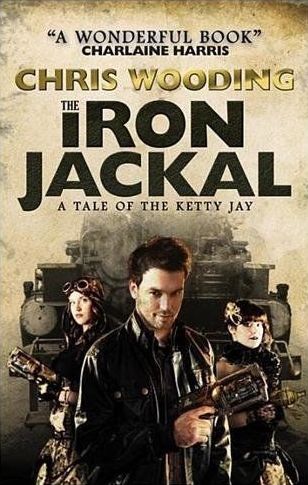
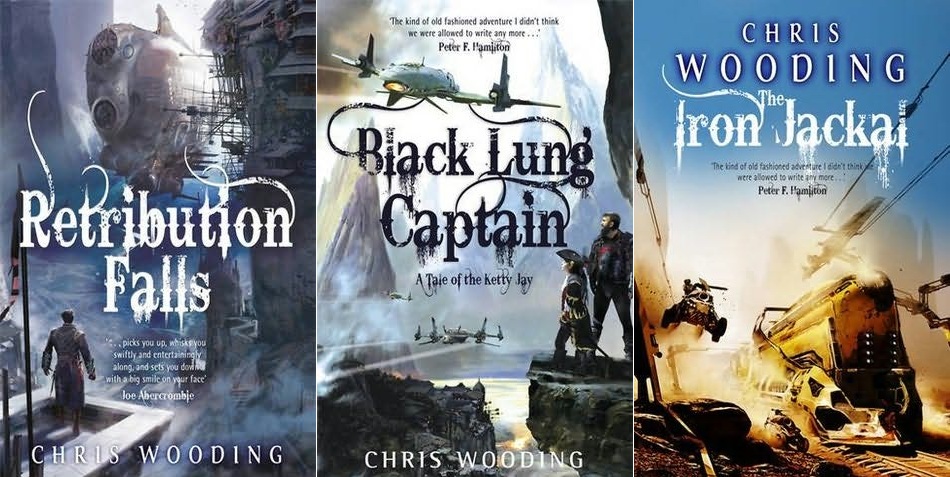
The Iron Jackal-smallChris Wooding’s Ketty Jay novels come packed with witty dialog, high-flying adventure, and a hearty dose of steampunk fantasy — not to mention some great covers (see the British editions of the first three here). The previous volumes, Retribution Falls and The Black Lung Captain, were published in the US by Bantam Spectra; with the third Wooding switches publishers to Titan, bringing a new look to a series that has been compared to Firefly. If you’re on the hunt for a new series that includes sky pirates, quirky characters, and swashbuckling fantasy, this might be exactly what you’re looking for.

Things are looking good for Captain Frey, roguish captain of the Ketty Jay and her dysfunctional crew of layabouts. Accustomed to living on the wrong side of the law, running contraband, robbing airships and generally making a nuisance of themselves, Frey’s rag-tag bunch of no-hopers is finally on the rise from bottom-feeding freebooters to bar-room celebrities. And, just for once, nobody is trying to kill them.

Even Trinci Dracken, Frey’s one-time fiancée and long-time nemesis, has given up her quest for revenge. In fact, she’s offered him a job — one that will take his crew deep into the desert heart of Samarla, land of their ancient enemies, where the secrets of the past lie in wait for the unwary. Secrets that might very well cost Frey everything.

Join the crew of the Ketty Jay on their greatest adventure yet: a story of mayhem and mischief, roof-top chases and death-defying races, murderous daemons, psychopathic golems and a particularly cranky cat.

Chris Wooding is also the author of Malice, Storm Thief, and over a dozen other books. He has announced that the fourth volume in the series, the upcoming The Ace of Skulls, scheduled for release in August, is also the last.

The Iron Jackal was published by Titan Books on March 11, 2014. It is 480 pages, priced at $14.95 for the trade paperback and $9.99 for the digital edition.

I Invoke the Voidal! Oblivion Hand by Adrian Cole

I Invoke the Voidal! Oblivion Hand by Adrian Cole

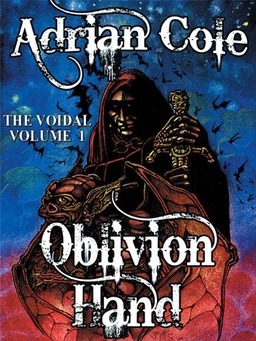
oie_24224952K95LzfUEStripped of all his memories for some great transgression against the Dark Gods, the mysterious one called the Voidal, or Fatecaster, endlessly traverses the dimensions of the omniverse. Always he brings vengeance via his Oblivion Hand, an additional punishment of the Dark Gods. And furthermore, any who aid or befriend him are made to suffer.

Oblivion Hand (Wildside Press 2001) is a fix-up of eight early stories by Adrian Cole about his dark wanderer, the Voidal. Cole’s amnesiac protagonist was introduced in a chapbook titled “The Coming of the Voidal” (in this book reworked and retitled “Well Met in Hell.”) Five more tales appeared in a variety of small magazines and anthologies between 1977 and 1980, including Fantasy Crossroads and the Gerald Page-edited Heroic Fantasy. Two more, “The Lair of the Spydron” and “Urge and Demiurge,” were scheduled to be in Phantasy Digest and Weird Adventures respectively, but both magazines shut down before the stories could be published. They appear for the first time in Oblivion Hand.

In a review I did of the first two stories, “Well Met in Hell” and “The Lair of the Spydron,” I was harsh and almost disdainful. Still, there was something about them that I remember liking. Reading Lin Carter’s Kellory the Warlock last week (and whoever thought a writer most people agree was generally mediocre could attract so many comments a quarter of a century after his death?), elements of it reminded me of Cole’s book. Both authors were intent on creating a setting that wasn’t just another watered down mimeograph of Middle-earth; they wanted something stranger. Carter succeeded, but Cole did immeasurably better.

Cole’s omniverse is an endless collection of interesting settings: universe-sized dimensions; monster-infested pocket worlds; a realm filled not with planets but islands that float in space. Countless arrays of gods rule over these various worlds. Terrible beings like the Spydron create and work their will on hidden places they carve out for themselves. Powerful sorcerers raise themselves up above the gods in other worlds.

Read More Read More

Vintage Treasures: Rogers’ Rangers by John Silbersack

Vintage Treasures: Rogers’ Rangers by John Silbersack

Rogers' Rangers-smallIf you know the name John Silbersack, it’s likely for his many significant accomplishments as a publisher and literary agent.

Silbersack has founded no less than six different imprints, including ROC Books at Penguin, Warner Aspect, and Harper Prism. Over a decade ago, he walked away from publishing and decided to become an agent, partnering with Trident Media Group, where he now reps some of the biggest names in the industry, including Barb & J.C. Hendee, Guy Gavriel Kay, E. E. Knight, William F. Nolan, David Schow, Paul Park, and the Isaac Asimov and Frank Herbert estates.

But back in the early 80s, this publishing Renaissance man also tried his hand at writing and editing. With Victoria Schochet, he edited the first four volumes of The Berkley Showcase (1980 – 1982), an anthology of science fiction and fantasy that presented original work from Berkley authors. It lasted five volumes and published a fabulous range of fiction from Orson Scott Card, R A Lafferty, Pat Cadigan, John Kessel, Howard Waldrop, Connie Willis, Thomas M Disch, Marge Piercy, Eric Van Lustbader, and many others.

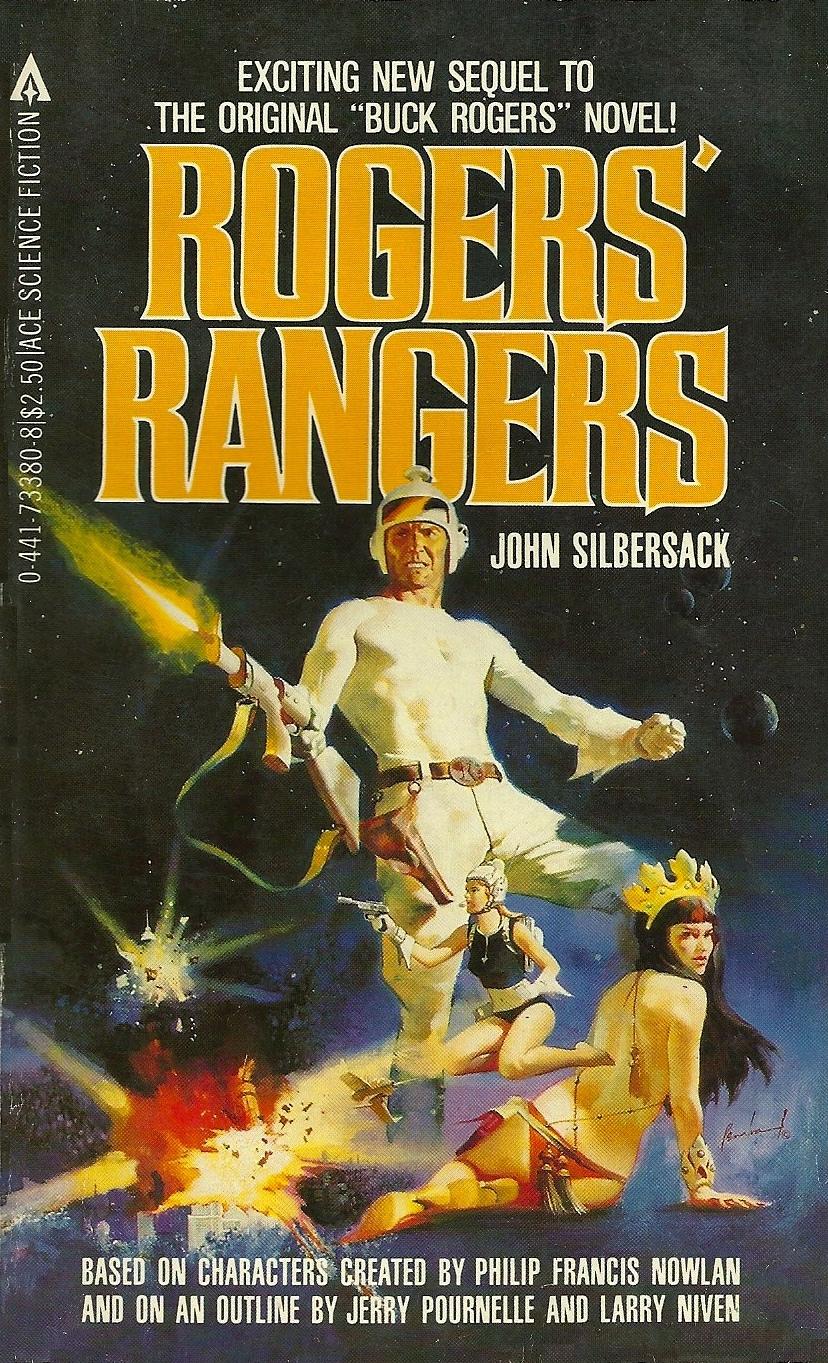
All very interesting. But what we want to talk about today is Silbersack’s sole novel: Rogers’ Rangers, a sequel to the original Buck Rogers novel, published by Ace Books in 1983, which I found in a collection of SF books from the 1980s I acquired two months ago.

Back in 1979, Glen A. Larson, the producer behind the original incarnation of Battlestar Galactica, launched a new SF TV show for Universal: Buck Rogers in the 25th Century, starring Gil Gerard and Erin Gray (and the voice of Mel Blanc as Twiki, Buck’s robot companion.) The series was a hit, and I vividly remember seeing the pilot episode in theaters, shortly before the TV version launched.

Read More Read More

The Series Series: Blood and Iron by Jon Sprunk

The Series Series: Blood and Iron by Jon Sprunk

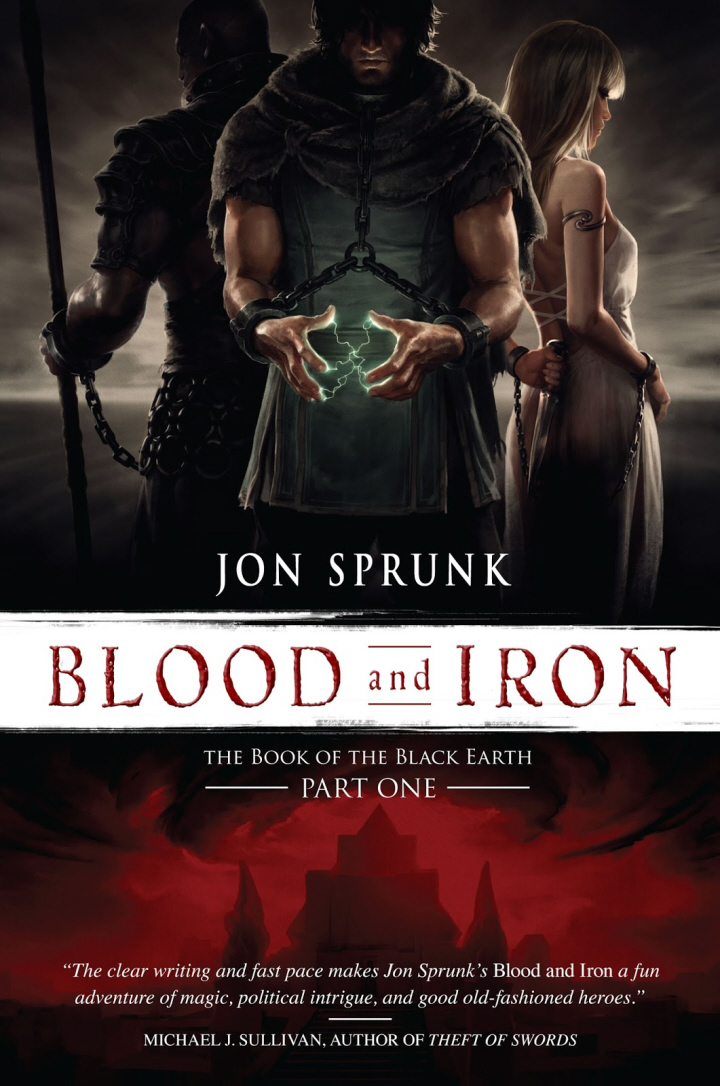
Blood and Iron Jon Sprunk-smallOf all the wild re-envisionings of the Crusades I’ve seen lately, Jon Sprunk’s Blood and Iron may be the wildest. His alternate-universe Europeans are recognizably European, but the opposing culture they face is that of a Babylonian Empire that never fell. And why has this Babylon-by-another-name persisted for thousands of years, so powerful that only its own internal strife can shake it? Because its royals actually have the supernatural powers and demi-god ancestry that the ruling class of our world’s Fertile Crescent claimed.

The Crusades seem to be having a moment in fantasy literature. This is the third novel I’ve covered this year that reimagines them. David Hair’s novel Mage’s Blood separated east and west with a sea so storm-ridden it could only be crossed every twelve years by means of a giant magic bridge, and the twelfth year coming was sure to unleash war. The alternate history in M. Harold Page’s Marshal Versus the Assassins was much more familiar — basically our own, with the addition of a few conspiracies and with unambiguously real miracles.

Jon Sprunk’s book takes the prize for strange worldbuilding. The Akeshian Empire is approximately what the Akkadian Empire might have looked like, had each of its major cities lasted as long and urbanized as complexly as Rome did. When monotheism comes to Akeshia, it arrives as a local heresy run amok, rather than as a foreign faith attracting converts. Akeshia’s gods are not kind gods; its semi-divine ruling caste are not nice people. However, when our hero comes to understand them from something closer to their own perspective, he finds much to admire and many people worth trying to save from the civil war that is beginning to take shape around him.

Read More Read More

The Novels of Michael Shea: The Incompleat Nifft

The Novels of Michael Shea: The Incompleat Nifft

The Incompleat Nifft-smallUnder editor Eric Flint, Baen Books has led the way in producing inexpensive mass market reprints of some of the most essential classic SF and Fantasy of the 20th Century — including Robert E. Howard, Andre Norton, James H. Schmitz., Murray Leinster, and P. C. Hodgell’s God Stalker Chronicles, among many, many others (They’ve continued in this tradition with fabulous anthologies, including the recent In Space No One Can Hear You Scream and many others.)

In 1997, Baen Books turned to Michael Shea, publishing his second Nifft the Lean novel, The Mines of Behemoth. By 2000, they were preparing to trumpet the arrival of his third, but by that point the original World Fantasy Award-winning volume Nifft the Lean had been out of print for almost two decades.

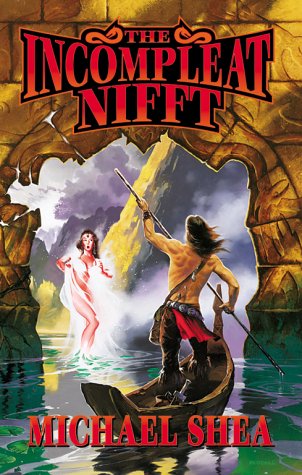
So five months before the release of The A’rak, Baen bundled both of the first two novels into a single paperback, cleverly titled The Incompleat Nifft, signally the impending arrival of the what would be the final book in the series. At 576 pages it was a terrific bargain, collecting both Nifft the Lean and The Mines of Behemoth under a Gary Ruddell cover, and it has become perhaps the most collectible paperback in Shea’s catalog.

This Time, They Would Make a Killing

Join master thief Nifft the Lean with his companion-at-arms, mighty barbarian Barnar Hammer-Hand, as they trust to their wits and their luck. Once Nifft and Barnar were hired by the ghost of a dead woman to kidnap the man who betrayed her and drag him down to hell to join her. A simple task — or so they thought at first…

Read More Read More

New Treasures: The Cold Commands by Richard K. Morgan

New Treasures: The Cold Commands by Richard K. Morgan

The Cold Commands Richard Morgan-smallWay back in Black Gate 13, the distinguished John C. Hocking contributed a feature review of Richard K. Morgan’s first fantasy novel and it alerted me to the fact that I was missing out on a major new work of sword & sorcery.

Here’s what he said, in part:

Richard K Morgan has made a name for himself with a chain of dark, slickly written science fiction thrillers… one might reasonably expect Morgan to continue in that style… Instead, he has written one of the most unusual, powerful, and daring sword & sorcery novels to see print for decades.

The Steel Remains follows a trio of characters, each of whom played a dramatic part in humanity’s grim battle with the Scaled Folk — reptilian invaders from the sea, defeated several years past…

As the three heroes are slowly drawn back together, a threat older and even more alien than the Scaled Folk moves into the world. Ringil and his friends will meet it with steel.

You can see why I was intrigued. Can that Hocking fellow write a review or what?

I’m a little late to talk about the sequel, The Cold Commands, especially in a column that ostensibly deals exclusively with the latest releases. But I just discovered it, so I’m going to do it anyway (I blame Hocking.)

The Cold Commands was released in in hardcover in 2011. It is subtitled Book Two of A Land For Heroes. You know what that means: now that there are two books, Morgan was forced to come up with a name for his series.

Read More Read More