Browsed by
Category: Series Fantasy

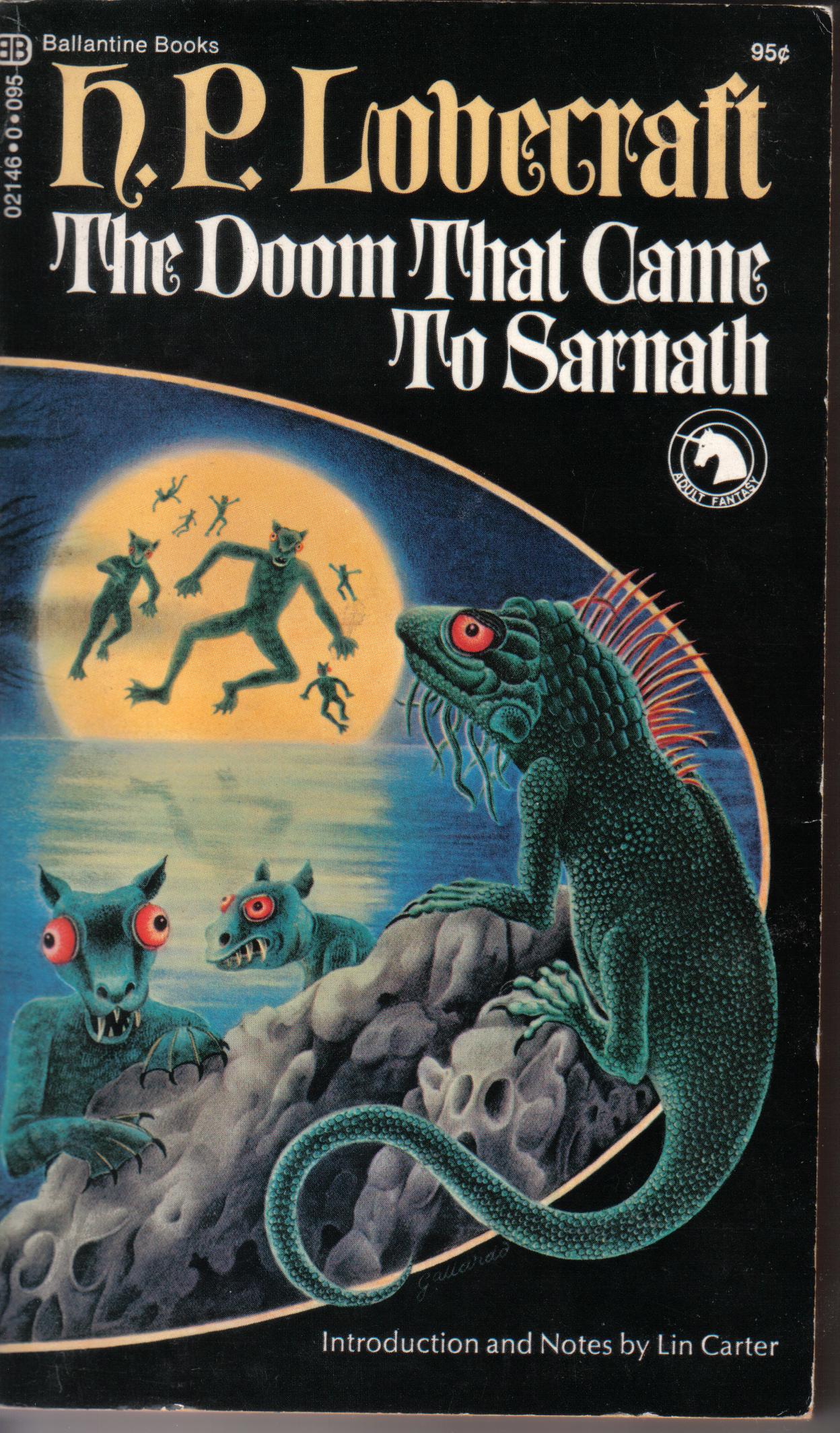
Ballantine Adult Fantasy Series: The Doom that Came to Sarnath by H. P. Lovecraft

Ballantine Adult Fantasy Series: The Doom that Came to Sarnath by H. P. Lovecraft

Lovecraft Sarnath frontThe Doom that Came to Sarnath
H. P. Lovecraft
Ballantine Books (280 pages, February 1971, $0.95)
Cover art by Gervasio Gallardo

The Doom That Came to Sarnath was the second volume of H. P. Lovecraft stories published under the BAF imprint. It served as a bridge between the Dunsanian fantasies of The Dream Quest of Unknown Kadath and the Cthulhu Mythos related titles that followed.

Many of the stories in this volume weren’t published until years after they were written or were published in amateur press publications of the day. These days, we’d call them fanzines. The contents include the aforementioned Dunsanian fantasies, some traditional horror stories, and some early Mythos tales. Also included are a few prose poems and one selection of Lovecraft’s verse.

Rather than give a brief description of each of the 20 items in the book, I’ll highlight some of the ones I liked best, then offer some general thoughts. Carter broke the selection up into groups loosely based on either chronology or theme. I’m not that organized.  I’m also not a Lovecraft scholar, so I’m not going to comment much on the specific chronology  of the stories or try to get into the nitty gritty of Lovecraft’s authorial evolution.

Read More Read More

Re-reading Michael Moorcock’s The History of The Runestaff: What I Missed the First Time Around

Re-reading Michael Moorcock’s The History of The Runestaff: What I Missed the First Time Around

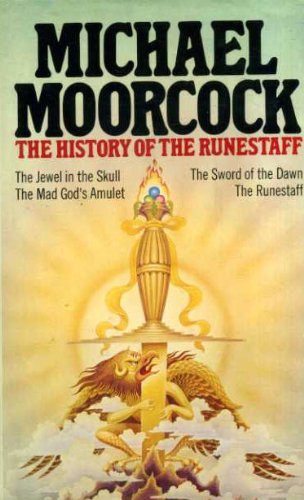
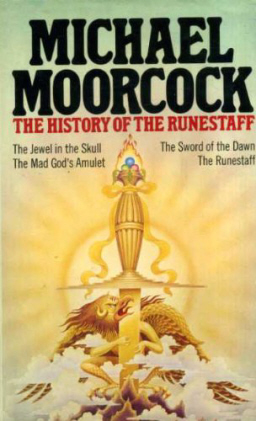
The History of The Runestaff UK omnibus-smallI don’t do re-reads, not often anyway. I’m usually too busy fighting neo-Nazis in the far future and wrestling dinosaurs on Mars. (You know, normal, everyday sort of stuff.) I decided to make an exception for The History of the Runestaff, however, mostly because I realized I had been recommending the thing to friends for years, but hadn’t touched it since I was twelve, when one of my friends dug the omnibus edition out of some weird corner in our school’s library, plopped it into my hands and mumbled something about multiple universes.

I remember staring, wide-eyed, at the thing, fascinated; the Conan covers might have been brutal and bloody and prominently featured big burly men, but this was strange, this was something different entirely; its pulsing yellows and light greens were alien, steeped in the psychedelia of the sixties (which, as the inside of the book told me, was when the books were written), it completely dashed away my expectations, crushed them under an iron-clad boot, made my little eyes wide. It contrasted brilliantly with the pulsing purples and browns and blacks of the Conan covers, its swirling surrealism was as far away from Frazetta as I had been.

Despite all that, I didn’t get around to actually reading it until a few months later, when my friend convinced the librarian to delete the book from the school files and I, somehow, managed to get him to trade me it for a copy of some other book. So it wasn’t until a few months later that I discovered that it wasn’t actually that different from Conan, anyway.

The History of The Runestaff was what introduced me to sword and sorcery, what truly opened the gate to Fritz Leiber, Edgar Rice Burroughs, David Gemmel, Jack Vance, Karl Edward Wagner, and so many others; it was, ultimately, what led me here. If there’s anything I’m going to re-read, I thought, it should be this.

Read More Read More

Devon Monk’s House Immortal is Based on her Black Gate Short Story “Stitchery”

Devon Monk’s House Immortal is Based on her Black Gate Short Story “Stitchery”

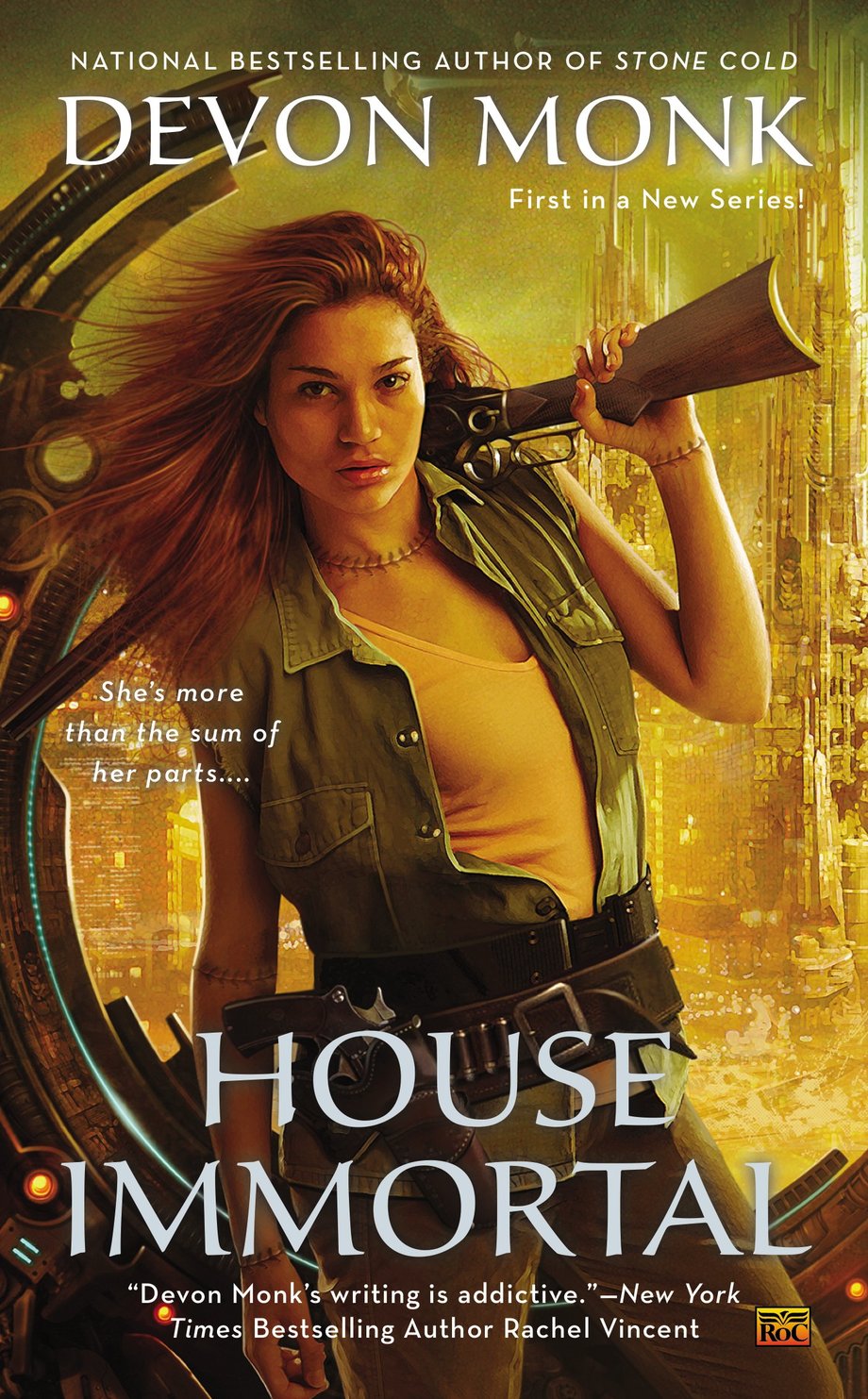
House Immortal Devon Monk-smallLast month, I reported on Devon Monk’s newest novel, House Immortal, the tale of Tilly Case, one of thirteen unfathomably strong creatures stitched together nearly a century ago, who finds herself tangled up in a deadly struggle between powerful Houses for dominion over death itself. One of the things I commented on in my article was the intriguing resemblance between House Immortal and the excellent short story I bought from Devon nearly 15 years ago, “Stitchery.” On her blog this week, Devon confirmed the connection.

[House Immortal] isn’t a “standard” urban fantasy, but more like a science-fiction-y urban fantasy. But even though it’s set in the future a bit, it still (I hope) reads like urban fantasy, with a strong female lead character, some butt kicking, some humor, some trouble that could spell out the end of a world or two, and a host of interesting people and places.

Publisher and Editor John O’Neill at Black Gate noted here, that it reminded him of “Stitchery” the first short story he bought from me for Black Gate. I’m so happy he noticed! The series is based off of that short story, (albeit loosely) and Matilda, Neds, and Grandma were all first introduced in that short.

Now, the novel went quite a different way than the short story, so I think of the short story as an alternate timeline Matilda may have lived, but not the timeline she is living in the trilogy.

If you want to check it out (“Stitchery” also was chosen for David Hartwell’s Year’s Best Fantasy #2) you can find it in Black Gate #2, or in my short story collection: A Cup of Normal.

I’m very proud to see Devon nurture the terrific story idea she had for “Stitchery” into something far more ambitious. Check out her complete comments on her blog here. House Immortal was published on September 2 by Roc Books. It is 351 pages, priced at $7.99 for both the paperback and digital versions. The cover artist is not credited. The second volume, Infinity Bell, is scheduled to be published on March 3, 2015.

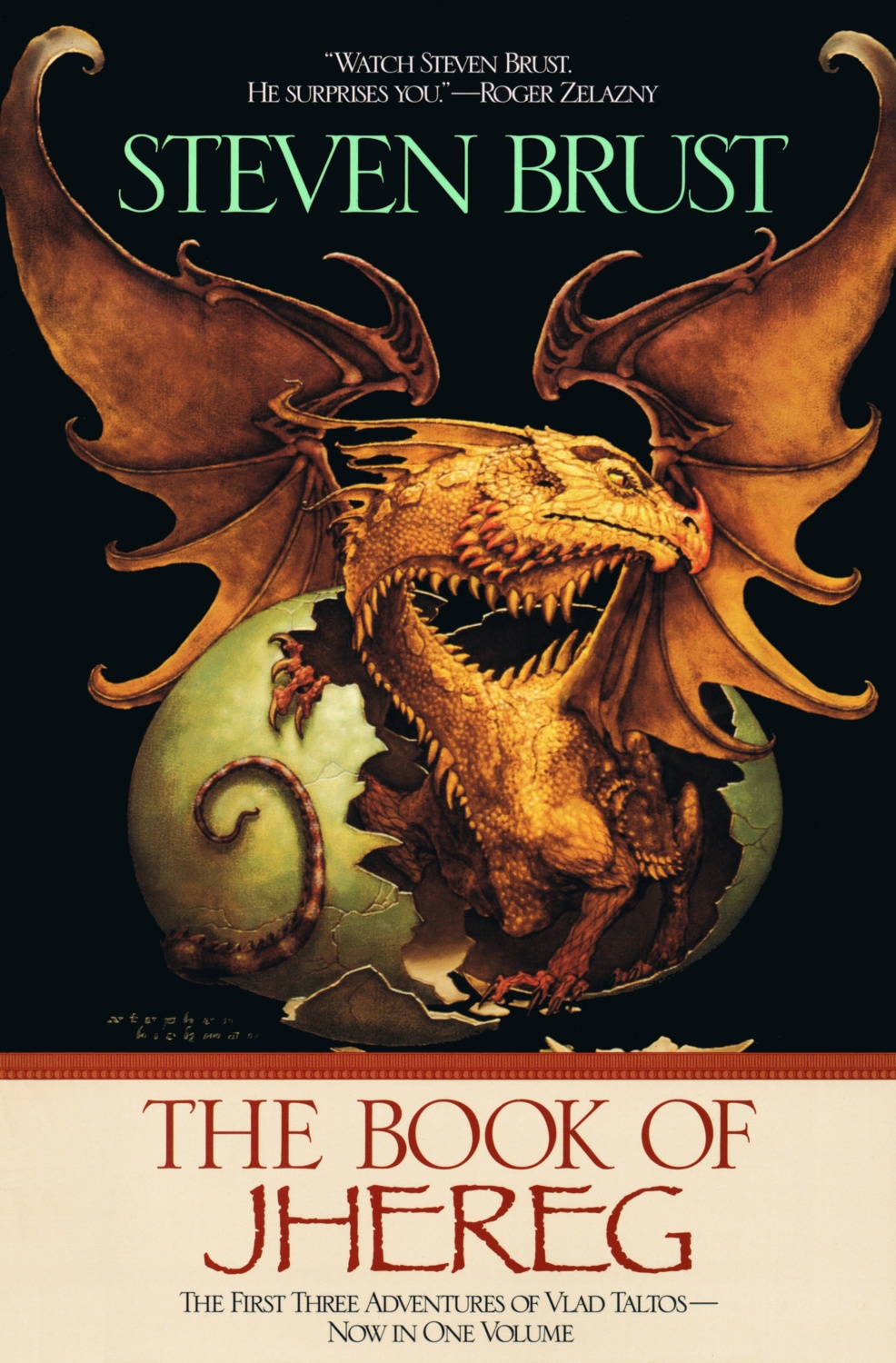
New Treasures: Hawk by Steven Brust

New Treasures: Hawk by Steven Brust

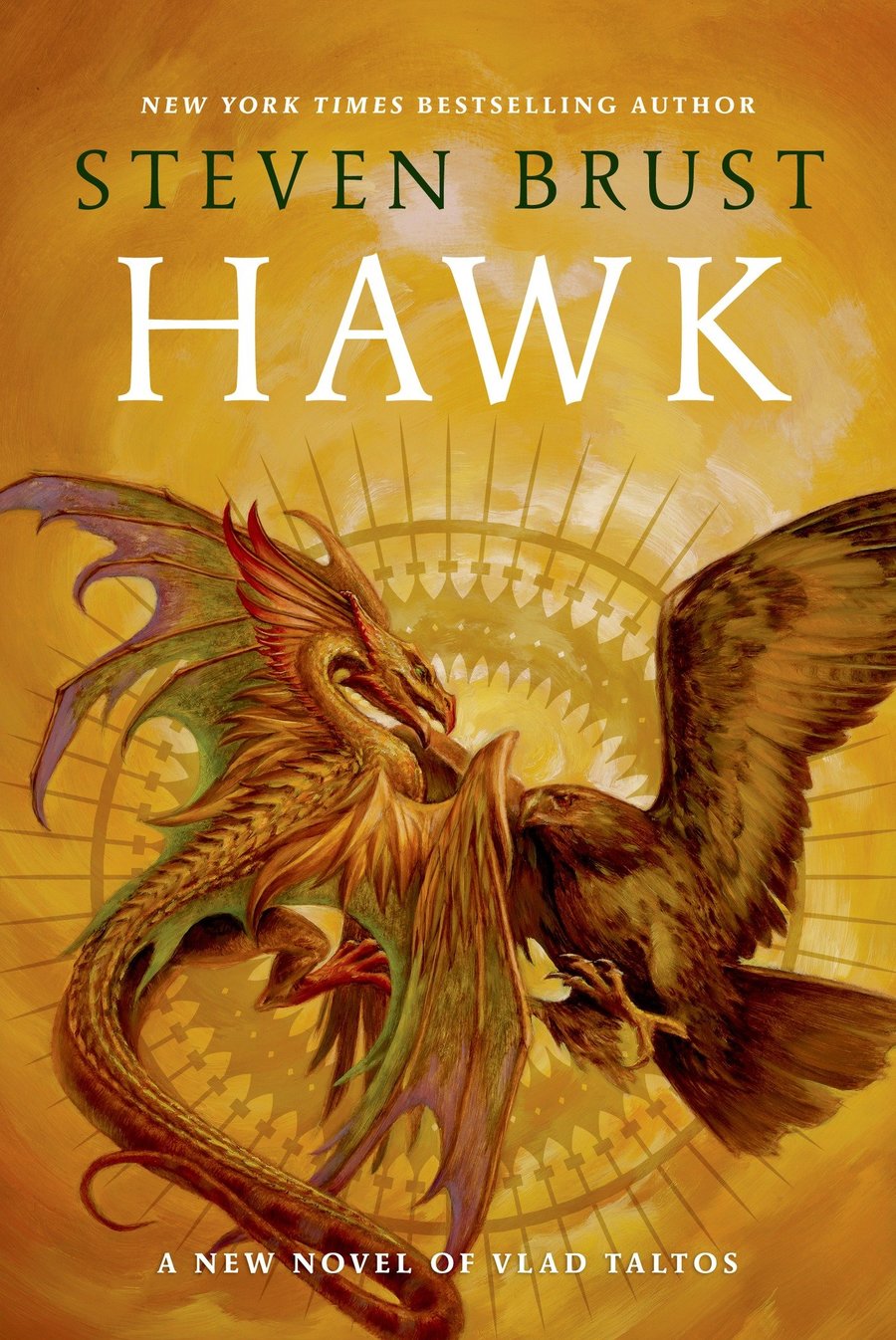
Hawk Steven Brust-smallI was surprised and delighted to receive a new book in the Vlad Taltos series from Steven Brust in the mail last week.

Hawk is the 14th novel in the adventure fantasy series that began with Jhereg (reviewed by Fletcher Vredenburgh here) way back in 1983. A total of 19 are planned; the last one was Tiassa (2011), and the next is Vallista. If you’re a newcomer to the series, I highly recommend The Book of Jhereg, a paperback omnibus collection of the first three novels (Jhereg, Yendi, and Teckla), which has been in print from Ace for over 15 years.

Vlad Taltos was an oppressed and underprivileged Easterner — that is, a human — living in Adrilankha, capital of the Dragaeran Empire. Life was hard. Worse, it was irritating. Then Vlad made a great discovery: Dragaerans would pay him to kill other Draegarans. Win-win!

The years of Vlad’s career as a crime boss and top assassin were cut short by a revolution, a divorce, and an attack of conscience (not necessarily in that order). In the midst of all that, he broke with the Jhereg, the Dragaeran house of organized crime. He’s been a marked man ever since. The Jhereg want to kill him. The Jhereg would love to kill him.

So Vlad’s been avoiding Adrilankha as much as possible. That hasn’t worked out too well. His life is there: his ex-wife Cawti, his son, and all his friends. One of those friends is his former assistant Kragar, who’s taken over Vlad’s old territory and criminal operations. Vlad will need Kragar’s help if he’s going to return to Adrilankha and deal with this mess.

It won’t be easy, and it certainly won’t be simple. Because there are no messes like the ones you make yourself.

Hawk was published by Tor Books on October 7. It is 320 pages, priced at $24.99 in hardcover ($11.99 for the digital edition). The cover is by Stephen Hickman. Read an excerpt at Tor.com.

Crossing the Threshold: Making Ultra-Long Fiction Work For You

Crossing the Threshold: Making Ultra-Long Fiction Work For You

Erin M Avans Author-smallToday I’m turning over the Black Gate rostrum to the talented Erin Evans. Take it away, Erin!

I have a confession to make: I have a word count problem. I always have. Short fiction is a struggle. My short stories are secretly novelettes, the few true short stories I’ve written begun as flash. I struggle mightily to keep my novels leashed, but, readers, I mostly fail.

There are those that say a novel has no business being over 100,000 words, and from an editor’s perspective, I agree. More than that and there’s certainly fat to be cut, scenes you don’t need and characters cluttering up the page. More than that and you’re asking a lot from a reader — a narrative that stretches that long risks becoming meandering and slow. It risks losing your reader’s attention. It risks being put down.

But for all I know “the rules,” I love a big, fat tome of a book. Epic fantasy is my jam — and I know I’m not alone. So it’s not surprising my latest book, Fire in the Blood, eventually broke free of the leash and came in twice as big as it was supposed to be. I turned in the final manuscript, waiting to hear back that I needed to cut a whole novel’s worth of words (or more).

But my editor couldn’t cut it by much. This story was meant to be big. “I think you found your stride,” she said. “Congratulations: you’re meant for epic fantasy.”

Words every long-writing author wants to hear. Here’s how I got them.

Read More Read More

Collect the Complete Faber & Faber Editions of Robert Aickman’s Classic Ghost Stories

Collect the Complete Faber & Faber Editions of Robert Aickman’s Classic Ghost Stories

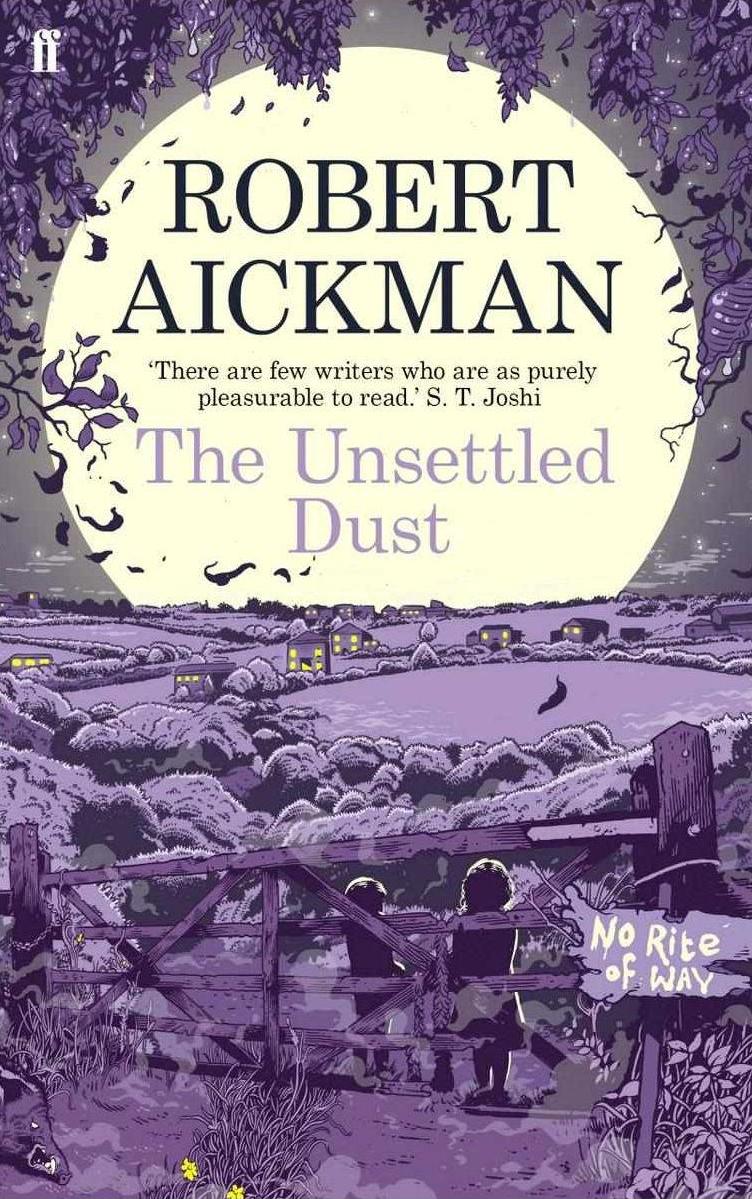
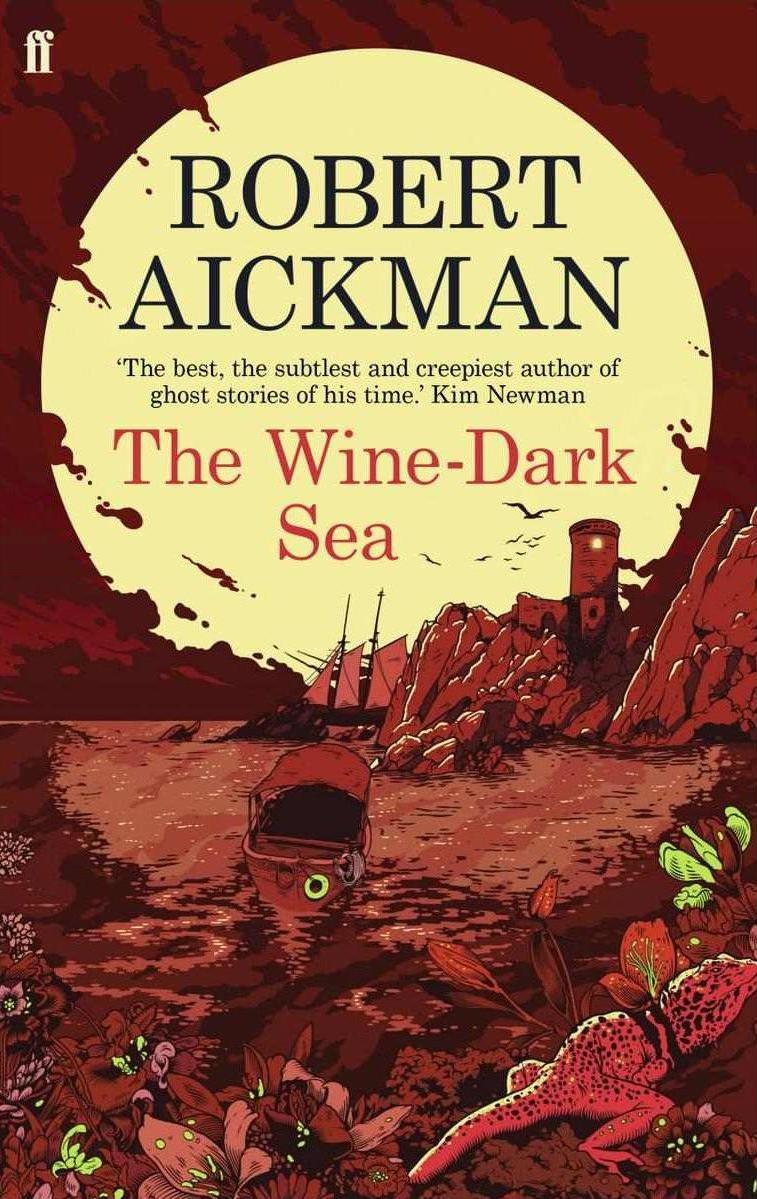
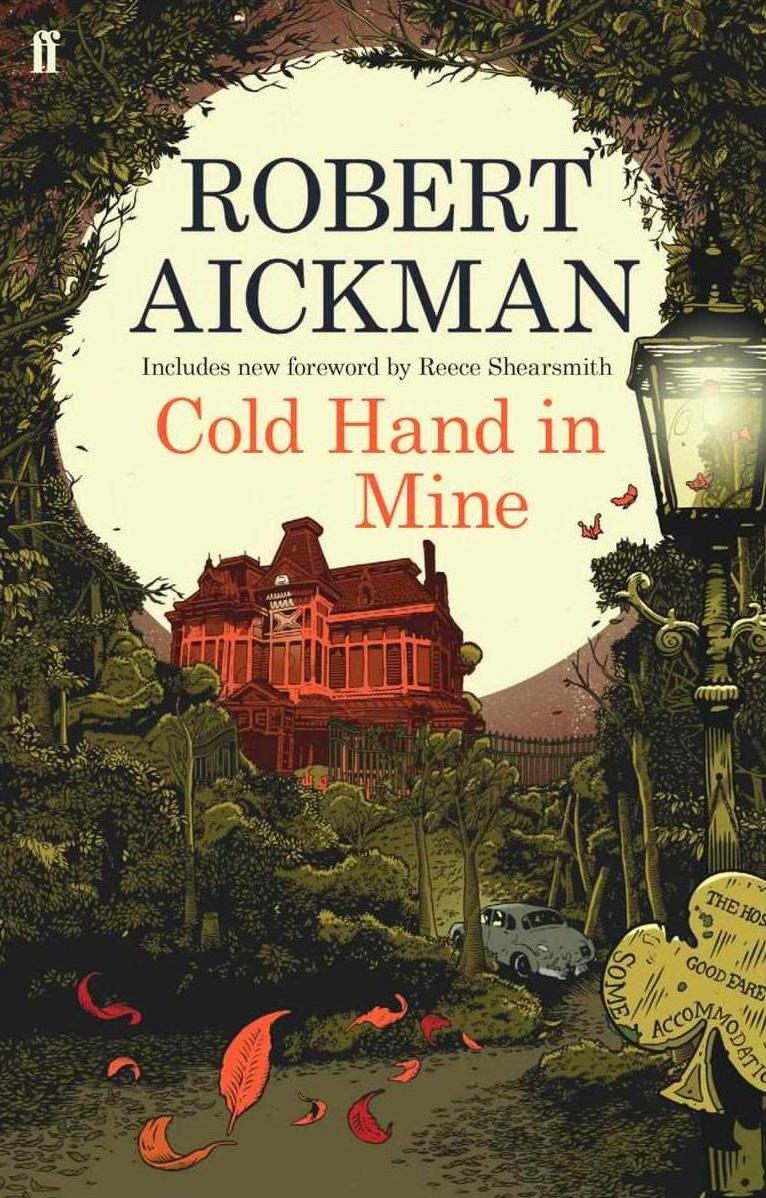
The Unsettled Dust Robert Aickman-small The Wine Dark Sea Robert Aickman-small Cold Hand in Mine Robert Aickman-small

About a month ago, I reported (with some delight) on my acquisition of Robert Aickman’s Dark Entries, a reprint collection of the author’s ghost stories from British publisher Faber and Faber.

I was so pleased to get it — and the book was just so damn gorgeous — that it wasn’t long before I started hunting down Faber and Faber’s other Aickman reprints: The Unsettled Dust, The Wine Dark Sea, and Cold Hand in Mine. All three are collections, gathering the author’s short stories and novellas.

Aickman has long been recognized as one of the finest horror writers in the field. He received the World Fantasy Award in 1975 for his short story, “Pages from a Young Girl’s Journal,” originally published in The Magazine of Fantasy & Science Fiction and reprinted in Cold Hand in Mine. In 1981, the same year he died, he was awarded the British Fantasy Award for “The Stains,” which originally appeared in New Terrors, and was eventually reprinted in The Unsettled Dust.

The covers of the new Faber and Faber editions are by Tim McDonagh, and they are absolutely stellar (click the images above for bigger versions). I love them all, but perhaps my favorite is The Unsettled Dust, with its subtle portrayal of two children taking a late-night shortcut across a spooky English landscape. McDonagh’s hyper-detailed, almost comic book style fits the subject matter beautifully; he captures the brooding menace of Aickman’s “strange stories” better than any artist I’ve ever seen.

All four books are currently in print in trade paperback, priced at £7.99 – £8.99, or around 8 bucks each for the digital editions. The print editions are not directly available in the US; I ordered them from an overseas book vendor through Amazon for between $8 – $9 each, plus shipping.

Future Treasures: A Play of Shadows by Julie E. Czerneda

Future Treasures: A Play of Shadows by Julie E. Czerneda

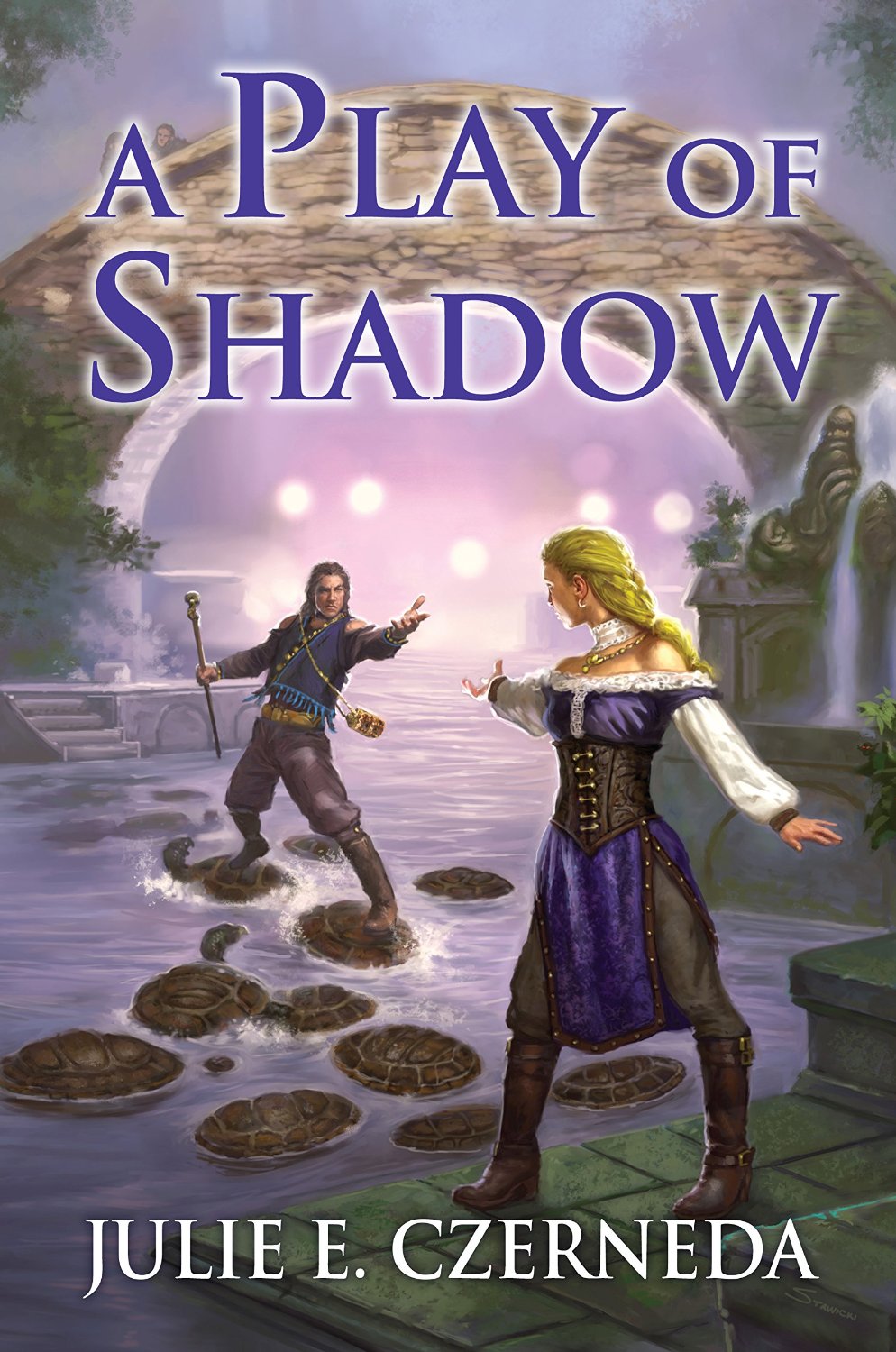
A Play of Shadows Julie Czerneda-smallCanadian writer Julie E. Czerneda has published over a dozen acclaimed science fiction novels and has rapidly built an enviable fan base.

She first dipped her toe into fantasy with Scott Taylor’s groundbreaking anthology Tales of the Emerald Serpent (announced right here back in March 2012), and its sequel, A Knight in the Silk Purse. She took the plunge with her first full-length fantasy novel, A Turn of Light, earlier this year.

The upcoming sequel, A Play of Shadows, returns to the pastoral valley of Marrowdell, home to a pioneer settlement of refugees, enigmatic house toads, and Jenn Nalynn, the turn-born who has always dreamed of exploring beyond the valley’s borders… and who finds that increasingly impossible.

What would you risk for family?

In the second installment of Night’s Edge, Bannan Larmensu, the truthseer who won Jenn Nalynn’s heart, learns his brother-in-law was sent as a peace envoy to Channen, capitol of the mysterious domain of Mellynne, and has disappeared. When Bannan’s young nephews arrive in Marrowdell, he fears the worst, that his sister, the fiery Lila, has gone in search of her husband, leaving her sons in his care.

The law forbids Bannan from leaving Marrowdell and travelling to Mellynne to help his sister. In this world. As a turn-born, Jenn Nalynn has the power to cross into the magical realm of the Verge, and take Bannan with her. Once there, they could find a way into Mellynne.

Read More Read More

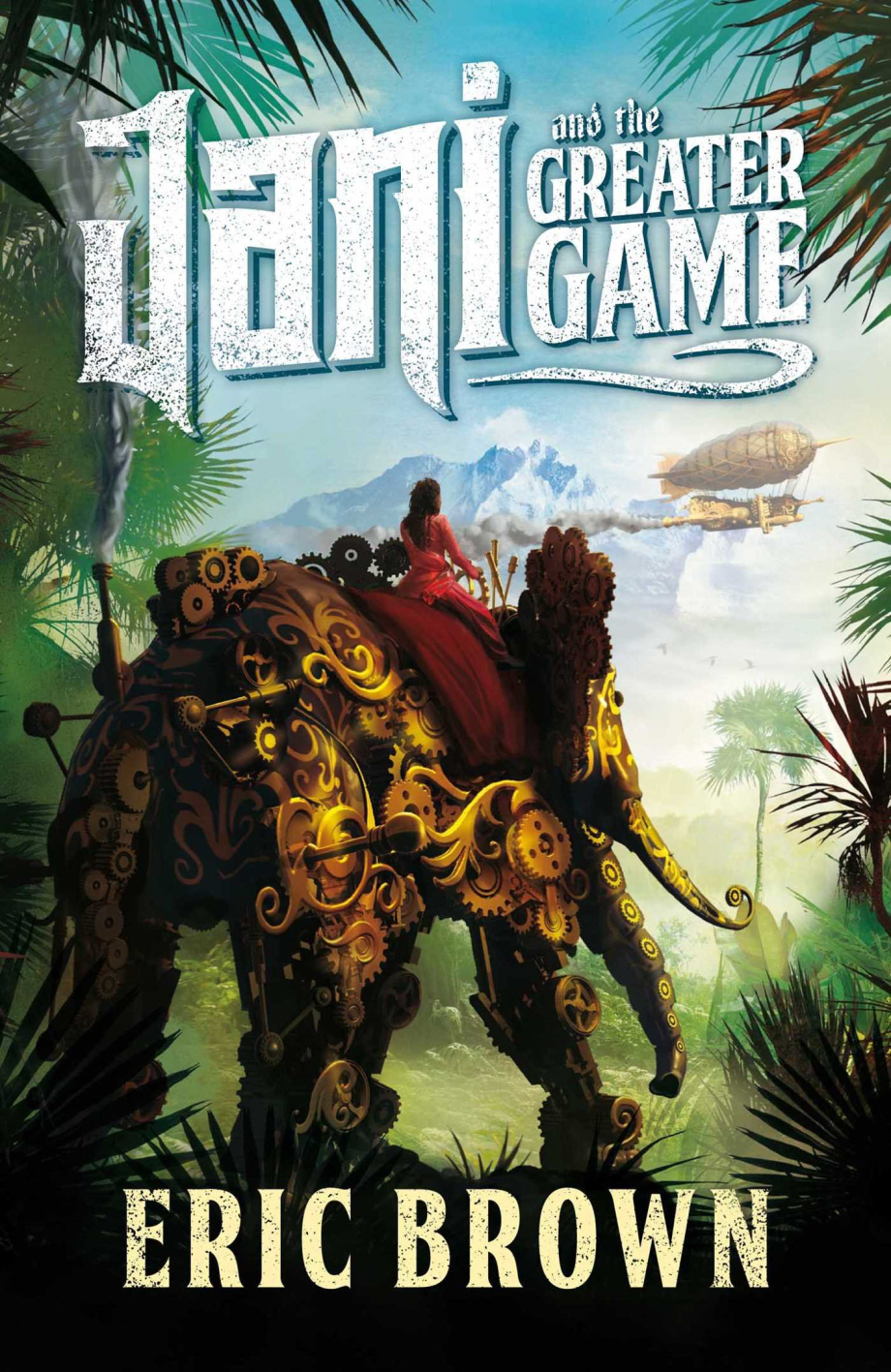
New Treasures: Jani and the Greater Game by Eric Brown

New Treasures: Jani and the Greater Game by Eric Brown

Jani and the Greater Game-smallThis Eric Brown fellow is one of the most prolific of the new generation of SF and fantasy authors. He’s published a dozen novels in just the last five years, almost all of them with Solaris Books, including the Bengal Station trilogy, The Kings of Eternity (2011), Weird Space: The Devil’s Nebula (2012), Serene Invasion (2013), and Weird Space: Satan’s Reach (2013).

His latest is the opening book in a new steampunk action adventure series set in India in 1910, where the British rule with an iron fist thanks to a strange technology fueled by a mysterious power source… and their enemies covertly maneuver to discover its secrets in a political dance known as the Greater Game.

Eighteen-year-old Janisha Chatterjee, the Cambridge-educated daughter of an Indian government minister, is coming home to visit her father on his death-bed, when her airship is attacked and wrecked. Amid the debris, a stranger — monstrous but kind — saves her life and entrusts her with a mysterious device, which pitches her head-first into the “Greater Game,” the ongoing stand-off between British, Chinese and Russian powers in the Indian subcontinent.

Dodging British officers, Russian spies, and the dangerous priest Durga Das, Jani must bring the device to the foothills of the Himalayas; to the home of Annapurnite, the secret power source on which British domination was built. There she will learn the truth about Annapurnite — a truth that will change the world forever…

Jani and the Greater Game was published on July 29, 2014 by Solaris Books. It is 384 pages, priced at $7.99 in paperback and $6.99 for the digital edition. The cover art is by Dominic Harman.

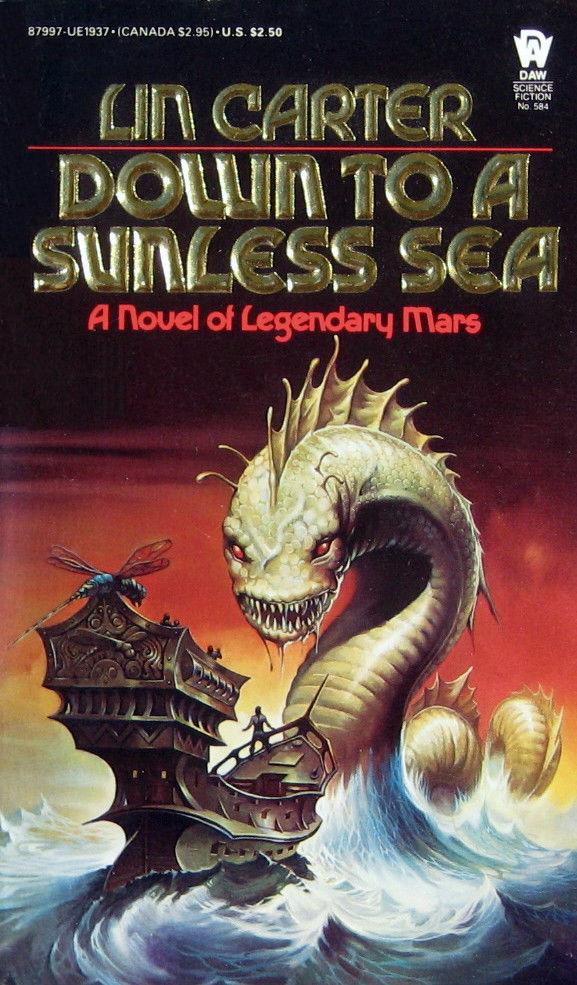
Vintage Treasures: Down to a Sunless Sea by Lin Carter

Vintage Treasures: Down to a Sunless Sea by Lin Carter

Lin Carter Down to a Sunless Sea-smallWe’re big fans of Lin Carter here at Black Gate. He was one of the most influential figures in 20th Century fantasy, chiefly as the editor of the Ballantine Adult Fantasy (BAF) line of paperback reprints, the six volumes of The Year’s Best Fantasy Stories, and the groundbreaking Flashing Swords! sword & sorcery anthologies. He was also one of the hardest working professionals in the genre. Carter edited a BAF volume every single month between May 1969 and April 1974 (65 total), and in the same time period produced over a dozen novels and numerous short stories.

Although his own fiction output was prodigious, Carter is remembered today chiefly as an editor rather than a writer. In his fond review of Carter’s 1984 novel Kellory the Warlock back in March, Fletcher Vredenburgh gave us a blunt assessment of his skill as a writer:

Poor Lin Carter: perhaps the greatest champion heroic fantasy ever had, an editor with few equals, one of the most knowledgeable fan boys in the world, but a poor writer. I think he would have liked his stories and novels to be remembered more fondly than they are. I believe Kellory the Warlock proves he had the potential to have been a better writer…

Most of his fiction, rarely more than pastiches of his favorite authors (Howard, Burroughs, Lovecraft, and Dent), never garnered enough attention to be republished… Carter was no master stylist and it can get a little irritating. Most of the time, he was trying to create fun, quick reads that were recreations of his favorite writers. In a way, he was writing fan fiction; it’s just that he got his published.

Personally, I’ve always been curious about Carter’s Mars novels, since they seem to be more fondly remembered today than much of his other fiction. I’ve always assumed they were Burroughs pastiches, but the Author’s Note to the final volume, Down to a Sunless Sea, makes it clear that they were actually inspired by the Queen of sword-and-planet fiction, the great Leigh Brackett herself.

Read More Read More

Future Treasures: The Lady by K. V. Johansen

Future Treasures: The Lady by K. V. Johansen

The Lady Johansen-smallThe first novel in K. V. Johansen’s two book Marakand series, The Leopard, appeared in June from Pyr Books and was widely praised. Even the esteemed James Enge was impressed, saying, “I’m hooked. The mix of magic, Tibetan-style religion, and Harold Lamb-style adventure is pretty addicting.”

I’m pleased to see that Pyr isn’t keeping us waiting for the final volume — it will be released in December, barely six months after the first appeared. If you can’t wait, you can always sample her first fantasy novel for Pyr, Blackdog.

Possessed by a ghost who feeds on death, the undying assassin Ahjvar the Leopard has been captured by the Lady of Marakand, enslaved by necromancy to be captain of her Red Masks. His shield-bearer Ghu, a former slave with an uncanny ability to free the captive dead, follows Ahjvar into the war-torn lands of the Duina Catairna to release him, even if that means destroying what is left of Ahj’s tormented soul.

Deyandara, the last surviving heir of the Catairnan queen, rides into a land ravaged by disease and war, seeking the allies she abandoned months before, though they have no hope of standing against the army led by the invulnerable Red Masks of Marakand and the divine terror of the Lady.

In the city of Marakand, former enemies ally and old friends seek one another’s deaths as loyalists of the entombed gods Gurhan and Ilbialla raise a revolt, spearheaded by the Grasslander wizard Ivah, the shapeshifting Blackdog, and the bear-demon Mikki. The Lady’s defenses are not easily breached, though, and the one enemy who might withstand her, the Northron wanderer Moth, bearer of the sword Lakkariss, has vanished.

The Lady will be published December 9, 2014 by Pyr Books. It is 445 pages, priced at $18 in trade paperback and $11.99 for the digital version.