Browsed by
Category: Series Fantasy

Ray Guns and Savage Planets: The Amazing Adventures of Flash Gordon

Ray Guns and Savage Planets: The Amazing Adventures of Flash Gordon

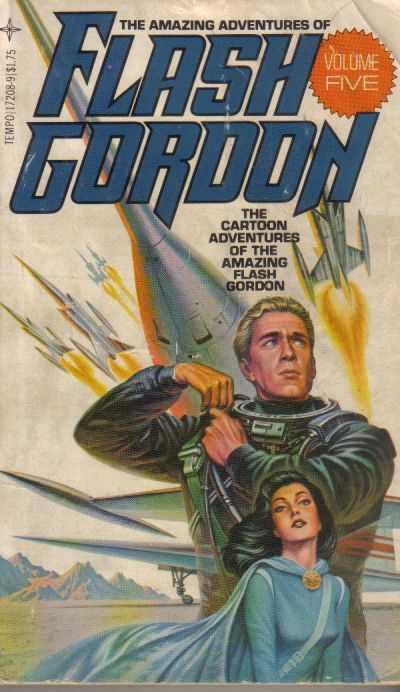
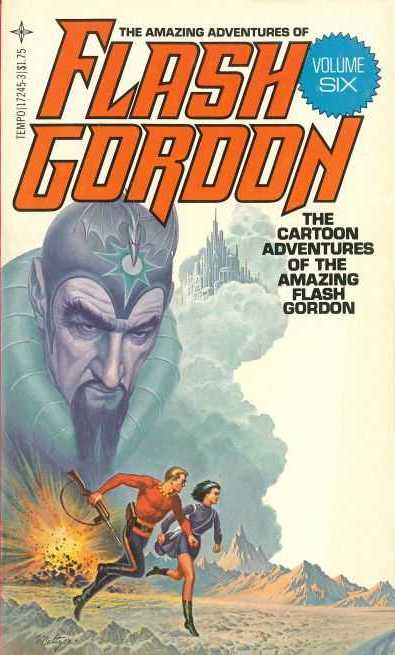
The Amazing Adventues of Flash Gordon 4-small The Amazing Adventues of Flash Gordon 5-small The Amazing Adventues of Flash Gordon 6-small

I know this is going to seem strange to some of you, but not that long ago, newspapers used to run adventure serials on the comics page. Like Calvin and Hobbes and Dilbert, but with a plot (and not funny). See, I told you it would sound strange.

It was a uniquely American art form, and it was popular through most of the last century. Dick Tracy, Spider-Man, Prince Valiant, Brenda Starr… you shared their fabulous adventures over breakfast every morning, parceled out in compact three panel segments. The most popular strips were collected in paperback, and these were treasures indeed — they included complete adventures (sometimes two). If it sounds strange to read comic strips in a paperback book… well, you’re right, it is. Fantasy is a strange genre; best you come to grips with it.

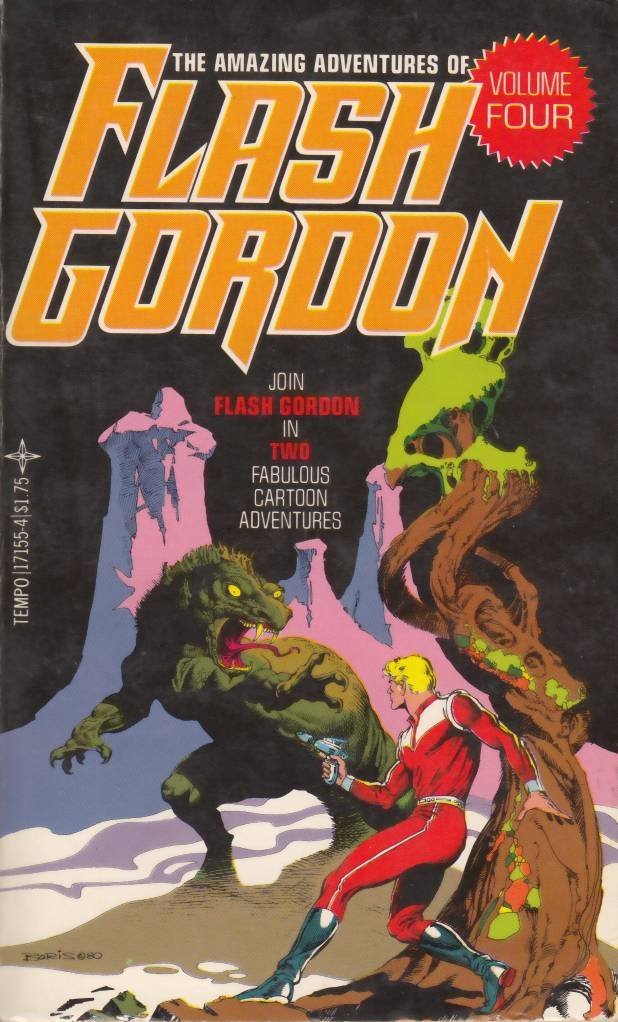
Flash Gordon, which ran from January 7, 1934 until March 16, 2003, was one of the most popular adventure strips on the market. It was collected in six paperback volumes from Tempo Books as The Amazing Adventures of Flash Gordon, written by Dan Barry and drawn by the incredible Bob Fujitani. All six were published in 1979-1980, and they collected storylines from the mid-70s. They’re still fun today — the dialog (and characters) are simplistic, sure, but the artwork is a marvel, and the stories move at a rocket’s pace. I bought the books above for less than four dollars each on eBay; copies are generally available for $5-10 each when purchased individually.

On the Road to Khurdisan: Brak the Barbarian by John Jakes

On the Road to Khurdisan: Brak the Barbarian by John Jakes

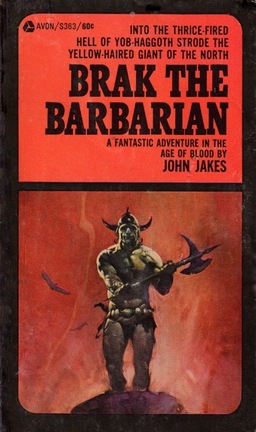
oie_2702648M0L78hhBFor people of a certain age (the pushing-fifty crowd) John Jakes is probably best known for The Kent Family Chronicles, his massive series of massive books about American history and the mini-series made from the first one, The Bastard. Hearing that title said out loud on TV was a pretty shocking thing for us kids back in 1978.

It wasn’t until I was a little older that I discovered John Jakes had started his career as a real journeyman pulp writer. While working in advertising, he wrote science fiction, westerns, mystery, and horror stories for all the major genre magazines. His name appears on the contents page of Fantastic Adventures and Amazing Stories, as well as Tales of the Frightened (easily one of my favorite titles for anything ever).

While Robert E. Howard had created the basic template for swords & sorcery back in the 1930s, it wasn’t until several decades later that the genre really exploded. Fritz Leiber and Sprague de Camp labored throughout the 50s, but it’s in the early 60s that S&S really takes off. Suddenly, Lin Carter’s writing his Howard/Edgar Rice Burroughs mashups, Michael Moorcock’s inverting and mocking many of the field’s cliches while still writing exciting tales, and Andre Norton is expanding S&S’s vison beyond the too-common male thud and blunder.

In 1963, with “Devils in the Walls” published in Fantastic, Jakes introduced his own barbarian hero, Brak. In a 1980 preface to a new editon of the first collection of stories, Brak the Barbarian (1968), he wrote:

It was in the role of dedicated Conan fan that I wrote the first Brak tale, Devils in the Walls. In spirit, anyway, the story was a Howard pastiche, and I have acknowledged the fact more than once.

Read More Read More

New Treasures: The Bloodbound by Erin Lindsey

New Treasures: The Bloodbound by Erin Lindsey

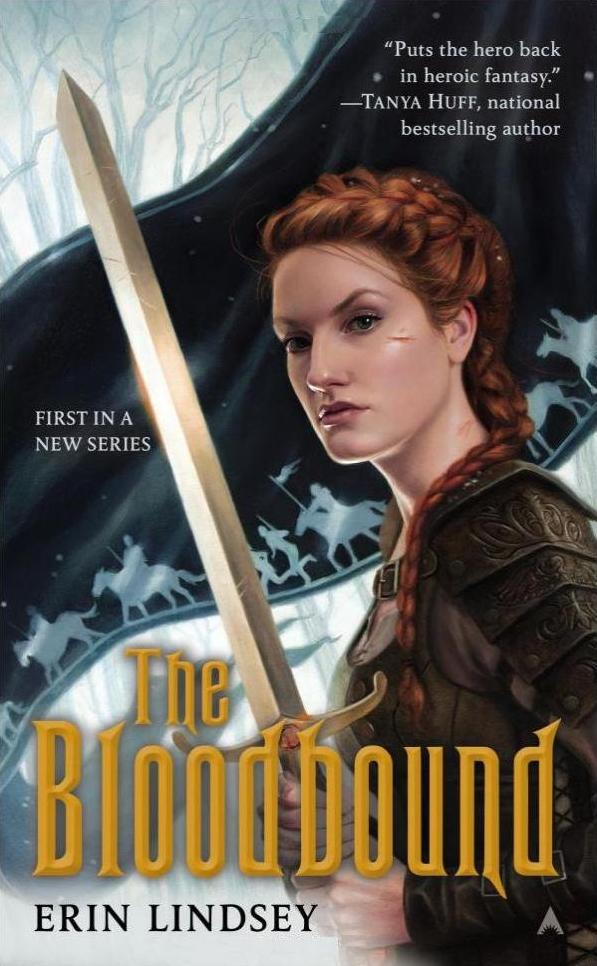
The Bloodbound Erin Lindsey-smallErin Lindsey’s debut novel is a tale of magic and court intrigue, the first in what looks like a promising new series. She also writes fantasy mysteries under the name E.L. Tettensor (including Darkwater, which we covered here last December).

Lindsey lives in Bujumbura, Burundi. I didn’t even know where Burundi is. I had to look it up (it’s in Western Africa). Already she knows things about the world I don’t; I like that in an author.

Of all those in the King of Alden’s retinue, the bloodbinders are the most prized. The magic they wield can forge invaluable weapons, ones that make soldiers like Lady Alix Black unerringly lethal. However, the bloodbinders’ powers can do so much more—and so much worse…

A cunning and impetuous scout, Alix only wishes to serve quietly on the edges of the action. But when the king is betrayed by his own brother and left to die at the hands of attacking Oridian forces, she winds up single-handedly saving her sovereign.

Suddenly, she is head of the king’s personal guard, an honor made all the more dubious by the king’s exile from his own court. Surrounded by enemies, Alix must help him reclaim his crown, all the while attempting to repel the relentless tide of invaders led by the Priest, most feared of Oridia’s lords.

But while Alix’s king commands her duty, both he and a fellow scout lay claim to her heart. And when the time comes, she may need to choose between the two men who need her most…

The Bloodbound was published by Ace Books on September 30, 2014. It is 359 pages, priced at $7.99 in both paperback and digital formats. The cover art is by Lindsey Look.

The Public Life of Sherlock Holmes: The List of 7 by Mark Frost

The Public Life of Sherlock Holmes: The List of 7 by Mark Frost

List_fullcoverMark Frost made the news not too long ago with the announcement that he and David Lynch will be making a new Twin Peaks series for Showtime. Yay! Twin Peaks came to an abrupt end in 1991: just after its second season. Frost apparently wasn’t one to let grass grow under his feet, as only two years later, The List of 7 hit bookshelves.

John O’Neill wrote about (mostly the cover…) this book last year.

Frost is absolutely a fan of Sherlock Holmes. Not only is the novel’s protagonist none other than Arthur Conan Doyle and bits of his life are scattered throughout, but there are Holmes-isms aplenty. Thus, this book is a type of pastiche, though darker than any straight Holmes tale I’ve read.

Read More Read More

Ballantine Adult Fantasy Series: The Doom that Came to Sarnath by H. P. Lovecraft

Ballantine Adult Fantasy Series: The Doom that Came to Sarnath by H. P. Lovecraft

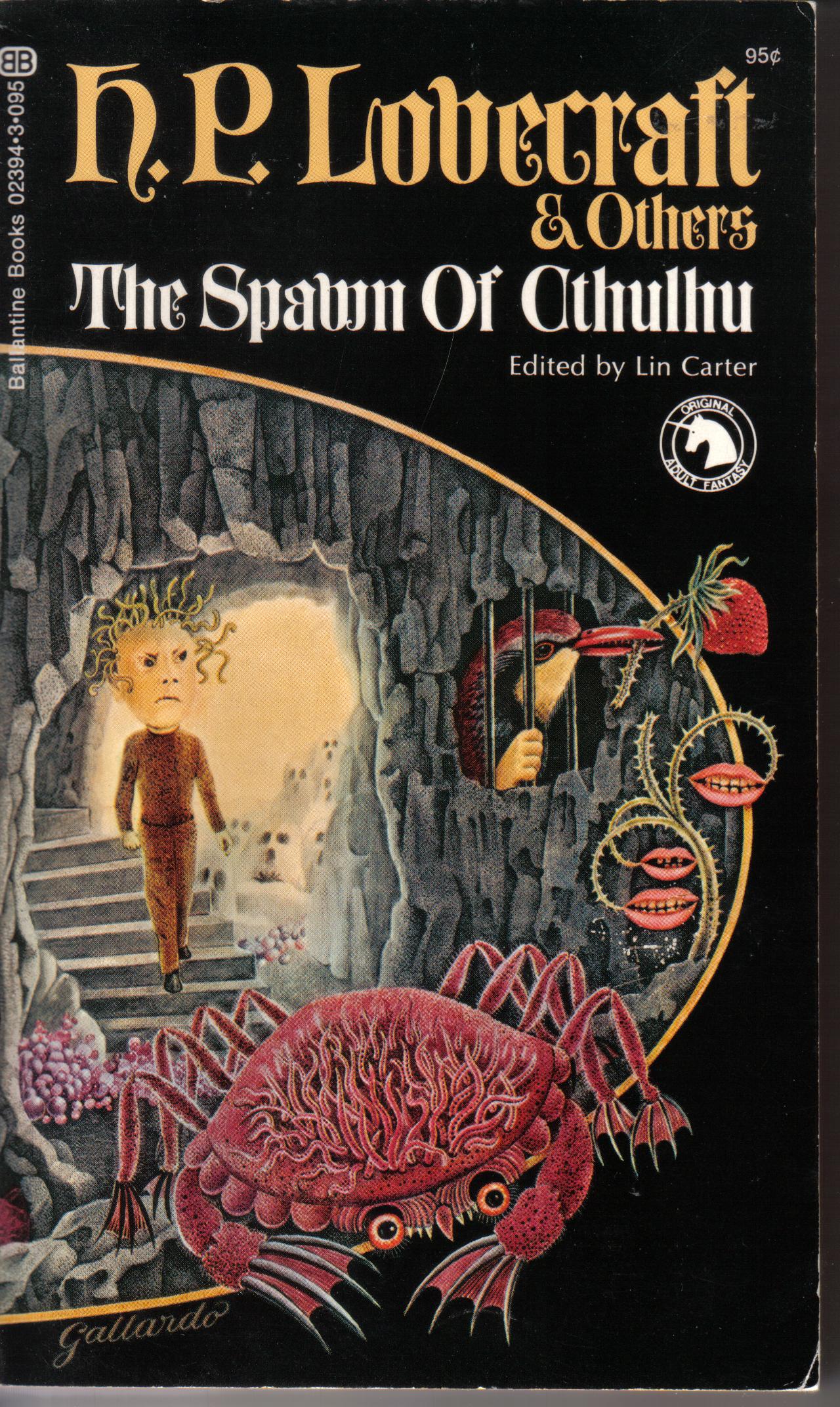
Lovecraft Sarnath frontThe Doom that Came to Sarnath
H. P. Lovecraft
Ballantine Books (280 pages, February 1971, $0.95)
Cover art by Gervasio Gallardo

The Doom That Came to Sarnath was the second volume of H. P. Lovecraft stories published under the BAF imprint. It served as a bridge between the Dunsanian fantasies of The Dream Quest of Unknown Kadath and the Cthulhu Mythos related titles that followed.

Many of the stories in this volume weren’t published until years after they were written or were published in amateur press publications of the day. These days, we’d call them fanzines. The contents include the aforementioned Dunsanian fantasies, some traditional horror stories, and some early Mythos tales. Also included are a few prose poems and one selection of Lovecraft’s verse.

Rather than give a brief description of each of the 20 items in the book, I’ll highlight some of the ones I liked best, then offer some general thoughts. Carter broke the selection up into groups loosely based on either chronology or theme. I’m not that organized.  I’m also not a Lovecraft scholar, so I’m not going to comment much on the specific chronology  of the stories or try to get into the nitty gritty of Lovecraft’s authorial evolution.

Read More Read More

Re-reading Michael Moorcock’s The History of The Runestaff: What I Missed the First Time Around

Re-reading Michael Moorcock’s The History of The Runestaff: What I Missed the First Time Around

The History of The Runestaff UK omnibus-smallI don’t do re-reads, not often anyway. I’m usually too busy fighting neo-Nazis in the far future and wrestling dinosaurs on Mars. (You know, normal, everyday sort of stuff.) I decided to make an exception for The History of the Runestaff, however, mostly because I realized I had been recommending the thing to friends for years, but hadn’t touched it since I was twelve, when one of my friends dug the omnibus edition out of some weird corner in our school’s library, plopped it into my hands and mumbled something about multiple universes.

I remember staring, wide-eyed, at the thing, fascinated; the Conan covers might have been brutal and bloody and prominently featured big burly men, but this was strange, this was something different entirely; its pulsing yellows and light greens were alien, steeped in the psychedelia of the sixties (which, as the inside of the book told me, was when the books were written), it completely dashed away my expectations, crushed them under an iron-clad boot, made my little eyes wide. It contrasted brilliantly with the pulsing purples and browns and blacks of the Conan covers, its swirling surrealism was as far away from Frazetta as I had been.

Despite all that, I didn’t get around to actually reading it until a few months later, when my friend convinced the librarian to delete the book from the school files and I, somehow, managed to get him to trade me it for a copy of some other book. So it wasn’t until a few months later that I discovered that it wasn’t actually that different from Conan, anyway.

The History of The Runestaff was what introduced me to sword and sorcery, what truly opened the gate to Fritz Leiber, Edgar Rice Burroughs, David Gemmel, Jack Vance, Karl Edward Wagner, and so many others; it was, ultimately, what led me here. If there’s anything I’m going to re-read, I thought, it should be this.

Read More Read More

Devon Monk’s House Immortal is Based on her Black Gate Short Story “Stitchery”

Devon Monk’s House Immortal is Based on her Black Gate Short Story “Stitchery”

House Immortal Devon Monk-smallLast month, I reported on Devon Monk’s newest novel, House Immortal, the tale of Tilly Case, one of thirteen unfathomably strong creatures stitched together nearly a century ago, who finds herself tangled up in a deadly struggle between powerful Houses for dominion over death itself. One of the things I commented on in my article was the intriguing resemblance between House Immortal and the excellent short story I bought from Devon nearly 15 years ago, “Stitchery.” On her blog this week, Devon confirmed the connection.

[House Immortal] isn’t a “standard” urban fantasy, but more like a science-fiction-y urban fantasy. But even though it’s set in the future a bit, it still (I hope) reads like urban fantasy, with a strong female lead character, some butt kicking, some humor, some trouble that could spell out the end of a world or two, and a host of interesting people and places.

Publisher and Editor John O’Neill at Black Gate noted here, that it reminded him of “Stitchery” the first short story he bought from me for Black Gate. I’m so happy he noticed! The series is based off of that short story, (albeit loosely) and Matilda, Neds, and Grandma were all first introduced in that short.

Now, the novel went quite a different way than the short story, so I think of the short story as an alternate timeline Matilda may have lived, but not the timeline she is living in the trilogy.

If you want to check it out (“Stitchery” also was chosen for David Hartwell’s Year’s Best Fantasy #2) you can find it in Black Gate #2, or in my short story collection: A Cup of Normal.

I’m very proud to see Devon nurture the terrific story idea she had for “Stitchery” into something far more ambitious. Check out her complete comments on her blog here. House Immortal was published on September 2 by Roc Books. It is 351 pages, priced at $7.99 for both the paperback and digital versions. The cover artist is not credited. The second volume, Infinity Bell, is scheduled to be published on March 3, 2015.

New Treasures: Hawk by Steven Brust

New Treasures: Hawk by Steven Brust

Hawk Steven Brust-smallI was surprised and delighted to receive a new book in the Vlad Taltos series from Steven Brust in the mail last week.

Hawk is the 14th novel in the adventure fantasy series that began with Jhereg (reviewed by Fletcher Vredenburgh here) way back in 1983. A total of 19 are planned; the last one was Tiassa (2011), and the next is Vallista. If you’re a newcomer to the series, I highly recommend The Book of Jhereg, a paperback omnibus collection of the first three novels (Jhereg, Yendi, and Teckla), which has been in print from Ace for over 15 years.

Vlad Taltos was an oppressed and underprivileged Easterner — that is, a human — living in Adrilankha, capital of the Dragaeran Empire. Life was hard. Worse, it was irritating. Then Vlad made a great discovery: Dragaerans would pay him to kill other Draegarans. Win-win!

The years of Vlad’s career as a crime boss and top assassin were cut short by a revolution, a divorce, and an attack of conscience (not necessarily in that order). In the midst of all that, he broke with the Jhereg, the Dragaeran house of organized crime. He’s been a marked man ever since. The Jhereg want to kill him. The Jhereg would love to kill him.

So Vlad’s been avoiding Adrilankha as much as possible. That hasn’t worked out too well. His life is there: his ex-wife Cawti, his son, and all his friends. One of those friends is his former assistant Kragar, who’s taken over Vlad’s old territory and criminal operations. Vlad will need Kragar’s help if he’s going to return to Adrilankha and deal with this mess.

It won’t be easy, and it certainly won’t be simple. Because there are no messes like the ones you make yourself.

Hawk was published by Tor Books on October 7. It is 320 pages, priced at $24.99 in hardcover ($11.99 for the digital edition). The cover is by Stephen Hickman. Read an excerpt at Tor.com.

Crossing the Threshold: Making Ultra-Long Fiction Work For You

Crossing the Threshold: Making Ultra-Long Fiction Work For You

Erin M Avans Author-smallToday I’m turning over the Black Gate rostrum to the talented Erin Evans. Take it away, Erin!

I have a confession to make: I have a word count problem. I always have. Short fiction is a struggle. My short stories are secretly novelettes, the few true short stories I’ve written begun as flash. I struggle mightily to keep my novels leashed, but, readers, I mostly fail.

There are those that say a novel has no business being over 100,000 words, and from an editor’s perspective, I agree. More than that and there’s certainly fat to be cut, scenes you don’t need and characters cluttering up the page. More than that and you’re asking a lot from a reader — a narrative that stretches that long risks becoming meandering and slow. It risks losing your reader’s attention. It risks being put down.

But for all I know “the rules,” I love a big, fat tome of a book. Epic fantasy is my jam — and I know I’m not alone. So it’s not surprising my latest book, Fire in the Blood, eventually broke free of the leash and came in twice as big as it was supposed to be. I turned in the final manuscript, waiting to hear back that I needed to cut a whole novel’s worth of words (or more).

But my editor couldn’t cut it by much. This story was meant to be big. “I think you found your stride,” she said. “Congratulations: you’re meant for epic fantasy.”

Words every long-writing author wants to hear. Here’s how I got them.

Read More Read More

Collect the Complete Faber & Faber Editions of Robert Aickman’s Classic Ghost Stories

Collect the Complete Faber & Faber Editions of Robert Aickman’s Classic Ghost Stories

The Unsettled Dust Robert Aickman-small The Wine Dark Sea Robert Aickman-small Cold Hand in Mine Robert Aickman-small

About a month ago, I reported (with some delight) on my acquisition of Robert Aickman’s Dark Entries, a reprint collection of the author’s ghost stories from British publisher Faber and Faber.

I was so pleased to get it — and the book was just so damn gorgeous — that it wasn’t long before I started hunting down Faber and Faber’s other Aickman reprints: The Unsettled Dust, The Wine Dark Sea, and Cold Hand in Mine. All three are collections, gathering the author’s short stories and novellas.

Aickman has long been recognized as one of the finest horror writers in the field. He received the World Fantasy Award in 1975 for his short story, “Pages from a Young Girl’s Journal,” originally published in The Magazine of Fantasy & Science Fiction and reprinted in Cold Hand in Mine. In 1981, the same year he died, he was awarded the British Fantasy Award for “The Stains,” which originally appeared in New Terrors, and was eventually reprinted in The Unsettled Dust.

The covers of the new Faber and Faber editions are by Tim McDonagh, and they are absolutely stellar (click the images above for bigger versions). I love them all, but perhaps my favorite is The Unsettled Dust, with its subtle portrayal of two children taking a late-night shortcut across a spooky English landscape. McDonagh’s hyper-detailed, almost comic book style fits the subject matter beautifully; he captures the brooding menace of Aickman’s “strange stories” better than any artist I’ve ever seen.

All four books are currently in print in trade paperback, priced at £7.99 – £8.99, or around 8 bucks each for the digital editions. The print editions are not directly available in the US; I ordered them from an overseas book vendor through Amazon for between $8 – $9 each, plus shipping.