Two weeks ago I got a cryptic e-mail from the distinguished John DeNardo, founder and publisher of SF Signal. The whole thing read:
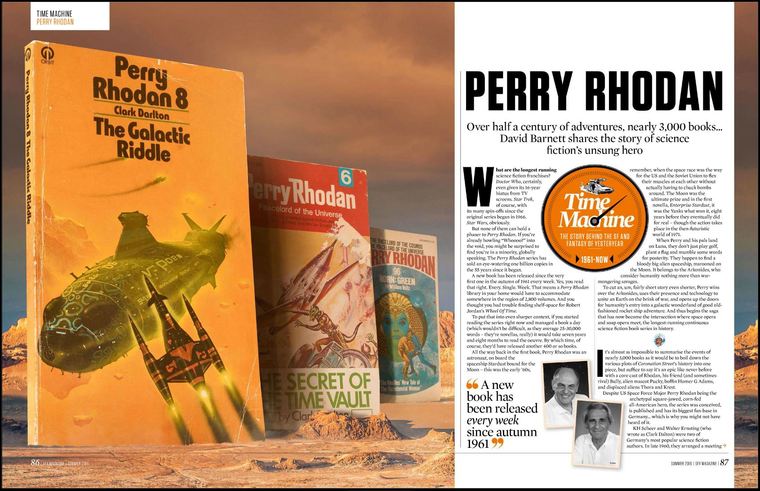
Just read David Barnett’s SFX article on Perry Rhodan, including quotes by you. Very cool!
Wait, what? When did I say stuff about the mighty Perry Rhodan? DeNardo, what are you talking about? John kindly elaborated in his next note:
It’s the Summer 2016 issue. I’m a digital subscriber. Screen caps attached.
The first of two double-page spreads John forwarded me is above. It’s a terrific full-color article from SFX magazine on Perry Rhodan, the long-running space opera, and it does indeed include a quote from me. I knew nothing about it. You know what that means. That’s right — there’s a science fiction magazine called SFX out there and I didn’t know about it. What the hell, world?
The Digest Enthusiast is fast becoming one of my favorite magazines.
Yeah, maybe that’s because I’m an obsessive collector of digest magazines, so finding a publication devoted to my special interests makes me feel all tingly. But seriously, this magazine is a fun read, cover to cover.
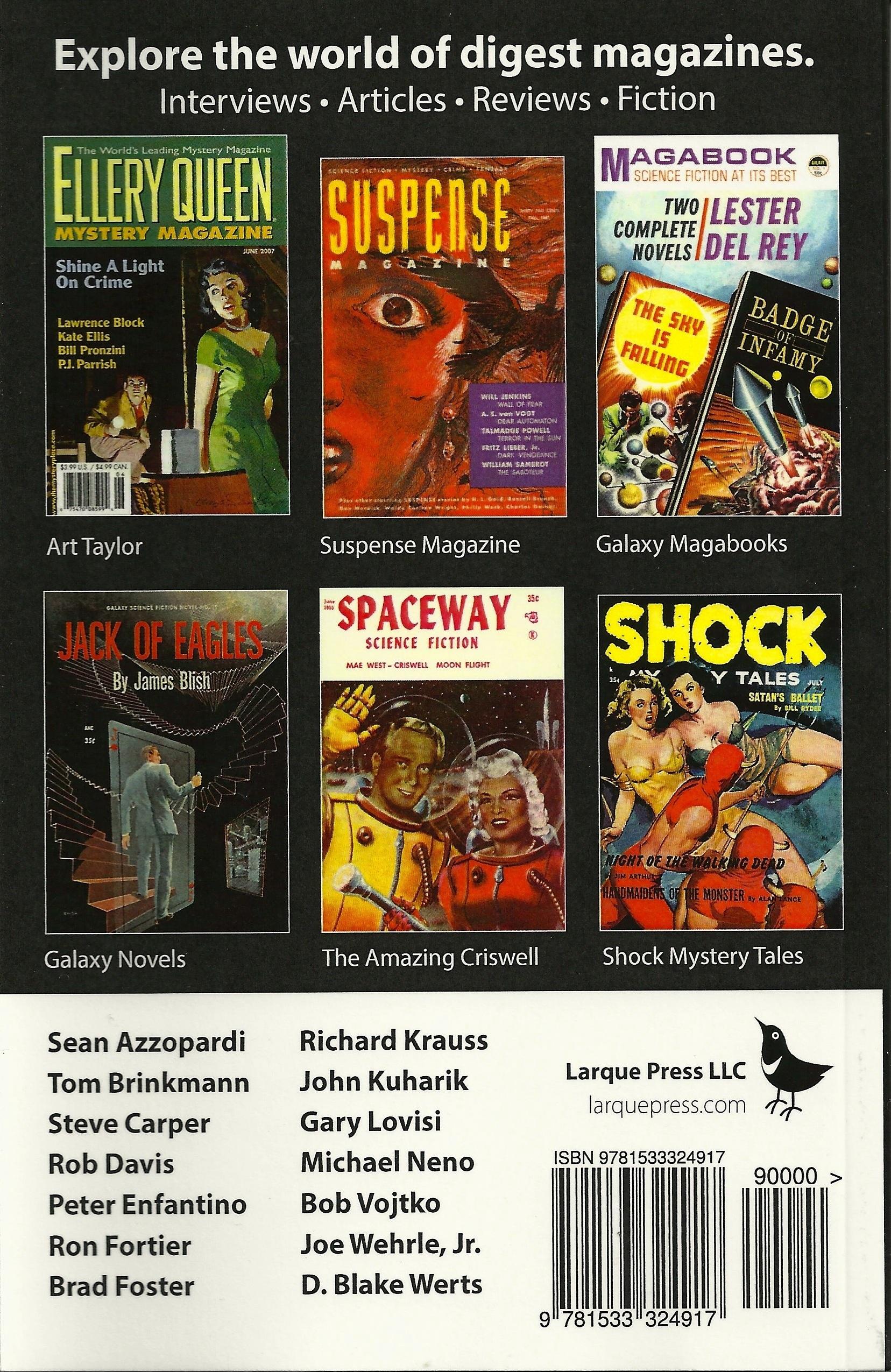
Take for example Steve Carper’s excellent article on The Galaxy Science Fiction Novels, 31 SF novels published in magazine format between 1950-1958 and edited by Galaxy‘s legendary editor H.L. Gold. I bought a story from Steve Carper, “Pity the Poor Dybukk,” which appeared in Black Gate 2, and it’s great to be reading him again. In less skilled hands this article might be nothing more than a dry recitation of facts and publishing dates (not that I wouldn’t find that thrilling, mind you), but Steve greatly livens up the proceedings with fascinating and highly informed commentary on the novels Gold chose, and the often surprising history behind them. Here’s a taste.
Lyon Sprague de Camp’s first published story was “The Isolinguals” in 1937. During the 1930s and 40s he became a significant author, writing dozens of stories and numerous novels. His time travel novel Lest Darkness Fall (1939) is considered a classic and is still read today. Alongside such genre standard bearers as Robert Heinlein and Isaac Asimov, he is considered one of the authors responsible for bringing greater sophistication to science fiction. He was the fourth Grand Master as chosen by the Science Fiction Writers of America in 1979, and in 1984 he was given the World Fantasy Award for Life Achievement. His 1996 autobiography, Time and Chance, won a Hugo Award. In his lifetime he was well-regarded and successful.
To call de Camp a polarizing figure is an understatement. His control over Robert E. Howard’s Conan character for so many years, his ham-fisted editing of Howard’s stories, his ruthless strangling of any effort to get pure, unadulterated Conan into print, raised the ire of readers. For an incredibly detailed history of de Camp’s relationship with REH’s work and legacy, I highly recommend tracking down Morgan Holmes’ 16-part series, “The de Camp Controversy.”
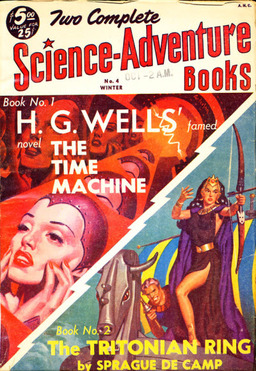
De Camp first encountered the character of Conan when his friend Fletcher Pratt tossed him a copy of Conan the Conqueror. According to Lin Carter, de Camp “yielded helplessly to Howard’s gusto and driving narrative energies.” In 1951 de Camp decided to try his own hand at Howardian swords & sorcery and wrote The Tritonian Ring. He sold it to the clunkily-titled magazine Two Complete Science-Adventure Books.
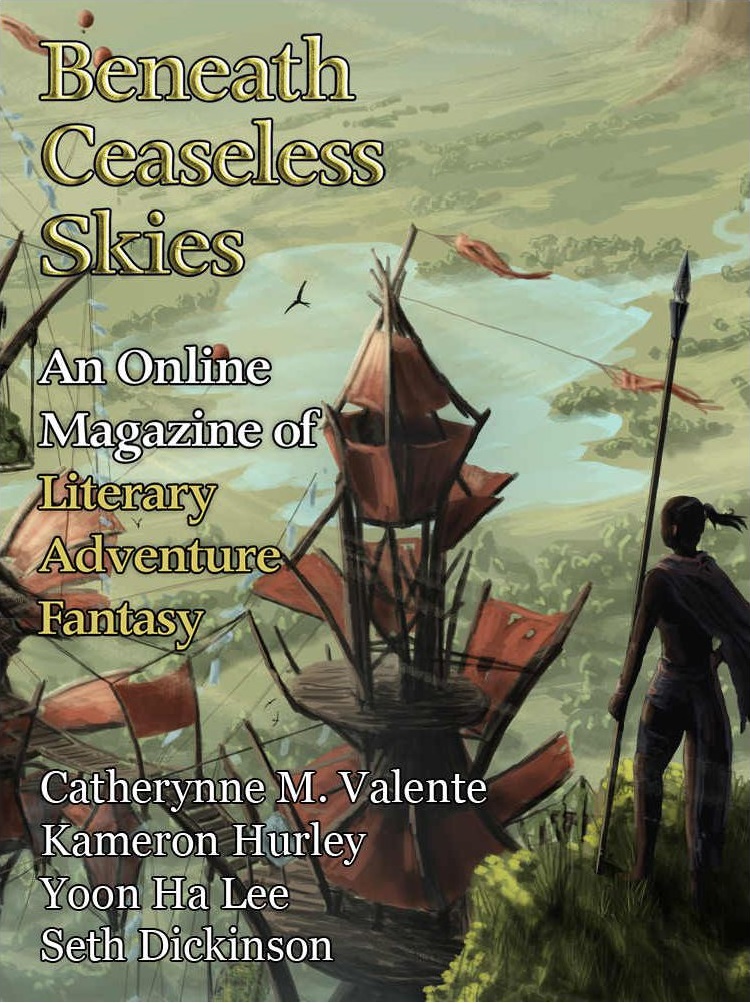
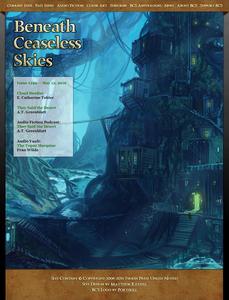
Black Gate would like to salute editor Scott H. Andrews and the entire team at Beneath Ceaseless Skies for achieving a remarkable milestone: publishing an amazing 200 issues over the last eight years. (To put that in perspective, that’s 185 more than Black Gate, every one of them on time! I get light headed just thinking about it.)
Simultaneous with their landmark 200th issue, the magazine wrapped up their subscription drive aimed at enabling the magazine to publish longer stories, and announced that they are now open to stories up to 11,000 words. Sweet!
But the big news is the big double issue. Issue #200 of Beneath Ceaseless Skies is dated May 26 and features fiction by Catherynne M. Valente, Kameron Hurley, Yoon Ha Lee, and Seth Dickinson, podcasts by Yoon Ha Lee and Seth Dickinson, and a Gaunt and Bone reprint by BG author Chris Willrich. Here’s the complete Table of Contents.
“The Limitless Perspective of Master Peek, or, the Luminescence of Debauchery” by Catherynne M. Valente So it came to pass that over the weeks remaining until the parturition of Perdita, I fashioned for her, out of crystal and ebony and chips of fine jade, twin organs of sight not the equal of mortal orbs but by far their superior, in clarity, in beauty, even in soulfulness. If you ask me how I accomplished it, I shall show you the door, for I am still a tradesman, however exalted, and tradesmen tell no tales.
“The Judgment of Gods and Monsters” by Kameron Hurley She shouldn’t have gone to the trial, or talked to that stupid reporter, even for a second. Her father would know, now, that it was her who had his file. It was her who had been called upon to bring him in. She wouldn’t have shown up at the trial otherwise, and he knew it. “Two bits to the one whose family it isn’t,” she said to Merriz, and rolled up to get a look at the shooters.
It’s all subjective, but 2015 really seemed to be the year of Sam J. Miller and Kelly Robson. If you weren’t reading their stuff you were missing something special. There were others, like Alyssa Wong, but you needed to read Sam and Kelly. Just like the year before it was Kai Ashante Wilson and Usman Malik.
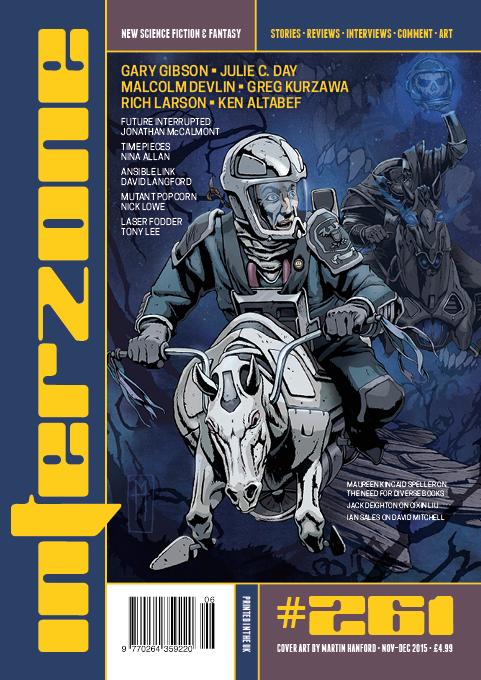
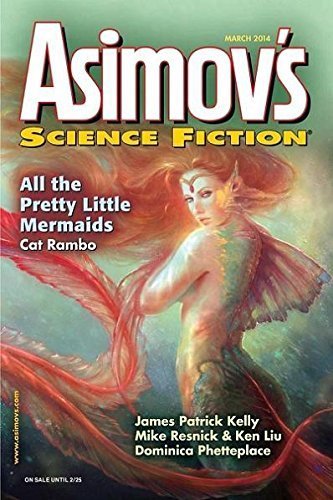
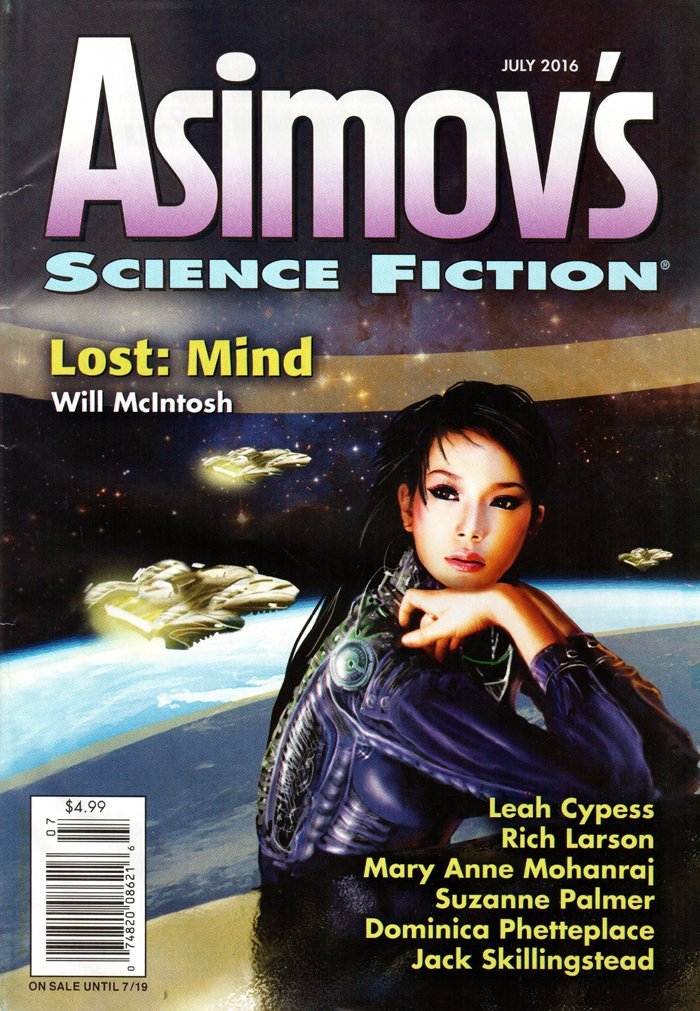
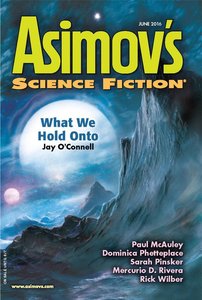
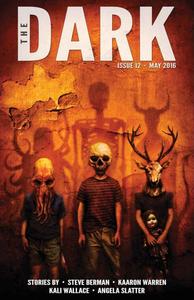
While thankfully none of those fine writers have gone away, this year seems to belong to Rich Larson and Dominica Phetteplace, both of whom have had fine stories in a range of publications. Larson has had strong work in Interzone, Analog, F&SF and elsewhere, while Phetteplace has set up home in Asimov’s with a series of excellent stories. She also has a new one in the upcoming July/August F&SF, “Spells Are Easy If You Have The Right Psychic Energy,” that I really enjoyed. And both authors are in the current issue of Asimov’s, July 2016 (above right).
Tor.com is on a roll. Their new line of novellas has been a commercial and critical hit — the $2.99 digital price pretty much makes them irresistible, and Nnedi Okorafor’s Binti just won a Nebula Award. Plenty of others in their catalog are getting award attention, too. And in addition to their premium publishing line, they continue to publish fine novellas for free on their website.
All in all, it’s not an exaggeration to say that Tor.com has helped usher in a new era for the novella in SF & Fantasy publishing. They certainly haven’t done it alone — Clarkesworld, Beneath Ceaseless Skies, and other top sites have all recently announced that they’re starting to publish longer work — but they’ve definitely led the way in making the novella sexy again.
So I was delighted to see Tor.com recently open a new reading period for unsolicited novellas. Here’s the announcement.
Starting June 5th, Lee Harris and Carl Engle-Laird will be reading and evaluating original novellas submitted by hopeful authors to http://submissions.tor.com/tornovellas/. You can find full guidelines here, and we highly recommend you read the guidelines, because we’re doing things a little differently this time. Until the end of June, Tor.com will only be considering novellas of between 20,000 and 40,000 words that fit one of the following science fiction subgenres:
Time Travel
Space Opera
Near Future Thriller
Cyberpunk
…As always, both Lee Harris and Carl Engle-Laird actively request submissions from writers from underrepresented populations. This includes, but is not limited to, writers of any race, gender, sexual orientation, religion, nationality, class and physical or mental ability.
If you’ve had that unfinished space opera/cyberpunk thriller gathering dust on your hard drive, now is definitely time to polish it off an submit it! Read complete details here.
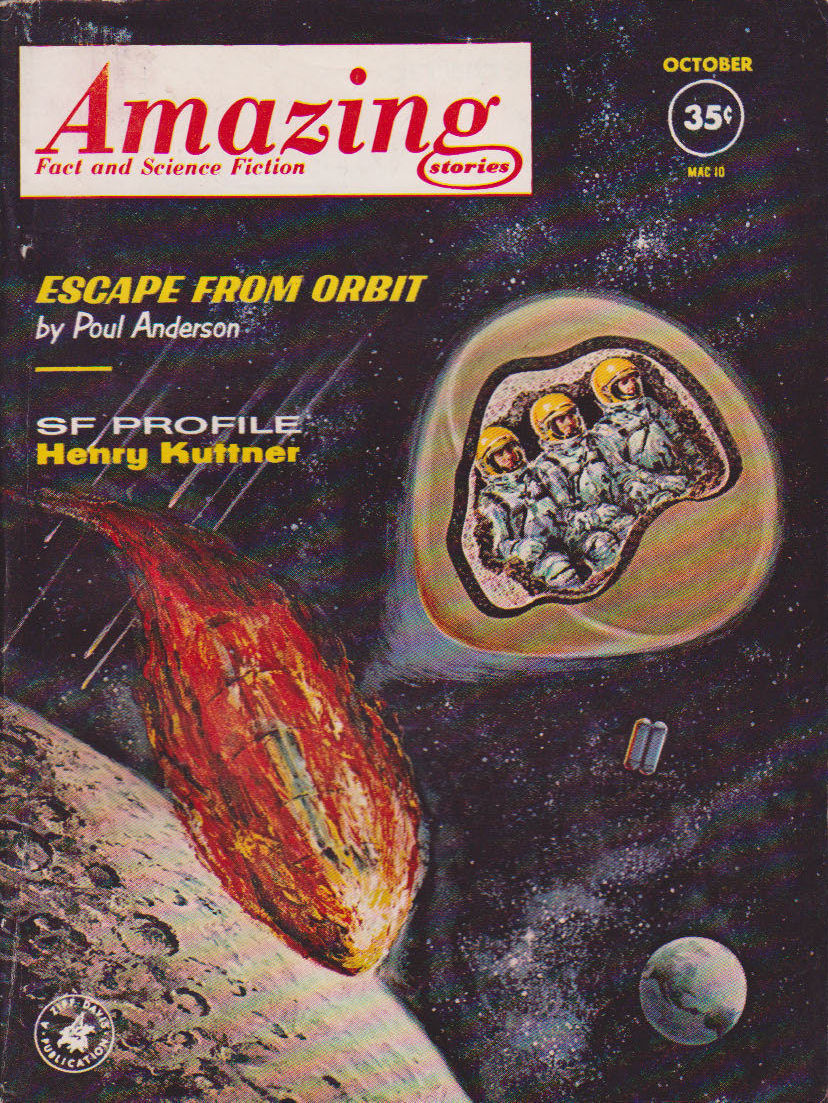
Back to Cele Goldsmith’s Amazing. This is a minor issue in context.
The cover is by an artist I’m not familiar with, Bill Conlon. The interiors are by Virgil Finlay, Austin Briggs, George Schelling, Lloyd Birmingham, and Dan Adkins. Norman Lobsenz’ editorial is about science vs. the humanities. The science fact article is called “The Nuclear Putt-Putt,” by Frank Tinsley, and it’s about Project Orion (the notion of propelling a spacecraft by nuclear bombs). Sam Moskowitz contributes a profile of the late Henry Kuttner, reflecting the view that much of what he wrote under his own name was garbage, so no one could believe he was behind the Lewis Padgett stories.
S. E. Cotts’ book review column covers Great Science Fiction by Scientists, edited by Groff Conklin; The Long Tomorrow, by Leigh Brackett; Return to Otherness, by Henry Kuttner; Telepath, by Arthur Sellings; and The Super Barbarians, by John Brunner. He praises the Conklin anthology for its off-center focus — the fiction of actual working scientists — less than for the quality of the actual stories. The review of The Long Tomorrow is an out and out rave (with an apology for having taken so long to get around to it).
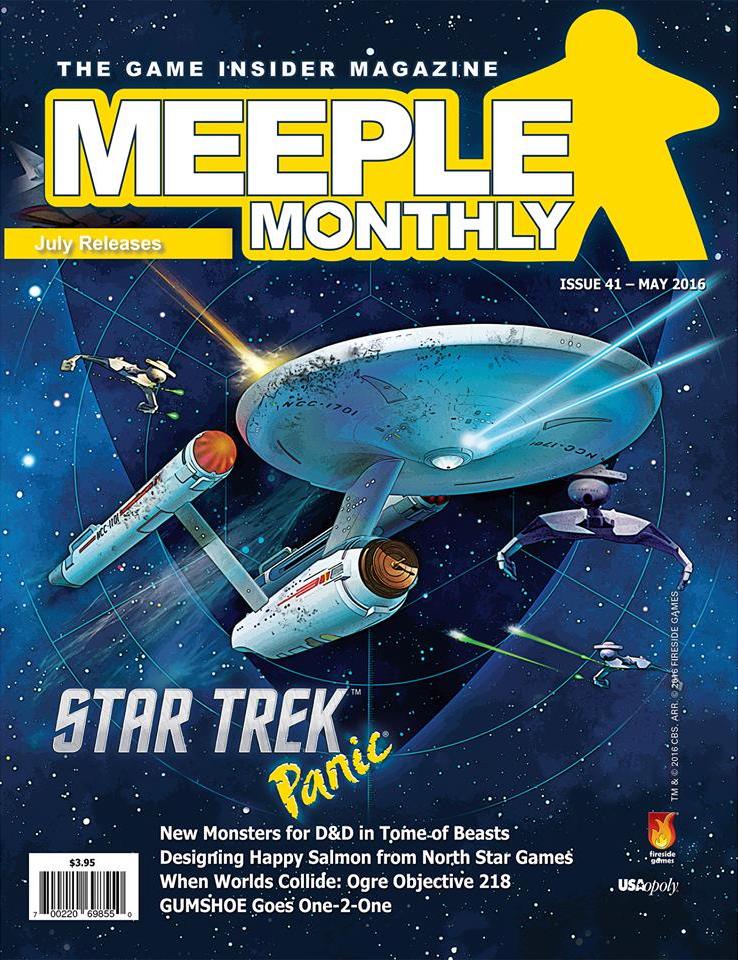
If you hang out in game stores (and who doesn’t?) you’ve doubtless seen copies of GTM, Game Trade Magazine, a monthly industry mag for the Adventure Hobby industry that also doubles as a handy catalog for Alliance Game Distributors. GTM is always a pleasant read, with fun articles and full color pics of upcoming RPGs and card games. While I was browsing the magazine rack at my local game store last month, I came across something called Meeple Monthly, and at first couldn’t believe my eyes. It looked like GTM, except for board games… a full color magazine devoted to the very latest releases, with full color throughout, chatty articles, a nice assortment of ads, and enthusiasm for the industry dripping off every page. And that’s exactly what it was.
Ah, what a marvelous world we live in. An inexpensive color magazine devoted to new board games? Yes please! I snatched up that issue and brought it home, and I’ve bought every one I could find since. The May issue, featuring a cover feature on Fireside Games and USAopoly’s Star Trek Panic, covers games shipping in July. It also contains:
An inside look at Happy Salmon from North Star Games
A sneak peak at 400 new monsters for Dungeons and Dragons Ancient Bestiaries in Tome of Beasts, from Kobold Press
Wade Rockett’s preview of the excellent artwork in Tome of Beasts
Robin Laws’ inside look at Gumshoe going One-2-One in Cthulhu Confidential, from Pelgrane Press
The Battle for Hill 218 comes to the OgreUniverse in Ogre: Objective 218, the newest from Steve Jackson Games
All that plus over a dozen pages cataloging every upcoming board game, from all the major publishers, all in full color. What’s not to love?
Meeple Monthly is edited by Jenna Piller and published by ACD Distribution. It is 48 pages, full color, priced at just $3.95. See more details — including news on the upcoming June issue — at their Facebook page.
Lots of great reading for fantasy fans in June, and the month is just getting started.
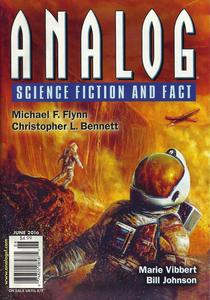
In addition to all the new magazine releases, our intrepid reviewers kept you posted on classic fiction — including the latest installment from Matthew Wuertz of his long-running re-read of Galaxy magazine from the early 50s, and our look at the first two volumes of The Best of Amazing Stories, The 1926 and 1927 Anthologies, edited by Steve Davidson and Jean Marie Stine.
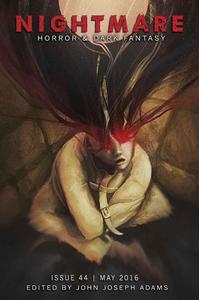
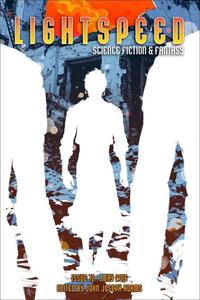
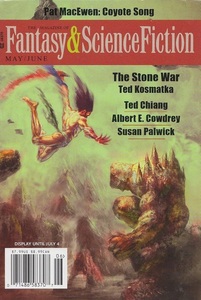
Check out all the details on the magazines above by clicking on the each of the images. Our May Fantasy Magazine Rack is here.
As we’ve mentioned before, all of these magazines are completely dependent on fans and readers to keep them alive. Many are marginal operations for whom a handful of subscriptions may mean the difference between life and death. Why not check one or two out, and try a sample issue? There are magazines here for every budget, from completely free to $35/issue. If you find something intriguing, I hope you’ll consider taking a chance on a subscription. I think you’ll find it’s money very well spent.
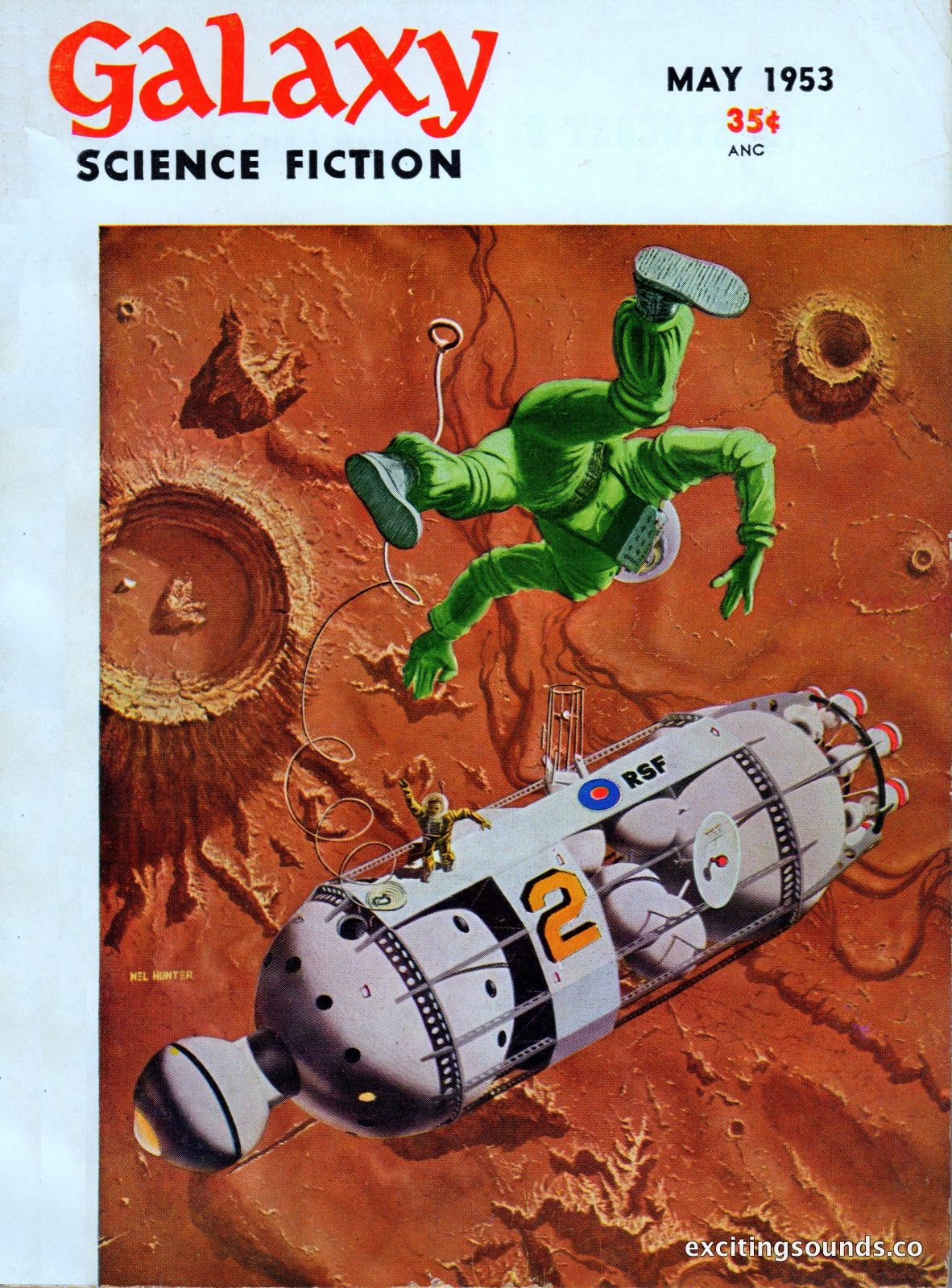
In the May, 1953 issue of Galaxy, Editor H. L. Gold opens with some thoughts on science fiction and the future. He writes:
Does good science fiction, then, pretend to describe the actual future? No, certainly not. Anyone who thinks so is missing the point… We’re having fun with ideas, making first this one and then that predominant just to see what might happen if.
“Wherever You May Be” by James A. Gunn — Matt Wright is heading to a hunting cabin in the Ozarks to write his thesis but has car problems. While he’s trying to get it running again, he finds a young woman named Abbie laughing at him. She ran away from home and hopes to go with Matt, but he’s not about to take in someone claiming to be 16 (she’s actually 18), so he takes her home to her father. Matt expects to find signs of abuse but finds the older man wants to be rid of his daughter — as though he’s afraid of her.
When Matt finally reaches the cabin (after getting lost a few times), he finds Abbie waiting for him. Given the late hour, he decides to let her stay. She tells him that sometimes things happen around her — objects moving as she thinks about them. Yet as he tests her abilities, she seems unable to do anything, unless she becomes upset.
Matt decides that she will be his new research paper, though she doesn’t know it. He could run all kinds of tests on her abilities. Except that it’s clear that she’s happy being with him — that she likes him. So he considers a way to enhance her powers — by breaking her heart.
I still can’t decide how I feel about this story, so I credit it with sticking with me. Abbie’s character anchors the entire story. But I just can’t stand Matt. And I don’t like the ending because I feel it cheapens Abbie’s character and pardons Matt. I think there are other ways that could have led to a similar conclusion without leaving me a bit jaded. Regardless, as I said, the story stuck with me, even with the ending (or maybe because of the ending).