Warlocks and Warriors: Two Sword & Sorcery Anthologies edited by L. Sprague De Camp and Douglas Hill
 |
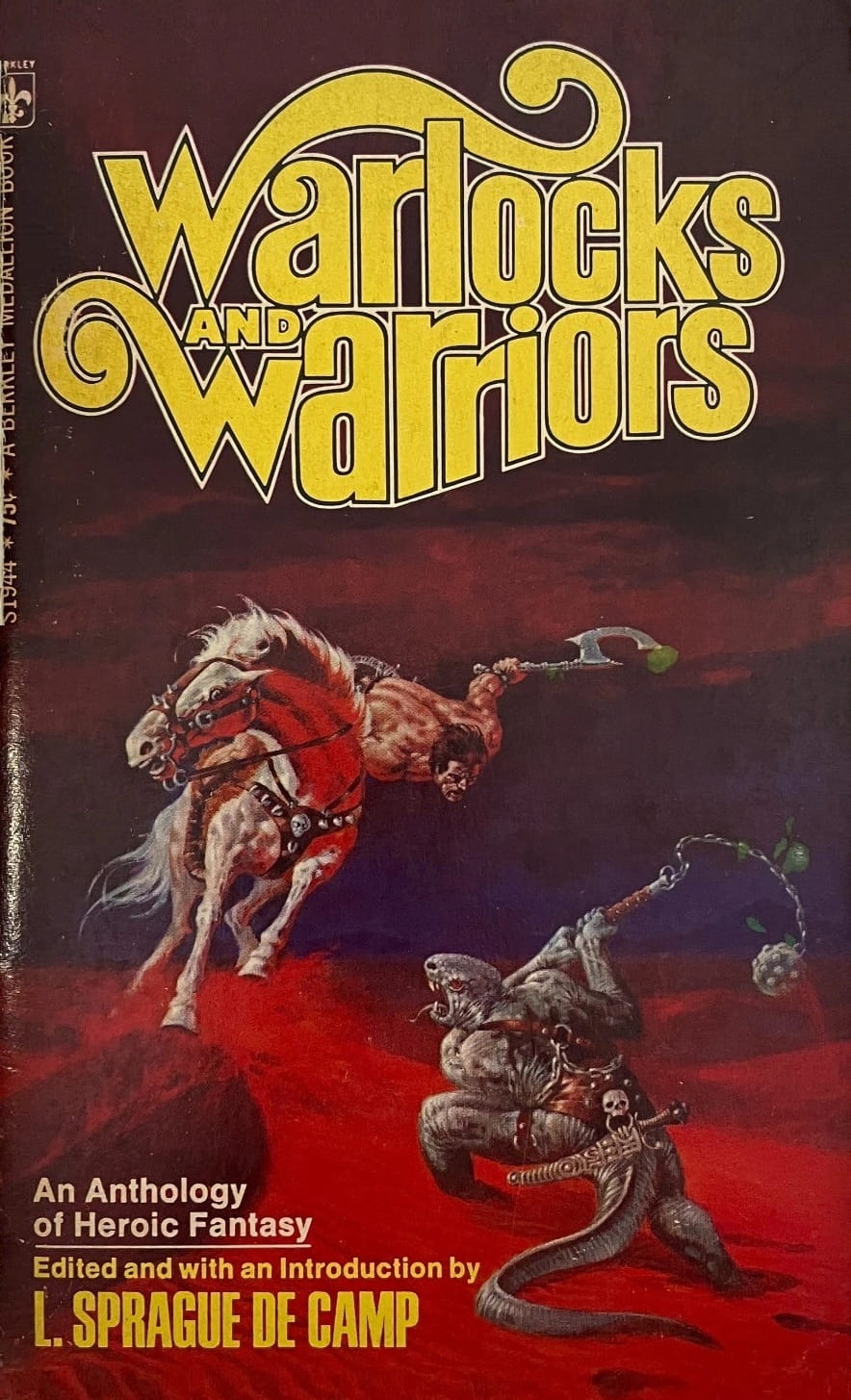 |
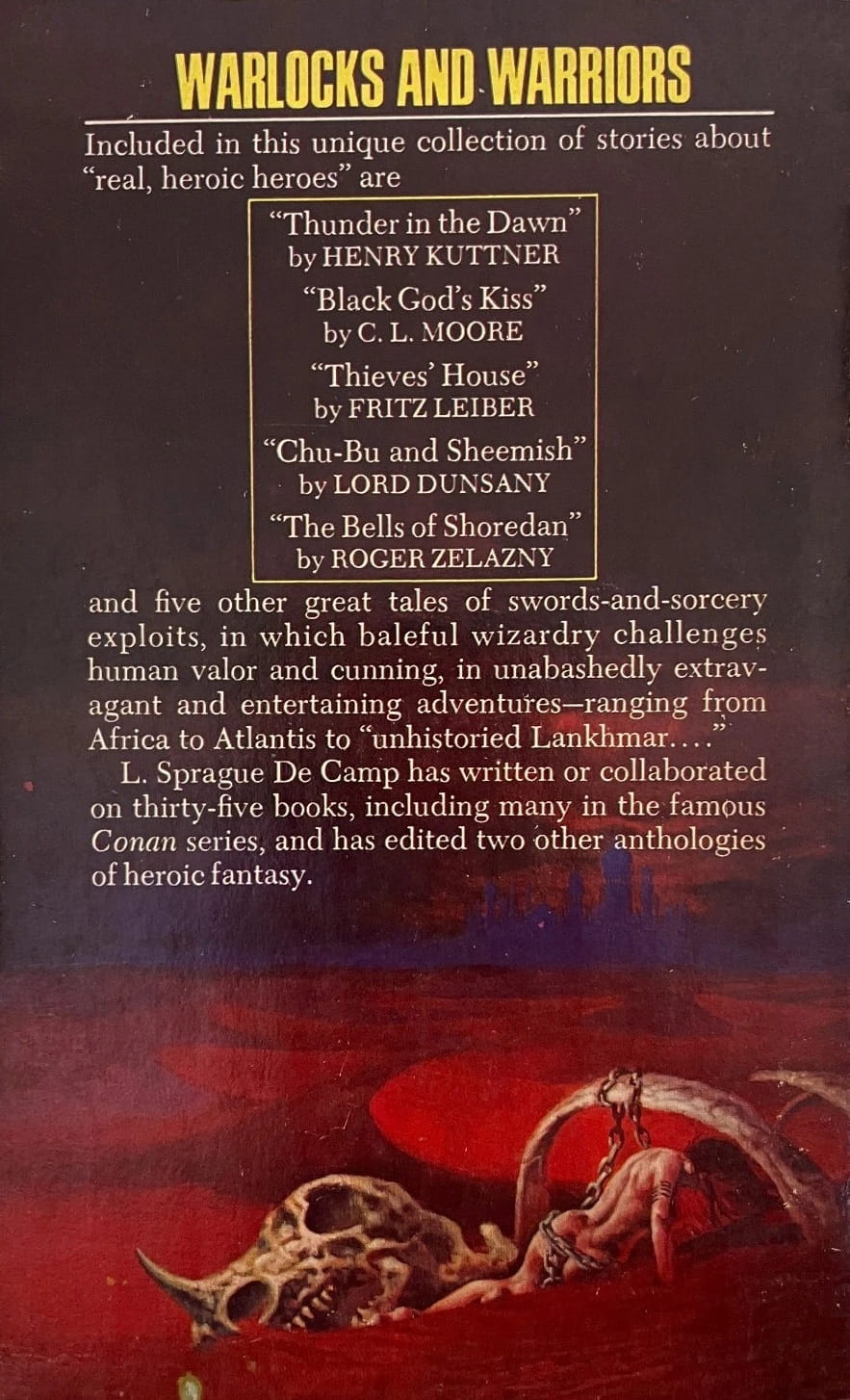
Warlocks and Warriors, edited by L. Sprague De Camp
(Berkley Medallion, January 1971). Cover by Jim Steranko
Warlocks and Warriors (1970) was edited by L. Sprague De Camp, who did quite a few anthologies around this time while also busy editing and rewriting Robert E. Howard’s Conan tales. It’s certainly a good collection, and quite varied, though not all these fit the heroic fantasy label associated with the collection. Certainly, not all are Sword & Sorcery (S&S). The cover is by the great Jim Steranko.
The anthology contains:
An intro by de Camp
“Turutal” by Ray Capella
“The Gods of Niom Parma” by Lin Carter
“The Hills of the Dead” by Robert E. Howard (a Solomon Kane tale)
“Thunder in the Dawn” by Henry Kuttner (Elak of Atlantis)
“Thieves’ House” by Fritz Leiber (Fafhrd & the Gray Mouser)
“Black God’s Kiss” by C. L. Moore (Jirel of Joiry)
“Chu-Bu and Sheemish” by Lord Dunsany
“The Master of the Crabs” by Clark Ashton Smith (Zothique)
“The Valley of the Spiders” by H. G. Wells
“The Bells of Shoredan” by Roger Zelazny (Dilvish)
The Ray Capella story, “Tutural,” is set in Robert Howard’s Hyborian Age but is not about Conan or a “Clonan.” One might consider it fan work but it’s quite well written. Capella’s full name was Raul Garcia-Capella (1933 – 2010), and you’ll sometimes see his work under just Raul Capella.
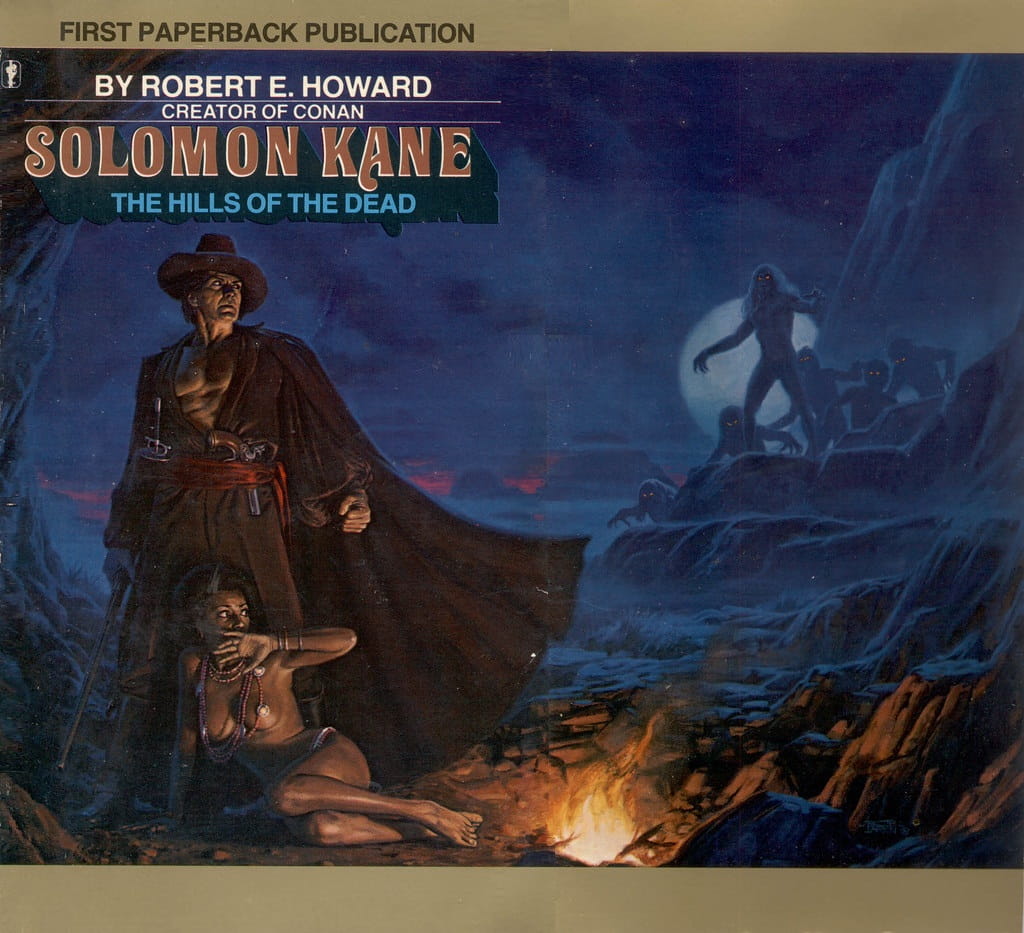
The Howard contribution, “The Hills of the Dead,” is one of his Solomon Kane stories. The Solomon Kane tales were written before REH started working on Conan and they feature a very different kind of hero. I like them a lot.
Moore’s “Black God’s Kiss” is a Jirel of Joiry tale and my favorite piece here. Henry Kuttner was married to C. L. Moore. His tale here is his longest piece about Elak, which is well worth reading. Fritz Leiber seemed to be in just about every anthology that appeared around this time with his Fafhrd and Gray Mouser tales. This is another one. Wells’ story here is fantasy rather than SF and quite fun.
 |
 |
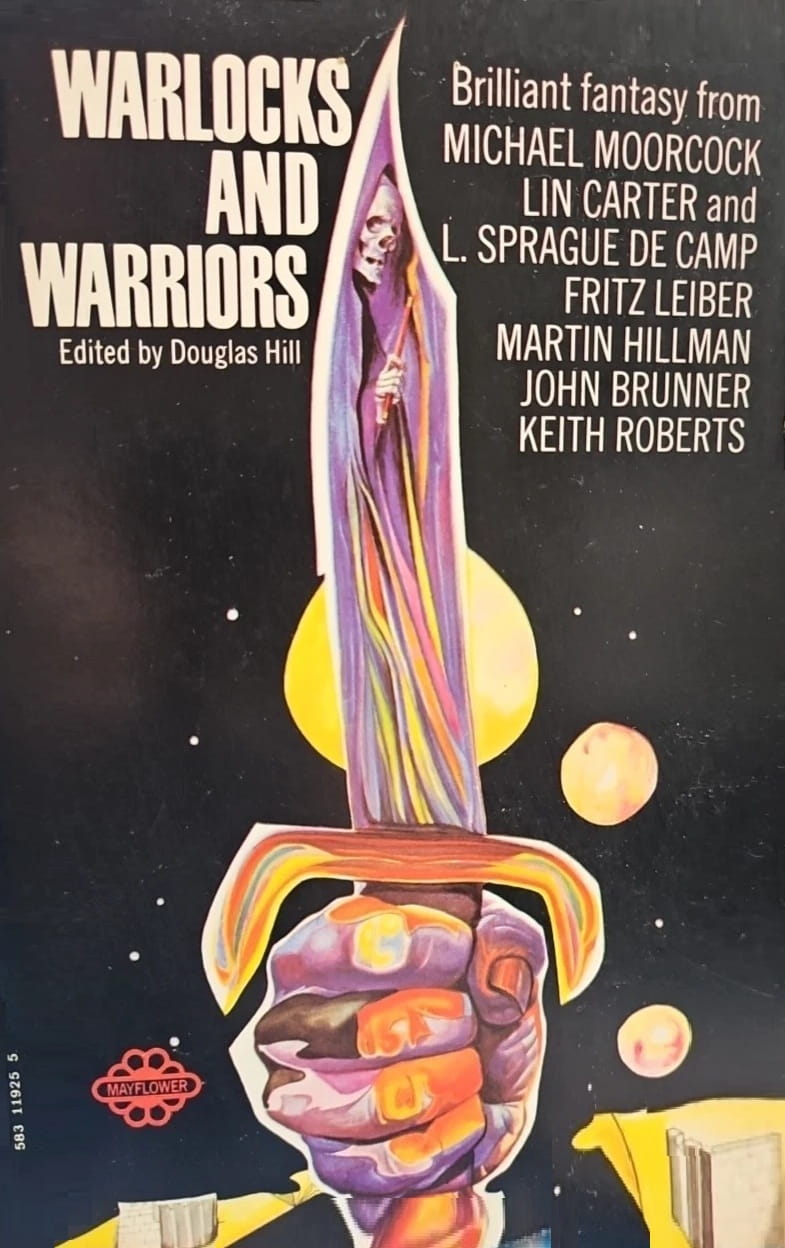
Warlocks and Warriors, edited by Douglas Hill (Mayflower, 1971). Cover by Josh Kirby
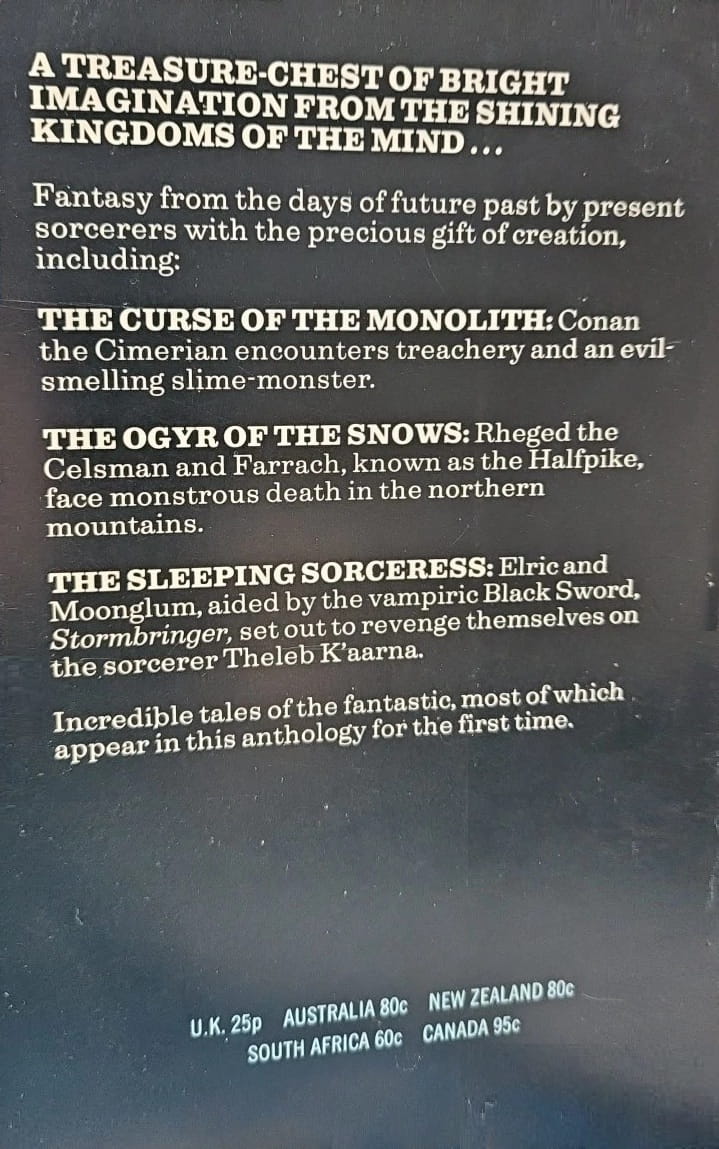
A second, very different book with the title Warlocks and Warriors appeared in 1971. It was edited by Douglas Hill (1935 – 2007) and published by Mayflower books in London. It has a very simplistic cover, artist unknown, although the reflection in the knife is kind of cool. Hill apparently wrote a number of books of his own, though I haven’t read any.
After Hill’s short introduction we have the following stories:
“The Sleeping Sorceress” by Michael Moorcock (an Elric tale)
“The Curse of the Monolith” by Lin Carter and L. Sprague De Camp (Conan)
The Ogyr of the Snows” by Martin Hillman
“The Wages Lost by Winning” by John Brunner (The Traveler in Black)
“The Wreck of the Kissing Bitch” by Keith Roberts (The Ice Schooner)
“The Unholy Grail” by Fritz Leiber (The Gray Mouser)
I’d read “The Sleeping Sorceress” before. This is an early Elric and Moonglum story by Moorcock and is quite good. I’d also read “The Curse of the Monolith,” which is a Conan pastiche by Carter and De Camp. Not quite Howard’s Conan but it was an OK tale.
I also had previously read “The Unholy Grail” by Leiber. This tale recounts the earliest adventure of the Gray Mouser, of Fafhrd and the Gray Mouser fame. Not my favorite of the series, probably because I like the Fafhrd character better than the Mouser character.
 |
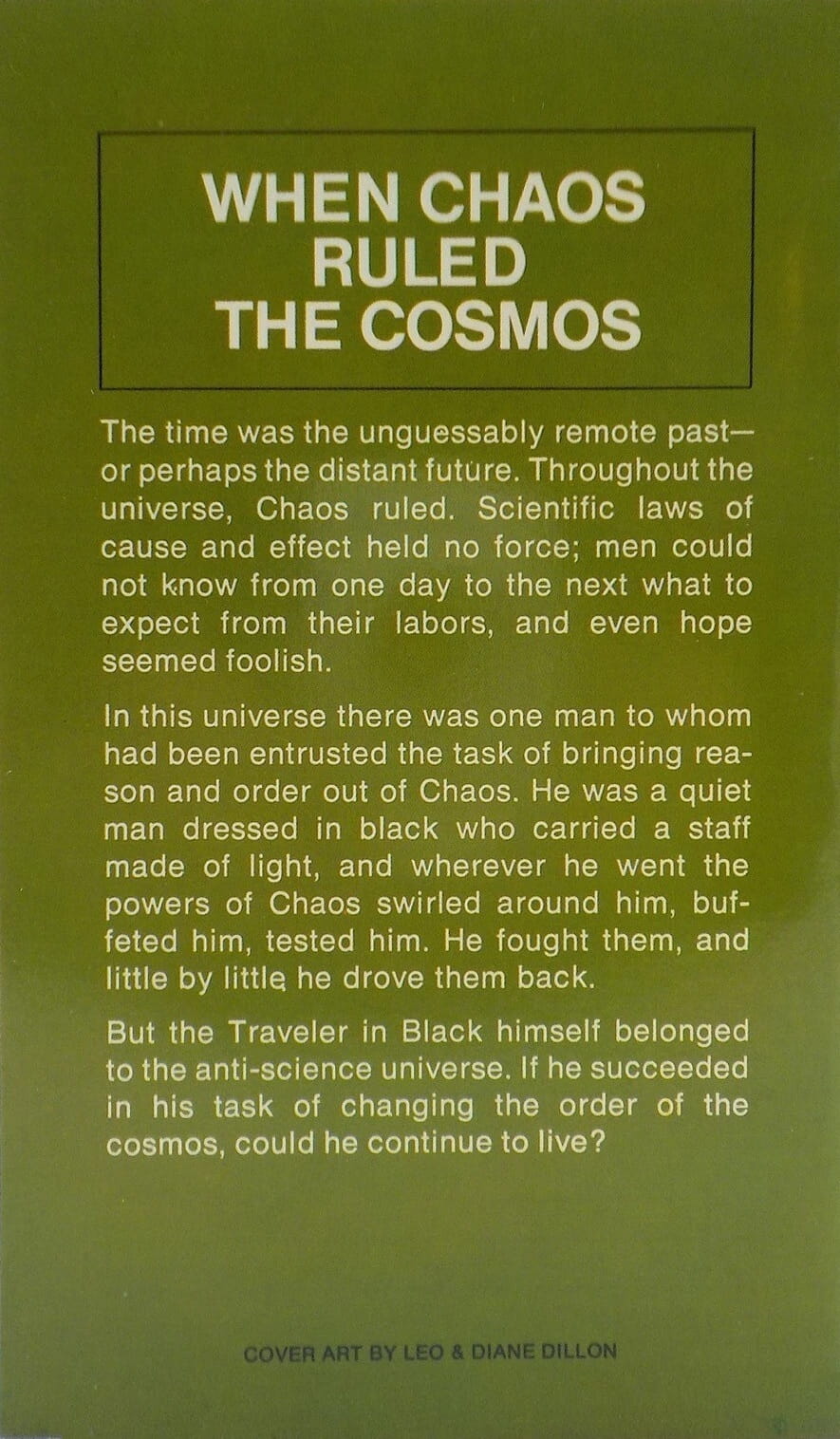 |
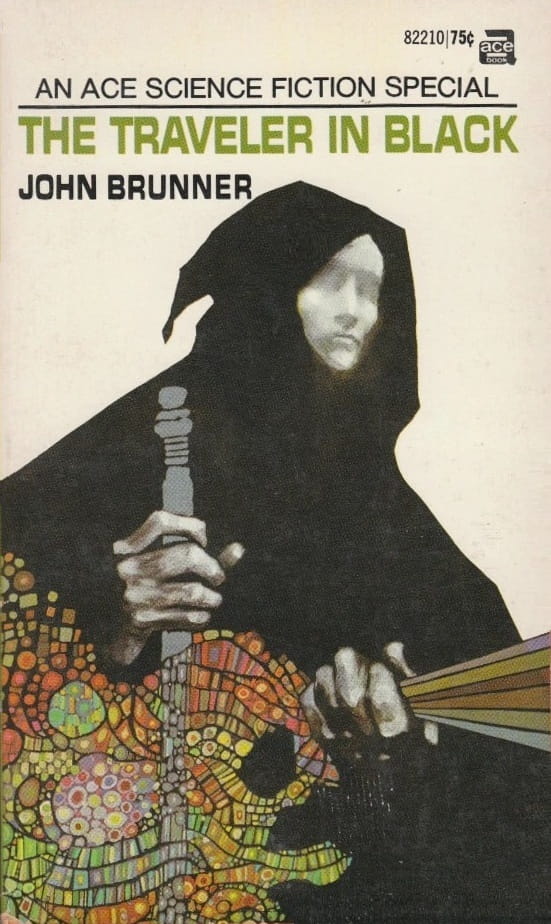
The Traveler in Black by John Brunner (Ace Books, January 1971). Cover by Diane and Leo Dillon
What were new to me were the tales by Hillman, Brunner, and Roberts, and all three were quite good. Brunner, I know, of course. I’ve read a lot of his SF. This is a story of the “Traveler in Black,” definitely fantasy though not Sword & Sorcery. The Traveler is a kind of mixed angel/devil character with the power to grant people’s desires. I’d not previously read these tales. It was beautifully written but meandered until it got to the main plot.
Martin Hillman’s “The Ogyr of the Snows” is definitely S&S, and a well written piece. The hero is Conanesque but wins the day mostly by wit. According to the introduction, this tale was extracted from a “novel in progress” by Hillman, but it turns out Hillman was Douglas Hill’s pseudonym. I looked through a list of Hill’s books but am not sure which one this piece may have come from.
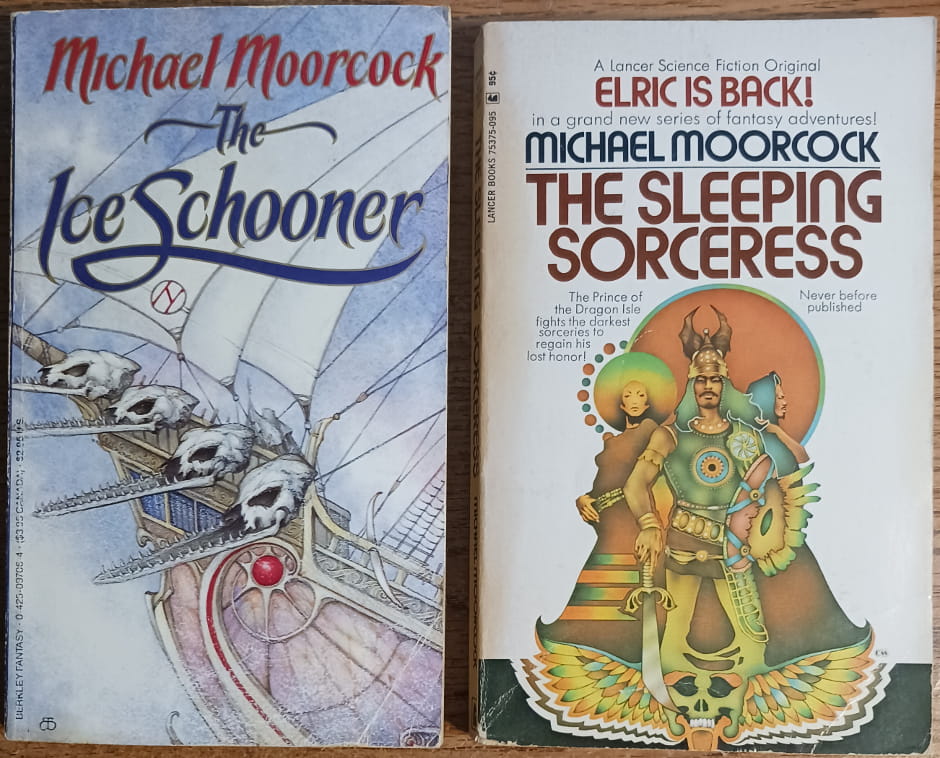
The greatest treasure in this collection is “The Wreck of the Kissing Bitch” by Keith Roberts. This tale is set in the world created by Moorcock for The Ice Schooner. The world was already beautifully conceived and Roberts does a fine job playing in the same universe. My favorite tale in the collection, concluding with a tense and exciting chase scene of sailing ships across the great ice seas.
I’ll be talking a lot about Moorcock down the line but above is a little tease in a picture of two of his books mentioned in this post (The Ice Schooner – cover artist unknown: The Sleeping Sorceress – cover by Charles Moll).
Charles Gramlich administers The Swords & Planet League group on Facebook, where this post first appeared. His last article for us was a review of Swordsmen and Supermen, edited by Donald M. Grant. See all of his recent posts for Black Gate here.
Huh — I could’ve sworn that Ice Schooner cover was Robert Gould (who did a bunch of other Moorcock covers for Berkley in the 80s) but that signature in the bottom left doesn’t seem to match and ISFDB has nothing to say.
I have both of these anthologies and agree they’re both very solid; and the Hill book was probably my first introduction to Brunner’s Traveler in Black.
I looked pretty hard for the cover artist for Ice Schooner but couldn’t find anything. I’ll have to have a look to see if I can connect it to Gould. I hadn’t heard his name associated with it before.
I don’t have any evidence other than, as I said, it seems to be in a similar style to what Gould used for the Elric, Corum and Count Brass books, and that signature in the bottom left really makes me think it was actually someone else.
Gotcha
For me – or for my eyes – that signature in the bottom left does match perfectly. That’s Robert Gould. Look for example at this picture:
https://www.comicartfans.com/GalleryPiece.asp?Piece=2176728&GSub=257355
(I hope it’s okay to post this link. I don#t want to make any trouble.)
Yeah, I’d call that pretty definitive — I just didn’t see that symbol on any of my own Moorcock covers that I was reviewing.
thumbs up
cool. That is helpful
I am surprised ISFDB doesn’t have the artist credited but I think it looks like Ian Miller’s style
I actually put in an edit for Robert Gould as cover artist (as per Gero’s comment above) but it’s still pending approval.
ool. I’m going to correct it in my original files today.
That’s a nice table of contents.
indeed
I have the first, yet to find the second. I like both covers and TOCs, though I find it very interesting they’re only a year apart and share the same title and in fact one includes the editor of the other.
Yep, that kind of interconnectedness can drive one crazy if you think about it too much
The UK cover is by the late Josh Kirby who was best known here in Britain as the cover artist of Terry Pratchett’s books in the eighties and nineties.
Yes, the Black Gate folks added that under the cover picture itself although I didn’t know the artist when I first wrote the essay. I’ll correct that in my essay going forward
Had to stop for a second when I saw the Keith Roberts story being labeled with “The Ice Schooner”, which I identified with Mr. Moorcock. So it is! Keith Roberts at play in the Moorcock multiverse, awesome! I wonder if he wrote any other Moorcock-adjacent tales.
I’m not sure. I haven’t investigated that, but he did a great job with this
“The Wreck of the Kissing Bitch” is great. It’s not the only story Roberts wrote in The Ice Schooner world — “Coranda”, from Moorcock’s New Worlds in 1967, is also great. I read The Ice Schooner with great enjoyment as a teen and was delighted to run across Roberts’ two stories decades later.
I don’t believe I’ve read Coranda. Will have to look for it. Ice Schooner is about my favorite Moorcock tale
The Dilvish stories (such as “The Bells of Shoredan”) are one of the few Zelazny properties I’ve never been that enthusiastic about.
A lot of his work seems in hindsight to have been testing grounds for other work. The Amberites, for example, seem to me to be in some ways a combination of Dilvish and Shadowjack.
I’ve read some of each, Dilvish and Amber and I agree that Amber is probably the more complete story. I enjoyed both OK.