Ridley Scott’s Robin Hood: Robin Hood Begins, Kingdom of Heaven Ends
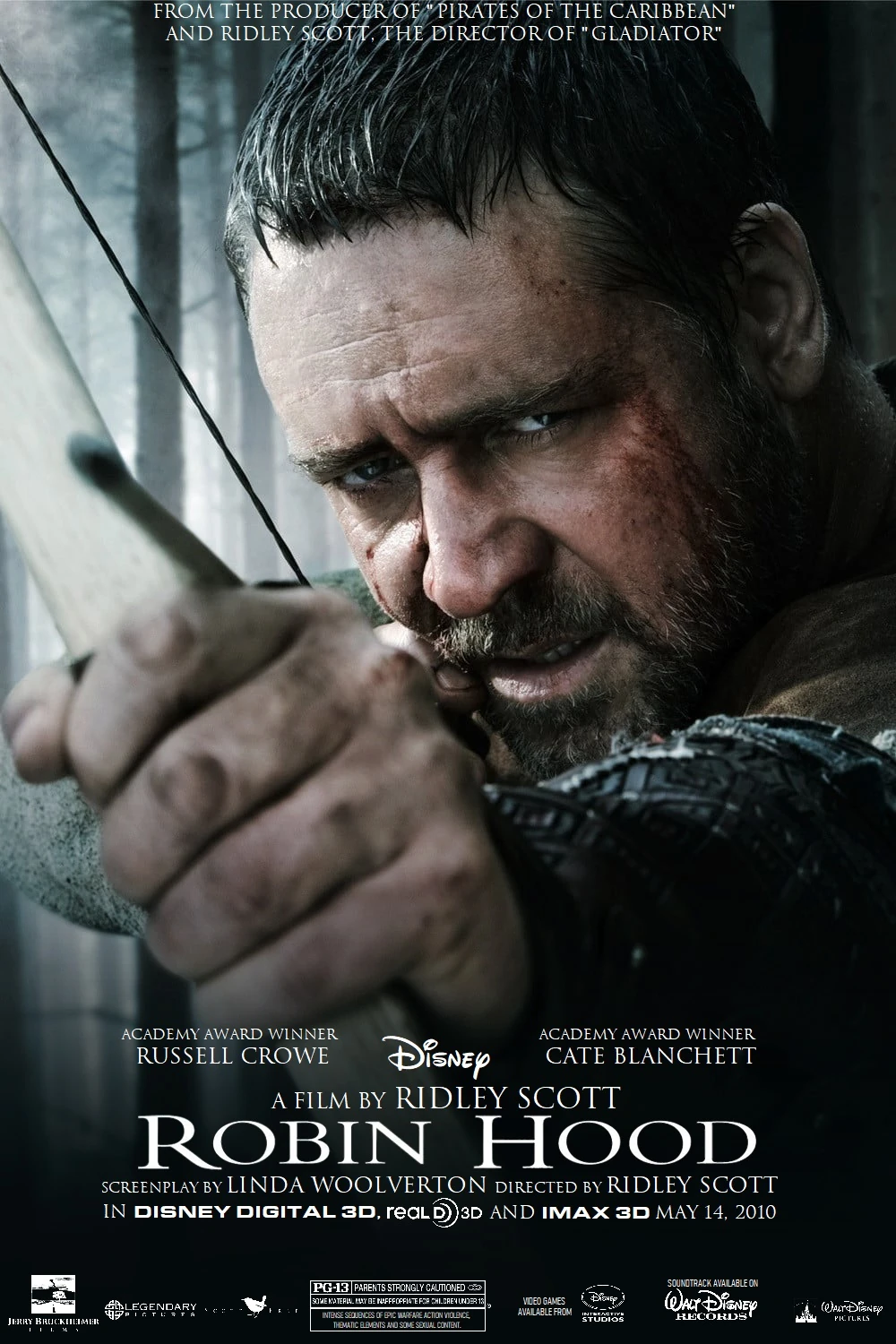
Robin Hood (Unrated Director’s Cut) (156 minutes; 2010)
Written by Brian Helgeland. Directed by Ridley Scott.
What is it?
What it is, is a criminally underrated film.
Maybe it would’ve been more successful if they had titled it Robin Hood Begins.
Another option, though it probably wouldn’t have helped at the box office, is Kingdom of Heaven II.
Because it is both of those things, and more.
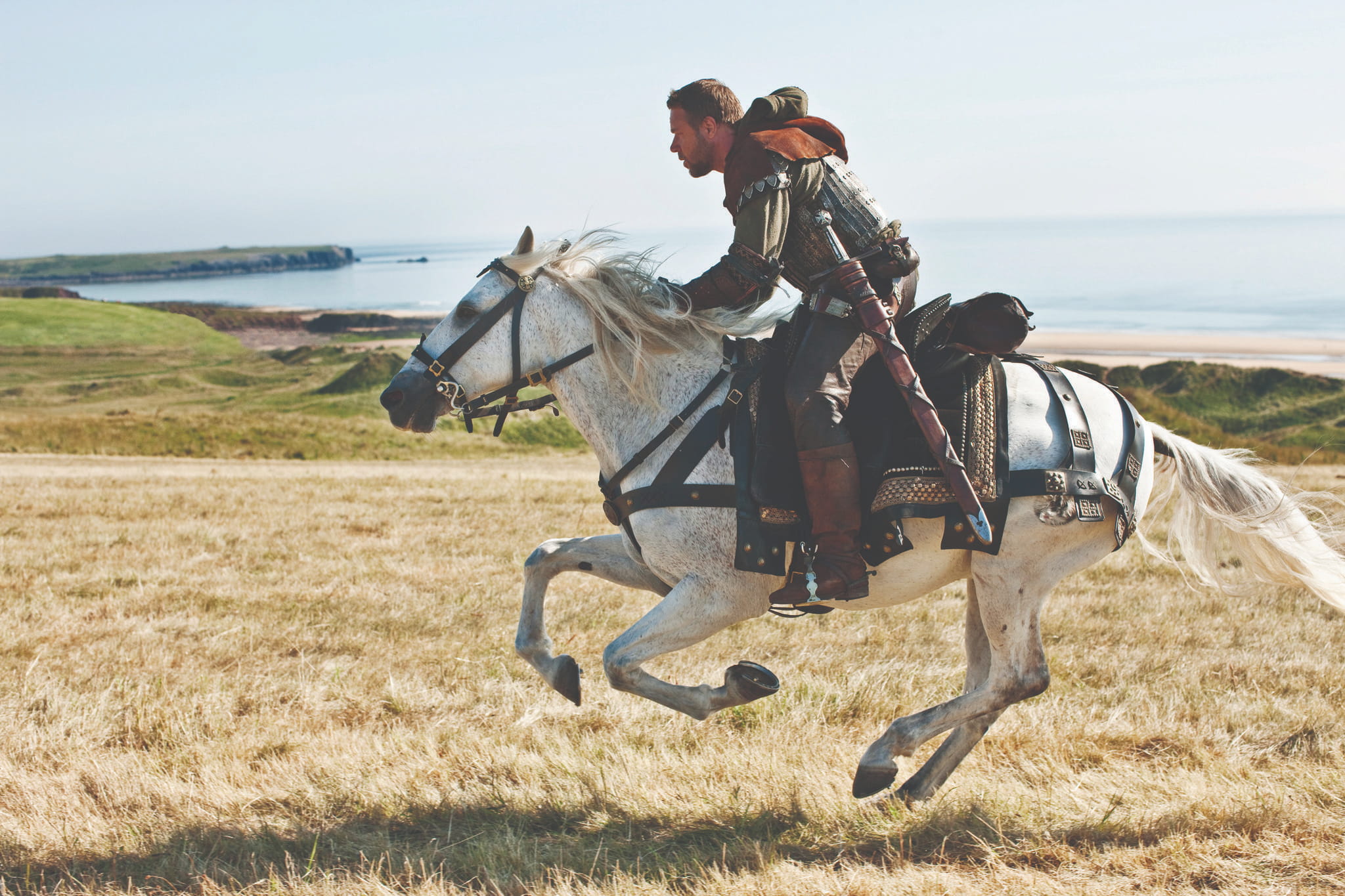
It’s a backdoor sequel to Kingdom of Heaven. That movie ended with Richard the Lionheart stopping by Orlando Bloom’s village in France, on his way to Crusade in the Holy Land. This film begins with Richard on his way back home.
And it maintains the primary theme of that film, which is that what makes a man a man is not what organization he is affiliated with or what title he bears, but what he chooses to do every day.
It’s also an origin story for Robin Hood. Essentially, it’s a prequel to every other Robin Hood movie. It begins with him serving in Richard’s army, and follows him right up to the very moment he’s declared an outlaw by King John.
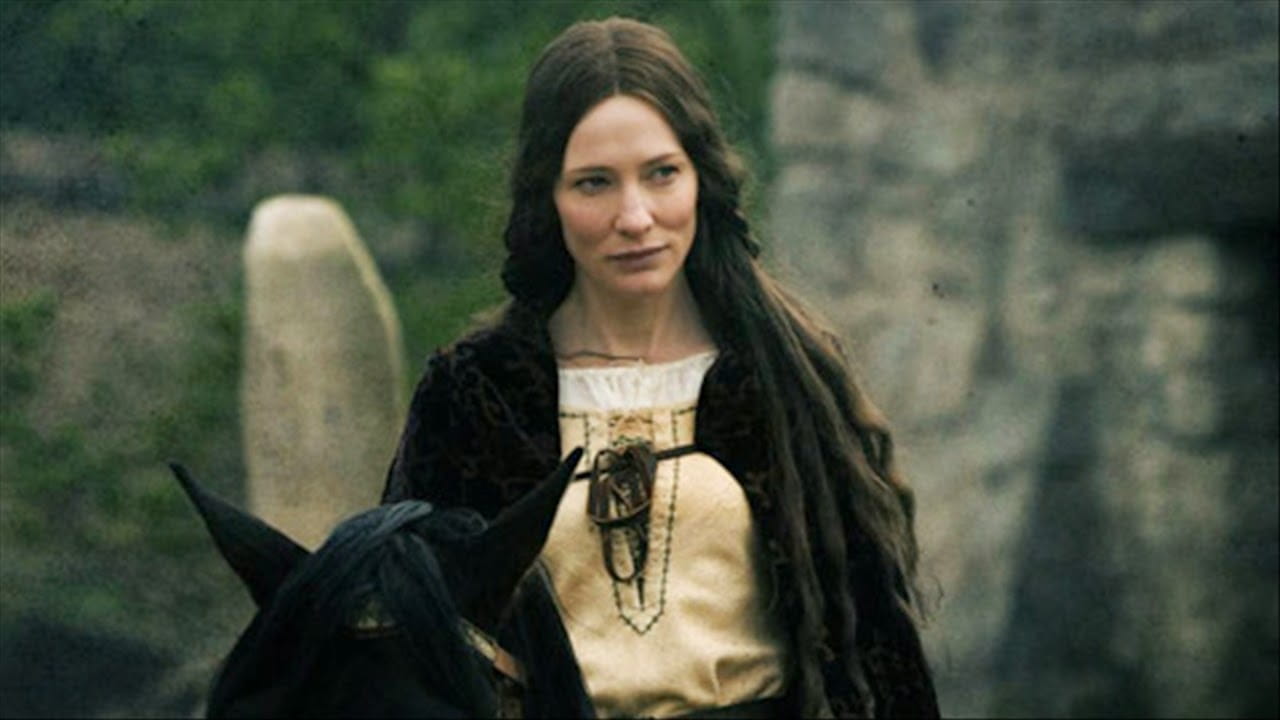
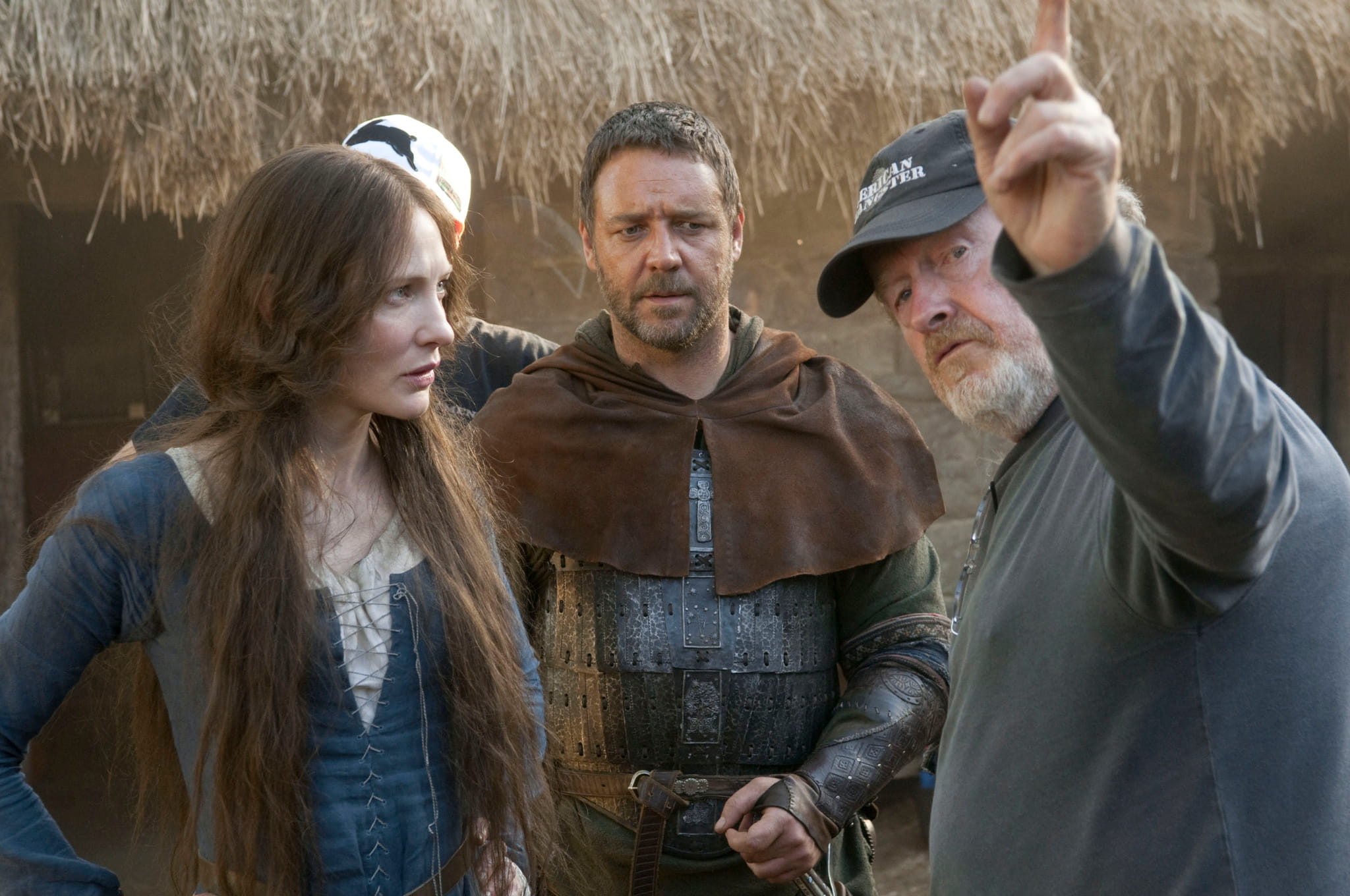
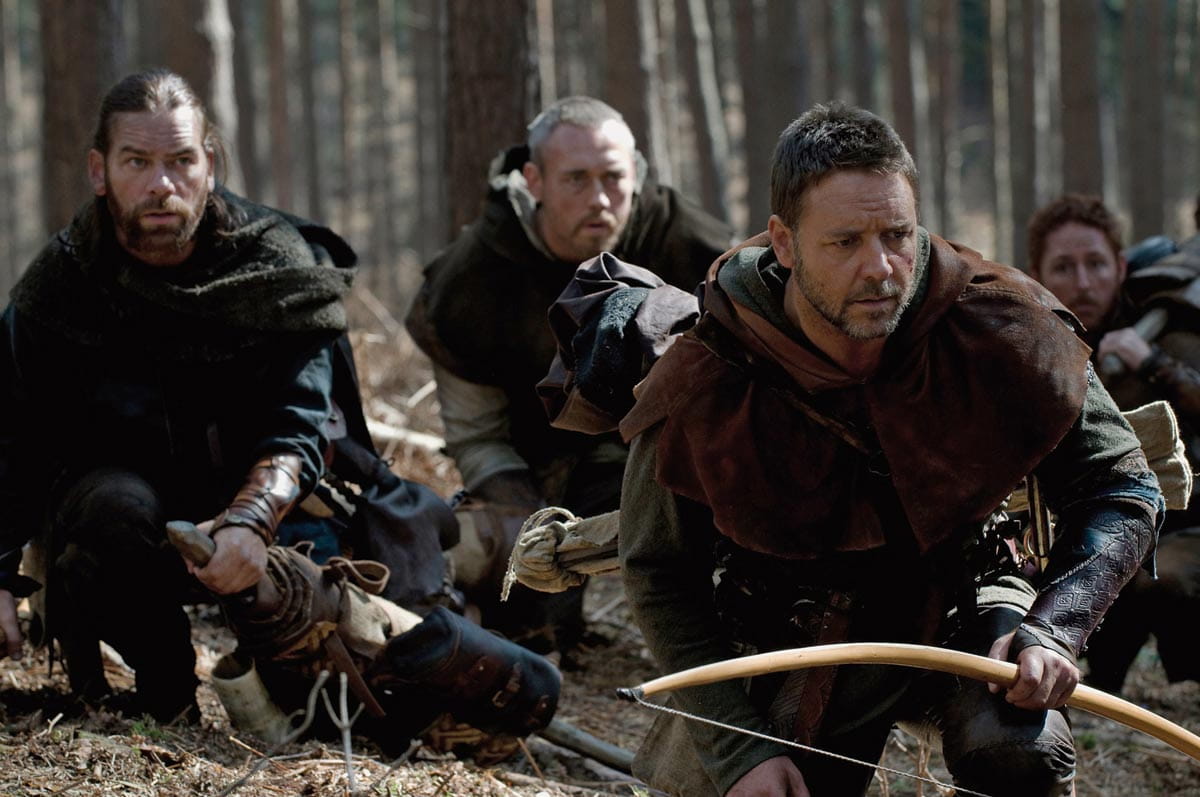
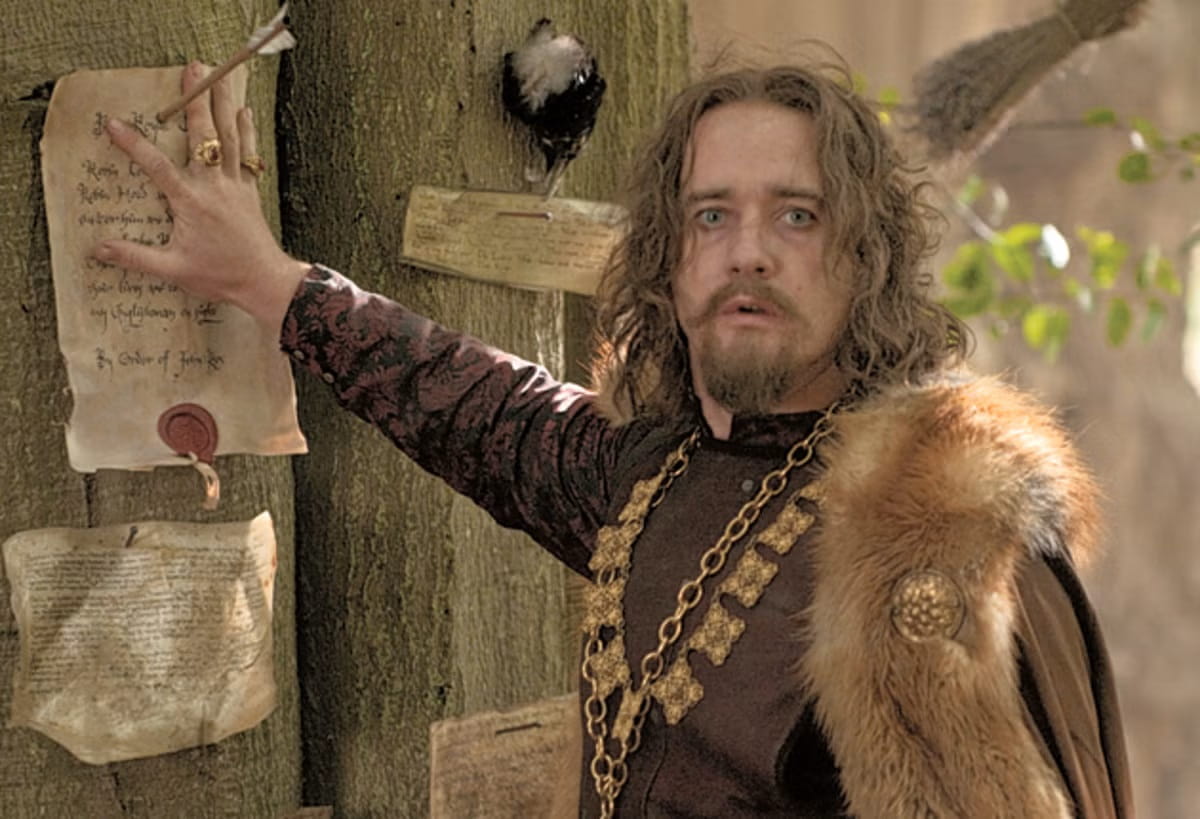
The cast is spectacularly good. Mark Strong is ideal for a medieval English villain. Galadriel is a beautiful Maid Marian who is also strong and smart and tough. Lea Seydoux, of the last two James Bond films, is a radiant French princess. Oscar Isaac is always good in everything but is enjoyably evil here as Prince John. The main Merry Men are cool but never get anywhere near enough to do. A young Matthew McFadyen makes a fine, evil sheriff of Nottingham – though he, too, barely appears in the film.
William Hurt plays a completely useless character who takes up precious run time that could’ve been given to Little John or the Sheriff. He spends a lot of time looking on in disappointment at Prince John’s missteps, but does nothing.
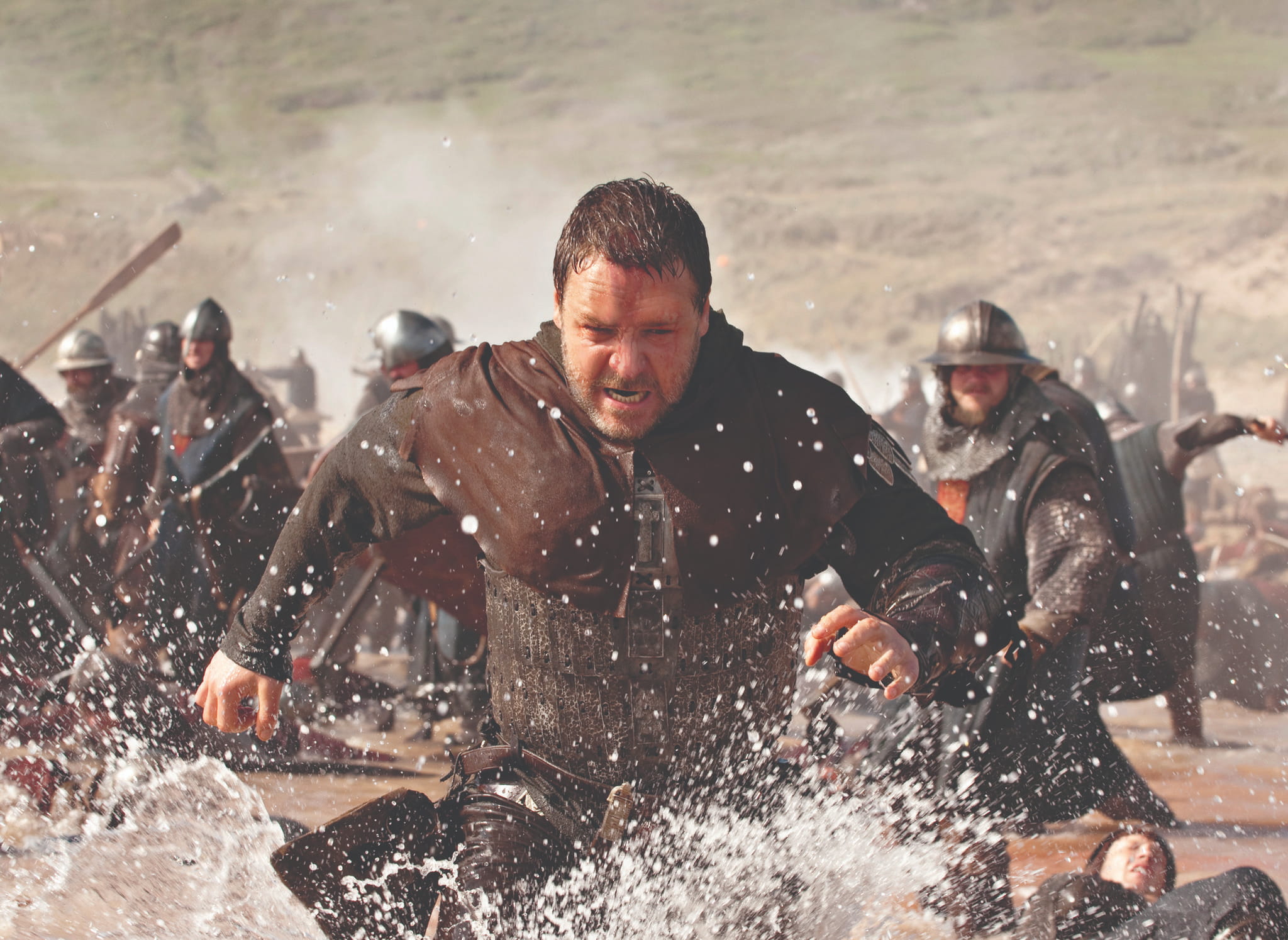
Russell Crowe’s Robin Hood here is hard as nails, incredibly competent and confident, a natural leader and a charismatic force.
I love that this version of Robin Hood is an impostor. He’s not Robin of Loxley. He’s a guy who finds Robin of Loxley being ambushed in the French forest and takes his place. And his identity.
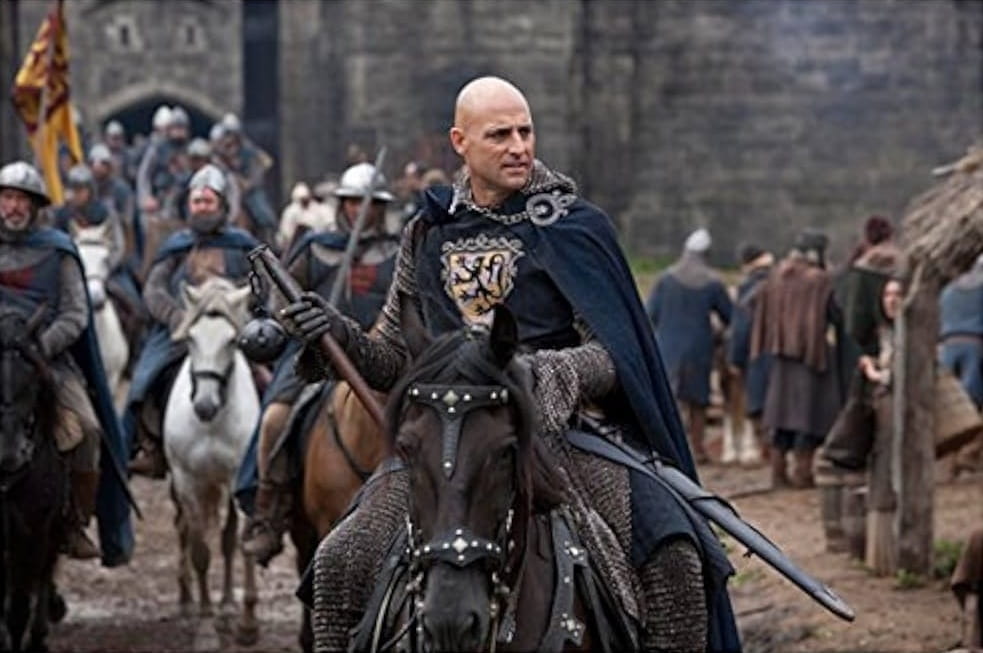
Yes, Robin of Loxley becomes the first victim of identity theft.
It’s a fine movie overall, as long as you understand what you’re getting and what you’re not getting. There should’ve been a sequel that actually showed the adventures of Robin Hood and the Merry Men now that they’re established as outlaws. One was planned, anyway, but never filmed. Lacking that, the film fails to deliver what audiences could reasonably expect. In addition, the ending is something of a downer, though it does leave the door wide open for further adventures by Robin Hood, as well as establishing a need for those adventures to happen.
Noteworthy
This movie did not do well among critics or at the box office.
It brought in just under $322 million worldwide – not a disaster, but not a big hit, either.
Its Rotten Tomatoes score is just 43%. Critics praised its production values and acting, but simply didn’t find it very much fun.
A good comparison might be found in the Western genre, and particularly in Wyatt Earp movies. Tombstone is bold and colorful and fun, while Kevin Costner’s Wyatt Earp is probably more true to actual history, but is also more somber, serious and flat.
Ridley Scott’s Robin Hood has more in common with Costner’s Earp movie than with Tombstone.
I suspect audiences were disappointed because they expected some version of Costner’s Robin Hood: Prince of Thieves movie (1991), which was silly and cartoonish but also more fun.
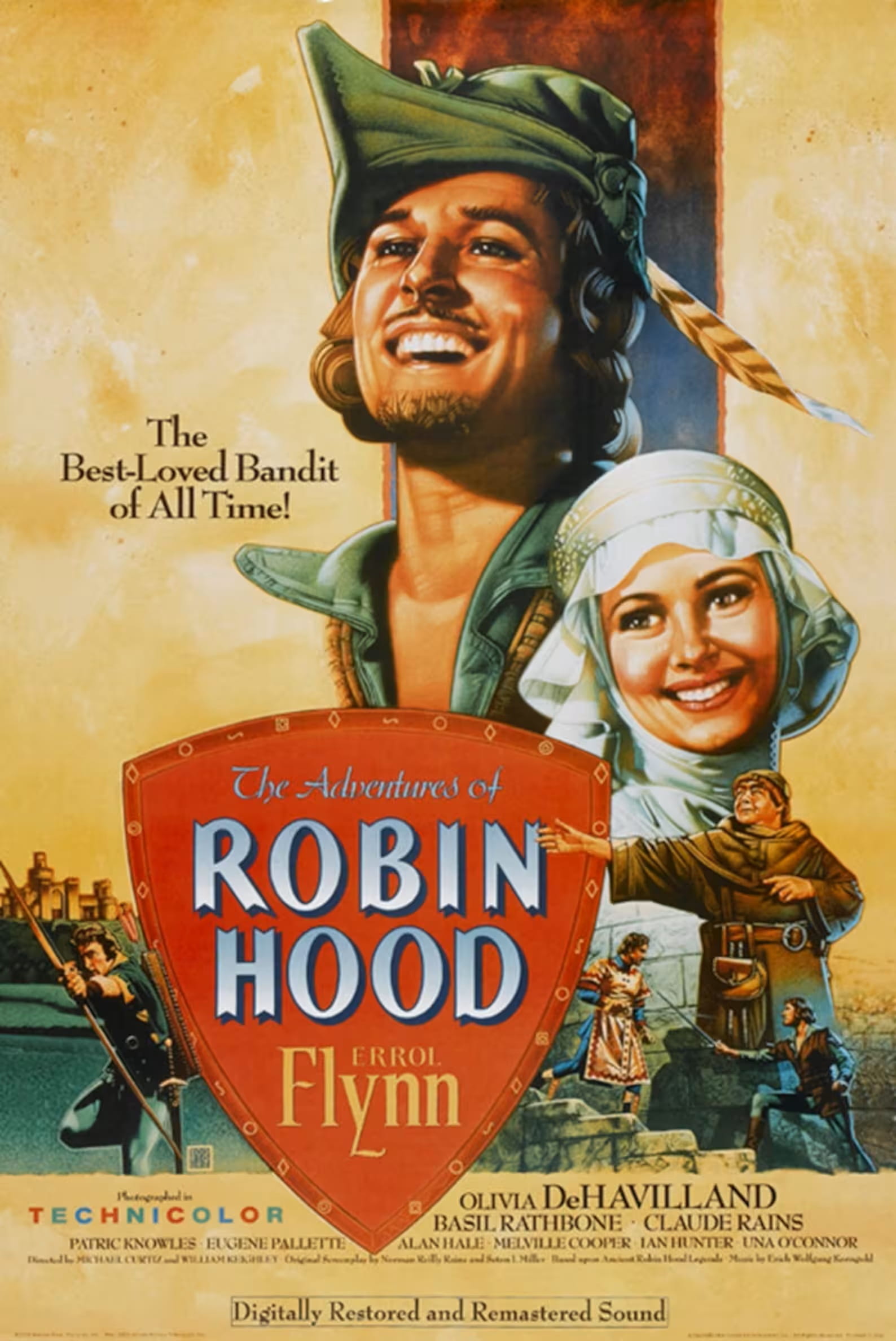
Or perhaps Errol Flynn’s The Adventures of Robin Hood (1938) raised the bar (and set audience expectations) too high, decades ago.
If you’re looking for Robin and his Merry Men chasing the Sheriff of Nottingham through Sherwood Forest while robbing from the rich and giving to the poor, well, I have to tell you – this is not that movie. Not at all.
This is a movie about commoners with uncommon valor rising up and taking the place of noblemen at first by pretending to be them, and then through their deeds and their actions.
And it’s about one extremely arrogant and stubborn jerk who happens to inherit the crown of England.
In 2026, Russell Crowe noted that the original plan was to make three films, continuing into the better-known Robin Hood material. Unfortunately, this one didn’t meet the financial number necessary to trigger the sequels.
Quick and Dirty Summary
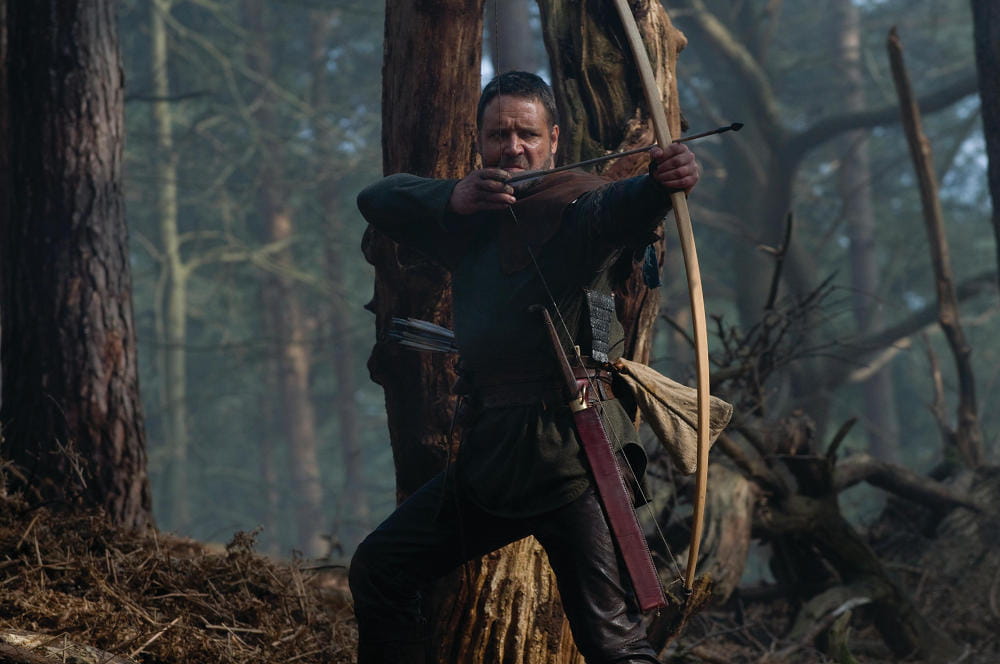
Russell Crowe and his pals are archers fighting their way across France alongside King Richard the Lionheart, on their way back to England from the Crusades.
Crowe and Company get fed up with Richard’s vanity and his endless battles. They decide to desert and go home. At the same moment, Richard is killed in battle.
When Robin of Loxley is killed in an ambush while trying to bring Richard’s crown home, Crowe and his men take up the task, impersonating noblemen in the process.
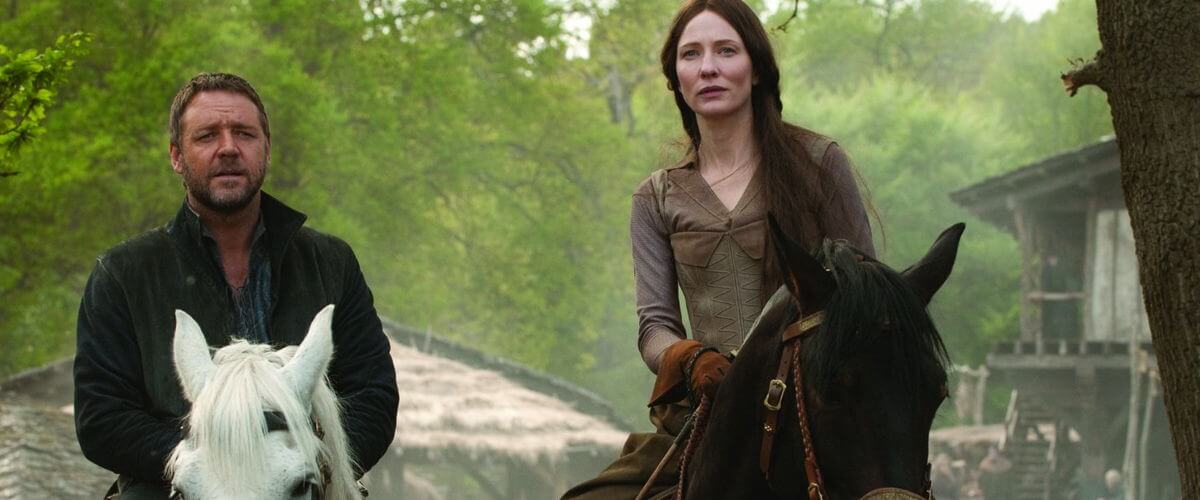
Once back in England, they get caught up in the brewing civil war surrounding Prince John. Meanwhile, Crowe’s character, pretending to be Robin, meets and becomes involved with Maid Marian.
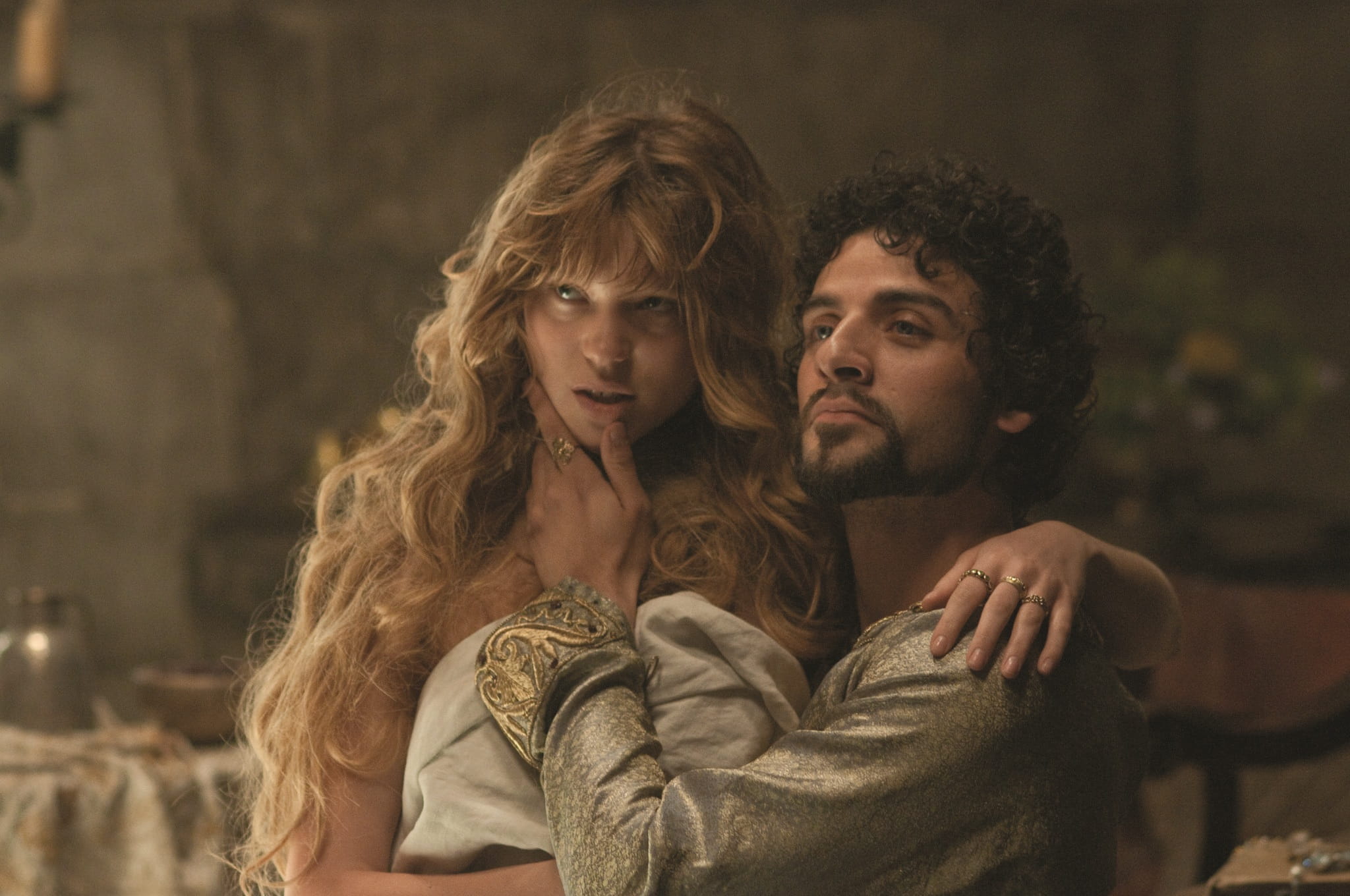
There are also a number of very good moments in which the scenery-chewing Oscar Isaac preens about while ignoring his wife and mother and sleeping with a beautiful French princess (Seydoux).
This all sounds very Robin Hood-ish. But then we are served up an entirely separate plot involving Sir Godfrey (Strong), a traitor who’s helping the French king invade England.
Eventually Crowe’s character – I honestly don’t know what to call him; he’s not really Robin of Loxley and he’s not “Robin Hood” yet, instead going by “Robin Longstride” — reconciles with King John long enough to repulse the French invasion. But John being John, the situation reverts quickly afterward. The movie ends right where we expect the Robin Hood story to begin. Indeed, the last words we see on the screen before the credits roll are, “And so the legend begins.”
Fantasy/SF/Sword & Sorcery Elements
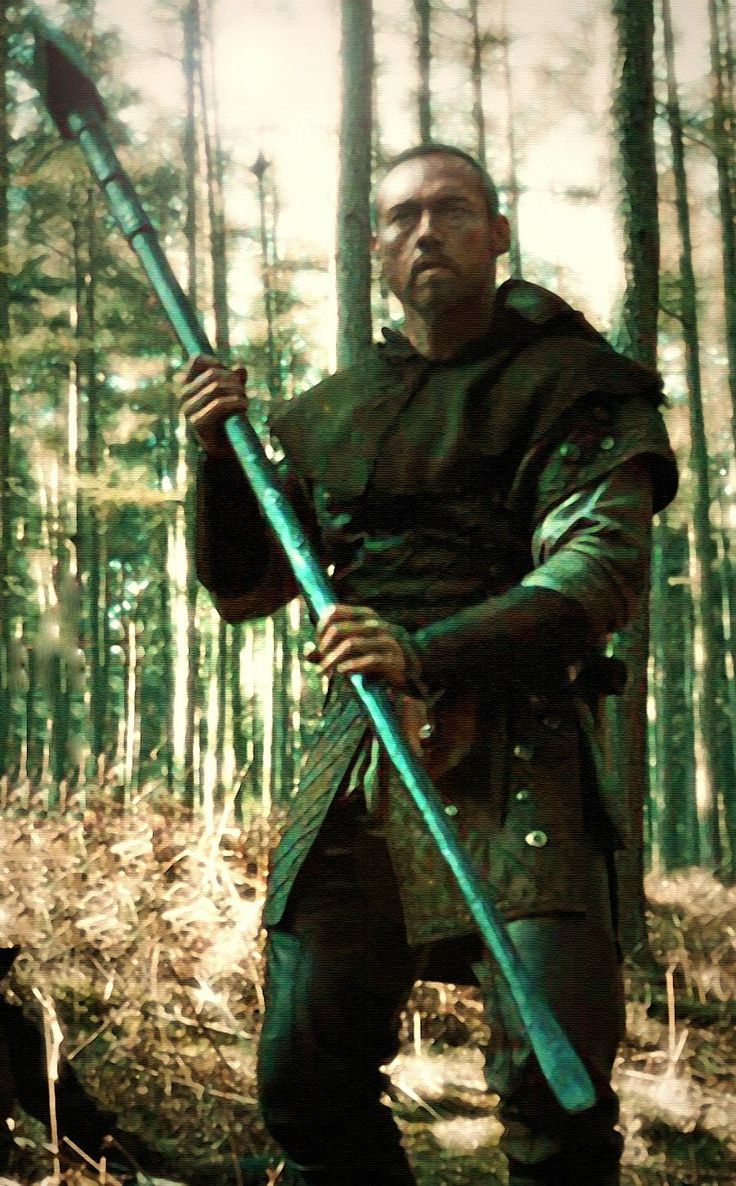
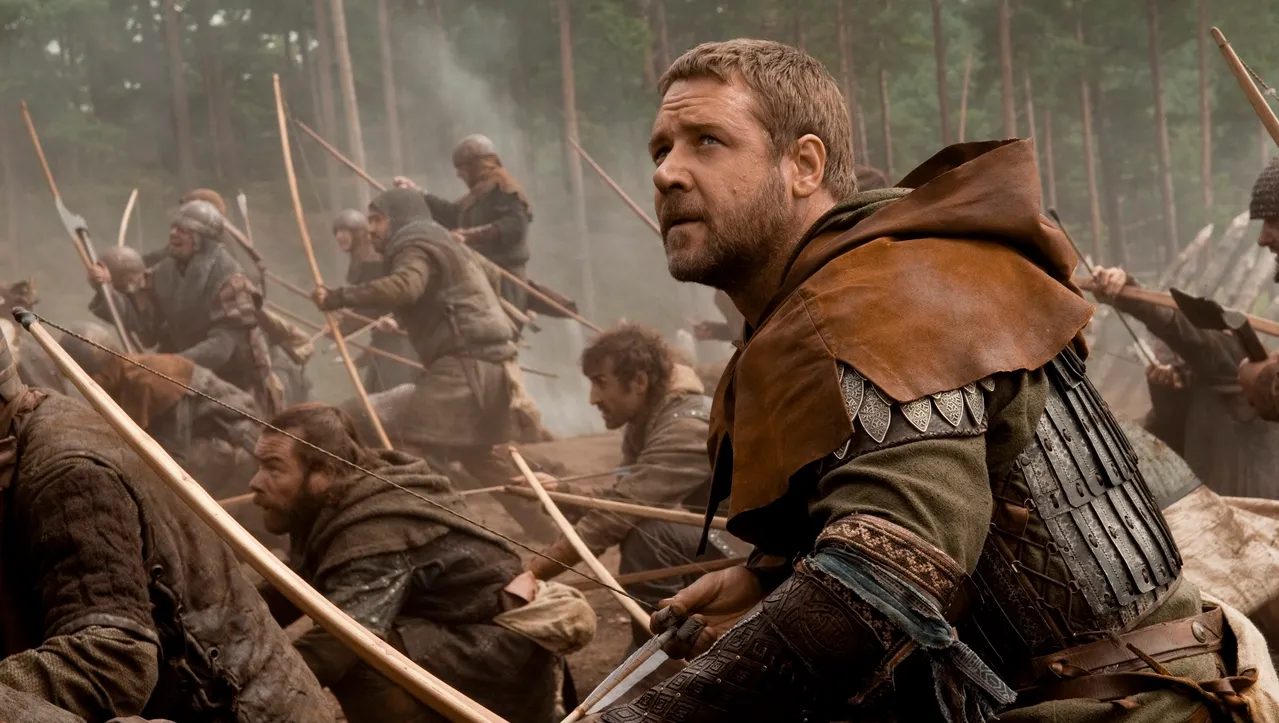
As one might expect, the weapons that feature in this film are bows and arrows.
A crossbow bolt through the neck kills Richard in much the same way it killed the big German Crusader early in Kingdom of Heaven.
Robin Whateverhisnameis gets a few opportunities to show off his archery skills – but not many. Not nearly enough for a film about allegedly one of the greatest archers to ever string a bow.

High Point
The best portion of the film is probably when Robin decides to impersonate the slain Loxley. Suddenly he and the handful of Merry-Men-to-be traveling with him morph into “heist film” characters. Robin’s Eleven.
And speaking of stealing, of course Isaac as the deluded King John steals every scene he’s in, often just with his facial expressions.
Low Point
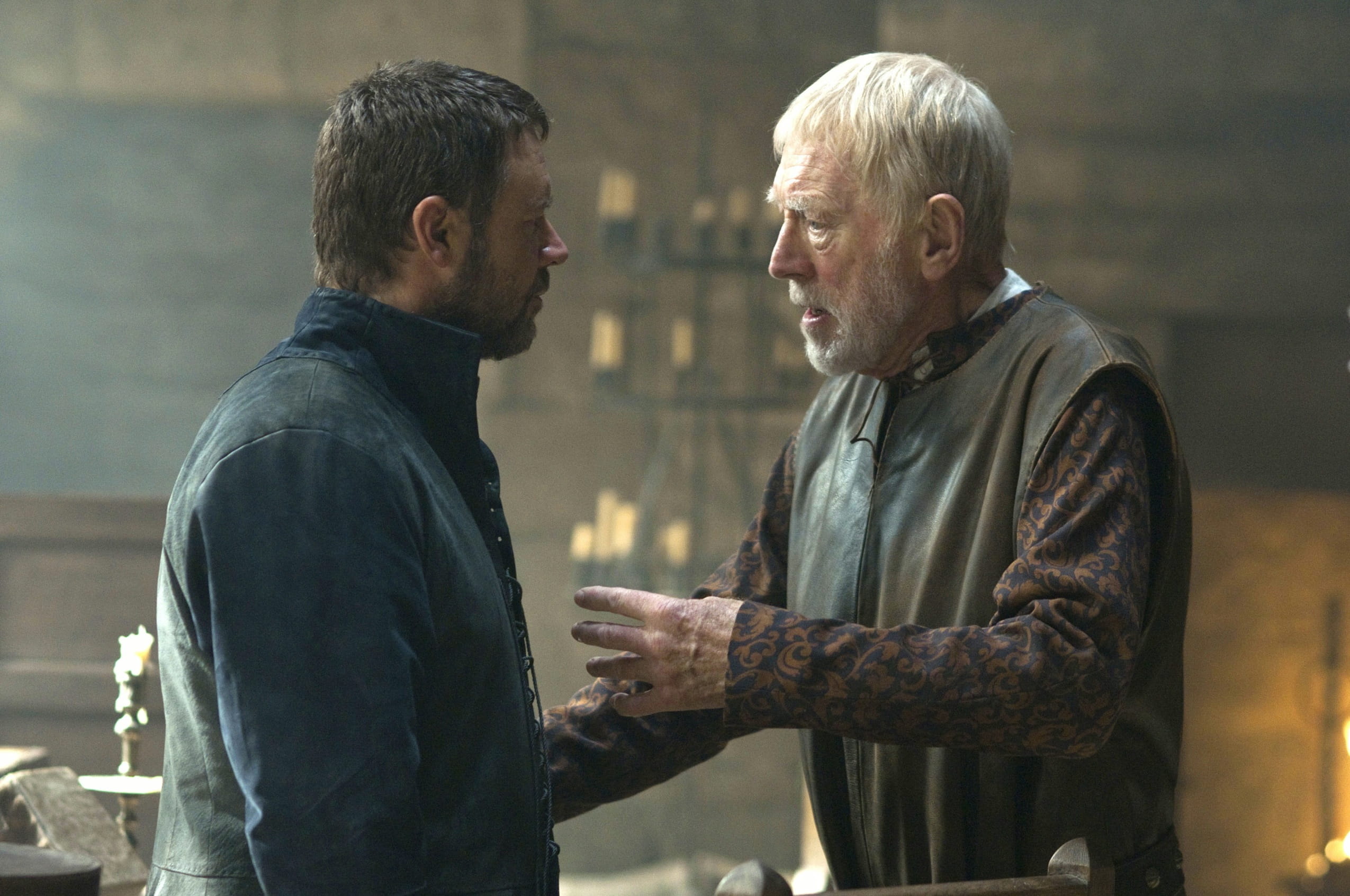
There’s a long segment in the middle of the film where Robin and company have settled into Marian’s farm, and then not a lot happens that’s very exciting. We do get some fun appearances here by the great Max von Sydow as Sir Walter Loxley, the father of the man Crowe is impersonating. What’s a Medieval action film without von Sydow??
But beyond him, it’s a pretty dry middle of the movie, and it’s easy for audiences to tune out during this section.
Standout Performance
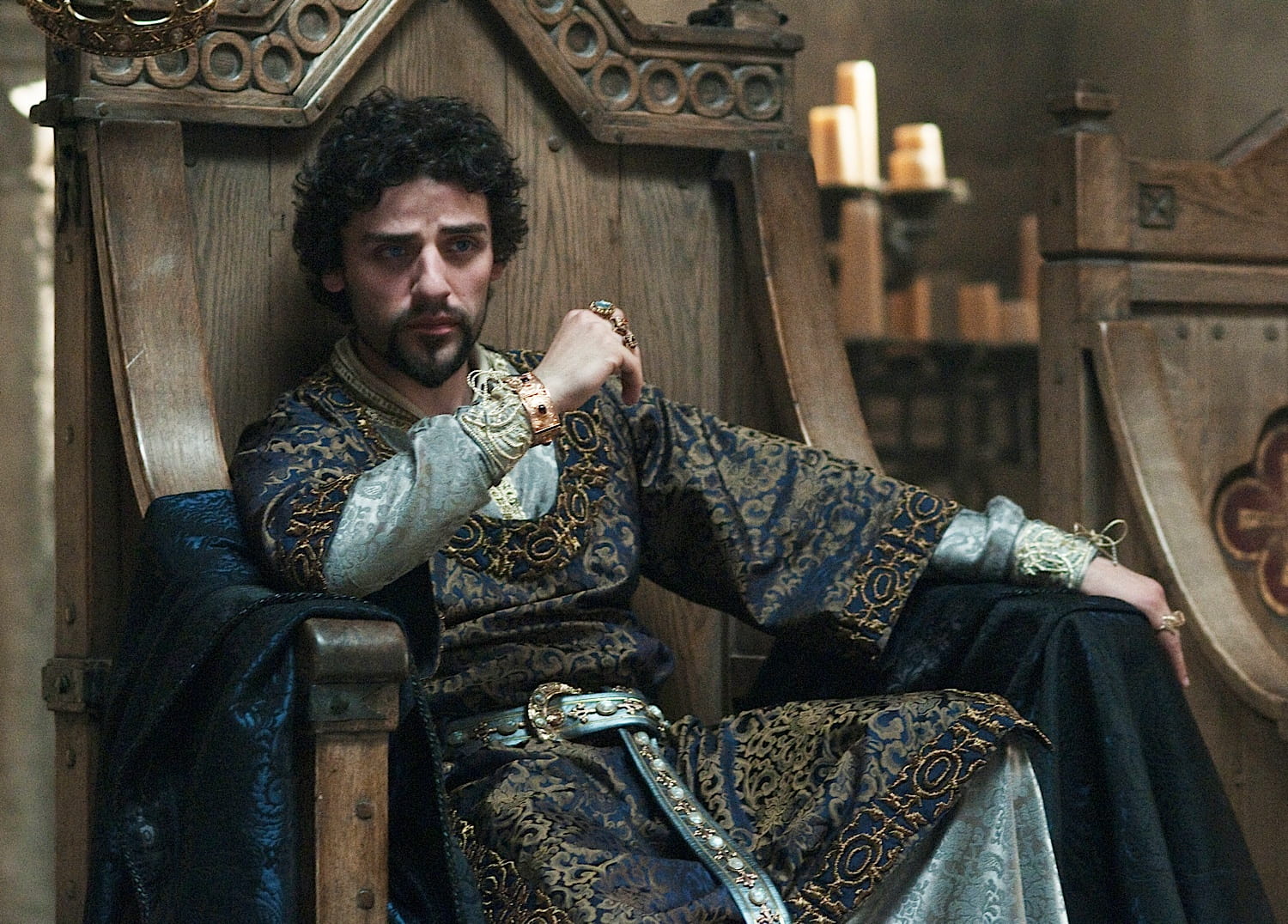
There are several good performances, but I’d argue that Oscar Isaac as the ridiculously evil and treacherous Prince/King John takes the cake. He’s the “Hans Gruber” of this movie. Yippee-ki-yay, Robin Hooder!
Overall Evaluation as a Movie and as Fantasy/SF/Sword & Sorcery
It’s not precisely a Sword & Sorcery movie per se, but it is S&S-adjacent, featuring a mythical main character who is essentially a Fantasy hero.
It’s a very creditable unofficial sequel to Kingdom of Heaven, by the same director and featuring some of the same supporting actors.
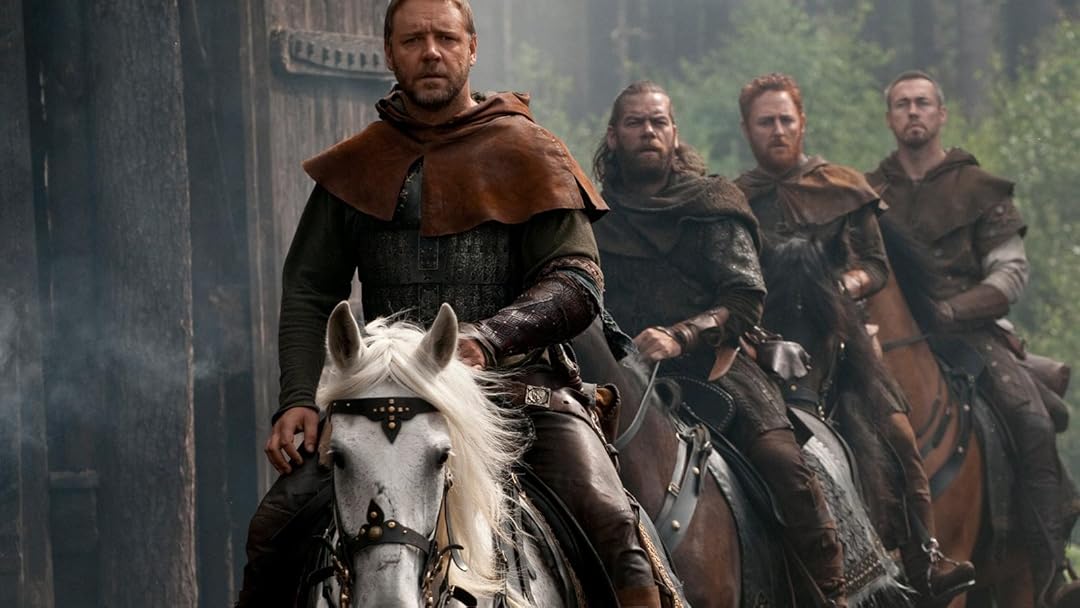
And while it has its slow sections and doesn’t really give us the Robin Hood we probably went into it looking for, it does give us a very fine Medieval warfare and intrigue movie, as well as the prequel to the actual Robin Hood story we never knew we needed.
Put that in yer Magna Carta, ya bastards!
Van Allen Plexico once edited an anthology of tales set in a Thundarr-style post-apocalyptic future of super-science and sorcery, called Blackthorne: Thunder on Mars. He is a member of the Science Fiction and Fantasy Writers of America (SFWA), a Grand Master of Pulp Literature (2025 class) and a multiple-award-winning author of more than two dozen novels and anthologies, ranging from space opera to Kaiju to crime fiction to superheroes to military SF. Find his works on Amazon and at www dot Plexico dot net.
I remember not liking this movie in the theater, although I haven’t seen it since. I appreciate what they were trying to do with the politics of it and the real history, but the execution fell flat.
Maybe it didn’t have entirely enough archery, but it has two of my favorite bowshots from any movie: Early in the movie the shot through dense trees at a man fleeing on horseback, and late in the movie the shot at another man fleeing on horseback, far enough away to require a serious arc and while a battle raged around Robin. Much better than splitting an arrow in a competition.
Man as a medieval historian, a teacher of historical fencing, a Robin Hood geek, AND a fan of the extended KINGDOM OF HEAVEN, terrible history, modern moralizing and all (the real Balian of Ibelin is such a more interesting man) I HATED this movie so hard it hurt. Indeed, it was the movie that convinced me that despite their being the three of the things that most impressed Young Greg, the three things that never need to be made again are stories about ROBIN HOOD, KING ARTHUR or THE THREE MUSKETEERS.
I won’t even bother with killing Richard with a bolt through the neck instead of the minor wound that killed him via infection, and years after his return to England–Scott has never, by his own words, cared about historical fidelity. And visuals are his thing, not nuanced plot (at least, since THE DUELLISTS) — which is too bad because a Robin of Loxley caught in the lightning swift machinations of Eleonore of Acquitaine to help John dispose of her grandson, Arthur (Richard’s presumptive heir) to put the son she’d never cared for on the throne would make a great backdrop. Way better that whatever the hell is going on with the Mark Strong storyline that’s just there so we can have a big battle…oh and D-Day landing craft medieval style in a reverse D-Day. (You can literally imagine Scott shouting “get it? get it?” during screenings.
Yeah, we get it.
This film has all of the worst design elements of the Costner film — leather pants, scarves, weird, made-up armour–the “when things were drab” nonsense Hollywood can’t get over in Medieval movies since the ’60s, and the cynical “all heroes are PTSD cynics, antiheroes, etc” that again, just pollutes all post-modern attempts at these stories. Robin can’t ever just be doing this because it’s right, he’s got to be on a revenge mission (Costner), a PTSD survivor of the Crusades (the recent BBC), or in this case, a grifter. It’s not fresh or edgy–that would have been fresh or edge like…45 years ago…and was all done better with ROBIAN AND MARION.
Then, as you note, there is a roughly 30 min section in the movie where…nothing happens. Like, nothing. You could cut ever scene and the movie still makes sense. We’re just sitting on a farm being plucky.
Cate Blanchett is just woefully miscast in age, demeanor, everything as Marion, and Russell Crowe, whom I generally like, is just giving a stock performance. His “whatever his name is” has little in the way of charm, charisma or anything else. The real gem is Oscar Isaacs who belongs in a better movie and steals every scene–much as Alan Rickman almost saves Costner’s goofy Satan-cult Robin Hood by realizing he is in a comedy–and MacFadyen’s Sheriff.
This was the movie that convinced me that much as I had loved Scott’s movies over the years, even when they were bad history combined with increasingly uncredited theft of other material (ex: Gladiator’s script is pretty damn close to a remake of the 1964 FALL OF THE ROMAN EMPIRE, with two scenes lifted straight from DEMETRIUS and the GLADIATORS and a Zimmer score that sounds great because so did Holst’s MARS, and Wagner’s SIEGRFRIED’s FUNERAL MARCH), but that ended with KINGDOM OF HEAVEN. I didn’t even try “GLADIATOR 2”. His recent outings mucking with PROMETHEUS suggests that sometimes you need to know when to quit.