Browsed by
Category: Books

Seductive Sorceress Queens, Decadent Civilizations, and Moon-lit Brawls: A Review of Bloodstone by Karl Edward Wagner
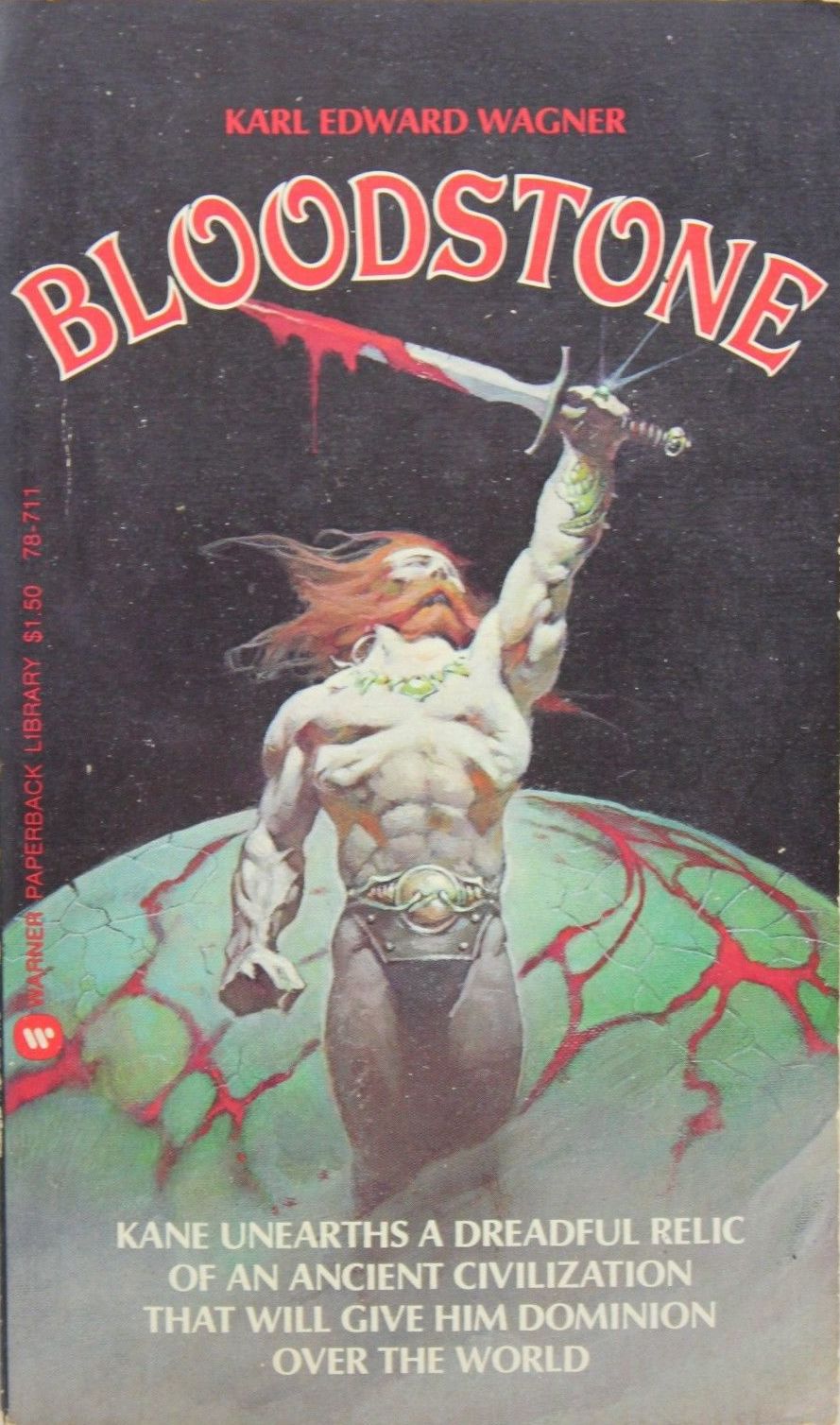
Seductive Sorceress Queens, Decadent Civilizations, and Moon-lit Brawls: A Review of Bloodstone by Karl Edward Wagner

Bloodstone Karl Edward Wagner-smallI love used book shops. And when I say love, I damn well mean love; anything that offers me a Kane Book for less than a pound is pretty much saying ‘I do’ in my book. You just can’t buy that kind of passion, unless you happen to offer me a Kane book for under a…. oh, never mind!

Now, if you’re a bit of a fantasy connoisseur (and if you’re reading this you probably are) you’ve likely heard of Kane, or at least Karl Edward Wagner; the guy’s novels sell for an arm and a leg on Amazon and are showered with praise at every turn. So you can understand my excitement upon finding the book, and my anticipation when I opened it up.

The story follows Kane as he stumbles upon an intriguing ring during a raid. His interest piqued, Kane investigates further and finds that it is actually linked to a legendary giant gem named ‘Bloodstone’ which would, apparently, look really nice in his front garden. Needless to say Kane decides to look for it, and his search leads him to an ancient city somewhere in a forest, one that serves as a kind of no man’s land for two warring leaders: Malchion, and Dribeck.

What follows is some seriously top-notch sword and sorcery; the first few chapters are brilliant, filled to the brim with Gothic imagery and seductive sorceress queens, decadent civilizations, moon-lit brawls with lurid beasts; all the good stuff that made me fall in love with the genre. It’s got everything: mysticism, super-science, monsters, a lost city, and an ancient civilization.

And the first couple of skirmishes with a race of lizard men, the Rillyti, (who happen to be the very same lizard men who made Bloodstone) are all excellently done, filled with a real unpredictability, and a truly tangible sense of danger. It really reads like something you’d find in the pages of Weird Tales, alongside the latest Conan tale, or Solomon Kane’s newest yarn.

And it’s great fun. The kind that is a lot harder to find today (a few exceptions aside). At this stage, the thunder in its pacing was audible, the weight of its sword blows palpable, the dirt and grit and grime of its world was seeping into the room. And I loved every moment.

So why, Mr Wagner, why oh why, did you slow it down?
…

Read More Read More

My Favorite Dragons

My Favorite Dragons

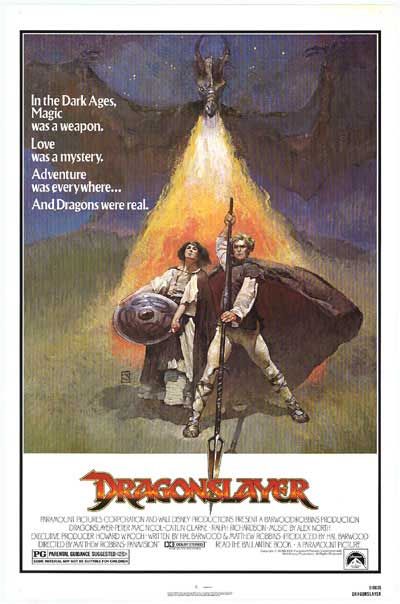
Dragonslayer poster-smallDragons.

These creatures of legend have captivated our imaginations from the dawn of time. A staple of fantasy literature and culture, they embody power, majesty, and perilous danger.

I’d like to share with you some of my favorites, in no particular order.

Smaug (The Hobbit, J.R.R. Tolkien)

Ah, old Smaug. Wrecker of dwarven homes and stealer of treasures. I can still remember the rapture with which I read this book as a child, with all Bilbo’s misadventures leading him toward an epic confrontation with this ancient wyrm.

Without a doubt, Smaug triggered a fascination with dragons that has lasted my entire life. And now with The Hobbit movies coming out, I can re-live that joy in its full splendor on the big screen.

Vermithrax Pejorative (Dragonslayer, Touchstone Pictures)

I saw this movie as a kid, fresh off my love-affair with Smaug. Even though we see precious little of the beast until the final act, just the sounds of its breath rising from the ground and the reactions of the various characters to its presence fill the movie with a wonderful sense of anticipation.

And the final battle between wizard and dragon is pretty damned good for its time. Definitely, a diamond in the rough.

…

Read More Read More

New Treasures: Darkwalker by E.L. Tettensor

New Treasures: Darkwalker by E.L. Tettensor

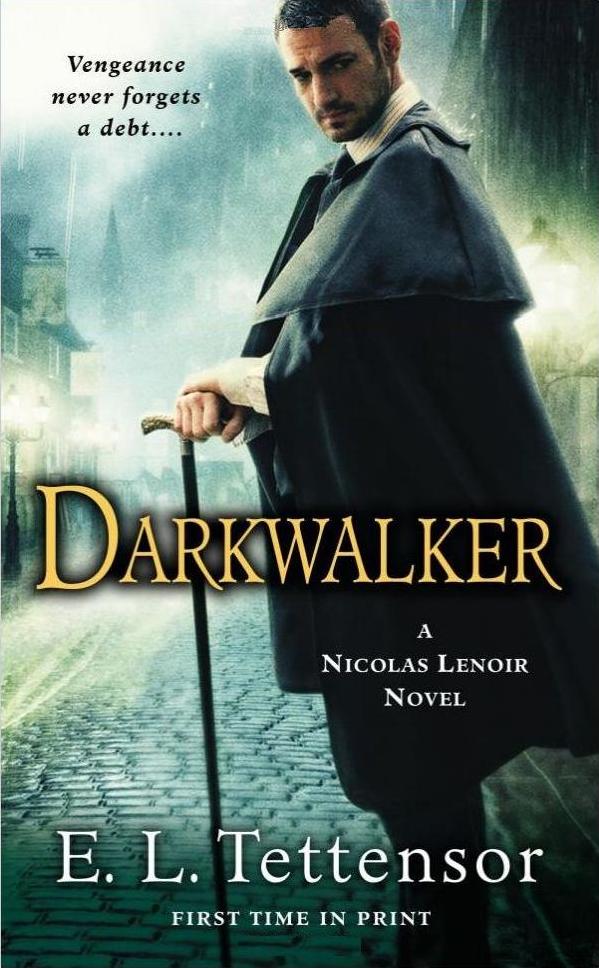
Darkwalker-smallDarkwalker is the debut fantasy novel from E.L. Tettensor and it offers an intriguing mix of both the familiar and the new — just what I’m looking for, I think.

The setting is Kennian, part of the backwater Five Villages, which seems a lot like 19th-century England if you squint. Stepping into the scene is Police Inspector Nicolas Lenoir, tasked with investigating a dark mystery. Folks here for the most part scoff at the supernatural — but don’t tell the thing hunting Inspector Lenoir. This one looks like a fine mix of fantasy and mystery in a fog-shrouded Victorian-era (ish) landscape, with plenty of original touches to keep things interesting.

He used to be the best detective on the job. Until he became the hunted…

Once a legendary police inspector, Nicolas Lenoir is now a disillusioned and broken man who spends his days going through the motions and his evenings drinking away the nightmares of his past. Ten years ago, Lenoir barely escaped the grasp of the Darkwalker, a vengeful spirit who demands a terrible toll on those who have offended the dead. But the Darkwalker does not give up on his prey so easily, and Lenoir has always known his debt would come due one day.

When Lenoir is assigned to a disturbing new case, he treats the job with his usual apathy — until his best informant, a street savvy orphan, is kidnapped. Desperate to find his young friend before the worst befalls him, Lenoir will do anything catch the monster responsible for the crimes, even if it means walking willingly into the arms of his own doom…

Darkwalker: A Nicholas Lenoir Novel was published by Roc Books on Dec 3, 2013. It is 368 pages, priced at $7.99 for the paperback and for the digital edition. Read an excerpt on the Penguin website here.

See all of our recent New Treasures here.

One Man’s Trash…

One Man’s Trash…

Seven SorcerersWhen I was growing up, everybody tried to tell me what to read.

My parents wanted to me read “normal” books, not “trashy” books with Frank Frazetta covers featuring scantily-clad maidens, sword-wielding barbarians, or hideous monsters. My teachers wanted me to read Modern Literature — and they made sure I was exposed to as much as possible — although my favorites were Hamlet and Beowulf.

In college my instructors pushed Ernest Hemingway and Raymond Carver toward me and I read them, but only because I was required to. None of this depressing and introspective realism caught my fancy. I was made for more fantastic stuff. Oh, I read. Voraciously. From the time I was old enough to hold a book I read non-stop. It began with The Hobbit in third grade, and before I finished middle school I had finished The Lord of the Rings trilogy. But I read what I loved, not what people THOUGHT I should read. I read fantasy. (With liberal doses of horror and sci-fi.)

I read Robert E. Howard, Edgar Rice Burroughs, H.P. Lovecraft, Clark Ashton Smith, Michael Moorcock, Lin Carter, Weird Tales magazine, and later Tanith Lee, Robert Silverberg, William Gibson, and Lord Dunsany. I read fantasy fiction with a dark edge, sword-and-sorcery, horror, and sci-fi. I even read my share of Stephen King, David Eddings, Piers Anthony, and John Norman. I didn’t give a damn what people thought I SHOULD be reading. Still don’t. I didn’t care that most of my literary heroes were from the pulp fiction era, and that their work was largely dismissed as “trash” when they were producing it. I read their works three or four generations after the fact, and I loved it.

Today I enjoy discovering new authors who take those pulp-inspired roots and do something entirely new with them–who breathe fresh life into classic concepts. I’ve found such writers in A.A. Attansio, R. Scott Bakker, and Guy Gavriel Kay, to name a few. If somebody recommends a book or an author to me, I’ll check it out. But it doesn’t take me all that long to figure out if it’s for me. If I like it, great! I’ll spread the word about that author and his/her work. I love to shout about the things I really dig. But if I don’t care for it, that simply means that a particular piece of fiction didn’t meet my personal taste. No harm done.

Because that’s all that really matters, when it comes to fiction. Personal taste.

…

Read More Read More

John R. Fultz’s Seven Sorcerers On Sale Today

John R. Fultz’s Seven Sorcerers On Sale Today

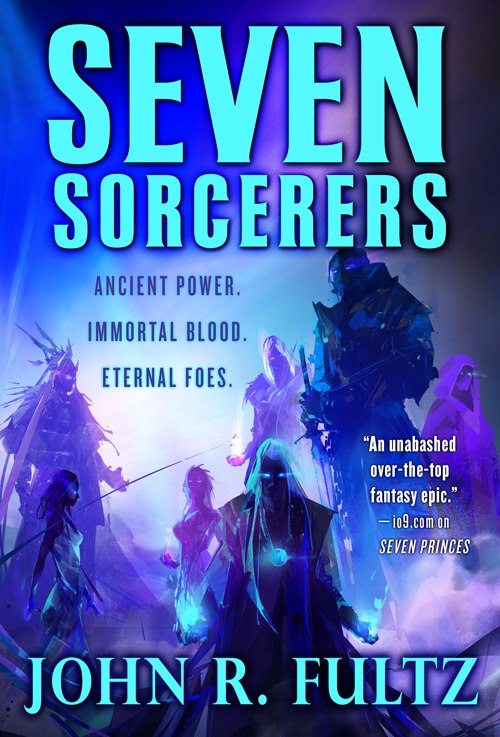
Seven SorcerersWe’re celebrating a major publishing event at the Black Gate rooftop headquarters today: the arrival of Seven Sorcerers, the third novel in John R. Fultz’s Books of the Shaper series.

When Seven Princes, the first book in the series, arrived in January 2012, it marked the debut of a major new fantasy talent. Seven Kings cemented that reputation, and over the next two years, John graduated from promising new novelist to full-fledged literary star. The critical acclaim for the first two books has been stellar — Barnes & Noble called them “flawless epic fantasy,” Library Journal praised Seven Princes as “A stand-out fantasy series from an author with an exceptional talent for characterization and world building,” and io9 labeled the same novel “Epic with a capital EPIC.”

John’s talent is too big to be contained just in novels — on June 3, 2013, 01Publishing published his first collection The Revelations of Zang, gathering his baroque and fascinating sword & sorcery Zang Cycle, featuring the tale of a revolt against the nine Sorcerer Kings whose power displaced the gods themselves.

We published three stories from John R. Fultz’s Zang Cycle in the print version of Black Gate: “Oblivion Is the Sweetest Wine,” that tale of Taizo the thief and his daring heist in spider-haunted Ghoth (BG 12); “Return of the Quill,” in which Artifice’s long-simmering plan to bring revolution to the city of Narr finally unfolds (BG 13); and the prequel story “The Vintages of Dream” (BG 15). Next, John took us back in time to Artifice’s first year as a member of the travelling Glimmer Faire in “When the Glimmer Faire Came to the City of the Lonely Eye,” which appeared as part of the Black Gate Online Fiction line here in January.

Somehow missed out on all the excitement? Read the excerpts and stories linked above or try the complete first chapter of Seven Kings for free. Get more details on Seven Sorcerers here.

Seven Sorcerers was published today by Orbit Books. It is 448 pages, priced at $17 in trade paperback and $9.99 for the digital edition. Look for it in bookstores everywhere — and stay tuned to Black Gate for a special opportunity to win a signed copy!

Vintage Treasures: The Unknown, edited by D.R. Bensen

Vintage Treasures: The Unknown, edited by D.R. Bensen

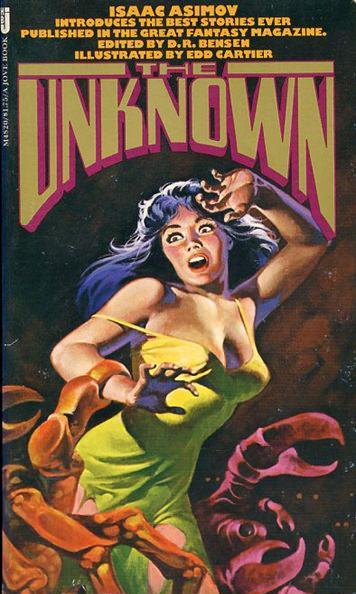
The Unknown edited by D R Bensen-smallIn all of our recent discussions of pulps, we have sorely neglected one of the greatest pulp fantasy magazines of all time: John W. Campbell’s magnificent Unknown. It wasn’t deliberate; we’ve just been focusing on Amazing Stories, Galaxy, and the pulp roots of Dungeons and Dragons of late.

So to do a little catch-up, I thought I’d talk about a splendid anthology I’ve been reading this weekend: The Unknown, a collection of ten short stories and one novelette from the pages of Unknown. If you’ll allow me, I’d like to quote from the Wikipedia entry on Unknown, since I think it does a fine job of summarizing the genesis and impact of Campbell’s great experiment in fantasy:

Unknown (also known as Unknown Worlds) was an American pulp fantasy fiction magazine, published from 1939 to 1943 by Street & Smith, and edited by John W. Campbell. Unknown was a companion to Street & Smith’s science fiction pulp, Astounding Science Fiction, which was also edited by Campbell at the time; many authors and illustrators contributed to both magazines. The leading fantasy magazine in the 1930s was Weird Tales, which focused on shock and horror. Campbell wanted to publish a fantasy magazine with more finesse and humor than Weird Tales, and put his plans into action when Eric Frank Russell sent him the manuscript of his novel Sinister Barrier, about aliens who own the human race… The magazine is generally regarded as the finest fantasy fiction magazine ever published, despite the fact that it was not commercially successful, and in the opinion of science fiction historian Mike Ashley it was responsible for the creation of the modern fantasy publishing genre.

The Unknown contains an excellent survey of Unknown magazine, with entertaining editorial comments and fiction contributions from Henry Kuttner, Nelson S. Bond, Theodore Sturgeon, L. Sprague de Camp, H. L. Gold, Manly Wade Wellman, Fredric Brown, and Anthony Boucher — plus a Fafhrd and the Gray Mouser tale from Fritz Leiber, and more.

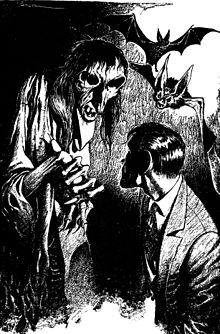
It also reprints interior art from the magazine by the great Edd Cartier (see a sample here), who painted the covers for many Unknown issues. I wish more paperbacks from the era did this, as I found the artwork delightful.

…

Read More Read More

Self-Published Book Review: Vampire Siege at Rio Muerto by John M. Whalen

Self-Published Book Review: Vampire Siege at Rio Muerto by John M. Whalen

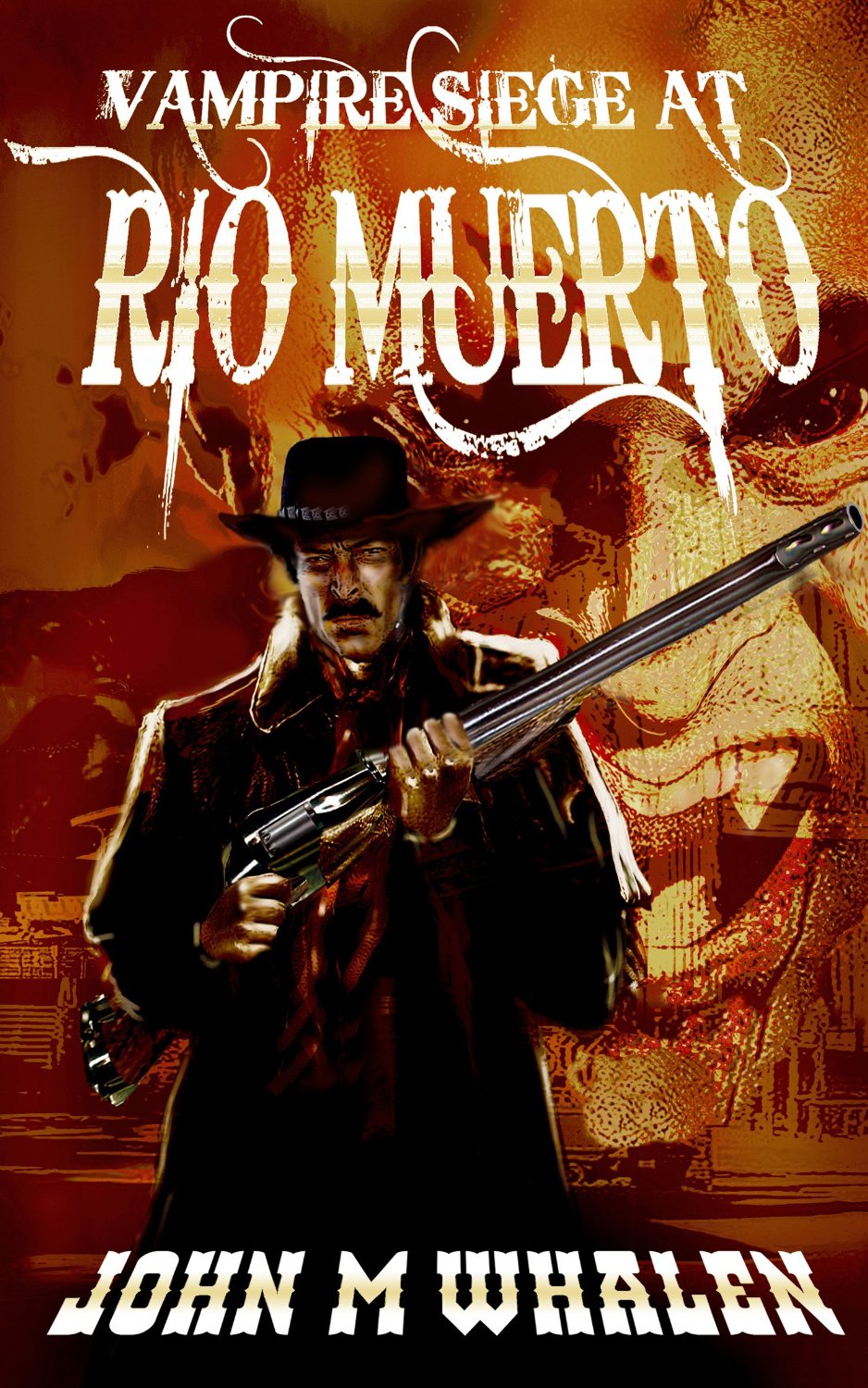
Vampire_SiegeI have a soft spot for Weird Westerns. (I know, last month I said I have a soft spot for dwarves. Well, they’re both true. If anyone ever writes a Weird Western with a dwarf protagonist, I’ll be all over it.) This wasn’t always the case, but a couple of years ago I had an idea for a story that turned out to be a Weird Western, and I developed an appreciation for the genre in the process of writing it. (Not that I’ve yet managed to sell that story, but that’s neither here nor there.)

I didn’t want to review  Vampire Siege at Rio Muerto last month, partly because I had just reviewed a vampire book the month before, and to be honest, I’m not much of a fan of vampires. At least in this book, the vampires were unabashedly bad guys, drinking the blood of the living and engaging in all sorts of debauchery. The main character of the book is Mordecai Slate, a professional vampire hunter in the Old West. Apparently, vampires were more of a problem back then than I realized. Mordecai has been hired to capture, rather than kill, a vampire, and to bring him back to be staked by Don Pedro to avenge his daughter. It’s an unusual mission for Mordecai, but the pay is very good, so he takes it.

Capturing the vampire, Kord Manion, proves easy enough, but soon Kord’s brother Dax and his gang are on Mordecai’s tail. He plans to set up an ambush for the six of them, but he runs into some trouble on the way, rescuing a girl from some outlaws, and gets himself shot. He needs to visit the doctor at the small town of Rio Verde, renamed Rio Muerto since the river dried up, and that doesn’t give him enough time to recover before Dax and his gang are at the town’s doorstep and he needs to convince the suspicious townsfolk to help him before the place is destroyed.

…

Read More Read More

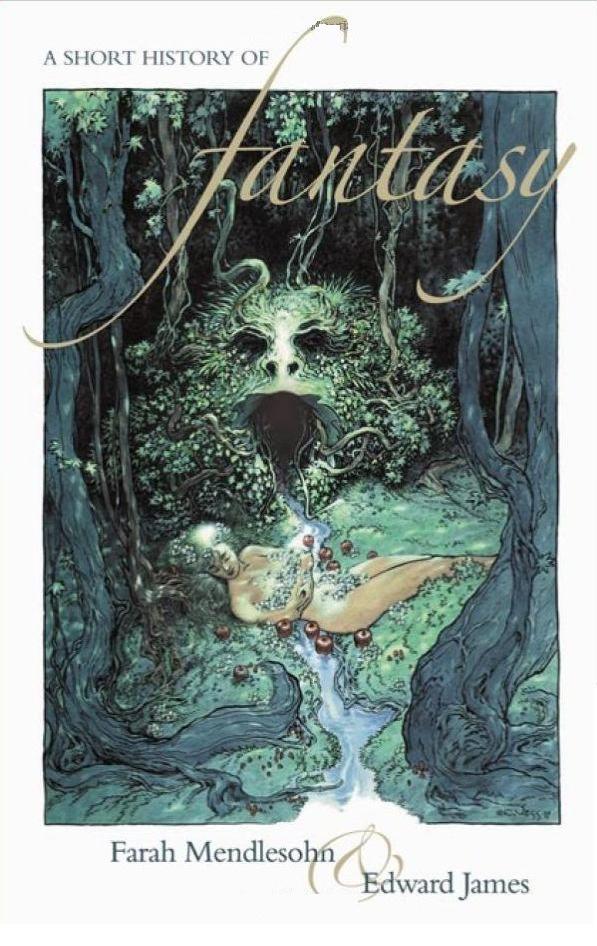
Two Perspectives are Better Than One: A Review of A Short History of Fantasy

Two Perspectives are Better Than One: A Review of A Short History of Fantasy

A Short History of FantasyI recently reviewed L. Sprague de Camp’s 1976 Literary Swordsmen and Sorcerers and Lin Carter’s 1973 Imaginary Worlds. As good as both were, I lamented that there didn’t seem to be a history of fantasy past the mid 1970s.

But thankfully, I was wrong. Enter Farah Mendlesohn and Edward James’s wonderful 2009 A Short History of Fantasy.

Besides treating all of the 70s, 80s, 90s, and even the first decade of the 21st century, this volume has other merits that de Camp and Carter’s lack. In sum, it is a more comprehensive and well-rounded approach to the subject. I’ll spend a little time highlighting why and then give some brief critical comments.

First, this book deals with more than just literature, per se. Mendlesohn and James also talk about movies, games, and even children’s lit in each period –- and most of the chapters tackle a single decade. I think this is insightful, in that it condenses all the possible influences that may have gone into fantasy.

For example, given that many fans will agree that Tolkien’s The Hobbit and C. S. Lewis’s Chronicles of Narnia were gateway drugs, so to speak, to their love of the genre, it makes sense to think more about other children’s fantasy and their connection to the field. For instance, Mendlesohn and James address in some detail such writers as J. K. Rowling and Philip Pullman. I think more should probably be written about the influence of children’s books upon fantasy.

Another huge advantage over de Camp and Carter is author perspective. There are two authors here; neither is American and one is a woman. It should be obvious that, usually, two perspectives are better than one; a second perspective can bring attention to things that a single author may miss. Thus, there’s a better chance that more diverse fiction will be covered and less minutia (there are drawbacks to this as well that I’ll get to later).

…

Read More Read More

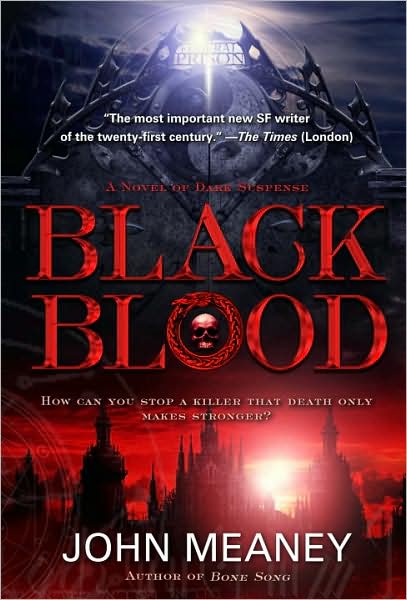
New Treasures: Black Blood by John Meaney

New Treasures: Black Blood by John Meaney

Black Blood-smallBritish writer John Meaney, author of The Nulapeiron Sequence (Paradox, Resolution, and Transmission), has been called “the most important new SF writer of the 21st century” by The Times of London. Impressive, but it was his turn towards gothic fantasy with Bone Song that really caught my attention. The sequel, Black Blood, has been described as a blend of futuristic noir, gothic fantasy, and thriller, all set in a lushly detailed necropolis where a cop must stop a conspiracy of killers whose power is fueled by spilling black blood.

He’s lucky to be alive. That’s what everyone tells him. Except Tristopolitan police lieutenant Donal Riordan doesn’t feel lucky and he isn’t really alive. In one horrific moment not even death can erase from memory, Donal lost the woman he loved even as her ultimate sacrifice saved his life. Now it’s literally her heart that beats in his chest and her murder that Donal “lives” to avenge.

While being a zombie cop has its upsides — including inhuman reaction time and razor-sharp senses — Donal’s new undead status makes him the target of Tristopolis’s powerful Unity Party, whose startling rise to power is built on a platform of antizombie paranoia and persecution. The Party is no friend, to be sure — but it’s the secret cabal known as the Black Circle and their stranglehold on the city’s elite that consume Donal’s black heart. For at the center of this ring of evil is the man responsible for his lover’s murder — a man Donal has already had to kill once before.

Now, with ominous reports of white wolf sightings throughout the city and a dangerous sabotage attempt at police headquarters, all signs indicate that the Black Circle is planning a magical coup d’état. And the terror will begin with a political assassination triggered by a necroninja already hidden… in a place no one expects. For Donal, it’s no longer a matter of life and death but something far more serious. How can he stop a killer who won’t stay dead and an evil that death only makes stronger?

Sounds like the beginning of a promising new series, especially if you like your fantasy blended with dark science fiction (and necroninjas!) Black Blood was published February 24, 2009 by Bantam Spectra. It is 384 pages, priced at $15 in trade paperback or $9.99 for the digital edition.

This Will Be On The Test

This Will Be On The Test

Treasure IslandI don’t know whether it’s the controversy over the character Turiel in the upcoming The Hobbit: The Desolation of Smaug, but there’s been a big swell of interest lately in the Bechdel Test. You know what that is, right? Generally applied to movies and TV shows, it determines whether women are represented equitably. In order to pass the test,  there must be two female characters who have names; they must at some point speak to each other; they must speak about something other than men. Seems simple.

I remember my father once telling me that Treasure Island had no women in it. He seemed to think this was a good thing. He was wrong, of course, except that he was also right. What he didn’t realize was that the film he was familiar with had no women, but that wasn’t also true of the book. Jim Hawkins does have a mother.  We could argue, however, that the film guys got it right, since Mrs. Hawkins does little or nothing to forward the plot.

So Treasure Island, whether print or celluloid, fails the Bechdel Test.

Most films/shows don’t pass the test, even the ones we fantasy and SF lovers love the most. Big Bang Theory doesn’t pass, even though there are three named female characters (and not because Penny, as my friend Jim Hines has pointed out, has no last name). Stargate passes, at least SG1 – they were smart to make the doctor a woman, since that gives plenty of room for non-guy related conversation. It’s been a while, but I believe that Star Trek: Voyager passes (between Captain Janeway, B’lanna Torres, and Seven-of-Nine) and TNG as well – remember, the doctor’s a woman.

…

Read More Read More