Browsed by
Category: Books

The Top Five Differences Between HBO’s Game of Thrones and George R.R. Martin’s A Game of Thrones
The Top Five Differences Between HBO’s Game of Thrones and George R.R. Martin’s A Game of Thrones

Game of Thrones-smallIt’s rare a show comes along that leaves readers wondering whether the book or screen version is better.

Generally speaking, film and television adaptations rarely live up to the complexity and depth of novels. In an effort to condense plot and keep things moving relatively quickly, and understandably, shows and films often act as the tip of the iceberg.

The original works, however, are more likely to reveal the underlying complexities (the rest of the iceberg, you might say) and true personalities of most of the characters. And, as expected, whole scenes are generally chopped from the film version due to lack of time.

So, of course, when a show like Game of Thrones comes along (the fourth season of which will be starting next week), that has some fans claiming the show is as good, perhaps even better, than George R.R. Martin’s A Game of Thrones, then we have no choice but to examine the merits of each.

In my opinion, the show lacks in several major areas. First: relationships.
…

Read More Read More

Mary Gentle’s The Black Opera: Another Opinion

Mary Gentle’s The Black Opera: Another Opinion

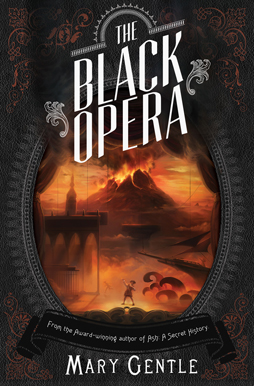
The Black OperaTwo years ago, veteran author Mary Gentle’s most recent novel The Black Opera was published to mixed reviews. Some liked the book’s mix of alternate-history fantasy and comic-opera theatricality — as the sub-title has it, “a novel of Opera, Volcanoes, and the Mind of God.” Others, ably represented at Black Gate by Sean Stiennon’s review, found the pacing was slack, the fantastic elements underdeveloped — particularly with regard to how they affected the setting — and, perhaps especially, that the drama was undermined by a lack of conflict among the characters. Having just read the book myself, and having greatly enjoyed it, I felt like putting forward a few thoughts in the novel’s defence. Oddly, I don’t so much disagree with many of the criticisms as think that in context they actually work to make a pleasant, effective story.
First, let’s be precise about what we’re looking at. The Black Opera‘s set in the early-to-mid nineteenth century in a world where miracles happen: inconsistent but often startlingly powerful violations of physical laws that seem to be related to powerful musical performances. Ghosts and the walking dead are not uncommon. In Naples, a freethinking opera librettist named Conrad Scalese is saved from the Inquisition by agents of King Ferdinand II, who conscripts Conrad into a secret project: combating a secret society of Satanists who plan to invoke a miracle that will raise Satan and destroy Naples. They will do this by staging a Black Opera — so Conrad, on Ferdinand’s behalf, must create a countering ‘white opera’ to overcome their evil plan. The book follows Conrad’s frantic attempts to create and stage his opera on a tight timetable, introducing and setting up characters and subplots before an extended climax brings everything to a dramatic head.

…

Read More Read More

The Novels of Michael Shea: A Quest for Simbilis

The Novels of Michael Shea: A Quest for Simbilis

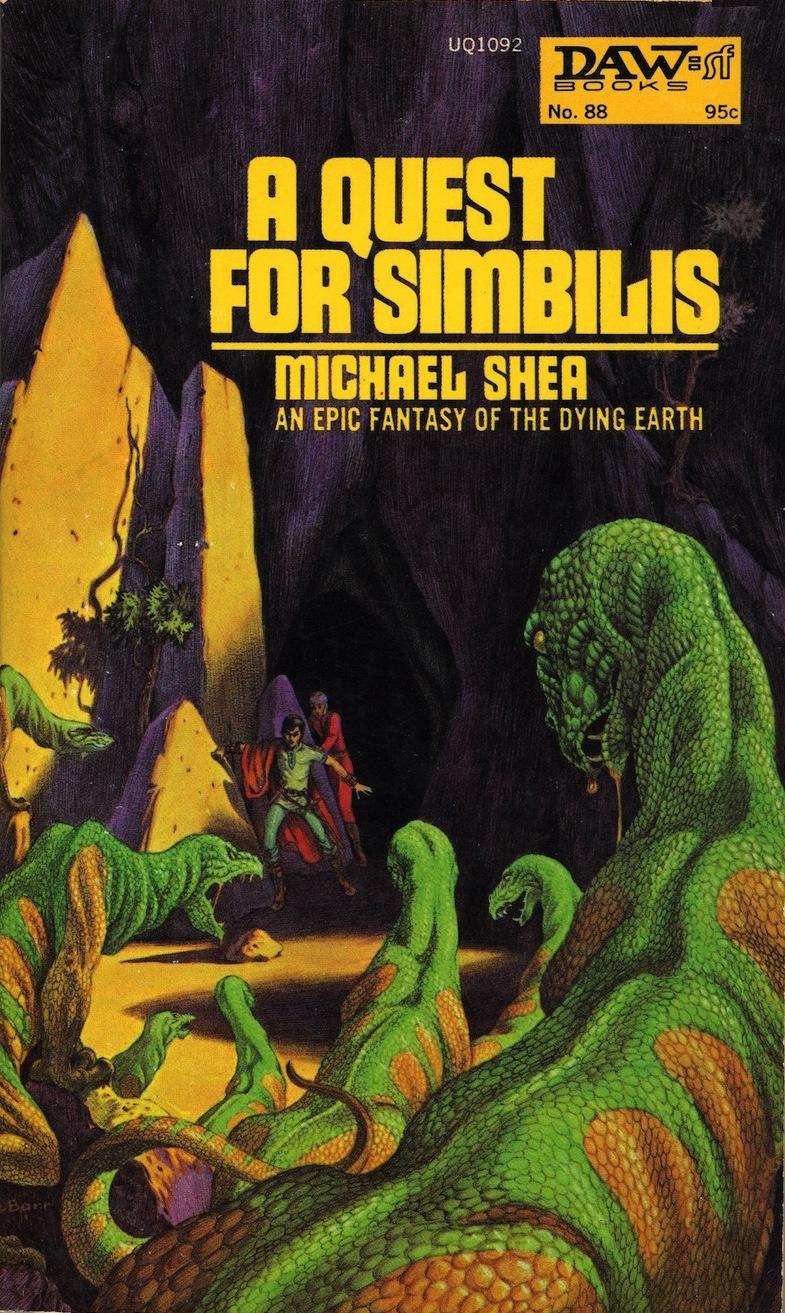
A Quest for Simbilis-smallThe stories that surround Michael Shea’s first novel, A Quest for Simbilis, have the stuff of legend.

In the early 70s, Michael found a copy of Jack Vance’s Dying Earth novel The Eyes of the Overworld in the lobby of a hotel in Juneau, Alaska. The book stayed with him for four years, through a brief first marriage and extensive travels, hitch-hiking through France and Spain, until he sat down to write an homage to Vance and a sequel to his novel. It was published in paperback by DAW Books in 1974 and was a finalist for the British Fantasy Award.

There are dangers to playing in someone else’s playground, and some at the time saw Michael as a dabbler, not really serious about writing. But nothing could have been further from the truth, as his wife Lynn noted in the announcement of his death at Michael Shea’s website on March 7th.

Michael published his first novel, A Quest for Simbilis, in 1974, and for all the years that I knew him, he wrote almost every day. Novels, short stories, and, his first love, poetry poured out of him up through the very last day of his life. Some thought of Michael as reclusive, when in fact he was just old-fashioned, a writer’s writer. Once a piece was perfect, he wanted to set it aside, forget it, and begin the next project. Even so, we, his family, feel that, along with our memories, his written works are what we still have of him.

Michael’s family have now turned his website into a forum where his friends and fans can “share their experiences, both literary and personal, as well as find access to new releases and formats of his work.” Visit the site here.

Jack Vance graciously declined to share the advance offered by DAW Books for A Quest for Simbilis, but allowed the book to be released as an authorized sequel to his Dying Earth novels. Eventually, Vance took the series in a different direction when he published a third book, Cugel’s Saga, in 1983.

…

Read More Read More

New Treasures: The Dark Eidolon and Other Fantasies by Clark Ashton Smith

New Treasures: The Dark Eidolon and Other Fantasies by Clark Ashton Smith

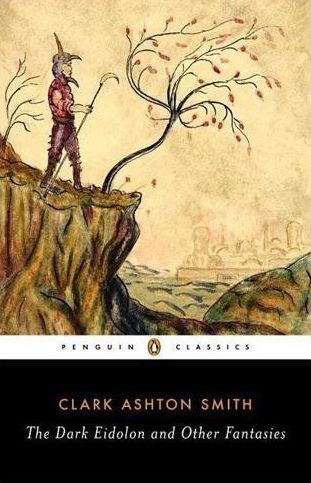
The Dark Eidolon and Other FantasiesAt long last, Clark Ashton Smith gets a little respect.

The highly regarded Penguin Classics line — which scholars and teachers love to rely on when drawing up things like course reading lists — has been slow to embrace pulp writers, and especially pulp fantasy writers. But in the last decade or so they’ve been correcting that oversight, starting with Lovecraft (The Call of Cthulhu and Other Weird Stories, Oct. 1999, The Thing on the Doorstep and Other Weird Stories, Oct. 2001, and more.) They’ve done a little better with other fantasy writers, including Lord Dunsany (In the Land of Time: And Other Fantasy Tales, February 2004), Arthur Machen, Shirley Jackson, M. R. James, and others.

Much of this has been the result of the efforts of editor S.T. Joshi, who now brings Penguin Classics their very first pulp sword & sorcery collection, gathering together the best work of the great Clark Ashton Smith.

Called “unexcelled by any other writer, dead or living” by H.P. Lovecraft, Clark Ashton Smith, a prolific poet, amateur philosopher, bizarre sculptor, and unmatched storyteller, simply wrote like no one else. Now, The Dark Eidolon and Other Fantasies, the much-awaited collection of poetry and prose from Clark Ashton Smith, introduces him into the Classics as a cosmic master artist who saw horror and wonder in all things, and in whose pen note a single sentence was safe.

This collection of his very best tales and poems, selected and introduced by supernatural literature scholar S.T. Joshi, allows readers to encounter Smith’s visionary brand of fantastical, phtantasmagorical worlds, each one filled with invention, terror, and a superlative sense of metaphysical wonder. The volume’s title story — a revenge tale that ends with macrocosmic stallions returning to trample a house they had formerly spared — is set in Smith’s Zothique story circle, in which the last inhabited continent on Earth watches humanity at the end-time regress to a pre-modern state.

The Dark Eidolon and Other Fantasies was published by Penguin Books on March 25. It is 370 pages — including 32 pages of Explanatory Notes on the stories by Joshi — and priced at $16 in trade paperback and $9.99 for the digital edition.

…

Read More Read More

Explore the Echoes of a Vanished Product Line in Lost Empires of Faerûn

Explore the Echoes of a Vanished Product Line in Lost Empires of Faerûn

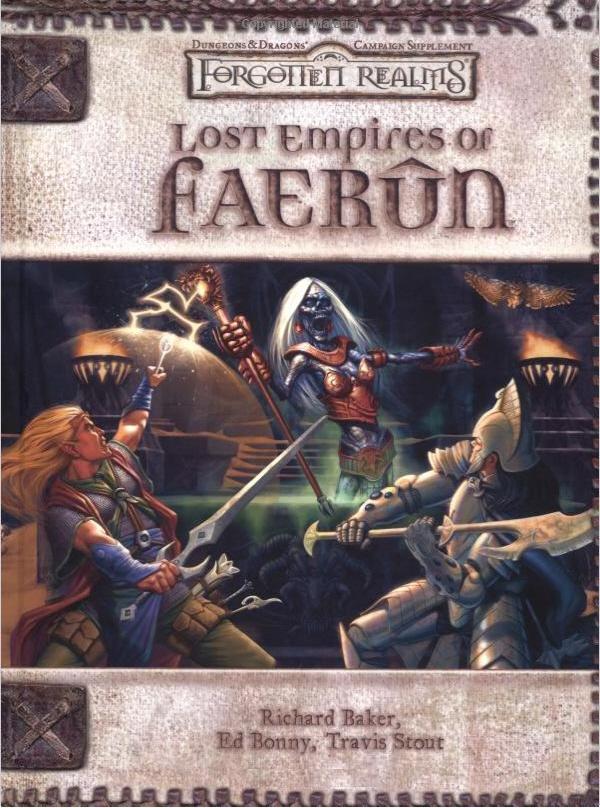
Lost-Empires-of-Faerun-smallI’m still processing the boxes of gaming loot I brought home from the Spring Games Plus Auction. Honestly, this could take a while. You may want to get a coffee or something.

I find it fascinating to watch the items that set off a bidding frenzy. The Descent games I talked about last time, for example. Or absolutely any expansion sets for Wizard of the Coast’s out-of-print Heroscape — lordy, yes. I wish I had a closet filled with those babies. I’d retire to Bermuda.

But it’s no fun to bid on stuff that far out of my price range. Gape while everyone else bids like crazy? Sure. But bid yourself? No. It’s like asking the Homecoming Queen to Prom. Sure, everybody’s doing it, but it ain’t easy on your self-esteem.

But you know what is fun to bid on? Cheap stuff, and especially cheap stuff that was once very expensive. Like premium D&D products that are now one or two editions out of date and selling at rock bottom prices. Items like a brand new copy of Lost Empires of Faerûn, which originally retailed for $29.95 and which I snapped up for 6 lousy bucks.

Let me paraphrase from the back of the book. Something, something, secrets of past empires of the Forgotten Realms, comprehensive sourcebook, new feats, stuff, prestige classes, magic stuff, equipment stuff. Can I use this to put together an adventure in 10 minutes when I manage to forget game night switched to Friday? Yes? I’m sold.

Apparently, the book also contains gaming advice on ruins, including rules for how to build and sustain a ruin-based campaign, a bunch of detailed adventure sites with maps, artifacts, and some new monsters. You had me at “ruin-based campaign.” Take my money already.

…

Read More Read More

Do You Have the Time?

Do You Have the Time?

Time-MachineSpider Robinson, in his brilliant and moving story “The Time-Traveler,” pointed out that we’re all time travellers really. We’re all moving into the future at the rate of one second per second.

As those of you who read last week’s post might realize, Robinson’s talking – in a way – about a subjective experience. The protagonist of the story experienced the passage of ten years of time in a manner completely different from that of the rest of the world. To the other characters (and the readers) the present is merely the present, because they (and we) had experienced the intervening years in the normal way. Because the protagonist hadn’t, it felt to him as though he’d stepped ten years into the future.

If that sounds a bit confusing, I urge you to find the story (it’s collected in Callaghan’s Crosstime Saloon) and read it for yourself.

…

Read More Read More

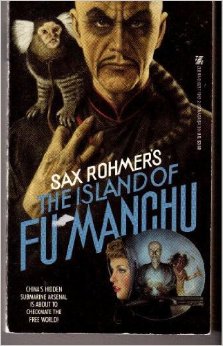
Blogging Sax Rohmer’s The Island of Fu Manchu, Part Four

Blogging Sax Rohmer’s The Island of Fu Manchu, Part Four

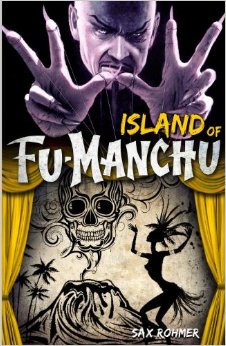
island titanisland zebraSax Rohmer’s Fu Manchu and the Panama Canal was first serialized in Liberty Magazine from November 16, 1940 to February 1, 1941. It was published in book form as The Island of Fu Manchu by Doubleday in the US and Cassell in the UK in 1941. The book serves as a direct follow-up to Rohmer’s 1939 bestseller, The Drums of Fu Manchu, and is again narrated by Fleet Street journalist, Bart Kerrigan.

The final quarter of the novel sees Rohmer really deliver the goods with Kerrigan and Sir Denis Nayland Smith successfully infiltrating the Haitian voodoo ceremony of Queen Mamaloi. While similar scenes had occurred in the past at various clandestine gatherings of the Si-Fan, the sequence most closely resembles the gathering of the followers of El Mahdi in 1932’s The Mask of Fu Manchu. Rohmer’s mastery of the art of suspense writing makes the reader believe the heroes are in genuine danger. While this is no small feat, considering the number of times Rohmer had penned similar scenes in the past, part of the success here is down to the climactic revelation of the voodoo Queen Mamaloi.

…

Read More Read More

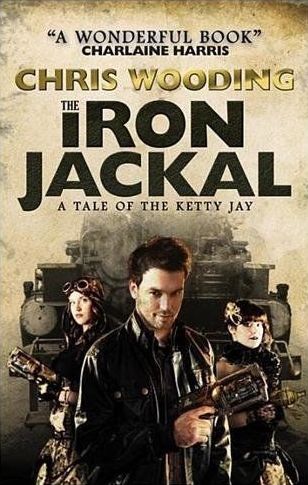
New Treasures: The Iron Jackal by Chris Wooding

New Treasures: The Iron Jackal by Chris Wooding

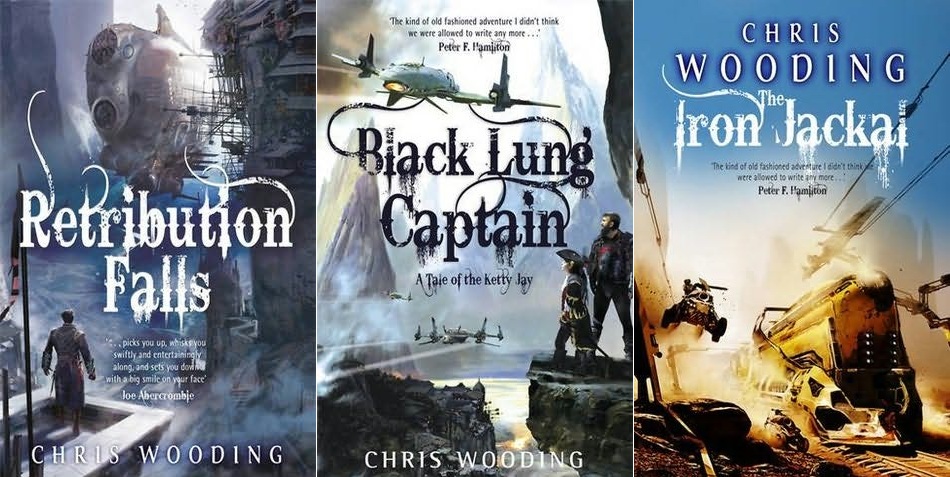
The Iron Jackal-smallChris Wooding’s Ketty Jay novels come packed with witty dialog, high-flying adventure, and a hearty dose of steampunk fantasy — not to mention some great covers (see the British editions of the first three here). The previous volumes, Retribution Falls and The Black Lung Captain, were published in the US by Bantam Spectra; with the third Wooding switches publishers to Titan, bringing a new look to a series that has been compared to Firefly. If you’re on the hunt for a new series that includes sky pirates, quirky characters, and swashbuckling fantasy, this might be exactly what you’re looking for.

Things are looking good for Captain Frey, roguish captain of the Ketty Jay and her dysfunctional crew of layabouts. Accustomed to living on the wrong side of the law, running contraband, robbing airships and generally making a nuisance of themselves, Frey’s rag-tag bunch of no-hopers is finally on the rise from bottom-feeding freebooters to bar-room celebrities. And, just for once, nobody is trying to kill them.

Even Trinci Dracken, Frey’s one-time fiancée and long-time nemesis, has given up her quest for revenge. In fact, she’s offered him a job — one that will take his crew deep into the desert heart of Samarla, land of their ancient enemies, where the secrets of the past lie in wait for the unwary. Secrets that might very well cost Frey everything.

Join the crew of the Ketty Jay on their greatest adventure yet: a story of mayhem and mischief, roof-top chases and death-defying races, murderous daemons, psychopathic golems and a particularly cranky cat.

Chris Wooding is also the author of Malice, Storm Thief, and over a dozen other books. He has announced that the fourth volume in the series, the upcoming The Ace of Skulls, scheduled for release in August, is also the last.

The Iron Jackal was published by Titan Books on March 11, 2014. It is 480 pages, priced at $14.95 for the trade paperback and $9.99 for the digital edition.

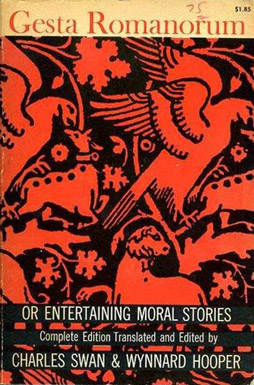
The Eucatastrophic Gesta Romanorum

The Eucatastrophic Gesta Romanorum

Gesta RomanorumSomewhere in Europe, probably around the end of the 13th or the beginning of the 14th century, someone put together a book of tales. Likely this someone was a cleric who wanted to compile a manual to use in sermons and preaching. The texts were written in Latin and featured stories of all sorts: romances, travellers’ tales, fragments of Pliny and Herodotus and Aesop. A number were brief and didactic, if not prosaic, describing some uninteresting event or propounding a riddle a nearby wise man quickly answered with too pat an explanation — but others of the tales were filled with miracles and adventure and magic, with angels and saints and knights and dragons. Each was given a detailed moral, with every incident and character shown to have allegorical significance. Whether because it boasted wonder-stories, because it made those wonder-stories Christian parables, or both, the book quickly became immensely popular. This being well before the age of print, manuscripts proliferated, gaining and losing stories along the way.
Most of the tales claimed to take place in “Rome,” which superficially meant little: there was no attempt to create any sense of place or setting. A story might be said to take place in the reign of a given Emperor, but even if said Emperor happened to share a name with a recorded ruler of Rome, the Emperor of the tale typically had nothing to do with the Emperor of history. At any rate, this conceit gave the collection of stories a name: Gesta Romanorum, The Deeds of the Romans.

The book was first put in print in the late fifteenth century and an English translation appeared in the first decade of the sixteenth, by which time the book had already had tremendous influence on European literature. It had presented writers like Chaucer and Boccaccio and John Gower with narratives and narrative seeds that they’d develop in their own writings. It continued to be popular through the sixteenth and seventeenth centuries: the longest single story in the book is a version of the romance of Apollonius, Prince of Tyre, one of the most popular tales of the Middle Ages, and it seems that the Gesta’s version directly or indirectly inspired Shakespeare’s take on the story, Pericles.

…

Read More Read More

The Fantasy Novels of Lucius Shepard: The Golden

The Fantasy Novels of Lucius Shepard: The Golden

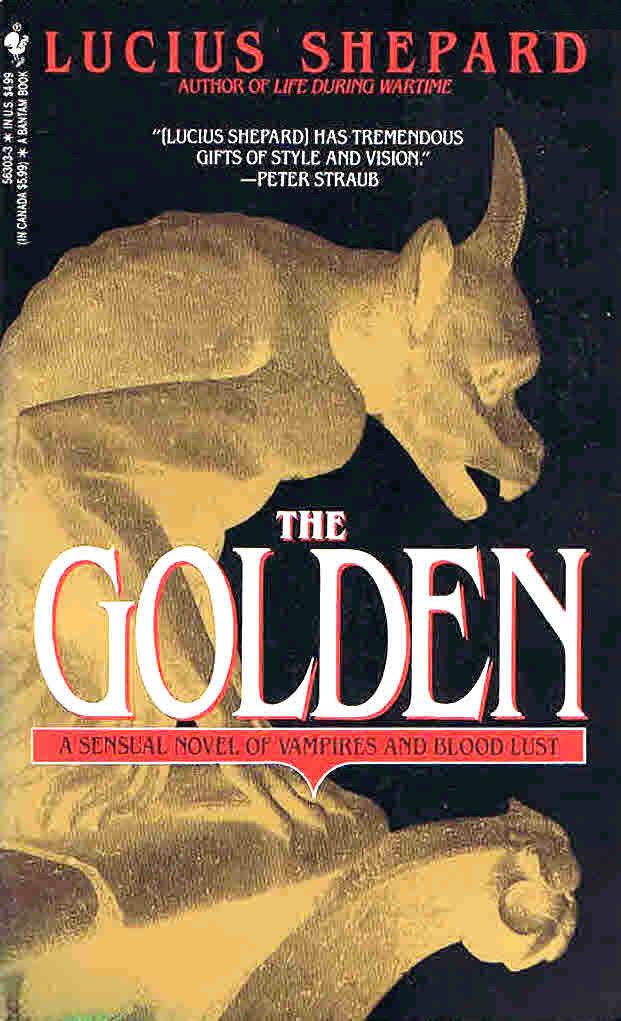
The Golden Lucius Shepard-smallLucius Shepard was known chiefly as a science fiction writer, and for good reason. His most popular books, including Green Eyes and Life During Wartime, were science fiction and so was much of his most acclaimed short fiction.

But to disregard his fantasy contributions would be a major oversight. Shepard died earlier this month and to commemorate his profound contributions to the genre, we will survey his fantasy books, beginning with his third novel, 1993’s The Golden, a tantalizing mix of mystery and horror subtitled A Sensual Novel of Vampires and Blood Lust.

In the mid nineteenth century, vampires gather at Castle Banat, one of their most sprawling and ancient warrens. Their five-hundred-year breeding project has produced the Golden, a mortal of perfect blood, and they’ve come to drink from her in a ceremony that will incidentally make her one of the Family. When the girl is found murdered, the clan’s shadowy patriarch calls on the detective Michel Beheim to solve the crime. But Michel has been a vampire for only a short while, and though he was a talented investigator among mortals, he is ill-prepared for the task. Soon he is fighting to survive the bizarre terrors of the labyrinthine castle and the schemes of vampires who guard a secret that may forever alter the world of the undead.

The Golden won the Locus Award for Best Horror Novel in 1994.

The Golden was published in a limited edition hardcover by Mark V. Ziesing books in April 1993 and in a mass market paperback by Bantam Books in August 1993. It was 291 pages in paperback, priced at $4.99. It is currently out of print, but a digital version is available for $6.99.