Browsed by
Category: Books

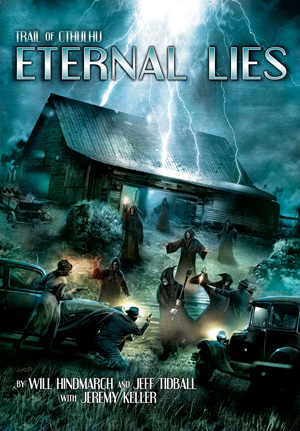
New Treasures: Trail of Cthulhu: Eternal Lies
New Treasures: Trail of Cthulhu: Eternal Lies

Eternal Lies-smallI haven’t played Call of Cthulhu or its sister game Trail of Cthulhu in a long, long time. But that’s okay, because I still enjoy reading the fabulously creative adventures.

One of the best — and certainly one of the most elaborate and ambitious — I’ve come across in some years is Eternal Lies from Pelgrane Press. A massive new campaign for Trail of Cthulhu, Eternal Lies is packed full of surprises and adventure.

I originally covered it here when it was first released last year (see my original post for more details), but this week I finally got my hands on a copy. I was not disappointed, even after the lengthy wait.

Trail of Cthulhu is a standalone game of Lovecraftian horror, and one of Pelgrane Press’s most successful and acclaimed products. Set in the 1930s, it uses  Robin D. Laws’s GUMSHOE system, which is also the basis for several other successful games, including The Esoterrorists, Fear Itself, and Mutant City Blues. Now in its third print run, Trail of Cthulhu won two Ennie awards for Best Rules and Best Writing, as well as an honorable mention for Product of the Year.

It is superbly supported, with some of my favorite recent RPG releases, including Rough Magicks, Bookhounds of London, Arkham Detective Tales, The Armitage Files, and two omnibus adventure collections: Out of Space and Out of Time.
…

Read More Read More

Review: They Say the Sirens Left the Seas

Review: They Say the Sirens Left the Seas

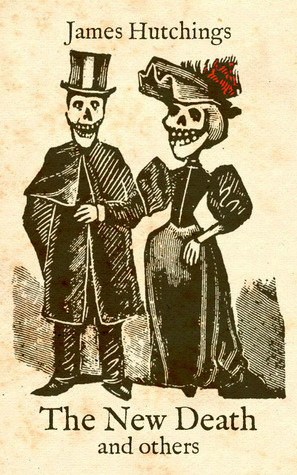
12742577d05381f961017e2b538dc745fd253fc50a37d322-thumbThe very talented darkly-humored poet James Hutchings returns with his third collection, They Say the Sirens Left the Seas. I previously reviewed his first offering, The New Death and Others, back in 2011. This new collection offers readers more of what they have come to expect from this eccentric and highly original voice.

Hutchings is just as much at home spinning fables as he is dishing up Gothic treats or plunging into the ridiculous with no consideration of social conventions. All three of his excellent collections are available at Amazon as eBooks or direct from the Smashwords website for download for less than a dollar apiece.

…

Read More Read More

In Praise of Paperbacks

In Praise of Paperbacks

The Chessmen of Mars-smallFirst, a disclaimer. The Luddite rant that follows is my personal view only. I acknowledge the many benefits and advantages of electronic reading devices and to all of the people (many of them dear friends of mine) who would never think of parting with their Kindle, iPad, Nook, or whatever, this is in no way a judgment or condemnation of you or your reading preferences. It is simply about me and my preferences. Now, let the rant begin.

I teach elementary school, and when I began that job, ten years ago, I was faced with the “problem” of what to do with my summers. Yardwork? Get the garage in order? Any of the thousand other home projects that clamor for attention during the working week and never get done for lack of time or energy? Attractive as these options are, I quickly hit upon the happy idea of passing my summers in the same way I did as an adolescent, in reading through as many SF/fantasy paperbacks as I possibly could in the allotted time. Though age does take its toll, and gone are the days when I had the stamina to read The Chessmen of Mars or Have Spacesuit, Will Travel through in a single sitting, as I did when I was thirteen, I still manage to do all right. The choice to spend my extended vacations reliving those great days of blissful, carefree reading is one of best I’ve ever made.

A couple of summers ago, having just finished one book (I think it was one of E.C. Tubb’s Dumarest of Terra novels), I looked around for my next read. There on the shelf was a paperback copy of The Stars Are Ours by Andre Norton. My copy is a 40 cent paperback, published by Ace in 1954. The book is great fun and I quickly zipped through it.

…

Read More Read More

Future Treasures: Grudgebearer by J.L. Lewis

Future Treasures: Grudgebearer by J.L. Lewis

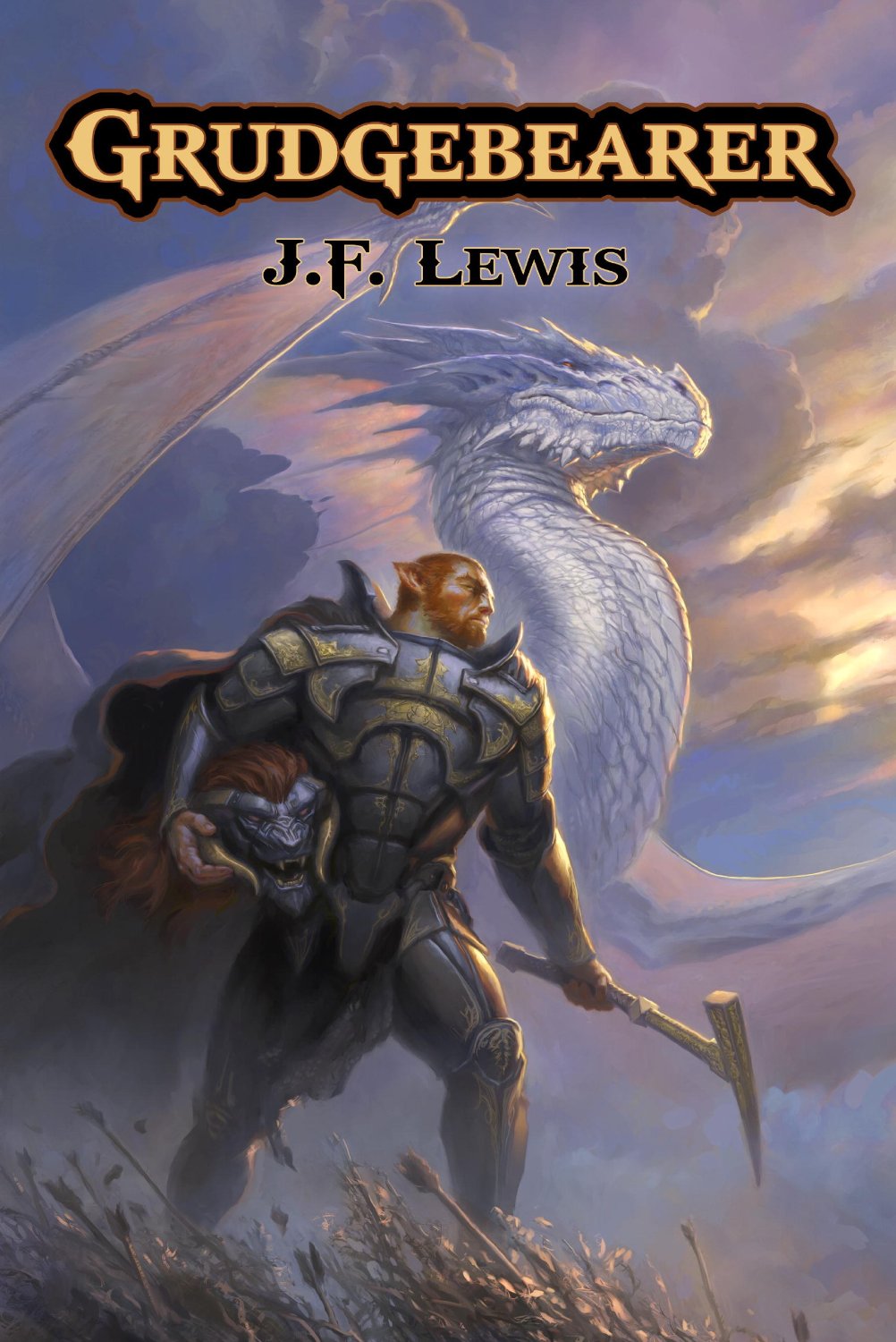
Grudgebearer-smallJ.F. Lewis is the author of the Void City novels, about a vampire who runs a strip club and suffers from short-term memory problems.

With Grudgebearer, the first volume of the Grudgebearer trilogy, Lewis turns to more classic second-world fantasy with a setting full of action, adventure, and carnivorous elves…

Kholster is the first born of the practically immortal Aern, a race created by the Eldrennai as warrior-slaves to defend them from the magic-resistant reptilian Zaur. Unable to break an oath without breaking their connection with each other, the Aern served the Eldrennai faithfully for thousands of years until the Sundering. Now, the Aern, Vael, and Eldrennai meet every hundred years for a Grand Conjunction to renew their tenuous peace.

While the tortures of slavery remain fresh in Kholster’s mind, most of the rest of the world has moved on. Almost six hundred years after the Sundering, an Eldrennai prince carelessly breaks the truce by setting up a surprise museum exhibit containing sentient suits of Aernese armor left behind, never to be touched, lest Kholster kill every last Eldrennai. Through their still-existing connection with their ancient armor, the Aern know instantly, and Kholster must find a way to keep his oaths, even those made in haste and anger. While Kholster travels to the Grand Conjunction with his Freeborn daughter and chosen successor Rae’en, his troops travel by sea, heading for war.

Grudgebearer will be published on September 2 by Pyr Books. It is 400 pages, priced at $18 in trade paperback and $11.99 for the digital edition.

See all of our recent articles on upcoming books here.

Vintage Treasures: The Great Steamboat Race by John Brunner

Vintage Treasures: The Great Steamboat Race by John Brunner

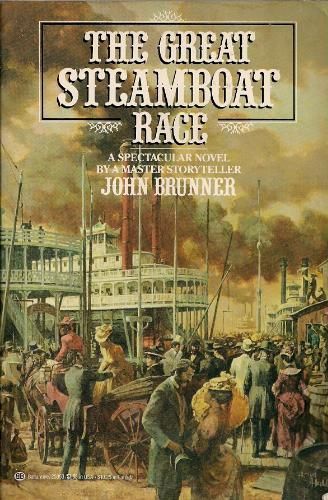
The Great Steamboat Race John Brunner-smallJohn Brunner is one of my favorite writers. He wrote one of the finest SF novels I’ve ever read, the Hugo Award-winning Stand on Zannibar, and over a career that spanned 40+ years he produced nearly 60 SF novels  and 15 short story collections.

I have virtually all of his SF output, but a few months ago I stumbled on a Brunner novel unknown to me: The Great Steamboat Race, published in a premium trade paperback edition by Ballantine in 1983. Based upon the true story of an epic race between the steamboats Natchez and Robert E. Lee down the hazardous Mississippi River on the July 4th 1870 weekend, The Great Steamboat Race is a massive historical saga and a significant departure for Brunner. It’s the only book like it in his catalog and Ballantine obviously sunk some money into the production — it’s packaged very much like a historical bestseller.

A decade before it appeared, a virtually unknown sword & sorcery writer named John Jakes escaped midlist obscurity by turning from SF and Fantasy to historical fiction with his novel The Bastard. That single novel made Jakes one of the most popular writers in America and the series that grew from it, the Kent Family Chronicles, eventually sold 55 million copies (to put that in perspective, that’s roughly twice George R.R. Martin’s sales for all the volumes of A Song of Ice and Fire.) Jakes’s success inspired many of his fellow SF writers to experiment with straight historical fiction, including Robert Silverberg (with Lord of Darkness, 1983) and a handful of others.

Although The Great Steamboat Race was well-reviewed, it was not a success. It was never reprinted in mass market paperback (although copies of the trade paperback edition are easy to find, even today) and John Brunner returned to writing SF and fantasy. He never wrote another historical novel.

The Great Steamboat Race was published by Ballantine Books in February, 1983. It is 568 pages, originally priced at $7.95. New copies are available on eBay for roughly the same price today.

The Constant Tower by Carole McDonnell

The Constant Tower by Carole McDonnell

oie_92323565jFPqCc4When I started my blog (Swords & Sorcery: A Blog), one of my goals was to force myself to read new fantasy. I knew I’d get bored pretty quickly if all I did was write about books and stories I’d read many times. As a fan, it’s too easy to allow oneself to get comfortably caught up in a cycle of reading and rereading the same old dusty stack of Howard, Leiber, and Moorcock. My newer go-to books include Norton, Saunders, and Wagner, but most of their books are still between thirty-five and fifty years old.

Like any other person writing, I also wanted people to read my work. Another article about “Queen of the Black Coast” or “Adept’s Gambit” out in the universe was going to bore most readers as much as it would me while writing it. This meant finding my way back into the thicket of current heroic fantasy, which I’d stopped reading a long time ago.

Turns out I picked about the perfect time to start reading heroic fantasy again, as there was an exciting revival taking place. One discovery I made was Milton Davis and the tremendous efforts he was making to write and publish sword & soul stories. My interest was piqued by the idea that someone was doing something different in the genre, not just regurgitating the same heroic fantasy tropes that have been done to death.

When I went from looking at the amazing cover of his and Charles Saunders’s anthology Griots and actually reading the contents (reviewed at my site), I was hooked. Other than Davis and Saunders, I didn’t recognize any contributors to the collection. Several really grabbed me, but the story that I liked best was “Changeling,” a tale of daughterly duty and sibling jealousy by Carole McDonnell.

…

Read More Read More

New Treasures: Dead Man’s Hand edited by John Joseph Adams

New Treasures: Dead Man’s Hand edited by John Joseph Adams

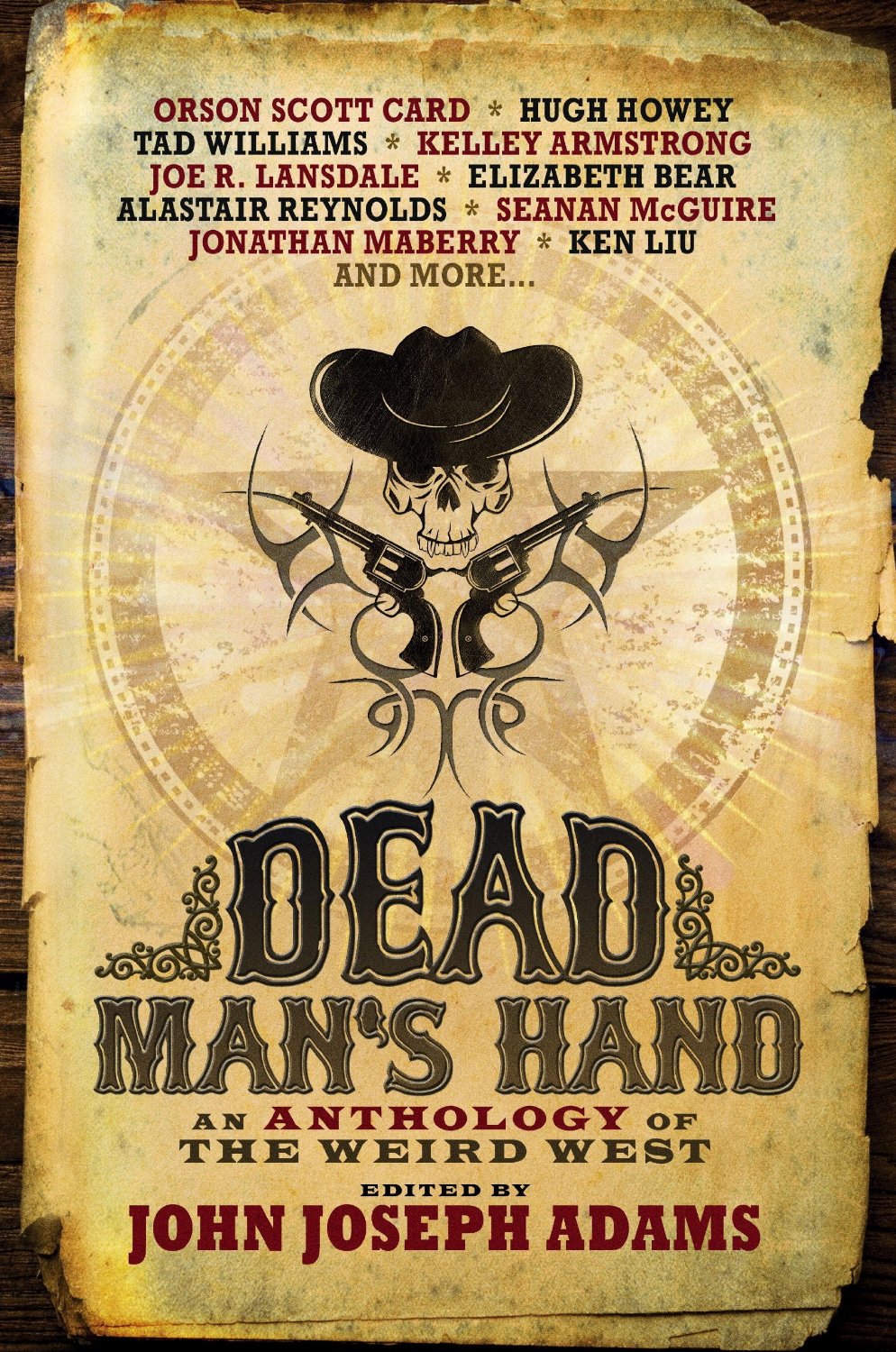
Dead Man's Hand John Jospeh Adams-smallJohn Joseph Adams is having a good year.

Back in April, he was nominated for a Hugo Award for Best Professional Editor, Short Form (his seventh nomination), for his work as editor of Lightspeed, Nightmare, and anthologies like The Apocalypse Triptych.

That’s not his only triumph this year — far from it. His popular anthology Robot Uprisings (co-edited with Daniel H. Wilson) was released on April 8, and the special Women Destroy Science Fiction issue of Lightspeed has just arrived, and is being recognized as a landmark issue.

But the JJA project I’ve most been looking forward to this year is his original anthology of Weird Western tales, featuring brand new stories from Alastair Reynolds, Joe R. Lansdale, Tad Williams, Seanan McGuire, Tobias S. Buckell, David Farland, Alan Dean Foster, Jeffrey Ford, Laura Anne Gilman, Fred Van Lente, Walter Jon Williams, and many more.

Dead Man’s Hand was published by Titan Books on May 13. It is 409 pages, priced at $16.95 in trade paperback and $9.99 for the digital edition. Read more details — and the complete book description — in my April 13 Future Treasures post.

Here’s the complete Table of Contents.

…

Read More Read More

A Monster Index for Shub-Niggurath, Cthuhlu or Azathoth: A Review of Lovecraft’s Monsters

A Monster Index for Shub-Niggurath, Cthuhlu or Azathoth: A Review of Lovecraft’s Monsters

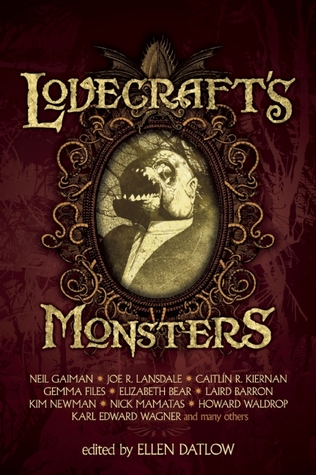
Lovecraft’s Monsters-smallI love H. P. Lovecraft. Moreover, I think he is the foremost horror and weird writer of all time! I’m not going to attempt to defend that claim here other than to say that I personally love his writing style (purple prose and all), his creatures, his gods, his mood setting — all of it! Thus, as I’ve said in another review, I’m pretty much a sucker for any book advertised or alluded to as “Lovecraftian.” It should be no shock then that I bought the recent anthology Lovecraft’s Monsters.

This book is edited by the multiple award-winner SF&F editor Ellen Datlow. Datlow typically compiles her anthologies around certain themes. The title Lovecraft’s Monsters should thus be fairly self-explanatory. But in detail, each story in this volume contains a monster that is from, similar to, or inspired by one of H.P. Lovecraft’s horror stories.

New to Lovecraft and his monsters, you say? Ever wonder who Shub-Niggurath, Cthuhlu, or Azathoth are? Ever curious as to what shoggoths, “deep ones,” or the Hounds of Tindalos are? Wonder no longer! There is a helpful “Monster Index” compiled in Lovecraft’s Monsters, by Rachel Fagundes, that introduces all such beasties. Besides identifying which stories within Loveccraft’s Monsters contain these creatures, the index also points to where they are first found in Lovecraft’s original stories.

I should also point out that this is a very attractive book with creepy illustrations throughout provided by John Coulthart. In fact, there is one illustration for each story and poem (Gemma Files provides two poems here). Coulthart’s work provides the cover illustration as well. These are nice little extras not usually offered in anthologies.

But of course no anthology is worthwhile without some good stories. And thankfully Lovecraft’s Monsters does not disappoint. There are some very well-known authors here, including Neil Gaiman, Joe Lansdale, Caitlín Kiernan, Elizabeth Bear, and Laird Barron. Most of the stories are reprints, including some older works such as Karl Edward Wagner’s. But with the exception of one story, I had never read any of these tales before.

…

Read More Read More

The Public Life of Sherlock Holmes: When Elric of Melnibone Came to 221B Baker Street

The Public Life of Sherlock Holmes: When Elric of Melnibone Came to 221B Baker Street

Moorcock_DorsetLodgerWell, not quite. That title was just to grab your attention. But Elric’s creator did set a tale at London’s most famous address, 221B Baker Street. And it’s a pretty ‘normal’ Holmes tale; which you might not expect from the guy who created Stormbringer.

I enjoyed Fletcher Vrendenburgh’s post last week on Michael Moorcock’s Eternal Champion. I devoured the tales of Corum, Hawkmoon, Erekose, and of course Elric in my middle-school years.

Being a Dungeons and Dragons player, these books were awesome. I think I even used Rackhir the Red Archer in a game. If you’ve not read  significant parts of that saga, your fantasy education is lacking.

Moorcock’s work encompasses much more than just the Eternal Champion tales. I’m a Christian and I was fascinated by the premise of The War Hound and all the World’s Pain (an excellent read: the sequel, not so much).

I even wrote a paper on the idea for a high school religion class. That got me an invite to see the teacher, a priest, after class.

Back in 1995, Moorcock wrote “The Adventure of the Dorset Street Lodger” as a privately printed chapbook which he let friends of his, who were opening a hotel on Dorset Street, give away to their first guests.

…

Read More Read More

Self-Published Book Review: Pyre by R. B. Kannon

Self-Published Book Review: Pyre by R. B. Kannon

If you have a book you’d like me to review, please see the submission guidelines here.

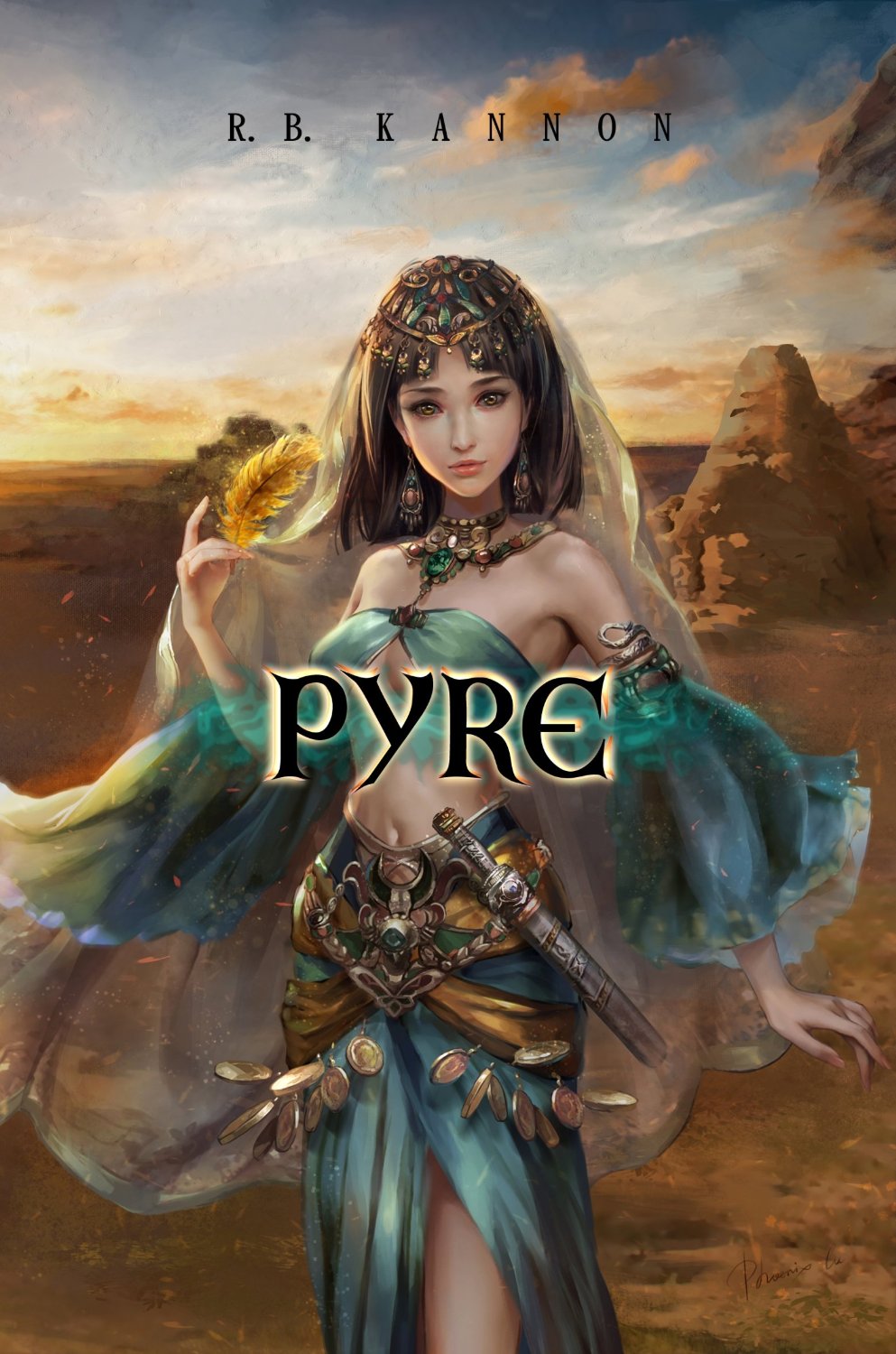
While the cover is beautiful, I’m pretty sure Ember never wore anything remotely like that outfit anywhere in the novel.

This month’s self-published book is Pyre by R.B. Kannon. Set in a desert land reminiscent of ancient Egypt, it tells the life story of Ember, scion of a ruined people.

When Ember was a small child, her mother locked her inside an ancient, abandoned temple to die. She did this because Ember is cursed. Her people have no dreams or visions, no hope or desire or love. They sacrificed those things to a long forgotten demigod. But Ember is different—she not only has those ordinary traits of humanity, her mere presence disturbs the dreamless sleep of her people, bringing them unwanted dreams and nightmares. So she was locked away in the temple, but she was not alone. The Voice was there, a demonic presence who bonds with her and frees them both.

At first, Ember is taken in by Azarus, the eunuch satrap of the province, who teaches her to read and write not only the common language, but also the ancient glyphs that cover the ruins littering the countryside. Years later, when Azarus is killed by the Emperor’s unfavored son, she flees, returning first to her own people, then falling in with prostitutes and bandits, before finally coming back to the temple, where she challenges the Voice to seek redemption not just for herself, but for her fallen people.

The strongest part of Pyre was the prose. The first person narration has a lyrical quality, filled with descriptions rich with dream-like imagery, slipping effortlessly between reality and Ember’s own dreams. Ember herself is strong and determined, qualities which initially drew the Voice to her. The Voice, on the other hand, is cynical and mocking. He accompanies Ember more out of curiosity and boredom, and his own chance at freedom and survival, than because he has any interest in her welfare.

…

Read More Read More