Browsed by
Author: John ONeill

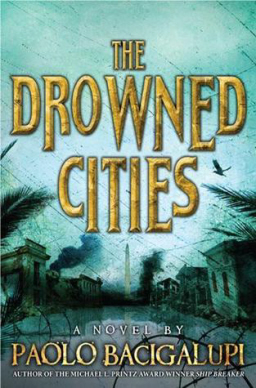
New Treasures: The Drowned Cities by Paolo Bacigalupi
New Treasures: The Drowned Cities by Paolo Bacigalupi

drowned-citiesOkay, I know we’re here to talk about Paolo Bacigalupi’s new novel, but I just want to take a moment to say that I took my two teenage sons to see The Avengers today, and it totally rocked. It was better than it had any right to be, and I agree with Andrew Zimmerman Jones when he says aspiring writers should bring a notebook. Everyone who wants to learn about storytelling should watch this movie.

‘Nuff said. We now return to our regularly scheduled New Treasures article.

So Paolo Bacigalupi has a new book out. It’s described as “a companion book” to his 2010 novel Ship Breaker.

I don’t know what that means, to be honest. Is it a sequel? Why don’t they just call it a sequel? Maybe it’s a prequel? Or it’s, like, set in the same world but doesn’t involve any of the same characters, like The Avengers and X-Men? Or does it present the same events from two radically different viewpoints, like MSNBC and Fox News?

Dang it, I don’t know why the publicity departments at New York publishing houses keep coming up with different words for sequels. They should use straightforward comic analogies in promotional materials, so busy bloggers like me can get to bed early.

Anyway. Paolo Bacigalupi has a new book. His last two, The Windup Girl and Ship Breaker, were really cool (and The Windup Girl even won the Hugo Award). The Hugo Award is a big deal. Black Gate doesn’t have one (yet), and until we get one, that shiny rocket statue makes us starry-eyed and respectful. That’s Mr. Bacigalupi to you, Buster. Here’s the book description:

In a dark future America where violence, terror, and grief touch everyone, young refugees Mahlia and Mouse have managed to leave behind the war-torn lands of the Drowned Cities by escaping into the jungle outskirts. But when they discover a wounded half-man — a bioengineered war beast named Tool — who is being hunted by a vengeful band of soldiers, their fragile existence quickly collapses. One is taken prisoner by merciless soldier boys, and the other is faced with an impossible decision: Risk everything to save a friend, or flee to a place where freedom might finally be possible.

This thrilling companion to Paolo Bacigalupi’s highly acclaimed Ship Breaker is a haunting and powerful story of loyalty, survival, and heart-pounding adventure.

Ship Breaker is highly acclaimed; forgot to mention that. The Drowned Cities arrived in stores on May 1st, it is $17.99 for 448 pages in hardcover, and is published by Little, Brown Books’ Young Adult division.
May/June Fantasy & Science Fiction Magazine now on Sale

May/June Fantasy & Science Fiction Magazine now on Sale

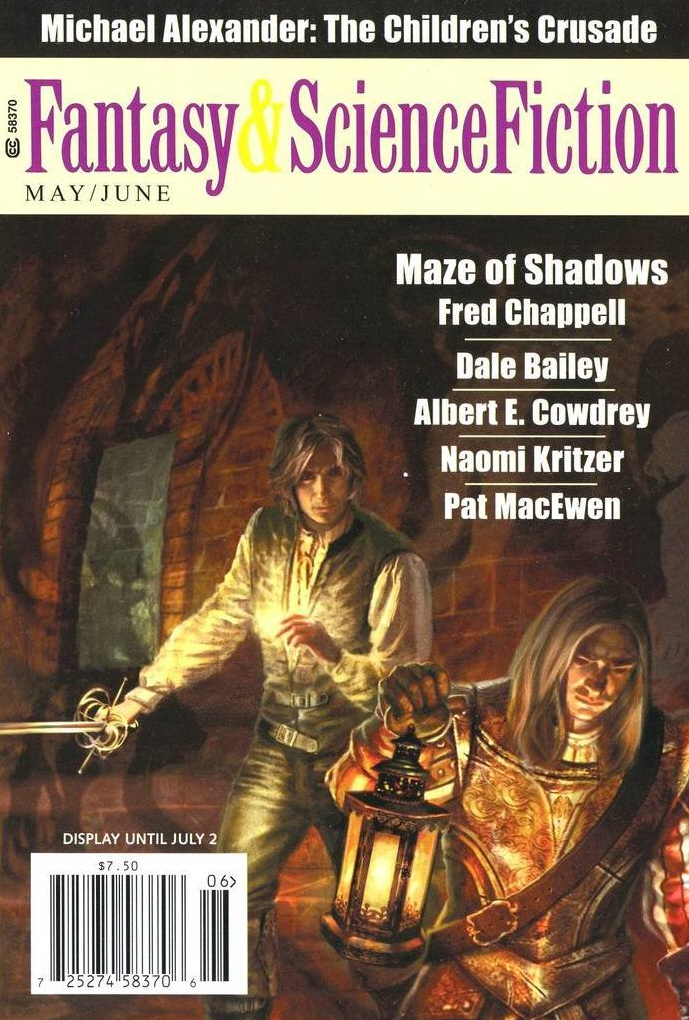
fandsf-may-june-20121Great cover on the latest issue of F&SF courtesy of Max Bertolini, illustrating “Maze of Shadows” by Fred Chappell, another tale of Falco the shadow thief. Has there ever been a good dungeon-delving cover on F&SF? No idea, but this one makes up for it. Click on the cover for a humongous version, and check out the creepy dude in the shadows. Here’s the complete table of contents:

NOVELLA

  • “Maze of Shadows”  – Fred Chappell

NOVELETS

  • “Liberty’s Daughter”  – Naomi Kritzer
  • “Asylum”  – Albert E. Cowdrey
  • “Taking the Low Road”  – Pat MacEwen
  • “The Children’s Crusade”  – Michael Alexander

SHORT STORIES

  • “Necrosis”  – Dale Bailey
  • “Typhoid Jack”  – Andy Stewart
  • “City League”  – Matthew Corradi
  • “Grand Tour”  – Chris Willrich

As usual, Lois Tilton has already reviewed the issue in detail at Locus Online. Here’s what she says about “Maze of Shadows”:

Master Astolfo has accepted the commission of a nobleman to guard his house with shadows in order to protect a mysterious treasure within. Falco and his fellow-apprentice Mutano have duly constructed a shadow maze, but a blind man sent to test it easily finds his way through. The chateau [pun, there?] also houses the cat that has Mutano’s voice, while he can only converse in cat – a situation that Mutano wants to remedy…

There’s a thing about series: if built around an ingenious and fascinating notion, such a premise can carry the first story a long way. But in the subsequent installments, we expect and require rather more. There is plenty of more in this one. The shadow trade figures prominently, the details sufficient and comprehensible for the purpose of the story without a lot of unnecessary backgrounding. The mannered narrative voice of Falco is engaging. There is also a neatly complex plot full of interwoven mysteries to keep readers involved. And some extraordinary cats.

The cover price is $7.50, for a thick 258 pages. Additional free content at the F&SF website includes book and film reviews by Charles de Lint, James Sallis,Paul Di Filippo, and Kathi Maio, and the “Curiosities” column by Jack Womack. We last covered F&SF here with the March/April issue.

On Sale Today: Gods of Opar by Philip José Farmer and Christopher Paul Carey

On Sale Today: Gods of Opar by Philip José Farmer and Christopher Paul Carey

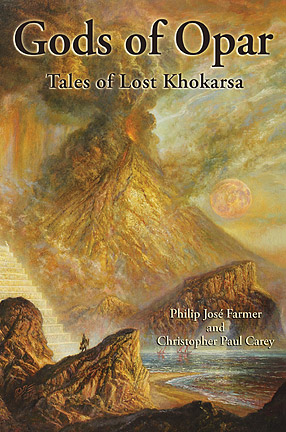
gods-of-oparI love these Philip José Farmer collections from Subterranean Press. They’re gorgeous, for one thing, with wonderful Bob Eggleton covers and the top-notch design typical of Subterranean. They look great lined up on my bookshelf.

But they’re also a terrific and economical way to obtain some of Farmer’s best work, whether you’re interested in his short fiction — collected in Up the Bright River, Venus on the Half-Shell and Others, Pearls from Peoria, and the massive The Best of Philip Jose Farmer — or his linked novel series, such as The Other in the Mirror.

The latest offering from Subterranean Press is no exception, collecting two long out-of-print novels and the conclusion to the trilogy, co-written with Christopher Paul Carey, which appears here for the first time:

Gods of Opar: Tales of Lost Khokarsa collects for the first time anywhere Philip José Farmer’s epic Khokarsa cycle, including the never-before-published conclusion to the trilogy, The Song of Kwasin.

In Hadon of Ancient Opar, the young hero Hadon journeys from his outpost city to the heart of the ancient African empire of Khokarsa, battling in the Great Games for the chance to win the king’s crown. But just as Hadon stands upon the precipice of victory, the tyrannical King Minruth usurps the throne and overturns the beneficent, centuries-old rule of the priestesses of Kho. Now Hadon must set out upon a hero’s journey unlike any other—to hunt down a living god and return with his bounty. The saga continues in Flight to Opar, as a decree by the oracle hurtles Hadon upon a perilous quest that will determine the fate of the next twelve millennia. In The Song of Kwasin, Hadon’s herculean cousin returns to Khokarsa after long years of exile in the Wild Lands. But soon Kwasin finds that in order to clear his name he will have to take up the cause against King Minruth himself and stop him before he fulfills his mad quest for immortality high atop the sun god’s bloody ziggurat.

Gods of Opar is 576 pages in hardcover. The trade edition is $45; there’s also a $65 Limited Edition with loads of additional content, including The Song of Kwasin Outline, a Khokarsan Glossary and Calendar, and more. You can find complete details at the Subterranean Press website.

New Treasures: Henry Kuttner’s Thunder in the Void

New Treasures: Henry Kuttner’s Thunder in the Void

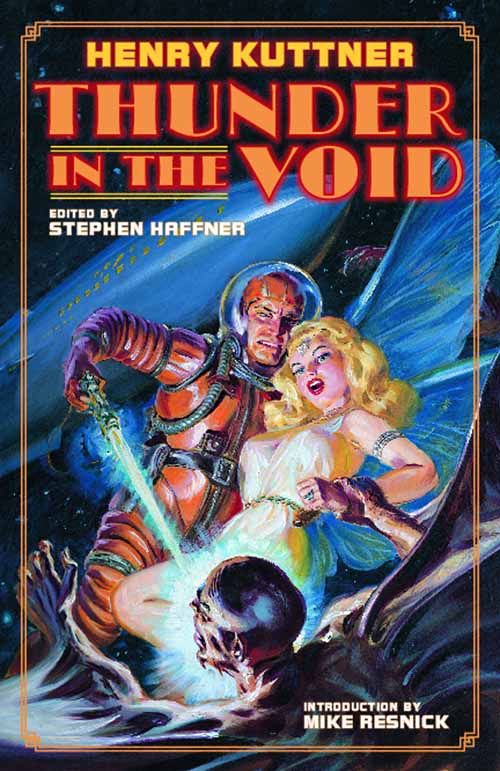
thunder-in-the-voidThis weekend here in Chicago was the 12th annual Windy City Pulp and Paper Convention, one of my favorite local shows. I met fellow BG bloggers Jason Waltz, Joe Bonadonna, and David C. Smith on Saturday, as well as Bill “Indy” Cavalier, Morgan Holmes, and the always engaging Bob Garcia. Late on Sunday I heard someone call my name and turned to discover none other than William Patrick Maynard, our distinguished Friday blogger, who was selling his new novels The Terror of Fu Manchu and The Destiny of Fu Manchu at an impressively-stocked table. Despite having worked together for years it was the first time we’d ever meet, and I really enjoyed our conversation. He’s a fascinating fellow, and I kept him until well after the show had ended.

But the highlight of the show is always seeing the new titles at the Haffner Press booth, and this year didn’t disappoint. Stephen Haffner’s archival quality hardcovers are works of art, and his taste is excellent. He has published the definitive short fiction collections of many of the finest early pulp writers, including Leigh Brackett, Edmond Hamilton, Jack Williamson, C.L. Moore, and Henry Kuttner.

Still, Stephen may have outdone himself with his newest release, Henry Kuttner’s Thunder in the Void, a massive collection of 16 Space Opera tales from Planet Stories, Weird Tales, Super Science Stories, and other classic pulps. Before Kuttner married C.L. Moore in 1940, he wrote blood-n-thunder Space Opera in the style of one of his favorite authors, Edmond Hamilton — with winning titles like “Raider of the Spaceways,” “We Guard the Black Planet,” and my favorite, “Crypt-City of the Deathless Ones” — all of which are collected here.

The book looks terrific, even by the high standards of Haffner Press. Most of the these tales are appearing in book form for the first time. Also included is a previously unpublished story, “The Interplanetary Limited,” and an introduction by Mike Resnick.

Stephen mention to me that Thunder in the Void may be the fastest-selling book he has ever printed. It was released on April 4th in a printing of 1000 copies, of which only 200 are left. If you want a copy, I urge you to act fast. Thunder in the Void is 612 pages in a high-quality hardcover, with a cover price of $40. Cover art is by Norman Saunders. It is available directly from Haffner Press.

Previous Haffner releases covered here include Kuttner and Moore’s Detour to Otherness, Henry Kuttner’s Terror in the House: The Early Kuttner, Volume One, and the upcoming The Complete John Thunstone, by Manly Wade Wellman.

Matthew Stover returns to Caine with Caine’s Law

Matthew Stover returns to Caine with Caine’s Law

caines-lawIn 1996, when I founded the SF Site, I became professionally involved with genre science fiction and fantasy for the first time. I covered it virtually in its entirety, publishing 50+ articles and reviews every month, written by over 40 contributors.

It was tremendously exciting. I still remember the first review copies I ever received, from Andy Heidel at Avon Books. By the end of 1998 I was receiving dozens of review copies a week, but that first box in the summer of 1997 meant that publishers were starting to take us seriously for the first time. I still remember every book into that small box; how wonderful they felt in my hands, and how vibrant and alive SF & fantasy publishing seemed at the time.

Something else I remember about those days is the new authors appearing on the scene; how much I envied them, and how closely I watched their careers. Virtually every month an author published her first novel, many to great acclaim. We paid a lot of attention to new authors at the SF Site, and tried to get them as much coverage as we could.

Over a decade later I hate to tell you how many of those authors made it: virtually none. I can count on one hand the writers who started publishing in the first years of the SF Site, and who are still working in the field today.

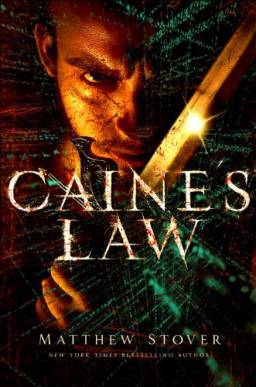
I’m very glad to report that one of them is Matthew Stover — whom we knew as Matthew Woodring Stover back in the day, when Del Rey published his first brutal and riveting fantasy novels Heroes Die (1998), and Blade of Tyshalle (2001). They were the first two novels in what became known as The Acts of Caine series, which became a trilogy in 2008 with Caine Black Knife. On April 3, Del Rey published the fourth in the series, Caine’s Law:

Caine is washed up and hung out to dry, a crippled husk kept isolated and restrained by the studio that exploited him. Now they have dragged him back for one last deal. But Caine has other plans. Those plans take him back to Overworld, the alternate reality where gods are real and magic is the ultimate weapon. There, in a violent odyssey through time and space, Caine will face the demons of his past, find true love, and just possibly destroy the universe.

Hey, it’s a crappy job, but somebody’s got to do it.

Caine’s Law is 496 pages; it’s now available in trade paperback for $16. Get more details at Del Rey’s site here.

New Treasures: Goodis: Five Noir Novels of the 1940s & 50s

New Treasures: Goodis: Five Noir Novels of the 1940s & 50s

goodis-five-noir-novels1Let’s take stock for a minute. Been a busy week, and it’s only Tuesday. Is it time for another installment of New Treasures already?

Let’s see, let’s see… what did we cover last time? Been so long I barely remember. Well look at that — it was a handsome pair of novels from The Library of America. By coincidence, The Library of America also published the book I want to talk about today: Goodis: Five Noir Novels of the 1940s & 50s.

Or maybe it’s not coincidence. Maybe The Library of America is just that cool. Here’s the back cover copy for today’s omnibus collection of five classic crime novels by David Goodis — you decide.

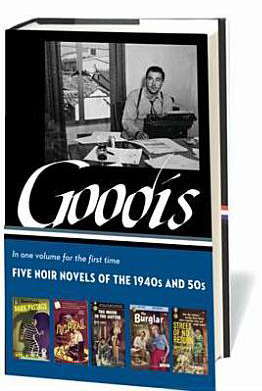
In 1997 The Library of America’s Crime Novels: American Noir gathered, in two volumes, eleven classic works of the 1930s, 40s, and 50s — among them David Goodis’s moody and intensely lyrical masterpiece Down There, adapted by François Truffaut for his 1960 film Shoot the Piano Player. Now, The Library of America and editor Robert Polito team up again to celebrate the full scope of Goodis’s signature style with this landmark volume collecting five great novels from the height of his career. Goodis (1917-1967) was a Philadelphia- born pulp expressionist who brought a jazzy style to his spare, passionate novels of mean streets and doomed protagonists: an innocent man railroaded for his wife’s murder (Dark Passage); an artist whose life turns nightmarish because of a cache of stolen money (Nightfall); a dockworker seeking to comprehend his sister’s brutal death (The Moon in the Gutter); a petty criminal derailed by irresistible passion (The Burglar); and a famous crooner scarred by violence and descending into dereliction (Street of No Return). Long a cult favorite, Goodis now takes his place alongside Raymond Chandler and Dashiell Hammett in the pantheon of classic American crime writers.

No, it’s not fantasy or science fiction. But it’s a complete noir library in one attractive package, and it has thumbnail pics of five pulp paperbacks from the 40s & 50s right on the cover wrap. Good enough for me.

Goodis: Five Noir Novels of the 1940s & 50s is 848 pages in hardcover. It was published March 29, 2012, and retails for $35.

Courtney Crumrin Volume One: The Night Things

Courtney Crumrin Volume One: The Night Things

courtney-crumrin-volume-one-the-night-things2Far back in the mists of time (March 2002, if you want to be picky), I picked up an intriguing black and white independent title at my local comic shop. It was Courtney Crumrin and the Night Things #1, written and drawn by Ted Naifeh and published by Oni Press.

The first few pages featured cold and uncaring parents, a spooky house, young bullies, sinister night creatures, and a protagonist who was clearly an aspiring criminal and juvenile delinquent. Before the end of the first issue, young Courtney Crumrin had trapped a goblin and forced it to cruelly devour one of her school mates, bones and all.

Man, this was just what I was looking for. I brought it home and read it to my three children, and they immediately clamored for more.

More is what they got. Over the next few years Naifeh produced over a dozen issues following Courtney and her Uncle Aloysius, a powerful warlock who reluctantly teaches her magic. Courtney’s adventures involved the helpful (but hungry) goblins Butterworm and Butterbug; Boo & Quick, talking neighborhood cats who assist the young aspiring witch; a local Coven of witches and warlocks who frequently turn to Aloysius for help with dread problems; night things from the Twilight Kingdom — including The Dreadful Dutchess, Courtney’s friend Skarrow, and The Twilight King — and the terrible Tommy Rawhead, a giant hobgoblin feared by the Coven, and everyone else.

The various issues of Courtney Crumrin were collected into four handsome trade paperbacks, followed by the short-lived spin-off series Courtney Crumrin Tales in 2005. But that was all, and fans were left waiting while Naifeh turned to other projects, like Polly and the Pirates.

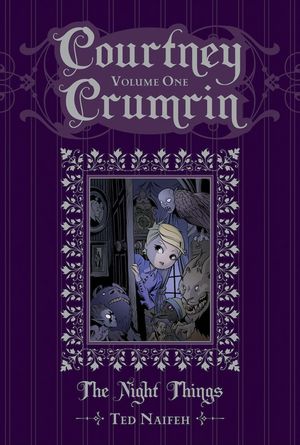
The long drought ended two weeks ago with the arrival of Courtney Crumrin Volume 1: The Night Things, the first hardcover edition of Courtney Crumrin. More importantly, it’s also the first time the issues have appeared in color, and the newly colorized pages look terrific. Volume One reprints the first four issues with special bonus material including sketches and covers of all four issues. The second volume, Courtney Crumrin & The Coven of Mystics, reprinting the next four issues in color, is due Aug 29, 2012.

Courtney Crumrin is one of the finest comics produced in the 21st Century. Don’t miss the opportunity to have these early issues in a handsome permanent edition. Courtney Crumrin Volume One: The Night Things is 144 pages in hardcover; it is published by Oni Press for $19.99.

More than a decade after I read them the first issue at bed time, all three of my children are still ardent Courtney Crumrin fans. But they’ll have to wait for this volume, because Dad wants to read it first.

“What’s Become of Screwloose?” and Other Great Short Fiction by Ron Goulart

“What’s Become of Screwloose?” and Other Great Short Fiction by Ron Goulart

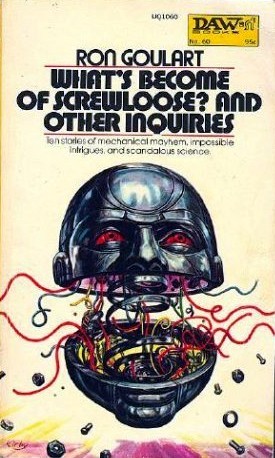
whats-become-of-screwloose1Ron Goulart has written more than 70 novels, most of them science fiction or fantasy, as well as over a dozen non-fiction titles, including Comic Book Culture and the classic history of the pulps, Cheap Thrills: An Informal History of the Pulp Magazines.

I saw his name countless times in the paperback racks where I hunted for science fiction as a teen, on slender DAW volumes like Calling Dr. Patchwork, The Panchronicon Plot, and Big Bang. He had a reputation for light comedy, not something that appealed to me at the time, and I pretty much ignored Goulart for years.

In fact, I truly discovered Ron Goulart for the first time five days ago, shortly before midnight last Wednesday.

I was bagging a collection of Worlds of IF, a science fiction digest that folded in 1974, which I’d gradually accumulated over several weeks on eBay. I was casually flipping through the April 1970 issue when I stumbled on the short story “Swap,” by Ron Goulart, with this editorial teaser:

What happens when you swap love partners — and win a hot, curvy bundle of hate?

As a student of short fiction teasers — I’ve written a few hundred for Black Gate — I know a winner when I see one. I pulled the lever to recline the couch and, surrounded by nearly a dozen stacks of aging science fiction magazines, settled back to enjoy a 42-year old science fiction story.

Read More Read More

Horror Roleplaying in 1890s England: Cthulhu By Gaslight

Horror Roleplaying in 1890s England: Cthulhu By Gaslight

cthulhu-by-gaslightContrary to what you may read, it’s not all about Barbarian Prince and First Edition AD&D after hours here at the Black Gate rooftop headquarters.

No, sometimes during our friendly evening gatherings we just sit around and reminisce about great gaming sessions of old. I played a bit of Call of Cthulhu in my day; so much so that it’s probably my second favorite RPG (right behind AD&D).

Together with a few close friends I trekked down my fair share of fog-shrouded New England back alleys, trying to sound like Sam Spade while deftly making perception checks and shining feeble torchlight on things better left unseen.

Good times, good times. Except for the failed sanity rolls, of course, and the frequent times I was forced to crumble up my character sheet while Brian Muir, our game master, described how my character was dragged off to the asylum, screaming in wordless horror. Sometimes I wonder how I stumbled into this hobby.

But mostly what I remember about Call of Cthulhu was that Chaosium had hands down the best packaged adventures on the market. Seriously, they were epic. Larry Ditillio’s globe-spanning Masks of Nyarlathotep is still considered the high water mark for RPG adventures in the 1980s, and Keith Herber’s Spawn of Azathoth won the Gamer’s Choice Award for Best Role Playing Adventure in 1987.

Beyond the Mountains of Madness, an enormous 438-page masterwork from Charles and Janyce Engan, commands outrageous collector’s prices today (copies are currently selling at Amazon.com for $555 — and up), and that’s not even the most sought-after. That distinction belongs to Horror on the Orient Express, a fabulous boxed set released in 1991 which sold out quickly and has never been reprinted.

But it was William A. Barton’s Cthulhu By Gaslight that was always my favorite.

Read More Read More

50% Off Sale at Night Shade Books

50% Off Sale at Night Shade Books

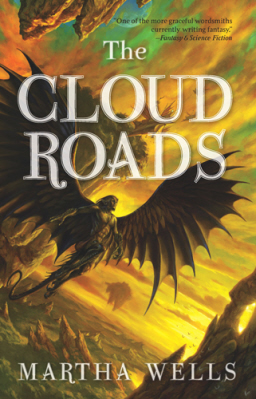
cloud-roadsNight Shade Books, one of the leading small press publishers, is having a 50% off sale. That’s 50% off every book in their catalog, including all existing stock and forthcoming titles.

However the sale only lasts until next Thursday, April 26th, so act fast.

Night Shade publishes some of the most acclaimed authors in the business, including Martha Wells, Manly Wade Wellman, Greg Egan, Glen Cook, David Drake, Paolo Bacigalupi, Kage Baker, Jay Lake, Iain M. Banks, Elizabeth Bear, Charles Saunders, Lucius Shepard, and many more.

Night Shade has also earned a fine reputation for discovering and promoting many of the hottest rising stars in SF and fantasy. Just in the last few years they’ve published Rob Ziegler’s Seed, Cat Valente’s The Habitation of the Blessed, Bradley P. Beaulieu’s The Winds of Khalakovo, J.M. McDermott’s Never Knew Another, Kameron Hurley God’s War, Jon Armstrong’s Philip K. Dick Award nominee Yarn, and the Hugo Award-winning The Windup Girl by Paolo Bacigalupi, just to name a few.

Looking for recommendations? Here at Black Gate we’ve recently discussed several excellent Night Shade titles, including:

as well as one or two I’m doubtlessly forgetting.

I also highly recommend all four volumes of Jonathan Strahan Eclipse series, perhaps the best original anthology line currently on the market, Ann and Jeff VanderMeer’s nifty pirate anthology Fast Ships, Black Sails, and Charles Saunders’ legendary sword & sorcery novel Imaro.

To get 50% off you need to purchase at least four titles — which won’t be a problem, considering the rich selection you have to choose from.  Get all the details on the sale here, and start shopping their catalog here.