Confessions Of a Cormanite
 Graham Greene once said that the books that influence us the most are not the ones that we “seriously” or systematically read in adulthood, but are rather those first books we seek out in our youth and that we read for the simple love of reading.
He wrote, “In later life, we admire, we are entertained, we may modify some views we already hold, but we are more likely to find in books merely a confirmation of what is in our minds already.” But when we are children, “all books are books of divination, telling us about the future, and like the fortune-teller who sees a long journey in the cards or death by water they influence the future.” This has been true of my own reading, and I would also assert that for those who love film, it equally applies to the movies that they watched early in their lives.
Movie buffs come in countless varieties; there’s a great variation in their degrees of passion and in the objects of their devotion. Some bring offerings of ice to the shrine of a Kubrick or an Antionioni, and others make blood sacrifices on the altar of a Scorsese or a Peckinpah. Some soar with Hawks while others go to Welles for their refreshment. One group bows silently before Buster Keaton and the next sings songs of praise to Judy Garland.
Now, I am a movie buff and I have been given tremendous pleasure by the artists I just mentioned and by many others. I love Lubistch, would stay up late for Sturges, have been beguiled by Bunel, am wild for Wilder… but none of these immortals occupy the place closest to my heart.
Get me away from the art house, put away the beautifully illustrated coffee table book on the Masterpieces of Swedish Cinema, send home the educated — but dull — guest whose favorite Woody Allen film is Interiors (please!) or who saw The English Patient three times, and leave me alone in my sanctuary — my darkened living room at 2:00 am, lit only by the restless images that pass across the television screen, images selected for no one’s pleasure but my own, and the truth will at last emerge. I am a Cormanite.
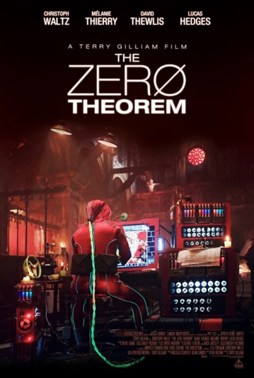 Before continuing my Fantasia diary with a look at the movies I saw last Sunday, I want to focus in on one specific film that struck me as an utterly brilliant piece of science-fiction satire. I think it divided the audience; I’ve heard and seen reactions from people who were left cold by it as well as from people who loved it as much as I did. Perhaps that’s not surprising. The movie is The Zero Theorem, directed by Terry Gilliam from a script by Pat Rushin, and it is as idiosyncratic and persistently individual as you’d expect from Gilliam.


 To my mind, if you’re a critic of any integrity, sooner or later the criticism you write will lead you to challenge your views of yourself as well as your views of the art you experience. That’s the nature of much truly effective art: it makes you look at yourself and think about yourself in new ways. If you’re trying to articulate your reaction and assessment of such a work, honesty will compel some self-examination as well. Powerful art requires an acknowledgement of one’s subjective response.