A Year of Writing Franchise Fiction
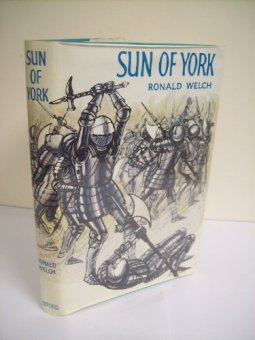
“Would you like to be paid to write Historical Adventure set in the Wars of the Roses?”
“Well I really wanted to write a literary novel set in the Wiemar Republic about Great War veterans coming to terms with their fractured lives, but: Yes.”
That’s roughly the Skype conversation I had a year ago, except I just made up the bit about the literary novel.
This was a chance to follow in the footsteps of my heroes Ronald Welch and Harold Lamb. It was difficult to say yes without sounding unprofessional (by swearing and whooping, e.g.).
I’m supposed to say something like: This ushered in a crazy year etc etc.
It wasn’t like that.
You just can’t write fiction day in day out if your life is Hollywood-crazy, perhaps with a Manic Pixie Dreamgirl jogging your arm. Almost all the professional writers I know have tranquil home lives and sane routines balancing work and social life.
Nor can you actually have much output if you lead a cinematic creative life, staggering to your keyboard after a booze-fueled night of carousing, then spending long hours angsting about your imagery.

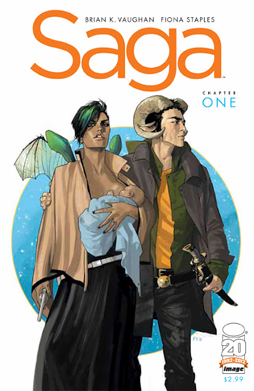 A few months ago, the 2013 Hugo Award for Best Graphic Story was given to Saga, Volume 1, the first trade paperback collection of the ongoing Saga comic book. Written by Brian K. Vaughan, with art by Fiona Staples (and lettering and design by the Fonografiks studio), the book deserved the win. It’s the first chapter in a promising story and manages to establish a simple and powerful basic situation for the main characters, while also creating a complex world, backstory, and array of subplots. If it sometimes seems overbroad, too accessible and glib, it also has a deep and original sense of history to its setting, and a design sense that makes that setting live.