Future Treasures: The Best Science Fiction and Fantasy of the Year Volume 8, edited by Jonathan Strahan
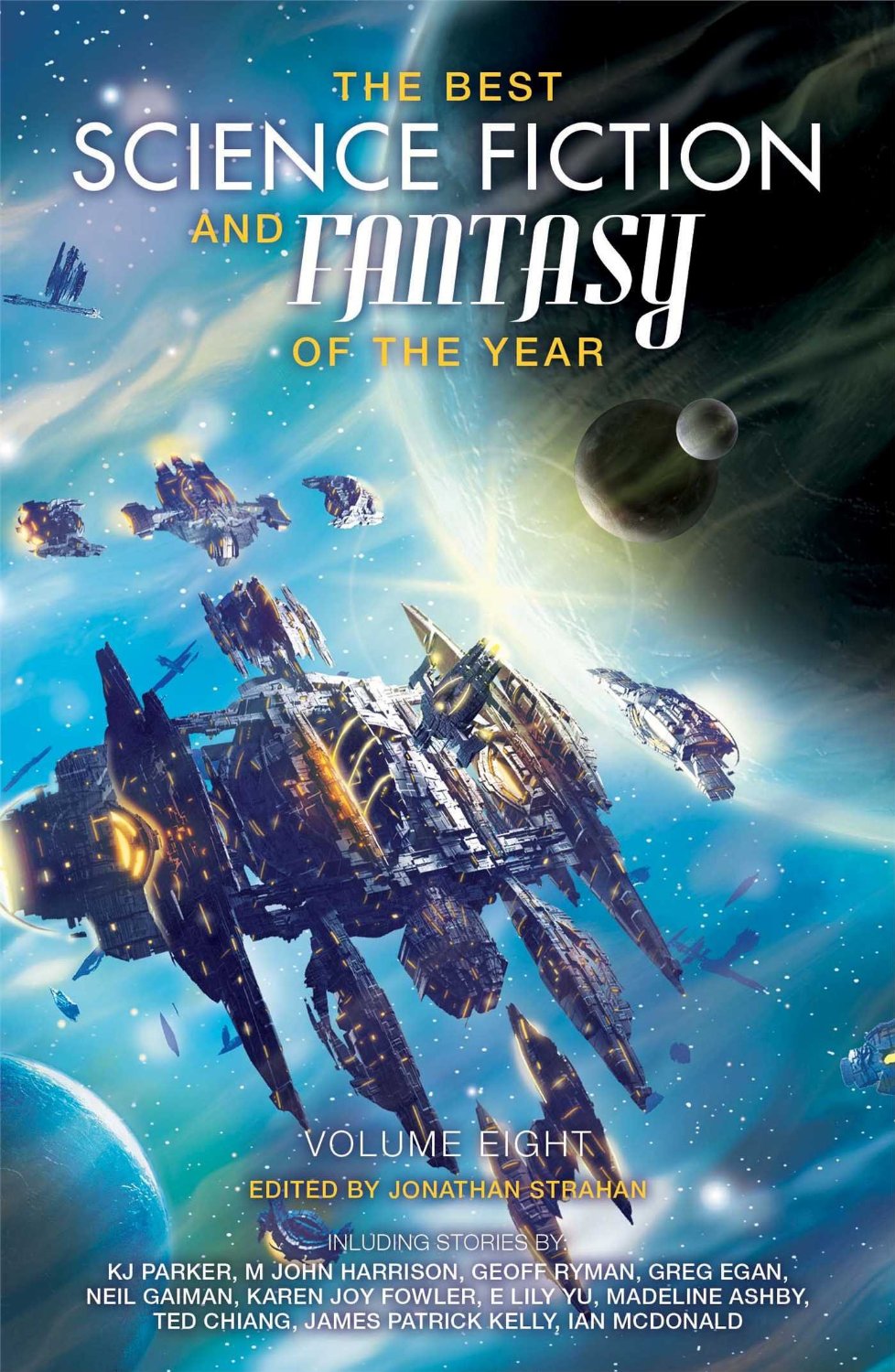 When we covered The Best Science Fiction and Fantasy of the Year Volume 7 (back in May, if memory serves), publisher Night Shade was having serious issues and I mentioned, “Likely this will be the last one, at least in this format.” Which I considered a real tragedy, as editor Strahan has proven to have a real talent for picking out gems from the crowded and constantly changing genre short fiction market.
Fortunately, ace publisher Solaris has stepped into the void and rescued the series and Volume 8 will appear this year on schedule. They’ve changed the distinctive cover style and format — a shame, since the first seven volumes look impressive on my shelves — but hopefully they won’t mess with too much else.
Strahan has unveiled the table of contents at his website and it looks like another very impressive volume. As usual, he culls fiction from a wide range of industry markets, including traditional print mags — F&SF, Interzone, McSweeney’s, Asimov’s, Electric Velocipede, and even Twelve Tomorrows, the special SF issues of the MIT Technology Review — and top-tier online markets like Clarkesworld, Lightspeed, Beneath Ceaseless Skies, Eclipse Online, Subterranean, Tor.com, and Strange Horizons.
He also draws stories from the biggest anthologies of the year, like Old Mars, Dangerous Women, Rags and Bones, Once Upon a Time: New Fairy Tales, and An Aura of Familiarity.
Authors in this volume include Ian McDonald, Robert Reed, Eleanor Arnason, Ian R Macleod, Charlie Jane Anders, James Patrick Kelly, K J Parker, Lavie Tidhar, Richard Parks, Ted Chiang, M. John Harrison, Neil Gaiman, Geoff Ryman, Greg Egan — and, as always, a few new talents whose names you may not yet recognize, but whom you may want to keep an eye on.
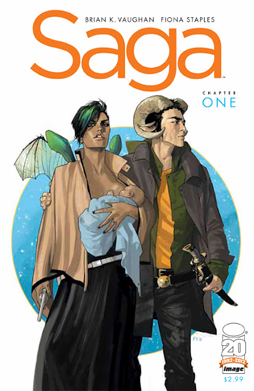 A few months ago, the 2013 Hugo Award for Best Graphic Story was given to Saga, Volume 1, the first trade paperback collection of the ongoing Saga comic book. Written by Brian K. Vaughan, with art by Fiona Staples (and lettering and design by the Fonografiks studio), the book deserved the win. It’s the first chapter in a promising story and manages to establish a simple and powerful basic situation for the main characters, while also creating a complex world, backstory, and array of subplots. If it sometimes seems overbroad, too accessible and glib, it also has a deep and original sense of history to its setting, and a design sense that makes that setting live.