Browsed by
Category: Vintage Treasures

Ancient Planets and Treachery at Every Turn: Rich Horton on The Ginger Star by Leigh Brackett

Ancient Planets and Treachery at Every Turn: Rich Horton on The Ginger Star by Leigh Brackett

The Ginger Star Steranko-small The Ginger Star Boris Vallejo-small The Ginger Star Planet Stories-small

Over at his personal blog Strange at Ecbatan, Rich Horton reviews one of the great classics of science fantasy, Leigh Brackett’s The Ginger Star, the opening novel in the three-volume Book of Skaith.

I adore the great Brackett stories of the late ’40s and early ‘50s, particularly The Sword of Rhiannon, one of the great pure planetary romances; and other stories in the same loosely developed future (though The Sword of Rhiannon is really set in the past): “The Halfling,” “The Dancing Girl of Ganymede,” “Mars Minus Bisha,” “Shannach – the Last,” for example. Other SF was also very fine, most notably The Long Tomorrow, a post-Apocalyptic novel; but also The Big Jump and The Starmen of Llyrdis. Her slightly later story from Venture, “The Queer Ones” (aka “The Other People”) is excellent, and not terribly well known. The Eric John Stark stories fit into her Mars/Venus/etc. future – and they are quite enjoyable as well. Stark is portrayed as a nearly savage man, raised as an orphan on Mercury, and rampaging through Venus and Mars in the most prominent pieces.

The Skaith novels feature Stark as the protagonist, but they are set on a planet in another Solar System, Skaith. I had assumed that she set them there because the Mars and Venus of the earlier stories was no longer astronomically plausible, and perhaps that is the case, but it should be noted that in these books she does still portray Stark as a native of Mercury – also a highly implausible thing.

Read More Read More

The Iron Dragon’s Daughter: A Wholly Biased Review

The Iron Dragon’s Daughter: A Wholly Biased Review

The-Iron-Dragons-Daughter-smallAh, The Iron Dragon’s Daughter. John O’Neill asked me for a review a few weeks ago, and I thought, “Really? You want me to be objective when she and I are so very much in love?”

Because it is love, you know? And it burns hot enough to turn all negative comments to ash.

I’ve driven friends away with this obsession. “What do you see in The Iron Dragon’s Daughter?” they ask. “She’s so incoherent. She has practically no… no character.”

Yes, all right, all right. We’re talking about a book here. I knew that. Ink and paper, rather than flesh and bone. Born — apologies! — published in 1993. To some, like myself, it became a classic, but others greeted it with bewilderment and it has collected a slew (31%) of apathetic reviews on sites like Amazon.

The book has flaws, you see? It takes the type of liberties that would have most sane reviewers flinging stars away like wasps found on a beloved child.

“Where’s the plot?” they cry.

“Why is the main character so bland?”

Both of these accusations ring true. Michael Swanwick’s story does have an arc that flows from the first page to the last, but rather than a rushing torrent, what we have here meanders across an exotic plain of wonders, leaving half-finished tales behind like so many oxbow lakes.

Read More Read More

Once More Into the Primal Land: Tarra Khash: Hrossak! by Brian Lumley

Once More Into the Primal Land: Tarra Khash: Hrossak! by Brian Lumley

oie_331744OeH2c07SWith Tarra Khash: Hrossak!, the British horror luminary Brian Lumley returns with six more stories of derring-do and magical skullduggery set in his primeval land, Theem’hdra. (Two years ago, I reviewed The House of Cthulhu, his first collection of swords & sorcery stories, here at Black Gate.) For those not familiar with the great island-continent, it’s another prehistoric land shoehorned into the Lovecraft Mythos timeline that includes Mu, Lemuria, Hyboria, Hyperborea, and several other forgotten places. It’s the sort of place endemic to tales of swords & sorcery, replete with strong-muscled heroes, conniving merchants, demon-haunted tombs, backstabbing villains, and dastardly wizards with faces hidden in deep cowls (all of which are found in this book).

Any moderately-read consumer of S&S will have experienced these elements, if not to the point of boredom, at least a whole bunch. To get away with the use of such hoary elements, an author must use them without a bit of irony, and with brio. Lumley does exactly that.

Lumley told Robert M. Price that his inspiration for The House of Cthulhu was the work of Clark Ashton Smith and Lord Dunsany, and it’s a claim only bolstered by the tales in this collection. While his prose is never as ornate or bejewelled as his models, there is a similar love for exotic, haunted landscapes draped in mystery and populated by ancient deities and uncanny magic.

Read More Read More

Blogging The Insidious Dr. Fu-Manchu by Sax Rohmer, Part Six – “The Call of Siva”

Blogging The Insidious Dr. Fu-Manchu by Sax Rohmer, Part Six – “The Call of Siva”

NOTE: The following article was first published on May 2, 2010. Thank you to John O’Neill for agreeing to reprint these early articles, so they are archived at Black Gate which has been my home for over 5 years and 260 articles now. Thank you to Deuce Richardson without whom I never would have found my way. Minor editorial changes have been made in some cases to the original text.
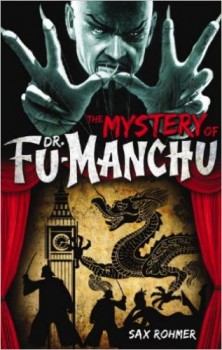
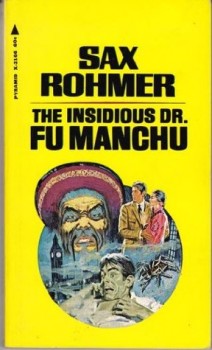
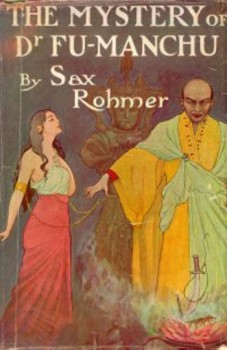
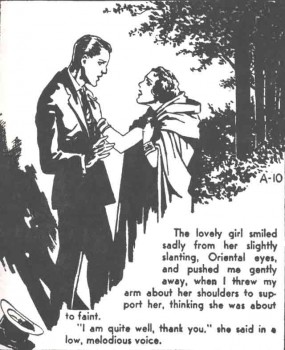
ColliersSivainsidious6“The Call of Siva” was the fifth installment of Sax Rohmer’s serial, Fu-Manchu first published in The Story-Teller in February 1913. The story would later comprise Chapters 13-15 of the novel, The Mystery of Dr. Fu-Manchu (initially re-titled The Insidious Dr. Fu-Manchu for its U.S. publication). Rohmer had built several of his Fu-Manchu stories on protracted paranoia and had previously made good use of a Limehouse opium den as a setting, but “The Call of Siva” sees him letting his plotline be dictated by the altered state of the waking dreamer for the first time and to great effect.

The story opens with our narrator, Dr. Petrie relating a strange dream which begins with him writhing on the floor in agony. Rohmer makes good use of Stygian darkness, Oriental tapestries, and Mohammedan paradise as suggestive imagery that Petrie’s queer dream, at once both mystifying and terrifying, is uniquely Eastern in origin. This point is confirmed as Petrie awakens with Nayland Smith as his cell mate. Only at this point does Rohmer resume something approaching a conventional narrative with Petrie’s murky recollection of he and Smith rushing to warn Graham Guthrie that he has been marked for assassination when they are abducted by unseen assailants from a passing limousine.

Read More Read More

GreyDogTales on Equation Thrillers

GreyDogTales on Equation Thrillers

Stories in the Dark-small Dracula's Brood-small Bone to His Bone-small

Yesterday my friend Neil Baker, publisher at April Moon Books, introduced me to blogger John Linwood Grant, who blogs at GreyDogTales. I wandered over to his corner of the internet, and was delighted to find a fascinating discussion of the Equation Chillers, a line of British horror anthologies I’d never heard of.

Right, let’s go back a few years. Nearly three decades, in fact. One of our finds of the late eighties was the short-lived Equation Chillers series. Sadly, only eight books were ever produced directly under the imprint. We have battered copies of all of them which we bought at the time, thank goodness.

They were, in a way, the precursor of the Wordsworth Editions, where lost, rare or unusual stories of the supernatural suddenly became available at an affordable price. Equation revived a whole haunted house full of Victorian and Edwardian short stories, and it’s worth noting all eight volumes here, with the occasional comment from us.

Anything in the spirit of the delightful Wordsworth Editions Tales of Mystery and the Supernatural (or, as we prefer to call them, TOMAToS) has my immediate attention. Check out John’s full article — with plenty of marvelous cover scans — here. And it looks like I’ll be spending some quality time at his website.

Vintage Treasures: The Elsewhere Anthologies, edited by Terri Windling and Mark Alan Arnold

Vintage Treasures: The Elsewhere Anthologies, edited by Terri Windling and Mark Alan Arnold

Elsewhere Volume 1-small Elsewhere Volume 2-small Elsewhere Volume 3-small

Terri Windling is a superstar in the field of fantasy. She’s been awarded the World Fantasy Award nine times, and she’s also won the Mythopoeic Fantasy Award, the Bram Stoker Award, and the 2010 SFWA Solstice Award. As an editor at Ace she discovered and promoted first novels by Charles de Lint, Emma Bull, and many other important authors; with Ellen Datlow she co-edited 16 volumes of the seminal Year’s Best Fantasy and Horror from 1986–2003. She’s also an author in her own right, with several highly regarded works to her credit, including the Mythopoeic Award-winning novel The Wood Wife, and a number of children’s books, such as The Raven Queen and The Winter Child.

But believe it or not, she got her start in this industry as an artist. I didn’t discover that until I interviewed Ellen Kushner for my Tale of Two Covers article on her Basilisk anthology earlier this month. Here’s Ellen:

It’s an anthology I’m still really proud of. It’s also how I met Terri Windling, who did the interior illustrations (which much more accurately represent the aesthetic of the stories). She’d just come to town, and was showing her art portfolio around. Jim [Baen] thought I’d like her work, and that he wouldn’t have to pay her much… Terri, of course, essentially took over my job as fantasy expert for Jim a few months after I left Ace.

Ellen reached out to Terri as we were fact checking the article, and in the process Terri gave me the fascinating back story on how she began her career as one of the most respected and admired editors in the field with the Elsewhere series of anthologies, the first of which won the World Fantasy Award. Here’s what she said.

Read More Read More

Blogging Sax Rohmer’s The Insidious Doctor Fu-Manchu, Part Five – “The Green Mist”

Blogging Sax Rohmer’s The Insidious Doctor Fu-Manchu, Part Five – “The Green Mist”

NOTE: The following article was first published on April 25, 2010. Thank you to John O’Neill for agreeing to reprint these early articles, so they are archived at Black Gate which has been my home for over 5 years and 260 articles now. Thank you to Deuce Richardson without whom I never would have found my way. Minor editorial changes have been made in some cases to the original text.

CollMistinsidious5“The Green Mist” was the fourth installment of Sax Rohmer’s serial, Fu-Manchu first published in The Story-Teller in January 1913. The story would later comprise Chapters 10-12 of the novel, The Mystery of Dr. Fu-Manchu [initially re-titled The Insidious Dr. Fu-Manchu for U.S. publication]. When Rohmer incorporated the story into the novel, he added linking material intended to make the book appear timely and relevant. However, the true-life Yellow Peril news items that Rohmer has Petrie recount from actual British papers of the day strike a discordant note nearly a century on.

Freed from the exotic trappings of weird fiction, the straight journalism of the era seems dated, naïve, and offensive to modern sensibilities. This phenomenon is hardly unique to Sax Rohmer’s fiction and may also be experienced in the unenlightened views on display in the earliest of Herge’s Adventures of Tintin. Making matters worse is the current vogue for political correctness that believes in burying the past rather than learning from it. The combination of these factors stands as the most challenging obstacle facing mainstream publishers in the 21st Century marketplace.

Read More Read More

Vintage Treasures: Sorcerer’s Son by Phyllis Eisenstein

Vintage Treasures: Sorcerer’s Son by Phyllis Eisenstein

Sorcerer's Son Phyllis Eisenstein-small Sorcerer's Son Phyllis Eisenstein-back-small

I ran into my friend Phyllis Eisenstein at the Windy City Pulp & Paper Show here in Chicago over the weekend, and the first thing she said to me was, “I’m retired!”

This is exciting news. Phyllis has been nurturing several writing projects for the past few years, and I’ve been impatiently waiting for them — and it’s great to hear that she’ll finally have more time to devote to them. Though I forgot to ask if it means we’ll finally get the long-promised third volume in her Book of Elementals fantasy series, which began with Sorcerer’s Son in 1979, and continued with The Crystal Palace (1988). The third volume, The City in Stone, was actually completed a decade ago, but was left without a publisher after the sudden collapse of Meisha Merlin in 2007. The first two volumes are now long out of print.

Phyllis’ other novels include Shadow of Earth (1979), In the Hands of Glory (1981), and the Tales of Alaric the Minstrel (two novels, Born to Exile (1978) and In the Red Lord’s Reach (1989), plus various short stories). Her work has been nominated for both the Hugo and Nebula Awards, but these days of course she’s most famous for being the person who convinced George R.R. Martin to put dragons in A Song of Ice and Fire.

Read More Read More

Blogging Sax Rohmer’s The Insidious Doctor Fu Manchu, Part Four – “Redmoat”

Blogging Sax Rohmer’s The Insidious Doctor Fu Manchu, Part Four – “Redmoat”

NOTE: The following article was first published on April 4, 2010. Thank you to John O’Neill for agreeing to reprint these early articles, so they are archived at Black Gate which has been my home for over 5 years and 260 articles now. Thank you to Deuce Richardson without whom I never would have found my way. Minor editorial changes have been made in some cases to the original text.

Romer_-_MysteryOrbanRedmoat“Redmoat” was the third installment of Sax Rohmer’s serial Fu-Manchu, first published in The Story-Teller in December 1912. The story would later comprise Chapters 7-9 of the novel, The Mystery of Dr. Fu-Manchu (initially re-titled The Insidious Dr. Fu-Manchu for U.S. publication) in 1913. “Redmoat” is significant for delving into the aftermath of the Boxer Uprising. As we discussed in Part Three, this conflict leant credence to the Yellow Peril fiction that had been steadily gaining in popularity over the preceding fifty years. More importantly for our purpose, the Boxer Uprising provided a motive for Dr. Fu-Manchu’s actions.

There are two principal supporting players to the story who are worthy of greater consideration. The first is the Reverend J. D. Eltham. Reverend Eltham had earned a name for himself during his missionary days in China as “Parson Dan.” Nayland Smith tells Dr. Petrie that Eltham “held off two hundred Boxers at a hospital in Nan-Yang with only a garrison of a dozen cripples and a German doctor for support.” The heroic clergyman’s evangelical zeal had resulted, according to Smith, in the Boxer Uprising. While ascribing the blame for that conflict on a single missionary is more than a bit implausible, it is interesting that Rohmer, an Edwardian author, took a critical view of the British Empire and recognized that intolerance to Chinese culture not only hindered the goal of religious conversion, but sparked China’s decision to drive the foreigners out of their country by whatever means necessary. It is also interesting to note that as Fu-Manchu is the personification of the Yellow Peril, so Parson Dan is the personification of colonial intolerance at its worst.

Read More Read More

The Exhumation of Myra Maynard

The Exhumation of Myra Maynard

mysteries-of-myra-book-225x320myra1Most people have never heard of The Mysteries of Myra, much less seen the surviving footage. This 1916 silent serial was produced by publishing magnate William Randolph Hearst and directed by The Wharton Brothers for The Whartons Studio in Ithaca, New York. As late as the early talkie era, New York was still a rival for Hollywood with Paramount Pictures based on the East Coast until the early 1930s. The Mysteries of Myra was intended to carry on the tradition of The Perils of Pauline and The Exploits of Elaine, it was the work of the same screenwriter of those two lucrative serials, Charles Goddard, but The Mysteries of Myra was very different from any serial before or since in terms of structure and content.

Charles Goddard’s 15 chapter screenplay was developed from an original story treatment by real life occult detective, Hereward Carrington. Dr. Carrington was a member of the infamous Society for Psychical Research and a colleague of Harry Houdini. While a skeptic who exposed many false claims of psychic phenomena and hauntings, Dr. Carrington was also a believer in demonic possession, the afterlife, and other preternatural occurrences. The hero of the piece, Dr. Payson Alden, occult detective is clearly based on Hereward Carrington. The Mysteries of Myra is concerned with Dr. Alden’s efforts to save heiress Myra Maynard from the occult society, The Black Order and to win her heart from her contemptible fiancé , Arthur Varney, who is the right hand man of The Grand Master of The Black Order.

Read More Read More