Browsed by
Category: New Treasures

New Treasures: Watcher of the Dark
New Treasures: Watcher of the Dark

Watcher of the Dark-smallYou’d think that, after nearly 40 years of collecting science fiction and fantasy, I’d be accustomed to looking past the cover while on the hunt of promising new books.

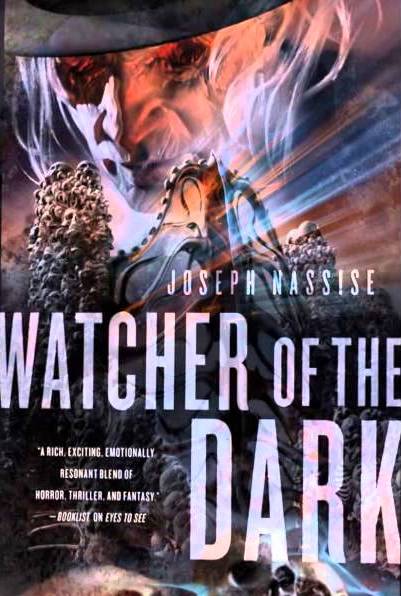
Naaah. Good covers are underrated, and great covers can tell you a more than a simple plot summary. And Watcher of the Dark has a very intriguing cover indeed, featuring a fabulously detailed Lovecraftian horror dominating a bone-strewn alien landscape, while a sinister blind man looms over the whole affair, plotting his evil… wait a minute.

Is that blind guy the hero, exorcist Jeremiah Hunt? My. He’s definitely got a certain style (click the image at right for a bigger version.) This is even more intriguing than I thought.

New Orleans was nearly the death of Jeremiah Hunt, between a too-close brush with the FBI and a chilling, soul-searing journey through the realm of the dead that culminated with a do-or-die confrontation with Death himself.

Hunt survived, but found no peace. When he performs an arcane ritual to reclaim the soul of the magically gifted, beautiful women who once saved him, he must flee the law once again, to the temporary sanctuary of Los Angeles, city of angels.

In L.A., Hunt must contend with Carlos Fuentes, who sees in the blind exorcist a means to obtain the mystical key that opens the gates of Hell. Fuentes knows Hunt’s weakness is his loyalty – to the woman he loves and to another supernaturally gifted friend – and threatens to torture them in order to get Hunt help complete his dreadful quest.
Read More Read More

New Treasures: In Space No One Can Hear You Scream, edited by Hank Davis

New Treasures: In Space No One Can Hear You Scream, edited by Hank Davis

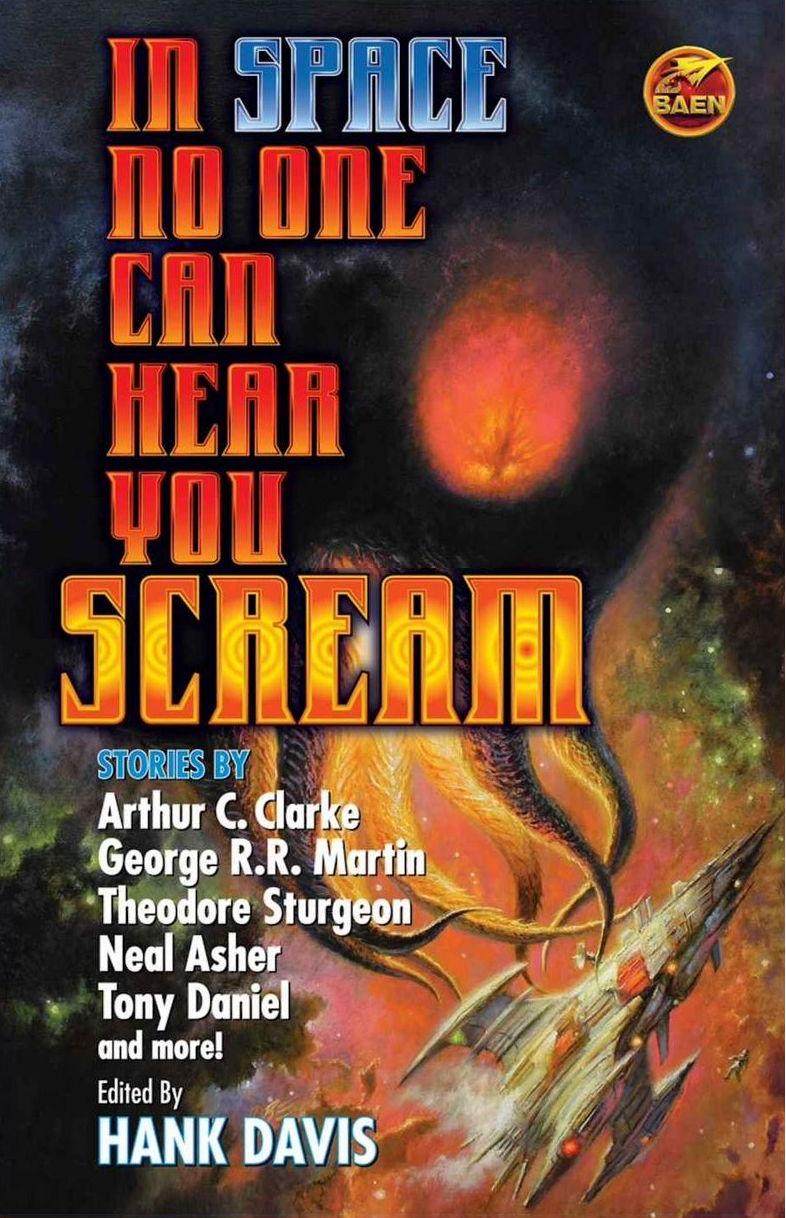
In Space No One Can Hear You Scream-smallIn 2013, no one remembers that “In Space No One Can Hear You Scream” was the tag line of a 1979 horror movie.

Well, after 34 years, I guess it’s okay to recycle a decent tag line, even for a film as popular as Alien. Especially when the end product is as intriguing as this Halloween-themed science fiction anthology. The moment I saw it I thought, “I wonder if it has the really great horror SF, like Arthur C. Clarke’s “A Walk in the Dark,” and George R.R. Martin’s “Sandkings?” It has both, in fact, alongside 11 short stories and novelettes from Theodore Sturgeon, Elizabeth Bear and Sarah Monette, and others — plus a long novella from James H. Schmitz.

THE UNIVERSE MAY NOT BE A NICE NEIGHBORHOOD…

“The oldest and strongest kind of fear is fear of the unknown,” the grand master of horror, H.P. Lovecraft, once wrote. And the greatest unknown is the vast universe, shrouded in eternal cosmic night. What things might be on other planets — or in the dark gulfs between the stars?

Giving very unsettling answers to that question are such writers as Arthur C. Clarke, Robert Sheckley, James. H. Schmitz, Clark Ashton Smith, Neal Asher, Sarah A. Hoyt, Tony Daniel and more, all equally masters of science fiction and of terror.

One might hope that in the void beyond the earth will be found friendly aliens, benevolent and possibly wiser than humanity, but don’t be surprised if other worlds have unpleasant surprises in store for future visitors. And in vacuum, no one will be able to hear your screams — as if it would do any good if they could…

Here’s the complete table of contents.

Read More Read More

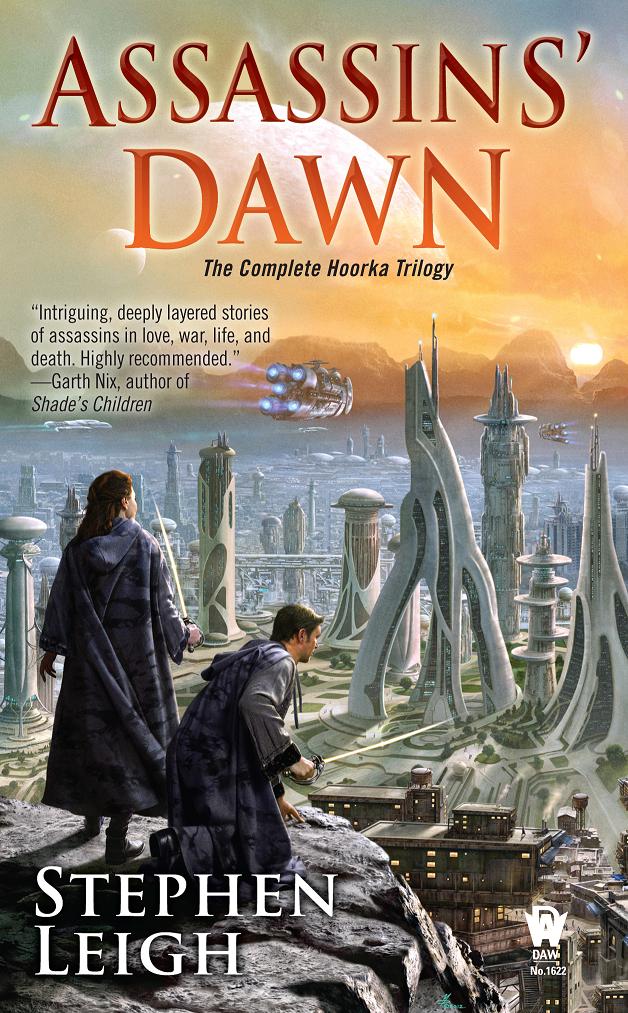
New Treasures: Assassin’s Dawn: The Complete Hoorka Trilogy, by Stephen Leigh

New Treasures: Assassin’s Dawn: The Complete Hoorka Trilogy, by Stephen Leigh

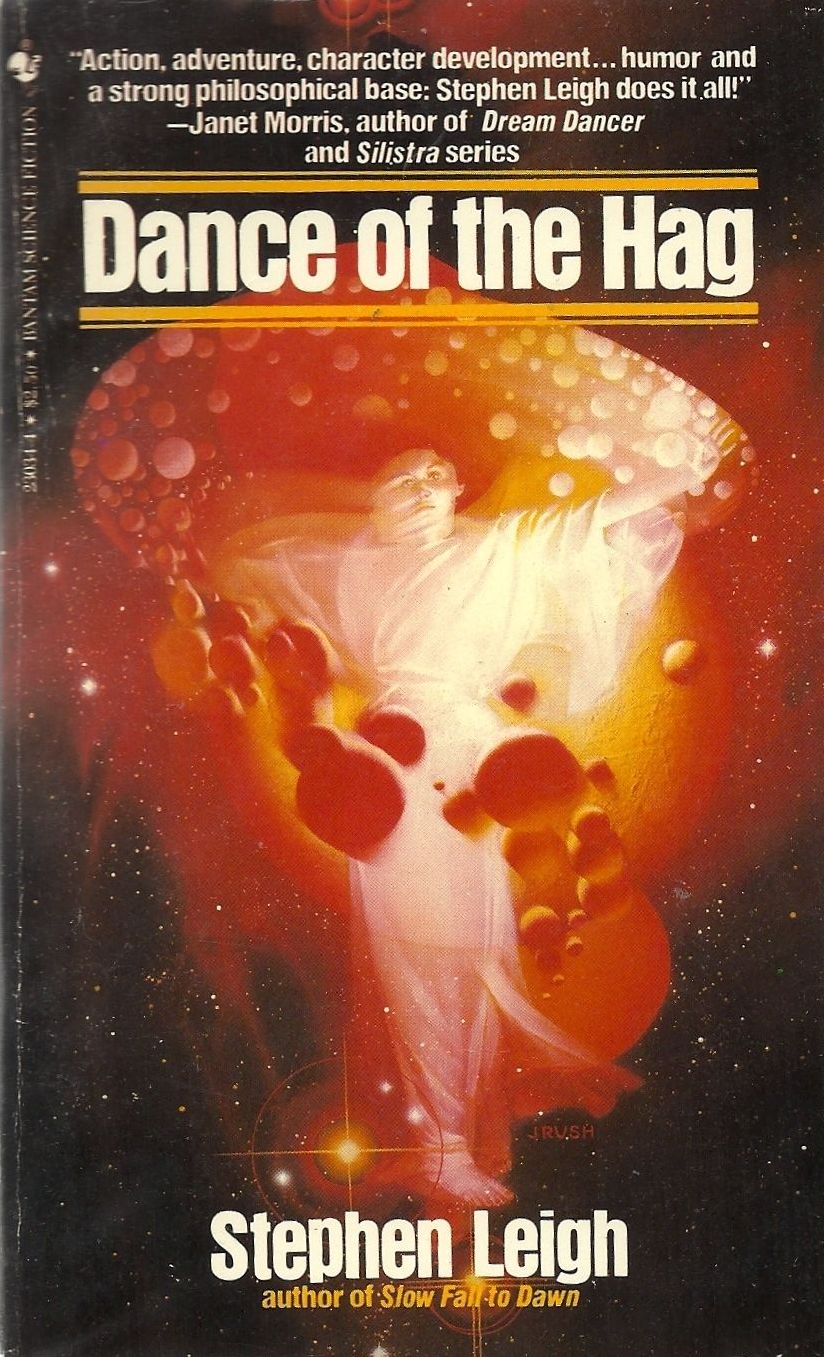
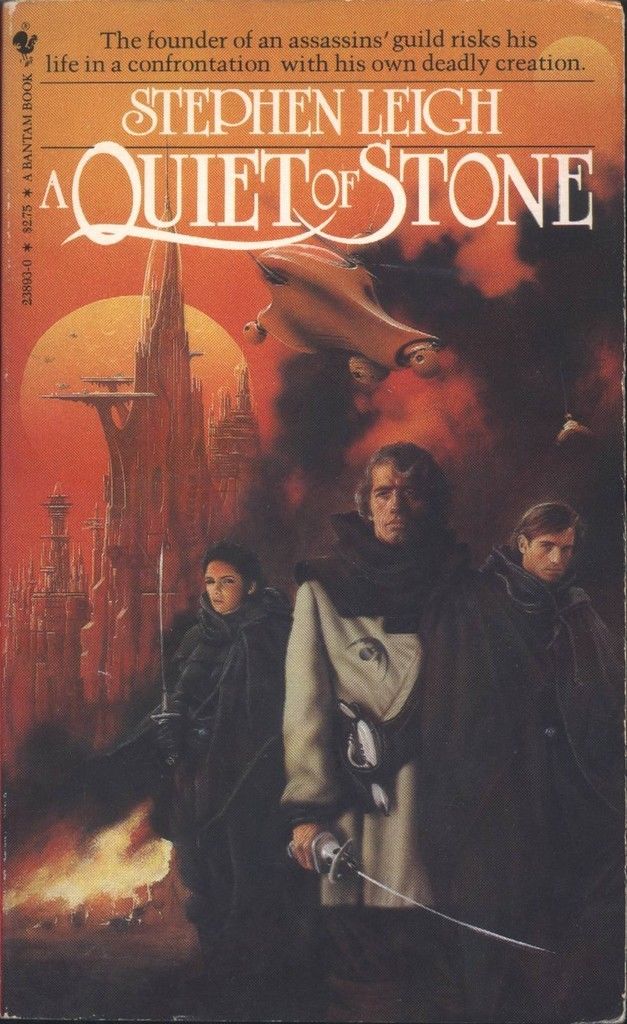
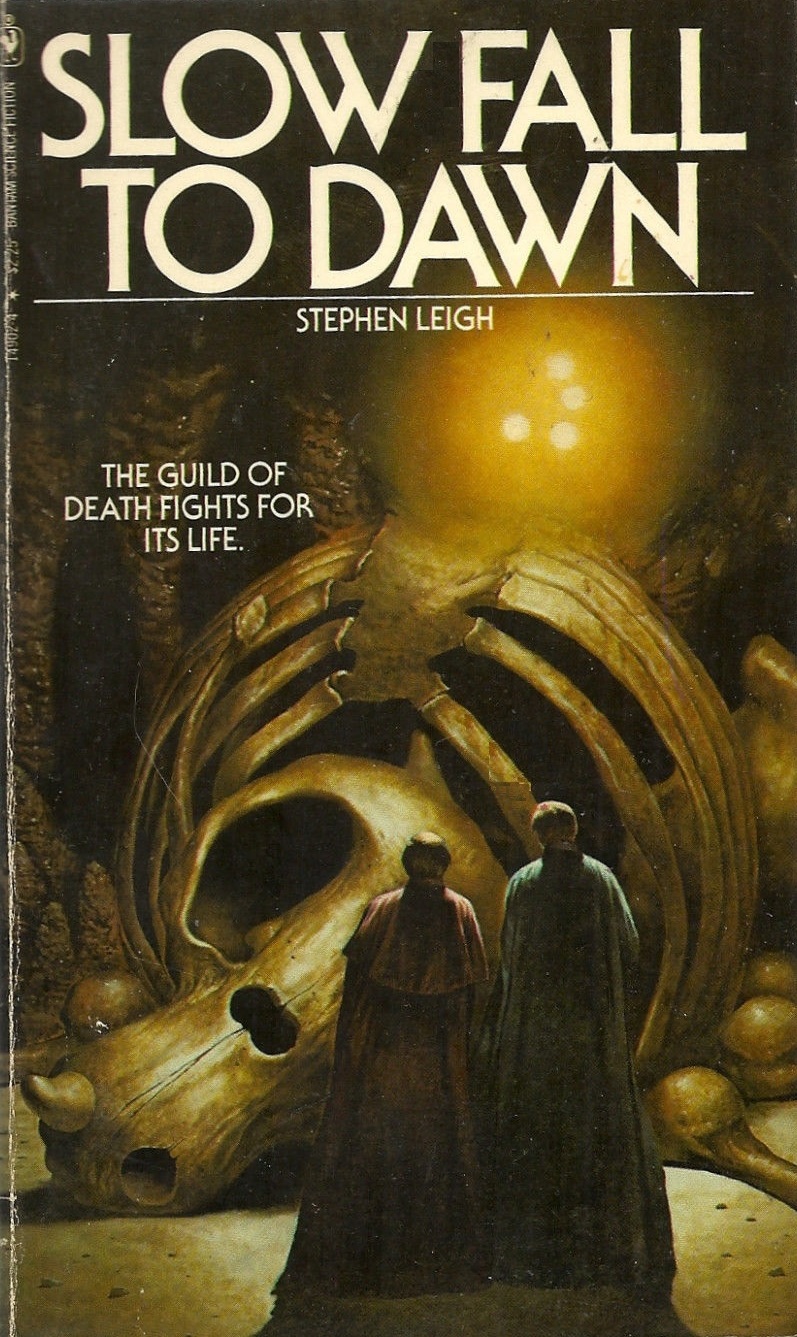
Slow Fall to Dawn-small Dance of the Hag-small A Quiet of Stone-small Untitled-3

[Click on any of the images above for bigger versions.]

Paperback publishing has come a long way since the early 80s. Improved binding and glues have made producing thicker books much more economical. Or something, I dunno. But we’re definitely living in the golden age of the omnibus, when publishers are cramming shelves with big, fat paperbacks collecting forgotten fantasy and SF series from prior decades, all for about the same price as every other dopey paperback.

Is that a great deal, or what?  I certainly thought so on Saturday, when I found a handsome volume collecting all three novels in Stephen Leigh’s long out-of-print science fantasy Hoorka Trilogy on the shelves at Barnes & Noble. Assassin’s Dawn includes Slow Fall to Dawn (1981), Dance of the Hag (1983), and A Quiet of Stone (1984). The Hoorka are a guild of assassins with a strict code: any victim that can survive until dawn may go free, unmolested. But the consequences of this law can be harsh, especially when the client has no such scruples, as their leader Gyll discovers as he tries to take his guild offworld, into the newly thriving Alliance, a star-spanning organization attempting to put together the pieces of a once-great empire.

Stephen Leigh is also the author of The Crystal Memory, Dark Water’s Embrace, Dinosaur Planet, Speaking Stones, The Bones of God, and The Abraxas Marvel Circus. His publisher DAW has been something of a pioneer in the fantasy omnibus biz, with a nice assortment from Terry A. Adams, Tanya Huff, Marion Zimmer Bradley, C. J Cherryh, Jennifer Roberson, S. Andrew Swann, Peter Morwood, and many others.

Assassin’s Dawn was published May 2013 by DAW. It is 610 fat pages, priced at $8.99 for both the paperback and digital versions.

New Treasures: The City of Dreaming Books by Walter Moers

New Treasures: The City of Dreaming Books by Walter Moers

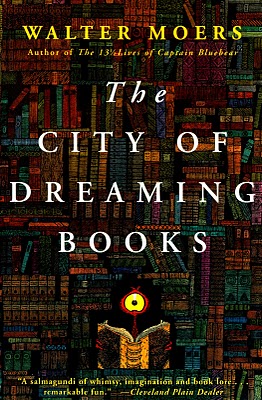
The City of Dreaming BooksWalter Moers got my attention with his first novel in English, The 13½ Lives of Captain Bluebear, which relates adventures of human-sized bear with blue fur on the fictional continent of Zamonia.

Okay, I know how that sounds. But Moers, who’s also a cartoonist and painter, brings cartoon sensibilities to the page with consummate skill, and his whimsical tales of Zamonia have captured hearts and minds around the world. The 13½ Lives was followed by Rumo, A Wild Ride Through the Night, and The Sorcerer’s Apprentice.

The City of Dreaming Books sounds like his most intriguing title yet, featuring a city-sized library filled with secrets, haunted by the mysterious Shadow King…

Optimus Yarnspinner has inherited from his godfather an unpublished manuscript by an unknown writer. He sets off to track down the mysterious author, who disappeared into Bookholm — the so-called “City of Dreaming Books.” Yarnspinner falls under the spell of this book-obsessed metropolis, where an avid reader and budding author can find any number of charming attractions — priceless signed first editions, salivating literary agents, and for-hire critics. But as Yarnspinner pursues the trail of the missing author, the darker side of Bookholm begins to unveil itself — cold-blooded book hunters, fearsome cyclopean booklings, sharp-toothed animotomes, and of course, the Shadow King, whose howls rise from deep beneath the city at night. Will Yarnspinner survive his quest into this world where reading is a genuine adventure?

Like most of his books, this one features a cover by Moers, and numerous black & white illusrations throughout. Moers’ art is as charming as it is unique, equal parts Virgil Finlay and Dr. Seuss.

I found the brand new sequel, The Labyrinth of Dreaming Book, in the Dealer’s room at Windycon last week for the first time. That means it’s time for me to stop dithering and finally read this one.

The City of Dreaming Books was published by Overlook Press in 2008. It is 462 pages, priced at $17.95 in trade paperback at $11.99 for the digital edition. It was translated from the German by John Brownjohn.

New Treasures: The Tilting House by Tom Llewellyn

New Treasures: The Tilting House by Tom Llewellyn

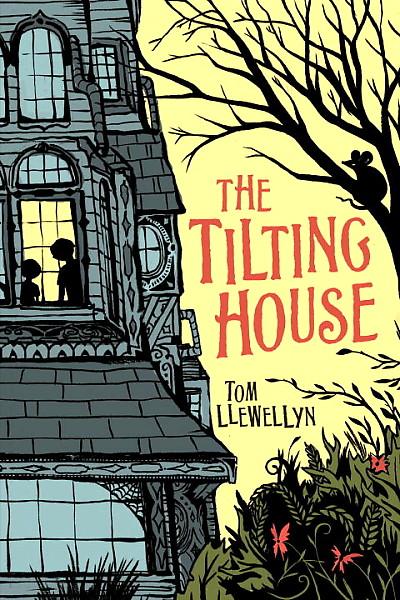
The Tilting House-smallI love kid’s books. It was kid’s books like Alfred Hitchcock and the Three Investigators and The Case of the Marble Monster that first taught me to love reading, and I’ve never really lost my appreciation for straight-up adventure tales, or a good spooky mystery.

So I still buy them from time to time. And overall, the same story elements appeal to me today that did in 1974, when I was 10 years old:  treasure maps, strange inventions, haunted houses, and rats with hidden agendas. All the building blocks of drama, really.

Which explains why Tom Llewellyn’s The Tilting House appealed to me the moment I laid eyes on it, and left me unable to put it down until I had purchased it:

Talking rats. Growth potions. Buried treasure.

Brothers Josh and Aaron Peshik are about to discover that their new home with the tilting floors hides many mysteries. When the boys and their neighbor Lola discover the hidden diary of F.T. Tilton, the brilliant but deranged inventor who built the house, they learn a dark secret that may mean disaster for the Peshik family. Can the kids solve the riddles of the tilting house before time runs out?

Mad science, mischief, and mishaps combine in the suspenseful and imaginative tale of The Tilting House.

The Tilting House was Tom Llewellyn’s first novel; he followed it with A Matter of Life and Seth: Life is a battle. High School is Murder in 2013.

The Tilting House was published by Trigygle Press, a division of Random House, in April 2011. It is 152 pages, priced at $15.99 in hardcover and $10.99 for the digital edition. It is illustrated by Sarah Watts, who also did the colorful cover.

Deepest, Darkest Eden edited by Cody Goodfellow

Deepest, Darkest Eden edited by Cody Goodfellow

oie_11233710dfgxIM2cClark Ashton Smith, one third of the Weird Tales triumvirate along with H. P. Lovecraft and Robert E. Howard, has been a favorite of mine ever since I bought a copy of the Lin Carter-edited collection Hyperborea. I was thirteen or fourteen and Smith’s archly told stories of the titular prehistoric land and its impending doom before an encroaching wall of ice, stunned me. I was long familiar with Lovecraft’s purple prose, yet nothing had really prepared me for Smith’s cynical, lush, and utterly weird writing. The stories were stunning and I was a fan.
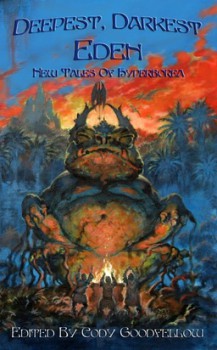
I was pretty excited when John R. Fultz announced that he had a story in soon-to-be-published Deepest, Darkest Eden,  a collection of new stories edited by Cody Goodfellow and set in Smith’s Hyperborea. As soon as I finished reading Fultz’ post (and letting my brain drink in the gloriously pulpy cover by Mark E. Rogers) I headed over to publisher Miskatonic River Press’ site and ordered my copy. I couldn’t wait to get the return to Clark Ashton Smith’s decadent, dying land into my hands.

For me, stories set in someone else’s created world, or using their characters, need to center on what makes the original special. They don’t need to replicate it exactly, and with Clark Ashton Smith’s idiosyncratic prose it would be a mistake to try, but they should aim for similar artistic goals. Ryan Harvey, in his long article about Smith’s Hyperborean Cycle, concluded that it’s an “unusual medley of elements, with Lovecraftian themes rubbing against satiric jabs, elevated mocking language, black jokes, and a sense of a slow, chilly annihilation that cannot be escaped”. That gives any author setting out to play in Smith’s imaginary Hyperborea a wide array of ideas to pursue.

Many of the stories in Deepest, Darkest, Eden — and there are eighteen plus two poems — are very successful at meeting my test for success. Several of the authors have clearly subsumed the alternately funny and despairing world view of Smith and mixed it with their own talents to create worthwhile additions to the Hyperborean Cycle.

Read More Read More

Neoclassical Adventure

Neoclassical Adventure

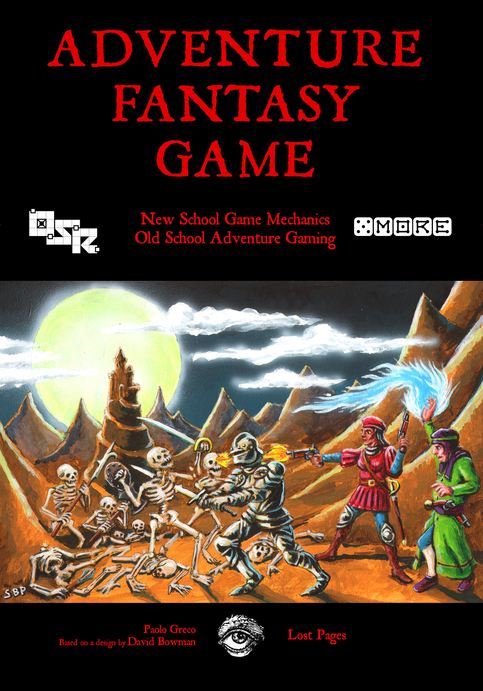
afgIf you’ve been following the online discussion of tabletop roleplaying games (especially fantasy roleplaying games) over the last few years, odds are good you’ve heard of the “Old School Renaissance.” For that matter, if you’ve been following the RPG coverage here at Black Gate, you’ve probably already noticed this term being used in numerous blog entries before this one. As folks online are wont to do, some will quibble and kvetch about the precise meaning of the OSR (as it’s come to be known; it even has a logo!), but, at its most basic, the Old School Renaissance is a renewed appreciation for the RPGs of the 1970s and ’80s, as well as a renewed interest in playing these classic games.

Gamers being what they are (and always have been), it wasn’t long after the OSR picked up steam that people wanted to start producing new material for their favorite RPGs, a desire facilitated by the Open Gaming License and System Reference Document that Wizards of the Coast released at the same time as the Third Edition of Dungeons & Dragons in 2000. Together, they made it possible to create and sell “clones” (or “retro-clones”) of popular roleplaying games from the past, games that are in many cases are long out of print or locked away in the IP vaults of a corporation. Want to write an adventure for your beloved 1981 edition of D&DLabyrinth Lord lets you do that. Want to publish a new campaign setting for AD&D? OSRIC gives you the tools for just that. There are also clones for games like RuneQuest, Gamma World, Chill, and many more, not to mention many older games that have come back into print as a result of the renewed interest the OSR has generated in them. Whatever your favorite game of the past, odds are good that you’ll be satisfied.

There’s another category of old school RPGs, however. They’re not clones, since they aren’t modern-day restatements of older rules sets, but they do take clear inspiration from their predecessors of yore. They are, for lack of a better term, neoclassical roleplaying games.

Read More Read More

New Treasures: Magic and Loss by Nancy A. Collins

New Treasures: Magic and Loss by Nancy A. Collins

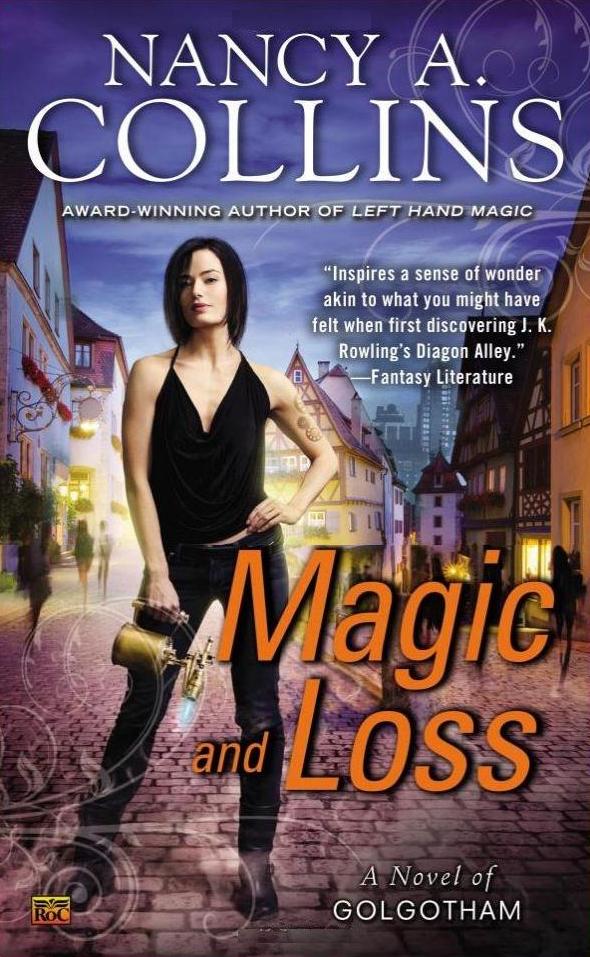
Magic and Loss-smallNancy A. Collins has had a long and distinguished career in dark fantasy. Her first novel, Sunglasses After Dark (1989), became an immediate classic of vampire fiction, and her character Sonja Blue went on to appear in two additional novels: In The Blood (1992), and Paint It Black (1995). Her three-volume Vamps series from HarperTeen began in 2008, and her brand new adult series Golgotham began in 2010 with Right Hand Magic, followed a year later by Left Hand Magic.

The third volume, Magic and Loss, arrived last week, and it continues the tale of Tate Eresby, an artist who moves to Golgotham, Manhattan’s centuries-old supernatural district. The neighborhood is populated by creatures from myth and legend, but its most prominent citizens are the Kymera, a race of witches who maintain an uneasy truce with New York’s human population.

It has been several months since Tate Eresby developed her new magical ability to bring whatever she creates to life, but she is still learning to control her power. Struggling to make a living as an artist, she and Hexe can barely make ends meet, but they are happy.

That is until Golgotham’s criminal overlord Boss Marz is released from prison, bent on revenge against the couple responsible for putting him there. Hexe’s right hand is destroyed, leaving him unable to conjure his benign magic. Attempts to repair the hand only succeed in plunging Hexe into a darkness that can’t be lifted — even by news that Tate is carrying his child.

Now, with her pregnancy seeming to progress at an astonishing rate, Tate realizes that carrying a possible heir to the Kymeran throne will attract danger from all corners, even beyond the grave…

Nancy Collins has been writing dark urban fantasy since before it existed as a sub-genre, and she still does it far better than most. Magic and Loss was published November 5th by Roc; it is 290 pages, priced at $7.99 for both paperback and digital versions.

See all of our recent New Treasures here.

New Treasures: The Illusion of Steel by Lenora Rose

New Treasures: The Illusion of Steel by Lenora Rose

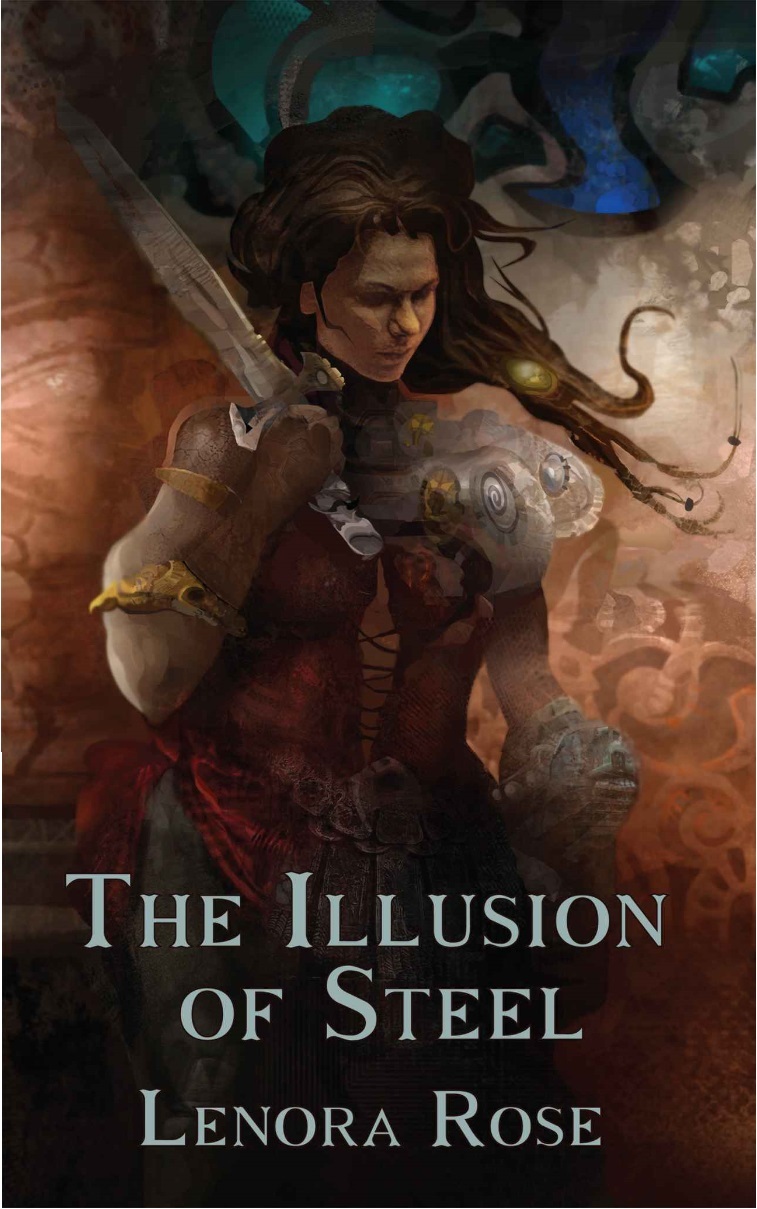
The Illusion of Steel-smallI was at Windycon 40 here in Chicago over the weekend, one of my favorite local conventions. As usual, I spent half my time in the excellent Dealers Room, wandering between Bob Garcia’s booth, the well stocked Dreamhaven Books table, and the splendid Starfarer’s Despatch booth — always packed with vintage paperbacks in terrific condition, and where I did most of my shopping.

But the big surprise this year was Raechel Henderson’s Eggplant Literary Productions. I’ve known Raechel for years, since she started the marvelous Spellbound magazine in 2001, and always admired her tenacity in the face of the dire forces of modern publishing. Raechel completed a successful Kickstarter back in July to fund a special Spellbound and Spindles issue of the magazine, and I dropped by her table to congratulate her and see what was new.

I knew she’d have a fine range of new titles, but I wasn’t prepared for the flourishing back catalog of fantasy novellas, novels, and surprises Raechel had produced in just the past few months. Eggplant is rapidly emerging as one of the most promising and productive new publishing houses in the industry, with brand new titles from Laura J. Underwood, Lori Ann White, Patricia Russo, Martin Clark, Lenora Rose, and many others. I’ll showcase several here in the next few weeks — starting with a fast-paced tale of shape-shifters, werewolves, and magic blades from new author Lenora Rose.

Not even a shape-shifter can hide from her past forever.

Abandoned by her mother as a child, never knowing her father, Kanna Mendrays understands how to hide. She has used her shapeshifting ability to mask who she is, what she is, even her gender. Now that she has come to Melidan Tower to heal, she finds her defenses crumbling.

Peace is scarce here. Biadei — the friend who saved her life and brought her to the Tower — goes mad at each full moon. The aged Lord Daemon — infamous for having killed the man who abused him — seems to know too much about her. Every room of the Tower presents Kanna with a mystery when all she wants is to be left alone.

And now she has begun to hear a voice: the spirit of Lord Daemon’s victim, whispering to her through a sword named Desecrator. When Biadei is captured by werewolves, it promises, “Give me Daemon, and I will save your friend. Give me Daemon, and you will know the truth about your family…”

The Illusion of Steel was published December 14, 2012 by Eggplant Literary Productions. It is 70 pages, priced at $4 in digital format. It is currently available from Amazon.com, Barnes & Noble, Kobo, and OmniLit. The gorgeous cover is by Alex Martínez. Read an excerpt at the Eggplant website.

New Treasures: Hooded Man by Paul Kane

New Treasures: Hooded Man by Paul Kane

Hooded Man Paul Kane-smallThere are lots of retellings of Dracula out there (just in the last two weeks William Patrick Maynard covered of Marvel’s Dracula, Lord of the Undead, James Maliszewski examined Bela Lugosi’s turn as Count Dracula in the 1931 Universal film, and John R. Fultz looked at NBC’s new series Dracula.) Same with Sherlock Holmes (see the trailer for Season Three of BBC One’s adaptation here), and the Tales of King Arthur and his noble knights (examples from the past two weeks here and here).

Hell, they recently retold Carrie and John Carpenter’s Halloween, and those stories are barely 30 years old.

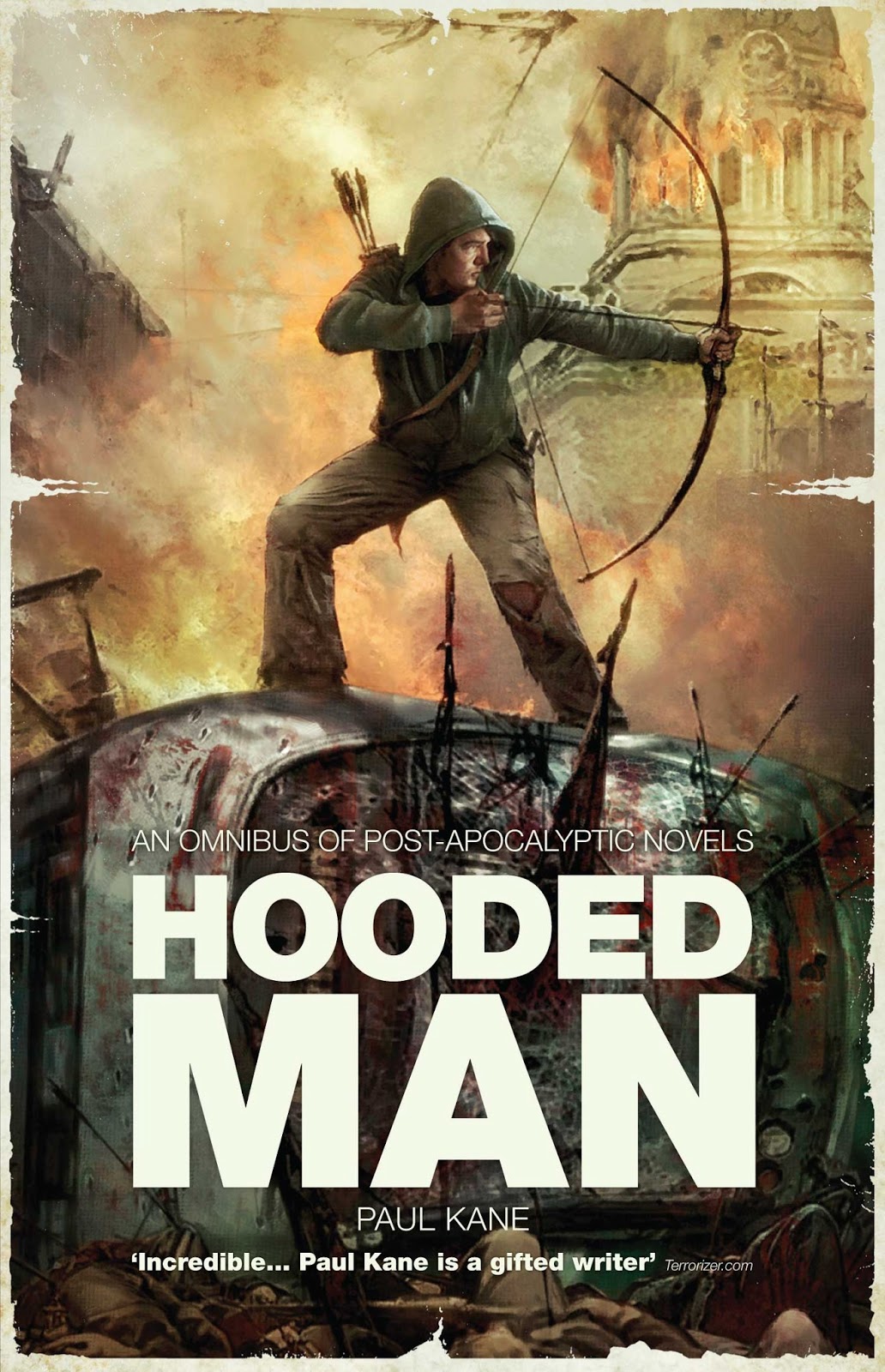
For my money, the legend that doesn’t get re-told enough is the tale of Robin Hood. I can think of only a handful of really fine versions in the last 30 years, including Parke Godwin’s novel Sherwood, Richard Carpenter TV series Robin of Sherwood, and Robin McKinley’s novel The Outlaws of Sherwood. So I was pleased to see a new omnibus collecting all three novels of Paul Kane’s post apocalyptic retelling, Hooded Man.

When nine-tenths of the world died horrifically, Robert Stokes lost everything, including his wife and his son. The world about him gradually descended into a second Dark Age, and the former policeman retreated into the woods near Nottingham, becoming a hunter, living off the land and avoiding any form of human contact… until now.

A new foreign despot, De Falaise, has looked on England and found it ripe for conquest. He leads an army of mercenaries through the Channel Tunnel and works his way up the country, pillaging as he goes. When De Falaise arrives at Nottingham and sets up his new dominion, Robert finds himself drawn reluctantly into the resistance, and assumes the mantle of the famous legend of Robin Hood, in a guerrilla war that will take him and his followers to the limits of endurance and beyond.

This volumes collects the novels Arrowhead, Broken Arrow, and Arrowland. Paul Kane’s other novels include Of Darkness and Light and The Gemini Factor. His short story collection, The Butterfly Man, was released in 2011 by PS Publishing. Although it’s standalone, Hooded Man is part of The Afterblight Chronicles series, which also includes School’s Out Forever by Scott K. Andrews and The Afterblight Chronciles: America by Simon Spurrier, Rebecca Levene and Al Ewing.

Hooded Man was published June 11, 2013 by Abaddon. It is 704 pages, priced at $12.99 in trade paperback and $9.99 for the digital version.