Browsed by
Category: Magazines

February Short Story Roundup

February Short Story Roundup

oie_13616139DhBwLErAnother month, another roundup of solid swords & sorcery short fiction for your enjoyment. Follow along for a look at February’s offerings.

Swords and Sorcery Magazine Issue 61 kicks off its sixth year of publication with a bang; actually, a pair of bangs. The first little explosion comes in the form of a group of friends making stupid decisions in Tom Lavin’s “Trouble in the Viscount Tavern.” Deon surprises his friends Tenny and Ruald with a strange book left behind by an inn guest. Though its cover advertises it as Giselder Farnbrak’s Herbs and Homely Cooking, inside are spells. Despite misgivings from Deon, the others start to read some out loud for a lark. Lavin’s description of the resulting horrors is bone-chilling.

…

Read More Read More

Fantasy & Science Fiction, Volume 132, No. 1 & 2 (January/February 2017)

Fantasy & Science Fiction, Volume 132, No. 1 & 2 (January/February 2017)

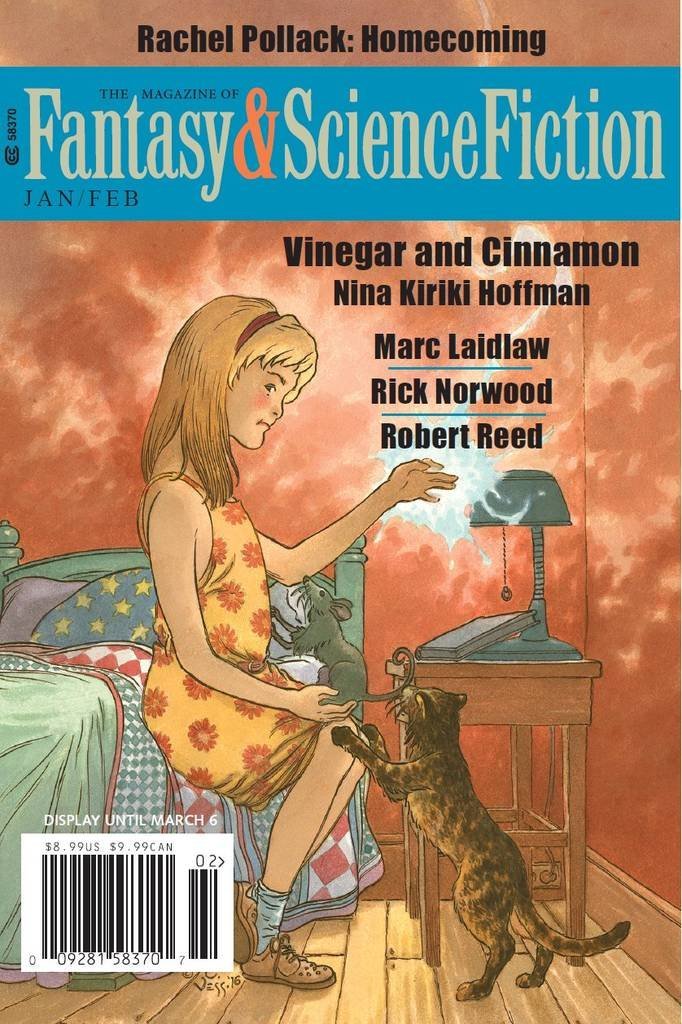
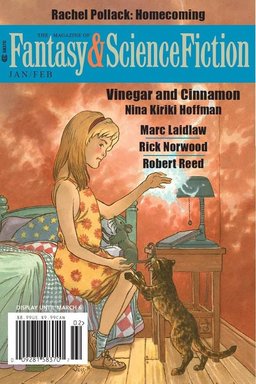
The Magazine of Fantasy & Science Fiction January February 2017-smallSo I got a late start on this year’s reading, which means that I’ve just finished the January/February issue of The Magazine of Fantasy & Science Fiction. As with any collection of stories from a variety of writers, I liked some more than others.

Before we even start, check out the cover art by Charles Vess. A little girl is using her blue magic hand to befriend a rat and a cat. You hardly even notice that she’s not so much sitting on a bed as she’s squatting up against it. (Click the image to embiggen.)

And the cover image isn’t just a random design. It’s a scene from the first story of the issue, “Vinegar and Cinnamon” by Nina Kiriki Hoffman. Nothing too deep here. Just a young witch in training who accidentally turns her brother into a rat, then has to track him down and figure out how to change him back. The writer doesn’t take the predictable route of focusing on the young witch, instead keeping the point of view on her brother and how being a rat alters his perceptions and priorities.

“The Regression Test” by Wole Talabi presents a variation on the Turing Test, as a computer program is designed to simulate the thought processes of a scientific genius. While the scientists can verify how well the program recalls information, they have no way of judging how close the personality is to the original, so they invite the scientist’s daughter to ask the program questions. Of course, there’s more going on here than a simple question-and-answer session.

“A Gathering on Gravity’s Shore” by Gregor Hartmann continues the Franden series. Since I’ve never read any other stories with this character, it was a little rough to get the character and setting straight at first. It’s basically a garden party in which Franden flirts with a botanist and tries to draw out opinions on a pending civil war.

Next is the novelette, “Homecoming” by Rachel Pollack. Again, this was part of a series of stories featuring Jack Shade, a paranormal investigator cursed to take on the case of anyone holding one of his business cards. This time, the case involves retrieving a missing piece of a woman’s soul. Of course, things go bad and Jack eventually has to enlist some supernatural help to prevent the end of the world.

…

Read More Read More
March/April 2017 Asimov’s Science Fiction Now on Sale

March/April 2017 Asimov’s Science Fiction Now on Sale

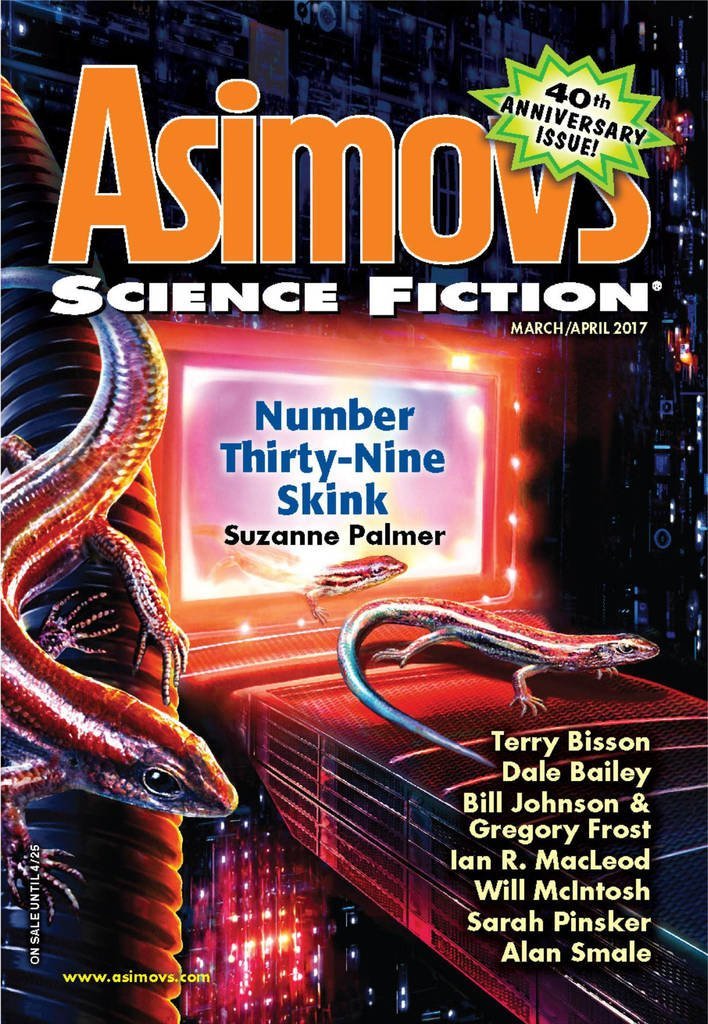
Asimov's Science Fiction March April 2017-smallThe March/April 2017 Asimov’s Science Fiction is the magazine’s 40th Anniversary issue. I can still remember buying the second issue off the racks in Ottawa back in 1977. I vividly remember Isaac’s editorial, which cheerfully encouraged young readers to write science fiction, and how much it inspired me to try my hand at it myself.

I borrowed my parent’s typewriter, banged out a story, and mailed it in a few weeks later, dreams of being an SF writer in my head. I’m sure Asimov’s then editor, George Scithers, was cursing Asimov as he worked through the crush of submissions. I still have his personal rejection letter, which gently critiqued my plot, characters, and spelling. When I met George at the 2002 World Fantasy Convention in Minneapolis, I was finally able to thank him for his kindness to me a quarter-century earlier.

The double-sized March/April issue of Asimov’s is packed with intriguing stuff, including brand new fiction by Damien Broderick, Will McIntosh, Bill Johnson & Gregory Frost, Ian R. MacLeod, Suzanne Palmer, Sarah Pinsker, Dale Bailey, Rich Larson, Terry Bisson, and others. Here’s Sheila’s full description from the website:

March/April 2017 is our official fortieth anniversary! The exciting cover story is by Asimov’s Readers’ Award-winner Suzanne Palmer. In her tense new tale, a human-created artificial intelligence — left grieving and lonely on a distant planet — may annihilate an alien lifeform over a terrible misunderstanding. Don’t miss “Number Thirty-Nine Skink”!

Alan Smale flies us to another universe for an alternate view of “Kitty Hawk”; Ian MacLeod reveals the brutal “Wisdom of the Group”; We’ve come to expect that Damien Broderick will play with a myriad of motifs in his tales and certainly delivers in “Tao Zero”; Terry Bisson offers a wry explanation for why “We Regret the Error”; We find some twisted love in Rich Larson’s “Cupido”; while Will McIntosh provides us with another story of love gone wrong in “Soulmates.com”; “A Singular Event in the Fourth Dimension” is a charming Asimov’s debut for new writer Andrea M. Pawley; Sarah Pinsker will break your heart with “The Ones Who Know Where They Are Going”; Ian Creasey lets us know that it will only get worse “After the Atrocity”; with “The Invasion of the Saucer-Men” Dale Bailey treats us to another of his works inspired by fifties SF movie titles; Gregory Norman Bossert lets us know who’s a “Goner”; and we’ll learn why “Three Can Keep a Secret” from a mysterious con artist in Bill Johnson & Gregory Frost’s new novelette.

…

Read More Read More

Galaxy Science Fiction, September 1953: A Retro-Review

Galaxy Science Fiction, September 1953: A Retro-Review

Galaxy Science Fiction September 1953-small Galaxy Science Fiction September 1953-back-small

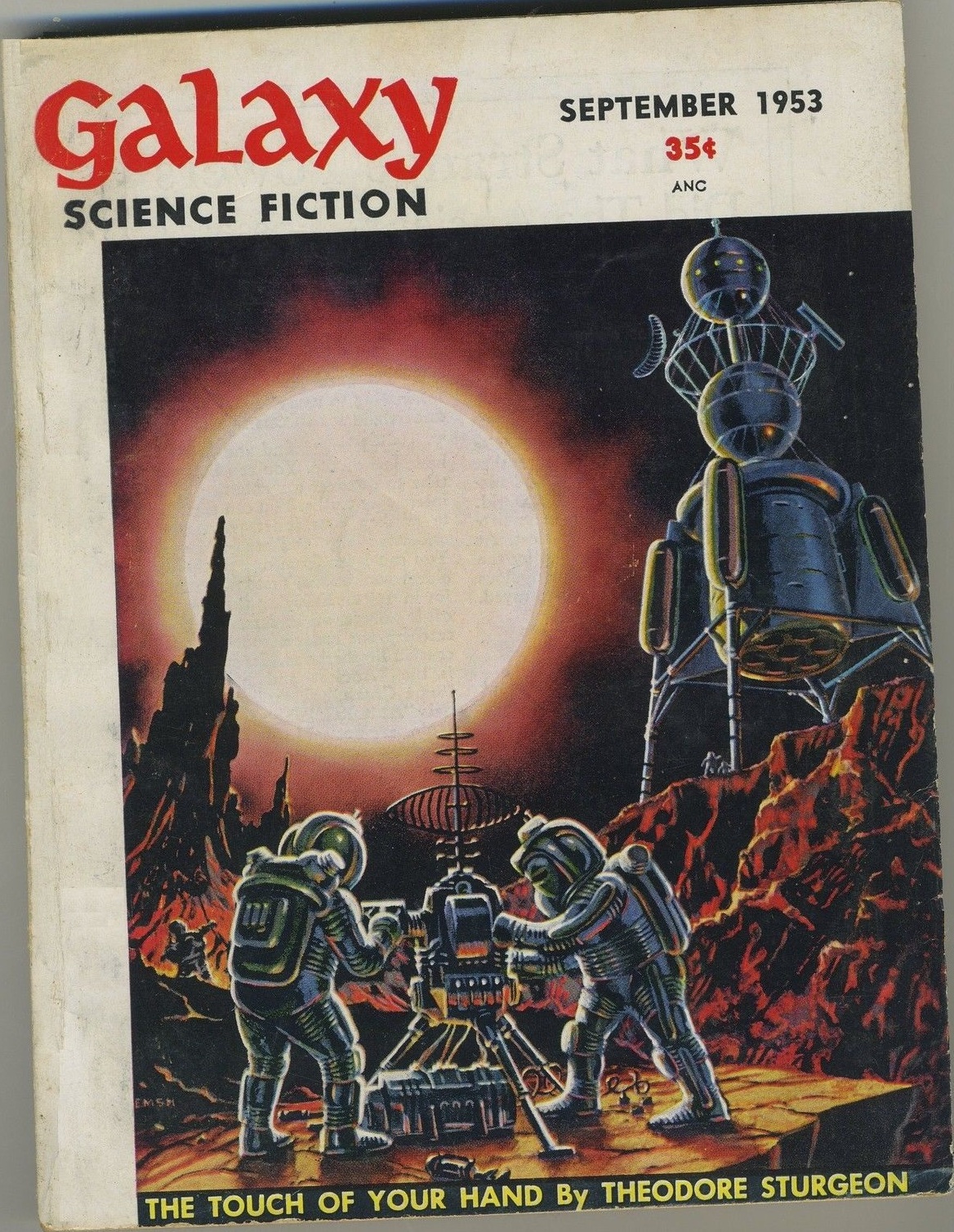
The September, 1953 issue of Galaxy Science Fiction opens with Editor H. L. Gold weighing in on vocabulary guessing for future science fiction. He writes that

Objects and methods must be named so the reader will recognize them. All the author can do is apply logic, which sometimes works, as in the case of several commonly used terms invented by science fiction, but more often does not, as in terms that are born naturally, not synthesized.

He describes how some words, like nylon and Kleenex, are trade names. The word jeep came from how soldiers abbreviated “General Purpose Car” (listed as “G.P.” in stock lists). He concludes his remarks by writing:

If we were trying to predict instead of entertain, you’d be right in objecting to our inevitable bloopers (origin unknown). But would you rather wait for the correct lingo (lingua, tongue) or enjoy our guessing right now?

My answer: bring on the bloopers!

…

Read More Read More

The March Fantasy Magazine Rack

The March Fantasy Magazine Rack

Alfred-Hitchcocks-Mystery-Magazine-January-February-2017-rack Beneath-Ceaseless-Skies-216-rack Clarkesworld-February-2017-rack Nightmare_53_February_2017-rack
Heroic-Fantasy-Quarterly-31-rack Beneath-Ceaseless-Skies-217-rack Beneath-Ceaseless-Skies-219-rack Nightmare-Magazine-March-2017-rack

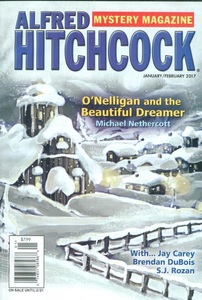
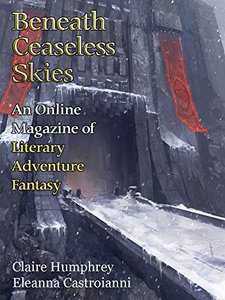
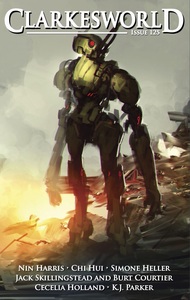
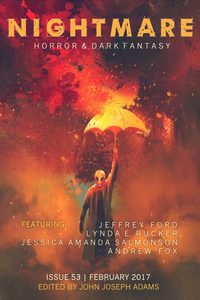
Michael Penkas took on the lion’s share of our magazine coverage this month, with in-depth reviews of the latest issues of Alfred Hitchcock Mystery Magazine, Beneath Ceaseless Skies, and Nightmare. Mike joins our current magazine reviewer, Fletcher Vredenburgh (whose beat is primarily sword & sorcery), as well as our Retro-reviewers, Rich Horton and Matthew Wuertz.

In other magazine news this month, Rich Horton presented his 2017 Hugo Nomination thoughts, recommending dozens of stories from all of the major magazines. See all the details here.

Check out all the details on the magazines above by clicking on the each of the images. Our February Fantasy Magazine Rack is here.

…

Read More Read More

Beneath Ceaseless Skies 219 Now Available

Beneath Ceaseless Skies 219 Now Available

Beneath-Ceaseless-Skies-219-smallIssue #219 of Beneath Ceaseless Skies is now available, completely free on their website. It is dated February 16, 2017 and features fiction by Grace Seybold and Jeremy Sim, an Audio Fiction Podcast by Margaret Killjoy, and a reprint by Cory Skerry.

Jason at Featured Futures was enthusiastic about the Seybold.

Jeone Serrica is climbing what seems to be a world entirely of mountainside or cliff-face when, after scaring off a giant lizard, she encounters a village of strange women. After being somewhat ambivalently welcomed and despite being told to remain in her guest quarters, our intrepid explorer sneaks a peek at the villagers’ rites. What she sees mystifies and horrifies her but, before she can even try to come to terms with it, she’s snatched by a giant bird and taken off to an even stranger realm and an encounter that requires much more from her than even facing down giant lizards…

The imagination brought to bear in conceiving this doughty protagonist and this amazing world and the entities she interacts with was extremely impressive… it was fascinating throughout and will live in the memory for quite some time.

Read Jason’s complete review here.

Here’s the complete Table of Contents for issue 219.

…

Read More Read More

Nightmare, Issue 54 (March 2017)

Nightmare, Issue 54 (March 2017)

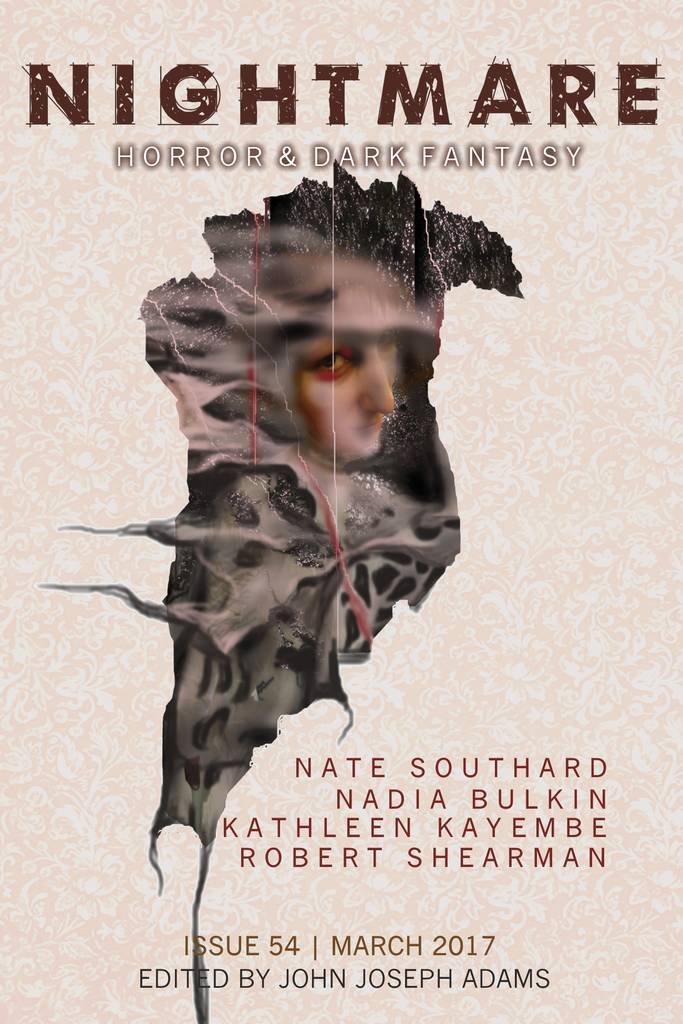
Nightmare Magazine March 2017-smallUsually with Nightmare, by the end of the issue I’ve picked a clear favorite story. The stories are always well-written, but there’s usually one that especially moves me. This month, we’ve got two haunted towns and two haunted families that consistently play with the concept of who is haunted and who is the haunter. And I just can’t pick a favorite.

It starts with “Things Crumble, Things Break” by Nate Southard, about a town that’s slowly dying from a chemical accident. Or from something that they’re told is a chemical accident. While the author never mentions Flint (either in the story or in the proceeding interview), it’s impossible not to read this story of a toxic, abandoned city without thinking that tragedy wasn’t at least a subconscious influence.

Next up is “Alice Through the Plastic Sheet” by Robert Shearman (originally published in Remember Why You Fear Me: The Best Dark Fiction of Robert Shearman), that starts with the familiar trope of the boring suburban family being disturbed by loud neighbors … only to veer off in a David Lynchian direction rather quickly.

“You Will Always Have Family: A Triptych” by Kathleen Kayembe starts with a noise in a locked room (yet another familiar horror trope) and slowly reveals a tale of possession that alternates between three different points of view (hence the “Triptych” in the title). Kayembe doesn’t spare with the gruesome imagery, but at its heart this is a story about family and what it means to different people. And while I normally hate horror stories that delve too much into explaining the physics behind the supernatural, this one puts in just enough that we understand the stakes, while also explaining why so many possessed people end up looking so ragged so quickly.

It all winds up with “Seven Minutes in Heaven” by Nadia Bulkin (originally published in Aickman’s Heirs, appropriately enough), another “haunted town” story that has a twist ending that actually comes up in the middle. So you might begin reading this story thinking, “Oh, I know where this is going,” and you’re right, but that twist gets revealed in the middle, leaving the reader to sink even deeper into the nightmare. Because the only thing worse than finding a monster in your closet is realizing that there’s another closet behind that one.

…

Read More Read More

February 2017 Clarkesworld Now Available

February 2017 Clarkesworld Now Available

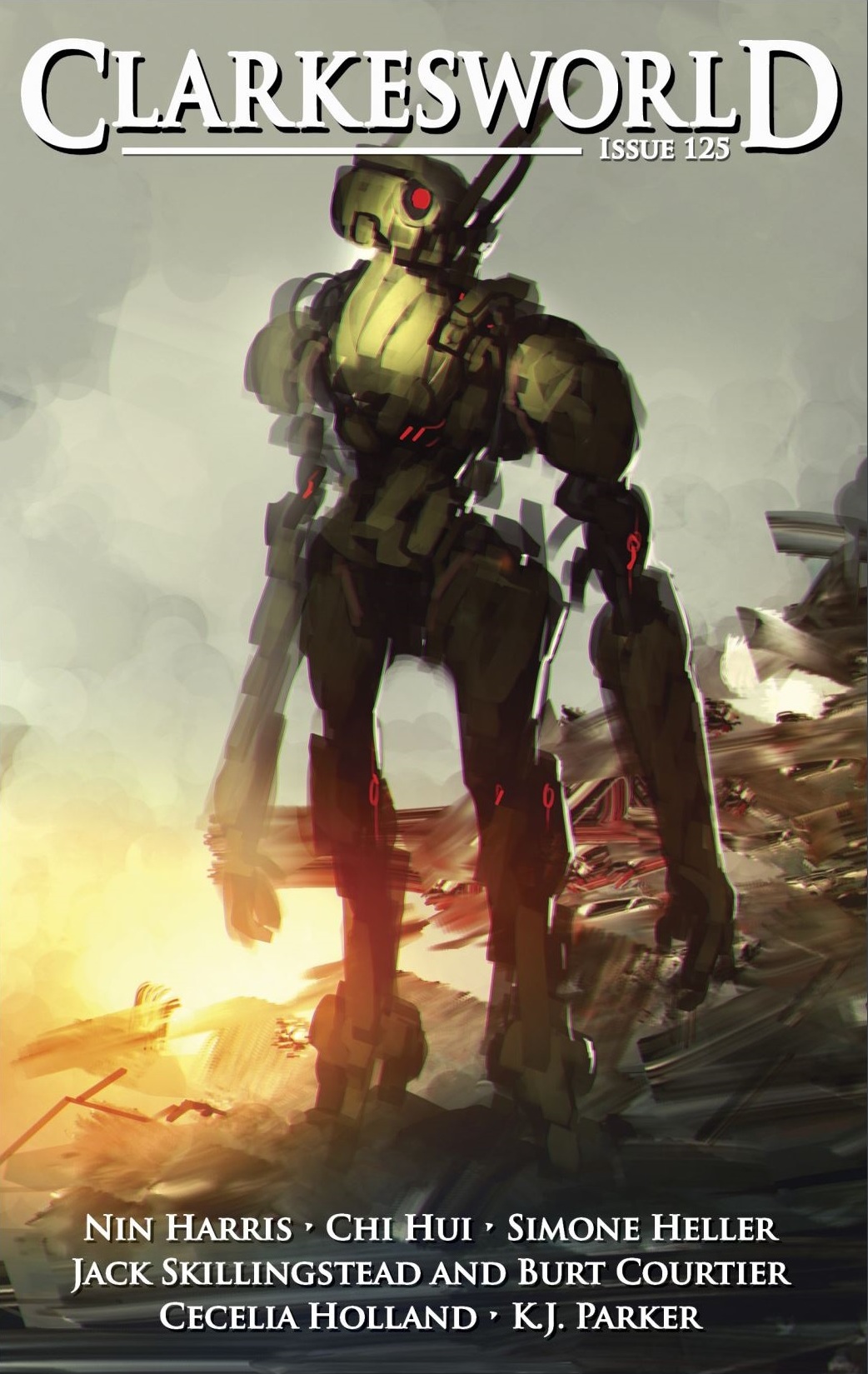
Clarkesworld February 2017-smallThe February 2017 issue of Clarkesworld, issue #125, marks an important milestone for the magazine — and for its editor and founder, Neil Clarke. Here’s Neil to explain (from his editorial, “The Next Chapter Begins“).

The day this issue is published will be my first day as a full-time editor, which isn’t to say I’ve reached the point where I’m making a full-time salary. That’s going to take time, which I finally have. The first order of business is to close the salary gap between Lisa’s job and my old one and to cover the cost of our new health plan. I’ve agreed to do some consulting and knowledge transfer sessions with my former employer, so that should help create a bit more of a buffer before our savings account has to come into play.

As for the impact all this new-found time and energy will have on Clarkesworld, give me a couple of months to work that out. I still have some backlogged tasks that need to be completed and then I can start hammering out a long-range plan. In the meantime, each new subscription, Patreon supporter, or advertiser takes a little bit of the financial pressure away, so this will be one of my immediate areas of focus.The other will probably be targeting more anthology projects, both original and new, including catching up on the remaining Clarkesworld annuals. I’ll probably take on a few more ebook clients as well.

If you are already a subscriber or supporter, thank you. You’ve made this leap possible. If you aren’t a subscriber, there’s no better time than now. I know money is tight for many of our readers and listeners, so if you can’t afford to, you can always help by amplifying the calls for new subscribers/supporters on social media or perhaps adding a review on one of the many sites that sell our digital subscriptions — you’d be really surprised by how much of an impact that sometimes makes.

And while part of me will miss my old career, I’m eager to get started on this new chapter in my life and look forward to the new opportunities it presents. Now, back to work… !

Clarkesworld is one of the finest magazines we have — and one of the best things to happen to genre short fiction in the last decade. If you care at all about the future of the field, I hope you’ll consider supporting Clarkesworld, perhaps by just buying a sample issue at Amazon or B&N.com for $2.99 or, as I did, signing up at their Patreon page. I’m very excited to see what the new era brings at Clarkesworld, and I hope you’ll join us for the ride.

…

Read More Read More

Hugo Nomination Thoughts, 2017

Hugo Nomination Thoughts, 2017

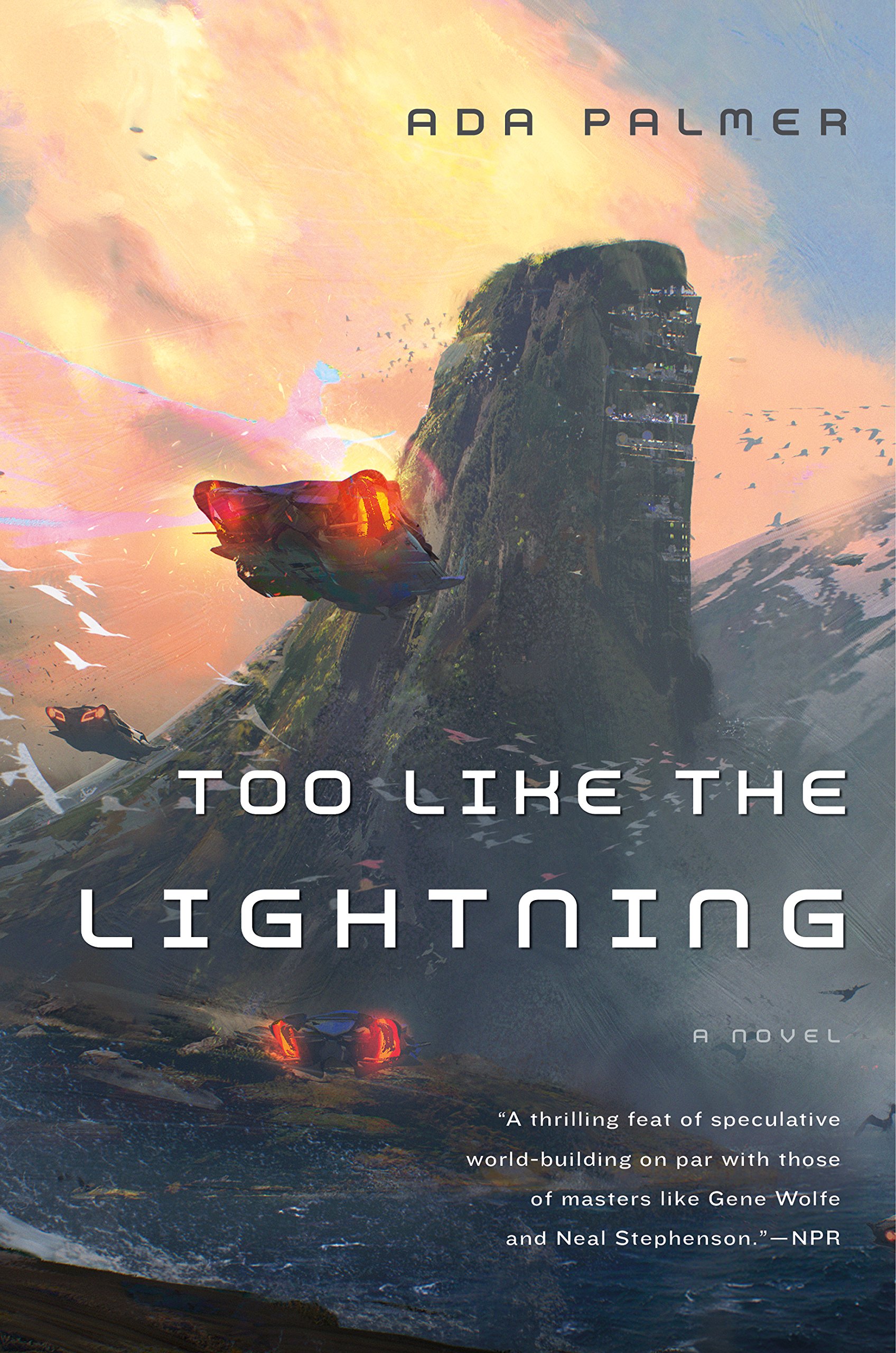
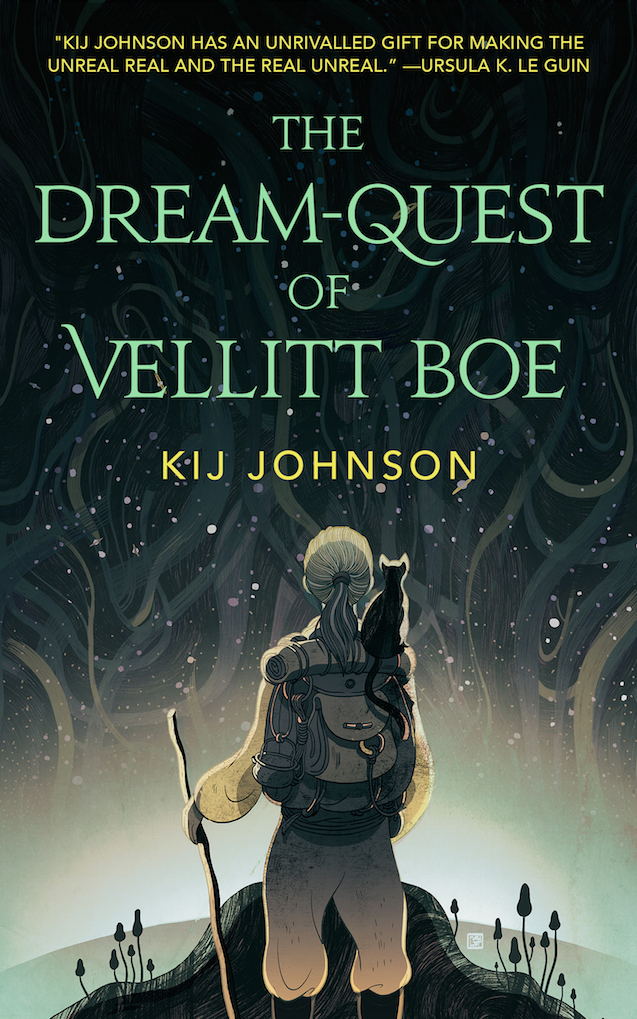
Too Like the Lightning-smaller The Dream-Quest of Vellitt Boe-smaller Beneath-Ceaseless-Skies-192-smaller

It’s that time again, right? Hugo nominations are open, and they will close on March 17th. I’ll be discussing most of the categories, but as usual, I’m better informed about short fiction than anything else.

I should mention going in that there have been some significant changes to the Hugos. There is a new Hugo Category, for Best Series. (I don’t like the idea much, but I’ll play along.) There is a new non-Hugo for Best Young Adult Book, up for ratification in Helsinki for a potential award next year. There are changes to the voting process: now there will be 6 nominees instead of 5 (though each nominator still just votes for 5), and the 5% rule (that each story on the final ballot must appear on 5% of the nominating ballots) has been eliminated. And the EPH process for counting the final votes has been approved. I won’t try to explain that – there are much clearer explanations than I could offer readily available.

One more note to begin with – though I participate with a lot of enjoyment in Hugo nomination and voting every year, I am philosophically convinced that there is no such thing as the “best” story – “best” piece of art, period. This doesn’t mean I don’t think some art is better than other art – I absolutely do think that. But I think that at the top, there is no way to draw fine distinctions, to insist on rankings. Different stories do different things, all worthwhile. I can readily change my own mind about which stories I prefer – it might depend on how important to me that “thing” they do is (and of course most stories do multiple different things!) – it might depend on my mood that day – it might depend on something new I’ve read that makes me think differently about a certain subject. Bottom line is, in the lists below, I’ll suggest somewhere between 5 and 8 or so stories that might be on my final ballot. Those will be in no particular order. And the other stories I list will all really be about as good – and I might change my mind before my ballot goes in.

…

Read More Read More

Beneath Ceaseless Skies, Issue #217 (January 19, 2017)

Beneath Ceaseless Skies, Issue #217 (January 19, 2017)

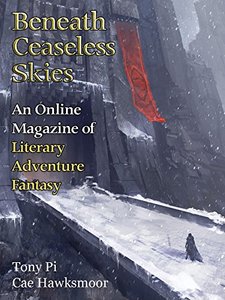
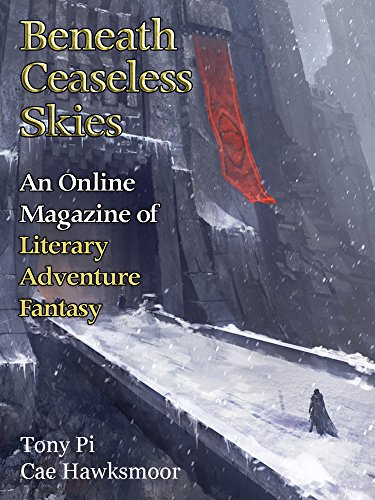
Beneath-Ceaseless-Skies-217-smallOnce again, Beneath Ceaseless Skies delivers a pair of stories that convey a genuine sense of wonder by exposing the reader to ideas and imagery that they never experienced before.

It starts with “Proteus Lost” by Tony Pi, a story about the perils of shapeshifting. So often, magic in fantasy is portrayed in recipe format. Mix these ingredients with those magic words and you get a spell. In this story, we get a genuine sense of the dangers involved in casting a spell on yourself. The “spells” involve a series of conjurations written in a spell book as a list of visual riddles. Get any one riddle wrong and you end up in the wrong shape and need to work your way back to the intermediate shape where you lost your way. Tony Pi pulls off the amazing trick of making two guys sitting in a room reciting spells feel suspenseful.

Next up is “Requiem for the Unchained” by Cae Hawksmoor. I’ll be honest and say that I found the premise of this story to be rather confusing. At its heart, it’s about a captain taking a ship on a dangerous mission rather than losing it. There are old themes here about the old way of doing things being replaced by new ways and a genuinely compelling concept of a sea of ghosts. But the story seemed to have a lot of build-up before the action that didn’t clearly explain what exactly was being done. A smarter reader will probably think I’m just a slow learner, but that was my take on it.

As usual, you can read both stories (as well as a podcast recording and archived story) for free at www.beneath-ceaseless-skies.com/issues/issue-217, but these publications only survive through financial support. So why not drop ninety-nine cents and actually pay for it?

We last covered Beneath Ceaseless Skies with issue #216.