Browsed by
Category: Books

New Treasures: The Inner City by Karen Heuler
New Treasures: The Inner City by Karen Heuler

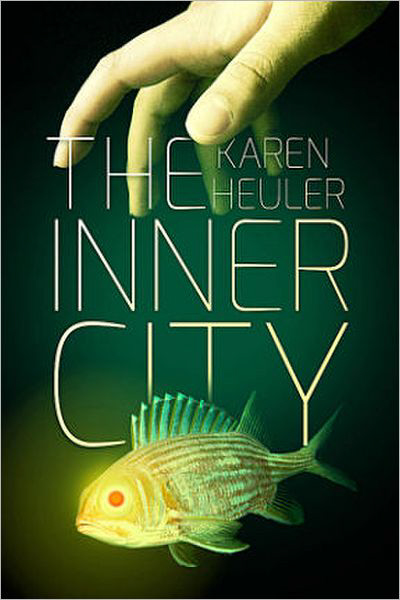
The Inner CityI’ve started ordering more from Barnes & Noble’s online store. Not that I’ve been unhappy with Amazon, but I wanted to try out the competition, and so far I’ve been pleased with the service.

The first book I ordered was the seventh volume of the collected Atomic Robo, Flying She-Devils of the Pacific. At some point while browsing their online store, they recommended an odd little volume to me: Karen Heuler’s The Inner City, a collection of fantasy short stories. I’ve never heard of Karen Heuler. But I’m very familiar with ChiZine, the eclectic Canadian publisher, and raved at length about their marvelous back catalog a while back. So I took a chance and ordered The Inner City — what the heck, it was the perfect price to get my order up to $25, and get free shipping.

What are you hiding down deep in your inner city?

Anything is possible: people breed dogs with humans to create a servant class; beneath one great city lies another city, running it surreptitiously; an employee finds that her hair has been stolen by someone intent on getting her job; strange fish fall from trees and birds talk too much; a boy tries to figure out what he can get when the Rapture leaves good stuff behind. Everything is familiar; everything is different. Behind it all, is there some strange kind of design or merely just the chance to adapt? In Heuler’s stories, characters cope with the strange without thinking it’s strange, sometimes invested in what’s going on, sometimes trapped by it, but always finding their own way in.

Surprisingly, so far I’ve been more taken with The Inner City than Atomic Robo — and believe me, that doesn’t happen very often. Typical of ChiZine, the book design and packing are gorgeous. There’s even a 10-page catalog in the back that reminds me of the checklists in the endpapers of Ace paperbacks that fascinated me as a young teen. The stories in this collection were originally published in places like Weird Tales, Cemetery Dance, Albedo One, Moon Milk Review, and other excellent publications — a good sign.

The Inner City was published February 13, 2013. It is 212 pages, priced at $16.95 ($9.99 for the digital edition). ChiZine has a generous sneak-peek here — including the complete 10-page catalog. Check it out!
Vintage Treasures: Nifft the Lean by Michael Shea

Vintage Treasures: Nifft the Lean by Michael Shea

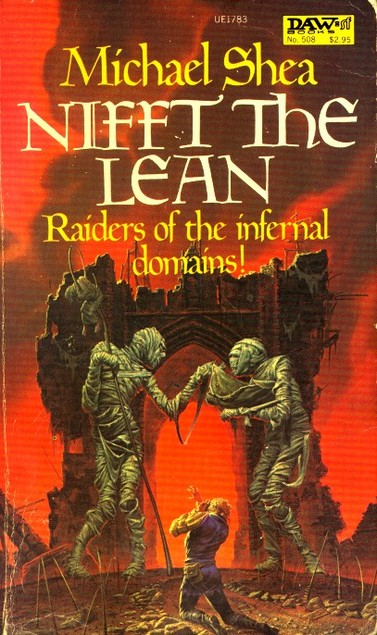
Nifft the LeanMichael Shea is one of the most fascinating characters in the genre. Consider this biographical tidbit from his Wikipedia entry:

At a hotel in Juneau, Alaska, Shea chanced on a battered book from the lobby shelves, The Eyes of the Overworld by Jack Vance (1966). Four years later, after a brief first marriage and one year hitch-hiking through France and Spain, he wrote a novel in homage to Vance, who graciously declined to share the advance… It was Shea’s first publication, A Quest for Simbilis (1974), and an authorized sequel to Vance’s two Dying Earth books then extant.

Nowadays we’d call that “fan-fiction,” and read it online. In 1974, A Quest for Simbilis was published in paperback by DAW books, and it launched Michael’s career — a career that has produced some of the most acclaimed fantasy of the past four decades.

Eight years after he burst on the scene with A Quest for Simbilis, Michael published one of the most important works of modern sword and sorcery: Nifft the Lean, a collection of four linked novellas published in paperback by DAW in 1982. It won the World Fantasy Award for year’s best novel, and accolades from every corner of the genre.

Nifft has reappeared several times since, first in The Mines of Behemoth (Baen, 1997) — collected with Nifft the Lean as The Incompleat Nifft (Baen, 2000) — and most recently in the novel The A’rak (Baen, 2000).

However, I’ve never read the original Nifft the Lean, and when I stumbled on a copy in a collection of DAW paperbacks I purchased last month, I decided it was time to rectify that. The marvelous Michael Whelan artwork is reminiscent of many other DAW S&S titles of the time, especially Michael Moorcock’s Elric books, and there’s a familiarity to it that I find very welcoming. I’m looking forward to reading the stories that inspired it.

Nifft the Lean was published in December 1982 by DAW Books. It is 304 pages in paperback, originally priced at $2.95. It is currently out of print.

To Unbuild the Unreal City: M. John Harrison’s Viriconium

To Unbuild the Unreal City: M. John Harrison’s Viriconium

ViriconiumThe term ‘dying earth’ comes from a series of stories by Jack Vance, but Vance was following in the footsteps of Clark Ashton Smith, whose Zothique stories introduced the concept: a setting at the end of time, during the twilight of civilisation on earth — when magic and science had become fused and indistinguishable, when the ruins of previous cultures choked the land, when we and our children and our children’s children are not even memories. Among other writers to tackle similar settings are Michael Moorcock, in his Dancers at the End of Time series, and Gene Wolfe in his classic Book of the New Sun. Wikipedia suggests a few more examples, such as C.J. Cherryh’s Sunfall. Dying-earth stories are typically autumnal, often ironic or cynical, stories about things running down in the senility of the world; often written in a self-consciously baroque style. And, I find, often very powerful works. I want to write a bit here about one of the odder works of an inherently odd subgenre: M. John Harrison’s Viriconium sequence.
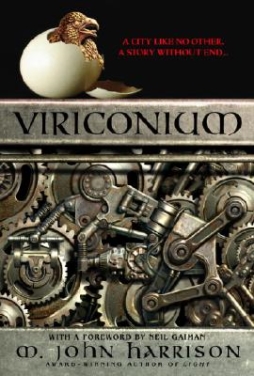
There are four Viriconium books, three novels and a collection of linked short stories: The Pastel City, published in 1971; A Storm of Wings, from 1980; In Viriconium, from 1982; and 1985’s Viriconium Nights. One can technically read the books in any order, as few plot strands directly connect them. They’re bound by setting, theme, and imagery, and to that extent perhaps are best read in order of publication, so that one follows the growth of Harrison’s conception of the books and of his technical facility. At any rate, the internal chronology of the series is intentionally difficult. Omnibus editions treat the short stories of Viriconium Nights in different ways, sometimes putting them together in one place as they would have first appeared, sometimes scattering them before, between, and after the three novels. Harrison has apparently said that the stories can appear in any order, so long as the short story “A Young Man’s Journey to Viriconium” comes at the end.

The four books are very different works, as one might expect from pieces written over 15 years. The style varies radically. So does the tone; the writing, ironic from the start, produces increasingly complex effects. Thematically, key concerns persist, about art and heroism and ritual. And reality; and the way in which fantasies attempt to mimic reality, and the ways in which bad fantasies — or bad fiction — deviates from emotional truth. So these are books that use the form of fantasy fiction to critique, or question, fantasy. Depending on what set of definitions you care to use, you could call this a modernist or postmodernist approach. The more important question is this: does the work succeed as written art?

Read More Read More

Coming in December: John R. Fultz’s Seven Sorcerers

Coming in December: John R. Fultz’s Seven Sorcerers

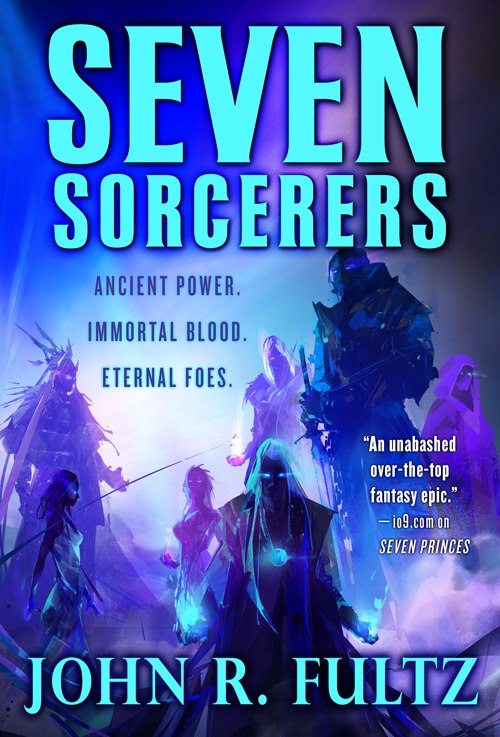
Seven SorcerersOrbit Books has released the cover of the third book in John R. Fultz’s Books of the Shaper series, Seven Sorcerers, scheduled for release this winter. Here’s the back cover copy, leaked to us by Bothan spies:

Ancient Power. Immortal Blood. Eternal Foes.

The Almighty Zyung drives his massive armies across the world to invade the Land of the Five Cities. So begins the final struggle between freedom and tyranny.

The Southern Kings D’zan and Undutu lead a fleet of warships to meet Zyung’s aerial armada. Vireon the Slayer and Tyro the Sword King lead Men and Giants to defend the free world. So begins the great slaughter of the age.

lardu the Shaper and Sharadza Vodsdaughter must awaken the Old Breed to face Zyung’s legion of sorcerers. So begins a desperate quest beyond the material world into strange realms of magic and mystery.

Yet already it may be too late…

Seven Sorcerers is the sequel to Seven Princes and Seven Kings (which we covered here and here.)

If you can’t stand the excitement and want to read some John R. Fultz today — perfectly understandable — then we suggest you start with his fine sword & sorcery story “When the Glimmer Faire Came to the City of the Lonely Eye,” published right here back in January as part of our Black Gate Online Fiction line. Or try the complete first chapter of Seven Kings for free.

Seven Sorcerers is scheduled to be published by Orbit Books on December 3, 2013. Look for it in bookstores everywhere.

My Characters Don’t Give a Damn

My Characters Don’t Give a Damn

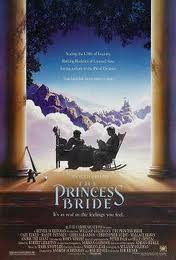
PB filmAnd why should they? Most of them don’t live in universes where damnation is a possibility. What? You didn’t think that swearing, cursing, or slang had just as much to do with world-building as how your characters speak in general?

Does everyone know the bi-lingual pun that’s in The Princess Bride? It’s the part in the film where they’re rounding up everyone in the Thieves’ Forest and the guard says to Iñigo, “Ho there!” and Iñigo replies, “Get away with your ‘HO there.'” Now, if you know that the f-word in Spanish is “joder,” pronounced HOthere, this is a pretty funny bit. If you don’t… well, you do now.

Aside from the comedy potential, William Goldman (who wrote both the novel and the screenplay) is underscoring the point that Iñigo is Spanish – which in itself underscores that The Princess Bride is set in a recognizable version of the primary world.

For our purposes, Iñigo’s example illustrates one of the prime sources for swear words: sexual acts. Anyone who pays attention is familiar with the other sources: religion, family relations, body parts, and bodily functions. Yes, sexual acts are bodily functions, at least in part. But eating, for example, doesn’t usually give rise to swear words – unless there’s something taboo involved, which gives you another clue as to the origin of a lot of profanity.

Take a moment to consider the origin of the word profanity (just in case you think religion is no big deal).

Read More Read More

Blogging Sax Rohmer’s The Trail of Fu Manchu, Part Two

Blogging Sax Rohmer’s The Trail of Fu Manchu, Part Two

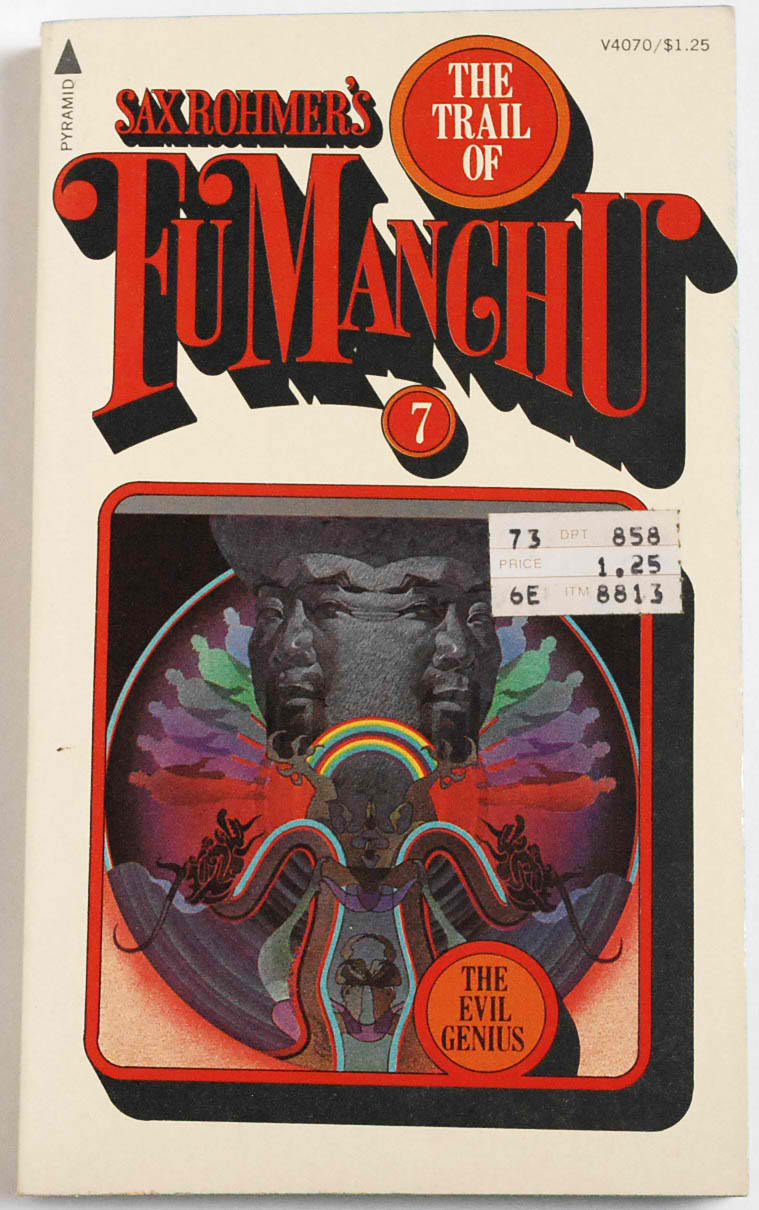
Trail late PyramidThe Trail of Fu ManchuSax Rohmer’s The Trail of Fu Manchu was originally serialized in Collier’s from April 28 to July 14, 1934. It was published in book form later that year by Cassell in the UK and Doubleday in the US. The book marked the first time Rohmer employed third person narrative in the series and dispensed with the first person narrative voice modeled on Sir Arthur Conan Doyle’s Sherlock Holmes stories. The results dilute what would otherwise have been a stronger novel that saw the series return to its roots.

Sir Denis Nayland Smith, Alan Sterling, and Chief Inspector Gallaho follow Fah lo Suee from Sam Pak’s Limehouse opium den to the Ambassador’s Club, where the daughter of Fu Manchu has a rendezvous with Sir Bertram Morgan. The reader learns in short order that Fah lo Suee met Sir Bertram three years ago in Cairo and so has retained her old identity of Madame Ingomar. The old financier has fallen madly in love with the seductive Eurasian beauty. Sir Denis and company follow their car to Rowan House in Surrey, the former residence of Sir Lionel Barton, where Madame Ingomar’s father now resides. Once again, Rohmer refers back to the first book in the series, for it was at Rowan House where Nayland Smith and Dr. Petrie first encountered Sir Lionel Barton.

Read More Read More

Alex Bledsoe on “How I Discovered Silver John”

Alex Bledsoe on “How I Discovered Silver John”

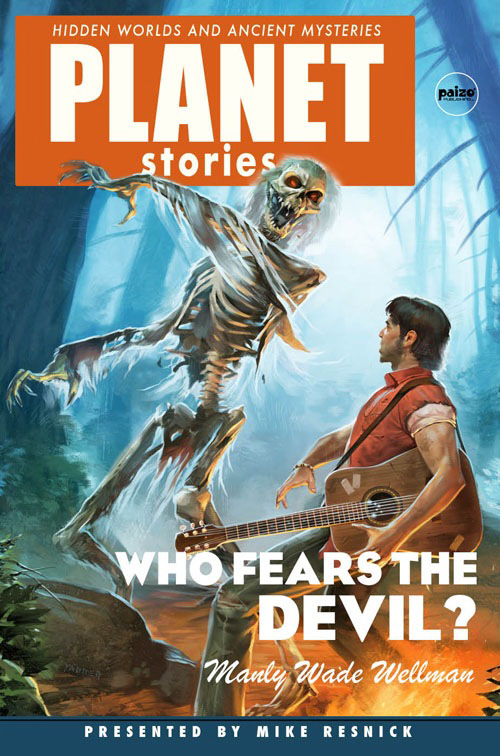
Who Fears the Devil Planet StoriesJust last week, we announced the winners of our Best One-Sentence Reviews of Manly Wade Wellman contest, and published twenty of the best entries. Not too surprisingly, many focused on Wellman’s popular Silver John stories, tales of monsters and Appalachian magic.

Alex Bledsoe, author of The Hum and the Shiver and the forthcoming Wisp of a Thing, knows a thing or two about Appalachian magic himself. I was fortunate enough to hear Alex read from Wisp of a Thing at Capricon here in Chicago last month, and I’m looking forward to receiving my copy. So I was pleased (and a little surprised) to see Alex’s article at Tor.com last week, explaining how he only recently discovered Wellman’s Silver John tales — and came across his novels for the first time at Capricon, of all places:

When Tor released my first Tufa novel, The Hum and the Shiver, back in 2011, many people asked me if I’d been inspired by Manly Wade Wellman’s tales of Silver John. Although I knew of them by reputation, I’d never actually read them until last year, when Planet Stories published Who Fears the Devil? The Complete Tales of Silver John.

The resemblance, as is so often the case in comparisons like this, strikes me as mostly cosmetic. Yes, Wellman’s stories are set in a vague Appalachia, and yes, they involve magic and inhuman creatures. But they’re far more Lovecraftian than Tufan, with their invocation of things from other realities bleeding into ours and poking out around the fringes to snag the unwary… I’m delighted that the stories are so different from my own stuff, because that means I can devour them with a clear conscience. These stories are cool.

Further, before Capricon in Chicago this year, I didn’t even know there were full length Silver John novels. Rich Warren of Starfarer’s Despatch, a used-book dealer, clued me in, and I picked up After Dark based on his recommendation. And lo and behold, it was a real, literal page-turner that kept me reading when I should’ve been doing other, more important things (like writing, or parenting).

Ah, Starfarer’s Despatch — that explains it. Rich Warren and Arin Komins have had a hand in more than a few discoveries of my own. They sold me that paperback edition of Vampires I talked about last month, not to mention the only copy of Tales of Time and Space I’ve ever seen. There’s a great photo of the two of them in action in Howard’s Worldcon wrap-up from last year, too (and their website is here). True booksellers have magic of their own.

New Treasures: Comics: The Complete Collection by Brian Walker

New Treasures: Comics: The Complete Collection by Brian Walker

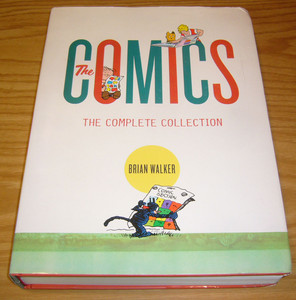
Comics The Complete CollectionThere are coffee table books, and there are coffee table books. Brian Walker’s Comics: The Complete Collection is the latter — meaning it’s a “coffee table” book in the sense that it’s large enough to be propped up and used as a coffee table. For a family of five.

If the very existence of a 672-page, 7-pound book crammed full of vintage American comics strips from the past 110+ years isn’t enough to interest you, then you probably have no soul. But maybe this will help: this book collects 1,300 of the best newspaper strips from some of the finest comics ever created, including Walt Kelly’s Pogo, Berke Breathed’s Bloom County, Bill Watterson’s Calvin and Hobbes, Scott Adams’s Dilbert, Charles Schulz’s Peanuts, Will Eisner’s The Spirit, Gary Larson’s The Far Side, Hal Foster’s Prince Valiant, Chester Gould’s Dick Tracy, Ernie Bushmiller’s Nancy, Milton Caniff’s Terry and the Pirates, Al Capp’s Li’l Abner, Roy Crane’s Wash Tubbs, Dik Browne’s Hagar the Horrible, Jim Davis’s Garfield, Harold Gray’s Little Orphan Annie, Bill Griffith’s Zippy the Pinhead, Johnny Hart’s B.C., Geroge Herriman’s Krazy Kat, Burne Hogarth’s Tarzan, Lynn Johnston’s For Better Or For Worse, Bil Keane’s Family Circus, Hank Ketcham’s Dennis the Menace, Winsor McCay’s Little Nemo in Slumberland, Dale Messick’s Brenda Starr, Richard Outcault’s Yellow Kid, Brant Parker’s Wizard of Id, Alex Raymond’s Flash Gordon, E.C. Segar’s Popeye, Mort Walker’s Beetle Bailey, Tom Wilson’s Ziggy, and Chic Young’s Blondie.

And others. Lots and lots (and lots) of others.

It’s called The Complete Collection because it was originally published in two volumes: The Comics Before 1945 and The Comics Since 1945. These survey volumes were useful in their own right, with comics organized by decade, and well-written biographical profiles, as well as thoughtful analysis of the different genres. But the omnibus collection is both an incredible value and a beautiful piece of work, the kind of gorgeous and massive tome you could place prominently in the living room, flip through for years, and never exhaust. Or use to prop up the foundation of your house, whatever.

Comics: The Complete Collection was published in April 2011 by Abrams ComicArts. It is 672 pages in hardcover, and there is unlikely to be a softcover or digital edition. It’s a bargain at $40, and you can find copies online for around $29. Highly recommended.

Last Chance to Win One of Four New Copies of the Unearthed Arcana 1st Edition Premium Reprint

Last Chance to Win One of Four New Copies of the Unearthed Arcana 1st Edition Premium Reprint

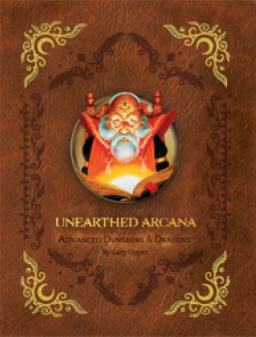
unearthed arcanaTwo weeks ago, we announced a contest to win one of four new copies of the Unearthed Arcana 1st Edition Premium Reprint, compliments of Wizards of the Coast.

How do you enter? Easy — by doing exactly what you’re doing already: telling complete strangers all about your D&D adventures.

Just send an e-mail to john@blackgate.com with a one-paragraph summary of your most memorable D&D or AD&D characters. Points will be awarded for conciseness and originality. We’ll publish the best here at Black Gate, and the Top Ten as decided by our judges will be included in a drawing for one of four copies of the new Unearthed Arcana 1st Edition Premium Reprint.

These WotC Premium Reprints have become quite the hot property, incidentally. The first three — the Players Handbook, Dungeon Masters Guide, and Monster Manual — are already sold out and out of print, and I strongly suspect the same will happen to this one. The upcoming volume Dungeons of Dread is perhaps the most interesting one yet, as it collects the first four adventures in the S Series — Tomb of Horrors, White Plume Mountain, Expedition to the Barrier Peaks, and The Lost Caverns of Tsojcanth — complete with the original b&w interior art.

All entries become the property of New Epoch Press. No purchase necessary. Must be 12 or older. Decisions of the judges (capricious as they may be) are final. Terms and conditions subject to change as our lawyers sober up and get back to us. Not valid where prohibited by law. Or anywhere postage for a hefty hardcover is more than, like, 10 bucks. Good luck!

How Well Does The Cloud Roads Fit as Sword and Sorcery?

How Well Does The Cloud Roads Fit as Sword and Sorcery?

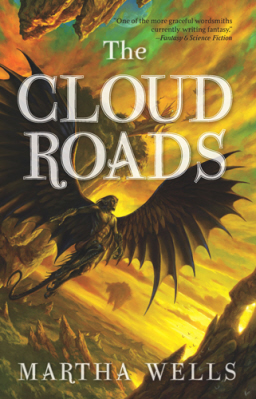
cloud roadsI’ve always had a problem with genre categories.

What I’ve seen over the years is that when you try to define a category in order to make it easier for readers to find the kind of books they like, publishers begin to tailor their marketing to that definition. Then people begin to write to that definition. The definition becomes increasingly narrow, and it makes stories that don’t fit that definition in every respect harder to sell.

When you do sell a book that doesn’t fit, you occasionally get a reader email demanding to know why something sold as a fantasy doesn’t have a bearded white guy with a sword as the main character, because the definition is now so narrow that your book (and a lot of others) has been squeezed out of it.

When I wrote The Cloud Roads, the first of the Books of the Raksura, I still felt it fell mostly under the category of sword and sorcery, despite there not being any swords, and the sorcery being internal and intrinsic to the characters. The books I read that I thought of as sword and sorcery usually had one (or two) loner characters, bumming along in a fantasy landscape as mercenaries, looking for treasure or opportunities to make a living. They had been outlaws in the past, or were fleeing accusations of something, or a past of slavery or powerlessness or something in their lives that they had to hide.

In The Cloud Roads, Moon was profoundly alone, even when he was living with other people. He was traveling in a fantasy landscape looking more for food and shelter than treasure, and he had something to hide.

But instead of a career as an outlaw or a failed rebel, he was hiding the fact that he was a flying shapeshifter whose other form resembled top-tier predators that were famous for destroying whole cities and eating their inhabitants. Instead of a sword, he had claws.

Read More Read More