Browsed by
Category: Books

New Treasures: Enter The Wolf: Vampire Earth Volume 1
New Treasures: Enter The Wolf: Vampire Earth Volume 1

Enter the WolfE.E. Knight’s Vampire Earth is one of the best adventure series on the market — action-packed, highly entertaining, and filled with great twists and surprises. Set on a near-future Earth conquered by a vampiric alien race, it’s the kind of fast paced and chilling narrative that would have resulted (as Paul Witcover puts it), “If The Red Badge of Courage had been written by H.P. Lovecraft.”

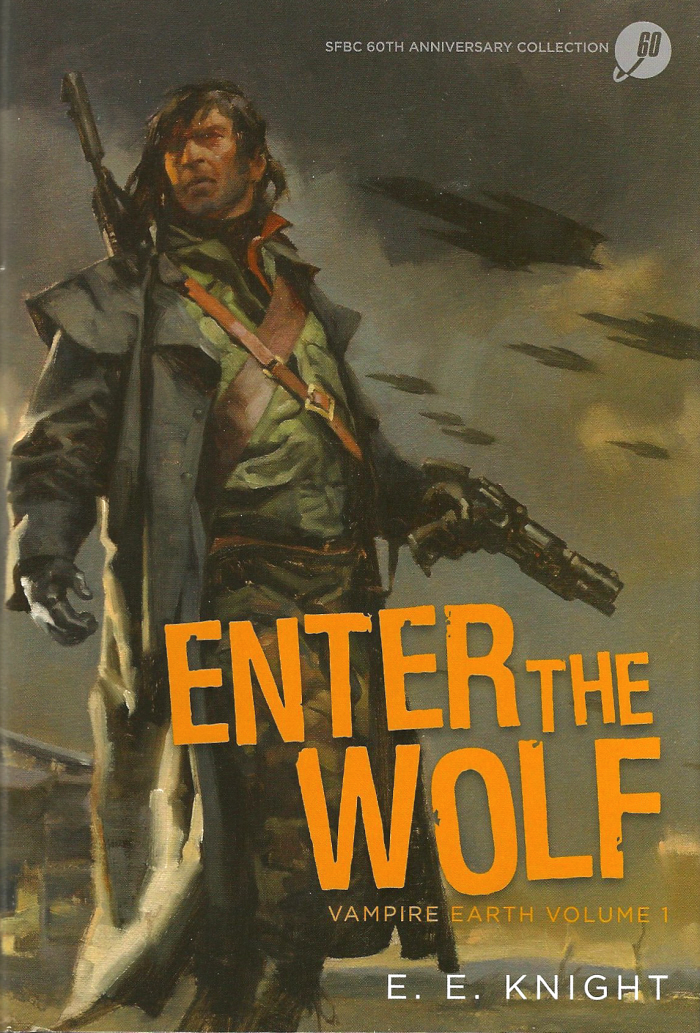
The Science Fiction Book Club has just released a high-quality hardcover omnibus of the first three books, Enter The Wolf. My copy arrived last month, complete with a sewn-in bookmark and great new wrap-around cover art by Gregory Manchess (click on the image at right for a bigger version).

Earth, 2065. Everything you know has changed. 43 years ago, the bloodthirsty Reapers came to Earth to feed their insatiable hunger. Now a ragtag rebel alliance is all that remains in the fight against our vampiric alien overlords. This is the world of the Vampire Earth saga, author E. E. Knight’s riveting blend of horror, dystopia and all-out military SF action. Devour this addictive series’ first three thrilling novels in Enter the Wolf, an SFBC 60th Anniversary omnibus!

Way of the Wolf: For four decades the Reapers have ruled our world. But Lieutenant David Valentine believes the human spirit remains unconquerable. And he’s on a mission to take back the Earth. Choice of the Cat: They call them the Cats — an elite stealth force of the finest warriors humanity has to offer. David Valentine is out to join their ranks. But first he must uncover the secret of the Twisted Cross, a deadly and mysterious new force under Reaper command. Tale of the Thunderbolt: As the human Resistance continues their struggle to overthrow the Reapers’ reign, Valentine embarks on a harrowing quest to find a long-lost weapon. Is it enough to turn the tide of darkness and end the Kurian Order’s dominion of Earth forever?

If you haven’t already, read E.E. Knight’s short story of ancient fellowships and dread sorcery, “The Terror in the Vale,” published in January right here at Black Gate.

Enter The Wolf: Vampire Earth Volume 1 was written by E.E. Knight, and published exclusively by the Science Fiction Book Club in February 2013. It is 803 pages in hardcover priced at $16.99 for members; it’s available as part of the introductory offer to the club for just $1. Check it out here — I’ve been a member of the club for years, and recommend it highly.
SF Signal on Liar’s Blade: “Fafhrd-and-Grey-Mouser-style Sword and Sorcery”

SF Signal on Liar’s Blade: “Fafhrd-and-Grey-Mouser-style Sword and Sorcery”

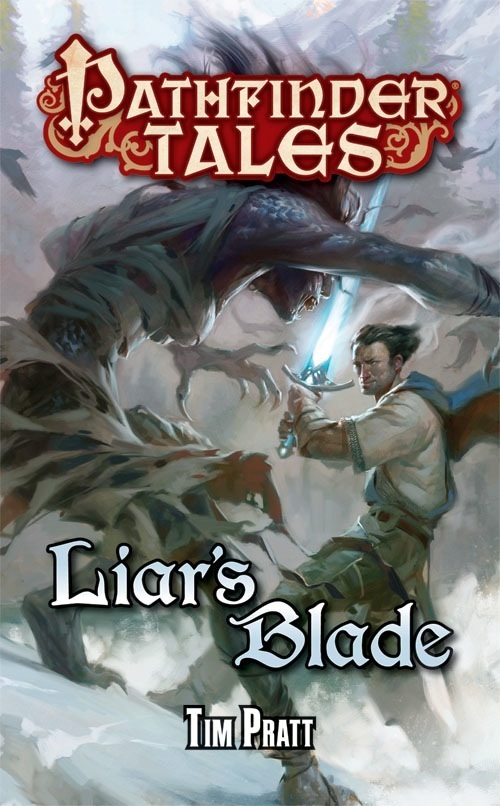
Pathfinder Liar’s BladeSF Signal‘s Karen Burnham gives a big thumbs-up to Tim Pratt’s latest Pathfinder novel, Liar’s Blade, with the kind of review that sends me scrambling to find a copy:

The Pathfinder line of RPG novels is doing a lot of things right. They’ve been publishing intelligent adventure novels that showcase their gaming system and their campaign setting in lush detail. They’ve hired a variety of solid, professional authors, and they’ve spread their tales among a wide variety of heroes instead of following one party for multiple books. The one thing that they had been missing – until now – was the particular brand of [charm] that I have recently come to love in Fritz Leiber’s Fafhrd and Grey Mouser series. Tim Pratt has done an excellent job of capturing that spirit in this Pathfinder outing.

Fafhrd-and-Grey-Mouser-style Sword and Sorcery in a Pathfinder setting? Sign me up!

Tim’s first Pathfinder Tales novel was City of the Fallen Sky (June, 2012), which seems to be unrelated to this one. But maybe not; I’ll have to read them both to be sure. The “variety of solid, professional authors” Karen mentions include Howard Andrew Jones, Richard Lee Byers, Dave Gross, Robin D. Laws, Elaine Cunningham, Ed Greenwood, James L. Sutter, and many others.

We’ve been telling you about Paizo’s premiere fiction line for a while; don’t pretend we haven’t. We presented an exclusive excerpt from Dave Gross’s new Pathfinder Tales novel, Queen of Thorns, in October; we also covered the release of Howard Andrew Jones’s Plague of Shadows in October 2011. Bill Ward’s four-part Pathfinder Tales story “The Box” was published online back in October 2011, and Howard had his own Pathfinder Tales piece, “The Walkers from the Crypt,” a 4-part mini-epic, published free online in March 2011.

Liar’s Blade was published March 12, 2013 by Paizo Publishing. It is 400 pages in paperback, priced at $9.99. You can download a free sample chapter or purchase the digital edition for $6.99 directly from Paizo.com, or read Karen’s complete review at SF Signal.

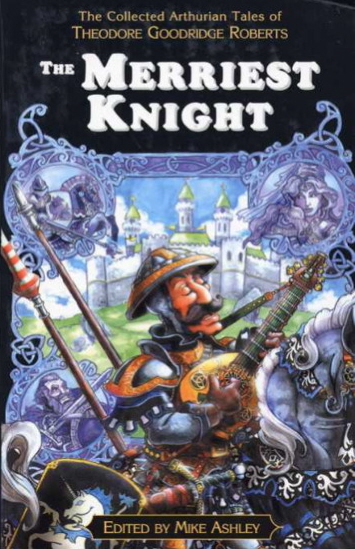
New Treasures: The Merriest Knight, The Collected Arthurian Tales of Theodore Goodridge Roberts

New Treasures: The Merriest Knight, The Collected Arthurian Tales of Theodore Goodridge Roberts

AppleMarkYesterday, I spent the day at the Spring Auction at Games Plus, which I’ve taken to calling the Paris Fashion Week of Games. It was a very successful outing — so successful that I knew I had some explaining to do to Alice, who balances the family finances.

While I was waiting to settle up with the cashier, my eyes fell on a curious artifact in the tiny books section at Games Plus: The Merriest Knight, The Collected Arthurian Tales of Theodore Goodridge Roberts. Roberts was a Canadian pulp author whose tales of Sir Dinadan, whom Mallory called “the merriest knight,” appeared in the pulp magazine Blue Book in the 50s. Sir Dinadan was known as the most practical of the Knights of the Round Table, and Roberts’s stories differed from many of the Arthurian tales of the era in their warmth and wit.

Late in his career, Roberts wrote a final entry in the Dinadan saga, “Quest’s End,” which remained unpublished in his lifetime. Rumor had it he’d also begun collecting all the tales with an eye towards publishing a book, but the project remained unfinished when he died.

Now the peerless Mike Ashley, who’s edited countless anthologies — including 32 books in The Mammoth Book Of... series, and five other Arthurian Anthologies, such as The Pendragon Chronicles and Chronicles of the Holy Grail — has finished what Roberts began with The Merriest Knight, a beautiful collection of the complete tales of Sir Dinadan:

Under the guidance of editor Mike Ashley, The Merriest Knight gathers for the first time all of Roberts’ tales of Sir Dinadan — including the previously unpublished “Quest’s End” — and several other long lost Arthurian works by this master of the stylish adventure yarn and the historical romance. Within these pages, readers will find a collection of Arthurian tales that are sometimes poignant, often humorous, and always ingenious, as well as a Camelot made fresh by the wry and often scathing eye of Sir Dinadan, who never rushes into battle without first being certain of the need to fight at all.

Why is The Merriest Knight for sale in a games store? Ah, that’s an entirely different tale.

Read More Read More

Sorry, Can You Repeat That?

Sorry, Can You Repeat That?

PathLast week I talked about how Fantasy and SF writers deal with the idea that our characters aren’t speaking English, and I focused for the most part on primary world fantasies (by which I mean fantasies with an obvious connection to our world as we live in it) and on SF works of the near and far future.

I wanted to deal with secondary world fantasies separately, partly because that’s what I primarily write myself and partly because I think that use of language might be even more important here, where language becomes most clearly part of the world-building process. Think about it: you don’t have to be half Spanish and half Polish like me to know that how we express ourselves is all about our cultural backgrounds.

So whether we call them secondary world fantasies, heroic or epic fantasy, or sword-and-sorcery, it’s how our characters express themselves – and even how the narrative voice expresses itself – that gives our readers their primary entry into the worlds of our novels and stories. Language has to make these places strange enough that readers understand they’re dealing with a complex imaginary world, while at the same time making those worlds enjoyably accessible.

Some of the same tools we use when trying to add an element of strangeness or “Other” to the primary world (playing around with syntax, avoiding contractions) can make the jump to how we express language in secondary world fantasies as well – but there are some problems that might be unique to those complex imaginary worlds.  And therefore some tools that might be unique as well.

Read More Read More

Rogue Blades Entertainment Reveals the Secrets of Writing Fantasy Heroes

Rogue Blades Entertainment Reveals the Secrets of Writing Fantasy Heroes

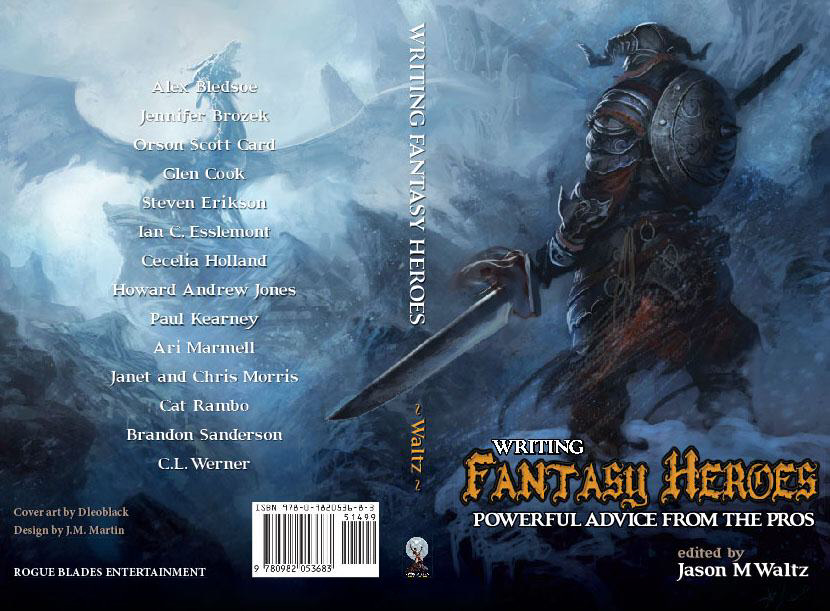
Writing Fantasy HeroesThe distinguished Mr. Jason M. Waltz, occasional Black Gate contributor and stalwart road-trip companion, is rumored to be fairly highly placed in the global publishing mega-consortium that is Rogue Blades Entertainment. So when he leaked word to us of an impending major release this week, we dropped everything to check it out.

RBE is no stranger to heroic fantasy. For the past few years they’ve been at the very forefront of the genre, with such groundbreaking anthologies as Return of the Sword, Rage of the Behemoth, Demons, and others. Writing Fantasy Heroes looks like their most ambitious release yet — a must-have book for readers and aspiring writers alike.

Fantasy heroes endure. They are embedded in our cultural fabric, dwarfing other literary figures and the mere men and women of history. Achilles and Odysseus, Gilgamesh and Beowulf. King Arthur and Robin Hood, Macbeth and Sherlock Holmes, Conan and Luke Skywalker. They dominate our legends, and tower over popular culture. The stories we tell each other begin and end with fantasy heroes, and the 21st Century is as thoroughly captivated with them as ever. From Batman to Gandalf, Harry Potter to Tyrion Lannister, the heroes of fantasy speak to — and for — whole generations. But what makes a fantasy hero? How do the best writers create them, and bring them to life on the page? In Writing Fantasy Heroes some of the most successful fantasy writers of our time-including Steven Erikson, Brandon Sanderson, Janet Morris, Cecelia Holland, Orson Scott Card, and Glen Cook-pull back the curtain to reveal the secrets of creating heroes that live and breathe, and steal readers’ hearts. Whether you’re an aspiring writer or simply a reader who loves great fantasy and strong characters, this book is for you.

Writing Fantasy Heroes is edited by Jason M. Waltz, with a forward by Steven Erikson. It was published by Rogue Blades Entertainment and is available from Amazon.com and other fine distributors for $14.99 in trade paperback. The terrific wrap-around cover is by Dleoblack (click on the image for a bigger version). As soon as we receive a copy in house, we’ll report back with full details.

Stephen King Pens a Sequel, 36 Years Later

Stephen King Pens a Sequel, 36 Years Later

Doctor SleepSeems I’m on a horror kick this week. Yesterday I talked about classic horror of the 80s, today I want to jump ahead to one of the most anticipated novels of 2013.

Stephen King has done almost everything in his 40-year career: mystery, science fiction, crime, psychological thrillers, epic fantasy, and of course horror. But with the obvious exception of his Dark Tower series — and Bleak House, the follow-up to The Talisman, which he co-authored with Peter Straub — he has avoided sequels.

That’s about to change with the arrival of Doctor Sleep, the sequel to one of his earliest books, and one of the most famous horror novels of the 20th Century: The Shining. Five-year-old Danny Torrance, the child hero of The Shining, is now middle-aged Dan Torrance, whose encounter with twelve-year-old Abra Stone — who possesses the brightest shining ever seen — leads him into deadly conflict with a tribe of murderous paranormals.

On highways across America, a tribe of people called The True Knot travel in search of sustenance. They look harmless—mostly old, lots of polyester, and married to their RVs. But as Dan Torrance knows, and spunky twelve-year-old Abra Stone learns, The True Knot are quasi-immortal, living off the “steam” that children with the “shining” produce when they are slowly tortured to death.

Haunted by the inhabitants of the Overlook Hotel where he spent one horrific childhood year, Dan has been drifting for decades, desperate to shed his father’s legacy of despair, alcoholism, and violence. Finally, he settles in a New Hampshire town, an AA community that sustains him, and a job at a nursing home where his remnant “shining” power provides the crucial final comfort to the dying. Aided by a prescient cat, he becomes “Doctor Sleep.”

Then Dan meets the evanescent Abra Stone, and it is her spectacular gift, the brightest shining ever seen, that reignites Dan’s own demons and summons him to a battle for Abra’s soul and survival.

I always look forward to a new Stephen King book, but I’ll be looking for this one with very special interest. Doctor Sleep will be published on September 24, 2013 by Scribner. It is 544 pages in hardcover, priced at $30 ($14.99 for the digital version).

Vintage Treasures: The Empire of Fear by Brian Stableford

Vintage Treasures: The Empire of Fear by Brian Stableford

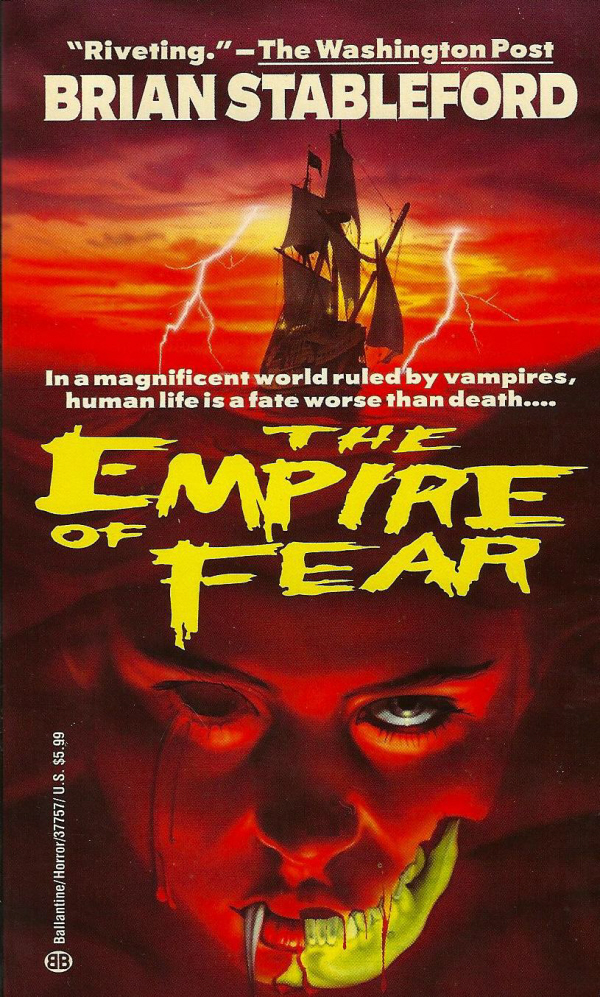
The Empire of FearLast week’s Bram Stoker Awards nominees — not to mention all the recent chatter about horror and dark fantasy on this blog, from Matthew David Surridge’s investigation of Rebecca to my Saturday piece on Adam Nevill’s Last Days — has gotten me to thinking about the major horror novels of my youth. One of the most frequently discussed and passed around was Brian Stableford’s vampire epic The Empire of Fear.

England in the seventeenth century is a land ruled by the Undead, an empire upon which the sun never rises. Feared and envied, worshipped and despised, Richard the Lionheart and his aristocracy of vampires rule with terror and the darkly-seductive promise of life eternal for the lucky few. For centuries it has been thus. But now, even in the very shadow of their vampire masters’ tyranny, mortal resistance is brewing.

Edmund Cordery, member of the cabal pledged to penetrate the mysteries of the vampires and destroy them, strikes the first blow. But it will fall to his son, Noell, to carry on the crusade of human against inhuman. And it will fall to those who come after Noell to keep the struggle alive for over three centuries — from England to Malta to modern-day America, where destiny will decide finally whether the forces of horror or humanity will hold sway over all…

For short fiction fans, The Empire of Fear grew out of the author’s “The Man Who Loved the Vampire Lady,” a novelette in the August 1988 Fantasy & Science Fiction. Stableford was one of the most ambitious horror writers of the late 80s and early 90s, especially with work such as his well-regarded Werewolf trilogy (starting with The Werewolves of London, 1990). Having covered werewolves and vampires, Stableford completed the triumvirate of classic monsters in 2008 with The Shadow of Frankenstein, the first of The Empire of the Necromancers trilogy.

The Empire of Fear was published in paperback by Ballantine Books in October 1993 (hardcover edition 1988). It is 469 pages, with an original cover price of $5.99.

Horror or Not: Daphne du Maurier and Rebecca

Horror or Not: Daphne du Maurier and Rebecca

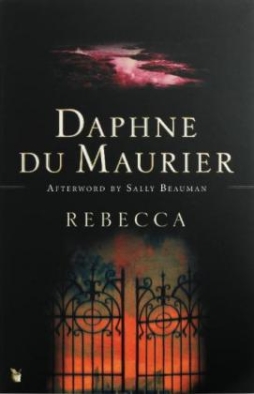
RebeccaWomen in Horror Month is over now, and after some consideration, I’ve decided to write a bit about a book I didn’t discuss during the month proper, and why it was I didn’t write about it. Daphne Du Maurier’s Rebecca is often mentioned as a classic horror novel and an important part of the Gothic tradition. I certainly can see it as a Gothic. But I wouldn’t describe it as horror, not exactly. I’d like to try to consider it here, and see if I can figure out just what it is.

To start with, I can say that Rebecca, published in 1938, was du Maurier’s fifth novel. It became a massive popular success, though critical reception was more mixed. Du Maurier adapted the book for the stage two years later, the same year Alfred Hitchcock’s film adaptation — Hitchcock’s first movie for an American studio — reached screens. Du Maurier herself was thoroughly part of the English literary world; parodied by P.G. Wodehouse, daughter of a famous actor, cousin to the boys who inspired Peter Pan.

The book itself is told in retrospective, as a recollection of the unnamed first-person narrator, who as a young woman in her early twenties falls in love with an older man, Maxim de Winter, marries him, and becomes mistress of his great house called Manderley. But the new Mrs. de Winter finds herself competing against the memories of her husband’s first wife, the eponymous Rebecca. Manderley’s housekeeper, Mrs. Danvers, idolised the dead woman. As the book moves along, we come to find out more about Rebecca and slowly come to understand not only the truth of her relationship with Maxim, but who Rebecca de Winter really was.

Read More Read More

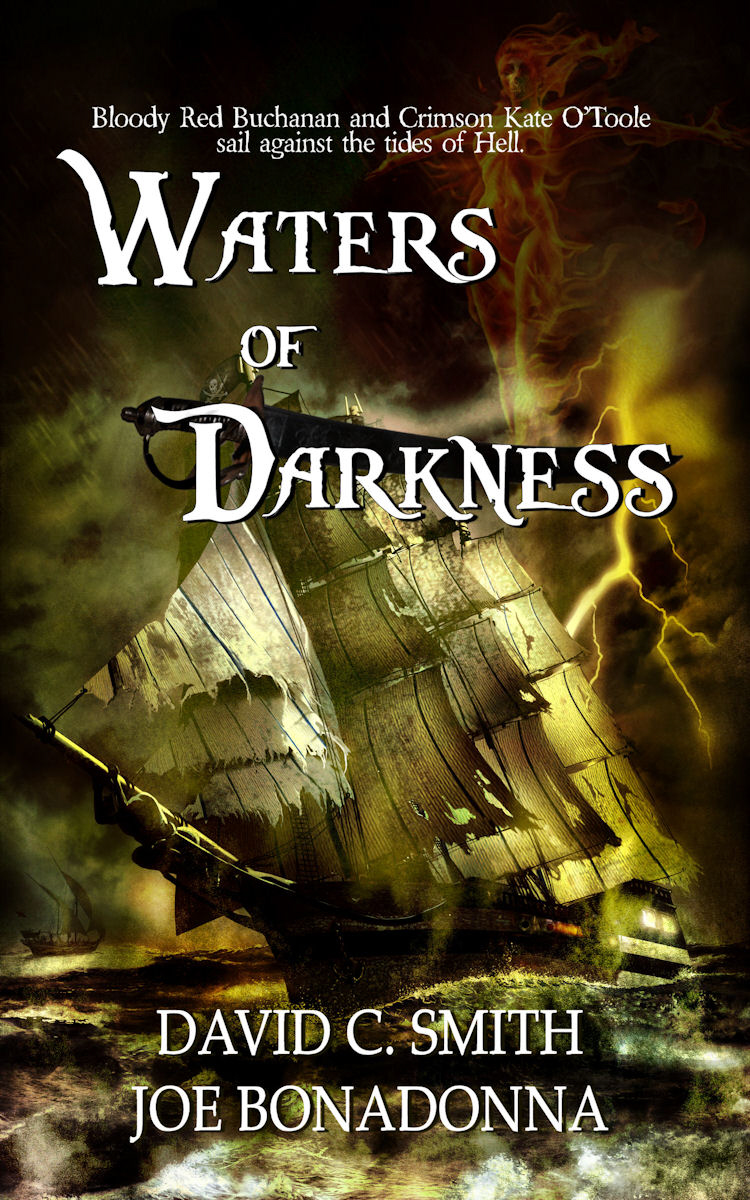
Damnation Books Releases Waters of Darkness by David C. Smith and Joe Bonadonna

Damnation Books Releases Waters of Darkness by David C. Smith and Joe Bonadonna

Waters of DarknessWe’re very pleased to note the March 1 release date of a new novel by two Black Gate contributors, David C. Smith and Joe Bonadonna, which they describe as “the best supernatural pirate dark fantasy… EVER.” We asked Dave about the book’s genesis, and here’s what he told us:

This story is based on a ms. I wrote in 1978 that was to be a sequel to The Witch of the Indies, my first published novel, based on Robert E. Howard’s Black Vulmea character… I wrote a 50,000-word first draft in the spring of 1978 (before Witch was published) that I filed away for decades. Despite my naive enthusiasm (at the age of 24!) that Zebra would certainly want a sequel, as we know, The Witch of the Indies sank fast and has pretty much been forgotten. But! Who doesn’t love a pirate story? Joe asked to see that old, yellowing (literally) draft and went to work on it. So we wound up collaborating — at a distance of 35 years, in a way — and have written what we both think is a terrific pulp-style pirate dark fantasy.

Joe took my rough draft, added at least 10,000 words to it, recrafted who knows how many thousands more, and brought in new characters, new developments… He went to town and really brought the thing to life.

David and Joe’s last collaboration for us was The Big Barbarian Theory, one of the most popular articles on the Black Gate blog last year. We featured David’s The Fall of the First World in December, and posted the complete text of Joe’s Dorgo the Dowser novella “The Moonstones of Sor Lunarum” last Sunday.

Waters of Darkness was published by Damnation Books on March 1, 2013. It is 60,000 words and currently available in Kindle format for $5.95. The wonderful cover is by Dawne Dominique. More details at the website.

The Mad Scientist’s Guide to World Domination Just $1.99 at Amazon.com

The Mad Scientist’s Guide to World Domination Just $1.99 at Amazon.com

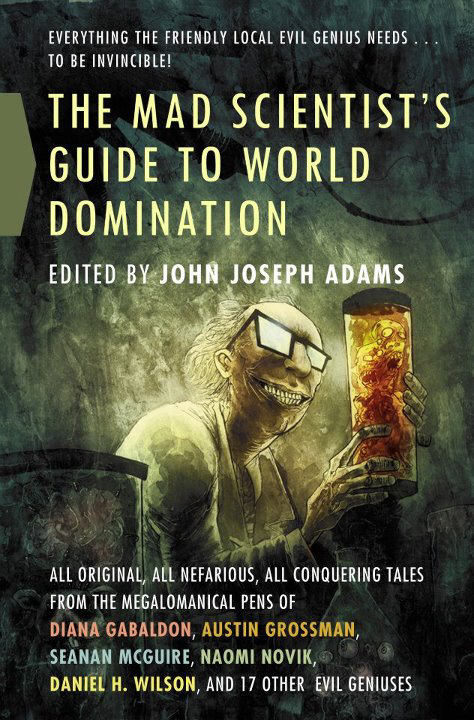
The Mad Scientist's Guide to World DominationNo sooner do I settle into my big green chair with John Joseph Adams’s massive fantasy anthology Epic (which I covered here just two days ago), than do I discover that he’s unveiled another great project. Packed with “all original, all nefarious, all conquering tales,” The Mad Scientist’s Guide to World Domination is available in Kindle format for just $1.99 from Amazon.com. Here’s the table of contents:

“Professor Incognito Apologizes: an Itemized List” by Austin Grossman
“Father of the Groom” by Harry Turtledove
“Laughter at the Academy” by Seanan McGuire
“Letter to the Editor” by David D. Levine
“Instead of a Loving Heart” by Jeremiah Tolbert
“The Executor” by Daniel H. Wilson
“The Angel of Death Has a Business Plan” by Heather Lindsley
“Homo Perfectus” by David Farland
“Ancient Equations” by L. A. Banks
“Rural Singularity” by Alan Dean Foster
“Captain Justice Saves the Day” by Genevieve Valentine
“The Mad Scientist’s Daughter” by Theodora Goss
“The Space Between” by Diana Gabaldon
“Harry and Marlowe Meet the Founder of the Aetherian Revolution” by Carrie Vaughn
“Blood and Stardust” by Laird Barron
“A More Perfect Union” by L. E. Modesitt, Jr.
“Rocks Fall” by Naomi Novik
“We Interrupt This Broadcast” by Mary Robinette Kowal
“The Last Dignity of Man” by Marjorie M. Liu
“Pittsburg Technology” by Jeffrey Ford
“Mofongo Knows” by Grady Hendrix
“The Food Taster’s Boy” by Ben Winters

The Mad Scientist’s Guide to World Domination was published by Tor Books on February 19, 2013. It is 368 pages in trade paperback priced at $14.99; the list price on the digital version is $9.99. The awesome cover is by Ben Templesmith. More details are available here. No idea how long the $1.99 deal will last, so take advantage of it soon.